How to Fire a Dental Employee (and Handle Team Turnover Without Wrecking Culture)
Every dentist knows the hire they should have let go six months ago. The one who drags the morning huddle down. The one the rest of the team quietly works around. You keep them because firing feels harder than tolerating. That instinct is costing you more than you think.
Turnover is not the enemy. Keeping the wrong person is. On the Bulletproof Dental Practice podcast — 450+ episodes, 1M+ downloads — Pete Boulden and Craig Spodak have said it plainly: without the right people, you stagnate. Your team moves your vision forward, or it holds it hostage. There is no neutral.
Why is keeping a bad hire more expensive than firing them?
Because the cost never shows up on one line of your P&L. It bleeds across all of them.
Craig Spodak has studied the real number. His take: replacement cost in dentistry runs higher than in most businesses, because we are technique-oriented — you are not just filling a seat, you are rebuilding skill, chairside rhythm, and patient trust. A single bad front-desk or clinical hire can quietly torch tens of thousands in lost production, botched scheduling, and the morale tax on everyone forced to compensate.
Now stack the hidden costs:
- Culture drag. One misaligned team member resets the ceiling for everyone. A-players do not stay in rooms run at the pace of the slowest, most negative person.
- Leadership bandwidth. Every hour you spend managing around a problem is an hour stolen from growth.
- Patient experience. Your team is the practice. Patients feel tension before they can name it.
Pete’s tactical frame: if you would not enthusiastically re-hire this person today, knowing everything you know, you already have your answer. The only variable left is how long you let it cost you.
What is the “protect the house” rule?
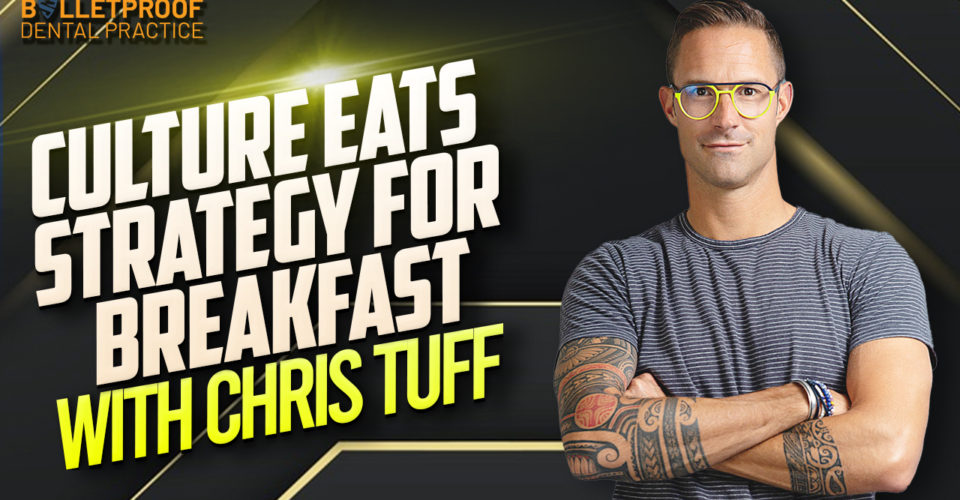
On the show, guest Chris Tuff — bestselling author on modern leadership — put a phrase on it that stuck: protect the house. Your culture is the house. Everything you have built lives inside it. Your job as owner is not to be liked by every person on payroll. It is to defend the environment that makes your best people want to stay.
Here is the hard version, and Tuff says it directly: sometimes you have to let your people leave. Not everyone belongs on the bus. When you cling to someone who does not fit — out of guilt, out of fear of the hiring process, out of “but they’ve been here five years” — you are not being kind. You are taxing the loyalty of everyone who does fit.
Craig’s heart-side of this matters just as much: firing done right is not cruelty. It is clarity. The wrong seat for your practice may be the right seat somewhere else. Releasing someone with respect can be the most honest thing you do for them.
What are the warning signs it is time to let someone go?
Stop waiting for a single catastrophic event. It rarely comes. Watch the pattern instead:
- The team works around them, not with them. Tasks quietly get rerouted to avoid the friction.
- They fail on values, not just skills. Skills you can train. Character and coachability you cannot.
- Feedback changes nothing. You have been clear, direct, and documented — and the behavior returns.
- You feel relief when they call in sick. Trust that signal. It is data.
Skills gaps deserve coaching. Values and attitude gaps deserve a fast, humane exit. Confusing the two is the #1 mistake owners make — they endlessly retrain a person who was never going to buy into the mission.
How do you fire a dental employee the right way?
Do it like a professional, not a coward. The goal is a clean, legal, dignified exit that protects your team and your license.
- Document first. Before termination day, have a paper trail — reviews, written warnings, specific incidents with dates. This protects the practice and forces you to be honest about whether you actually gave them a fair shot.
- Consult on compliance. Employment law is state-specific. A ten-minute call with an HR advisor or employment attorney before you act is cheap insurance against a wrongful-termination claim.
- Keep it short, direct, and private. End of day. Two people in the room. Decision already made — this is not a negotiation or a debate. Respect is delivered through brevity and clarity, not a 40-minute autopsy.
- Protect the patient day. Have the schedule, passwords, and coverage handled before the conversation, not after.
- Tell the team like a leader. No gossip, no character assassination. “We’ve made a change. Here’s how we’re covering. Thank you for stepping up.” Then close the door on it.
How do you stop having to fire people in the first place?
The best termination is the one you never have to run — because you hired right and led well. From the podcast playbook:
- Always be hiring. Even when fully staffed. A live bench means you lead from strength, not desperation — and desperation is why most bad hires happen.
- Trial-to-hire. A working interview or defined trial period tells you more in three days than three interviews ever will.
- Onboard like it matters. Craig’s exit-interview finding: the biggest turnover hits in the first couple of months, and the cause is almost always overwhelm and thin training — not the person. Fix onboarding and you fix half your turnover.
- Connect relentlessly. Chris Tuff’s core message on the show — genuine connection is the single greatest retention lever. People do not leave practices where they feel seen.
Where do dentists learn to lead a team like this?
Firing well, hiring right, and building a culture A-players fight to stay in is a learnable system — but you will not learn it alone at 9pm reading policy PDFs. You learn it from owners a few moves ahead of you.
That is the entire reason Bulletproof exists. Our Mastermind — 46 owners who refuse the clinical treadmill — is where these exact conversations happen without ego. It is where a dentist stops white-knuckling the hard call and gets a roadmap from people who have made it. And every summer at the Bulletproof Summit (August 7–9, 2026, The Phoenician, Scottsdale), that room comes together in person.
Dentistry does not have to be lonely. The wrong people make it lonelier. The right ones — on your team and in your corner — change everything. Want to know where your practice really stands? Run the numbers in our 1% Practice Scorecard, then come find your tribe.
The 1% of dentists, who want 100% from life.
Blog



























1+1=3 The Power Of Alignment and Delegation For You and Your OM with Erika Pusillo
, October 31, 2024























, June 15, 2023

, June 8, 2023
, May 31, 2023









Look at These 3 Stats if You’re Thinking of Going Out of Network with Teresa Duncan
, January 11, 2023
, December 28, 2022

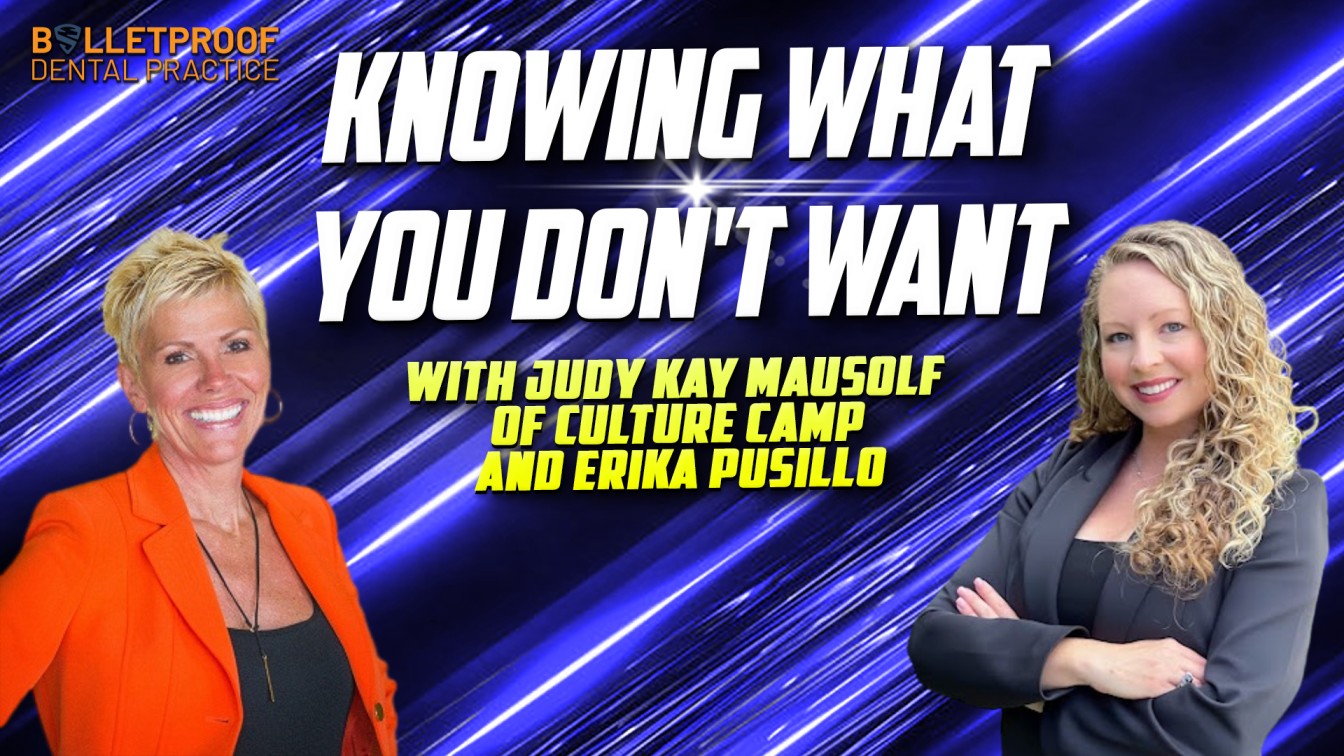
Knowing What You Don’t Want with Judy Kay Mausolf of Culture Camp and Erika Pusillo
, November 30, 2022


Cabo This Week, Immersion Learning, Biggest Breakthroughs, Your Personal KPI is Net Worth
, November 2, 2022
, October 19, 2022








Business is not Productivity, Productivity is not Profitability with Chris Salierno
, September 22, 2021
























3 Biggest Bottlenecks of an Entrepreneurial Dentist: PART 2 with Perrin DesPortes of TUSK Partners