Bulletproof Storytime
Apply for our 2022-2023 Mastermind NOW at BulletproofMastermind.com!
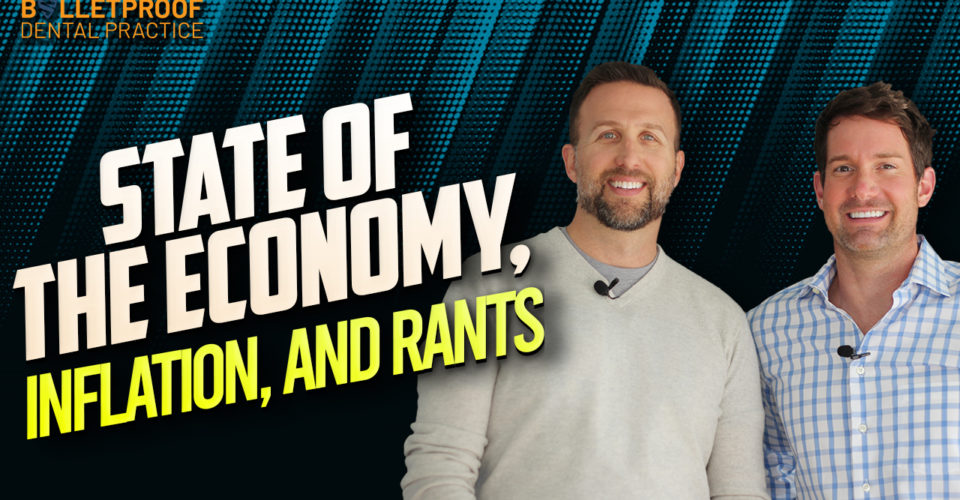
Bulletproof Dental Practice Podcast Episode 245
Hosts: Dr. Peter Boulden & Dr. Craig Spodak
Key Takeaways:
Introduction
Elon Buying Twitter
‘And Then What’ Game
HR-5 Testing
Gratitude
References:
Mighty Networks: Bulletproof Dental Practice
Tweetables:
Hate speech should not be allowed. Dr. Peter Boulden
If you don’t have an active process to curate some level of gratitude for what you have you will take it for granted. Dr. Craig Spodak
Losses were just accelerated learning. Dr. Peter Boulden
Full Episode Transcript
Below is the complete transcript of this episode of the Bulletproof Dental Practice podcast. Prefer to listen? Find us on Apple Podcasts, Spotify, and YouTube.
Read the full transcript
The following transcription was from the Bulletproof Youtube channel. Here is the https://www.youtube.com/watch?v=kYf4vwTR-fE
Craig Spodak
0:00:00
No need to go down the rabbit hole, but why did he buy this? Why did he buy Twitter? So he is an absolutist of free speech. I thought America was an absolutist of free speech.
Peter Boulden
0:00:26
Well, we are. No matter what. So it's important to him. So, the reason he's having to buy, so here's what happened. He bought 11%, okay? The board offered him a seat at which point he was going to take it, what's his name? Sundar?
Craig Spodak
0:00:41
Whatever.
Peter Boulden
0:00:42
Argarwal is the CEO. But then they said, hey-
Craig Spodak
0:00:44
The T-bone?
Peter Boulden
0:00:45
That's awesome. No, if you take the board seat, then you basically can never get more than 15%, which would not be a controlling interest. So he rejected the board seat and said, no, here's the deal. I'm going to make-
Craig Spodak
0:01:00
Tell me what the poison pill is. I want to know what the poison pill is.
Peter Boulden
0:01:02
So the poison pill-
Craig Spodak
0:01:03
Because the DVD came in and told me about this, and it was way over my head.
Peter Boulden
0:01:05
Yeah, so the poison pill is something that boards can implement, and it truly is a poison
Peter Boulden
0:01:13
pill.
Peter Boulden
0:01:13
They can implement to create more shares, effectively diluting themselves in the process, which is the poison pill. But it allows Elon would have to then keep chasing the limited. So they would basically issue a ton more shares, at which they would get to buy more of. And then Elon would get diluted.
Craig Spodak
0:01:31
But then the fiduciary responsibility to its shareholders. This is great.
Peter Boulden
0:01:44
So they become personally liable if they decide to poison pill and want to stay in control. They are personally liable. So Jack only owns actually 2% at this point, 2% of the company, so he's kind of out. And he, I think, would probably –
Craig Spodak
0:02:00
He looks like an evil superhero by the way now. He looks like the people that fought Superman in that movie in the 80s. No, I'm not saying anything. I'm just saying he's got that look.
Peter Boulden
0:02:08
Yeah, he does. So go ahead. I'm sorry. So that's where we are with Elon. So everyone, you know, when this happened last, let's call it, I think it was last week, like last week, you know, YouTube was abuzz, Twitter was abuzz, of course, and there were people saying that there's no chance that the board is going to let this happen. Elon being such the flex that he is, he subtly reminded everybody that he's much richer than everybody else. And here's how he did it. Do you know how? No, this is great. I'm loving it. He made the offer for 5420, the number 420. If you remember, this is how he became the richest man in the world with the number 420. You ready? Remember when he tweeted, with one tweet he became the richest man in the world,
Craig Spodak
0:02:53
made over three, he made over a hundred billion dollars with his tweet. He said… The Bitcoin tweet?
Peter Boulden
0:02:59
Nope. No, no, that's not new Bitcoin. Okay, okay, calm down. This is when he was threatening, this is when, I just can't believe you don't, I can't believe you don't know this.
Craig Spodak
0:03:06
I don't know, but hey listen, there's a lot of people that don't know this. Comment below if you don't know this.
Peter Boulden
0:03:10
No, no, no, no, don't gang up on me.
Craig Spodak
0:03:12
That's good, you'll see.
Peter Boulden
0:03:13
Alright, so he wrote, thinking about taking Tesla private at $420 per share funding secured. Right, which was a subtle taunt to the SEC saying I'm going to take this private. Twitter went crazy, everyone jumped on Tesla and rode the rocket up because they thought he was taking Tesla private. So the 420 is just a flex, in this instance of Twitter, is such a subtle flex because the stock price is nowhere near $54 right now. It's in the high 30s. Now he has to pay a premium to get that much of the control to privatize the company. He has to pay a premium, usually 20 to 30 percent, so he's right in there. But he's paying actually a little bit more than that only because he wanted to get to the number in the 50s, but he wanted to include the number 420 just to remind everybody, hey,
Craig Spodak
0:04:08
I'm richer than you. I'm richer than you. Well, listen, it's April 25th as we record this podcast. Was the news of his position on April 20th any chance? Did he do something on 420? No, it was the tweet. If you look back, it's funding secured for 20. So 420 is kind of this mythical number in. I know, but it'd be cool if he just on five days ago released something as well.
Peter Boulden
0:04:34
You know, actually, Greg, I don't know. It was it done for 20? It might be what for. So we're at April 25th right now. So, yeah, it was Thursday, actually. So that's pretty that's pretty funny if that's the case.
Craig Spodak
0:04:46
He almost is like Elon is almost like a living meme. He loves jokes, he loves memes, he loves… He's creative as hell, man.
Peter Boulden
0:04:55
He loves to just talk shit to people without talking shit to people.
Craig Spodak
0:04:59
Yeah, I remember when someone, God, Bernie Sanders tweeted…
Peter Boulden
0:05:04
Oh my God, he's like, you're still alive?
Craig Spodak
0:05:06
I have to keep reminding myself you're still alive. Oh my God. Like they say, you don't pay enough taxes. He's like, I've paid more taxes this past year than any other human being in the history of the U.S. government.
Peter Boulden
0:05:19
Then all of y'all combined.
Craig Spodak
0:05:20
Right, but I have to keep reminding myself you're still alive. Oh my God.
Peter Boulden
0:05:26
That is hilarious. I never even saw the response.
Craig Spodak
0:05:28
I think Bernie just took off. Don't go toe to toe with Elon. It's like the guy, by the way, speaking, I know we're just talking latest events but like you can hear someone quick quick talk shit to mike tyson
Peter Boulden
0:05:45
on the plane on the plane no talk shit in his face like that right so he's behind him in this plane first class all that and this guy was a little drunk and you know that it just kept haunting mike tyson we just want my cousin jumped up and did the dog shit out of this guy yeah that's that's what happened in the internet she heard him which we're going to be everyone cheered him this guy was beat
Craig Spodak
0:06:08
up for the toes all the way huh yeah he's a career criminal the guy that talked to my Tyson oh shit really as a pop yeah the public service announcement to like don't pet rabbit pit bulls number one is another one don't like you know go kick a sleeping bear well look everyone's got a plan until they, when they, when they talk, when they talk
Peter Boulden
0:06:28
Mike Tyson until they get punched in the face.
Craig Spodak
0:06:30
So the back of our manual, the first manual we ever had at the Bulletproof Summit was everyone's got a plan until they get smacked in the fricking mouth, which is Mike Tyson. I love that we're talking current events here, by the way. We didn't mean to.
Peter Boulden
0:06:43
No, I'm not actually not being sarcastic, Craig.
Craig Spodak
0:06:45
I think that's, that some of my favorite pods actually just kind of rant on like, uh, what's my, well, we get, let me, let me circle back for one second. So, um, that's what all in podcast does. What, what, talk to me, what does this mean? So he just tweeted something along the lines of, I hope my, my, my harshest critics stay active on Twitter. He said that.
Peter Boulden
0:07:07
Yeah, because he's, cause he's standing. So basically what he's saying is, is it's the fall of the empire when you have companies that can… if Twitter is acting like the town hall but Twitter is then aligned with left or right from a partisan perspective, then it's a dangerous proposition. He's saying look, going to space and electric cars and all this shit is important, but if our town hall is broken, it's my duty as someone who has a shit ton of money to buy this and make sure it's free for all. And so basically what he's saying is he has two missions. To make sure that everyone can speak freely whether it's good, better, and different. You know if you don't like it then don't subscribe. And he wants to fix the bot problem which I am a big user of Twitter, probably the only social media I use. And the bot thing is a problem, Greg. Where people can sign up, take your name, you know it's a bot. So he wants to solve that by making Twitter almost like cost a dollar a month or just something that's a little bit So it's not just free for everybody That's one. That's one. That's one solution that he's presented So those are really his two missions and and yeah, he feels very very strongly about it
Craig Spodak
0:08:15
Yeah, it says I hope that even my worst critics remain on Twitter because that is what free speech means and areas blowing up Like define hate speech. How do you cancel hate speech? And then people are saying right now, if Elon Musk buys Twitter, deleting the app is the new, if Trump wins, I'm moving to Canada.
Peter Boulden
0:08:37
It's so true, I don't want to delete that shit.
Craig Spodak
0:08:41
I don't know, I mean, I don't use Twitter.
Peter Boulden
0:08:44
If they do, what are they afraid of, right? Oh, now there's gonna be real talk here, I'm leaving. Like, that makes no sense. Like, who in their right mind doesn't want free speech?
Craig Spodak
0:08:53
A lot of people, because they do believe that there's hate speech.
Peter Boulden
0:08:57
Hate speech is, right, I agree with that. You shouldn't, hate speech shouldn't be allowed where you're literally just talking and hurting people intentionally. You know, and who then becomes, who then becomes, Craig, the moderator of that, I guess, is, but I think some people just don't like certain narratives to be played out publicly, is what I'm saying, in the town hall setting. So I like how we're doing this, Greg. But two of my favorite pods do this, the All In podcast and then My First Million with Sam Parr and Shane Puri. Yeah, I was right. They do this. They rip about it a lot.
Craig Spodak
0:09:37
I got something.
Craig Spodak
0:09:38
Does that mean?
Craig Spodak
0:09:39
Wait, just one more question about this.
Craig Spodak
0:09:40
So what happens then? Twitter becomes more inclusive, all the accounts are banned? Twitter, if it takes it private, luckily because of the Jobs Act that was created, I think Obama created the Jobs Act, I don't know the exact legislation, but it allows for 2,000 other people to be shareholders in that. So there's a way around it for him to privatize it so he doesn't have fiduciary responsibility to shareholders in publicly traded companies. So he does want to take it private I believe. as we're coming up to midterm elections,
Peter Boulden
0:10:17
you can imagine both sides of the aisle being like,
Peter Boulden
0:10:20
this could be bad.
Peter Boulden
0:10:22
Oh yeah, he said the best social media platform is one on which the extreme left 10
Craig Spodak
0:10:26
and the extreme right 10% are both equally unhappy.
Peter Boulden
0:10:29
It's true.
Craig Spodak
0:10:30
It's like what they say,
Craig Spodak
0:10:31
a good negotiation is where both parties feel Moderately happy? Or moderately upset. Moderately upset. Okay. You know you've struck a good negotiation when both people are the same degree of unhappy. Yep, that's the, when both people are the same degree of unhappy. Yep, that's the characteristics of a fair deal, right? Right, yeah, both parties should be unhappy. That's true.
Peter Boulden
0:10:54
That's wild.
Craig Spodak
0:10:55
Okay, stop what you're doing. The Bulletproof Summit is coming at you June 3rd and 4th at the Grand Hyatt in Nashville.
Peter Boulden
0:11:01
The Grand Hyatt is located in the Gulch, which as most of you know is the best area of NashVegas. So we'll be featuring new, never done before Bulletproof tracks for doctors, team, and hygienists. There's going to be some VIP tickets available, but book by May 2nd and you can receive some group discounts for your team. Prices will also go up for the last 50 tickets. Tickets are already half gone for this event and it will sell out like all previous years. This is the biggest no-brainer in dentistry. If you want to elevate yourself, your team, and your practice, check it out. Bulletproofsummit.com. We'll see you there. All right. Well, you took us on a wild tangent today. Anything else you want to talk about
Craig Spodak
0:11:49
current events? I've got something for us. Well, I got just to tell you about my 60-gallon diesel fuel tank.
Peter Boulden
0:11:56
No, we… Yeah, you did. I think that's ridiculous that you want to fill up one time every six
Craig Spodak
0:12:00
months or whatever. I think that's ridiculous. I wish. I wish I filled 60 gallons in six months.
Peter Boulden
0:12:05
Hey, how much is diesel right now, by the way?
Craig Spodak
0:12:08
Five.
Peter Boulden
0:12:09
Five dollars.
Craig Spodak
0:12:09
Five.
Peter Boulden
0:12:10
Five dollars.
Craig Spodak
0:12:11
Five dollars.
Craig Spodak
0:12:12
How much is, how much, I know only because I filled up the other day.
Peter Boulden
0:12:16
Oh, wow.
Craig Spodak
0:12:17
But it's moving fast, man. Gas is moving fast.
Peter Boulden
0:12:20
So today, well, we need to open that up.
Craig Spodak
0:12:22
Everything's Putin's fault.
Peter Boulden
0:12:23
Everything's Putin's. Even inflation. Everything's Putin's. Inflation was transitory until it was Putin's fault.
Craig Spodak
0:12:29
Well, as you hear, he won the Nobel Peace Prize for curing COVID in 40 hours. Literally, he invaded a sovereign nation, and COVID just, poof, poof, gone.
Peter Boulden
0:12:42
It's a remarkable world we live in.
Peter Boulden
0:12:44
It is a remarkable world.
Peter Boulden
0:12:45
I had a funny thing that I was, I thought of you, Craig, and I was like, I'm gonna read this on the pod and not give Craig any intel on what I'm about to read, so you can take this however, I think you'll enjoy this story. So today is gonna be bulletproof story time, just for a second. But I'm gonna read something that I saw on a wall in a Jimmy John's restaurant.
Craig Spodak
0:13:05
Jimmy John's sandwich.
Peter Boulden
0:13:05
Jimmy John's sandwich.
Craig Spodak
0:13:07
Sandwich, yeah, I'm a big fan, okay. Isn't he like, just for a piece of information, isn't he like an exotic animal hunter?
Peter Boulden
0:13:16
This much I do not know.
Craig Spodak
0:13:19
Yeah.
Peter Boulden
0:13:20
All right, so ready? Ready for my story? You going to pay attention? Yes, please, please. Okay, because I think this is applicable to dentistry very much so, and especially kind of what you teach. Between what you teach and I teach, I think this is going to be the story of this, the summation of this story. You're going to jump all over, because you teach this a lot to people. OK, so ready?
Craig Spodak
0:13:41
Yeah.
Peter Boulden
0:13:41
It's a little bit of a longer story, so bear with it, it's story time. OK, so here we are. The American investment banker was at the pier of a small coastal Mexican village when a small boat with just one fisherman was docked. Inside the small boat were several large fin tuna. The American complimented the Mexican on the quality of his fish and asked how long it took for him to catch them. The Mexican replied, only a little while. Then the American asked, why didn't he stay out a little longer and catch more fish? The Mexican said, he had enough to support his family's immediate needs. The American then asked, but what do you do with the rest of your time? The Mexican fisherman said, well, I sleep late, I fish a little, I play with my children, take a siesta with my wife, Maria. I stroll into the villages each evening where I sip wine and play guitar with my amigos. I have a full and busy life. The American scoffed. I am a Harvard MBA. I could help you. You could spend more time fishing with the proceeds, buy a bigger boat, and with the proceeds from the bigger boat you could buy several more bigger boats. Eventually, you would have a fleet of fishing boats. Instead of selling your catch to a middleman, we could sell directly to the processor, eventually opening your own cannery. You would control the product, the processing, and the distribution. You would need to leave this small coastal fishing village and move to Mexico City, then LA, and eventually New York City, where you will run your expanding empire. The fisherman asked, but how long will all this take? To which the American replied, 15 to 20 years. But then what? The Mexican asked. The American laughed and said, well, this is the best part. When the time is right, you would announce an IPO and sell your company stock to the public and become very, very rich. He would make millions. Millions? asked the fisherman. Then what? Well, the American said, you would then retire, move to a small coastal village where you would sleep late, you would fish a little, play with your kids, take a siesta with your wife, just draw the village in the evening, sip wine, and play guitar with your amigos. I like that. Where was that exactly? It was on the wall of Jimmy John's. And so I thought, you know, as I read there, I kind of sat there, was just waiting for a sandwich, and I was like, oh my God, Craig, we love that.
Craig Spodak
0:16:06
I'm going to read it on pod live because it's so true, and I think it resonated so much with dentistry and the movement we have. Well, you know what, first of all, go ahead.
Peter Boulden
0:16:17
And the movement we have with this obsession right now with DSOs and private equity buying us and then what and then what and then what, right? And I thought it was so applicable. I'm gonna start my own DSO, I'm gonna do some roll-ups, and I'm gonna, you know, just because that's the narrative. But you don't stop and think like, huh, I actually really loved my life before, when I was taking strolls and fishing and, you know, singing with my amigos. So, anyway.
Craig Spodak
0:16:43
I love it. I'm flattered that you thought of me for that story. That's cool. I'm happy that when you see something like that, you think of me, that's cool. That's a big compliment to me.
Peter Boulden
0:16:53
Wow.
Craig Spodak
0:16:53
But that's cool. I love it. I mean, it's so true. It's like the and then what game. So you can do it both ways. You can do the positive and then what, or the negative and then what. Like, you know, so my buddy Randy, who has been in the pod, one of my favorite people, you know, every time he got a bad review or something happened.
Peter Boulden
0:17:11
Flooring Randy, right?
Craig Spodak
0:17:12
Yeah, Flooring Randy.
Peter Boulden
0:17:13
Yeah, he's a genius businessman.
Craig Spodak
0:17:14
So every time something bad happened in his business, he thought it was the beginning of the end. He had one of his major people, because he had only maybe 20 customers. They were big baller customers. So it's like when we have a bad review on Yelp, it's like, okay, one patient. But what he described to me is when he would have one of his major customers upset with him, he would literally think that the toilet was flushing and his whole business was spiraling and about to go down into the sewer.
Peter Boulden
0:17:41
Dude, I still do that.
Craig Spodak
0:17:42
And it's just, yeah, we all still do. You know, it's like Costas was saying the other day, it's like one board letter or one associate quitting, one, you know, hygienist going off the walls or something like where one move away from something catastrophic. But then you play the and then what game? Okay, so let's just say you do, you know, get that bad review and then what, and then what? And then let's say this, there's always something that you could What I'm trying to say to mitigate the fear of saying right? But at the very very end at the end of all the and then what's you might find yourself Okay, then I'm in a two-bedroom condo and I work at Aspen part-time, right? I'm like, that's not so bad. Right? So like when I when I went off to do my massive project back in 2012, my, and then what, if everything went to shit? And it was a very real possibility that it was going to go to shit. I would, you know, I just didn't realize how close I was, but looking back and being a more sophisticated business person and understanding the loans and the nature of the loans I signed and how, what type of recourse they had. I just thought, I'll move to Carmel, California and work for somebody and probably make a couple hundred grand a year and life could be pretty damn good. So our worst case scenarios are never as good as they, are never as bad as they seem. I love that, you play the worst case hypothetical scenario. And what we think. Right, but the best case is not that great either to the point of the Mexican fishermen. But we have a tendency to 10x what is probably possible from a negative perspective and not do that on the flip side of the positive. I think that is a great, especially if you are a worry wart like myself, I think that is a great exercise.
Peter Boulden
0:19:21
I mean, I'm always.
Craig Spodak
0:19:22
Yeah, you are.
Craig Spodak
0:19:23
You are definitely a worry wart.
Craig Spodak
0:19:24
I can't calm my freaking brain down.
Peter Boulden
0:19:25
I think I'm more than you are.
Craig Spodak
0:19:26
Do you make yourself, yeah, you definitely are. Thank you. Do you make yourself go through that exercise or are you just sitting here? Yeah, I do. I do. I don't worry per se as much as I have a little bit of anxiety that I can control better than I ever could, but I have an active brain. For example, I will get my brain firing on the ranch. You're late at night firing up because you will text me at 11 and start getting on these rants. Well, I just explore things. It's partly enjoyable for me, so I know a little bit about myself. Like if I did sell my company for some stupid money, I would worry about that guy. Because I would put the same amount of energy, thought, and desires into like my ranch. I'd be like a neurotic freaking cow rancher. Like I wouldn't want to do that. So I need outlets. I need a lot of outlets. I need to express myself. But I did want to say one thing. You were talking, and I just, damn, I just lost it. Uh-oh. Look, a squirrel. No, I did just lose it. I was talking about do you practice being like, are you a disciple of your own teaching, or are you just sitting here pontificating about, yeah, you're just bullshitting everybody. No, no, no. I mean, listen, I definitely do practice. Well, I mean, yesterday I was in the woods and hiking with my son, and I put myself in situations to deprive myself of the opportunity to go down rabbit holes. And generally, I'm happier than I've ever been, but it's also because I get a chance to help other people more profoundly, too. So that's part of my fulfillment.
Peter Boulden
0:21:13
I do want to tell you about something cool that happened. Just did a podcast with HR5, I think it was really cool. I'm really excited about it. Yeah, with Shreesa, we just did, right before this we just recorded with them and that's Tom Neighbors, he's like the OG in oral systemic health, oral systemic dentistry. But the new testing stuff that they've got going on, I love that dentistry's moving into diagnostic-driven methodologies versus like, let's just scale the shit out of things. And like, so really cool. They're actually coming to Bulletproof and doing HR5 for everyone, which is really, yeah, they're gonna do free testing to all the people in the audience.
Craig Spodak
0:21:54
Yeah, when you meet those younger people that are otherwise healthy and you see their bone like unzipping, you know it has to be another therapeutic mechanism. Something pathologically systemic. Yeah. And it's not going to be. You see people that have created a calculus, and their bones stay there. And they don't have that chronic inflammation and that growth of that bacteria. And then you see a 26-year-old, otherwise healthy, young individual, and they lose their bones so fast because of that bacterial component. So yeah, I'm really pleased that we have other tools besides scraping like to your point I just think you know, it's really the way to tell you to tell you I use para protect now Do you use para protect? Are you serious right now? I'm the one who got you using it. No, no, no I well, you know, what's funny is Randy got me using it, though I know you brought it to my practice, but I'm like now that's right You know, we don't need to worry about that and then like Randy who's like just so enthusiastic about everything He's like, you know when you're using your Paraprotect, Craig? I'm like, I don't use that shit. He's like, what do you mean? You don't have Paraprotect? Oh, you're saying you personally have Paraprotect. I personally use it now. Everyone should have it. Yes, holy smoke. It's just one of those things you should just be issued as a human. Right, yeah. Do you actually use it? Yeah, I actually use it. I put it in the shower. So, you know, it's exposure that's the important part, right? It doesn't have to be a long exposure. It's just exposure every day.
Peter Boulden
0:23:15
So I just do it in the shower.
Peter Boulden
0:23:16
Right?
Peter Boulden
0:23:16
Real quick.
Peter Boulden
0:23:17
Pump, rinse it out.
Craig Spodak
0:23:18
But I like the gel. But I know it sounds like a very particular commercial. What, because it whitens? No, I like the way. So the regular viscous carbamide peroxide that you use for whitening treatments is like.
Craig Spodak
0:23:29
Too viscous.
Craig Spodak
0:23:30
Too viscous. You can't get it in the tray. It's all stuck in your mouth. It feels like you're eating like peanut butter on Ritz crackers or something, like stuck to the roof of your mouth. You can't get that crap off. So what I love about this is it just washes right out. So I'd rather do a more frequent, more water-soluble carbamide peroxide treatment for whitening than I'll overnight.
Peter Boulden
0:23:47
Yeah, it's only a 2.1 or something percent, right? So it's enough to be-
Craig Spodak
0:23:52
Okay, so what's a normal whitening's 10% then?
Peter Boulden
0:23:55
10% hydroperoxide, yeah, which is pretty-
Craig Spodak
0:23:57
No, 10% carbamide.
Peter Boulden
0:23:59
No, no, so carbamide has a higher concentration because it breaks down. Carbamide is more stable, so it's better in whitening gel, but it breaks down into a lesser concentration. I think it's carbamide peroxide and urea, actually.
Craig Spodak
0:24:10
Okay, got it.
Peter Boulden
0:24:11
I think. It's been a while since I looked at the science.
Craig Spodak
0:24:14
I'm probably about to get scorched on this. But oh well. Carbamide peroxide and urea.
Peter Boulden
0:24:20
And Twitter. Hey, you know what? We did get lots of feedback. With the ones called Rants, we get people saying like, more of this. And I'm like, wow, really? I feel like you're that interesting, but I'd be nothing without it.
Craig Spodak
0:24:38
You're pretty interesting, Peter.
Peter Boulden
0:24:39
I'd be nothing.
Peter Boulden
0:24:40
Well, I have a plethora of useless knowledge.
Craig Spodak
0:24:41
That's for shit short. No, this is not useless. So what else was on your mind besides that story? I love that story, by the way. No, that was really it. And I think I especially thought it was timely. As we're coming up, as you and I are kind of curating
Peter Boulden
0:24:59
new agendas and curriculums for Summit and just like,
11
0:25:04
I don't know, I just thought it was really cool
Peter Boulden
0:25:05
and a great reminder that so many times the blessings are, we're already doing the blessings. We just haven't taken inventory of that, right? Like the life we live are usually blessings. And if we don't, I don't know.
Peter Boulden
0:25:21
I'm kind of-
Craig Spodak
0:25:22
Yeah, let me finish your thought. If you don't have an active process to curate some level of gratitude for what you have, you will take it for granted. It's a hedonic principle. It's a hedonic treadmill. You're making goals. You're postponing your happiness for the future. Like, oh, as soon as this comes in or that comes in, I build my new operator, I hire this person, I use this, or I get to a million dollars or whatever it is, if you can't be happy right now, if you can't find a reason to be happy today, you can never create happiness in your future.
Peter Boulden
0:25:51
Dude, actually, I know where I wanna go. This is where I wanted to go with this. Thank you for bringing this up. And this is actually, I wanna talk about the podcast that you sent me that was from your wife. Oh yeah, that's so good.
Craig Spodak
0:26:03
Right, it's called Strength to Strength.
Peter Boulden
0:26:05
And it was on the Oprah, which I was thinking as you sent that to me, I was like, does Craig listen to the Oprah podcast? But then I'm glad you clarified it with, not that that'd be bad, but I'm glad you clarified that with like, this is, you know, Zaisha sent me this. But I thought. Zaisha sent me something so cool, by the way.
Craig Spodak
0:26:20
She sent me that podcast, and she never sends me podcasts, so I thought it was really cool. And she said right at the end. Do you think she's ever listened to yours? No, she doesn't even know we have one. She has no idea that this exists. Shut up. So she writes, she sends that Arthur Brooks Strength to Strength. It was on Oprah's Super Soul April 6, 2022. And she writes there, she goes, you are a visionary. I was like, oh, that's so nice. Why? So it's just neat that she she think wait, why why why I just closed the chat You're a visionary Just because she's like you're really Craig you're just and she doesn't really pay me a lot of Really heartfelt words cuz I know I've seen it. She's hard. Yes. She's hardcore She's not but I like that her love language is I mean hit you right with what I think right between your eyes Craig Here's what I think about yeah, yeah, so she she's not the type to be like wordy I guess I have enough words like talking up for both of us, but it was like you're a visionary I'm like well. What do you mean? She's like you know you're just a very smart man Craig you see things five steps ahead Okay, it's it's just cool that she said it was this on the heels of sending this part of this link as well? It was, so she thought of me with the Strength to Strength podcast and said, you're ahead of the curve.
Peter Boulden
0:27:44
So let me give a little context for people with this. So, Arthur Brooks, who's the Harvard professor, was on the Oprah podcast and Craig sent me this thing. Obviously, we've talked about that. And so what it's, and I think it again, is super applicable to dentistry, not us ranting about Elon, but this is applicable to dentistry. But it's finding, what he talks about is, is finding deep purpose in the second wave of your life. Right, whereas most of us. Curve. Second curve, you can call it waves, right, so yes. But most people who are just go, go, go in their 20s and 30s,
Craig Spodak
0:28:19
they feel their best years are behind them, right?
Peter Boulden
0:28:23
Especially when it's linked,
Craig Spodak
0:28:24
because he said you have two sides of your brain. This is neurologically proven that there's a portion of your brain, and I think it's your prefrontal cortex, that peaks at a certain age, like 30 or 40. And it's the side of the brain, and then that fades at a certain aptitude, that neuro strength fades, right? Is that what it is?
Peter Boulden
0:28:47
Well, they did a study on this, and you would expect the people who had accomplished the most in their life, right, as they near retirement to be the happiest in retirement, but it's actually the absolute opposite because they rested on the laurels of what they did in the first curve or the first wave, but didn't plan for the second. So the first curve is kind of, this is where I think it's dentistry, and this is called the striver's curse, right? So the takeaway is don't count your past successes to get you happiness in the second curve of your life. You must get on the second success curve to be happy in the second phase. And so in our first curve, it's the 20s and 30s, it's the rising dentist. I'm going to put dentist in there, right? The dentist who is going to CE and getting skills and running an office and has respect in the office and is problem solving and all these things. And usually after retirement, there's no second curve to dentistry. Or they're already breaking into their second curve, as Oprah said, you know, Bapawd, where you're starting to not be fulfilled by the things that you had immense gratitude for and satisfaction for. For example, maybe some of your orthodontic moves, like the cases, you're just like, yeah, that's all right. But it was an amazing case, right? So you're just bored by things that would have wowed you years ago. That means that that's evidence that you are probably moving into the second curve of your life. And no one knows it.
Craig Spodak
0:30:07
And no one knows it.
Peter Boulden
0:30:09
And you know it immediately.
Craig Spodak
0:30:10
The shit that used to get you super fired up, it bores you now. Bores you, right? So the second curve increases in your 40s or your 60s.
Peter Boulden
0:30:17
This is kind of what you call your Dalai Lama brain. And this is where you get lit up by your passivity to teach others and share with others and make impact. And this has all been backed by neuroscience, like you said, Craig. And this is why older people are better at teaching and better with wisdom and better with patience. And the first curve is like me, me, me, me, me. And the second curve is more like you, you, you, you, you. So it's more of the giving curve, but people fail. But the funny thing is too,
Craig Spodak
0:30:47
the funny thing is in that giving curve, I was gonna say, you get. So if you're the leader of an organization You have multiple doctors or multiple team members You can leverage them help them get what they need and in doing so it'll return massively for yourself But he actually gave the example which I tweeted back tweeted. I know dentist He actually used a dentist example in in the podcast He said you know you're starting to enter the second phase of the second curve rather, when like he goes, for example, you're the dentist who loves work and now you're seeking Fridays off or more time off. You're usually the first to know that you're entering that curve. He also talks about how like workaholic, I thought it was very fascinating because I was very guilty of some of the things he was talking about, like workaholics are no different than someone who has a drug addiction, right?
Craig Spodak
0:31:36
Or a smoker.
Peter Boulden
0:31:36
It's a dopamine receptor.
Peter Boulden
0:31:38
It's a dopamine receptor, right?
Peter Boulden
0:31:39
It's that constant hit. It's the person who would rather do the 14th hour of work than sometimes go home and do the first hour with their family just because they…
Craig Spodak
0:31:48
Yeah, that was a great analogy. It was. The 14th hour of work or the first hour of being a parent.
Peter Boulden
0:31:55
And sometimes we've all been in that space where you just feel like – I know I have been where you sometimes get in modes of your career where you feel like you're in flow and you just wanna stay up 24 hours a day and roll on with your mission, right? And everything else is a distraction. But sometimes, you know, but it needs to, so I've been guilty of that.
Craig Spodak
0:32:15
Yeah, but the funny thing is, Peter, as your friend, I've watched you enter the second curve.
Peter Boulden
0:32:21
Yeah, yeah.
Craig Spodak
0:32:22
I've watched the curves. I've witnessed it. I've been your friend through the curves.
Craig Spodak
0:32:26
Yeah.
Craig Spodak
0:32:26
It's neat to watch it, because I've gone through that curve, too. And that's really important, because the people who have it hardest are the people who peak early. If you're a professional athlete, and you're so good, you're used to going on a field, and you're used to just being a badass in whatever sport you dominated in. And if you don't reinvent that, you'll lament the failings of your body, the failings of your abilities. And that's a really tough place to have to live.
Peter Boulden
0:32:50
He did use the athletes as being the one that's almost the most pervasive problem because it's like they did so much in their 20s and 30s and then all of a sudden they feel super lost or depressed even into the later half of their life. So he also talks about one more thing, Greg, which is getting in the gap. Do you remember that part?
Craig Spodak
0:33:10
No, I don't recall.
Peter Boulden
0:33:11
About it, which was, it was the story he was talking about with him fishing and the guy at the falling tide. So basically he was going through this story about him fishing and the guy said, look, you're not catching anything are you? And he was like, no sir I'm not. He's like, you need to wait for the falling tide. That's about 30 minutes from now. So he said he sat there with the man and they waited and about 30 minutes later they started throwing in their line. And he said there was this fish coming in all over the place. So the falling tide is when it leaves the ocean and it throws up all the microplankton and all that stuff. Or the plankton rather, not microplankton, plankton, right? And so the fish start going crazy and they get into a feeding frenzy which encourages them to bite the hook. So his take away from that, as the man said, was, look son, the biggest mistake you'll make in life is not putting your line in the water. And so what this author was saying, Arthur Brooks was saying is that if you're in that unknown space, first and second phase or in that transition, just get your line in the water. That's the biggest mistake you will. Look for opportunities when you're in transition, when you're in pain, and when you're in uncertainty. Just get your line in the water and start trying to ideate or have conversations with people, but don't just pull your line and say, the fish aren't biting anymore. Not for me. Get your line in the water. And he says you can do that through meditation. You can start addressing how you're feeling through meditation and why you're feeling that way. But he said, ultimately, you need to get your line back
Peter Boulden
0:34:43
in the water.
Peter Boulden
0:34:43
And I thought that was just a really cool thing. Because we all, probably everyone listening to this has had several gut punches, whether it be in our businesses, whether it's been side hustles. I know Craig, you've had some ventures that have gone south, and I've had a lot of ventures that have gone south, even outside of dentistry. But I always say it's like this petri dish, and sometimes you're going to get a moon shot and you're going to create something magical, but sometimes it's like, oh, that experiment was a failure. And you can't always have wins. I remember when I first started getting some losses, I was like, golly, I'm such a failure. But the losses were just accelerated learning. And you have to just keep going out there. I think that was a really cool takeaway.
Craig Spodak
0:35:25
One of the takeaways for me from that podcast is this guy's a very successful person. He's a multi-published author. And I surmise from the podcast he was about 50 or late 40s or something like that Yeah, at least and and the what what the impetus to write this book from strength to strength was he was on a plane And he was listening to older couple behind him and he could tell they're a married couple But it was a you know an overnight evening flight the lights were low and he didn't want to turn around be rude But the wife said no, it's okay. You're gonna be remembered. You're not a failure talking to the man. And so he expected some, you know, older man that hasn't done very much with his life and he's lamenting that he hasn't been a successful person. And the moral, the end of the story is that the lights flicked on when they arrived and he turned around and it was one of the most successful, well-known, widely loved, you know, business people and entrepreneurs ever. And it made this guy realize like, oh shit, like if this can happen to this badass, it could happen to me. And one of the things that's been very beneficial for me was having all these uber successful friends and seeing like, oh damn, they suffer too. They sell their company and they're having anxiety. They go through this and have no purpose. And it's like, it was just accelerated learning for me to see that, okay, if you have the lens to look into a bunch of successful people and realize that they're still dealing with the same shit all of us listening are dealing with, then there's no way out of this. You're gonna have to cultivate fulfillment on your own. It's going to, at the very end, rest upon your effort, your feelings, your attitudes. Fulfillment won't come if you just achieve your way there. And I love talking about this stuff, you know I do, because everybody's always approaching us. Well, everybody's always approaching us with the easy steps. Yeah. And I watch these transitions. I watch these people say like, hey, should I do this or that? I'm like, well, what do you want to do? What do you want to do? What do you want to do? And at the end of it, it's like these people don't know what the f they want to do. They don't know what they want. No one knows what they want. You and me don't even know it. Right. I mean, it's like what I think Naval Ravikant said, like, hey, don't be so hard on yourself. You're just an ape with a plan.
Peter Boulden
0:37:39
You're just an ape with a plan?
Craig Spodak
0:37:40
You're just an ape with a plan.
Peter Boulden
0:37:42
That's funny.
Craig Spodak
0:37:43
You know, it's just, you're a primate with a larger prefrontal cortex and a plan, but no different. So I think it's just neat to know that we're, the suffering that we're all going through is not unique to you. It's just part of your human DNA. And yes, it's important to run a profitable business, and yes, you want to make sure that you're-
Peter Boulden
0:38:03
Yeah, he does talk about that, because it can't be all this kumbaya. He said, look, I'm a fan of capitalism, right? But capitalism needs to be, the end result needs to be something that you're going to serve. And he said at the end, there's only four things that matter at the end, of when he breaks it down. And it's faith, family, friends, and work that serves others. And he said, as long as the capitalism is ultimately serving those four things that ultimately matter, as opposed to worldly other things like the Instagram or me feeling good about yourself. As long as your income and your desire to succeed is serving some of those other things that matter, he's like, I'm all for capitalism. I want you to be a gazillionaire, but it should serve that. It was actually, Greg, the only pod, and I will tell you this without giving you too much kudos. The only pod I've actually listened to recently, two times.
Craig Spodak
0:38:55
That moved, oh yeah, that moved the needle for me too.
Craig Spodak
0:38:57
Yeah.
Craig Spodak
0:38:58
So kudos to Saisha, my wife, but she'll never hear this.
Peter Boulden
0:39:01
She'll never hear it. Hi, Saisha.
Craig Spodak
0:39:03
So it's anyway.
Peter Boulden
0:39:04
And by the way, Emily's no different.
Craig Spodak
0:39:05
Peter's wife, Emily, does not even know that we've written a book or have a podcast. She does. We both have married women that were really alarmingly unimpressed with us, which means something by the way. We don't like to be acknowledged or something. There's probably a girl that you dated prior to Emily or I dated prior to Saisha, it's just like, oh my God, look at what you've done. Oh my God, look at what you've done. I can't marry this girl. She's great. I'm going to marry the one that doesn't know anything about what I do. That sounds like a great plan. We're both happily married.
Peter Boulden
0:39:44
Alright, well I got nothing else on that. I think we covered probably, this could be called entropy. Just everything just went crazy. Craig, do you know what entropy means?
Craig Spodak
0:39:55
Yeah, of course you do. It's the tendency of things to disorganize over time. Wow, beautiful. The world is, everything is a trope or a gate. Yeah, everything is getting expanding and disorganizing as we speak. If we call this one entropy, the people who are not wanting to hear science are going to be like, I'm not listening to entropy. Yeah, I would never listen to a podcast called entropy. You tell me like Twitter, Elon Musk and Carbide Peroxide.
Peter Boulden
0:40:22
I'm in, I'm all in. And especially if it's under like 40 minutes, which means we gotta go.
Craig Spodak
0:40:27
Yeah, hey, by the way, we still have some tickets left for the summit, FYI. But they are going to be shortly, either the last 50 go up in price, just because of, that's the way we've always done it. I think we might be there, by the way, so don't delay. I've got a lot of people reaching out to me, like, I'm gonna do it. I'm like, hey, have you bought your tickets? No.
Peter Boulden
0:40:48
Yeah, you should seriously do it. And that is not a sales proposition, but it is about to be.
Craig Spodak
0:40:53
Well either one of two things. Either A, buy your tickets today, or B, don't DM me or text me. One or the other.
Craig Spodak
0:41:01
Craig.
Peter Boulden
0:41:02
No, because it's just…
Craig Spodak
0:41:03
Savage, dude. No, I didn't mean it like that. I just meant like I can't do anything. Remember at the last one, people like in Airbnbs and all that stuff and trying to get in.
Peter Boulden
0:41:12
Yeah, having to Uber over and yeah, what a mess. Yeah, don't do that. Don't do that. Don't do that. All right, buddy, that's a wrap. Unless you got anything else. Wrap.
Craig Spodak
0:41:22
Unless you got anything else, we're going to wrap this Bulletproof pod. So Peter, I've been using Compassionate Finance for a couple years now. What I love about it is, at a certain point, with the third-party financing options that you're out there, that are out there, it's like, geez, this is a great business to be in. I want to be in the business where I'm helping patients out and getting it big on the interest rates. So it's worked really well for me. I've taken patients that normally couldn't qualify and creating long-term payment plans and creating some of the upside.
Peter Boulden
0:42:03
Yeah, and you're accruing, I mean, you've been accruing, you know, you're acting as the bank, right, in the intermediary investment area. Correct, yeah. I have a portfolio.
Craig Spodak
0:42:10
And you have accrued quite a massive portfolio now. Yeah.
Peter Boulden
0:42:14
This is great. I love it when, you know, we don't have to rely on third parties to provide the service, meaning that here's a patient and we're providing the service, why does there have to be someone in between, right, to say yes or no? And I love that you get to be the one who dictates, yes, treatment, yes, I'll take it, and since I'm providing the treatment, I don't need to provide the funds right now. I'll take it over time. It's a great methodology and a great solution where sometimes there's not one for approving people.
Craig Spodak
0:42:42
So I think it's worked really good in both of our practices. Yeah, it's working really well for me. My goal is to get to like seven figures of portfolio. I wanna do more and more and more. I'd rather have a long-term performing portfolio because let me tell you something, my bank is not even going to give me a fraction of a percent on the money I put in it. So I'd rather have something performing me a fraction of a percent on the money I put in it. So I'd rather have something performing for me like that, like Compassionate Finance.
Transcribed with Cockatoo
Blog
1+1=3 The Power Of Alignment and Delegation For You and Your OM with Erika Pusillo
, October 31, 2024
Look at These 3 Stats if You’re Thinking of Going Out of Network with Teresa Duncan

, January 11, 2023
Knowing What You Don’t Want with Judy Kay Mausolf of Culture Camp and Erika Pusillo
, November 30, 2022

Cabo This Week, Immersion Learning, Biggest Breakthroughs, Your Personal KPI is Net Worth
, November 2, 2022
Business is not Productivity, Productivity is not Profitability with Chris Salierno
, September 22, 2021
3 Biggest Bottlenecks of an Entrepreneurial Dentist: PART 2 with Perrin DesPortes of TUSK Partners