Cabo This Week, Immersion Learning, Biggest Breakthroughs, Your Personal KPI is Net Worth
Bulletproof Dental Practice Podcast Episode 269
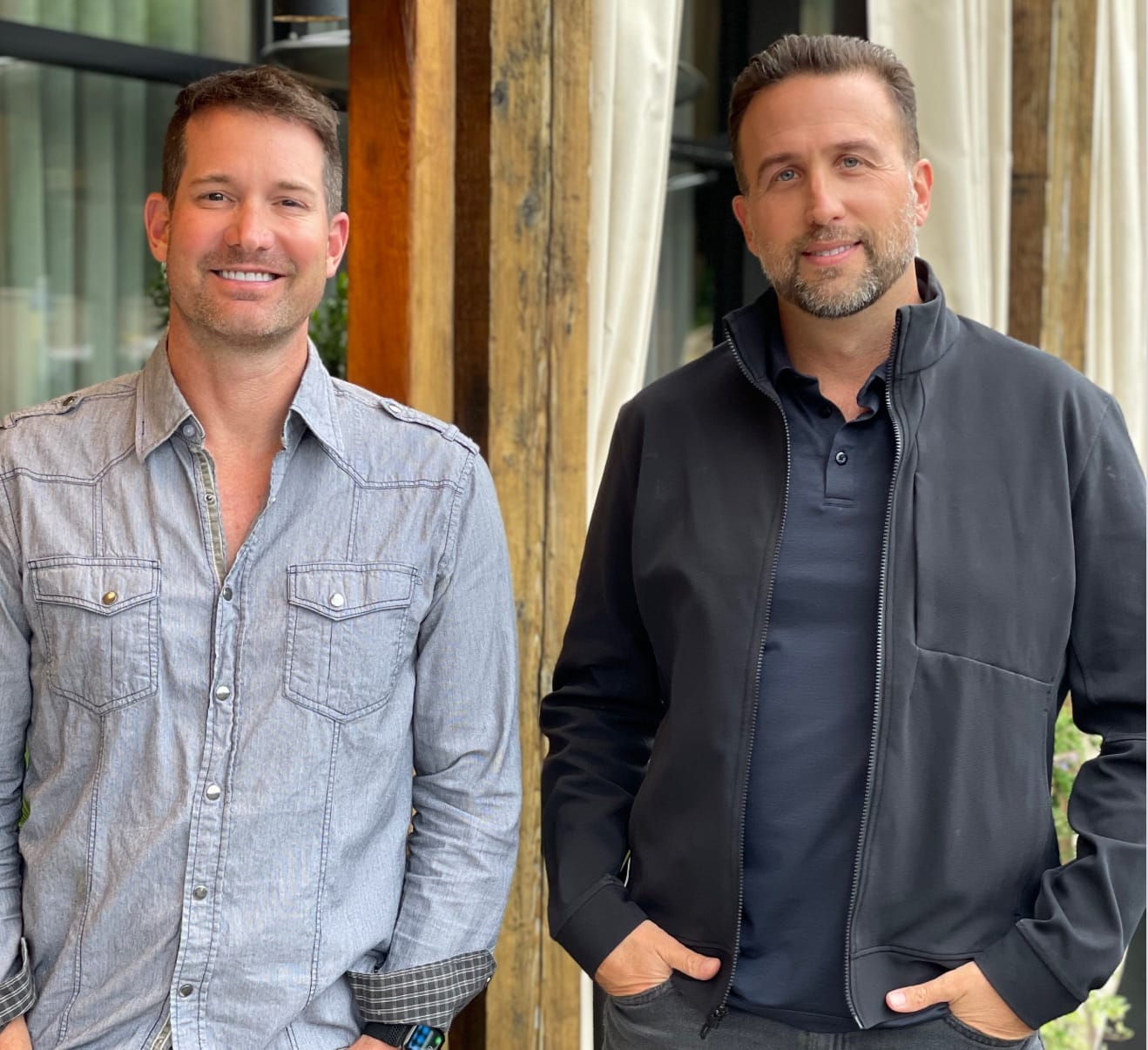
Hosts: Dr. Peter Boulden & Dr. Craig Spodak
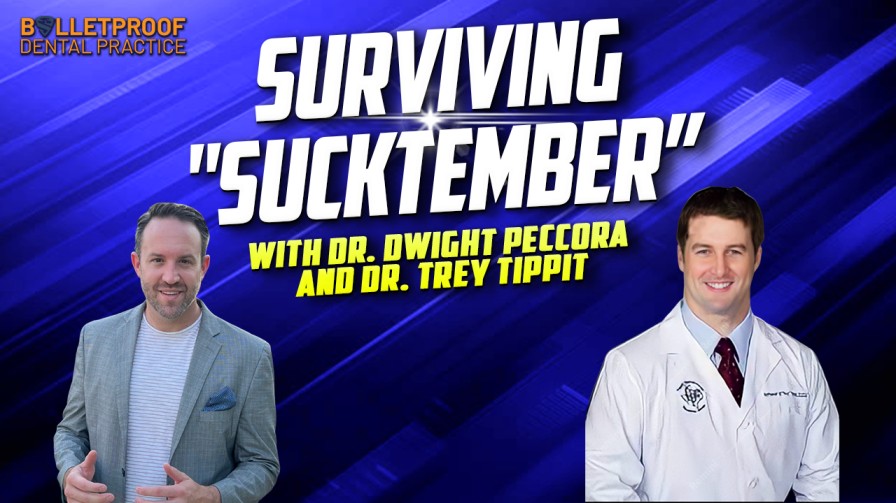
Guests: Dr. Trey Tippit & Dr. Dwight Peccora
Key Takeaways:
Introduction
Mindset Is The Key
Breakdown And Breakthrough
Struggle
Net Worth Tracking
References:
Bulletproof Mastermind
Bulletproof Summit
Mighty Networks: Bulletproof Dental Practice
Think and Grow Rich
Tweetables:
Get in a group of like-minded individuals. -Dr. Peter Boulden
If you’re the one who’s smartest it’s going to limit your growth. -Dr. Craig Spodak
Breakthroughs don’t need to be massive. -Dr. Dwight Peccora
Happiness is not the absence of problems.- Dr. Craig Spodak
You should focus on the balance sheet. -Dr. Trey Tippit
Full Episode Transcript
Below is the complete transcript of this episode of the Bulletproof Dental Practice podcast. Prefer to listen? Find us on Apple Podcasts, Spotify, and YouTube.
Read the full transcript
The following transcription was from the Bulletproof Youtube channel. Here is the https://www.youtube.com/watch?v=H7bV1NckqPA
Craig Spodak
0:00:00
Alright. Looks like we're all back together. We followed the link this time. Yeah. It's amazing when you send the link. It's amazing when you follow directions, which is why my name is not NumNuts, but you guys are. No, you literally sent a link. You're just like the loudest voice. You double down when you're completely wrong. That is true, Craig. You do. That is true. Even when I'm wrong, I will bow up. And you win. And you win. Just by being first. Maybe I'm wrong. Maybe I actually… You emailed us a link. We clicked on it, and we are wrong. I'm like, damn it, I'm so sorry I clicked on the link that you sent. And Trey, you just got lucky, bro. I got lucky. You're just happy.
Dwight Peccora
0:00:49
He is. You're just happy.
Craig Spodak
0:00:50
I just closed my eyes and clicked a link. Yeah, I changed it. I'm here.
Dwight Peccora
0:00:54
It's okay, it's okay.
Dwight Peccora
0:00:55
I'll claim to numb nuts just for everybody. I'll change my name, but I'm ready to see what happens in the true Cabo view here.
Trey Tippit
0:01:02
Okay.
Peter Boulden
0:01:03
Cabo view.
Craig Spodak
0:01:04
Well, that is coming this week, I gotta say. I know. Getting excited for a little. You know, it's funny, I tell people, like, well, I'm not gonna be here this week because I'm going to Cabo. And they're like, oh, it must be nice.
Trey Tippit
0:01:16
I'm like, I'm going for business.
Trey Tippit
0:01:16
They're like, yeah, right.
Dwight Peccora
0:01:18
It is business.
Dwight Peccora
0:01:19
I got plenty of that crap, too.
Craig Spodak
0:01:22
Yeah, I don't say business. I say I'm going to Mexico for business. It sounds a little bit more Pablo Escobar. I like that. Because Al Capulco does so much more business, correct?
Dwight Peccora
0:01:30
You got to fly in and out.
Craig Spodak
0:01:31
Nah, but like, you know, it could be in Mexico City meeting with, ooh, you know, I don't know. Department people, yeah. Somebody.
Trey Tippit
0:01:39
Sounds good.
Craig Spodak
0:01:40
I love it.
Trey Tippit
0:01:41
All right, well.
Dwight Peccora
0:01:42
Who's been to Cabo, by the way?
Craig Spodak
0:01:43
Pete, I know you have. I have not. Have you been?
Peter Boulden
0:01:46
I have been a couple times.
Dwight Peccora
0:01:47
Yeah, actually.
Trey Tippit
0:01:48
I have not been to Cabo.
Craig Spodak
0:01:49
Yes.
Peter Boulden
0:01:50
It's actually a super easy flight, direct flight.
Dwight Peccora
0:01:51
Wait, Trey, ever? Ever.
Peter Boulden
0:01:53
I've never been to Cabo.
Trey Tippit
0:01:54
What?
Craig Spodak
0:01:55
No, I've never been to Cabo.
Peter Boulden
0:01:56
Okay, let me help you.
Dwight Peccora
0:01:57
No beaches, water's cold, but that means the resorts have amazing pools.
Craig Spodak
0:02:03
No, there's plenty of beaches, but if you go in, you will die.
Craig Spodak
0:02:06
Why?
Craig Spodak
0:02:07
The surf and underdo is that big.
Dwight Peccora
0:02:09
It's really cold water and the surf is deadly.
Craig Spodak
0:02:12
And it smashes you right into cliffs.
Trey Tippit
0:02:14
I've watched… The resorts have some of the greatest pools ever.
Craig Spodak
0:02:16
I watched a guy go in and be like, no, I'm fine. And a big dude, muscular dude, this is 10 years ago, watched him, one of my best buddies at the time, got picked up into a 20-foot wave that breaks right on the beach, picked up and slammed on the beach so hard that he got up and his shoulder was down by his belly button. Just gruesome.
Trey Tippit
0:02:34
He's like looking at you, is it bad?
Trey Tippit
0:02:35
Yeah, he's like, I don't want to look, is it bad?
Peter Boulden
0:02:36
You're fine, you're fine.
Craig Spodak
0:02:37
I was like, dude, your clavicle's like completely gone. And then the worst part of that is he's in a Mexican emergency room. No, totally. And I tell you what, that is the danger part about it. It breaks right on the beach, like giant ass waves right on the beach. It's not like they're slow rollers like Hawaii, where you can like, it's got a grip tight, but it's freaking beautiful and fun. And there's so much to do in Cabo. That's awesome. You're going to learn a lot too, which is going to be fun.
Dwight Peccora
0:03:03
Totally. Totally. All right, Dwight, anything else on the Cabo? No, just kind of, uh, we're excited about the fact of complete immersion in that and getting a chance to deep dive, not only just in getting to be around everybody, but getting to be around each other and kind of deep diving on some of these things. Obviously, we get on a pod and how much ideas come out just on this, but you can imagine having everybody together and starting to answer some of these questions. But yeah, I would encourage, even if
Craig Spodak
0:03:36
you're listening to this, and I think I've said this more than one time on the podcast, but like, get in a group of like-minded individuals, regardless of your stance in your practice life cycle or where you are, but like, fine, it doesn't have to be all dentists. Like, I get a lot of my ideas and innovation from non-dentists, honestly, because I talk to people in my YPO, or I have a mastermind of men's group as well, and so it doesn't have to be that, but get in a situation where you feel like you are amongst peers that are equally yoked in terms of your ambition and your intelligence and your, you know, someone you want to emulate, you know, someone who's a great husband or wife or father or mother, whatever it is. You know, surround yourself by like-minded people or people that you want to aspire to be. Yeah, I like that little differentiation, Peter. But by like-minded, whatever you want to create, find a group that has that. So it might be that your mentality is not really great, so find a group of successful people and your crowd is really important. I was looking at, I think, the power of immersion learning because we've seen it, guys, when we put groups of bulletproof masterminders together, we see transformation. And I'm always wondering, like, why is that? And I kind of dug in a little bit. And there's a book that we've all read, and it's kind of, you know, it's almost like iconic at this point. It's Napoleon Hill's Think and Grow Rich. But he shared this, like, this is when he started talking about the idea of mastermind, it was back in 1937. And he was sharing his ideas about it being like, anytime two or more are gathered, there's a third mind that shows up. And it's the magic ladder of success You know the process of mind blending here is described in the mastermind may be likened to the act of one who connects Many electric batteries to a single transmission wire thereby stepping up the power passing over that line by the amount of energy that the batteries carry Each mind through the principle of mind chemistry stimulates all other minds in the group. And I was like, that's a perfect explanation of why the immersion of it is great. And obviously the Zoom we do is great. But like that's a perfect, everyone gets to level up, learn from. And it's just really cool. So I'm personally excited. And I like that we do it in really cool places. It's right here in Valley, in Cabo, and things like that.
Trey Tippit
0:05:57
So anyway, I'm excited.
Dwight Peccora
0:05:59
And I'm excited to see you guys. But the main component to that you have to realize though wait don't gloss over that Peter just said something nice nice So just that was the one time
Dwight Peccora
0:06:07
I'm excited
Dwight Peccora
0:06:09
Document it's
Craig Spodak
0:06:11
Yeah, he said I'm excited guys which literally means I love you guys so much in Pete language And roll domestic such a cold mother. I said I'm excited to see you guys That is just, I just didn't want to gloss over that.
Peter Boulden
0:06:25
So sorry, NumNuts, go ahead. I didn't want to. Yeah, so NumNuts is going to speak for a second,
Dwight Peccora
0:06:29
but I want to make sure that that's posted. That's the same time. Okay, he was nice. There was a heart on that. The most powerful thing there is not only that unity, but I think the immersion concept of being away from your current space. Why do I bring this up so much right now is that after COVID, everybody thinks that they can do everything through video from their own space and that they're gonna get the same ROI from coaching, consulting or personal interaction as we did from that. And the truth is, is getting away from my ecosystem, like I love it, listen, I know people come and visit me here, right? It's great, but it doesn't mean that my ideas are as open because they're still tethered to these walls. They're still tethered to the environment which I'm in and My natural tendency is to stick with status quo because I'm in these walls Preach numb nuts pretty you've got to get out so that your numbness won't continue being numb You've got to get out there and you got to create an environment for yourself, and that's the beauty of what I think Bulletproof does well on mastermind and other masterminds do it well, is get you out of your element so that when you hear a concept, you can actually sit back and be like, huh, would that apply to my space over there?
Peter Boulden
0:07:47
And that's what makes all the difference.
Dwight Peccora
0:07:48
It's more abstract, you're saying.
Craig Spodak
0:07:50
It's kind of, you're not in the walls.
Trey Tippit
0:07:51
I love that, Dwight.
Craig Spodak
0:07:52
Well, you can be physically inspired. You can go to inspirational space, and Peter and I were very deliberate
Dwight Peccora
0:07:58
when we talked about that.
Craig Spodak
0:07:59
We have to find space to be inspiring.
Dwight Peccora
0:08:00
In our vision, we actually said that.
Craig Spodak
0:08:02
Like, when we started out, we were like, we want to go, Craig is always like, let's go to inspiring places to have the first summit. That was the thing. That's why, honestly, it was in Atlanta, at the St. Regis, like let's go to a nice place, whether or not we lose money or not in this conference, let's go to a nice place, because it inspires a different mentality, right? Yeah, don't you remember like at Terranea in LA, when you and I were sitting there and we could see pilot whales on the coast and stuff like that. We could have had that at the Ramada in LA. We'd weed our way through the encampments of tents and probably made a lot more money but it wasn't inspiring. That's the most important thing is that you should be physically inspired. I want to touch on one thing about getting in the right group. Some people will tell me, and I have this dental friend and he's a masterminder as well. Not a masterminder in our mastermind. He has his own mastermind. And he'll consistently tell me, I only touch base with him maybe once a year, but he's like, man, I got to hang out with you and your people more. I'm like, well, why? He's like, I'm the smartest guy in the room on all the conversations. And he's not growing. But obviously, he's not making any changes in his life. So it's serving him. He likes to be the smartest person. I don't like being the smartest person. I wanna be, I always wanna feel like I am the dumbest person in the room, which fortunately for me is not hard to feel that way. But I just think if you're the one who's the smartest, then it's gonna limit your growth. And this guy obviously wants to be that.
Dwight Peccora
0:09:31
And in most places I might be a smarter person in the room, and here I'm just a numb nut, so I'm excited to be around you.
Craig Spodak
0:09:37
All right, we can take that off.
Trey Tippit
0:09:38
You can go back to the door.
Craig Spodak
0:09:39
Yeah, we beat that one pretty good.
Trey Tippit
0:09:41
Now, I'm not looking down on us.
Craig Spodak
0:09:42
The name's important when you jump into these things. One, there's the whole inspiring aspect to it, but there's a way to get back in this too that I think it's glossed over as well. But I've always heard that you should spend a third of your time with people farther along, a third of your time with people that are in your same space and a third of your time there are people not quite as far as you because you are also giving back to that. So being the smartest one in the room every time, it doesn't benefit you nearly as well. Teaching also helps. It solidifies your beliefs and it takes you further in what you already know.
Peter Boulden
0:10:14
Agreed.
Craig Spodak
0:10:15
Beautiful.
Craig Spodak
0:10:16
That's what business ownership does for us. Done, I'll see you guys later. Yeah, pencils down, full stop.
Dwight Peccora
0:10:22
Non-starter, don't forget that one.
Peter Boulden
0:10:24
Non-starter.
Craig Spodak
0:10:25
At least it's not binary anymore. Remember Peter when every other word out of your mouth was binary? Well, that was like, that was circle circa 2000.
Dwight Peccora
0:10:33
Progress, we call that progress.
Trey Tippit
0:10:34
It was binary. I mean, it's a great word though, right?
Craig Spodak
0:10:37
One or a zero, like take your pick.
Peter Boulden
0:10:38
I love binary.
Dwight Peccora
0:10:39
Well, so we got, I think that's critical. We have to understand that at the end of the day, we get surrounded, no matter how long, the longer you're with you can hire new people but the longer you're around your own people you all become yes people to each other to the same system the same processes so I love the idea of breaking out I think they can grow rich if you have not read that and you are in any way an entrepreneur an entrepreneur mindset thinker or trying to break through you've got to spend some time in Napoleon Hill that is kind of his token standard I never liked that book just gonna be honest I never read it by the way. It's really hard to read. It doesn't make sense to me. Sorry, Dwight, I'm not crushing you, but everyone says that. I feel like we always say like, oh, thinking Grouch. It is, it's good, I think, but when you read it, I'm like, what the hell is he talking about?
Craig Spodak
0:11:30
Is anyone else? I've never been able to copy that.
Dwight Peccora
0:11:33
There's a lot of depth in that on understanding general operation systems, processes, and things that would drive most of us crazy. The best way if you're gonna listen to it, so I listened to it on recording, audio was much, much easier for me as distracted as I was. But yes, it tells a story, it doesn't just say, hey, these are important concepts in entrepreneurship. Like, the story is the basis of how that works. So you're gonna hear that for the rest of your life as long as you're around other people quoting it.
Craig Spodak
0:12:04
So it just has got some good stuff. What I do believe though, and I just want to say this here, I'm reading a Joe Dispenza book and it's kind of mimics the way I look at the world. I think that the greatest thing that happens to you is your decision to arrive at a certain outcome. So your mindset is the key. So if you don't feel, and we all have friends or people that are in our circles of like everything always is going wrong. Well, you know how it is, you know, this and that and it's just so harsh to deal with those types of people. Like the Suck Timber podcast. I had never even heard that but if you believe that there is Suck Timber, you have a really hard lift ahead of you to fix that. So I think there are people that make their burdens easier with their mindset and people that make it less easy. I don't think it's like this universal secret that you're gonna be like, I'm gonna be great, I'm gonna be great. Don't lift a finger, you're not gonna be great. But I do think mindset is really important.
Dwight Peccora
0:12:58
I got a massive amount of comments off of that pod. And then most of it was because I need to get out of this mindset and I need to stop listening to some of these people. And I thought that was spectacular for those who were willing to listen, for those who were willing to step away, and some of them were on that social media post in those groups and Facebook, where all of a sudden I'm going on there, I'm like, what is wrong with you people? And that's what inspired the pod in the first place. But what interested me was a lot of those individuals then went, because I went and linked the pod in that group. And then they listened to it and went through it. And all it was was, who are you around?
Peter Boulden
0:13:37
Who's in your ear?
Dwight Peccora
0:13:37
That's really what they responded to me. Two of which were like, hey, can I still join the mastermind? Is it too late? Right?
Peter Boulden
0:13:46
So I sent them over.
Trey Tippit
0:13:47
I hope you said, yeah, go for it.
Dwight Peccora
0:13:48
We'll take them. Absolutely. Because I mean, it's a month.
Craig Spodak
0:13:51
We can catch you up, do whatever. But the point was not that. And we'll do a reduced rate for those people so they can catch up to speed.
Dwight Peccora
0:13:54
And I can do the vision part with that.
Craig Spodak
0:13:55
So rolling admissions?
Peter Boulden
0:13:56
Yeah, why not?
Dwight Peccora
0:13:57
Rolling admissions.
Craig Spodak
0:13:58
For good people, why not?
Dwight Peccora
0:13:59
Yeah. They're incredible humans who are just realized they were stuck, but they didn't realize it until somebody went in there and was like, stop being surrounded by this, stop letting this in your ear. And I think that was in essence a breakthrough that I heard even this last week from individuals, and sometimes breakthroughs don't have to be massive, but they can just, for a mindset breakthrough, that is massive, it will change everything. And I told one of them, I said, for you to realize you need to be around the right people for what's going in your ear, this is the best prep you can have to a recession, to whatever is coming our way. But focus on yourself, focus on making sure you're around the right people. So our next topic related to biggest surprise, which was a question, breakthroughs through breakdowns that we have gone through in our personal practices and things to that degree. For me, mindset was a huge one. It was a big one and that's why I'm linking it together from the first topic because so much of it for me was you go through academics and it is the worst environment for mindset anywhere, especially professionally, right? You get told you're not gonna make a lot of money. I remember walking into the original practice I walked into Fort Bend Dental and it had been created since 1987, this and that. And the first thing that happened to me was the original office manager asked me, first day I walked in, to sit in the chair in her office and looked at me and said, you're not going to get rich here. You're going to make a good living, but treat us well because we control your schedule. And I looked at her and I said.
Peter Boulden
0:15:40
Sounds like prison basically.
Trey Tippit
0:15:41
Right.
Trey Tippit
0:15:42
You'll get three square meals a day.
Trey Tippit
0:15:44
Right.
Dwight Peccora
0:15:45
So this was my favorite thing. Because could you imagine that poor human, right? She had no idea that she was talking to Dwight Decora, right? This is the last person who you want to tell these things to? So I stood right up and I was like, oh.
Trey Tippit
0:15:58
Maybe I'm the Rainmaker, baby.
Dwight Peccora
0:15:59
I was like, I am so sorry. I think you've mistaken me for somebody else. That was literally the first thing that came out of my mouth. I was 25, 26 years old. I was like, you've totally mistaken me for the wrong person. I said, come with me. And I walked her back to the back to the founding partner's office. I said, can you repeat what you just said to me, to him? I brought all the partners in the room. I said, repeat it. Well, and I said, I will repeat it for you. And I went through every little thing. I don't see you doing that.
Trey Tippit
0:16:31
Yeah, I don't either.
Craig Spodak
0:16:32
Oh bro, you don't even know me bro. This is so Dwight.
Dwight Peccora
0:16:36
And what's funny is today, this is the most common story. In less than a year, there were 16 people in that practice. The culture was so bad that in less than a year, 14 people had either left or been terminated and would replace everybody else. That point in time, the transition happened. And so it took someone to stand up to that. And that was a massive breakthrough. But that was me. I said to myself, I said, you don't understand. The partners went to the dental school and all they did was go to the dean's office and say, who is the best leader to add to our team and go down and we want the best. They recruited the class president. So you were brave through Cain
Trey Tippit
0:17:16
before you ever started your job?
Dwight Peccora
0:17:17
I'm relating it to dentistry, but yes, for me, I had come, I was currently owning two companies. I was an entrepreneur, I was traveling all over places, and I was being added to a dental practice, and she comes and tells me, by the way, you're not gonna get compounding equity, growth, and net worth, and all these other things. You're just gonna focus on being a dentist you get paid for this and we control you I'm the last person you want to say that you're gonna control my methodology. That's just not down here, sonny I'm gonna crush your dream. It was amazing
Craig Spodak
0:17:49
Let me say how like that change in the end you die in your own arms every right had she not done that though
Dwight Peccora
0:17:54
I don't know that Fort Bend dental where B will be where it is today simply because the fire got lit on me day one.
Craig Spodak
0:18:04
Funny, similar story to Pete, huh?
16
0:18:05
Yeah.
Dwight Peccora
0:18:06
And I went crazy. And I didn't, at that moment, I thought I was gonna be able to play nice all the way around. I had to take complete over, complete, take over the whole thing completely. Because I realized that it was in the walls. And I got to the point where I got coached and coached and coached inside the dentistry, outside the dentistry. I interacted with you guys. And then what did I do? I sent you a video of me standing in front of breaking ground when we started building that building Why because that culture was still in the walls Most of those people were gone, but it was still in this who we are and how we do it broke out
Peter Boulden
0:18:36
I've ever been like not this guy get my phone number Yeah
Craig Spodak
0:18:40
Did you share my phone number
Dwight Peccora
0:18:42
I loved it.
Trey Tippit
0:18:44
No, Dwight, that was very inspiring.
Craig Spodak
0:18:46
And I love that you had your breakthrough so early because it validated what you were gonna do, your path. That's pretty cool. Trey, I wanna hear about this. Any breakthroughs, biggest surprises, breakthroughs through breakdowns? I will tell you, I can't point a finger to a large single event breakdown, but I will tell you that there are breakdowns constantly that I've always kind of viewed building a business as a really good way to build who I am and improve what I do. It always relates back to me and self-improvement. But you look at fires that start burning too long, you look at any fires that just jump up out of the ordinary and you rush to them, or you avoid conflict, you don't deal with the fire. There's all these little things and these little lessons that pop up that you're not addressing and you do it in your personal life as well. So one of the biggest things I've noticed is those breakdowns are not just breakthroughs moving forward in a practice or building a business, but it changes who I am and how I address my friends, my wife, my kids are three and below, so I can't tell you it's that yet, but it would be the exact same thing as they grow. But that's a nonstop process. I don't think that that's ever something that stops, and I've been fortunate that I don't have a single incident. I mean, that's luck more than anything, but I'm very conscious of all the small ones that happen. And fires, I would tell you, are the biggest teaching tools. And when I say that, I don't mean the breakdowns. I mean, when I'm starting to put more fires out, and I'm in that stage right now, I know something's wrong. If I want to keep growing, then I need to have, I can't be focusing on the negative, on putting the fires out. I need to be focusing on opportunity, on moving in the positive direction.
Dwight Peccora
0:20:46
I'm sure. Let me push on that for you. I'm interested in something. When you took on the transition from dad's practice to your practice. Yeah. Obviously those, those are cultural variances. In fact, so much so if you search Trey Tippett, you'll find that Rocky Balboa video that we talked about and it almost insinuated to me, I wasn't a part of it, so I have no idea it was way back, but insinuated to me a little bit of a sense of maybe you were ready to fight, meaning we had to fight it out. We had to break through some stuff. I'm interested in hearing that transition for you because I think that had to be a breakthrough for the team that you had to instigate and probably change a big chunk of who you are, which is kind of the comment that you're making. Does that relate? I mean, how did that process go? I'm curious.
Craig Spodak
0:21:30
That process was, that doesn't necessarily relate in that regard. I was a part of the practice before I bought it so right now I was a piece of that culture in a lot of ways I was I was part of the positive I was part of the negative as well But but changing those roles and then bringing about change that that creates a lot of negative in and of itself Whether it be positive change or negative change, but you have to address it so you lose a lot of people over a period of time who aren't going to get on board with the new direction or the new vision of what you're doing or where you're driving towards. But I think when you look at, funny enough, that video and a lot of what we were doing there was kind of a, that was us and me looking at, and looking back at the last spot that we did talking about reading some of the things about Paradigm and you see all these things in every dental, every dental, or frankly, any medical company, and you read their vision, you read their values, it's all repetitive. It's all the same thing and we're patient centered. Well great, who isn't patient centered? And who's gonna write, we're not patient centered, we're, I'm looking out my ass and I'm gonna make more money. You know, something like that. We strive. We strive. We strive, great word, great word. But, you know, I started looking at that and you start realizing there's a whole nother level. So, when you realize, hey, let's start playing with videos, let's create values that actually matter and let's make it fun. And we started actually our values are an acronym and it spells fight and we put it on our scrubs and it is that was the beginning that rolled out kind of right before and right at the retreat that we threw for everybody, which was February of 2020. So we got a little stalled in our progress, but, uh, but we rolled that out and it was basically a, we fight for what we believe in and we believe in our values. And then we have that, and that was where the Rocky thing comes in. So it wasn't necessarily a break from the old in a negative way. It was an inspiration to drive forward and seeing that, hey, we can do it the same way everyone's been doing it. We can do it the same way you see all over the place. Or you can do something that's memorable and something that people are gonna hold on to and drive that forward and then hold on to the people that wanna jump on board with that new ship.
Dwight Peccora
0:23:45
Yeah, good momentum builder.
Craig Spodak
0:23:46
Yeah, you got it, you got it.
Trey Tippit
0:23:49
All right, Pete, you're up.
Dwight Peccora
0:23:51
I mean, I feel like everyone's heard Craig's in mind
Craig Spodak
0:23:53
so much just over the years we've talked about this, whether it was, you know, kind of at a scenario like yours, Dwight, where I was told like, hey, you can never compete against me. You will go out of business. You can't lead my practice. Or, you know, partner breakdown, being told I was, you know, I was the thief in my embezzlement deal with a partner or a fire or, you know, just all the things. And I feel like everyone's heard Craig and my trials and tribulations as well as our successes. But I think, look, I will end my comment on this, and I really instill this in my children right now, because they are older. You know, Trey, we talked earlier, my 12-year-old daughter, I tell her things. She just got cut from basketball, and she was very upset about it. And I said, look, Hamzy, everything happens. God's intending things to happen just exactly as they should. And you may not see the blessing right now, right? But you're going to have, this is going to be the first of many upset and tragedies in your life. And you have to reframe the narrative. And I always tell people, like, everything's a blessing. You just need to kind of, just kind of need to zoom out a little bit. And almost without fail, Dwight, when I was playing the woe is me card in my life, right? Oh, a building burnt down. When I was playing with the woe is me card, three months later, two years later, whatever it is, I was able to look back and say, that was one of the best things that ever happened, right? And there's just always such a silver lining to things. And I think that life happens for you, not to you. And so, you know, you've heard this all from me before. So I want to- I think it's good that you said it all again though Peter. I agree.
Dwight Peccora
0:25:40
It's so important. Half the reason why the two people on the bottom of the screen have gotten to where we've gotten is because you two have shared that. You all have been coaches of ours for a long time. That's why it should be. Craig, you're real good about keeping
Craig Spodak
0:25:54
us in this mindset. What Peter said is exactly what I was going The the idea that you're not supposed to struggle the idea that you're not supposed to have breakdowns That is the biggest breakthrough to realize. Oh shit. This is meant to happen This is for my growth and development and Peter is really good at being you know When the shit hits the fan like he can pull the woe is me thing sometimes But when Peters backed up against the wall and left with no options He is always going back to that default of like, this is for me. I'm going to persist. I'm going to do well. And I think the first point is the idea that you're meant to struggle. Everybody that's listening to this that's saying, woe is me, why is this happening to me? It's happened to all four of us in great forms. So number one, we're all meant to struggle. And number two, it is meant for your fulfillment and your development. And when you adopt that psychology around struggle, the struggle itself disappears. It's like you cannot be injured if you release the sense of injury. So you have to be a part of the process to say, this is going to hurt me, this is going to set me back. If you're unwilling to see it that way and say, you know, there might be something else in a year or a month or down the road, you disarm that process and that psychology is powerful, super powerful. So breakdowns specifically, I could name 20, but the biggest breakthrough is the idea that
Trey Tippit
0:27:25
breakdowns are for me.
Craig Spodak
0:27:27
One thing you've always told me too, Craig, and it's resonated so much, is that you're like, look, life is not the, like happiness is not the absence of problems, right? It's the better qualification of those problems, right? Your life gets better and you're still solving things, but joy comes from solving issues. And sometimes that issue might be something that at the time it happens,
Trey Tippit
0:27:49
it seems catastrophic to you.
Trey Tippit
0:27:50
And there are some.
Trey Tippit
0:27:51
Look, there's death, there's cancers, there's things like that that are catastrophic.
Craig Spodak
0:27:54
I'm not trying to say like everything happens for a reason, but like I experienced both of them, you know, in my world, so… But the other side of those, like with the cancer struggle, I mean, even with that scare, it's crazy to think that there's a net positive to a family member having cancer, but I think as an outsider looking into your life, I think it is, it was a net positive. I wouldn't wish this on you. Right, right, right, no, I get what you're saying.
Dwight Peccora
0:28:26
And we also tend to be fixer types, right? And once you're building and supporting people, if we have nothing to fix, anybody on this call will get depressed. You got nothing to fix.
14
0:28:37
I mean-
Craig Spodak
0:28:38
No, you just get better quality problems. You buy a lake house and you have to fix that.
Dwight Peccora
0:28:41
You have a raccoon in your attic.
Craig Spodak
0:28:42
You have to reckon with jet skis and stuff like that. I was on a boat yesterday with a guy who's a very, very wealthy man and he was just telling me about this boat he has, it's a yacht. He took like 20 minutes to tell the story about how his stewardess was such a problem and he couldn't deal with this and managing these people. I'm like, listen, as long as you own the boat and the boat doesn't own you, I think we're okay. I think for all of us who are reaching another level of success or wealth, there are certain things that will orchestrate quality problems. If your life is not complex enough, you'll buy that boat. Yeah, right. Your 25-year-old self would love to have that problem. I know. I know. I know. Interesting. That's a great context. Great context. Speaking of that, there's one thing I want to end on this pod. And can you guys hear me okay still? I want to end this on something that's come up recently. I've been going through kind of financial discussions with some of my mentors and things like that and I was thinking about how, let me poll you guys, how many of you on this call track your net worth month over month? Okay. Maybe not month over month but not on an once a month. Quarterly? Yeah quarterly or twice a year. I would actually say I probably quarterly as well Craig. I was shocked to hear the amount of people, as I've kind of been curious on this, that just don't have a fucking clue. Don't have a clue. And I'm thinking-
Dwight Peccora
0:30:14
In what circle though in those-
Craig Spodak
0:30:15
Okay, well some were dentists, one was a physician, one was a derm, one was just a regular business-
Peter Boulden
0:30:21
Oh, that's a different crew.
Craig Spodak
0:30:22
I'm thinking like your YPO friends. No, well no, some of those I haven't asked them. You get a different answer I think. Yeah, so what I was thinking is like it's interesting in dentistry that we are fanatical about our dental intel. We are our chairs and our new appointment rate and our revenues and this and that. But like are we then get a little bit negligent, potentially, I'm not drawing generalizations, but potentially we get a little negligent with the ultimate KPI for us and our family, which is probably personal financial freedom. And just like Pearson's Law, Craig, did you notice that kind of as you start being a good disciple of tracking it, that it's gotten better? 100%. So just like Pearson's Law, what you track increases, what you give attention to gives gets life to And it also either can bring you hey I've got some work to do or wow I really am in a better situation If shit hits the fan than I thought and I think there's blessings in both of those realizations But without knowing without picking your head up out of the sand which I know I've used now in two podcasts back-to-back You just don't have the awareness and And so it's a very valuable, and so I actually have a template, I was looking for the template that I've used, and I'm going to post this template. Oh, very valuable, Peter, that's awesome. I'm going to post this template on the Mighty Network. Cool. It's the one that I've used for years and years and years, and it's been well, and it actually calculates things. It takes your, obviously, your liabilities versus your assets. You can add other tabs and talk about debt service and things like that. But it's a helpful exercise, and if it's eye-opening one way or the other, that's awesome, I'm glad that you came to that realization. But I do think it's important, especially as we are probably leaders of our family and have a lot of people depending on you, that you need to kind of shore up your financial plan. You know, I have an interesting story. We have two minutes for a story or not, really?
Craig Spodak
0:32:29
Oh, let's do it.
Craig Spodak
0:32:30
Absolutely. So one of my doctors, Dr. Alfredo, said, �Hey, you've got to call this buddy of mine. He's really unfulfilled. He's really unhappy.� I always step right into those conversations. He was just really, really unhappy, this poor guy. This was going back like three or four years ago. New practice owner making, quote, �less than he was as an associate.� He's really upset he's working so hard. So this idea of net worth, I think, is falling on a lot of deaf ears with our listeners because we are craftspeople and providers and stuff like that, so we normally don't talk about net worth. He's like, look, I really made a big mistake. I'm only making $150 now. I was making $225 as an associate.
Trey Tippit
0:33:04
What did I do?
Craig Spodak
0:33:05
Blah, blah, blah, blah, blah. It just kind of helped him say, okay, so what did you buy the practice for? I bought it for this. Okay, what do you think the practice is when you bought it? It was worth how much blank? How did you figure that out? Well, I figured it was six times EBITDA or net operating income. Okay, what's the net operating income now? He's like this. I'm like, okay, so let's do six times that. By the way, how much did you pay down on your practice for the last year? I'm like, put this all on paper. Yes, you made $175,000 as an associate. Your practice went up by $200,000 even though you haven't sold it. It's worth $200,000 more. You paid $85,000 to your debt service now. So no, you're not making 225. You have 175, you are correct, but you made $385,000 last year because you're down.
Trey Tippit
0:33:49
In principle abatement is what you're saying. Right, in principle abatement and capital appreciation. Amazing distinction, yes.
Craig Spodak
0:33:54
Amazing, so we are like shepherds. We look around, we have nine sheep. I only have nine sheep." We think we are that, but when you're paying down your debt and when you have capital appreciation, that's your net worth. You have to start thinking like that because it's really important. By the way, for friends that have sold big companies, and this has been very powerful. Randy's told me this before because I've had offers to buy my practice before. He said the only difference is you feel really good for a couple days or a couple weeks when they take your net worth and they cut you a check for your business and you deposit it in your account and you see the blank dollars in your account. But then all of a sudden you realize, I had it all the time anyway. I just didn't feel wealthy because it was your net worth and it was your equity in your businesses.
Peter Boulden
0:34:45
Your equity, yeah.
Craig Spodak
0:34:46
Your equity, right. Sorry, I used the wrong word. It was the equity. No, you're right. But it's an important distinction because for that guy, Arvind was his name, and it fixed him. It fixed his psychology, and he wound up doing great from like an hour of conversation. All I did was just show him it's not true. The truth is this is what you really made. So when you're paying down your debt, as a simple exercise, if you don't want to go through Peter's formula, if you're paying down $5,000 or $10,000 or $15,000 of debt per month, at the end of the year, at least realize you made that money. So you pay down $50,000, $70,000, $80,000, $100,000 in debt, that goes from right pocket to left pocket. 100%. You can't spend it, but the best thing of all is— It's no longer a liability. Right. Right.
Trey Tippit
0:35:33
It's an asset, not a liability.
Craig Spodak
0:35:34
Right. And that has to—you have to break your mentality of, what do I get paid to what am I worth and that's a big. And then you feel better. When you feel better, you make better decisions. And it's the game that big boys play and even us small potatoes. Yeah, they play the net worth, not like, what did you make last year? It's like, what are you worth? Right. I think that's summed up in a good way of looking at you should focus on the balance sheet. And if you show me someone that has a good balance sheet, I can show you someone that their P&Ls are solid. They've engineered good cash flow. It does not go the other way around necessarily. Focus on the cash flow, you get hung up on your salary, then you don't necessarily transfer that over and you can get lost in how that moves over. So balance sheet's important.
Peter Boulden
0:36:19
The track of that.
Craig Spodak
0:36:20
Well, simply put too, Trey, is, I just wanna add to what you're saying, that one of the traps of being a dentist is we are very high-salary people and high salaries screw you up because we make a lot of money, even associates, $200,000, $300,000, $400,000, some of those guys, $500,000. That's where you can't get ahead because you'll spend what you earn. We had Scott Galloway in the podcast and Scott was like, �I've never made more than $150,000, $200,000 in salary in any given year.� So these entrepreneurs stay lean because they're not making the money that we're making. So when they get an event and they exit a company, they're good stewards of that capital. We're not good stewards. Like, hey, I made 400 last year, I made 450 this year, I'll spend 448.
Dwight Peccora
0:37:04
And you never get out of that.
Dwight Peccora
0:37:06
That is the crisis. Balance sheets and business, we look at them, this and that, but if you're not getting a balance sheet in your personal life, you're not realizing, I love to always say, was this a compounding equity year for you? Or did you just get a paycheck? Meaning compounding interest, investments, equity growth, net worth compounding, because that is how you truly build net worth. Yes, maybe your mother or father or whoever was a doctor and they got great money, they made good money, and they put 401K aside. True network growth is if you have a compounding year or not. Many, many individuals out there invest in something, whether it's building a practice, getting involved. If you're an entrepreneur in a practice, invest in something outside, equity within real estate, other things. As we talked about earlier in the other pod, now's the time. Don't be scared by what's going on in the rest of the world.
Craig Spodak
0:37:59
You must. Now's the best time.
Dwight Peccora
0:38:01
Now's the best time for the next 40 years.
Craig Spodak
0:38:03
Yeah, assets are the only thing people run away from when they're on sale. When the TV's on sale, when the car's on sale, people love that stuff. But when an asset's on sale, they hate it. And unfortunately, this is so rare that we have that there's someone talking about this. We are very highly educated craftspeople, and no one had this conversation with me. I had to learn this the real hard way. I was the guy who got out of school, made 90 grand with my dad and bought a Mercedes right out the bat.
Dwight Peccora
0:38:32
Right out the gate.
Peter Boulden
0:38:35
Yeah.
Dwight Peccora
0:38:36
That's common.
Peter Boulden
0:38:37
Enjoyed it, fellas. Dwight, I know you got a big day. Let's wrap.
Dwight Peccora
0:38:40
I'm going to knock out a case that got moved up because I'll be in Cabo with you fellas
Trey Tippit
0:38:43
later.
Craig Spodak
0:38:44
Well, and you were probably prepping for all of your pre-pod roast, so.
Dwight Peccora
0:38:49
Oh, I do need to write a new batch. I'll write those on the flight down with
Craig Spodak
0:38:52
Gregson next to me. You're not going to get anything done with me sitting next to you. Yeah yeah he'll steal all your energy. Dwight can steal my energy. He's the one that called like the EU's are like 99. Let's go! Look at those biceps you working out you sexy human. It's gonna be fun man. It's gonna be a great
Dwight Peccora
0:39:08
week. I'm pumped to see everybody. Yeah I can't wait to see you guys.
Craig Spodak
0:39:13
Great, looking forward to it. All right, over and out. See you guys.
Trey Tippit
0:39:17
♪ This time baby I'll be playing it through ♪ ♪ This time baby I'll be playing it through ♪ ♪ This time baby ♪
Transcribed with Cockatoo
Blog




























1+1=3 The Power Of Alignment and Delegation For You and Your OM with Erika Pusillo
, October 31, 2024

























, June 15, 2023
, June 8, 2023
, May 31, 2023









Look at These 3 Stats if You’re Thinking of Going Out of Network with Teresa Duncan
, January 11, 2023
, December 28, 2022



Knowing What You Don’t Want with Judy Kay Mausolf of Culture Camp and Erika Pusillo
, November 30, 2022


Cabo This Week, Immersion Learning, Biggest Breakthroughs, Your Personal KPI is Net Worth
, November 2, 2022
, October 19, 2022
















Business is not Productivity, Productivity is not Profitability with Chris Salierno
, September 22, 2021



































3 Biggest Bottlenecks of an Entrepreneurial Dentist: PART 2 with Perrin DesPortes of TUSK Partners