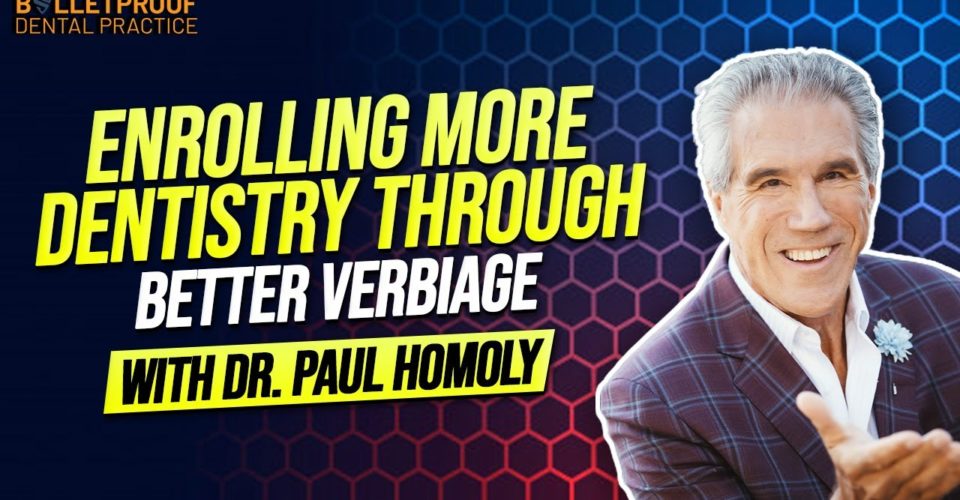
Enrolling More Dentistry

The Bulletproof Dental Podcast Episode 343

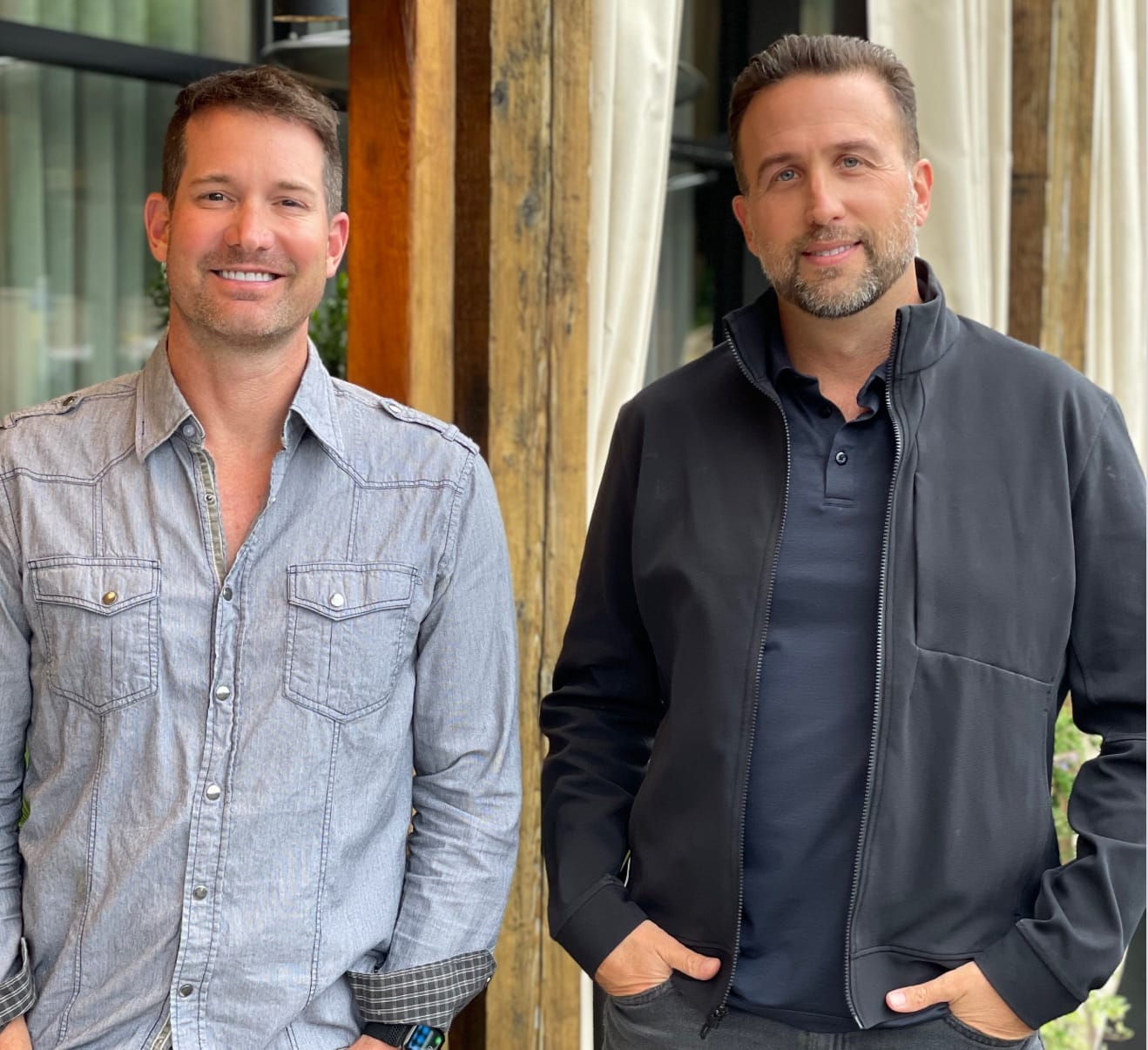
HOSTS: Dr. Peter Boulden and Dr. Craig Spodak

TAKEAWAYS

  • Comprehensive diagnosis is essential, but effective delivery of treatment plans is equally important.
  • Recording consultations can help dentists improve their presentation skills.
  • Fear of rejection and discomfort can hinder effective enrollment.
  • Empathy and understanding the patient’s perspective are crucial in the enrollment process.
  • Body language and context play a significant role in treatment presentations. Use patient-benefited language and avoid technical jargon to effectively communicate with patients.
  • Record frequently asked questions and provide videos or resources to patients prior to consultations.
  • The belief set and confidence of the doctor are important factors in patient acceptance.
  • Storytelling and leadership can engage patients and build trust.
  • Avoid talking to patients in a supine position and consider using consultation rooms for treatment presentations.
  • Establish a smooth patient handoff process to ensure continuity of care.

CHAPTERS

00:00 – Introduction and Reflection on the Podcast

02:04 – Updates and Speaking Engagements 

03:01 – Enrolling More Dentistry and Student Discount

04:06 – Personal Experience with Lecture at Dental School

07:42 – Dental Summit and Booking Hotel Rooms

09:04 – Importance of Enrolling Dentistry

12:00 – Saying More vs. Comprehensive Diagnosis

13:20 – Recording Consultations for Self-Improvement

18:08 – Fear of Rejection and Sweaty Back Conversations

21:44 – Importance of Body Language and Empathy

25:09 – Context Matters in Treatment Presentation

27:14 – Patient-Benefited Language

29:39 – Recording Frequently Asked Questions

30:00 – The Belief Set and the Confidence of the Doctor

32:41 – Storytelling and Leadership

39:45 – Consultation Rooms vs. Treatment Rooms

45:29 – Patient Handoff Process

REFERENCES

Bulletproof Summit 2024

Dental Students use code: BPSTUDENT for your discount!

Listen on Spotify

Listen on Apple


Full Episode Transcript

Below is the complete transcript of this episode of the Bulletproof Dental Practice podcast. Prefer to listen? Find us on Apple Podcasts, Spotify, and YouTube.

Read the full transcript

The following transcription was from the Bulletproof Youtube channel. Here is the https://www.youtube.com/watch?v=4x1Ksq8FBCc

Craig Spodak
0:00:00
What's up everybody? I'm Dr. Peter Bouldin. And I'm Dr. Craig Spodek and you're listening to the Bulletproof Dental Practice Podcast. Simply the best podcast in dentistry designed to help you maximize your practice and your life before political success. Leadership, team culture, marketing, and financial freedom, and everything in between. Now, let's get

Peter Boulden
0:00:23
to it. Hey everybody, welcome back to another episode of the Bulls Roost Dental Practice Podcast. Today we have a legend in dentistry, and probably blushing as I say that, but it's someone I've listened to my entire career, and Craig and I have just been really excited because it's something we beat the drum on a lot as we talk to dentists, and I'm really excited to have Paul Homily, who's a legend in Burbage and treatment presentation, and just been an icon in the dental field, and I'm just really excited to have you here today, Paul. So thank you, thank you for agreeing to join us.

Peter Boulden
0:00:55
And yeah, let's jump into it.

Peter Boulden
0:00:57
Let's jump into it.

Paul Homoly
0:00:58
All right, I'm ready, guys.

Paul Homoly
0:01:00
I'm ready.

Paul Homoly
0:01:00
Craig, you were talking about one of your favorite topics about complete care and how dentists are afraid to ask for what they want. Pick up on that, what you were saying.

Craig Spodak
0:01:08
I thought you were right over the target on that. Yeah, so, you know, we see dentists spending an inordinate amount of time and effort and money to learn clinical dentistry, to learn how to make better preps, and learn more scientific skill to make their clinical practice better, but they oftentimes don't spend even a fraction of that time, effort, or money trying to get patients to say yes and see, you know, and look at their case acceptance numbers. And I always say that life will give you what you ask of it. And we were talking just before I hit record, people are afraid to actually recommend the treatment that they know patients need for fear of being rejected. So he, Paul, if you don't mind, go through the statistic that you just asked us. It was mind-blowing.

Paul Homoly
0:01:51
Yeah, well, I've been surveying audiences, live audiences now, for my seminars. I've been surveying them anonymously during my seminars. I would ask, how many of you are reluctant to offer patients complete care out of fear of overwhelming them or losing them from sticker shock? And they can answer anonymously just through an app on their phone, and the results show up on the screen. Over 70%, 7-0, 70%, thousands of dentists over a 10-year period of time have admitted to being reluctant to offer complete care out of fear of overwhelming patients or losing them from sticker shock. All that was pre-COVID-19. Now, I don't want to beat that topic to death

Craig Spodak
0:02:34
because it's already been beat to death. And by the way, Paul, pre-COVID-19 was 10 years of a record market conditions. People had more cash and disposable income than they ever had. Dental spending is at its highest it's ever been, yet 70% of dentists are like, I don't wanna tell this person what they need, or I'm afraid of that. That was the best time ever.

Paul Homoly
0:02:55
Exactly right. So when you think about that, all right, so now it's COVID-19. So now, what's changed? I'll tell you what's changed. What's changed is that the bar is higher in terms of our fiduciary responsibility to patients, that is recommending care that's in their best interest. Hey, you know, Peter and Craig, there is strong evidence of the oral systemic links. We don't need to get into that, but oral conditions can exacerbate systemic conditions. COVID-19 is opportunistic to preexisting systemic conditions. So in many ways, in many ways, offering complete care is the new standard of care because no longer is the definition of complete dentistry optimal restoration of function comfort aesthetics phonetics and airway we need to add optimal function comforts aesthetics airway and patient safety so now I'm not saying I'm not saying that all patients need to accept complete care what I am saying is that our new responsibility is recommending complete care. Whether patients accept it or not has always been their choice, but the fact is is that we we don't have a choice if we want to practice a standard of care that coincides with the new

Craig Spodak
0:04:18
reality. Does that make sense what I'm saying? It does and you know what I think it really comes down to? I want to call I want to address the thousand-pound elephant in the room. It's self-esteem. It's the dentist's self-esteem. It's not about… because if you're a pleaser and it's about you and you don't want to get rejected, you're not actually looking out for the best interest of the patient. You're concerned with what the patient thinks of you. And if you're ever… there's something there that I want you

Paul Homoly
0:04:45
to kind of expound on. Yeah, well you know, I'm about processes. You know, Craig, what I've prided myself over the years is that I've tried to create processes around different entities in dentistry, whether it's speaking, influence, leadership, case acceptance. And what I'm running into is, what I've run into, again, with hundreds of dentists for over decades, is that one of the obstacles that stops dentists from offering complete care is they don't know what to say when the patient says no. Right. See, they're stuck. Because our culture in dental school, continuing education, dental literature, is all about what? Educate, educate, educate, right? And we believe, we believe if we educate patients enough that they should accept care. They'll say yes.

Paul Homoly
0:05:40
They'll say yes, yeah.

Paul Homoly
0:05:41
But you see, that's a false premise. And so going into the situation where dentists present care and they hear a no, all they need to hear a no is a couple of times. And what they started to do is just hand off the treatment presentation to a treatment coordinator and let her argue with the patient about that. I have a solution to that, and I want to talk you through that today as far as how can dentists recommend complete care with no fear of losing patients or overwhelming them from sticker shock? You see, dentists are in dilemma if they offer complete care. Let's say it's a $15,000 case. Let's just say that, okay? That's not really high, that's not low, but that's contemporary dentistry for a lot of 50 plus senior patients who have got a combination of symptoms. Would you agree with that? On a $15,000 fee right there. Well, I've found that most dentists begin to get nervous about quoting fees at about the $3,500 to $5,000 level. Once they hit that point, what happens is that patients begin to push back. You see, when I hear dentists talk about, or consultants talk about, they'll say things like, well, you should be experienced 95% case acceptance. When I hear that, I know they're

Peter Boulden
0:07:08
either stupid or they're lying. It's one of both. Or they're way under-presenting. They're going for the occlusal composite or something

Paul Homoly
0:07:17
like that time and time again. Absolutely right. So let's look at this foundationally. And what I'd like to do is take you through a process of how to rethink the whole deal about treatment presentation. I'm going to start with this. The whole idea of patient education is overrated. It's overrated as an influencer. Here's why. I want you to imagine you've got all patients, okay, are divided into two groups. You get this group over here whose total care needs, everything they need, is relatively modest. Their total care needs, fill in a crown or two, let's say that total treatment fee is in the $3,000 to $5,000 range. Over here, you've got complex care needs where you're doing 6, 8, 12, 20 units, loan graphs, that kind of thing. So you've got modest care and you've got complex care, these patients typically will respond to patient education. Here's why. Because oftentimes, when patients have modest needs, gingivitis, asymptomatic periapical abscesses, impacted third molars, minor malocclusions, they may not even be aware of their conditions. Would you agree with that? You're not aware. So what do we do? We do exams, we sit them down, we show them the x-rays, say, look at here, you got this problem here, you got this problem here. See, we educate these people into concern. We educate them into what I call disability. Disability is the emotional component of their conditions. And I'm saying these modest care patients over here have got modest or no disability at all. Educate, by educating them, we educate them into their disability. Now, let's look at these patients over here, okay? These patients, they can't eat, they hate the way they look, they can't make love, they can't breathe, their health is failing, right? They've got severe conditions, partial, total evidentialism, TMJ, airway issues, periodontal issues, aesthetic issues, kinetic issues, right? These patients know they've got dental problems. If you sit down and give this patient the brush and floss conversation, you know, honey, that train has left the station a long time ago. Okay, so here's the issue. Most dentists are successful with these modest care patients. They're successful by using patient education as the driver of treatment acceptance. Now, let's look at this patient over here. This doctor sits down and educates, educates, educates, gets all done with all the, here's the three ways we can treatment plan you, here's this, here's that. Patient says, well, how much will all this cost? You go, $15,000. They go, oh my God, I had no idea it would cost that much. I wanna go home and think about it. They're not going home to think about it. They're going home to drink about it. That's exactly what they're going to do. All right, so here's the distinction. Here's the distinction. This is step one in offering complete care without losing patients a sticker shot. Here's step one. Know that these patients and these patients respond differently in the treatment conversation. Once those fees get above three to $5,000, it's no longer about educating patients. The driver of treatment acceptance for these folks is giving them the experience of being understood. That means understanding why they want their teeth fixed and number two, how it's got to fit into their life. Does that make sense what I'm saying, guys?

Craig Spodak
0:11:13
Perfect sense, perfect sense.

Peter Boulden
0:11:15
So the presentation is different when you start getting into very complex treatments because people, they already know their issues. You don't need to spend time educating, right?

Paul Homoly
0:11:25
Is that what you're saying?

Paul Homoly
0:11:26
You get, you get.

Craig Spodak
0:11:27
What I'm understanding is that it's like, for a simple treatment plan, it's like there's a problem and there's a solution. For a complex treatment plan, there's such a big leap of money and dollars that you're gonna motivate people as to why, they have to envision what their life is gonna be like beyond the treatment, what's it gonna feel and look like and all that, if I'm understanding that correctly, like you have to get to their motivational factors.

Paul Homoly
0:11:50
Yes, okay, so how do we get to the motivational factors? Let's get into step two now, step two. Okay, so I'm not gonna get into patient education. Okay, we know how to do that, okay? And don't get me wrong here, there's many dentists, men, probably the majority of dentists have got what I would call modest care practices that the majority of their cases are $5,000 or less, okay? And they live happily ever after, they coach their baseball teams, they're good golfers, life is good. This is not about them being wrong. I want everybody to hear that. Really what I'm talking to is a dentist who have been successful with the bread and butter case, but they bought the Syracuse, they got the CAT scan, they're doing dental implants, and they find that they're stuck. They're all dressed up, but they're stuck with the case, treatment acceptance issues, okay? So let's talk about these patients over here. How do we give these patients the experience of being understood? So, new patient comes in, first thing to happen, first thing to happen, we have a conversation with them. We don't turn them off to the hygienist, we don't fill their mouth full of x-rays. We sit down and we have a conversation with them. In that conversation, we really wanna discover four things. The four things, number one, why are they there? So Craig, let's say you're the patient, okay? You come in and say, Craig, hey, welcome to the practice. I'm Paul Homley. How can I help you today? You go, well, you know, I'm in business and I'm looking for investors in my business. I end up in front of bankers and venture capital people. I'm interviewing for people in my company. And these teeth have been dingy for a while. My wife showed me a couple of articles on cosmetic dentistry and I like to get something done with that. I said, really, Craig, it's been a while since you've been to the dentist, why now? Well, I've got this event coming up and now what happens is I learn why Craig wants his teeth fixed, okay? So the first step here is to have this conversation with the patient to really understand why they want to get their teeth fixed. And this really requires you to be curious.

Craig Spodak
0:14:12
Right, and also Paul too, it's interesting because it didn't take a day to get to this place. You know, obviously someone has a full mouth reconstruction and they trip and they fall and they break their two front teeth. You don't have to ask them why. But these people have been neglecting their mouths for so long. They looked this way three years ago and they didn't call you. So that's such an important thing. This just didn't happen like in a traumatic event. And what most of us do is we judge these people. So they're finally coming and we judge them, oh, well, you haven't been in the dentist in so long. And, you know, like give the guy a freaking break. He's finally mustered up the courage. He doesn't need you to chastise him. So I think it's really important. This is not a this is a long time problem and something finally pushed that it could even be like oh I got left $300,000 and then you have a lot of information now to go off of you know money was always the problem but someone just gifted me $300,000 to fix my teeth well we don't need that

Paul Homoly
0:15:07
much but but but close but exactly that's just for the upper you know we'll talk about the lower later. I think you and Peter would agree that the biggest cases you guys do, there is a precipitating life event.

Peter Boulden
0:15:21
Always.

Paul Homoly
0:15:22
That inspires it. Somebody's getting married, somebody's getting a divorce, or they're building a business. High school reunion. High school reunion, big deal. Okay, so now I can.

Peter Boulden
0:15:30
It's like crisis.

Paul Homoly
0:15:32
Yeah, and so now the second part of this conversation, remember this conversation occurs before any x-rays or trips to the hygienist or anything like that. Second part of the conversation is going to be, you know, I look at, I'm looking at your record here, Craig. I see you live on York Road. You know, my brother used to live there years ago. You've got kids that go to York Community High School, and now I start talking to them about family issues. Family issues are very safe. Family issues reveal the biggest, what I call fit issues. Fit issues are those life circumstances that patients need to fit our dentistry into. Fit issues can be bad things, divorces, bankruptcies, deaths, fit issues can be good things, vacations, weddings, births. Fit issues are life circumstances. So what I want to do, Craig, is have a conversation that will begin to reveal fit issues. You go, oh, yeah, my boys go there. I said, well, what year are they? Well, one's a sophomore, one's a senior in high school. Oh, they got college plans? So we start talking about that. So what do I know? I know that you've got teenage boys. I know. And then I ask, you know, what business are you in? Craig, you say, well, you know, I'm an entrepreneur. We've got a startup company, and we're going to do this, that, and the other thing. Oh, is your wife involved in that, too? Oh, no, she's a schoolteacher. Now with COVID, she's been laid off. So now I'm beginning to understand those issues about your life. This is how you give people the experience of being understood. You see, this conversation is between person to person. It's not doctor to patient, it's person to person. So following, in this conversation, I've done this hundreds of times in hundreds of dental offices. I can have this conversation in about five to seven minutes with patients and I'll understand why they want their teeth fixed, what is the precipitating life event and what life circumstances they're dealing with that I need to accommodate or subordinate my treatment plan to. Does that make sense what I'm saying? Yeah. Okay, so now I know why and I know how it needs to fit into their life. Okay, so now let's get back to complete dentistry. I do your complete exam, you've got a mouthful of issues. Your care is $15,000. I've done my exam. And let's just say that I'm going to recommend treatment at the same appointment. Oftentimes with a case that size I might bring them back for a second time around a counsel or I might do it on teledentistry. I might do a Zoom meeting with them to present their care. We'll talk a little bit about that. Okay, so now I'm gonna present your care. What I'm gonna do is I'm gonna present care very specifically. You see, during your exam, during your exam, I'm going to start the examination with your chief concerns. These are gonna be your front teeth. And as I go through your mouth, I am going to identify those issues that exist. And one of the things I'm going to do is determine your concern. For example, I would say, Craig, you know, I noticed back here you're missing molars on this side and on this side. You know, patients of mine who've got missing teeth typically find they end up losing more teeth over time. Does that concern you? You see, for those conditions in your mouth, I'm gonna determine whether you're concerned or not concerned. I'm not gonna educate you as to why you should be concerned. I'm just gonna understand if you're concerned. So now at the end of the exam, now I know what conditions you're concerned about, what conditions you're not concerned about. I know why you want your teeth fixed and I know how it has to fit into your life. Am I on track here? Are you guys with me?

Craig Spodak
0:19:48
Yes, 100%.

Paul Homoly
0:19:49
Okay, now I'm gonna present your care. You and I were sitting in the consultation area and I say, Craig, oh, and now I've had a chance to look at your teeth. I feel really good about us getting you looking and feeling very confident in your business conversations. We do this type of dentistry all the time. I also know that you've got a lot on your plate right now. Your boys are starting college, your wife is laid off from her school teaching job, and you're making some investments in your business. I understand that. The reason that I bring that up is all my patients have budgets. Sitting next to me, I want you to meet Joy. She's our patient advocate. Patient advocate is the nomenclature I use instead of calling her a treatment coordinator. I call this person patient advocate because it communicates the value to the patient more so than her job description. So I go, Craig, this is Joy, my patient advocate. She's an expert at helping patients fit dentistry into the life. When you and I are done talking, Craig, you and Joy will have a chance to talk. Let's start with the thing that you're most concerned, it's about your front teeth. My recommendation there is going to be that we replace that dark enamel with a new enamel-like material. We call that veneering the teeth. And I would take out an iPad and I would show a before and after, or maybe I do it on computer screen. Here's the dissipation that we did, here's how they look now. The second thing, Craig, that you mentioned that you were concerned about is that discomfort you have up on your upper left side. My recommendation there is that you get some old broken silver fillings. I recommend we replace those fillings with a porcelain-like material. And then again, I might show an illustration. Finally, Craig, I know that you're not concerned about the missing teeth on this side and the missing teeth on this side. I know you're not concerned, but I want you to know that I am. And when you're ready, my recommendation would be for us to replace those teeth in a way that you'd brush right in your mouth, called dental implants. And of course, when you're ready to talk about that, I'd be glad to get into that with you. Craig, what questions or comments do you have for me? Now, let me stop right here.

Paul Homoly
0:22:09
What have I done?

Paul Homoly
0:22:10
Number one, I clearly identified why you wanted to get your teeth fixed. Number two, I identified how it had to fit into your life. Number three, I recommended conditions you were concerned about. But notice, I also recommended conditions that you weren't concerned about. But how did I do that? This is the piece I want you guys really to get. Do you remember how I recommend, recommended treatment for conditions you weren't concerned about? Do you remember how I did that?

Peter Boulden
0:22:44
By asking if it was something

Peter Boulden
0:22:45
they were concerned about, right?

Paul Homoly
0:22:47
Right, I asked them if they were concerned about it during the exam. But during the consultation, what I did is I acknowledged their lack of concern. I said, Craig, the last thing I want to talk to you about is something I know that you're not concerned about.

Peter Boulden
0:23:04
Not concerned about, yeah.

Paul Homoly
0:23:05
Yeah. Say, as soon as I say to you, as soon as I acknowledge your lack of concern, how much sales pressure do you feel at this point?

Craig Spodak
0:23:15
None at this point.

Peter Boulden
0:23:17
None.

Paul Homoly
0:23:18
I say, I know you're not concerned, but I want you to know that I am. And when you're ready. You see, I've worked with the largest dental service organizations where they've got hundreds of dentists. And I've been in dental service organizations in a large group practices. One of the number one reasons why patients leave practices is perceived sales pressure. This is especially true for doctors who run off to the Cois Center or Sphere or Dawson, and they come back filled with the Holy Spirit on complete dentistry, right? Everybody gets full mouth x-rays, everybody gets study miles, everybody gets photographs, and what used to be simple treatment plans now these doctors are quoting 15, 20, 25, 30 thousand dollars on everybody. And the case presentations sound like this, you need, you need, you need, you need, you need. They recommend conditions patients are concerned about the same way they recommend conditions patients aren't concerned about. The number one reason patients leave practices is they perceive sales pressure. We don't think we're exerting sales pressure. We're thinking, oh we're just educating patients. But here's the problem with patient education. I said this earlier. I said patient education is overrated as an influencing aspect with When patients want the dentistry, right? Craig, in this situation, you really want this dentistry because you want to look great for your interview, right? When patients want the dentistry, but it doesn't fit in their life, patient education doesn't change fit issues. It doesn't change fit issues at all. And what dentists do, most dentists, is they continue to educate in the face of a fit issue. Right? Craig says, well, I don't really, I'm not really interested in replacing these back teeth. And I push back. Well, Craig, it's really important that we replace these back teeth because it's the posterior collusion that will support the bite. If we don't support the bite in the back, you'll be chewing on the front teeth, you'll destroy the front teeth. Now it's a sales pitch. Now it's a sales pitch. Now it feels like sales, but what if I say, Craig, Peter, I'm not trying to leave you out of this conversation.

Peter Boulden
0:25:43
No, it's fine, I get it, Craig's a patient, I get it.

Paul Homoly
0:25:46
Okay, all right.

Paul Homoly
0:25:47
Yeah, you can be a patient too,

Craig Spodak
0:25:48
just we'll do a psychiatric one afterwards, this is a dental patient.

Paul Homoly
0:25:52
That's right, but how much sales pressure do you feel when I say, you know, Craig, I know you're not interested in replacing those back teeth, I know you're not concerned about that, but I want you to know that I am. And when you're ready, my recommendation will be, and then I recommend treatment as if you were concerned. How much sales pressure do you feel, Eric? None. I do the same thing with my Invisalign consultations, by the way, as well. Excellent. None. So what have I done? You see, if you look at the concept of complete dentistry, complete dentistry really has two pieces. Conditions they're concerned about and conditions they're not concerned about. Where we step on our, where we fall all over ourselves is we don't know how to recommend treatment for conditions patients aren't concerned about without over-educating them and giving them a sense of sales pressure. That's where we screw up. And that's when patients get I had no idea it would be that expensive and that's where dentists feel very awkward and very unable to manage that conversation when patients are not ready does that make sense guys

Craig Spodak
0:27:05
it does and the not ready thing the timing the urgency is what can sometimes lead a patient to feel that you're being that they're being sold to you not listening to them because if patients come in and you just there's a there's a certain amount of education that you that that's incumbent upon you they have to provide but also if they know that this is just a long-term problem and it took them a long time to get here and it will probably not you know we're kind of like leaving dental infections we're talking about like occlusal disease we're not talking about active perio not talking about active infection, but occlusal disease, wear and tear, crowded teeth, things like that. You can tell them like, hey, it took you a long time to get here. And I'm not saying that if you don't move tomorrow, you're in deep trouble. But I'm going to educate you about the future, what it's going to look like. And then with things like scanning technology, because we scan all of our patients, we do a wellness scan with the iTero. And what an unbelievable tool if you scan someone with the iTero, and then a year or two later, you take another scan. Look at what happened over two years and what is like multiply that in five over the next ten years. You know what look at what happened and you can show them the wear that's happened. It's amazing and they start realizing that this is teeth are changing. And so it's just they appreciate it so much differently than like you've got a problem you need to do this. They just met you. And by the way they went to some like guy for the last ten years that wasn't even perio-charting them. So now you come in and you're calling out fives and sixes and sevens and doing x-rays and all this fancy stuff, and the other guy was just watching them. So it's a hard thing too.

Peter Boulden
0:28:39
All right, all right.

Peter Boulden
0:28:41
We hope everyone is getting massive value from listening to this podcast. If you are, we're going to ask a couple things in return. First, review us on iTunes. If you don't know how to do that, the easiest way is to pick up your phone, open the podcast app, click on the album art, and then scroll all the way through the episodes and you'll see review at the bottom. Go ahead and bang out the stars that we deserve. Second thing, if you haven't signed up for our text list to get notified of special offers or the next summit, or whoever it may be, make sure to text the words BULLETPROOF to 33777. That's 33777 and the word is bulletproof. Third thing is we've got the book, as most of you all know, but we've also got the audible version that Dr. Spodak spent three days in the studio and it was an arduous task and he crushed it. You really should be on the other book. And last, if you haven't heard, we've got an amazing deal with Merchant Costs Consulting and it's for processing and it's a check out that episode but if you want to get hooked up with that deal make sure to go to the landing page BulletproofDiscounts.com. That's it everyone hope you're having a great day and see you soon.

Paul Homoly
0:29:52
Yeah let me comment on one thing here you know that that case conversation that I just role-played with you. Benefit fit, concerned conditions, unconcerned conditions, then answering questions. That does not hold up to the standard of informed consent because I haven't talked about options, risks, and that sort of thing. That conversation that I just showed you is the influencing conversation. Let's say, Craig, you say yes to it, okay, or yes to part of it. Then my patient advocate would come in, she's already there by the way, she's in this conversation. She would make a financial arrangements, appointments, talk to you about insurance. When she's done, she would say, well, Craig, before you leave, you're gonna have another short conversation with Dr. Hama. I would return and say, Craig, terrific, we're ready to go. One more thing, I'm required by state law and by dental ethics that you understand the benefits, risks, and alternatives to treatment. And now I provide informed consent. You see, what I've done is I've bifurcated the case presentation. The traditional case presentation talks about benefits, risks, options of treatment. It's all in one big bundle, okay? Too much information. If you take a patient who has multiple missing teeth, multiple teeth to be restored, endodontic issues, periodontal issues, and there's multiple treatment plans possible for that patient, that conversation is impossible for the patient to understand. All they understand is 18,000 versus 6,000, right? That's the only thing they understand in this thing. So what I've done is I've separated the concept of influence from the concept of consent. Patient education, patient education is, is, that has the maximum benefit with the modest care patient. Why? Because they're not aware of their conditions. Patient education with the complex care patient has two other properties to it. Number one, prevention. Patient education is required for prevention because you're going to do all this dentistry and they need to know how to take care of it. And the second reason for patient education is consent, not influence. That's where my work departs radically from consultants and dentists that talk about educate, educate, educate. If you educate your patients, intelligent patients will want care. That's such bullshit. There's 10,000 reasons why patients aren't ready for care. The fact is, patients with severe dental problems, most of them want their teeth fixed, don't they? They want their teeth fixed, but the problem is how do they fit it into the life? And that's the last thing most dentists want to talk about, are fit issues. They don't know how to talk to patients about how it's gonna fit into your life. I may even say to a patient, if a patient's got really severe issues, we're talking $30,000, $40,000, $50,000 issues now, okay? I may say to that patient, Peter, I'll use you on this one, okay?

Craig Spodak
0:33:12
So you don't feel left out. Thank you Paul. Yeah, let's say a patient walks in with You know some sort of like adjustments like a psycho some Psychic psychiatric. I'm tripping over my words. I'm trying to make a joke Pete. Help me. Yeah Yeah, so help me and so if you Pete no your turn your turns over Craig settle down Go sit in the corner Craig. Yeah, let's say a person comes in with like a very fragile self-esteem. Okay, so go ahead. No fragile self-esteem. We get into mental health issues, we're gonna have to get out of the bottle of wine to deal with that. Oh yeah, well just for me alone, my God.

Paul Homoly
0:33:49
All right. Sorry, go ahead. So Peter, you come in and you got thirty, forty thousand dollars worth of dentistry debt. You have no idea, okay. So I'm gonna go through my initial interview like I did with Craig. I'm gonna find out why you want your teeth fixed and how it's gonna fit into your life And I'm gonna get a feel for your dental history Then I'm gonna do an exam to get a sense of what you know about Of what you're aware of what you're not aware of what you're concerned about what you're not concerned about and then I'll sit down in my consultation room and what I might do Depending on the complexity of care. I'm talking about a very complex case now. It's say something like this. I say, Peter, you know, now I've had a chance to look at your teeth, you know, I know I can help you with this. You know, we do this kind of care often, and I know that your big motive is that you're having health issues now. You've mentioned to me that your diabetes is getting worse, and now you're on antiarrhythmic medications, and you suspect that, I suspect you may have some breathing issues associated with this. I know what we can help you. What I don't know, Peter, is whether this is a good time for you. And the reason that I say this is because dentistry of this nature can be surprisingly time-consuming. It can be surprisingly expensive. Typically, dental insurance doesn't do a good job of reimbursing for this. And I need to get a sense, Peter, is this something that you're anxious to get going on now? Or is this something you want to do after your busy season? Let's say Peter's a salesperson or whatever. Something you want to do now, Peter, or maybe something that you want to do later, or maybe you'd want to talk about how we could approach this a little bit at a time. Peter, give me a sense. How can I help fit this into your life for you? Okay. Now you're going to have an honest-to-God conversation with the patient about how dentistry needs to fit into your life. And chances are, 100 percent, if I say to Peter, dentistry of this nature is surprisingly expensive and time-consuming. What do you think, Peter? Peter, what question are you compelled to ask me?

Peter Boulden
0:36:06
Well, how much is this going to be, kind of thing.

Paul Homoly
0:36:08
Absolutely. I'll say, well, Peter, you know, a case like yours. I won't quote your fee. I'll say a case like yours. I'll say, Peter, a case like yours can run anywhere, I would say, between $25,000 and $35,000. Typically, cases like yours will take me about six to eight months from start to finish. Most patients pay for it over time. We have financing plans available here. Is this something that would fit for you?

Craig Spodak
0:36:39
OK.

Paul Homoly
0:36:40
I haven't even done, I haven't presented him care yet. But what have I presented? I presented the fit before I presented the dentistry.

Peter Boulden
0:36:50
And you also gave hope, where typically, like, we don't give hope people come in feeling hopeless You're like hey, we've done this we can handle you But then you ask some fit questions to make sure you don't go down the rabbit hole of let me diagnose diagnose It's been an hour educating it only for you to say hey, it's not the right time

Paul Homoly
0:37:05
Yeah, absolutely I did the same damn thing Peter early in my practice patients say well how much does this cost? And I go, well, I don't know just yet, because we're going to need to do study models and take these x-rays and the photographs, and I need to study this. Hell, patients left the practice more confused than anything. So now they become more gun-shy. But once I learned just to, when I suspect a fit issue, okay, when I suspect a fit issue, I won't present the treatment, I'll present the outcome. Peter, I know we can get you looking good, feeling good about yourself. I know we can improve your digestion. I know we can help you with your nighttime breathing. We do it all the time. See, that's the outcome. We do it all the time. What I'm not sure about, Peter, is about Peter is whether this is the right time for you. And the reason that I say that is that so many of my patients are surprised by the complexity of the appointments, the cost involved, dentistry of this nature is far more expensive than most people think. Is this something that you'd like to talk about? Sure, can you tell me how much it will cost, how long it will take, how much will my insurance pay? How much time will I lose from work? You're gonna hear the same four questions. But the difference is, I haven't spent two hours diagnosing the treatment for this patient.

Peter Boulden
0:38:35
And you've also asked for permission, Paul, in that process, like, is this something you wanna hear more about, even though, you know, and they say yes, as opposed to just getting on our soapboxes sometimes and just pontificating about here's what we can do, and here's what's wrong with you, and all these things.

Paul Homoly
0:38:50
Absolutely. So I say $25,000, you go, oh my God, I had no idea it'd be that expensive. I said, well, Peter, that's why I bring it up. You see, that's the reason I bring it up, Peter. Let's do this. There are ways for us to segment your care over time. So for example, a case like yours, we could do part of the mouth, the next ear do the next part, and the next part. And I would say that we could divide your care probably into, I would say, maybe five to $8,000 increments over time to do it section at a time. Would that work better for you? And see, what I'm doing is I'm establishing FET before I establish the treatment plan.

Peter Boulden
0:39:35
You guys get that?

Paul Homoly
0:39:37
Yeah.

Paul Homoly
0:39:38
Absolutely.

Paul Homoly
0:39:38
Okay.

Paul Homoly
0:39:39
Absolutely.

Craig Spodak
0:39:40
I also like the, one thing I do, which is maybe included in this, because I know you said we have financing. I believe that people live in a monthly economy. Like I always say, like, I don't know how much a Honda Accord is, or a Volkswagen Golf, but I know it's about 250 bucks a month. I don't know the retail price of those two cars. I have no idea. And, you know, when you look at your cable bill, and I say this to people, your cable bill's probably like $150 a month, right? So imagine if you were to go into a consultation, you know, if you were going to be selling cable and said, hey, you like HBO, do you like all this stuff? Yeah, I can give you cable for $18,000. I'm like, what the hell are you talking about? $18,000 for cable? Well, yeah, it's a 10-year package. It's 120 months at $150 a month. You're spending a hundred, you're spending tens of thousands of dollars on all these recurring expenses in your life. You just never added them all up. People have spent 18 grand on cable and phone over the last 10 years. I have. Yeah, of course we all have. But the problem with dentistry is if it's decent or good, it should last 10 years, but it comes these big, big waves of money. So I always like to tell a patient about a monthly payment. So in my practice, Invisalign is $230 a month. And then people who are well off will say, I don't need a payment plan. Did you see, you know, they almost get to the point. Yeah, there's a badge of honor for them. No, no, no, I don't need your payment plan. Did you see my car? Look at my watch. My watch costs as much as Invisalign or whatever they'll say. So I always just think I have a preference to break it down to a monthly payment. So when I talk about the full-month recon cases, I would say something like those cases could be as much as a new car and similar to cars, we offer a payment plan so that could be ballpark between $200 and $500 a month. I don't know. I just wanted to bounce that off of you because you have obviously more years and more experience in that. How does that sound for you, Paul? Is that what's the issue?

Paul Homoly
0:41:32
I love it. I love it. You know, many years ago, this goes way back. This is probably 1981, 1982, before you guys were born. No, no, no, no.

Craig Spodak
0:41:46
Peter and I were well on our way to becoming dentists. We were in orthopedics.

Paul Homoly
0:41:51
Well, Craig was, Craig was, but. Yeah, I was one of the first offices to put in dental fee plan. Oh, yeah. Yeah, I remember the salesperson comes in and they had this machine and they said, well, you'll be able to communicate with us. You'll be able to do a credit check, but you can put it on this machine. I said, what is this machine? They say, it's called a fax machine. I said, what's a fax machine? So they gave me a damn fax machine and we started patient financing. Prior to that, we were sending patients to banks for second mortgages or getting a loan on their car. Wow. It was very difficult. But with practice financing over time, you're exactly right, Craig. It is about that monthly budget. And yes, we can talk about comparisons to cars and all of that. The more, I think metaphors work extremely well in these situations. Metaphors are a great way to put a lot of information into a very small space. The bigger point though, the bigger point is that, let's get back to that 70% of dentists who don't recommend complete care. Let's get back to that, because that's where we started. Now, the dentists who are afraid of losing patients to sticker shock, if I tell you, I know you're not concerned and I want you to know I am and when you're ready, you see what I've done is I've eliminated the sticker shock aspect of it through patient financing, treatment over time, right? Also overwhelm. See, I've eliminated overwhelm. Why? Because I didn't confuse them with all that information on patient education. I simply reinforced why they wanted their teeth fixed, how it needed to fit in their life, concerned and unconcerned conditions. So I've simplified, I've made it easier for patients to accept care. And for those dentists who are listening to this podcast. You might be sitting here shaking your head and say, I can never do that. How many of you are a silver tongue devil, you can get away with this stuff, but we can't. I'm telling you, I've taught this to thousands of dentists for decades. This process that I'm teaching you, literally is responsible for millions of dollars of collections every month from my clients who use it. I shouldn't say responsible, it's contributory to millions of dollars of collections every month for dentists who use this. And I would encourage both, you guys are successful dentists. You know, you guys probably can keep doing what you're doing and do just fine, but I would love to talk to you maybe a couple of months from now. And if you use some of these processes, I think you're going to be thrilled with it It's an

Paul Homoly
0:44:52
So I go ahead Peter. No good

Craig Spodak
0:44:54
you know it's interesting because I have a unique perspective in that we're like we're ten doctors in one roof under one roof and I've seen and I think it's it's easy to point out words at Dennis will oftentimes point out words at their problems like oh Well, you know you practice in such-and-such a place. Yeah, you have that and where I practice people don't have that type of money I remember Several years ago is lecturing for Invisalign and I drove into a certain part of West Florida West Coast of Florida I didn't really know where I was going but I passed by a Mercedes-Benz dealership And then I got to the hotel where I was gonna be giving the lecture and I remember someone saying like, oh yeah, you know, patients in this area don't accept Invisalign because this is a different area from where you practice. I said to the doctor, I'm like, well, just out of curiosity, how far do you practice from where we are right now? Oh, right, well, literally right, right there. I'm like, so I saw a Mercedes-Benz dealership. So do you think Mercedes-Benz would build a dealership in a place where people couldn't afford Mercedes-Benz? Because now, but, but it's an interesting thing and the unique perspective that I have is that I have dentists that work in the same box together. And the same patient will see one dentist who's like, hey, uh, I only want to do what my insurance covers and then go off and see another dentist who does a mock-up in their mouth with some LuxaFlow and shows them what they can look like. And all of a sudden they come up with $35,000. So it's so cool to see same patients, same office, same everything, drastically different results. And I think you've gotta have some form of emotional intelligence to just look at yourself and say, maybe it's me, maybe I need a little bit more work. And there's nothing wrong with that, by the way, because there's a lot of arenas in my life where I'm like, I'm getting crappy results because I'm not doing the work, you know? And I think it's really important, what you're telling people is just get the education, realize that you have to pivot and there's stuff, there's things in your control that you can leverage and you can get better. And if you're telling yourself, it's like that fixed versus growth mindset. If you're saying no, because I practice in Philadelphia or you know COVID, you know, it's the same guy that was saying he was 70% of the dentists are not willing to do the dentistry before COVID. Before COVID. So now everybody's got an excuse. Well, you know it's COVID. You know it's COVID. You can't talk about things like that. Now it's COVID. And there are dentists right now, Paul and Pete, that are kicking ass. Holy smokes.

Paul Homoly
0:47:25
I talked to my clients. I talked to a big group practice I work with. They're on 110% of collections now prior to COVID-19, all because… That's important. Let that sink in yeah means your narrative is bullshit you know you know whatever you're telling yourself is not true you know one of the one of the mindset shifts here that I think really helps you know trainers you know the whole thing with training and getting people to change there's a readiness aspect to it and I'm not talking about changing patients now I'm talking about changing dentists now.

Peter Boulden
0:48:04
100%.

Paul Homoly
0:48:05
And part of the obstacle is that we have this patient education mindset. I just, let me beat up on patient education for a while, guys, okay? Let me just go to town on this, because I am sick and tired of hearing dentists and consultants talk about educate, educate, educate. Inform before you perform. You know, that works at the modest care level, but all of that is really just hot air when it comes to that complex care patient. And what I'd like dentists to think about is to take that whole concept that we're gonna change patients through the process of education. If education was the trigger for change, if education was the trigger for change, then all of us would have ideal weight, perfect blood chemistry, fully funded pension plans, and intact marriages, okay? Right? See, education isn't the trigger. Education is part of the change process, but a bigger trigger for change is the concept of readiness. Are you ready for the change? Now, let's take that concept and move it over to the dentist-patient relationship. We believe, we've believed in the past, to get patients to change their behavior, we need to educate them. Again, I'll buy into that over here, but over here you see it's a different story. And what I'd like for Dennis to think about is instead of educating these people, lead them. That is, let's substitute the word leadership for education. Let's just go there right now with our nomenclature. Instead of saying patient education, let's talk about patient leadership. How would you lead patients into the right dental healthcare decision? I love that. I love that part, I'm sure.

Craig Spodak
0:50:13
I do too. I love it. You see, I always say that people believe or people feel what you believe, Paul, and leadership is a belief about yourself because it takes conviction. You know, we talked about that, I was saying self-esteem. It takes a different level of self-esteem to lead.

Craig Spodak
0:50:31
It does.

Paul Homoly
0:50:31
And a different level of conviction. Education is just relying upon your knowledge and saying, hey, listen, I hear what you're saying and this must be driving you crazy and we can fix this. Let's go. You know, it's a very different thing. Let's fix this, absolutely. And again, Craig, I'll buy into that for that modest care patient. But for those who are listening to this podcast that want to do bigger cases and get a greater sense of career fulfillment and feeling as if they've made the right career choices, let alone making more money, okay, that's one aspect of it. Let's shift the nomenclature to patient leadership. How do we create environments where it's easy for patients to accept care? Instead of how do we educate patients to accept care, how do we make it easy for them to grow into it? In this process that I've described, I've created online programs about it. It's called Making it Easy for Patients to Say Yes. And what it is, it's a leadership perspective on the case acceptance process. And I would say that those on this podcast that want to know more, here's what you do. Here's what you do. Because we're running out of time here. I don't know if you guys want to keep this to an hour, do you not?

Peter Boulden
0:52:00
Yeah, we typically, yeah, I mean, it's okay.

Paul Homoly
0:52:03
If it goes over, we're fine. Okay, okay. But let me put a little plug in here. If you're interested in this approach, what we've been talking about, that is a leadership approach to the complex care patient, a leadership approach to offering patients complete care,

Craig Spodak
0:52:20
here's what I'd like for you to do.

Paul Homoly
0:52:21
Take your smartphone, and I want you to text the word leadership, leadership to the address 55444. Text leadership to 55444. And what you're gonna get are sample lessons from my online program that get into the very things that I was talking about today. I just don't wanna, you know, I just don't wanna preach. You see, there's a lot of dental consultants and dental speakers that are preachers. They go, here's how to do it. Here's my big house and here's my trophy wife and here's my Ferrari and I'm smart and you're not and this is what you need to be doing. But they don't give you tools or resources or processes to get there. And consultants and dentists who tell me do this but they don't give me a process to get there. They're not leading me, they're preaching. Leaders provide resources. Leaders do three things. Leaders provide a sense of destination for the listeners. Here's where you can end up. We do that with ourselves, we can do that with our patients.

Craig Spodak
0:53:26
It's vision.

Paul Homoly
0:53:27
Leaders have vision, and the vision is what they see for your smile. Right, so leaders provide the destination. Number two, leaders provide resources to get there. And in the dental practice, that's the treatment, that's the CAT scans, and that's all the other things that we do. The third thing that leaders do is they provide confidence in their listeners, that the listeners believe them. Destination, resources, confidence. That's the big three. And the years that I've got left in dentistry, which are many, I'm not slowed down at all. The years that I've got left is that my focus is going to be on the leadership components in dentistry. How to manifest leadership in the treatment process, how to manifest leadership relative to the team, and how to look in the mirror, how to look in the mirror and ask yourself, have I been the best leader I can be and develop resources for dentists to grow as leaders. That's a big deal for me going forward, guys.

Paul Homoly
0:54:38
I love that, I love that.

Peter Boulden
0:54:39
So yeah, I was gonna ask you earlier, I was like, I really need a refresher on all this stuff. And so that's all I was gonna ask you is if you offer online courses, because in this COVID era, obviously we're all stuck from traveling. So yeah, I'm glad that you mentioned that. So obviously you give a free insight,

Peter Boulden
0:54:59
but do you have a next level way to kind of engage?

Paul Homoly
0:55:03
Oh, absolutely. Just go to my website and pull up, I've got two online programs. One is called Making It Easy for Patients to Say Yes. That's designed for mid-career dentists who want to go from modest to complex care. I have a second online program called Case Acceptance Skills for New Dentists. New dentists have different challenges than dentists going for complex care. These online programs are very complete, they're very affordable, they're designed to be implemented in office, it's video-based. bells and whistles, just go to paulhommerle.com and look up Making It Easy for Patients to Say Yes and or Case Acceptance Skills for New Dentists.

Peter Boulden
0:55:48
You have any coupon codes for Bulletproof listeners?

Paul Homoly
0:55:52
I can make them if you want.

Peter Boulden
0:55:55
Make a Bulletproof one.

Paul Homoly
0:55:56
Yeah, just put in Bulletproof at checkout. All right, excellent. Well, let's have a conversation offline, and we can make that happen for you guys easily. All right. All right, cool

Craig Spodak
0:56:05
Cool, you know, it's I I always say this to everybody. I feel like a broken record, so But I'm gonna give it one more time, you know to be a successful dentist There's three domains you've got to get your patients to like you enough to do the work You've got to invest in your clinical skills and you've got to run a good team and without one of those platforms, one of those domains in sync, you're never going to do it to the highest level and help the most amount of people. It's really unfortunate, because there's dentists out there that are 10 times better than any of the three of us, and they don't connect with people, and they don't connect with their team, and they're not as successful. And unfortunately, there's dentists out there that have very poor clinical skill, extremely poor, but they're great at connecting and all in the other domains, and they're doing really well financially, but it's not really fulfillment. So what an opportunity to recognize that there's, it's not just you go fill up on clinical CE, although that's very important, but once you have a good amount of that, there, it's a law of diminishing returns. You know, there's a law of diminishing returns. You have to look at the emotional aspect as well. It's really important.

Peter Boulden
0:57:13
Agreed.

Paul Homoly
0:57:14
Yeah. And I would say, Peter, you know, if I look at you and Craig, you know, in dentists who are like you, who have advanced clinical skills, would taking another course on laminate veneers significantly improve your practice? Would taking another course on occlusion or bonding agents, you know, after you reach a point, once you hit 10, 15 years in dentistry, come on guys, you know, if you're keeping up with your continuing education, continuing education is important to stay current, but after a while, the bigger lever arms in developing practices is the lever arm of leadership. It's clinical skills that get most dentists to that first plateau in their practice. They grow and grow and grow and their clinical skills will take them to a plateau. Let's say that plateau is $100,000 a month in collection. And that's where they've been for the last six, eight years. They may go a little bit up, a little bit below, but they're kind of in that range right there. If they take another course on occlusion, that's not gonna change. Another course on bonding, that's not gonna change, right? Because the limiting factor is not their ability to do the dentistry. The limiting factor is their ability to give the patients a sense that they'll be well cared for.

Peter Boulden
0:58:34
To lead the patient. To lead the patient.

Paul Homoly
0:58:37
And it's funny, we diagnose, Paul,

Peter Boulden
0:58:39
something Craig and I talk about all the time, is if someone's willing to get to that next plateau, we as dentists say, we diagnose what we think we need. I need to implement implants. I need to get into Invisalign. I need to put this in.

Peter Boulden
0:58:50
As opposed to, I need to learn literally leadership.

Craig Spodak
0:58:55
Well, it's hard, Pete. It's a hard pill to swallow.

Peter Boulden
0:58:57
It's a hard pill to swallow.

Craig Spodak
0:58:58
I would rather, it's not a lot of emotional awareness to have to say, it's like that diagram. There's what you know and what you don't know. But what you know and what you don't know are within the realm of you knowing. It's all the stuff that you don't know that you don't know So like people think of like oh, I know how to do invisalign know how to do fillings But I don't know how to do implants, so they're still only learning 20% But what about all the other stuff and they work with teams? They're like you know they walk out of a console me. They ask the treatment court how'd it go? Yeah, they're gonna think about it, but I think she's really motivated. I was trying to make the boss feel good

Paul Homoly
0:59:34
So no one's telling you hey you went off like with by maxillary protrusion and by…

Peter Boulden
0:59:40
They're not going to think about it. They're going to drink about it.

Craig Spodak
0:59:43
They're going to drink about it. Right. So everybody's sugarcoating because you're the boss and no one's giving it to you raw, but the best thing you can have is, hey, listen, you are not connecting emotionally. And that's a hard pill to swallow to say, I need help in my personal development. That's hard. That's actually hard. None of us want to do it.

Paul Homoly
1:00:02
Think about this, guys. Think about this. Think about this. You go to the Chicago Midwinter Meeting. That's one of my favorite meetings. So the star of the North or the henman, okay? You've got three days of general sessions. You've got three days of breakout sessions. So you've got 110 speakers. Of those 110 speakers, how many of those speakers are talking about the topics that we're talking about right now? On a percentage basis.

Peter Boulden
1:00:24
Three, oh, yeah, 5% maybe.

Craig Spodak
1:00:26
Now, part one, 15%.

Paul Homoly
1:00:28
Very few. So, Peter, let's say you wake up tomorrow morning and you say, my God, I am all screwed up. I'm gonna learn to be a better leader. Let me ask you something. Where do you go to learn that in dental?

Paul Homoly
1:00:36
Right? Yeah.

Paul Homoly
1:00:38
You're gonna listen to some hygienist talk to you about the disc profile or some old concept that's been beat to death, right? And I'm not against disc profiles. I'm not against hygienists. I'm just saying so much of this stuff has been regurgitated over time. And there's truly very little thought leadership relative to how to lead a dental practice, how to lead yourself. That's the domain that I reside in. And that's why guys, when you approach me to do this podcast, I'll say, okay, I'll do a podcast. You better brace yourself because you're not gonna hear the same shit coming out of me. I love it. I knew it. I love it.

Craig Spodak
1:01:17
That's awesome. But the problem is too, Paul, is the self-diagnosis of the dentist. How is your treatment plan acceptance? Oh my god. It's got to be 95%. 95% of people that I talk to either, because they don't report it. Like when you, I, you know, we use software in the office to show people's case acceptance rates. I'm like, no, it's got to be wrong. It's got to be wrong. It can't be 20%. I'm like, well, no, it is 20%. Well, the data's flawed. Well, you know, if the data's flawed for you, it's, it's flawed for the other one through nine doctors who have a 55% rate. So it's like, the scale is off, but we're all weighing ourselves. Does it really matter? The fricking scales off. We're all using the same scale. So don't worry about the data. It's just wild to think about that stuff though. It's a hard pill to swallow, like you said. It's a hard pill to swallow, that's exactly what it is.

Paul Homoly
1:02:06
Absolutely, guys, absolutely, yes.

Peter Boulden
1:02:08
That was awesome.

Paul Homoly
1:02:09
Okay.

Paul Homoly
1:02:10
Thank you, thank you for, yeah, it's all done.

Paul Homoly
1:02:13
It's all done, you know where to go.

Paul Homoly
1:02:15
Boy, that hour went fast, okay. So anyway, guys, text 55444 to leadership, get you going. Go to the website paulhomly.com and let's do this again guys. There's some interesting topics we could get into especially for that complex care patient. Topics like, okay so you do a rehab on a patient, three years later they come in and half of it's fallen out of the mouth. How do you influence patients to accept your care again? Yeah right. Oh I'd love to have that discussion.

Peter Boulden
1:02:50
Yeah, that's the next level of Paul Holliday.

Craig Spodak
1:02:53
That's a graduate of Paul Holliday.

Craig Spodak
1:02:54
And that's so important, by the way. I talk to doctors about that all the time. Like, you know, it's all, and I want to just leave with this thought. It's like in a medical world, it's patient and cancer together. And the doctor, the medical doctor saying, Diane, I'm going to try to help you with your cancer. And I think in dentistry, for some weird reason, it's patient over here and doctor in TMJ. I'm going to own your TMJ. I am going to fix everything. You have meth mouth, but I'm going to put some crowns on. I'm going to make you beautiful. Well, guess what? The reason why they got into that position is because their behavior. So if you don't address the behavior, your beautiful work in three years will be in the toilet. And we have to separate that domain. The responsibility for the care has to remain with the patient. Medical professionals do a good job with that. We don't.

Paul Homoly
1:03:40
You know who I blame on that? I blame Tom Peters and his book, The Search of Excellence. Remember that came out? The Search of Excellence came out. And every dentist that read that got constipated with The Search of Excellence. And Panky and Dawson and all the big institutes started talking about pursuing excellence.

Craig Spodak
1:03:57
Yeah, yeah, yeah.

Paul Homoly
1:03:59
There was this baloney about, if you really are a good dentist, your work is going to last forever. It

Craig Spodak
1:04:04
won't last forever. And that's so, you know, don't get… Well I mean under ideal circumstances, yeah. I mean it requires, we're the only, we're the only craft that requires the recipient. I mean that's not true. I mean if you look at medicine you don't have to, if you have like a LASIK procedure, you don't have to wash your eyes on a daily basis or else your LASIK is going to go bad. But if you build a reconstruction in someone's mouth and they never pick up a toothbrush or see

Paul Homoly
1:04:36
you again, it's going to fail. Even if they do pick up a toothbrush, even if they do floss, they can have the best home care. But if you do reconstruction when they're 50 and now they're 60 and now they're taking a boatload of medications, they get arthritis, their eyes have gone to hell, they can't see, they can't clean. The human condition goes, the entropy, it goes to disorganization. It's just a fact of life guys. Anyway, so next time let's talk about how do you influence patients for the second or the third time around on your care? Or how about this conversation? How to go from a modest care practice to a complete care practice? What's some of the practice management issues, some of the behavioral issues, and most importantly, how do you lead complex care? That would be a hell of a conversation. I love that. I love that. Yes. All right, everybody. Thank you so much and

Peter Boulden
1:05:36
everyone tuning in. We're going to get, Paul, we'll stay on here and I'll see if we can't get a deal for Bulletproof that I'll put in the notes of the podcast. And we'll go from there. But yeah, let's definitely get part two. So thanks everybody for tuning in. We'll see you next time. We'll see you next time.

Craig Spodak
1:05:50
Thanks, Paul.

Blog

The Outsourced Team Member

, February 26, 2026

What if Elon ran your practice?

, February 5, 2026

New Year Reflections and Goals

, January 8, 2026

Getting Out of the Chair
, December 4, 2025

EOS + BULLETPROOF PATHWAY

, October 16, 2025

Revolutionizing Dental Care

, October 9, 2025

Packard’s Law

, September 26, 2025

BECOME UNF**KWITHABLE

, April 10, 2025

Invest Like the Rich

, March 27, 2025

HOW TO BOOST CASE ACCEPTANCE

, February 6, 2025

Do These Before End of Year

, December 17, 2024

State of Dentistry

, May 2, 2024

Who’s Got the Monkey

, April 17, 2024

Enrolling More Dentistry

, April 17, 2024

Freedom of Direction

, March 8, 2023

ALWAYS BE RECRUITING

, November 23, 2022

Bulletproof Storytime

, May 18, 2022

Mastermind Announcement

, May 14, 2022

Reduce the Friction

, March 30, 2022

Heroin and a Salary

, December 22, 2021
How it Started, How it’s Going

, December 10, 2021
All things Real Estate – Part 2

, November 24, 2021
All Things Real Estate – Part 1

, November 17, 2021
How To Talk To Your Team

, November 3, 2021

Your Revenue Doesn’t Matter

, October 21, 2021

Fortune Rewards the Bold

, September 15, 2021
Summit Wrap Up 2021

, July 28, 2021

Debt Repayment Methods

, June 16, 2021

Bottlenecks to Revenue

, June 9, 2021

The Bulletproof Pathway

, March 17, 2021

Comfort Zone & Lifestyle Creep

, February 17, 2021

1 VS. 5 Locations

, February 10, 2021

Team Alignment is EVERYTHING

, February 3, 2021

Work As Hard As You Can

, December 9, 2020

Becoming a Thoroughbred

, November 27, 2020

Dealing with Upset Patients

, October 22, 2020

Team Compensation Negotiations

, September 17, 2020

The Risk of Burnout

, September 9, 2020

When to Expand

, August 27, 2020

Don’t Blow Your Ask

, July 16, 2020

Your Last Dance

, June 2, 2020

Looking for Silver Linings

, April 7, 2020

HR Answers in a Corona World

, March 19, 2020

The Summit Recap

, March 3, 2020

Dr. Baird is BAAACK!

, February 20, 2020

The Insurance Conundrum

, January 9, 2020

2020: Your BEST Decade Yet

, January 2, 2020

Leadership with Dr. Jenny Perna

, December 19, 2019

Smartest in the Room

, September 19, 2019