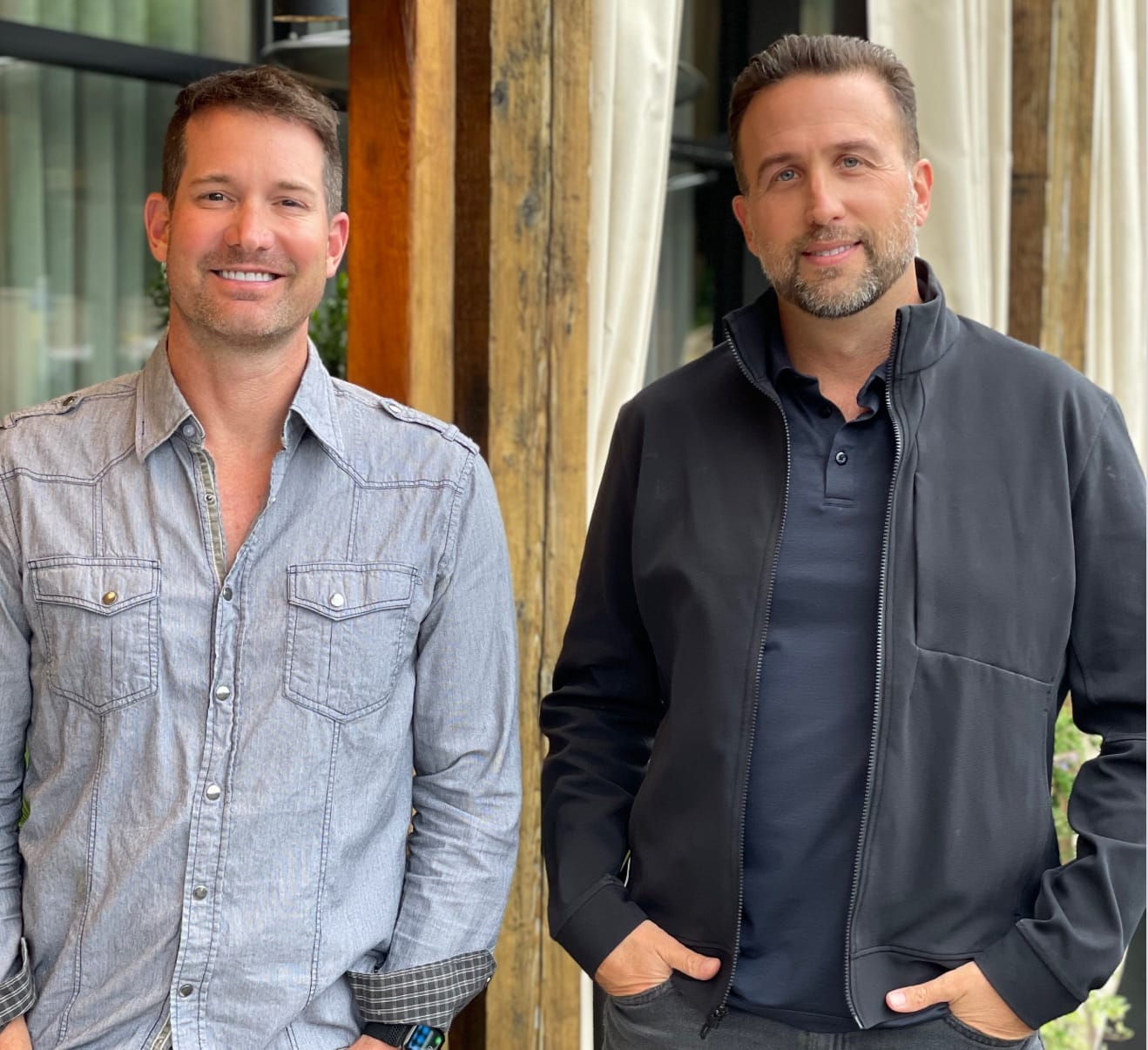
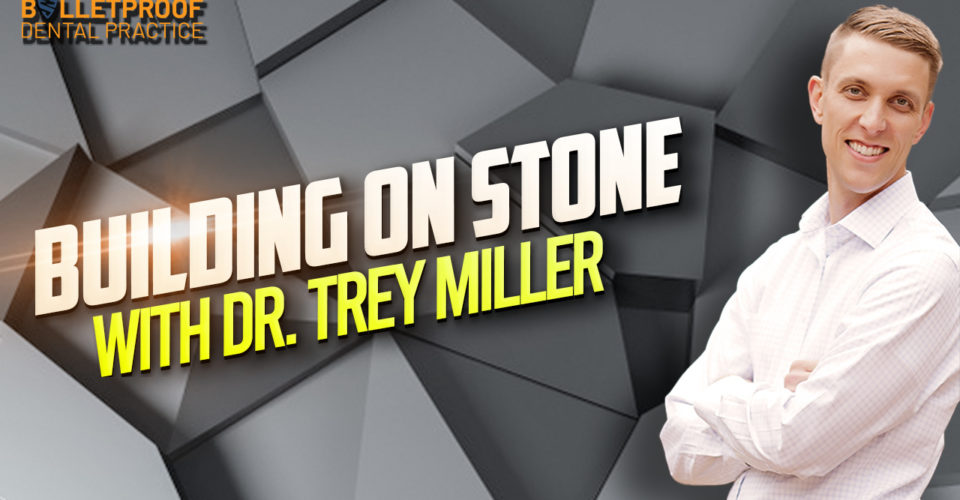
Dr. Startup PART 2 with Dr. Trey Miller
Bulletproof Dental Practice Podcast Episode 288
Host: Dr. Peter Boulden
Guest: Dr. Trey Miller
Key Takeaways:
Introduction
Private Practice Associateship To Start Up
Hurdles Encountered
Management
Refining And Simplifying Processes
Big Plan For Dentistry/Career
The Team You’re Deciding To Play With
Advice
References:
Bulletproof Mastermind
Bulletproof Summit
Mighty Networks: Bulletproof Dental Practice
Bulletproof ERC
Tweetables:
Everyone understands goals. -Dr. Peter Boulden
I want to test what I want to do. -Dr. Trey Miller
Inefficient processes amplify exponentially with scale. -Dr. Trey Miller
Simple is easy. -Dr. Trey Miller
Full Episode Transcript
Below is the complete transcript of this episode of the Bulletproof Dental Practice podcast. Prefer to listen? Find us on Apple Podcasts, Spotify, and YouTube.
Read the full transcript
The following transcription was from the Bulletproof Youtube channel. Here is the https://www.youtube.com/watch?v=csw4TjQ5BK0
Trey Miller
0:00:00
One more thing, I wrote this down to you and it's really popular, that I wish I would have figured out a lot earlier, is inefficient processes amplify exponentially with scale. I wish I would have known that in the beginning because you have all these great ideas, you listen to all these podcasts, you look at all these other people's systems and things they're doing and you want to be like them and you want to do it like them and then you may just create It may seem like the simplest thing in the world to you at the time but as you scale everything exponentially gets more complicated and in Simple simple is easy. You know, it's just I love it we'll do a quick intro here Trey get our energy
Peter Boulden
0:00:53
going get our energy going all right everybody welcome back to another episode of bulletproof dental practice podcast today today today we have Trey Miller back on the pod before Trey remember when we used to have to keep you anonymous because of fear of your boss finding out back in the day of you being an associate.
Peter Boulden
0:01:13
Remember those days?
Peter Boulden
0:01:14
You were the mystery guest. Now we've got a tour to like, I mean, this is, you've been on the pod, I think, more times than anybody, maybe. The reason being, I'm gonna give some context to people who may have not been, maybe this is their first time hearing about Bulletproof or listening. But Trey is based out in North Carolina and I've known him for a long time. I think the first time I met you, you were with your wife, Hannah, and it was out in California for I think like the second summit. I think that was one of the first times we really connected. Is that about accurate? Yeah. So it's been a long journey. You've been a masterminder for three years now, right? Right. You've been a mastermind for three years and you actually joined using some of your, I mean, you took a leap of faith and you took it, you know, in the philosophy of I really need this help as I'm growing in my next journey, which you left an associateship and wanted to go into ownership. And I believe you took some of your leasehold improvement money and applied it towards Mastermind.
Trey Miller
0:02:12
Is that an accurate, is that an urban myth or is that true? That's true, it was get a CBCT or join the Mastermind. So I went 2D and-
Peter Boulden
0:02:21
So smart, so smart. You went 2D and Bulletproof versus 3D.
Peter Boulden
0:02:26
That's right.
Peter Boulden
0:02:27
That's a smart move.
Trey Miller
0:02:28
I'd do it again in a heartbeat.
Peter Boulden
0:02:32
I have to say, Trey, that it's been really a pleasure of my career getting to know you and help you and kind of feel like I've played a part in just your journey. You've put in the hard work. I always tell people, you just don't get miraculous results like Trey has gotten without digging in and doing the shit, right? Eating the glass and then, you know, it's part of it. So, but it's been quite a joy to kind of just watch you and, you know, play a small part
Trey Miller
0:02:59
in some of this. Well, I appreciate you, you know, you and Craig, you guys have been, you know, instrumental and the growth, you know, the show, you know, it's the glass ceiling, you know, and don't know what's there. So you pop through until you pop through right or until someone else does it you know the four-minute mile and so you know you guys kind of put it out there and threw out the gauntlet and and I was just willing to go there but I you know again the mastermind both you Craig even Dwight you know now I get to know Trick Tip but I mean you know, I couldn't have
Peter Boulden
0:03:40
could have done it without you guys.
Peter Boulden
0:03:42
Well, you know, I disagree that I think you could have. I think you're it would have been you would have gotten there. Right. It may be on a slower trajectory. Right. Our job was to kind of tap you between the lines and say, go do this. Don't do this kind of thing. And when you're sailing out into a blue ocean, it's scary. And so it's fun to have it's not fun. It's important to have good mentors that can guide you and say no land is over there Not not over there. That's the abyss abyss of the ocean
Trey Miller
0:04:10
Yeah, I'd be I don't think I'd be as happy though, you know, yeah like I think there's a fulfillment that's gained from From it all and I would I may still have come lagging behind, but I don't think I would be as happy as I am right now.
Peter Boulden
0:04:31
So this, I'm glad you're touching on this because this is an important thing. As we're going over, we actually just had, we're in the month right now of our mastermind of talking about KPIs and what's important and how to move the needle and bonus systems, all these things, right? And Craig and I always contend that there's really like one master KPI. All these KPI that you're doing, and look at reappointment rate, and the EBITDA, and all these things, ultimately they should flow up to you, the happiness, your fulfillment, as the owner, or as a dentist, just period. The ultimate KPI is, are you happy? Are you fulfilled with what you're doing? And if you're not, like then all the other shit that got you here, all the other shit, like looking at hygiene reappoint doesn't really matter my opinion so I'm not saying you have to have like this inner peace and this kumbaya and you shouldn't look at metrics unless you have kumbaya like happiness but I think that they think they're that doing one without the other or doing one without the optics of the other is is it's hard it's not fulfilling like you like you're kind of saying like you wouldn't have as fulfilled.
Trey Miller
0:05:36
Yeah, I mean, you and I had many conversations. You just said, just hang in there, or you're pulling back the spring to release the spring. So, just to kind of get through a certain wave of where you are, and it takes some hard work, hard, some trying time sometimes to get to a place what makes you individually happy. What's happy for, what makes me happy is not going to be happy for everybody. And I think it's important to, as we kind of talk through the rest of this podcast and know that like just what I did is not for everybody. Because you could get here and you'd be absolutely miserable.
Peter Boulden
0:06:23
Okay. So give a summation of where you, how you started your career, because someone may have not, like I said, this may be someone's first Bulletproof, or someone who heard about your journey, so give a quick summation, Trey, on how you kind of started your journey in dentistry, and where you are now.
Trey Miller
0:06:41
So I started, I practiced in private practice for three years, it was a pretty well-established private practice. My third year, I was collecting over $900,000 as an associate, not including hygiene. So, if you had hygiene, it would be over a million dollars. I decided that was not the right fit for me and that's kind of where the journey began. I joined the Bulletproof Mastermind before I opened. COVID hit and kind of threw everything upside down, which, long story, was probably one of the best things that ever happened to us. And year one, year to date, from May 5th to May 5th, we collected 1.3. And 2020… This is post-COVID, right?
Peter Boulden
0:07:41
Yeah.
Peter Boulden
0:07:42
Yeah.
Peter Boulden
0:07:43
So, in 2021, you hit, you went from May of 2021 to May of 2022?
Trey Miller
0:07:50
Correct.
Peter Boulden
0:07:51
You hit 1.1.
Trey Miller
0:07:52
1.3.
Trey Miller
0:07:53
1.3.
Peter Boulden
0:07:54
Got it.
Trey Miller
0:07:55
And then in 2022, we did 2.2. And then with 2020, well, I'm sorry, the first calendar year, so I guess that would
Peter Boulden
0:08:08
have been. 22, yeah.
Trey Miller
0:08:09
Wait, wait, let me back up. So, May of 2020 to May of 2021, we did 1.3. And then in calendar year 2021, we did 2.2. And then in 2022, which was last year, which we just finished up, we did 2.7.
Peter Boulden
0:08:31
Okay.
Peter Boulden
0:08:32
Yeah, so year over year, you're giving kind of a, yeah, your window after COVID, your window of that year of COVID, and then your window the next following year, so the full calendar year. So that is quite the meteoric growth, really essentially coming out of COVID and then going from zero, which is let's call it May, to now as being an enterprise value or a top line revenue of your practice of being 2.7 you said, right?
Peter Boulden
0:08:58
Right.
Peter Boulden
0:08:59
Right. So that's quite the transition. What I'd like to know from that, and I think what people can know, because I think we've gone over some of your journey, right, we've had you on before when we only had the time of that first year, now we have kind of the second year of 2022. So, what did you learn since last we spoke? Like, what hurdles did you encounter from going from 1-3,
Trey Miller
0:09:24
because it's a different skill set that's needed to go from 1-3 to 2-7? Yeah, that's a great question, and don't let me gloss over and probe where you want, Pete. You know, part of it's personnel, you know, and I guess even from beginning to now, I've always been constantly looking at what kind of hurdles do I have, what are in front of me, what are going to be in front of me, you know, trying to stay five steps ahead always and anticipating where are your roadblocks going to be, who's your bottlenecks, how do we avoid those? And that's something I kind of personally just obsess about. And then sometimes things hit you and you don't even realize it. You know, from a personnel standpoint, you're right, you know, I mean, it takes a much different office and team to run a, you know, $1 million practice versus a $2 million practice versus a two and a half plus. You need a whole different support team, you need training. Are you saying a hurdle, Trey, just to cut you off,
Peter Boulden
0:10:33
the hurdle has been knowing how to manage your team?
Trey Miller
0:10:37
I think the hurdle is being able to flex within all those different ranges of life cycle and understanding that what worked in day one doesn't work today and being able to get yourself out of that. Because, give me an example. Like, I'll briefly run over, like from the beginning, like day one, you're focused on just putting people on the schedule. You know, you're talking about daily team training on how to answer phone calls, whether we have enough supplies to do the root canal that's here, because you run and fend on supplies on everything. You're paying attention to collections and Google reviews. I mean, that's like day one, first three to six months. And then you can get to where you're going 50, 60 a month. And then it's like, OK, we started with a front desk assistant, and now it's like, all right, now we need to add another assistant, a hygienist. And then that gets you to another hurdle. So we can kind of fast forward to like, you know, one two million dollar practice to a two plus. So I mean for me, like a one to two million dollar practice, I mean, you know, you're going to two doctors, you know, yourself and another doctor. You're gonna have at least three front desk, four assistants, three to four hygienists, and then possibly think about adding some type of management, in my opinion, like a clinical manager or an operations manager. I mean, and that to me was kind of where, you know, once I started adding in those management-level people is where I started seeing, you know, A, some of the workload cut off myself, and then two where like where we were able to then make another job.
Peter Boulden
0:12:29
Okay, so let me unpack some of this. Management, what does that mean?
Trey Miller
0:12:35
Um, so I pre, I, before I needed it, I hired an operations manager. Now that. At what level, Trey? I, I hired when I was around a million dollars. A million dollars, okay. So you hired, you hired a man, you hired, what was her, what was the title? Not that we're going to focus on titles, but. An, a, um, operations manager. So.
Peter Boulden
0:13:01
And that's different. Do you have a practice? Did you have a practice, I'm sorry, did you
Trey Miller
0:13:05
have an office manager at that point? Yes.
Peter Boulden
0:13:08
So it's, it's not in a, it's in addition to, correct?
Trey Miller
0:13:12
Yes. Yeah. The whole, the whole point, she had previously managed five practices. It didn't make a bad decision.
Peter Boulden
0:13:20
So this brings up a good point, or something to think. You were crystal clear, even before you had zero dollars coming in from being your own practice. You were crystal clear on the path, right? You had gone through the exercises of like your vision and what you wanted and what would fulfill you. And you, your vision was not, I want to have one practice. You have always wanted to go from a multi-location discipline, right? You wanted to go in multi-location, you wanted to become more of the CEO of your ecosystem. So where I'm going with this is, Trey, is that you made, someone listening may say, oh cool, I'm at one million dollars, maybe I need that same thing. Maybe I need that same hire. And I would challenge you, someone listening, just saying, be clear on where you want to go because Trey you made the you made the action to say I'm gonna hire not for the practice that I have currently I'm gonna hire for the practices that I want in the future right so you made you made an expensive move quote-unquote expenses right because because our salaries and our payroll are usually our biggest expense in our line item you made that move to say I'm going to take the investment or the expense and actually plan for offices 2, 3, 4, whatever it may be, and also to be growing for revenue and optimizing the current practice that I have, which sounds like you've already done, whether that was an expansion,
Trey Miller
0:14:42
right? Am I tracking on that so far? Is that kind of theme? It was a tough hire. I paid her $82,000 a year. It was a long term for a non-clinical, non-producing, really even a non-day-to-day, basically an oversight in systems, developing front desk protocol creation individual to then help us grow and scale was the sole reason for hiring her so that when we did practice number two that we just plug and play.
Peter Boulden
0:15:23
So you've been spending a lot of time building the flagship, right? We always call it kind of the flagship office, getting things buttoned up, your systems, your operations, your protocols, right? The SOPs of your practice buttoned up so that you are ready for scale. So many of us, myself included, just jumped into office number two because we could, right, because the revenues at number one were good enough to compensate for sloppy operational systems. And I'm going back in my own career back to 2009. I kind of did this, which I think in hindsight, you know, if I could have changed one thing about my trajectory, it would have probably been spend more time on number one, because it would have saved me a lot of ass kicking. Spend more time on really bulletproofing the systems, the operations, and the protocols for number two. So I hope that you learned kind of from, you know, and I know I kind of pressed on, you know, I've been pressing on you to kind of really do all this stuff. Maybe not me, but Craig or Bulletproof. Because it's crystal clear on what you wanted to do. And even if you're not, Trey, let me say one last thing and then I'll shut up. Even if you're not, let's just say you think you want to start out with being the multiple location.
Peter Boulden
0:16:37
Right?
Peter Boulden
0:16:38
Like, let's say you hypothetically have been like, this is what I want.
Trey Miller
0:16:40
Like so many people, I want five locations.
Trey Miller
0:16:42
Right.
Peter Boulden
0:16:42
And then you go through the school of Craig and he kind of breaks down and he's like, well, that's not really what you wanted, is it? And you're like, no, I just really wanted one that operated well. Hypothetically, if you had come to that realization, you only wanted one, how much better would your fulfillment and happiness be if you had done this anyway, right?
Trey Miller
0:17:02
If you had built for many, but stayed at one?
Trey Miller
0:17:04
Yeah, that makes sense. Yeah.
Trey Miller
0:17:07
Yeah, it'd be great. And I, and I'd have no problem if I get to a point that I'm not happy and fulfilled and I'm miserable I can I can always go back and go go backwards I know I won't but I always could and it's gonna be you know a well-oiled machine it's gonna be functioning properly I can walk in the door do the dentistry and go home at the end of the day numbers look great collections look great let's let's I remember you called me once in your journey, and I'll never forget it, you said, I can't do this anymore.
Peter Boulden
0:17:42
I am teetering on burnout.
Peter Boulden
0:17:45
I can't do this.
Peter Boulden
0:17:46
And I think it's so common to hear this, and you know, how many times did I say that same thing to my own self? And I think that you did something very important, is that you were aware of the way you were feeling. And then you enlisted the help of someone who had said, like, is this a normal, should I be feeling this? And I was like, Trey, this is part of it. Like it's just one more step, one more step, one more step, couple more months. Right. And which breaks you to that other point. And now you were like, I have no freedom. I have no free time. I have no this, I have no, you know, it was like I'm burnout, right? Contrast the where you are now, right? You're able to think about your business. You're able to go on fishing trips. You're able to do things with your family because you put in the hard work and the sacrifices in the beginning where I always say this, most entrepreneurs or most business people get to that point where they're saying, I can't do it.
Trey Miller
0:18:43
And then they stop, right?
Peter Boulden
0:18:45
They're mere mortals. They wrote, they stop and they say, well, that was just too hard, which is why the spoils go to people who, like I always say, put in the hard work. You identified your weaknesses. Hey, I'm not a very good marketer. I have a shitty marketing company. I'm gonna go learn marketing. Hey, I'm not a very good business owner. I'm not a very good leader organically. I'm gonna learn some leadership stuff. So not only were you doing the operations of the practice, you were actually side hustling and learning skills. Like I said, the marketing and the leadership and things like that. You were side hustling and learning skills that were gonna take you from A to B.
Peter Boulden
0:19:22
Yeah, that's one thing.
Trey Miller
0:19:24
You know, I took down some notes before the call. And one thing I wish I would have done even sooner, you know, and you helped me realize, well, first thing you said was, be careful what you ask for. Yeah, yeah.
Peter Boulden
0:19:38
Be careful what you wish for, right?
Trey Miller
0:19:43
But I wish I would have been able to analyze and pivot faster, you know, to analyze from a non-emotional, from a numbers perspective, you know, as a third party looking at your practice, and be able to pivot because every step of the way, every hurdle, every plateau of your numbers, there's something that's going to get you over that next hump and you just have to make those pivots. You're the one that holds the keys. It was kind of a pivotal moment for me. One day I realized, I don't remember what or when, it was probably one of our calls, I make the rules you know my this is my practice if I'm miserable then I get to make the rules that to be able to change that because otherwise you know we got very busy very fast and I was just running myself into into the ground I mean granted we were doing a hundred plus a and very profitable, making money, but I was so busy, I couldn't get myself out of the weeds. And then finally, when I had that realization, it was like a light bulb went off, and I realized, all right, we gotta start making some changes. And that was the journey of becoming fulfilled, and becoming happy, and understanding like that this is the way it's supposed to be.
Peter Boulden
0:21:17
I love that. It's like that extreme accountability you took, right? So many of us, including myself in this, we play sometimes this victim, this woe is me, and oh, I can't do this because of the economy. Oh, I can't do this because I'm a disassociate. Oh, I can't do this, right? And we play this narrative in our head. And before long, it's a self-fulfilling prophecy. And so you're right, sometimes you have to get in and be and recognize that you are the creator of what happens next.
Peter Boulden
0:21:43
Right? Yeah, absolutely.
Trey Miller
0:21:45
I mean, and again, I'm gonna say this again, every step of the way is a different hurdle and a different kind of hurdle and a different kind of challenge. And you have to be able to see it. And if you don't see it, you're going to be stuck where you are forever you know you're just going to be stuck in a in a clinical setting if that's going to be fine but if you're not if you're not you know then then you got to
Peter Boulden
0:22:14
find your way out of it and I mean go ahead. Hurdles you know like it's funny we always talk about this and you know I have hurdles Craig has hurdles people who are 10x the size of us have hurdles, you've had hurdles. So happiness and fulfillment is not the absence of it, it's just kind of qualifying and getting better quality hurdles where you're gamifying it, where you're saying like, God, the hurdles I had two years ago were shitty, right? These are a little bit better, at least they're challenging and I can do something about them. And I think, you know, we always say that people think that life, that happiness is sitting on the beach with the corona, with the absence of hurdles. And it's actually quite the opposite, right? Humans want to solve shit. We want to solve problems, we want to fix things, we want to ideate, we want to use
Trey Miller
0:23:01
our brain, we want to get out of bed in the morning, eager to go do that.
Peter Boulden
0:23:06
Right?
Peter Boulden
0:23:07
And when you don't have that, I think that's where there's a lack of fulfillment. I know this wasn't supposed to be a fulfillment pod and we brought it up a couple times. Because I think you, how old are you Trey?
Trey Miller
0:23:19
37. Yeah, so figuring this shit out like you've kind of been doing at age 37, where most people don't figure this out until they're 65 or 60s or late 50s, whatever it may be, like you had such a massive advantage that you know you're playing in a different game. I'm just proud of you because it's like, you know, you ate the glass, you ate the glass
Peter Boulden
0:23:37
and you came on the other side and you spit it out and you're like, here's the bottle.
Trey Miller
0:23:40
I think neither one of us are very touchy feely guys at all. Here we are talking about this. I wrote some things down. I think this could be helpful for people. This would be something I would love.
Peter Boulden
0:23:54
Did this get you too touchy feely? This would be a first for me. If I took us in a direction of being too touchy feely, that would be officially the first podcast, without Craig being here, I would say.
Trey Miller
0:24:05
It's a hard ride here.
Peter Boulden
0:24:06
All right, you wrote down some things, what?
Trey Miller
0:24:10
Yeah, I thought just-
Peter Boulden
0:24:11
Teach and preach.
Trey Miller
0:24:12
Yeah, so for me, I'll just say from my perspective, like I hit a hurdle at about the million dollar mark, and I hear a lot of hurdles at million dollar marks. And for me, the couple things, I wrote down five things that helped me get over that hurdle. One, I could plow through and do a lot of different industry to be able to kind of compensate for lack of areas in other sections of the practice. So one, we started focusing on retaining hygiene patients, so that's focusing on hygiene reappointment to making sure that we have accounts receivable is under control, election processes. Three, I think was the absolute biggest was scheduling. And I think, you know… You say scheduling? Scheduling, yes. What specifically? I'm to the point now where if I sit in the chair, I want to be doing $10,000 a day in production. It's not worth my time and I hate to kind of say it that way. I mean, I'll definitely do it, but that's my goal,
Peter Boulden
0:25:19
is $10,000 a day in production.
Trey Miller
0:25:21
It's an eight hour day, so essentially a $1,200 an hour is what you're kind of looking for, right? Yes, yes. $1,250, let's call it. Okay, Eric. Yes.
Peter Boulden
0:25:30
$1250, let's call it. Okay. Eric?
Trey Miller
0:25:33
So, we block schedule now to production. And when we hit that production, unless it's like a $12,000 impression for like a, you know, but for the most part, if it's, once we hit that mark, we move on to the next day so that we don't have these high, you know, $20,000 days, $5,000 days. And so, that was a huge one as well. Looking at like a little bit more detailed numbers like production per patient, you know, and then diving into some of the other individuals like perio, percentages, like just the little things, not overload with tons of data and information. And then the last one was getting processes and systems in place. And I say processes, you know, I know we always talk about systems, systems, systems, but just having processes in place. For me, systems are reproducible, scalable, processors, having something in place that can get you to the next level. So those were the main five things that I focused on. Make sure we had a process for everything. It focuses on those small numbers and then making sure that we were scheduling appropriately and that plus adding you know then we added you know another doctor, more treatment rooms, we did an expansion, you know open the capacity. We went from six ops to 11 ops and then we added doctors, hygienists, assistants, front desk, kind of in that specific order. And then I got stuck at the 150, 200,000 a month. And I think that was probably the biggest one for me to jump over because what happened there is that we started refining those processes and we started simplifying. That was the biggest thing. We just talked about this on our call at lunch. But once I started simplifying everything in my practice, things got easier for me, things got clearer, people's happiness got better, we started producing more. It was like a massive change. And things that we don't think are complicated are complicated at scale and things get really complicated at two, two and a half million dollars a
Peter Boulden
0:28:09
year in my opinion. I would agree. I would agree. I think that complications or complexity is the enemy of us executing, right? And that's a Tony Robbinsism. That's a he said that, not me said that, right? But I do agree with that. The idea of creating systems isn't to overcomplicate your life, isn't to micromanage people. It's to create simplicity and everyone knowing what are the goals. Here's how we're playing this football game, right? Here's the plays. Here's the score. You know, here's how much time we have. I'm getting into a sports now because everyone understands goals, right? The goal line of playing sports. And you have team members there on the field. It's like you have team members in your practice. And so I think just having a playbook, i.e. your systems, your operational manual or, or, or they didn't have to be a manual. I want to say it's not a manual. You know, you actually probably dug in and did some, you know, videos and you really kind of spent a lot of time training. I think you mentioned earlier on the pod tray that, that COVID in hindsight was one of the biggest blessings for that because it lets you sit around and architect a lot of this. Am I hitting that right?
Trey Miller
0:29:21
Oh, absolutely.
Peter Boulden
0:29:23
And so that's going back to the working. You had the benefit of instead of saying like, well, we're on vacation for three months because of COVID, you said, I'm going to use this time to create and think about what I want.
Trey Miller
0:29:36
And I think that's just a beautiful thing. Yeah and I the two people I let go before we even hired you know I hired them they hadn't officially started I had to lay them off and then they had to take a leap of faith which I'm not sure they were gonna go but we had you know two or three week through two or three meetings one hour meetings a week to talk about you I mean, different types of training systems and I couldn't pay them, but I told them, I'll take care of you when we start back. And I basically bonused them when we started back. And so, yeah, it allowed us to, you know, extra. What's your big plan for dentistry for your career?
Peter Boulden
0:30:22
So Peter, it is shocking to me how many people, one, have not actually heard about ERC and two, have gotten the wrong information. And you and Trey being two of them, I mean, I consider you to be an epic business person. And when I talked about the employer retention credit to you, you were really dismissed above me like, no, I went through that. I got it. You know, it's great. I got it. It was done. And even Trey just now, we were just talking to him on the last pod. He's like, yeah, I already, you know, my accounting firm, they got it very little. They only got like five or 10 grand. We know this is totally misunderstood.
Peter Boulden
0:30:56
I was told I didn't qualify until I went to a specialist and they're like, you absolutely qualify and here's the number. And it, it almost startled me. Like my jaw was off on the ground. Yeah. You don't actually, you don't believe it. You don't believe it. But don't, don't ask your CPA, ask someone who specializes, which is why we actually have this awesome arrangement and we created a link and the company is Bulletproof ERC to help kind of implement this because from this pot of money that Congress has allocated, we want the people listening from Bulletproof to take advantage of it. So this is why this announcement is going on because it's, like I said, don't ask your CPA, ask the people who this is the only thing they do all day every day.
Peter Boulden
0:31:35
That's why we had to do this, because initially, I was telling everybody, telling you, telling everybody, like, oh, I went, we don't qualify. So like, oh, this is not going the way it's supposed to. Like, you have to go to the people that do it. So I'm really proud of that. My buddy, Norm, works for the company. Norm, as you know, like the nicest guy in the world.
Peter Boulden
0:31:51
He's literally like Ned Flanders.
Peter Boulden
0:31:52
He's like, how do you do what you do? He'll fill out your form. He'll walk you through the process. He'll do the zoom call with you. It's literally white glove services. You don't have to do anything. And this is what they do. And it's an unbelievable program. You have two ways to pay for it. You can either pay up front or they can just take a percentage when they give you the money. And it is awesome. You did one. I did the other. We won't tell which one who did what. But it's a government program. It's going to run out. Do not delay. It's amazing how many people are like, I'll handle a couple months. I don't have time. You don't need any time.
Peter Boulden
0:32:26
Like this is like crazy.
Trey Miller
0:32:27
First come, first serve, right?
Peter Boulden
0:32:28
First come, first serve. And I mean, I know the government's treated you well through the CARES Act and you're thinking to yourself, well, maybe I don't need this. It is your money to have.
Peter Boulden
0:32:36
This is part of the CARES Act.
Peter Boulden
0:32:37
Right, it is part of the CARES Act, but I mean, even when I thought about it, I'm like, nah, I'm good. I don't wanna take more money, but this is a program that's allocated for people like you who have kept your employees, kept your businesses open, do not take it for granted. If your account told you, your friend who's a lawyer told you, do not leave that stone unturned. Go to bulletprooferc.com, spend five minutes, it's worth the due diligence. Do not assume anything and even if you filled it out, you got something but it wasn't, you know, what you think is commensurate for your size business, go ahead and reopen the process. You can amend these things for different years. So do yourself a favor, take the five or 10 minutes, have a Zoom call, you may be leaving hundreds of thousands of dollars on the table, which is not prudent for you, your business, and the families that your business supports. Do it for them.
Peter Boulden
0:33:28
Yeah, that's a good question. I mean, it will always change.
Trey Miller
0:33:33
So depending on where you get to and how comfortable you are and what that looks like when you
Trey Miller
0:33:42
get there, because you don't know.
Trey Miller
0:33:43
You don't know what you'll know. Correct. But based on present-day data of what you feel right now, where is your trajectory? What is your plan?
Peter Boulden
0:33:53
So, I'm, well, currently I'm under a contract for a piece of property to build a building
Trey Miller
0:33:59
for probably a 4,000 or 5,000 square foot building for location number two. So, I mean, I think long-term it's going to be five to seven practices that are somewhere in that 12, 12 to, I'm not sure I'll do another 14 op practice, but I wouldn't completely rule it out, but you know, two doctor practices with 10 to 12 ops, kind of spaced out in a general vicinity. I'm on the outskirts of Charlotte, but in a similar demographic on the outskirts of Charlotte, definitely owning the real estate involved as well. I like that plan. You've had a good mentor.
Peter Boulden
0:34:52
It's a little familiar. So do you feel, does that scare you? Does that goal scare you a little bit? Because some people would say if it doesn't scare you, then maybe it's not big enough. Or if it does scare you, does it mean that you feel like you lack the skills to get you from there to there?
Trey Miller
0:35:17
I know it's going to be challenging. I'm excited for where I'm headed. I mean, I'm looking forward to the new challenges that are ahead. the challenges of, you know, now growing other people to help your business grow and to kind of take on a new venture. I'm more excited than anything. Of course, I'm a little scared, but nothing like opening a practice during COVID. Everything else seems so much doable after going through what you did?
Peter Boulden
0:36:04
If you didn't have some fear, I think you'd be a sociopath, right? I think fear is a good thing in that it gets you… Humans are motivated by two things, I think. I think this is like Maslow says, this is like fear of loss and avoidance of pain. And so, your fear is motivated by, hey, I've created something pretty awesome that's really not broken. I don't want to mess it up. So fear of, I don't want to lose what I've created. So that's the fear that's going to drive you into the next phases of, well, I kind of want more because it's my calling. But that fear is going to help you say it's going to help you look at things, meaning now you have the acumen to say, here's what got me here. I did X, Y, and Z, and you've been tracking it and documenting it, knowing that you're going to need that same skill set or that same thing to replicate in office number two, which is going to have its own unique little variances. But you've like you've seen the movie before, which is why it's so important. That flagship thing. I wish I had spent more time with that flagship thing because because it will really help you when you have to weather the storm. No, it might be a storm on that. You might have picked the wrong spot, so to speak. Right. You may have to amp up your marketing. You might have demographically picked the wrong area. You might your bank may be calling for, I don't know, all these things. And you're going to have different types of problems.
Trey Miller
0:37:19
What scares me the most, there are definitely parts. I mean I'm excited, but there's also parts that I'm really worried about. Because what I'm scared about the most is can I replicate, maybe not quite as good as what we did, but can I replicate it again without myself and that's that's that's what I'm I'm trying to test I'm I want to test what what I'm about to go do because I'm I'm gonna try I'm gonna absolutely your business thrive in the absence of the
Peter Boulden
0:37:55
creator is what you're trying to is what you're the hypothesis you're wanting to
Trey Miller
0:37:58
test now right not mine like can I do open this other practice without me? And that's, so like I just had a conversation this morning, I have a, I don't have an operations manager anymore, that didn't work out, that was a bad idea. But it was a good idea, but it was the wrong person. But I have a, I have a clinical manager, which for me is like, it has been a phenomenal hire for me. So she, anyway, so I just had a conversation with her this morning and I said, can you write down all the things that you do that if you were not here, we would know what needs to be delegated to.
Peter Boulden
0:38:46
You got hit by a bus. What do you do?
Trey Miller
0:38:48
do. But no, I said, you know, you always have a job.
Peter Boulden
0:39:00
Well, look, man, that's I know we're making a joke about that, but this is a very important thing and it's and it's and it's pervasive in dentistry. We spend time creating, training, teaching, and then this person jumps into this role, like you're saying, this person who's taking a lot off your plate, this clinical role, and they have all this beautiful IP. And where is that IP kept? In their head.
Trey Miller
0:39:22
And what happens when they leave?
Peter Boulden
0:39:24
It goes with them.
Peter Boulden
0:39:25
Typically, your head goes with you, right? So we lose all of this IP as opposed to like, hey, you're doing the right thing. Automate, systematize, whatever system you're doing, I need you to replicate it. Not because you're being fired, not because of anything, but like that is incumbent upon the success of the business for me to ask you to do this. Right, so that someone else can step in your shoes if something catastrophic happened or if you decide to leave this office. Not that you're not going to get fired, but if you decide to leave, I can't prevent that. So therefore, I need this for the health of the business and the people you're leaving. I need you to document this.
Trey Miller
0:40:01
Yeah, and she's for her entire career, she's been an assistant, and her entire career, she just has been the one that does it. She just does it. And so, I mean, I've had very direct conversation with her that said, I don't care if you go in the back, and I said, think of your job as if you can walk in and you do absolutely nothing all day long, and everything runs and operates. And it's like, I will always find you something to do. Even if it's a problem. But if you can walk in and you sit back on your phone and play on your phone and look on Facebook, which she's, I don't even know if she has Facebook, but if you play on your phone all day, I am perfectly okay with that, as long as this thing runs squeaky clean. I'm like, I will always find you something to do, but think of it that way. Think of it as you're making your job not necessary and then when you do that then you've
Peter Boulden
0:40:54
done you've done a good job. So I want to pause here for a second because I want your feedback on this. There's probably a lot of dentists listening to this at all stages of the life cycle where they are who are thinking about me mentioning that one key person, the person that made their life so much better and they're thinking oh man that's you know that's Cindy at my office. Man, if she left, shit, I would be up shit creek. I would be just, it would turn my world upside down. That is a business vulnerability. So if you are listening to that and that was you, and Trey, this probably would go to you as well, is that if you have that key person, that key man or key woman in your office, in your practice, and you're saying, how do I get them to document it? They're probably not going to create that system of documentation because you told them to create that system of documentation, right? Because they don't have enough time in their day. I think it has to be something fully intentional. They're like, look, let's make a list that a fifth grader can understand of all the actions that you do. We're going to calculate your day, your ideal day. We're going to break it down into five minute segments. And I want you to write down at this task, okay, this is just where my brain works, this is why you're smiling, Trey.
Trey Miller
0:42:07
That's what I just said to her.
Peter Boulden
0:42:09
Okay, I say, I'm gonna hire a videographer,
Peter Boulden
0:42:12
because it doesn't have to be edited or anything,
Peter Boulden
0:42:14
I'm gonna hire someone, and I'm gonna document these things down, these five minute, this 100 tasks, these 100 things that you do in accumulation of your job. Because you're not going to be able to do it in your free time of just like creating me this system of documentation. So imagine having a videographer that you said, hey, how much would it be for you to come in and film? I got 400 bucks for the day or 500 bucks for the day. But now guess what? You have Cindy's complete IP in video form where you can put it in modules for somebody else. That is next level in my opinion. I refuse. This is the one thing that will keep me up at night. If I feel like my practice hinges on any one person, myself. It's literally a vulnerability. And so this is the anxiety that's going to come from you not having this kind of peace with your business or practice, is knowing that at any moment, it's like spinning plates, at any moment if that big plate comes down, we're in a shit storm. That is a massive, you can't take a deep breath anymore because your business is predicated
Trey Miller
0:43:27
on the actions of one. Yeah. No, and I feel even, I would be upset if the one person left just because I think she'd be leaving a great opportunity for herself, because I see what potential she has. But I feel like I could plug and play either someone internally or externally into every position in our practice. And we have a lot of people here. We've got, there's probably 17 or 18 full-time employees and four or five permanent part-time, which I consider two-day a week, like part-time.
Peter Boulden
0:44:06
Yeah, the success of your practice can't be predicated on you hiring these unicorns and thoroughbreds because as we know, they only come around our life every so often. What you can do though is take those unicorns and document them and create a system that they are the unicorns. We all have those people in our practice. Because, you know, look, if business success, like think about like, let's say a high-end chain, like a Starbucks. I don't know if that's the only high-end thing I could go with. If those people are, when you go into a Starbucks, I always marvel at them. Like they're flying around, they're doing things, they get it pretty right all the time. It's a decent, it's a pretty good experience, right? And they're all over the place. The Starbucks are all over the place in locations because they've created an operational standpoint where they can plug and play and grow and things like that. I think of Houston's too as kind of another chain. So back to your point of, you know, the people are the most important. I think you even started the pod with that, right? You started with using a team, you know, a phrase, the personnel. Which, you know, we're changing to kind of just
Trey Miller
0:45:18
be the team, the team you're deciding to play with. Right, right. No, it's, and it's so important. I mean, you know, we, we have people come in our office, never met us before in our life, and I, I tell them they need, you know, a tooth taken out or something, or a root canal, and, and people's, you know, patients' comments are, you know, and they say this all the time and it just fascinates me. They say, oh, you know, I trust you, you know, like, yeah, if that's what you think, then that's what we're gonna do. I'm like, hey, you don't trust me? You just met me for like two minutes. I've never worked on you in my life. And then I, and one day it kind of hit me. It's like, it's not about me. This is my team, you know.
Peter Boulden
0:46:01
This is the well I would push back on that but yes I like where you're tracking but yes it is it is the entire team it was that it was the experience that they were given from inception of searching you online to picking up the phone and calling to greeting in the waiting room to having a tour of the office to all these things right ultimately by the time I got to you you were the cherry on top that came in with confidence, clinical acumen, empathy, all the things that put the cherry on top and they're like, I trust you, whatever you said. It wasn't that they trust, it wasn't that you were the inflection point, Trey. It was like you said, like you're saying, the team and the whole process prepared them for saying whatever you think, Doc. Yeah, and it's, it just, it still
Trey Miller
0:46:46
blows my mind that someone just says yes and open your mouth and let me put a needle in your mouth after they've just met me for no time but you're right I mean that's 100% right and I'm getting to where I try and say less and less and less and every single appointment and because I mean I my hygiene. Tell me why. Tell me why. I'll screw it up like my hygiene and my team's better at it than I am and so my hygiene exams or I you know I walk in I meet so-and-so and I ask them what they do and chat a little bit about what they do or their hobbies and and I lay them back and I look in their mouth I tell them you need a couple if it's routine you know if it's like you know you need something complicated we'll spit you need a couple fillings and a couple crowns I don't show them x-rays, give me a couple of crowns, we'll get you scheduled and get you treated and plan to get you back as soon as you can. I'm done.
Peter Boulden
0:47:43
That's it.
Trey Miller
0:47:44
And that works for me. But my hygienist and the team around me can then go through and explain the stuff on the x-rays or the photographs or what it's going to cost. And if I sit in there and talk, the more I talk, the more I screw it up every time, every time. Or I talk that crown into an M.O.D.E.L. filling and I'm miserable just because I felt bad for Mrs. Jones. So I, anyways, so that's, but it's all because my team can train and back me up and say things like, oh Dr. Miller's great or you know, you're gonna, he does great work or he worked on my mom or you know they've all we've all talked about saying those little little pieces of information that make massive I love it but this is this is next-level stuff I always say so most of my anxiety when I was clinical that didn't come from the the practice of didn't come from the procedure right it came from the small talk that led up to that so that the
Peter Boulden
0:48:46
more and I would do I would acquiesce just like you and me like, well, could do this. You could do this. So we should do this. Right. And that my team's looking at like, what are you doing? Like we already talked about them doing this quadrant. And now you're saying like, what are you doing?
Trey Miller
0:49:01
Get out of here.
Trey Miller
0:49:02
Right. And like, it's so funny, but I got sweaty back around the small talk and I don't know what I'm doing a good job, but I just wanted to get to the clinical aspect of it. So funny you say that, right. You almost want to go in, have a good team that you trust, bobblehead, and say, yeah, I'm agreeing with what I'm finding and look what we're doing, and yeah, let's get you scheduled, bobblehead, and then get the hell out of the operatory. Because all you can do is confuse and therefore unenroll the treatment. Absolutely. Or you'll convince yourself to do even tell them what's going on. Now I'm to the point, my practice can't grow, we can't grow anymore off of me unless I dive into full arch dentistry, which I don't want to do because that's really hard to replicate or to bring another provider to do. How do we train leaders or managers to then disseminate and help train everyone else? Or how do I work with my doctors to get them to where their production per hour is $800, 800 plus an hour? How do we do that? So you're saying that I'm going to make a car analogy.
Peter Boulden
0:50:18
Let's say you redline a car at 5,500. You're saying that really you don't have true growth if you're pegged at redline all the time, just doing all you can do. And look at these numbers and all the things. You have to kind of get back to where it's running at 3,000 RPMs where you have some time, you're not overwhelmed, you're able to think outside your practice because you've become the bottleneck, right? And you're saying like, look, we can't grow anymore with me. Can't grow anymore with my personal production, so therefore I have to account for some time to train, lead other practitioners in the practice, whether it's hygienist or dentist.
Trey Miller
0:51:01
Yeah, and I told you a week or so ago, I feel like I'm getting pulled out of the chair and that my time is more valuable outside of the chair than in, just for the same reasons. I mean, I handed off a slam dunk, it was like a simple seven to 10 case the other day, which would take no time to do, but I handed it off to another doctor, and she's really great at it, and it's like, yes, I could have just stolen what they needed, and two hours later, it's a four or $5,000 procedure, but it's like, all right, I've got to back off some of mine to be able to build them, because what good does it do if I'm running around hair on fire, producing 10, $15,000 a day, and they're not quite as busy. So I'm to that point of even stopping saying, like, I don't do certain things, like I don't enjoy cosmetic, like Crown and Bridge, I hate it, like I'm probably one of the only doctors out there that do. I just, I can do it. I do a really good job at it. I can smile design. I can like, just the detail.
Peter Boulden
0:52:12
Yeah, but you don't make it. You're self-aware enough to say like, hey, I don't wanna do more shit I don't wanna do no matter the money.
13
0:52:19
Right.
Peter Boulden
0:52:20
And she will.
Peter Boulden
0:52:21
That's a beautiful, that's a beautiful place to be in. And also, it then frees up, like you're saying, you triage and put a gift on your associate's plate that says, hey, this case is ready to go. I want you to do it. Like you talk about goodwill towards another human or another practitioner who in most cases in our industry, Trey, it's, I'm going to, how many times you heard this? I'm going to hire an associate, do the shit work.
Trey Miller
0:52:46
Oh yeah.
Peter Boulden
0:52:47
How many times have you, I mean, literally if I hear that one more time, I'm not being dramatic, it's like it makes me, it's so cringe worthy. I'm like, that is not a sustainable thing and people are like, well associates fail, they always fail. No kidding. Because the phrase we've been using is, I'm going to hire an associate to give them the shit work. Who wants to stay around and do shit work? So I commend you on taking a quote unquote temporary haircut financially in order to propel the business forward? Hard. Hard, right? Because look, it's intoxicating, right? It's intoxicating to do the case, enroll the case, you know, you can see it already done. It's intoxicating. Dentistry becomes intoxicating that way. You're like, I'm good, I enrolled it, look at the case I'm going to do, look at my outcome. Boom. Endorphins are at a high. So it's hard to give away like the drug that makes you feel good and give it to someone else and be like, all right, it's yours, I guess.
Trey Miller
0:53:43
This morning, my associate came in and she had a number 15 that needed a root canal and she didn't feel comfortable doing it. And the guy needed a bridge, he wanted a bridge to go along with it. She said, do you want to do the root canal? And I said, yeah, I'll do that for you. And I thought about it. I thought about it. I thought about it Like oh man, it'd be so easy just to prep both teeth and then add $3,000 I'm like, I'm like, you know what and I so I told her schedule, you know My front desk to schedule it with time where she can finish the bridge prep on it And you know, it was hard that she was so thankful. She was just like, because it was like painful for her to come to me to ask me to do the root canal. And she was willing to give up the entire procedure for the benefit of the patient. And I said, I said, let's schedule it. I'll get you back. I'll tell the patient, you know, she's really great at it. It's it's it's so true.
Peter Boulden
0:54:43
And and I love that you did it because you're starting to think like, look, if shit hits the fan, the easiest person to get busy is me. Right? And you're thinking this as Trey, right? You're saying, I'm the best enroller. I'm the owner. I'm putting the hard work. I can do it. Right? It's, it starts insulating your business more to make other providers busy as opposed to, well, I just, I gave them away. Right? I sacrificed and you start, it's not a sacrifice. It's just, it's just starting to insulate yourself a little bit more, even though it's tough in the beginning. Trust me, I've gone through all these permutations. Okay, Trey, I want to wrap because I don't want to keep, I mean, I feel like we could go, we could go to all different sectors of the planet on dental ownership and such. I'm going to end with one last question.
Peter Boulden
0:55:32
Okay.
Peter Boulden
0:55:33
If you could give yourself advice self-advice as Trey 2.0, 2023, February 2023 Trey to Trey pre-COVID, whether that you can give advice to the associate Trey or the Trey setting out on his journey, the scary journey, what advice would you give? It's a hard question. You can take a few seconds to really make it prophetic.
Peter Boulden
0:56:04
That's…
Peter Boulden
0:56:06
For example, Trey, don't be scared. It's going to suck. It's going to hurt. There's going to be things, but don't, but fear isn't something you should have to have. Or I don't know. I'm trying, I'm just trying to give you, I'm trying to, I'm trying to fill in the silence here with some things. Or like, hey, you need to learn, you should learn this more, right? Like leadership. I should have done more leadership books or I should have wrote my vision down better or I should have learned more about marketing or I should have put everything in video or I should have, right? All these things. And maybe it's all those. Um, but if there is one thing that you could give advice to that would have made the pain, quote unquote, I'm putting pain in there, quotes the pain of getting to where you
Trey Miller
0:56:51
are now less, what would it be? Make time to look at your life and business, like I said earlier, make time to look at your life and business from an outside perspective. Whether that's an hour a day just to, you know, self self-audit where you are and where you want to go. Because it can, you know, even thinking about coming on this podcast makes me go back and relive all the steps that helped me get to where we are today. And sometimes it's nice just to do that, to kind of give yourself a little pat on the back and to realize how much hard work you've put in and how much you know and where you've grown to because when you're in it like when I'm in it you don't think about what you're doing you're just grinding every single day and it's hard and but if you can take a step back and just reflect which is really hard to do then and and then to analyze what your north star is where you want to go where you are and where you came from. It's a very powerful tool.
Peter Boulden
0:58:07
I love that. I think it's great. It's giving yourself some grace. That's kind of why we start our Bulletproof pathway and mastermind in all things with the vision because the vision can be your North Star. It can be the thing that quote unquote makes you Bulletproof because you're going to go through a little war and then be like, what am I doing? I can't, like you said, you called me. What am I doing? I can't do this anymore. And then you kind of re-audit that, re-look at that, and you're like, oh yeah, this is why.
Trey Miller
0:58:33
And it re-energizes you for the next battle.
Peter Boulden
0:58:36
One more thing that's a little,
Trey Miller
0:58:38
I wrote this down to you, and it's really popular, that I wish I would've figured out a lot earlier, is inefficient processes amplify exponentially with scale. I wish I would have known that in the beginning because you have all these great ideas, you listen to all these podcasts, you look at all these other people's systems and things they're doing and you want to be like them or you want to do it like them. You may just create, it may seem like the simplest thing in the world to you at the time, but as you scale everything exponentially gets more complicated. And simple is easy. I love it. That's such a great place to end. I love that. Simple, like the simplicity. And this takes me back. Did you major in science by chance, like as a pre-dental student? Yes. Do you remember the term entropy?
Trey Miller
0:59:40
Yes, but don't remember.
Peter Boulden
0:59:41
Okay, so entropy is, remember it's back in cellular and biology and it's basically the default in nature is to get more disorganized, essentially, right? The cellular process gets, so where I went with that when you were saying that is, and I completely agree as someone who has a lot of scale in this ecosystem, the bigger the molecule, the more tendency there is for the more tendency for entropy to prevail. I'm not trying to be all deep and whoa, woo, woo, but like that, that you are completely right when you're just small, you can suppress the entropy, the disorganization because you are the, the, you are the nucleus of that molecule, right? When your molecule gets giant and multicellular, even it's harder to do that without some simple, efficient processes that have been documented and organized. So I love that. Now you're kind of working to suppress that entropy.
Trey Miller
1:00:37
Yeah, that could be a whole other hour.
Peter Boulden
1:00:40
It sure could. It sure could.
Trey Miller
1:00:42
Yeah, so just, you know, everybody just make sure you know what you want, you know where you're going, you've got a good group of people around you. Whoever that is, whether that's the podcast or masterminds, it's so important to have that support system around you. Pete, I'll never be able to repay you for everything we've been through, so I really appreciate you.
Peter Boulden
1:01:11
Yeah, man. It's been awesome. It's been awesome. I'm super proud of you. And you know, and like you said, it does, it takes just engaging and getting outside of your comfort zone, right? Whether that's a study club that you're in, right? And you're, and you're, and you're forced to kind of learn in your community or you go to a summit with your team, potentially that could be a, that could be a catalystic move. Or maybe it's even, you know, next level where you're just sick and tired of the same results and you want to join a mastermind, which, which you want to have, you know, you want exceptional results. You want to change the trajectory of your life or optimize your life. Maybe not even change the trajectory, just optimize for that of what you're living. And at the end, going back to what we've said, the end, the ultimate KPI, the ultimate thing we're all striving to do, whether we know it or not, is just create massive fulfillment with our lives and using dentistry and the business of dentistry as a vehicle to do that. So anyway that was awesome buddy that was awesome. I will I will wrap and looking forward to seeing you and I know I just saw you in Salt Lake and looking forward to seeing you in person maybe this might not be until the summit I don't know since we've already done both of our mastermind retreats in Mexico and now Salt Lake. I'm wondering if the next time I'm going to see you is, are you going to come to Summit first off? Yeah, I'm speaking.
Peter Boulden
1:02:28
Oh yeah.
Trey Miller
1:02:29
Okay. Yes.
Peter Boulden
1:02:29
You got, see, that was a perfect softball for saying, Trey, if you liked what you, you and Bonner are both doing a, um, you are the kind of the startup superstars and you're doing kind of a presentation on that, correct?
Trey Miller
1:02:42
Correct.
Trey Miller
1:02:42
Yes.
Trey Miller
1:02:42
Awesome.
Peter Boulden
1:02:43
Awesome. Um, so if this resonated with you, you want some help and you want more of Trey's secrets, we'll see you in Vegas at the Wynn.
Trey Miller
1:02:55
All right, guys.
Peter Boulden
1:02:57
Have a good one.
Peter Boulden
1:02:58
Thanks. Thanks.
Peter Boulden
1:02:59
♪
Transcribed with Cockatoo
Blog






























1+1=3 The Power Of Alignment and Delegation For You and Your OM with Erika Pusillo
, October 31, 2024



























, June 15, 2023
, June 8, 2023
, May 31, 2023








Look at These 3 Stats if You’re Thinking of Going Out of Network with Teresa Duncan
, January 11, 2023
, December 28, 2022


Knowing What You Don’t Want with Judy Kay Mausolf of Culture Camp and Erika Pusillo
, November 30, 2022



Cabo This Week, Immersion Learning, Biggest Breakthroughs, Your Personal KPI is Net Worth
, November 2, 2022
, October 19, 2022
















Business is not Productivity, Productivity is not Profitability with Chris Salierno
, September 22, 2021































3 Biggest Bottlenecks of an Entrepreneurial Dentist: PART 2 with Perrin DesPortes of TUSK Partners