Our Success Gets People Healthy
Bulletproof Dental Practice Podcast Episode 291
Host: Dr. Peter Boulden & Dr. Craig Spodak
Guests: Dr. Trey Tippit
Key Takeaways:
Introduction
Economic Status And Predictions
Revenue Per Employee Or EBITDA Per Employee
Lean And Mean With Your Dental Practice
What’s Your Percentage?
References:
Bulletproof Mastermind
Bulletproof Summit
Mighty Networks: Bulletproof Dental Practice
Bulletproof ERC
To Sell or NOT to Sell PLUS Mastermind Ski Retreat Recap
Tweetables:
Banking is just a confidence game. -Dr. Peter Boulden
I would rather be clunky than lost. -Dr. Peter Boulden
Look at assets instead of just cash. -Dr. Craig Spodak
Stick with what you know works. -Dr. Trey Tippit
Look for the sustainable number. -Dr. Peter Boulden
Refine your system or tap out. -Dr. Craig Spodak
In this time of uncertainty always use data as a point of reference. -Dr. Peter Boulden
Be self-aware and know what you are heading out to. -Dr. Craig Spodak
If your business has holes in it, take inventory. -Dr. Craig Spodak
Culture is small little interactions among people. -Dr. Trey Tippit
It’s hard to fake culture. -Dr. Craig Spodak
Full Episode Transcript
Below is the complete transcript of this episode of the Bulletproof Dental Practice podcast. Prefer to listen? Find us on Apple Podcasts, Spotify, and YouTube.
Read the full transcript
The following transcription was from the Bulletproof Youtube channel. Here is the https://www.youtube.com/watch?v=Rk-uLRBhrAs
Craig Spodak
0:00:00
Let's just say I'm saber rattling and you're like, oh shit, okay, I'm going to get my, my, my shit together. I'm going to get my systems right. Or whatever it is, you know, I'm not making just a play for a summit or our mastermind or whatever, but something you join another group and you say, okay, this could be the year and you get everything refined. You get your vision straightened out. Your practice is thriving and it doesn't melt down the economy. What have I done? What, what ha what, what poor service have we delivered for somebody? It's just a call to get like, like with my, the health monitor I'm doing right now. You know, I had that, you know, I probably told you both, I had my hemoglobin A1c elevated a little bit. Doesn't mean shit, but left unchecked for five years, I probably have diabetes and it's a wake up call. I think the same thing, like we was talking about, you have to be your own advocate for your healthcare. You have to be your own advocate for your finances and your own advocate and your own person in charge for your business.
Peter Boulden
0:00:53
100%.
Craig Spodak
0:00:54
And this is the call, this is the midlife crisis for a lot of people. Yeah, you're making a call to get your shit done.
Peter Boulden
0:01:00
Yeah. I think the call is not just, hey, well, just throw in the towel and surrender.
Craig Spodak
0:01:05
I think it's, well, it's one of the choices.
Trey Tippit
0:01:08
I just showed up at Flash and they had a bunch of fajitas here.
Craig Spodak
0:01:21
It's such a Texan thing.
Craig Spodak
0:01:22
Just grab a tortilla and go.
Trey Tippit
0:01:24
Well, I'm pretending I'm eating healthy for the last two weeks. Yeah, tortillas is not the way to eat. No, you're identifying. I had a breakdown last night of this is fucking ridiculous. I'd rather be fat and happy. And so that's right. I woke up and I had a real nice, real nice lunch and then had a had a tortilla just as a. A reward, hey, listen, we love you just the way you are, Trey, but that's why I love you guys. Speaking of that, I accepted speaking of that, the last pod you were on was fire. I was so proud. I think it's probably great because I was off. You know, I think I suck up all the oxygen and Trey gets a chance to finally speak. Can you speak on this one? I'm going to try to speak on this one.
Craig Spodak
0:02:10
I don't know.
Craig Spodak
0:02:11
I don't know. Not just about tortillas, but add your knowledge. Yeah, but I have a lot of knowledge on tortillas. Well, let's segue into something, Peter. Where are you taking this?
Peter Boulden
0:02:20
Where are you steering this?
Peter Boulden
0:02:21
Taking this into serious business land. Let's do it. But first, you know what I got to do.
Trey Tippit
0:02:27
Play it.
Craig Spodak
0:02:28
Everyone's got to do a little?
Peter Boulden
0:02:29
Try it. Let me see it.
Trey Tippit
0:02:30
Alright.
Peter Boulden
0:02:31
By the way, Greg's working on a new intro, which is going to be fire.
Craig Spodak
0:02:35
That's going to be awesome. Is that right? Because he doesn't like yours? So here's the deal. I don't really like it. I'm happy you brought it up.
Craig Spodak
0:02:42
That's what I'm gathering.
Craig Spodak
0:02:43
No, I don't like it. I don't like it. I'm not feeling it. It was good for when it was. We need a new intro.
Peter Boulden
0:02:49
We're ready for change. So here we are today, Tuesday, March 14th.
Craig Spodak
0:02:55
Beware the Ida March.
Peter Boulden
0:02:56
We're in a weird world right now. If you're not paranoid right now, you're probably a fool.
Trey Tippit
0:03:02
Let me tell you why.
Peter Boulden
0:03:05
This is not tin hat shit, Trey. I hear you laughing. But we're not going to be able to stop interest rate hikes. Banks are failing left and right.
Craig Spodak
0:03:14
Well, that's another fear mongering. I like it.
Trey Tippit
0:03:17
I like where you're going.
Peter Boulden
0:03:18
We got a World War III proxy war going on.
Peter Boulden
0:03:21
Oh.
Craig Spodak
0:03:22
People are turning into becoming flat broke. Facebook's firing or you're just being fired. Bitcoin is climbing at about $1,000 a day. just released today, which is almost like comparing GPT-3 and 4 to being Earth and the Sun. Earth and the Sun. No. Right? So if you're not just a tad bit paranoid about all the movements going on right now, you should be.
Peter Boulden
0:03:55
I'm a fool because I'm not so paranoid right now,
Craig Spodak
0:03:57
but I did buy some Bitcoin bud. Which would mean that would be micro paranoia for you. Since you… Microaggression. He's dipping back in. I dipped the whistle. So here's the good news though. Inflation has fallen to six percent. You guys… Silver lining? Is that the silver lining? No, here's the problem though. So the data is still telling, the Fed is still telling, the data of inflation data is still telling the Fed it needs to continue raising because six is still too high even though it's going down. But all these banking crises that are going on have kind of had the Fed conflicted and what they might have to do is decrease interest rates and print money again, which the money printer gets turned back on, right? The money printer gets turned back on. Also, Moody's just cut, you know, Moody's does all the rankings on
Peter Boulden
0:04:54
companies and stuff.
Craig Spodak
0:04:55
Oh yeah, it's all bullshit. They just, well, okay. But they cut their outlook from the US banking system from stable to negative. No! Yes, citing a quote-unquote rapidly deteriorating operating environment.
Craig Spodak
0:05:10
I didn't know that.
Trey Tippit
0:05:13
So…
Craig Spodak
0:05:13
When did that happen, Pete?
Trey Tippit
0:05:15
Yesterday.
Craig Spodak
0:05:16
Was this on Tinfoil News Network?
Peter Boulden
0:05:19
Yep. Tinfoil.com is where I am a gold subscriber.
Craig Spodak
0:05:22
Are you sponsored by Reynolds by any chance?
Trey Tippit
0:05:25
Is that where we're going?
Craig Spodak
0:05:27
All right, look.
Trey Tippit
0:05:28
No, no, no, I hear you.
Craig Spodak
0:05:30
But that's alarming. That is actually alarming.
Peter Boulden
0:05:32
Look, it's…
Craig Spodak
0:05:33
Yes, I know we are not of the financial acumen as the all-in pod or CNBC or something like that, but we are. I think it's important for us to bring awareness to that. Look, if you had your head in the sand, you didn't know about the Silicon Valley Bank.
Peter Boulden
0:05:52
Trey, did you know about this?
Trey Tippit
0:05:54
I did.
Peter Boulden
0:05:55
Okay. Yeah. the current debt marketing, the current debt,
Trey Tippit
0:06:02
what am I trying to say?
Craig Spodak
0:06:04
Well, the leverage that banks use on your deposits. Yeah, the debt-based monetary system, right?
Craig Spodak
0:06:10
Yeah.
Craig Spodak
0:06:11
It's kind of, it's gonna be a house of cards. One of the things that I always say about you, and I love most about you, is that you, you're always really far ahead. So when you were talking Bitcoin 2019, 2018, I know by the time you brought it to me, it was that time, you were saying that you remembered this story right around COVID, actually it was March of 2020 when this story hit you, when you wanted to draw, you called me, I don't know, Trey, you were on the, someone was on it, maybe it was Dwight, I don't remember, but it was three of us talking, and it was this idea that, do you haven't gone to the supermarket yet? You got to get like just throw up on some like anti-fever, you know Sometimes I had villain make sure you get some toilet Things didn't get real and I'm like what the hell you guys talking about? I'm like, so I went to the supermarket and then you were telling me earlier that day you went to your bank and You know, I want to pull a $20,000 like we don't have your money and it sets you off down this rabbit hole Like what do you mean? You don't have my money? This is the bank. And you had this real understanding at that point after the research that you put this money in the bank and then the bank takes it and makes investments with it. And it was a very big shift for you. what fueled your initial positivity into crypto, and Bitcoin specifically, because you're like, well, if the money's not here, and money can just be made up, and blah, blah, blah, blah, and one of the reasons why I got out of Bitcoin, and I just wanna say this, and I got back in two days ago, is because I always said, at a certain point, if you have enough cash, you can deploy it and put it into great assets, but then when you see what happened at SVB and there were depositors at risk of losing their money, it's like it doesn't seem like Bitcoin is so suspect because at least, you know, and I even texted you, I'm like, I'm back in, you're like, yeah, be your own bank, you wrote, you wrote, be your own bank.
Peter Boulden
0:08:18
Right.
Craig Spodak
0:08:19
And I was just, I don't know. So, so you clarified a few things on that story, because you're right, but the timelines are a little bit skewed. That didn't, that didn't like give me conviction into the space of crypto. It was just another data point that I was saying, holy shit, what a house of cards. So yes, you're right. Maybe I'm a little early to things because I was calling it a house of cards back then because
Peter Boulden
0:08:36
it wigged me out.
Craig Spodak
0:08:37
And that gave you the feeling that you had made a good choice, though.
Craig Spodak
0:08:41
Well, kind of, yes, Trey. Or I just thought that maybe I was just the only paranoid one, which is quote unquote being the early, like Craig always says. But it was an interesting exercise And that and I kind of dug into that and so to go to the bank and let's just say you have you know I had five times the amount of money that I was asking that I had deposited there gave him that good faith right in My ideas it was as safe as under my mattress Right and so I'm assuming my dumb ass is assuming it's sitting there in the vault behind them So I'm just wanting to ask for it. And to Craig's point, no, that money has been not only is it not there, but it's being lent out and has been bought with your Treasury bills or given out as loans and has been rehypothecated 10, 20 times over.
Peter Boulden
0:09:28
So that's the fractional.
Peter Boulden
0:09:30
And so that's a reasonable number.
Trey Tippit
0:09:32
What? Yeah, I remember.
Craig Spodak
0:09:33
So everyone around that time when everyone started thinking about that and you started hearing I think it's Nancy Pelosi said there's a soundbite of her saying well we can just take everybody's retirement. The 401k's. Yeah. And you had all this. Everyone's like ah that's bullshit. That can't happen. And then Greece happens and you start having that whole mindset of oh shit. None of this is. I mean this is trust.
Craig Spodak
0:09:59
That's all it is.
Craig Spodak
0:10:02
Yeah.
Trey Tippit
0:10:03
Look, there's a thing.
Craig Spodak
0:10:04
It's consensus, it's consensus and trust. There is a phrase in crypto that is pervasive in the industry, not your key. And you guys have probably even heard this, not your keys, not your crypto, right? Which essentially means you are not, if you are not the custodian of your money, of your funds, then you are victim to things like the Celsius and the Luna crisis and the Voyager where there has been failures in these crypto quote-unquote banks. And if you don't have the keys, you're not the custodian. Same thing is actually the case with SVB and now looking at your terms and services for your bank. I guarantee you that, yes, you are FDIC insured for up to $250,000, but you are not the custodian of those funds any longer. Right? And so what's interesting about this, and I'm not trying, this was not intended to be a crypto versus banking because I don't, like Craig, like I said before we hit record, I'm not rooting for banking to fail and crypto to win. Right? I don't think one has to lose for the other one to win. I think they both can prosper and do well. Right? I think they can both live in an abundant parallel world. It's just, in actuality, no bank can pay back all its depositors at once. And I think that's freaking weird, right? So banking is just a confidence game. And you have to just assume that not everyone's gonna do a bank run on the purpose. And that's what happened with SBB, right? I mean, if you don't know the story, I mean, basically, it was contagion that happened on rumor. And then basically, because it was such a big funded VC bank, venture capital bank, some of those venture capital people were telling some of their primary companies that they had invested in, hey, go get all your money out because this bank's about to fail. And then it just turned into a free-for-all. And the fact that, like, honestly, they were stuck in long-term, SVB was stuck in long-term yield. Treasury bonds. Treasury bonds, exactly. Which is crazy that they bought them at 2% and 3%? Like we were doing the opposite. We were borrowing money for as long as we could. They're locking it up for as long as we could at that same rate. Like how irresponsible.
Peter Boulden
0:12:11
This is the irony.
Craig Spodak
0:12:12
It's crazy.
Peter Boulden
0:12:13
The banks were failing because they bought treasuries, which is a full stop,
Craig Spodak
0:12:17
should be the safest asset in the world to buy, right?
Peter Boulden
0:12:21
And they're failing.
Peter Boulden
0:12:22
Well no, it's access to your money.
Craig Spodak
0:12:23
It's locked for 10 years. You would assume that the United States Treasury is safe in the South. Right, but we put our money in the bank because we need access to it. In other words, if we have a longer timeline, we invest it. If we're not sure what to invest, we hold it in the bank for the need that we need immediate liquidity. We need liquidity. And then the bank turns around and locks it away. Right.
Peter Boulden
0:12:49
You know what I mean?
Craig Spodak
0:12:49
And let's talk about- Well, look, we've had this warm fuzzy though Craig, right? The FDIC and you and I had a conversation yesterday as I was leaving the gym and you're like look I've got way more, I feel exposed now because my aggregate amount is way higher than the FDIC insured amount that I have in work. Right? And so it's this paradigm shift. It's all of a sudden you think it's oh my gosh everything is so safe and neat and tidy and it's just like being under my mattress but now you felt like vulnerable like what do I do do I have to diversify into ten accounts or right it's so dumb the FDIC will cover you for 2.5 million if you have 10 accounts at each of 250 but if it all happens to be in one institution you're fucked I mean that makes no sense it's like wearing a it's like wearing a mask to go in a restaurant sitting down taking it off like that rule remember that one Trey do you know how much just you don't need to know this but could you take a guess on how much the FDIC has in its its Treasury to back up this amount? No, I have no idea. I don't even know to guess. Well, who knows? Well, well, it's not common knowledge until you dig in. I only know because I got interested, Craig, right? I know you're trying to poke it like I'm asking. No, no, we talked about it yesterday. It's cool. Yeah. And so, so basically in the banking system, what's insured, Trey, is about $22 trillion worth of quote unquote insured accounts.
Trey Tippit
0:14:13
Okay. According to my account.
Peter Boulden
0:14:15
Current FBIC regulation. Yeah. Yeah.
Craig Spodak
0:14:18
According to, according to the ones that would apply. Yeah. In the treasury account for that insurance policy, essentially, there's $225 billion. So a magnitude of difference of $22 trillion versus $222 billion, which is 1%, right? So they have 1% of the deposits are insured. 99% of money in deposits in banks is not insured. That's why this was so important that the government came in and did a backstop on this SVB because if they hadn't, it would have caused contagion in every regional bank, every non-SIB, which is SIBs, is a systematic important bank. There's only four in the US, Bank of America, Wells Fargo, I don't even know the other two, but we have four really systematic important banks. Basically what they were saying was unless you do a backstop, the only four that are safe are those. So people are gonna basically take all their money out of regional banks and local banks and put them in the four SIVs
Trey Tippit
0:15:25
if they hadn't done the backstop,
Craig Spodak
0:15:26
which they did do the backstop and it's kind of stopped the contagion. But as you guys saw, I don't know if you looked at stock quotes yesterday, banking stocks just got beat up yesterday.
Peter Boulden
0:15:39
Yeah.
Peter Boulden
0:15:40
So-
Craig Spodak
0:15:41
Bank of America is actually up today, which is interesting. But it-
Trey Tippit
0:15:44
Well, yeah.
Craig Spodak
0:15:45
It's a reflex, right? Meaning the reflex yesterday was, oh, people panic and they oversell.
Trey Tippit
0:15:51
Right?
Craig Spodak
0:15:52
So anyway, I don't want this to be something about banking because I feel like we get into economics a lot or GPT. But it has been relevant enough. I think there's enough weird scenarios going on that it's like I always say, guys, to people, even in our mastermind a lot, like it's just really important that we pick our head up out of the sand, get out of dentistry for a second, look at the macro around you so that you can plan and pivot for things that may come down the way.
Trey Tippit
0:16:21
And I just think that's so important
Craig Spodak
0:16:22
as a business owner or… So, I mean, that begs the next question.
Craig Spodak
0:16:26
How do you plan?
Trey Tippit
0:16:27
Yeah, that's a pretty good question.
Craig Spodak
0:16:28
So, do you say, okay, well, I'm gonna keep
Trey Tippit
0:16:29
X amount of dollars under my mattress, just in case?
Craig Spodak
0:16:31
No, yeah.
Craig Spodak
0:16:32
And all the way up to, okay, I'm gonna divide it up into 10 banks or however many banks you need to put whatever your dollar amounts you're keeping in as cash deposits in separate banks? That's a great question, and honestly, we got chastised for that, Craig and I, before, this was maybe a year and a half ago, when we were talking about the inverted yield, and someone was saying, okay, cool, you're bringing up this information, they were crushing us, they said, you're bringing up this information, but what the fuck do we do? Don't just tell a problem, give a solution. And sometimes it can't always be a solution, like, oh, do these three things, and lay your stake in the sand and say, do that, because honestly, these are people's lives at stakes, meaning that if you give bad intel, and I am not an expert in this, I think it's just wise to have three intelligent people that are in the same concentration of the industry, i.e. dentistry, talk about these variables so that maybe, maybe there is a solution, maybe it opens up an idea for someone and train. Maybe it is. Maybe it is diversifying into many accounts. I don't know. That seems super clunky to me. Oh yeah, for sure. But I would rather be clunky than lost one. And yeah, there's that. I don't think that I think that like to your point, Peter, earlier that I don't believe that we're at precipice of the banking system falling apart. We have very loose monetary policy. I mean, the amount of money that's being sent for that proxy war in Ukraine could remedy this. We're starting to feel this is the hangover of the boom time. The reason why the SBV thing, one of the reasons why it got compounded was because you can have all these tech startups that literally have no profit, and they're just burning cash and hiring people and cappuccino machines in every corner, like the Twitter headquarters. And those companies were valued at astronomical market values and the market has cooled, the banking system didn't react. I mean, what Elon did with Twitter was, I mean, you saw the TikToks of the Twitter employees day where they walked in like, the first thing I do is I make myself an avocado toast, and then I go to the rooftop, and then I have a, I mean, this is real. They were really saying that. And then Elon's like, what the fuck do you do here? You don't do anything. You're a blogger. You're fired. And then all the boards of every tech company were like, hey, do what Elon did. And Mike Benioff from Salesforce did the same thing. People moved in those more austere measures to create profit and focus on profit. Mark Benioff actually said that the number one thing we're going to focus on is profit. So as you bring it to dentistry, because I want to land it in dentistry, we are very closely tied to this discretionary spending of the US consumer. And I know we talked about this before and you both said we're in the recession. You know, you both were very, you know, all three said we're in the recession. And I think from the nuanced perspective of the definition of recession, yes we are. But I want to go back to what I said. I said that I don't think the consumer feels the pain yet. And then this is the next level of that pain. This is where the like, fill it, don't crown it. I think this is the beginning of that. And it's important for us because we all have a hiring problem. We can't find people. The tendency is as unemployment rises, we're going to want to hire five assistants and seven assistants and be gluttonous on our employment because we're expecting it to rock it up. But I just think this is just another reminder that your money isn't just safe. You should look at assets instead of just cash. And there could be a rattle, a significant rattle in consumer confidence, which will affect our cash registers. And a healthy dose of paranoia, this is all wrong. If we're just paranoid and like, oh shit, I didn't need to do that. Let me summarize what you said, Greg, just the way I heard it. Basically you're saying now is, if ever there was a time to be lean and mean,
Peter Boulden
0:20:42
it is now.
Trey Tippit
0:20:43
Right.
Peter Boulden
0:20:44
But not to the point of being anemic with where you are, because we're just not in that crisis mode.
Craig Spodak
0:20:49
Trey, go ahead, you're about to say something. So, that's a good summary, and it goes back, we said this on a number of pods back, but that's a good summary, and it leads to the fact of how you should behave 100% of the time. You have a model, you stick to your model, and you run that machine the same way all the time. When there's excess, Full market or bear market, you're saying. When there's excess, good for you. You can use it to expand, you can draw it, take it as distributions, you can put it to work in other industries, there's all sorts of stuff you can do. But the model itself, what's generating your cash in dentistry is gonna continue to generate that cash and if you're always running lean, then you should be able to survive the down times no matter what and then the boom times is just gonna distribute more. So stick with what you know works, as opposed to always reacting to environments. Do you guys know, so I know we've talked about kind of KPIs a lot, and I don't know if we've talked about them here, or maybe it's been mastermind a lot recently, and I know we spoke about some, Trey, in the to sell or not to sell pod.
Trey Tippit
0:21:56
Yeah.
Craig Spodak
0:21:58
One thing that I've been, that has been interesting to look at, and this is something that like more tech companies do and more other industries do from a KPI perspective. I'm gonna go off on a little bit of a tangent here Morgan I'm gonna pull it back. Is you look at either revenues per employee or EBITDA per employee per year okay. Which would actually equate by the way Peter to percentage of gross for employment costs. Well, it'll give you a basis, right, of if you have a million dollar practice, and let's call it maybe a ten million dollar practice, and 49 employees, right, you're looking at about a $200,000 per employee per revenue scenario. And so where I'm going with that is it's just another way to kind of look at data to say, am I lean and mean, right? Where was I? Chart that over time. When have I been the most efficient? And maybe that's my gold standard because your gold standard, Trey, for revenues per employee may be quite different than Craig's, right? And it may be all different, but look for the sustainable number. And so I'm actually going to start tracking that, not because I think that that's a great dental number, but it's another data point in this unknown territory that I think we're entering where no one really knows what's happening, right? I gave you that. The interest rates are going crazy. Are they going to start pumping money back in? Are they going to start pulling money in? What's going to happen?
Peter Boulden
0:23:26
No one knows.
Craig Spodak
0:23:27
Well, I think we can speak to some higher degree, more than just speculation, that interest rates will not now rise because they're worried about, you know, so what was it, Goldman Sachs just said that the interest rate that was expected to be hiked for March will not. Correct. So they're not sticking with the plan. You know, the plan was, so like stop this market, and it's not gonna be stopped. So inflation therefore will continue to advance or not be gold. And it has been said, Craig, that the backstop, not just on the SVB, but the backstop on all of the equities that are kind of, I'm sorry, all the treasures that are underwater is on the order of about $2 trillion. Wonderful. So think about that. I think maybe this is bad news for Zelensky. He might not get all he wishes.
Peter Boulden
0:24:13
Maybe he is.
Craig Spodak
0:24:14
Because we literally have given him a blank check, a blank check to that government, like with no end in sight. It's been intimated by, I mean, our treasury, our treasury, the yellow one over there. So I think that this monetary policy of blank checks to everything leads itself to the printing press just going on and whatever we thought happened in the last three years, I believe it's gonna accelerate over the next three. That's what I'm saying, that look what the stimulus did during COVID, right, we're in this crazy bull market and then crazy inflation, right? And so if the same thing happens because of this banking crisis, we're going to have the same injection of money. Yes, the money is going to start at the top. It's going to flow its way down. And then inflation is going to be on a tear again. And it's coming back to decimate people. If that if that scenario happens, right, lower middle class will come back and be decimated. Trey, where are you at with Bitcoin? The chickens are always going to come home to roost. What does that mean? That's the Texan. I like that. That's one of those sayings, by the way, that just Texans are saying. You know, you can't rope two cattle at once.
Craig Spodak
0:25:29
I can't ask about it.
Peter Boulden
0:25:31
Yeah, yeah, yeah. Good point. Good point.
Craig Spodak
0:25:34
Oh, yeah. Two chickens. We're going to pay the price eventually for all the actions that are being made. You know, you dump a bunch of money in, you turn on the printing press, you can do it, but there's always a reaction. There's always an increase in interest rates. In some ways, it's going to get hurt somewhere, but we always right the wrong. So when we cause these issues, we fix these issues. It's a balance that always tends back to the medium if we pull the right levers, which we may do quickly and we may do slowly and we may pull the wrong one but then we pull the other one later but the other issue that we that it's like taxes almost where you just you keep the train never arrives you keep wanting it to push into the future and we'll kick that can down the road hoping that something changes in the interim that allows us to to win and the problem is is like this something changed in the interim interest rates going up with locked up, fractionally lended money in banks at a low interest rate where they can't dump it and get the liquidity back out. But we right the wrong, and I'm just the optimist in me speaking. Yeah, you're saying that like, look, nature heals. I don't think people, US government is gonna heal from this. I mean, the US government is gonna heal. Everything's gonna be fine. And I completely agree. I think I'm at a year of peace. But you have to make good decisions in the meanwhile. Yeah, but betray, let's just say, let me play devil's advocate because I feel like that's my job on this pod sometimes.
Peter Boulden
0:27:01
Kidding, but I am the tin hat guy.
Trey Tippit
0:27:03
No, you're not. Kind of like.
Peter Boulden
0:27:05
No, you're right, you're right, I'm not.
Craig Spodak
0:27:07
All right, go ahead, go ahead. There is a point in which something stops becoming resilient though, right? That's true. No matter of the world dominance, right? There's a point. You can only stretch something too far before it breaks. And I'm not saying we're there, but everyone treats our economy, everyone treats the U.S. dollar as if it will always be this way. And you can do whatever you want to it and print as much as you want of it and blah, blah, blah, because we have the greatest military in the world and that's what backs up our money, blah, blah, blah. At some point though, the resilience stops and the rubber band snaps, right? I mean, it just has to in a system. And so I just, I get nervous when people talk about it in a cavalier sense, like, oh, it'll all be fine no matter what we do.
Peter Boulden
0:27:52
And I don't think that's the case.
Craig Spodak
0:27:54
I don't think that's the case.
Trey Tippit
0:27:55
I agree with that too.
Craig Spodak
0:27:55
Yeah, I agree with that. It's when you're cavalier about it in that sense and they're not thinking through in a process, I agree. But still look at America was the dominant power for a really long time. And like every dominant player in any type of system, new new players come up and dominant players weaken. And I think we can all agree that on the trajectory, most Americans, regardless of political affiliation, agree that America is on the wrong track. You know, so there, if, so how the country goes, so does the currency as well. I think as well, but you know, this is probably my favorite. Well, going back to what Trey was saying, like what is the action from this, right? Lean and Means, we established that. I think that's good. I gave some KPIs just to kind of get people interested in, in tracking where they are, where they've come from, where they want to go and stuff like that. Also, you know, getting down to your P&L, which is just such basic ass information that the three of us know about and look at. But like so many people just don't look at that. So they don't even know how they're trending over time. And I'm not trying to bring this into boring, boring talk. But Craig, you and I spoke during COVID many, many times about, holy shit, we have almost a zero interest rate policy. Go buy assets right now because it is an arbitrage. Right. Go buy properties. Go buy things. Expand because it's free money essentially right now. We'll refinance your loans. Refinance loans. Exactly. And so sometimes we do give good good advice. But as I follow people who kind of are who've made a career of this, everyone seems to be a little bit shaken, meaning they don't really know what's next because there are so many parameters in the air. Just before you move on to another topic, so let's talk to the people that are listening to this right now that over the last two, three years, they're not doing well despite the rising tide that's helped float a lot of people. So the last two years have been very, the practices are contracting. You have to take some inventory that if you're, to take some, look at your practice, look at where it's going. If you're not doing well now, it's going to get a lot harder for you. So a lot of people, well, there's a lot of people that were doing really well and think they're amazing because they were supported by great economies. And there will be a day of reckoning when… Wait, wait, wait, you're saying there's a dislocation between people thought they were doing well but actually it was the economy that was floating them? Precisely, so people, some people think they're amazing and it was a good… And they were rotting away. Yeah, when the economy is good we think we're geniuses and when the economy is bad it's the economy's fault. So there's some sort of selection bias. We conflate our results with just, and all I'm saying is that for those that have had a very difficult time, not because of a personal reason, but the business is not working well, patients aren't showing up, they're not doing treatment, they're not enrolling, they're not, you have poor systems, it's not going well, you either need to, this is a wake-up call, to get your systems refined aggressively or consider maybe tapping out. Because I think if you can't like… Jesus, what are you saying? I believe that. I believe that. That's doomsday. Well, no. Well, I just think there's a lot of… What do you mean by tap out? Well, okay, so let me tell you what I'm really saying. So whether that's new patients, your team culture, your systems are not on point, and you've barely weathered the last two years. When the economy cools, and I think we're all agreeing that these factors point to a cooling economy, it's going to get acute for you. So you could use that pain of getting close to the fire to say, oh shit, I'm going to go to the Bulletproof Summit, I'm going to hire this coach, I'm going to do this, I'm going to do that, I'm going to learn stuff that I never wanted to learn before because it never felt like it was that pressing. Or tap out, meaning like just look at your options. Merge with another doctor. Is there an entrepreneurial doctor in your area? Are you the entrepreneur and your friend is the one that's struggling? There's a way to join forces either with the DSO or some force that you could work with to help you. And I think that that's coming. I think it's important to know that. It's like if you were taking on water and you weren't in a storm, you can take on a lot more water when the storm is coming. And I don't think that's doomsday. I think that's sound advice, Greg.
Peter Boulden
0:32:42
I do.
Craig Spodak
0:32:43
It's not one I want to hear and it's not one that I want people to kind of, it's a new… Well, let's just say I'm saber rattling and you're like, oh shit, okay, I'm going to get my shit together. I'm going to get my systems right or whatever it is. You know, I'm not making just a play for a summit or a mastermind or whatever, but something, you join another group and you say, okay, this could be the year. And you get everything refined, you get your vision straightened out, your practice is thriving and it doesn't melt down the economy. What have I done? What poor service have we delivered for somebody? It's just a call to get like with the health monitor I'm doing right now. I had that, I probably told you both, I had my hemoglobin A1c elevated a little bit. It doesn't mean shit, but left unchecked for five years I'd probably have diabetes and it's a wake-up call. I think the same thing like we were talking about, you have to be your own advocate for your health care, you have to be your own advocate for your finances, and your own advocate and your own person in charge for your business. And this is the call, this is the midlife crisis for a lot of people. Yeah, you're making a call to get your shit done.
Peter Boulden
0:33:52
Yeah, I think the call is not just, hey, well, just throw in the towel and surrender. I think it's…
Craig Spodak
0:33:58
Well, it's one of the choices. Okay. You're not willing to do the work. It's way down the line, in my opinion, bud. I think it's way down, and I'm not saying it's not there. It is the parachute that is there to maybe save you. But so many people will exercise that prematurely, right? If they hear you say that. And I think there's so many things along the way that you can look in the mirror and say, you know what, my practice sucks at this, this, and this, and I suck at this, and this sucks, you know, and just really be crystal clear and authentic as opposed to being like no everything's awesome right just get awareness awareness have good self-awareness of where you actually stand reflect on your abilities and then make choices accordingly and you should a lot of people are not willing to do the work you know a lot you know why the reason why there's so many drugs that are written by doctors is because people diet change, blah, blah, blah, so they get the pill instead. And I'm just saying to-
Peter Boulden
0:34:54
I think it's ignorance is bliss, honestly.
Craig Spodak
0:34:56
I know, but this is, I think we can all agree that it was easier in many ways to be successful over the last economic cycle than maybe the next one. It could be harder for you. This is a good, I mean, this encapsulates that. I've always, I was told this and I spit this out to everyone in my organization, but the difference between people that are here and people that are here, these people know what to do and get it done. These people know what to do, they just don't do it. Right. And there's a big, big gap.
Craig Spodak
0:35:31
That's exactly right.
Craig Spodak
0:35:32
And that goes to everything, your health, your business, your finances, everything that you have to take stewardship over. That's a good point and you got, it's time to get it done you're right yeah I happen to practice like in my building it is such an interesting social experiment to see different people same organization same walls such different results and the ones that are getting different results are actually doing the work and for those that are listening and not watching Trey was pointing to the people that are high know what to do and do it, and the people that are low know what to do and don't do it. And that's all I'm saying, I think that right now, with all the things we're talking about, things could get tougher. And if they get tougher, this is a time to double down on yourself. And if you're not willing to do that, know that, and don't do it, but then be prepared for other consequences. You reap what you sow. Yeah, there's probably a Texas saying for that too. What is it, like? I think that is it. Rattlesnake in the boot or something?
Trey Tippit
0:36:29
Yep.
Craig Spodak
0:36:29
And then Peter and I won't question it
Peter Boulden
0:36:33
because if you say it, then we say it.
Peter Boulden
0:36:35
Yeah, yeah.
Craig Spodak
0:36:35
I'm just gonna run with it.
Peter Boulden
0:36:37
Run with it.
Peter Boulden
0:36:38
It's a Texas thing. It's gotta be true.
Craig Spodak
0:36:40
It's gotta be true.
Craig Spodak
0:36:40
Snakes ass close to the ground.
Peter Boulden
0:36:43
What'd you say, Trey? Say it again.
Craig Spodak
0:36:45
There's a snakes ass close to the ground.
Craig Spodak
0:36:46
Exactly. Let's move on. Exactly, let's move on. We beat that one.
Craig Spodak
0:36:51
Beat that one like a dead horse All right, so I think we I think we can kind of wrap this I think in summary That's everything. I mean like buckle down you had a whole bunch of stuff now look because I had a lot of random stuff It's just I was trying to give a very glimpse of like the things that are going on And I just think it's it's it's time to be paranoid, and I don't mean paranoid in a tin hat way. I mean paranoid about, oh shit, what could happen next. Lean and mean.
Craig Spodak
0:37:19
It's time to get lean and mean.
Peter Boulden
0:37:21
Yeah, or paranoid.
Peter Boulden
0:37:22
I like paranoid.
Trey Tippit
0:37:23
Whichever way you want to describe it.
Peter Boulden
0:37:24
I think a healthy dose of paranoia.
Craig Spodak
0:37:25
Look, a healthy dose of paranoia is almost the same thing.
Peter Boulden
0:37:31
Yeah.
Craig Spodak
0:37:32
Right?
Craig Spodak
0:37:33
Because it's like, what…
Craig Spodak
0:37:34
Well, it's your job as a business owner to think about what could happen. I mean, you shouldn't obsess about what could happen because a meteor could hit your fucking building. Do you guys, look, the three of us were in business, the three of us were in business during the great, the GFC, the great financial crisis, right? Of 2008, right? We were in business before that and business after that. Do you guys, have you guys ever gone back and looked at historically what happened during that time period? Do your revenues, your dip. And that was pretty, look, for those of us who went through that time period, that was a very, I mean, people were broke and killing themselves and like, there was a lot, there was a lot of beat upness in the streets, right? Killing, there was just financial ruin. Financial ruin everywhere, everywhere, right? Do you guys, have you guys ever looked back and saw where you were, maybe let's call it 2007 to 2000. You have? How far, where were you off, Craig? No, so I've told you this before. We grew, we grew those years.
Peter Boulden
0:38:37
Didn't you just grow a building though?
Craig Spodak
0:38:39
Yeah, no, no, no, I didn't. So I took over my dad's practice in 2008.
Trey Tippit
0:38:44
Okay.
Craig Spodak
0:38:45
So, and I immediately went on like an expansion journey and hired doctors, so it was like in a growth curve. And then I merged my, I bought someone's records and merged into my practice during that time. So I was just stepping on the gas, it was hard to say. And there's gonna be, there was probably people that started up in that era. I think it's just the mature. You're not the best data, you know, because look. No, because I was in a growth cycle. Yeah, and there's too many variables going on there, right? Like you took over your dad's practice, it was probably being throttled back also at that point, right? And so you kind of unleashed that.
Peter Boulden
0:39:18
So that's not a very good…
Craig Spodak
0:39:19
I got really lucky. It's not even lucky, it's just not a very good example of something that's from a consistency data point is what I'm trying to get to.
Peter Boulden
0:39:26
Trey, do you have that information?
Trey Tippit
0:39:28
Do you even, do you know?
Craig Spodak
0:39:32
So we didn't drop, we grew.
Craig Spodak
0:39:35
Your mic is very low, Trey.
Peter Boulden
0:39:37
You said basically we didn't drop, we grew.
Craig Spodak
0:39:39
We didn't drop. So from 2000 to 2008, it was a growth curve. For more or less a lot of the same reasons that Craig just said. I step in, you're poised for growth, you're running. And granted, our model is based on something very different than what Jell's is. So.
Trey Tippit
0:39:55
All right, well guess what?
Craig Spodak
0:39:56
This example falls flat on its face.
Craig Spodak
0:39:59
Well no, I think it's pretty important for everybody.
Trey Tippit
0:40:00
Let me tell you mine.
Craig Spodak
0:40:03
Let's say what happened, because also, too, listen, Trey has a model that's not as elective, right?
Peter Boulden
0:40:10
This is true.
Craig Spodak
0:40:11
So he is not as susceptible to the discretionary. He's got breaking teeth showing up every day. At that time, your model, Peter, and I know this, was very cosmetic, high-end cosmetic.
Peter Boulden
0:40:24
Fee for service, very cosmetic. You are absolutely right. I was concentrated in one genre of dentistry, right? Which actually, you know, I think I've told everyone from then, I realized the pain from that made me branch off into kind of trifurcate into surgical, restorative, and cosmetic. That being said, I do have data from 2007 to 2000, let's just call it, from peak to trough, if you will, right? From the lowest we went down.
Craig Spodak
0:40:53
And so we lost about 22%. Of your top line revenue.
Peter Boulden
0:40:58
Of our top line revenue between, right, so it was a 20% fall. So here's where I'm going with this, guys. In these times of uncertainty, I always use that as a reference because I don't think things, I don't think they'll get worse than that, or if worse, I don't think much worse. So ask yourself if you're listening to this,
Craig Spodak
0:41:17
if you had a 20% haircut on your revenues,
Trey Tippit
0:41:21
what would that do?
Peter Boulden
0:41:22
Right, would it be catastrophic to your ecosystem? Would you be able to be okay for a year or two with that? What would have to happen, right? So Trey, back to your point, the contingencies, would you have to fire someone based on the revenues per employee per revenue, you know, the metrics. Would you have to, what would you do? And that's why I said…
Craig Spodak
0:41:45
Another thing is looking at your model as well. If you knew that discretionary income would go down, would you, maybe you have a model where there's no hygiene right now and you just take off like all on X cases and you don't really, and you just spend money on those, on those types of procuring those patients. Would you want a hygiene program if the economic cycle cooled? Or would you want more of a quadrant-based business?
Trey Tippit
0:42:11
I would think you'd want to amplify that.
Craig Spodak
0:42:13
Personally, I would think you would. I'm just saying that there are certain models. Be careful of all Lennox cases in an economic crisis.
Peter Boulden
0:42:19
You do want to stay away from all Lennox.
Craig Spodak
0:42:22
Right, what I'm just saying that there's certain models that were built.
Peter Boulden
0:42:25
Can you agree, Trey?
Craig Spodak
0:42:27
I would agree, but so to further what the point Craig's making, though, is I think you should, I think an all-on-X model, and I'll use, you know, you have companies that pop up to reap the benefits of the time. Look at, you know, PRC, PPP, all these. You have companies that pop up that will be there to help you along the line. They'll take their cut and they disappear. An all-on-X model that is strictly all on X is exactly that. You can't weather the storm on the bottom end, but if you build, look at a, I mean call it a pyramid, build the base. If you have a big hygiene program, frankly you'll do more all on X anyway because you're pulling elective services out of your base. And then when the elective services go away because the economy may dip or discretionary spending gets pulled back for whatever reason, that space is still there. One of your employees can get ready for the next run. Well you're building a business on a very broad solid foundation. I love the physical analogy. One of my big errors in the way I built my business was specialty focused. So I built the top of the pyramid without the bottom of the pyramid. My biggest concern if you'd asked me seven, eight years ago, what do you want to do? I want to get my oral surgeon, my full-time oral surgeon as busy as possible. Like, duh, like what does that do? First of all, the rates that you pay the oral surgeon are so much higher than what the general dentist would get. You're not even making good economics off that doctor production. Whereas if you've built a, and I think this is coming to another more clear point, the, whatever happens, if the economy cools, it will be like the tide receding We'll get to see what everybody's made of if your business is good We're going to see a lot of people that have had major flex and had huge Years do they really have what it takes or what they just ride in the top of a wave that now receded So that's that brings up. What's the saying it's when the tide goes out you see who's swimming naked
Craig Spodak
0:44:23
Yeah, I was feeling naked.
Peter Boulden
0:44:24
Yeah. Yeah. You know what's funny though about 2008, I remember thinking this as someone who had no money. I remember thinking like presenting treatment and people saying yes and me thinking like how the hell? Like some people just were not affected.
Craig Spodak
0:44:36
Yeah, there will be locations that are not affected by the lack. Yeah.
Peter Boulden
0:44:40
Some people just have money.
Craig Spodak
0:44:41
But there's always locations that are not affected. I know. And that's one of the things you got to learn. One of the things you need to learn is Pete, you drop 20, 22% at any given time. You're 15 years later, but what'd you learn from that drop? Yeah, so how did you apply that off of a 15 year run to get where you are now? And Craig, you started with specialty. I'm gonna get my old surgeon busy. But how did you learn that that didn't pan out and now you've pivoted and you've built the model now? Do you start looking to that world and say hey what I learned from that and then how do I how do I make those? adjustments to make my model better you're saying the blessings that happen because always a blessing as long as you weather the storm there is Always and and I say that I'm making a big assumption that you are in fact Both you can reflect and you are in fact self-aware What do you guys think you just Thompson by the way that is for those of for those of for those people that are listening? To this right now and they're about to embark on the all on X model or the specialty driven model at least it goes in their ear because no one ever freaking told me that and I had to get my ass kicked so there's a way to be like okay I'm a real surgeon wants to be paid blank you know double digit percent you know this percentage over what a GP would and I'm gonna really allocate this many resources to it and there is a commoditization of patients like if you are lucky enough to have a great business that attracts someone to phone it and show up. If you only sell one thing to that patient, that's a problem versus I can do, we can do these five or 10 things. It's like having a store that only sells one thing. If you're an all on X model, you only sell oil, you know, oil changes. It's like, wouldn't it be nice to have the auto shop that your brakes are also looking a little wee, you know, bad here. We can do your oil and your brakes and your you know, I mean the oil is probably not a great analogy But it's just saying that the more trained you are the more things the more providers you have that do varied services the more Preventative services your businesses your dental business is more resilient And I think that the times have allowed people to say I don't need a dental resilient business We're getting 30 arches a week. I don't need that shit.
Craig Spodak
0:46:49
Yeah, it's dangerous. That's a good point.
Trey Tippit
0:46:51
That's all I got.
Trey Tippit
0:46:51
That's all I got.
Peter Boulden
0:46:52
And that was what I was,
Craig Spodak
0:46:53
that's the reason why Saber rattled and said like, hey, really have that self-awareness and really know what you're heading into. Because if you're getting your ass kicked over the last couple of years, you know, beyond the labor crisis and the COVID and all that, if you're just, if your business has holes in it, take inventory and step on the gas now if you're that person. Invest in yourself. Or you're saying plug those holes first. And that's I think what we mean when we kind of flippantly say be lean and mean. It's spend some time, dig under the hood, look for holes, plug them, fix some systems that are broken that have been sloppy but you've ignored them because we've been in a bear, I'm sorry, a bull market where there's been abundant people signing up for treatment. Now is the time to kind of, you know. Also there's a halo effect to one last point about culture. I want to bring up the culture for one second. There's a halo effect when there's uncertain times and you as a leader get to be that bright beacon for what you stand for and reminding people that you're doing good. I mean, listen, we're all in the dental business and we get to help people, we get paid to help people. And dentistry is a noble profession and we get to take people out of pain. And when the shit gets real and it gets bad, or if it does get bad, you can remind your team of that on a daily basis. Like today we're going in with uncertain times, with people coming in and needing to have care delivered, and we get the privilege and the blessing to deliver that care. And so the point I'm trying to make is that when you have uncertain times, you have an opportunity for your leadership to shine brighter than it would when there's positivity all around. It's easy to hold the helm in a calm sea. It's tougher during a storm. And you'll be looked at favorably. I know that was the case for me in COVID. You know, my leadership was probably the same, but I felt, and it was so much more impactful because people were looking to me for guidance on this uncertain time. And I was there for them. And that's, it can create a halo effect. So there is going to be silver lining through it if it does come to pass. Or, worst case scenario, we're talking a bunch of shit and history will prove this podcast either correct or wrong but my feeling is this is another nail in the coffin for pain at the cash register for us that we have yet to feel.
Craig Spodak
0:49:06
So sum it all up, you name the podcast this, get your shit done. Get your shit done, yeah.
Craig Spodak
0:49:12
Get her done. GSD, that's the phrase in my office GSD get shit done Yeah, one of our values that's perfect That's a plaque on your wall. It is our values still fight. It's an acronym and G is get shit done. I Love that. That is awesome. The truth is the truth anything else guys? We'll wrap this one and I want to end on I want to end on a positive somehow. I felt like I may have started it with just facts that were kind of doom and gloom.
Peter Boulden
0:49:46
We're all going to die.
Craig Spodak
0:49:47
Facts, I mean how you feel about them is a fact. It wasn't so much click bait, but I was trying to draw a lot of confluent factors into like, oh look we've got GPT4 launching, we've got Bitcoin growing, we've got banks crashing, we've got wars going on. It's all relevant information though. I mean, it's all, those things are happening. That's current events right now. It's truth. It's not like you were exaggerating it. It's truth. Pete, you asking both of us, how did 2007 to 2008 go, and you realize that the answer in both of these cases was we grew, is testament that we are exactly what Craig said. We are a business that is in healthcare. We have the privilege and the honor of being able to help people, and our success means people get healthy. And if you always sit back and relish in that, and you always take advantage of the fact that very few people can say that, then go do what you know to do best, which is take care of people. You will always triumph. And getting the chance to remind your team that's what they're doing today, because a lot of familiarity, they just tend to take it for granted or forget You know we I remember the first time I ever touched the patient in clinic I was like I was like oh my god like one day. I'll be paid to do this You know and then you forget Frickin I got to do this 15. I think we also
Peter Boulden
0:51:03
This is the last thing I'll say and and we can wrap it if you guys want, but I think we also Underestimate our ability to change direction. I'm not this isn't a freedom of direction thing, Craig. This is that we underestimate the changes that we, at usually the top of the food pyramid or organizations can change, right? You can look at, for instance, looking at your credit card statements and saying like, do we really need this? Is this moving the needle, right? This is what I mean by lean and mean, right? Do we need seven employees here or could we do with five? Do we need all these, right? Do we need all these SaaS services? Do we need all these fees? What is, having someone being looking at every expense that's coming in, right? Or money that's going out rather, and all the money that's coming in, and be very diligent about that. And what we track increases, and it increases in our favor. Right, so if you start getting real shrewd about do we love this, do we need this service, and getting real lean and mean in your P&L, and then being real directive with your marketing and actually bringing revenues in, I think this is what we mean by lean and mean. It's not just a saying that says like,
Trey Tippit
0:52:11
just do it, right?
Peter Boulden
0:52:12
Yeah, well, just be aware of it.
Craig Spodak
0:52:14
And that is, during the worst times in my practice. Let's just have a few phrases, lean and mean,
Peter Boulden
0:52:18
and we think, what does that mean? Right? And everyone kind of gets the idea, but how, where's the rubber meet the road when someone says get lean and mean with your dental practice and and when I hear that
Craig Spodak
0:52:29
To myself that's what it means to me. It may need something completely different to you guys
Trey Tippit
0:52:33
But maybe not
Craig Spodak
0:52:35
Also to I just think that looking at like we was talking about Pearson's law that which gets measured and reported tends to improve Like the sheer act act of having a scale in your bathroom will have you lose weight
Peter Boulden
0:52:49
just because you're drinking it.
Craig Spodak
0:52:50
You say that a lot.
Craig Spodak
0:52:51
I think that's fake news, Craig. Yeah, no.
Craig Spodak
0:52:54
I have a scale in my bathroom. I'm still waiting.
Peter Boulden
0:52:56
He hasn't done shit from that.
Craig Spodak
0:52:57
Well, you also said fat and happy. So you have an overt intention to stay fat and happy. That's right. That's a good point. But I do think that many of us, and I was talking to somebody just a little while ago, and they literally don't have, you ask a lot of these dental business owners, what is your percentage for overhead, for what is your percentage for your staff, your salary, your team salaries? They have no idea. What do you spend on advertising? No idea. What do you produce? No idea. So, like, it's not just lean and mean just means that know your numbers. Don't know your numbers. You don't own a business. You have to know your numbers. And you have to be obsessed in KPIs for everything, like what percentage of people, and oh, on Tuesdays people accept fluoride more. That's bullshit. That's like metric dysphoria, but at least know your numbers. Largest number of all of our practices across the board, outside of taxes, cause we all know that's the largest single expense is our team. So the unit, like how much per employee, another way of saying that just to kind of circle back to that point is just what's your percentage. I don't care if it's 10 or eight that do it, as long as it's sub 27% or 25%, I'm happy. And I would always tell somebody in my office before I hired them, somebody else, do you need help? Or would you rather have a raise? Could you do this job? Because we all have experiences where we lost an employee and never actually backfilled that person. Like I had one that you wanted me to fire a long time, let her remain nameless. But we took her $90,000 salary and Erica said you know we'll spend like I think we should spend like 60 of it amongst this team and they can all do it She wanted like spending 40 of it And everybody's super happy. They're all getting more money, and we didn't need to fill that other position Right and you just got bloated right that's what we all do look at what Silicon Valley the same thing with Twitter when you have profit margins that are astronomical, you need 300 cappuccino machines and an avocado toast maker and whatever else. And listen, Silicon Valley is the reason why we had to get like crying pods or whatever, safe spaces or whatever they have at Google. Then the dental office is like, okay, we need a crying pod too, you know, because Mrs. Jones could be kind of mean. And then Silicon Valley falls apart. And now we're sitting here like, what do we do with our crying pod in our massage room? These forces put pressure on us. It trickles all the way down, like how to have your employees feel loved. I mean, listen, I think it's great. But that was born in Silicon Valley. That was born of 7,000% profit margins. We don't have that. We don't have the ability to, like Facebook, to print money at that magnitude. But employees are like, hey, look what they're doing
Craig Spodak
0:55:48
at Facebook.
Craig Spodak
0:55:48
We've touched on culture in the past on a lot of different ways, but I just wrote something out that I have not actually disseminated it throughout my organization, but one of the things is I mentioned is culture is not your crying pod. Culture is not your nap pad, it's not your bonuses, it's not any of the events that we do in the happy hours and all that. Culture is saying hello in the morning. Culture is your, hey, how are you? It's good to see you, ask about your kids. It's these small little interactions between people. And that's what creates the fabric of your culture. All the other stuff may further and bolster that fabric, but the fabric is built there. The fabric is something that you don't actually have to spend money on. Spending money protects the culture. Spending money gives opportunity for the culture to thrive. It highlights it. But you can build those things and those are the important things. The rest are gimmicks. And sometimes gimmicks work. They help those things. But well, they work for social media. The gimmick works. The donut picture works for marketing messages a little bit. But when the patient shows up, they smell it, that your culture sucks. Like you always can feel, a culture's a vibe. You know when you walk into business.
Craig Spodak
0:56:57
That's definitely a vibe, yeah.
Craig Spodak
0:56:58
Yeah, I mean I went to a restaurant last night and the waitresses were all awesome and they all worked there forever and there's a great vibe there. And the service is amazing, everything is great, but it's like the same thing. That's the reason why corporate has such a hard time. It's hard to corporatize culture. You can't fake it. It's hard to fake. But I mean, doubling down on culture too is huge. And as a person who provided free lunches for four years, I can tell you that does not work. It actually makes people upset.
Peter Boulden
0:57:28
Yeah, heaven forbid they get the same thing two days in a row, Craig.
Craig Spodak
0:57:31
Exactly. There's one more thing I want to talk about. You guys might want to veto this. So I'm going to bring it up, and feel free to shut it down. I know you won't care. You did? No. Okay, so the other thing is, you know, we talk about the recession and cooling economics and how local affects. Like, it's crazy when we think about, like, I never cared or thought about conducting business in one geography versus another, outside of the demographics. If you have money and it's a good community, yeah, open up a dental practice there. But now we have the variable of how difficult and challenging it is to practice and be a business in certain states versus others. You know what I mean? I have friends of mine… You're just going to throw shade on
Peter Boulden
0:58:23
California and New York.
Craig Spodak
0:58:24
No, I'm not. I have many friends that say they will no longer do business in blank. I will no longer. I tried to do a dealership in Massachusetts was the last example, and it was so abusive and so difficult. They're like, we're not opening up any more companies there. Kevin O'Leary said the same thing. Yeah, he won't invest in companies in California. Right. So it's like, doesn't that trickle in as well? Like, you know, when like, doesn't that go into a decision? Let's say you're listening right now and you wanted to open in such and such a state. Does that start to enter into the young dental students mind that wants to open up a dental practice or the person wants to break out on their own? Does that go in there as well? Yeah, it should. Yeah, it should. Absolutely. If you, you know, unless you… There are a set of rules by which we live. Some are dictated by us and some are dictated by society and some are laws. But you gotta play within the rules. And if you wanna go and open up multiple practices and have big machines in North Carolina, it's a hell of a lot harder to do that than Florida, Texas, or Georgia. So you gotta see where you're going and it should 100% factor into the decisions that you're making.
Peter Boulden
0:59:39
Yeah, I just thought that was an interesting thing.
Craig Spodak
0:59:41
That's a shame. That's a shame that it is that way though, Greg, right? Well, I never thought it was like that. I never even knew who my governor was. I never cared about the governor. I never cared about different states. COVID started to highlight it. Like when we were talking to our masterminders, like, wait, what do you have to do over there? What's going on? I'm like, we don't have to do that. It's like, shit, it's hard enough, like without government intervention or regulation and stuff like that, it's hard enough running a business and doing things and managing employees and doing dentistry and making people happy, right? And now to get just hog tied with regulations and massive taxes and just these burdens,
Peter Boulden
1:00:17
it's like, golly, uncle, right? Like, uncle. Yeah.
Craig Spodak
1:00:22
And so it's just, it's tough to have that conversation of like, oh, you know what? Everyone should move to Florida or Texas kind of thing. But like, maybe that's not it. Speaking of, by the way, I just heard this. We have the lowest state tax, no state tax, lowest tax rate, and the highest surplus of any state. We have more jobs in Florida that are available today than before COVID.
Trey Tippit
1:00:44
It's crazy.
Craig Spodak
1:00:45
So when you're flying in to figure out from California where we want to move, fly right over Texas and keep going, keep going to Florida.
Peter Boulden
1:00:52
Go right to that commune floor.
Craig Spodak
1:00:53
They have jobs. They got a ton of jobs for you.
Trey Tippit
1:00:55
They're ready.
Trey Tippit
1:00:56
They got jobs and a ton of money.
Craig Spodak
1:00:57
It's so funny though.
Peter Boulden
1:00:58
I always ask people when they move here, why'd you move here?
Craig Spodak
1:01:00
I'm like, the weather. I'm like, what do you think about our politics? Like, oh, we hate it. It's just so funny. Everybody else does the same thing.
Peter Boulden
1:01:05
Why'd you move from New York?
Craig Spodak
1:01:06
You know, the weather.
Craig Spodak
1:01:07
I'm like, well, maybe.
Peter Boulden
1:01:08
The weather?
Craig Spodak
1:01:09
I'm like, what do you think of Florida politics?
Peter Boulden
1:01:15
Oh, God, you see it. I had a good six months a year.
Craig Spodak
1:01:18
Then you need to go buy him a yard sign.
Craig Spodak
1:01:21
No, I don't know. What am I gonna do? Listen, it's, I think if, when you get into the real world, you start to, you know, feel the difference between different places. But I just think it's interesting that that factor, that never would have gone into my mind. I was actually considering staying in Massachusetts. Just cause I liked it. After school you mean? Yeah, after school I went to. I considered staying in my town too. In Lexington, Kentucky. I remember replying and being like, what am I doing? I'm not from here. This isn't my name. Right, but that was the limit to my decision was where do I want to live. It never entered into my mind. It is difficult to do business in such and such a way. It didn't exist when we went to school. 20 years ago, it didn't exist. It was different. Yeah. Will it be harder here than it is here? Right. That didn't factor in. Never. Never factored in. You know, like you go to like a CVS in San Francisco, it does not look at all like the CVS in Georgia or rural Georgia. Like the CVS in San Francisco, everything is under lock and key. Like same store, same city, like that never happened. It's just everything's different in different states. It's a very interesting perspective. By the way, that's just my thought. I'd love to hear anybody comment below and let me know if they're thinking that or if I'm just becoming the crotchety old man. No, you just have confirmation bias. Yeah, exactly. And I just need someone to tell me like, no, you're way off base or no, we do feel it that way. I do follow a guy on Instagram, he's SFDentalNerd. I think his name is Wally Ma. Yeah, but he's always posting, like he practices there. He's like, look, here's what's happening. There's this going on my street right now. And it's like, oh, damn, like he shows like, here's CVS or here's like the bum outside my place. Or, you know, or this is the encampment.
Peter Boulden
1:03:12
He does a lot of content. I've seen his stuff too. He's awesome. He's awesome. I think we met him at DIA. He's part of the DIA.
Craig Spodak
1:03:17
No, you know what, he's also speaking at Seattle Study Club with us as well. No, no, no, AACD. Sorry, AACD. Yeah, got it. Yeah, I was going to say. That's just you rolling to Seattle Study Club.
Peter Boulden
1:03:29
Yeah, did you hear that story, Trez? It's so good. I haven't heard this one. So AACD.
Craig Spodak
1:03:33
Why don't you go with Bolden? Yeah, here, get one of your sound effects ready, Peter, because it's going to be a good one. So no, not that one, not that one. So AACD calls me and says, oh, exactly. I'll tell you when. I'll give you the finger. So AACD calls me and says, we want you to speak. I'm like, I don't speak without Bolden. And they say, OK, no problem. And so Bolden and I are speaking at Seattle Study Club the 27th of April. Seattle Study Club calls me and says the same thing.
Trey Tippit
1:04:03
I'm like, I was just in trouble.
Peter Boulden
1:04:04
AACD, your story's confusing. You said that about, so I got to ride your coattails on AACD is what you're basically saying.
Craig Spodak
1:04:10
And then Seattle Study Club says, hey, do you wanna speak? I'm like, I don't speak without Bolden. Like, no, we're not having Bolden. So I'm like, I don't wanna do it. Bolden was like, no, no, do it, it's important. And now to the.
Trey Tippit
1:04:21
Ha, ha, ha, ha. Ha, ha, ha, ha.
Craig Spodak
1:04:24
You know what, we're going to end on, you know what, for all the times I said you ride my coattails, I'm going to let you have that and just shut up and just let it be. No, I like it. It's okay, bud. You know what? Hey, we have a big follower on the Law of Proof Dental practice Instagram. TR himself is following our Instagram now and give us a nice shout out on Tony Robbins on International Dentist Day, or National Dentist Day, they gave us a big shout out. Do you know what happened, Trey? They reposted Craig and Tony's wife, Sage, they reposted that episode on his channel from the Bulletproof Network, so it got- And you know what changed because of that?
Trey Tippit
1:05:10
Nothing. You say it.
Trey Tippit
1:05:11
I called Craig.
Craig Spodak
1:05:12
Yeah, it's like, how does it feel? I mean, did everything change? I'm like, what changed? And he almost answered a little bit better. He's like, no, no. Well, why would it change? I was showering that day. It's a little bit nicer. I didn't even say anything. I can't even believe this. No, I didn't. I don't care. I wouldn't have expected anything to change. It is cool. And it's an endorsement because I know it's the type of thing that's also just, it's just, you know, you don't really, it's, it's the culmination of a relationship of a lot of service back and forth. And it's not like there's no, there's no one. I think what I'm trying to say is there's no one move that'll make you successful and no one failure that'll tear it all apart. It's a series of successes that build and make you successful in this. Oh God, look what he has with this. Uh, it's a, it's a series of failures that make you fail. It's not one big failure. So for those of you who are not watching right now, Peter, as his own little insecure flex that he does, under his name on the video right now, he's put founder and left nothing under my name or trade name. Just always put me in my place.
Peter Boulden
1:06:22
No, no, no.
Craig Spodak
1:06:23
We all need Peter Bolden.
Peter Boulden
1:06:24
It's a software glitch, honestly. I don't know why it doesn't…
Peter Boulden
1:06:27
It keeps happening.
Trey Tippit
1:06:28
It just keeps happening. It's real weird.
Craig Spodak
1:06:30
Oh my God. I love it. I love it.
Craig Spodak
1:06:33
Well, buddy, I can't wait to be the weak link in all of your speeches coming up.
Craig Spodak
1:06:37
I can't wait either.
Peter Boulden
1:06:38
It's going to be awesome. It's going to be awesome.
Craig Spodak
1:06:40
I'm excited for you, Pete.
Peter Boulden
1:06:41
Speaking of weak links, what happened to Dwight today?
Peter Boulden
1:06:42
Where's he at?
Craig Spodak
1:06:43
He couldn't make it?
Trey Tippit
1:06:53
All right, guys.
Trey Tippit
1:06:55
All right.
Trey Tippit
1:06:56
Hey, hey.
Craig Spodak
1:06:57
This may be one of the last final times, because Craig is working on a, you know, Trey, I don't
Peter Boulden
1:07:04
know if you've ever heard of him, but Craig is a very good rapper.
Peter Boulden
1:07:07
Oh, I've heard, yeah.
Peter Boulden
1:07:08
Oh, yeah.
Trey Tippit
1:07:09
We're doing a good rap.
Craig Spodak
1:07:10
So he is working on the new outro and intro. We've been a little bit frenetic with trying things out here and there, intro this, intro that. So this may be the last time you hear this outro. There's a lot of pressure on me, bro. It's okay. Hey, it should be okay. Alright. It's going to be awesome. Hey, I already heard kind of the first draft and I loved it, so it's going to be cool. Are you orchestrating? I mean, are you the performer? I'm not the performer. Well, no, we are the performer.
Trey Tippit
1:07:40
Yeah, kind of. Little snippets.
Craig Spodak
1:07:42
I don't want to give it away, but it's pretty cool, man.
Craig Spodak
1:07:44
Oh, man, I'm excited.
Craig Spodak
1:07:45
You're going to like it. I'm excited.
Trey Tippit
1:07:47
Very excited.
Craig Spodak
1:07:48
Very excited.
Craig Spodak
1:07:49
Well, guys, it was awesome seeing you. Thanks for listening. If you liked it, we added Eddie value. Share this with a friend. Like, comment. Tell us how much you love Trey. Review and review. We need some reviews, by the way. Everyone always forgets to review, just like we forget to ask for annotations to review. I like that texting guy. He's awesome. Yeah, he's alright. He's alright. If you got 30 seconds, we'd appreciate a review just to keep the oxygen going in the room. Ah, and don't forget, Summit's coming up. Craig, we don't promote very well. Summit's coming up. Go through Summit. The landing page is expanding with all the stuff that's happening when August,
Peter Boulden
1:08:27
they'll win in August, Las Vegas.
Trey Tippit
1:08:29
Check it out.
Craig Spodak
1:08:30
And if you're at ACD, come say hi. We'd love to see ya. Yes, totally.
Peter Boulden
1:08:34
And if you're at Seattle Study Club, say hi to Craig. Hey, hey, hey, hey, hey, hey, hey, hey, hey, hey, hey, hey.
Trey Tippit
1:08:42
Hey, hey, hey, hey, hey, hey, hey, hey, hey, hey, hey, hey. Hey, hey, hey, hey, hey, hey, hey, hey, hey, hey, hey, hey. Bang, bang, bang, bang, bang, bang, bang We know the cocky name is true We know the cocky name is true We know the cocky name is true We ain't gonna die living like a good crew We ain't gonna die living like a good crew Yeah, we bang, bang, bang, bang, bang, bang
Transcribed with Cockatoo
Blog























1+1=3 The Power Of Alignment and Delegation For You and Your OM with Erika Pusillo
, October 31, 2024







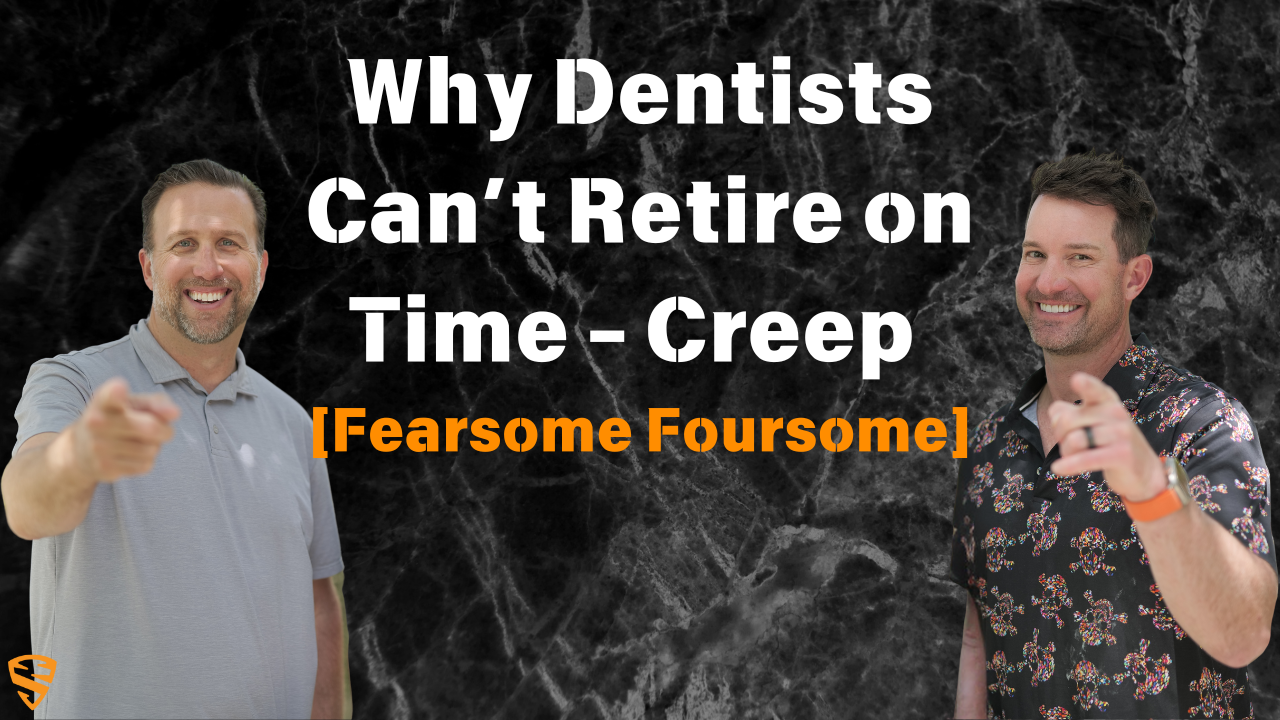













, June 15, 2023
, June 8, 2023
, May 31, 2023



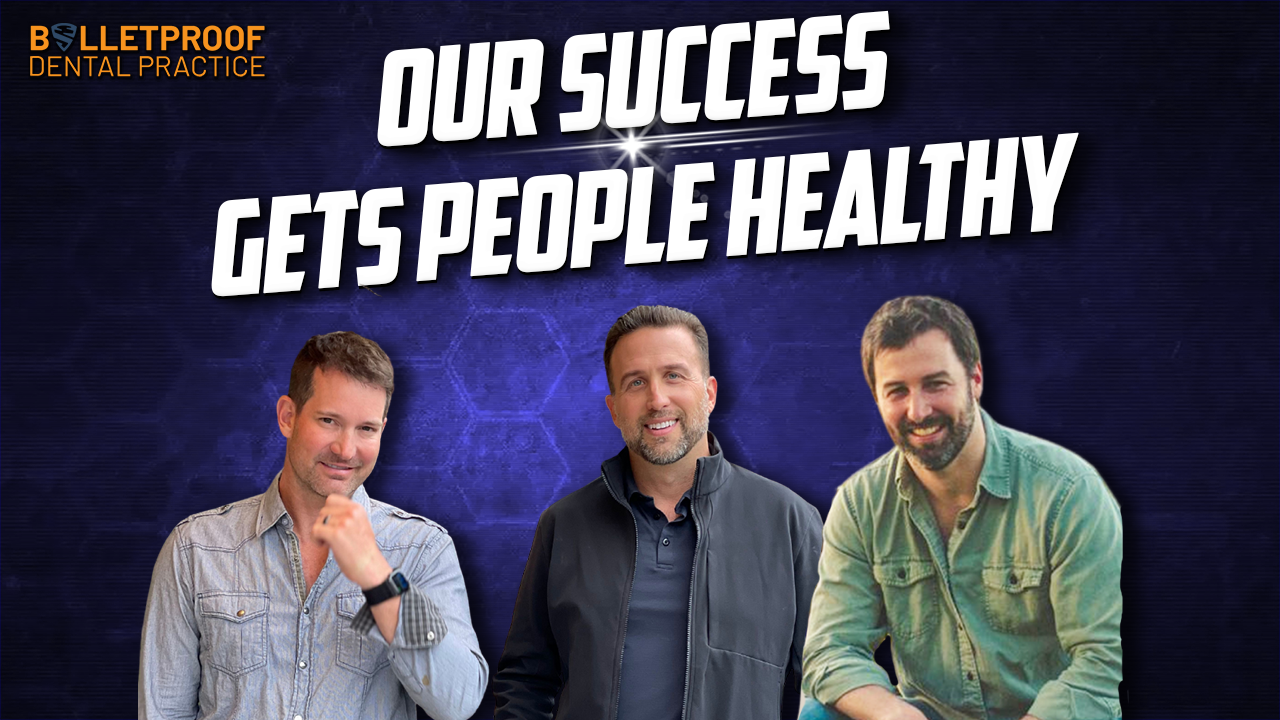







Look at These 3 Stats if You’re Thinking of Going Out of Network with Teresa Duncan
, January 11, 2023

, December 28, 2022



Knowing What You Don’t Want with Judy Kay Mausolf of Culture Camp and Erika Pusillo
, November 30, 2022



Cabo This Week, Immersion Learning, Biggest Breakthroughs, Your Personal KPI is Net Worth
, November 2, 2022
, October 19, 2022












Business is not Productivity, Productivity is not Profitability with Chris Salierno
, September 22, 2021













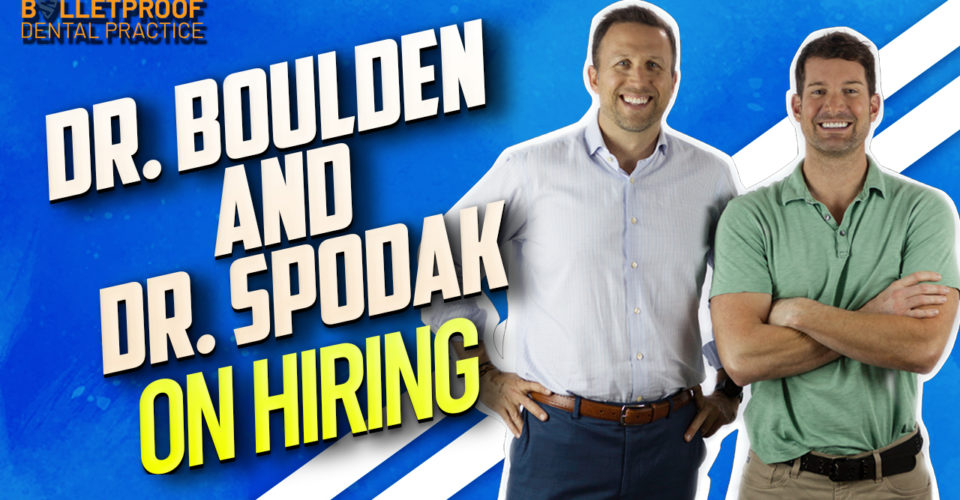







3 Biggest Bottlenecks of an Entrepreneurial Dentist: PART 2 with Perrin DesPortes of TUSK Partners