Loan Bites, Rogan Shots, Dyrdek Vision & AI Wisdom: All in a Dental Day’s Work!
Bulletproof Dental Practice Podcast Episode 303
Hosts: Dr. Peter Boulden & Dr. Craig Spodak
Guests: Dr. Trey Tippit & Dr. Dwight Peccora
Key Takeaways:
Strategies to become a person of value and develop resilience
Recognition of the top three hygienists in the country
Learning easy tricks for dental hygienists to improve efficiency
Resumption of student loan payments starting in September
Dentistry’s current focus on the psychological aspect of patient care
Addressing the hygiene crisis within the dental industry
Shift in favor of employees in the job market
High-risk status of 7.8 million federal borrowers potentially missing loan payments
Search results for dental hygienists
Engagement in a vaccine debate on Twitter involving Dr. Rogan
Cultural aspects surrounding the vaccine debate
Raising awareness about mental health issues in society
Importance of fostering intellectual debate and the recent decline in trust
Recognizing the significance of understanding the middle-core perspective
Challenging the difficulty of changing someone’s beliefs
Acknowledging Rob Dyrdek as a successful and savvy entrepreneur
Insights shared in “The First Million” podcast
Emphasizing the value of time management and balance
Life optimization principles discussed by Rob Dyrdek
Reflections on Father’s Day and the importance of having visions and goals
Exploring the entrepreneurial dimension within dentistry
Examining societal narratives around work and finding meaning
Strategies for increasing personal value and worth
Reevaluation of the perception of work as cruel
Recognizing the positive aspects of work and its role in personal fulfillment
Addressing burnout prevention in the dental profession
Hiring an implementer for effective practice management
Strategies for implementing new ideas and initiatives
Delegation as a crucial aspect of successful business operations
Cultivating fulfillment and purpose at work
Importance of regular and productive meetings
Establishing accountability and fostering a responsible team
Understanding the impact of lateral pressure in organizational dynamics
Weekly leadership team meetings to drive progress
Significance of goal-setting and tracking progress
Key considerations when building the annual plan
Embracing the evolution of the company and decision-making processes
Creating a more resilient business by reducing personal involvement
Applying leadership principles from “The Five Levels of Leadership” by Maxwell
Developing successors for high-value tasks and responsibilities
Setting a clear vision and guiding the team towards success
Dual aspects of leadership: personal growth and empowering others
Overcoming challenges through taking calculated risks
Expanding the application of AI in the dental field
Exploring joint ventures in dentistry in Texas
Streamlining email management through the use of plugins in Gmail
Enhancing efficiency by leveraging plugins for email copying and pasting
Optimizing processes for improved speed and quality
Auto-reply systems for efficient email and text communication
Implementing process streamlining techniques
Applying the Six Sigma approach to dentistry for enhanced quality
Utilizing dental technology to support the Six Sigma methodology
Delegating tasks to team members for improved productivity
Introducing a new automation system for cost-effective ordering and inventory management
Announcement of the upcoming mastermind or class, “Bulletproof GPT”
References:
Mighty Networks: Bulletproof Dental Practice
Tweetable:
Be a person of value, I think there’s an over-obsession with an intrinsic ‘look at yourself, like ‘How can I be fulfilled?’, ‘How can I be happy?’. And when you look inside for fulfillment or happiness, you’re going to ruin the possibility of achieving it. So, it is how you become more valuable like you get what you want in life by helping other people get what they want. – Dr. Craig Spodak
Full Episode Transcript
Below is the complete transcript of this episode of the Bulletproof Dental Practice podcast. Prefer to listen? Find us on Apple Podcasts, Spotify, and YouTube.
Read the full transcript
The following transcription was from the Bulletproof Youtube channel. Here is the https://www.youtube.com/watch?v=uTpzK6ObBKI
Craig Spodak
0:00:00
You get what you want in life by helping other people get what they want. If you own a massive dental practice and it takes great care of the community, you're helping other people. If you're a doctor with three or four employees, but you're helping them
Craig Spodak
0:00:12
and you're encouraging them, you're getting, you're not letting me finish bro. And this is how you become bulletproof. Bulletproof. Bulletproof.
Craig Spodak
0:00:31
Happy Father's Day guys, first of all. To us all.
Peter Boulden
0:00:35
To us all.
Craig Spodak
0:00:36
Yeah. To everyone, not just to you guys, everybody listening. But quickly, Dwight, I was asking a question. What's, because there's no right or wrong answer. But we all tend to answer questions from our own unique practices and each of our practices, as we always say, is a snowflake. But like what is your top producing hygienist do? Like your top, not the tippy tippy top, but like the top three, what is their average
Craig Spodak
0:01:00
collection for you?
Peter Boulden
0:01:01
Oh, geez.
Craig Spodak
0:01:02
Do you know? Are they big time? That's not something I know.
Dwight Pecorra
0:01:05
Like one of the top one of the top-ish?
Craig Spodak
0:01:06
We don't know.
Craig Spodak
0:01:07
What did you say? Are they in the 400 range?
Dwight Pecorra
0:01:12
I would say they would be between three to four somewhere. Okay, that's high. That's yeah, that's that's high Look at easily. I would say they're hitting they're passing 30. So what's 30? Yes
Peter Boulden
0:01:24
360 so yeah, yeah, and I know okay higher than that for sure. So that's good. Good range. Yeah. Okay. God, I was just curious
Craig Spodak
0:01:31
I had my own
Peter Boulden
0:01:32
Thought that is one of the things it's really doable like you hear that answer right in most practices, either I analyze or look at even before, like, you know, the average is probably about 200. I'll be if you're listening to this national average, hygiene, one hygienist typically about 200,000 or less, typically, but that is something that I've noticed that there's a pretty easy lift, you know, with even just like, even just coming to the summit or the mastermind, just learning some tricks for the hygienist, because it kind of opens up, it's a paradigm shift in the way they kind of present and do and address treatment. It's a pretty easy, let Trey in
Peter Boulden
0:02:08
here, it's a pretty easy.
Craig Spodak
0:02:10
It's also a four minute mile too, Pete, just to see what others have done. In fairness, my hygienist had never done what she was doing until she met Charissa and Charissa was doing those big numbers. So it's like seeing what other people can do.
Peter Boulden
0:02:22
Yeah, yeah. That's kind of exactly where I'm going is, but it's not a huge, it's not this giant skill set that must be learned, right? Like the skills are typically there, it's usually just here's the cadence, here's the flow, here's the things to look at, maybe do some higher diagnostic testing, things like that, and get better at presentation. And that's kind of like about what it should be, and the cool part is-
Craig Spodak
0:02:44
One of the things, Peter, that you looked at too, one of the things is the permission of the doctor to like, okay, go in and talk about blah, blah, blah. Go in and talk about whitening or sealants or nitrous or SRP or paraprotect. That's a big part too. I think that's what makes the biggest difference. I think so too, actually. If that's the biggest difference is the permission to say, go get them, go do it, I got your
Dwight Pecorra
0:03:08
back. I would, you know, I'm always an infrastructure guy and a scalability model guy. Cheers. Look at that. He's on vacay, but jumping in, so good.
Dwight Pecorra
0:03:17
Is that a midday beer?
Dwight Pecorra
0:03:19
Yeah, midday beer.
Craig Spodak
0:03:20
I know, it's a eight o'clock beer. I'm in Spain.
Craig Spodak
0:03:23
Yeah, he's in Spain.
Dwight Pecorra
0:03:24
Oh, five.
Trey Tippit
0:03:24
Nice.
Peter Boulden
0:03:25
Dedicated to the party.
Dwight Pecorra
0:03:26
But Trey, hold on.
Trey Tippit
0:03:28
I don't want to drink.
Peter Boulden
0:03:29
I know, Trey.
Craig Spodak
0:03:30
I know, I really don't want to drink. Please whip out a beer.
Craig Spodak
0:03:33
That's too much.
Craig Spodak
0:03:33
It is.
Dwight Pecorra
0:03:34
It is.
Dwight Pecorra
0:03:35
He's not a medical anymore, so no surprise.
Trey Tippit
0:03:39
That's awesome.
Craig Spodak
0:03:39
Thank you, Troy.
Dwight Pecorra
0:03:40
The reason, the reason I said what I said and not to throw us off because I think this is a great, you know, just starter or whatever, but I would love to know what the lowest is because that gives you a good understanding of the systems, processes, protocols, onboarding. Lowest, hold on Dwight, the lowest person in your team to me sometimes is more valuable than knowing what your top one or your top three are because you got some rock stars just like doctors out there. To me, it's more powerful to know what the average doc or the doc can do at Fort Bend Dental versus what a, there it is, Carbox gone. Or what a, you know, what your average hygienist can do or what your lowest starter hygienist can do because that tells me more about the infrastructure of your business than it does like some of the crazy-
Trey Tippit
0:04:32
I agree.
Craig Spodak
0:04:33
I agree. I agree. We've got one agenda that's probably like a $25,000, $20,000- Correct.
Peter Boulden
0:04:41
My gene was not on the moderator's agenda today.
Craig Spodak
0:04:44
I know. I was just closing up a loose end.
Trey Tippit
0:04:47
Yeah.
Peter Boulden
0:04:48
Sorry about that.
Dwight Pecorra
0:04:49
I like how I jumped on it.
Craig Spodak
0:04:50
You fuckers are talking serious dentistry.
Peter Boulden
0:04:52
Yeah, well, Craig was trying to get something in, and I just hit with it. Just going for it, Trey.
Craig Spodak
0:04:58
Going for it.
Peter Boulden
0:04:59
All right. Okay. Well, I want to catch up real quick with Craig. We know where you are, Dwight. You look like you're in the thick. Trey, I don't… This is a new backdrop for you.
Craig Spodak
0:05:07
Where are you now?
Craig Spodak
0:05:08
No, he's just… Well, I'm building an entirely new setup in my actual office.
Trey Tippit
0:05:14
That's right, all right.
Craig Spodak
0:05:16
So you're like building a podcast setup?
Dwight Pecorra
0:05:18
Well, I got a desk, I got a whole bunch of monitors.
Dwight Pecorra
0:05:21
Yeah, now he's got a raised desk. Microphone.
Dwight Pecorra
0:05:23
You can stand up like me now. I'm building it one thing at a time.
Trey Tippit
0:05:25
Good.
Dwight Pecorra
0:05:26
Go baby, go.
Craig Spodak
0:05:28
Peter, are you still in your bathroom with that green screen?
Peter Boulden
0:05:30
I am, I am.
Peter Boulden
0:05:31
I'm actually sitting in the tub right now.
Dwight Pecorra
0:05:34
He can take a piss and be on the podcast at the same time, it don't matter.
Peter Boulden
0:05:39
Hey, I was actually in Texas.
Craig Spodak
0:05:42
One of those boards that goes across the tub.
Trey Tippit
0:05:45
Yeah, yeah.
Craig Spodak
0:05:46
With a rubber ducky and a peanut butter jelly sandwich on it.
Peter Boulden
0:05:50
All right.
Peter Boulden
0:05:53
Everybody talk serious business yet or no? Can we add some content please?
Craig Spodak
0:05:57
Sure.
Peter Boulden
0:05:58
I was in San Antonio this weekend. Hey, Texas boy, come on. I was there, but I was only there for 27 hours, roughly. I had some things. I went to Mark's Summit. Oh, I love that hotel. That place is awesome. Yeah. And I, you know, didn't get to see him just because it's crazy. You know, someone made the analogy, like running a summit is like, like three wedding, trying to run like three weddings. And so I saw his like, his, his ops manager, his gal Ashley, and I, and I was like, look, I don't intend to see him. I know his hair's on fire and he's back to the age of blah,
Peter Boulden
0:06:34
blah, blah.
Peter Boulden
0:06:35
But anyway, it was good. I saw a ton of people in that 24 hours. It was worth going. So a ton of people. And here's what's funny is y'all, when I got home, so obviously people recognize like, you know, I love the podcast and people come up, but I got hit up like no less than 10 DMs, like, hey, I was gonna come talk, I saw you at the summit and I was gonna come talk to you, but I didn't, right? And I, or you were talking to other people and like whatever. I was like, damn it, really? Like I was there, you didn't talk to me? So it was just funny, like I get like Instagram DMs on that, like I was gonna come say something, but I didn't. And thank you for all you do kind of thing. And I was like, I would love to see that in person. But anyway, it was big, it was big, a lot of people there. That's a big summit. He knocks it out of the park, man. Yeah, yeah, he's doing it. You know, he's coming to speak at our summit, actually. So he actually pinged me and he's like, dude, I'm sorry we didn't get to see each other, but I'm excited to see you in Vegas. I was like, maybe I'll ghost you. Just kidding.
Dwight Pecorra
0:07:35
No, he didn't ghost you.
Craig Spodak
0:07:36
No.
Peter Boulden
0:07:37
Just kidding.
Craig Spodak
0:07:38
The moral of the story is if you see one of us at a convention or something, come on up because,
Trey Tippit
0:07:44
sorry, did I break up for a second?
Craig Spodak
0:07:46
No, you're good.
Trey Tippit
0:07:47
The moral story, if you see us at a convention,
Craig Spodak
0:07:49
doing this because we really want to add value. And for guys like us, it does make a little bit of a difference to say, hey, what you said last time helped. Or whether that's dropping a comment on the YouTube channel or a rating or just walking up to Dwight when he's at one of the 400 demo festivals he's at every year, just go and say hi.
Trey Tippit
0:08:09
Doesn't it mean something to you guys, seriously?
Craig Spodak
0:08:11
Doesn't it mean something?
Craig Spodak
0:08:13
It means something.
Craig Spodak
0:08:13
We like it.
Peter Boulden
0:08:14
Did you guys know that, Dwight, you're gonna know this for sure, that student loans are resuming September 1? Remember how we talked about that maybe six months ago? We were uncertain. So, I found out that it is resuming. It's resuming September 1. Not getting funded again is what you're trying to allude to. It's with first payment due October 1. So, it's… What's the hiatus we've been on? When did this start? The risk is sounding like an idiot. I was going to ask that question, Trane,
Dwight Pecorra
0:08:38
and I didn't want to get it transferred. Well, we spoke about it, I want to say,
Craig Spodak
0:08:42
six to seven months ago,
Peter Boulden
0:08:51
and we all didn't really know what was going on. I don't believe any of us have, or in that space of having student loans. I mean, there's no flex, but it's not applicable. So you filter out what's not applicable to your life. But I have been asking.
Dwight Pecorra
0:09:02
We have doctors that do.
Dwight Pecorra
0:09:03
We have doctors that do, and we're trying to help them kind of build better. And that goes across the whole,
Peter Boulden
0:09:07
not just dentistry, obviously, that goes across the whole economy. So I imagine that there's going to be a lot of restaurants open pretty soon, a lot of vacancies on vacations.
Trey Tippit
0:09:18
Well, I mean, it started March 2020.
Dwight Pecorra
0:09:21
I mean, Covid. Yeah. So think about that. A three year reprieve.
Peter Boulden
0:09:24
Right. And that interest both.
Trey Tippit
0:09:27
And interest.
Dwight Pecorra
0:09:28
Well, I think interest was halted, Dwight.
Peter Boulden
0:09:29
Yeah, that's what I'm saying.
Craig Spodak
0:09:30
Oh, yeah, yeah, yeah.
Peter Boulden
0:09:31
That's what is amazing. Here's what I was thinking about this.
Dwight Pecorra
0:09:34
I was like, you know, psychologically,
Peter Boulden
0:09:35
this is going to be a mind blast for people. Because after three years of not paying, you're kind of like, I'm good, I'm not. You've adjusted your life to not accounting for that. Six months for pre, you know how you could take, like I took a couple of those things called the forbearance when I got out of dental school, which was basically like hardship, right? Like, hey, don't make me pay this because I make $0. Please don't make me pay this. And like, you can do six month tranches of time to avoid it. But after like, and six months is fine. You kind of know it's coming, right? It's resuming. But after three years, that's gonna be, people have adjusted their lifestyle, their housing, their car, all the things, potentially now to make these bigger payments. And we know what the interest rate is, and we know what the aggregate amount of a lot of these loans are. It's not chump change.
Craig Spodak
0:10:30
It's going to put a hurtin' on it. Even if it's just psychological, even if it's just a psychological game, I mean, you know, when you're scared.
Peter Boulden
0:10:39
I don't think we're going psychological, bud.
Craig Spodak
0:10:41
Well, I'm just saying, even for those.
Dwight Pecorra
0:10:43
With a lot of docs that are getting out too, they're so ingrained into the mindset that they need to pay it off as fast as possible, that they take lower amortizations or terms rather, and I mean, some of them are staggering payments.
Peter Boulden
0:10:59
In order to pay it off as fast as possible?
Dwight Pecorra
0:11:01
Yeah, and then they have these huge lump sums. So they're stepping back into a big number as opposed to something that you wanna finance
Craig Spodak
0:11:08
out 25 years or so.
Peter Boulden
0:11:10
Well, it was just interesting. I was just thinking like how this is going to affect, you know, look at Mark's conference. He actually spoke on he got on stage and kind of opened with a number of things. And one of them at the end was kind of like the hygiene crisis. He was calling it right where everybody is kind of just in need of hygienist. They kind of left and never came back after Covid like we're having a hard time with it right now, actually a little bit. And I was talking to some other I was actually sitting at Paul Goodman's table, dental nachos, and he was kind of saying the same, you know. So it seemed like an epidemic going on in dentistry right now. And, you know, I think, look, remember, we were talking in COVID. Here's where I'm going with this. We were talking in COVID. And remember how the pendulum, y'all, was like, we were in COVID, people were just, the pendulum swung way in the favor of the employee, right? We were getting pitted against each other. This office will pay more. This will do more. I want 75. They'll pay more.
Craig Spodak
0:12:04
Right.
Peter Boulden
0:12:04
We were seeing it in the mastermind. People just kind of, people were getting, their salary was getting weaponized against them, so to speak. And so maybe these, maybe this kind of shift in, we're looping it back, you guys, to the student loans. When people have more obligations they need to pay for, sometimes their eagerness to work gets elevated.
Craig Spodak
0:12:22
Right?
Craig Spodak
0:12:22
So you're saying the transference of power from employer from employee back to employer again, the labor market.
Peter Boulden
0:12:31
I'm just maybe. Yeah. I need to work. Look, if you don't have a three thousand dollar a month student loan payment due, you're like, I'm good. I'll just do things here and there and tiptoe around. I don't need full time work. I don't know. I'm making an extrapolation about maybe maybe this could be maybe the resuming loans is a good thing, not only for hygienists, but also for dentists and anyone who's got student loans. It gets people back to work, whereas everyone's been bellyaching about no one wants to work anymore is where I'm going with this, Craig. That's it. And so it could be a good thing, like pay your debts. And also, everyone was hoping and praying that there was going to be some relief, like a Biden relief act of getting rid of student loans. And that doesn't look like it's going to happen either. So it's like time to just get back to work kind of thing.
Dwight Pecorra
0:13:15
I think it's how long it was paused, which is the real problem.
Craig Spodak
0:13:18
I agree.
Dwight Pecorra
0:13:19
Because just like the economic shutdowns for pandemic issues, it was the length that killed it. Not, I don't know, we don't know what to do. So let's just shut down for a little bit and figure it out. Oh no, we can't go all that. The length by which it allowed it to happen in other countries and ours all over the world. But I think this is the same situation. Had they allowed it to go for a year or less or something, I think- It just becomes habitual, right? Right. I mean, it literally says that there's 7.8 million federal borrowers are considered at high risk for missing payments once payments are resumed on student loans. That's just, it's hurtful because it's not only that, hey, something's coming back and I've gotten used to another life, but that they created a world for themselves. A lot of these individuals who didn't have to pay for something could move in with parents, could make these changes, could do whatever. And guess what? They didn't justify working hard to get a better paying job or work harder to develop their skills or do anything like that. When in the past, when there was a bad economy for hiring, people would go to more school to make themselves better qualified for bigger jobs. That's different than just being like, well, you don't have to pay a
Peter Boulden
0:14:28
bunch of the debt you have to pay. So by the way, you can hang out and keep it simple. And I think this is the bigger impact. Does that make sense? Yeah. You guys got anything on that? I mean, I think we've kind of taken that to where it is. Yeah. It's going to be really interesting to see the impact on it. I don't think that solves a hygiene problem at all. Yeah. Maybe you're right, Trey. That was probably a reach because there's probably not a massive amount of hygiene debt out there. And I guess I was just trying to draw any kind of connection to why, because we lost, a lot of people we lost, never came back, right? Yes, and this is what I ran not too long ago. I ran a recruiter search on hygienists on LinkedIn. And you pop up in whatever range you want to run, it popped up with 300 hygienists, which you immediately think, that doesn't seem right. And then you go and look at them, and I'm not kidding, it was four out of five. It says RDH in a job history or a title, that's why they pop up, but they were no longer hygienists, they were in sales, they were managers, they had already moved on to other careers of some sort. Yeah, so that's something dentistry is going to have to deal with a little bit. Right. And, you know, you were hearing anecdotal stories of people were about getting up and saying, I have to pay my hygienist in California, seventy five dollars an hour. And immediately Craig's head popped in like, well, who cares? What's it what's the relative worth? And like you could be winning in this scenario. But people get stuck on the hourly of what it is. Speaking of and this is a little sidebar. Have you guys been watching speaking about covid and stuff? You guys been watching this vaccine debate with Rogan?
Craig Spodak
0:16:03
Oh, on Twitter. Oh my God. With RFK.
Dwight Pecorra
0:16:05
It's crazy.
Craig Spodak
0:16:07
It's amazing.
Peter Boulden
0:16:08
So people, you don't know of this. Let me give some context. Joe Rogan had on a guy named Dr. Hotez, I believe it's him. And he's a vaccine expert. And he was talking about-
Dwight Pecorra
0:16:17
Baylor College of Medicine here in Houston.
Peter Boulden
0:16:18
Okay.
Trey Tippit
0:16:19
I didn't know that much.
Peter Boulden
0:16:19
A medical medicine guy. And so anyway, Joe Rogan's a big fan of RFK Jr. who is by trade an attorney and he's kind of a conspiracy theorist, kind of looks at things deeply. Anyway, Joe's a big fan. He had on Dr. Hotez on his podcast and he's like, look, you're look at this man and doesn't look like the picture of health first off. And so Joe starts digging in like, hey, do you take do you take vitamins? Like, no, I don't do that. He's like, well, what do you do? And he's like, you know, he's like, how's your diet? Yeah, he's like, I'm, you know, junk food, you know, junk foods, my thing. I eat it all the time. I don't exercise. And then he was like, well, well, vaccines are chemicals. He's like, no, no, no, no, no, no. Those are not chemicals. They are antigens. And so Joe just kind of is like, what is going on? So anyway, the bet has been Joe basically went online and said, doctor, I will challenge, we'll bet $100,000 for you to debate in an open forum, JFK Jr. on science.
Craig Spodak
0:17:20
On science.
Peter Boulden
0:17:21
Okay, so now other people have jumped in. Bill Ackman put another 100,000, Jason Garcandis put in 10,000, I think Andrew Tate put in- It's up to 2.6 million right now. It's up to $2.6 million, all going to charitable things, right? And it's just like about the science. And it's just, it's interesting how, it's just interesting, you know, our society.
Craig Spodak
0:17:41
Well, let me, let me, let me just unpack one thing. Did you, did you listen to the RFK Jr. Rogan podcast yet?
Trey Tippit
0:17:47
Yes.
Craig Spodak
0:17:48
I thought it was wonderful. So I, I don't, and I also want to clarify, I don't think that Joe Rogan's a fan of RFK Jr. I think Joe Rogan just creates open dialogue for contrarian thought points. And RFK Jr. has always been a contrarian and a conspiracy theorist, because let's face it, last year's conspiracy theories are coming to light now. So I'm not saying I have no position on any of this, but RFK has successfully sued Monsanto, and he's well-versed, he has a lot of data, and all he's looking for isn't a long-form discussion, because no one has ever given RFK Jr. an uninterrupted hour or two to just unpack what he said. He's always been blocked. So he had that, and during the conversation, Peter Hotez came up, and Joe was pretty harsh on Peter, because he should be, because Peter wasn't, you know, Peter's been really wrong, and said, and then Peter responded to Joe like, hey, it was really unfair, basically, what you did to me. He says, hey, unfair or not, I'm on the show. I'd love to have an open dialogue. And Patrick Bitt David said this as well, because I asked Patrick when he was in the office about vaccines, like, look, you know, I was always suspicious because I invited every single vaccine expert to go onto my podcast, every single one, and not one single vaccine medical professional would take my offer to come on my podcast. So he's just like, that was just the most incredible thing. And here you are, Peter won't do it as well. So like, if you won't have an open dialogue of two hours, it makes me really nervous about your position. Like, why are you shirking from a dialogue? I mean, trust the science, science is doubt. Religion is trust the expert. It's not, this is not religion. This is science should be debated. I mean, look at how many times we've all been wrong as medical professionals. We've all done techniques that we no longer do. And it was because it was a seed of doubt put in our mind and from some other professional, we learned and we pivoted. So it's just really scary. I'm not speaking to what RFK Jr. or Peter saying, but the fact that you won't go on a debate stage. The American public clearly wants, if they crowdfunded this thing, it could be a hundred million dollars overnight. I mean, I give 10 or 20 bucks to see this, but I wouldn't know.
Trey Tippit
0:20:07
Right.
Trey Tippit
0:20:07
I wouldn't know about this stuff.
Peter Boulden
0:20:08
Right.
Craig Spodak
0:20:08
The autism correlated data is very interesting. I mean, I know there's- RFB's data.
Peter Boulden
0:20:13
That was his, that was his stage for a while, right, Craig?
Craig Spodak
0:20:15
Yeah, but it's just, it's interesting. It's interesting because when we all grew up, we didn't know anybody with autism. We didn't know anybody with peanut allergies. Like it's, there's something, it could be cell phones, who knows what it is, but it deserves to be studied, you know, and questioned and open debate. I mean, I'm not, I am less confident today than I've ever been. I would have taken the other side of any vaccine debate, you know, three or four years ago.
Peter Boulden
0:20:41
It's always funny. You can say like, look, follow the money, right?
Craig Spodak
0:20:45
COVID would- 70% of our advertising, advertisements on TV, 70% are from big pharma.
Dwight Pecorra
0:20:53
The main concern on issues-
Craig Spodak
0:20:55
They cannot speak against that.
Dwight Pecorra
0:20:57
I think the-
Craig Spodak
0:20:58
So they're bought.
Dwight Pecorra
0:20:59
The narrative is bought. Yeah, but the cultural issue here is not specifically the debate or the conflict is when complex issues arrive, complex, this is indeed a very difficult complex issue. For some reason, our society believes that you have to run away from that and not talk about it as opposed to saying no this should be out in the open and discussed openly and pursued to figure out. Same goes with our you know our current president we haven't seen him enough we haven't asked him enough open questions he hasn't been out publicly we can't just throw anything at
Peter Boulden
0:21:31
him how do we verify his mental capacity right now when there's questions of that
Dwight Pecorra
0:21:36
that's a complex issue.
Dwight Pecorra
0:21:37
You know, there's… This is…
Craig Spodak
0:21:39
And when you cover it up, when you cover it up, these falling, incomplete sentences, you cover it up, it makes it really alarming.
Dwight Pecorra
0:21:45
But what I'm saying… It makes it really alarming….it's not necessarily, am I, are we Democrats, Republicans, do we believe in vaccines, do we not? That's not the issue, is what's wrong culturally if there's this concept of like, no, he shouldn't, Peter shouldn't have to stand up in front. No, I mean, you stand for anything.
Peter Boulden
0:22:01
If you're willing to be justified in being, even on a podcast like this, intellectually curious, Dwight, is what you're saying, and allowing for that forum. And, Craig, I think that's, you're going with Joe.
Craig Spodak
0:22:11
I think debate is the wrong word, though. I think there's a lot of problem with debate. It was just a long-form, three-hour discussion. And Joe's a good moderator. He's not going to ram it down his throat. He just wants people to defend their positions.
Craig Spodak
0:22:23
That's all.
Craig Spodak
0:22:25
And having a guy like RFK, or there's a myriad of other ones that would actually be
Dwight Pecorra
0:22:28
able to debate or have an intellectual conversation would be so valuable for all of us. Yeah, but the last few years has virtually destroyed the want of that and probably intentionally. People are much more, people are moved when issues are divisive and they don't want to hear the other side. So now you can push voter blocks, you can push whatever your agenda is. So now the idea of intellectual discussion, shit, that's harmful to all of those things. So we've been, the last few years, I think, has destroyed trust in that regard.
Dwight Pecorra
0:23:01
Yeah, I would agree. And I think you've based this on misinformation and it's on both sides. I mean, clearly the extremes are pushing absolute on both ends. Therefore, all we're asking for is, can somebody explain the middle core? And then at some point in time, each of us get to decide what we believe in. But the point is, is to understand the middle core. Can we get the extremes out of the scenario and get to the point where we can have an open and honest discussion and debate about how this works? We're struggling to pull that off in presidential acknowledgments and debates, much less… I mean, how many times have we talked about the fact that there's some individuals, even individuals even like RFK Jr. who has said I want to run and I should at least get to debate, you know, Joe Biden. Well, they've said they'll debate him. Yeah, yeah. Like we're talking about now you can't have a presidential debate against someone who's ready like. Yeah,
Craig Spodak
0:23:50
they're not going to debate. Well, in defense of the Democrats, I think they don't typically debate in a primary sitting president. I don't think that happens. I think a sitting president does not run against you though.
Dwight Pecorra
0:24:03
The point is that he's more independent, right, in that concept.
Craig Spodak
0:24:06
Yeah. I think the biggest thing is when something is suppressed and people are running away from the conversation, even if I was previously disinterested in the conversation, I suddenly want to pay attention. So when you talk about vaccines or natural immunity a year or two ago and you got literally kicked off of YouTube, I'm like, oh shit, that's scary.
Peter Boulden
0:24:27
Yeah, look at it even in dentistry remember the divisiveness of you know like CR camp versus neuromuscular camp I mean there's I mean there's so much rage back to your point like everyone it gets very tribal and everyone wants to join the tribe and then and then stand in their conformational bias of what they believe in and so anyway I didn't want to get us on politics I just I thought it was you know it is fun to bring up current events because sometimes
Craig Spodak
0:24:51
we don't all hear, you know, you don't all hear this. I'm a big fan. You know, on the RFK podcast, it was something interesting, Setty. You mentioned a Mark Twain quote. It says, it's easier to fool a man than convince a man that he's been fooled. And if we are being fooled, let, if we are, if this is really a big, big farm of play and they're really, they're doing this to us. Imagine all the other things that we have to start realizing, like, you know, maybe gluten intolerance is from this company, or maybe this, or our food's killing us. I mean, listen, I'm in Spain right now, and people are not fat here. People are not fat. Do we have a behavior issue? Do we have a food issue? Do we have, you know, why is pharma controlling our food? Why? There's a lot of very interesting questions, and we're not getting well. We're a very, we're a morbid nation. We didn't do as well in COVID because of our morbidity, the comorbidities we have. And pharma's way into our food. There's certain things that are done here. None of the sodas have corn syrup, and the meat has to be certain regulations. The food tastes better. None of the indigestion when I eat out here. So it does beg a lot of questions, and RFK as one person has sued successfully Monsanto several times from what I understand. I mean, he's a Democrat. He's always been a Democrat. And frankly, Joe Biden. I mean, I'm sorry, Joe Rogan is a Democrat. Elon Musk voted for Biden. These are not like the right-wing extremists that people are painting it out to be. It's just a very scary time when freedom of speech is really being questioned. It's very frightening. And if you're not paying attention, I think you should learn. I love pods, Craig.
Peter Boulden
0:26:27
I was listening to one the other day and I thought of you. And I'm going to recommend that you guys listen to it. Do you guys know who Rob Dyrdek is? Yeah.
Peter Boulden
0:26:35
You do?
Peter Boulden
0:26:36
Craig, do you know who Rob Dyrdek is?
Craig Spodak
0:26:37
As a skateboarder, I don't know anything about him.
Peter Boulden
0:26:39
Yeah, everyone knows him as a skateboarder.
Craig Spodak
0:26:40
Ridiculousness with the girls.
Trey Tippit
0:26:42
Yeah, ridiculousness.
Peter Boulden
0:26:43
Yeah, Chanel West Coast.
Trey Tippit
0:26:45
There you go.
Trey Tippit
0:26:46
She's a miscognizer.
Craig Spodak
0:26:47
She laughs at everything.
Peter Boulden
0:26:48
She laughs at everything. Giggles like a hyena. But, you know, everyone kind of knows him as a skateboarder. He is probably on track to become a billionaire right now, the next couple of years, through just being a businessman. And kind of, I was always a fan of him, you know, because he had the Play Factory and he had a, my dream was always like the warehouse and the foam pit shit and the skate, indoor skate park like he had. So I was a big fan. That's huge for a big guy too. Dude, yeah, yeah, Big.
Trey Tippit
0:27:15
Who Big?
Trey Tippit
0:27:16
Big died.
Peter Boulden
0:27:17
No way.
Peter Boulden
0:27:18
Yeah, he's dead. Yeah. What happened to Big? I don't know. It was before COVID actually. Yeah, I think he died of a heart attack. Anyway, so my point is I was exposed to Rob on a different level just because I followed him and I heard a podcast on the My First Million, right, with the one that I kind of recommend to you guys. Anyway, Greg, it's a worthy podcast to listen to, the one that just came out, episode 465, because it talks about Rob, and he is a savage business person. And here's why I related it back to what Greg says, is that he is, basically what he says is this, believe in your vision, go after it with massive intention, set your hourly worth, like Naval kind of always says, and then get help through implementation, right? And become obsessive about the things. But he tracks everything implicitly, like, right, he's tracking his time, he's making sure he's balanced, he's making sure his vision board is updated, like all the things. I think it's a worthwhile thing. I thought it was very applicable to dentistry, so I would encourage people, just like we talk a lot about in our summit, visionary aspect of it, right? Making sure that your GPS is set to the right freaking coordinates is so important. I think it's a good pod to listen to. If you guys have some, Craig, you might have some time on the boat, but I think it's really good. I think you'll be impressed with his acumen, business acumen. He's just a savage man. And like you can also give him that skateboarder, right? He's a savage.
Craig Spodak
0:28:45
He's so intentional with his time. And the way he spends his time on the personal level as well,
Dwight Pecorra
0:28:57
it is wild.
Dwight Pecorra
0:28:58
That's right.
Peter Boulden
0:28:59
It's inspiring.
Trey Tippit
0:29:00
Is it like that?
Craig Spodak
0:29:01
You'll become a professional, a high level professional skateboarder if you're not an intense person. So we tend to silo people like, wow, Michael Jordan, so blah,
Craig Spodak
0:29:11
blah, blah.
Craig Spodak
0:29:11
But a lot of these people that are extremely skilled in one area.
Peter Boulden
0:29:15
Yeah, but Craig, being uniquely qualified to be a skateboarder does not uniquely qualify you to be a savage business person, to get intention, to set vision. You could have just been athletically lucky, if you will.
Craig Spodak
0:29:26
Right?
Peter Boulden
0:29:27
You could have just skateboarded more than you're needed.
Craig Spodak
0:29:29
I find more often than not, I silo people that are masters in their craft. And I'm like, oh, well, that's just the basketball player, that's just the football player, that's just the podcaster. And I meet them, like, oh shit, these people are sad, they're badasses at life. I think that's more common, I'm not trying to take anything away from Rob Dyrdek, but I also know, help me understand something, Peter, did you see one of his episodes a long time ago and tell me, and this is the second, or this is the original that you saw?
Peter Boulden
0:29:57
No, yeah, probably this is the second, yes, and I did see it the first time, because he's wanting to kind of, Trey is saying, he's wanting to kind of develop this, like it's called life optimization
34
0:30:07
essentially, right?
Peter Boulden
0:30:08
He's showing people how to optimize life because he's claiming to kind of, I got it all figured out, right? Not figured out, but like he's, he's doing good things and he's waking up excited and like, you know, that's funny. My kids actually said to me, they're like, dad, you know, what do you, what do you want for father's day? And for whatever reason, I was reflecting back to them and we were talking, I was talking about them growing up. I said, you know what I want? My wish for you guys is that you wake up every day when you get to be adults and you are excited to do shit as I am. That is what I want. And they're like, what? And Rob kind of talks about that, right? Like having visions and goals. Like he bought a chunk of land. He sold a company and had $10 million and bought a chunk of land, called his Forever Ranch in LA. And like that was all the money He had but he's like I see the vision of me having a forever home with my family right and it's on this bluff And it's looking it's out looking. You know that was the part that reminded me of Craig It's looking it's the most it's the most You know immaculate piece of property in the all of the LA and it looks out here And I could see my family playing I could see my grandkids And you know it's on four acres and or 10 acre whatever it was. And I was like, it's just really cool. And his intentions were set so pure that like, he's gonna make it happen, right? And so, I don't know, but he was talking about getting up excited and I was thinking about all of you guys and I was thinking about how blessed we are in dentistry and just, you know, Dwight's foot is on the gas and, you know, Dwight, I bet you have to, I bet right now you have to control yourself to not get out of bed in the morning. Like, I don't get up yet, don't get up yet. You wanna probably get going, right? That is, you know, you look at people's longevity in life, like we talk about dentistry, you know, dentistry or just retirement period, people retire and then typically about four years later they die, right? I mean that's the stat. And it's because, you know, you lose a lot of that like that vigor in your life and that desire to go do shit and the desire to go change shit and the desire to go build shit. And, you know, I think that's a really cool thing for dentistry because we have control to be able to do that. Meaning we're not working UPS and sitting behind a desk and like the harder you work, you get no guarantee. Like my dad was an airline pilot. He said to me, he said, look, if I fly the plane great, here's my job. If I fly the plane extraordinary, I'm in the exact same position as I am if I flew the plane great, right? There was no upside reward for greatness. And as entrepreneurs, as dental owners, as dentists, there is a reward for it. And that's a beautiful thing. I know I just kind of talked about it.
Craig Spodak
0:32:33
There's another dimension though, Pete, too. You're talking about the entrepreneurial dimension, because that's where your mind goes, and I think a lot of our minds go. But there's a societal narrative that says work sucks, it's meaningless, you're supposed to make the money, and then you exit work and retirement is when like fulfillment happens. And clearly, as we all know from what you just, from what you just said, that's not true. So, and, and you're talking about one dimension of excellent work, exceptional work, moderate work and different results. There are a lot of people, my dad was one of them. He was an exceptional dentist, but he'd never scaled beyond his two hands. Exceptional dentistry, one patient at a time. And if you ask him, he'd have it no other way because you're kind of co-mingling and it's fine. It's just that I just want to point out the bias. You're co-mingling, scale, and entrepreneurial effort. And there's a lot of people who listen to our content.
Peter Boulden
0:33:28
Craig, what I guess is, I was not doing that so much. Like, was your dad waking up with the same vigor as like, I cannot make the rest of this case today
Craig Spodak
0:33:37
as I did- Look, he's 82 years old and in the office.
Peter Boulden
0:33:41
Well.
Craig Spodak
0:33:42
I should speak to what he is. And all I'm saying is I'm not trying to make wrong or right. I'm just trying to widen the narrative to encompass the Peters of the world and the Dwights and the Tres and Craig and my dad. There's other guys out there that and the UPS driver, by the way, funny enough, when I was going through one of the worst times of my own business life and I fricking hated my business, my UPS driver was really, really always smiling and happy. Funny story behind it, by the way.
Peter Boulden
0:34:08
Were they about to IPO at the time? Isn't that when they were IPOing?
Craig Spodak
0:34:11
No, he just, there was some entrepreneurial bumps in the head, but he liked what he was doing. Come to find out, really funny, you probably want to edit this out of the podcast.
33
0:34:22
But he had this system.
Dwight Pecorra
0:34:22
You know there's no edit button on our pod, right?
Craig Spodak
0:34:24
Yeah, I know, but he had this system, true story Peter, he had a system where he was actually, if the woman, if a woman leave the garage like half open, he'd go in and do another type of delivery. True story. He's no longer on our route. I didn't know that at the time. I just see a UPS driver always smiling, always happy. No wonder your garage door has been left open.
Trey Tippit
0:34:45
Hey, why was he so happy at your house?
Dwight Pecorra
0:34:47
Yes, yes.
Peter Boulden
0:34:50
How was the moment you took the crown?
Craig Spodak
0:34:52
It was past cracked, correct?
Dwight Pecorra
0:34:53
Did you see it?
Trey Tippit
0:34:54
I thought you were at work.
Craig Spodak
0:34:55
No, I was away.
Trey Tippit
0:34:56
I told her I couldn't see it.
Craig Spodak
0:34:58
But anyway, the point I'm trying to make is that there's a job for everyone, but the idea that work is cruel and unusual, that we should be rewarded by the gains and not have to suffer. Everything's the victim now. You could misgender someone and they're like, this is an insult to my very core. Like work is good for you to toil, to suffer, to try to put in and try to do the best and correct and do better every day. Hope and progress is the fuel for fulfillment. And I think everybody's got a role. Don't leave, sorry. Provide value. Yes, be a person of value. And I think there's an over obsession with an intrinsic look at yourself. Like, how can I be fulfilled? How can I be happy? And when you look inside for fulfillment or happiness, you're going to ruin the possibility of achieving it. So it's how do you become more valuable? Like you get what you want in life by helping other people get what they want. If you own a massive dental practice and it takes great care of the community, you're helping other people. If you're a doctor with three or four employees, but you're helping them and you're encouraging them you're getting you're helping other people and I just think that work has a bad rap and Especially now people are looking at Instagram and here I'm in Spain and oh I could be like that guy or whatever But honestly guys I say this to you every time on vacation one weekend about drinking beer and hanging out I'm starting to get like loss of purpose very quickly. So if you feel, so I'll speak to the person that's feeling burnt out, because for some reason the burnt out people always like to call me, and I think it's awesome. I mean, if I can create the space where people can share with me, but my advice to them is stop looking inside for fulfillment, you know. When you chase fulfillment, when you look inside for it, you won't find it. Go find it outward. Go serve other people, go help other people, be of value.
Peter Boulden
0:36:51
This is actually a good segue into the next topic I want to talk about, Craig. You just said it right there, which is burnt outness. And it's not, before you hit exit on the podcast, this is not about being burnt out. But I have seen something happen over several masterminds and several summits and several things of just having dental friends that, and I want to hear what you guys have to say about this. Burnout typically happens because you always think you're A, the best person for the job, right? Meaning like you have so much on your shoulders and you either are not good at delegating or you don't have someone who is an implementer in your business. The lights went on for me in my business and we've seen it now in many cases that when someone gets really intentional about what they want to do and they recruit implementers and getting someone dedicated to saying, hey, I need you to do this and run with it because it's my idea, it's my vision, go for it, right? Getting help is the thing that I think is the antidote to burnoutness. Would you agree, Dwight?
Dwight Pecorra
0:37:54
Absolutely.
Peter Boulden
0:37:55
Because you're big on implementer. Like, Dwight, you actually give them names. But like, if you don't, I remember I went to a seminar, you used to always go to seminars, think non-dental and stuff, I don't know where this one was. Anyway, maybe in Atlanta. And the guy was on stage, and he was very abrasive, very in your face. And he was basically like, look, if you don't have an assistant, like non-dental assistant, if you don't have an assistant and you're running a business, you are your own assistant. You're the assistant.
Peter Boulden
0:38:24
Yeah, nothing else.
Peter Boulden
0:38:25
And I was like, wait, I don't have an assistant. At that time I was like, wait, I don't have an assistant. I get everything done. And then I was like, but am I really getting it done? Am I really moving the ball forward? Or am I just telling myself that and then playing the, woe is me card, I'm so busy. I work 18 hour days. Look what I've had to do kind of thing. And I was like, is that, am I getting a sadistic pleasure from saying that? Or am I really wanting to move the business forward? And then my second thought was, well shit, what are they going to do for $60,000 a year or whatever you hire someone to do, right? Are they going to get my dry cleaning? Are they going to take my dog to the groomer? Like I don't even know what to do because I was so bad at delegating that I couldn't even implement someone, be the implementer.
Dwight Pecorra
0:39:01
And the hardest thing is to be honest with you, and this is full loop from Dyrdek all the way to kind of what we're talking about. We talked about this in office hours, right? That's what I'm bringing up. What blows my mind is that, you know, we get the bite of saying, Hey, I have purpose. I'm building a business. I'm pursuing it. And rightfully so it's like, Hey, I can get this done because it's small task, but we become our own bottleneck, no doubt. And a lot of people do not understand that bringing in a implementer or an integrator, the way those of you have read RocketFuel, the book or things like that. All those types of things. The concept is still, you have to have a vision, you have to have a perspective, system of which you're implementing, and bring that person to implement what you believe you want to do and the direction in which you're going. The problem is, is like we had in office hours, we had somebody who said, hey, basically I hired an implementer, but the way they were talking about them was like a CEO, was come in and do it.
Trey Tippit
0:39:58
What are they doing?
Dwight Pecorra
0:39:59
What are they doing? That's where I really struggle. And in fact, I struggle seeing that so often in businesses that they end up either letting them go or another type of a business gets created that you did not intentionally want to have. And now it's affecting your purpose, the purpose of your business and the purpose that you stand for. So I think this is clearly the way to augment and kind of scale yourself and then scale your business.
Peter Boulden
0:40:24
I guess my message, Dwight, sorry, is really just to your point, is that you're obviously a big fan of, you have several people around you because you know you can rob Derrida your way. You see the vision, you're building this building, building this practice, hygiene department, you know very clearly what you want and therefore you're able to get implementation. But until you get clarity, no one else can. And the other thing, the takeaway, Craig, you weren't obviously on the pot, the office hours, and there's no shade on that. I'm just telling you, bringing you up to speed of what happened. Dwight, did you notice, because we were talking about kind of some of the transformations from, let's call it, we're wrapping up this mastermind, it's almost been a year. I was just kind of looking around at me and like, in the beginning, there was like this freneticism when someone joins, like holy shit, I don't know what to do, my life's upside down. And now there's like this weird swagger by all this dentist, like I got it, I'm comfortable, I'm buying this, I'm doing it.
Craig Spodak
0:41:17
Yeah, look at Ryan. Look at Ryan.
Peter Boulden
0:41:19
Which is unbelievable, but like, it went from swag.
Dwight Pecorra
0:41:23
I was crying a lot during office hours today where it was like, oh, look at you, Tim, the guy with the 80 conflict culture index just making decisions and blowing a gun, and then the next one comes out of like,
Peter Boulden
0:41:34
you see what I'm saying?
Dwight Pecorra
0:41:35
Like, you're just hiring, you're blowing a gun, like, the difference, and even Eric sitting further back, sitting back in his chair, lean back. I suppose like, what do I do next?
Craig Spodak
0:41:45
What do I do next?
Dwight Pecorra
0:41:45
Which is how he started. I mean, even at the summit, you know, and the difference is who do you surround yourself by? Who's around you and pushing you to implement? And the biggest difference between the rate at which we're actually getting things done in our business, for example, Rob Dyrdek, what did he do? 15 million to 350 million in five years. That's what that podcast, that number 465 that Pete was talking about earlier. He took it that far. What did he do more than anything? Yes, it's delegation, but B, it was just saying, I know how many hours are in my day, and I'm obsessive about making sure that I'm valuing those hours, and I'm segregating them out, and I'm delegating, and I'm putting the right people in the right place to go along. And during office hours, we were talking about some individuals have a real hard time because they want to implement, but they're accommodating too many people. I can't fire this person, even though they're clearly not the best person for the job, but you know what, they've been here for five years, 10 years. They were my dad's assistant or whatever it was.
Peter Boulden
0:42:44
Right.
Dwight Pecorra
0:42:45
And that is what holds our businesses back. People are like, man, Rob didn't give a flying flip. He's like, I'm going from point A to point B. This is how much time I have to give you. I'm giving you this much. If you can't implement that in the end, we're going to go and blow it and go on. And that's the impact. He then gets the chance to not be fulfilled
Peter Boulden
0:43:02
only with purpose at work, but he finds- How do you, what is your system for doing that really quickly? Like, meaning, do you, let me, let me frame it up. Do you use software a lot? Do you have regular meetings? Do you sit some time and manifest things before you do? Like, you know, what do you do in all the things, right? Like how do you drive the ball?
Dwight Pecorra
0:43:24
What do you mean to do?
Peter Boulden
0:43:25
For me, we have implementation. So right, if someone's listening to this, right, I'm always going back to driving in the car, listening, being like, what do you mean implement, right? And so it's different for everyone at different life cycles in their business, right? If they're growing their business, right, it's different versus kind of getting in that homeostasis and just like, I wanna just keep doing what I'm doing. But what is your trade? Did that help kind of like?
Trey Tippit
0:43:48
Yeah, yeah.
Peter Boulden
0:43:49
Yeah, like, you know, regular meet, right? Some people just need to have regular meetings to check in with someone. Like sometimes I get actually emails every day to make sure some of my people are on track and we're working on things. Just wondering, it's helpful to hear tips for people listening because then they can audit their process or if they don't know how to start it, meaning like I had no idea what I was doing when I started to implementate, implementer, right? A personal assistant, executive assistant. So it would have been massively valuable for me to hear guys who did have one and use them effectively and were able to 2 and 3X their income because they worked on high value things.
Peter Boulden
0:44:26
Yeah.
Dwight Pecorra
0:44:26
I'm going to give a quick example and I'm going to show you how I am. I'm implementing it with somebody. One of the past masterminders Bonner called me yesterday and said, Hey man, I mean, he's on masterminder now too, but he great guy, Austin, Texas dude, build an incredible practice. And basically said to me, which is what we talked about in the other office hours was man, the, the second you hire an associate, you realize how much of your business is actually broken and how much infrastructure you don't have. Because he was running everything. This is why a lot of people listening are gonna be saying the same thing. I run my business, my clinical business is wrapped around how I care for patients. Well, he started walking out and he hired other doctors to come in. The most incredible thing he realizes is like, well, nothing works when I'm not here. And I'm like, well, then that's because you don't have a business. You've got to create.
Peter Boulden
0:45:14
You are the system.
Dwight Pecorra
0:45:15
You are the system. So now he's trying to create that. So he said, well, how do I build that kind of process? How do I do it? Well, for me, it's yes, hiring people is one thing, but building accountability and what I call a cadence, meaning I went from having a meeting, this sounds familiar to most people, all the time. Something's happening, putting out fires.
Peter Boulden
0:45:33
Meeting jiters.
Dwight Pecorra
0:45:33
Yeah, meeting jiters. Everybody's having a meeting. Oh, we need a meeting for that. Okay, let's block out an extra time for lunch, let's, two, I have one hour meeting for all, you know, that runs our 70 person operation that does what we need to do, and I, one week, every week, it's an hour on Monday morning, and we run a cadence, and what that means is that we all meet, and I have a middle management leadership team, and they all sit from every office on one call, and we document the items in which we're tackling this week. Not for the vision of five years out, not for 10 years out, not all year long, but what are we getting done this week to move the needle this week, so that next week we move the needle, and the next week, because most of us tell people what to do on Monday morning, and then the next Monday morning we walk in the office, and we tell them the same thing
Peter Boulden
0:46:21
because it didn't get done.
Dwight Pecorra
0:46:23
All year long.
Peter Boulden
0:46:23
I actually used Dwight's template, and I can say it's worked really well. Right, like the completion of what you've been working on this week, what's on your agenda, sorry guys, what's on your agenda and then what's upcoming in the following week. And you can bang it out in an hour and it serves everyone on the page. So I actually forgotten Dwight and you were talking about that. I was like, dude, I forgot, we actually got that.
Dwight Pecorra
0:46:45
I got that format from Dwight. And we love it because you post it and everybody's meeting right there and at the top it automatically calculates the percentage of completion of your task for this week, right? For me, the most important thing there is it's called lateral pressure. Everybody's like, well freak, you got it all there done and I'm still at 20%. I got to get my… It's a lot of lateral pressure on me because I might have a few items but you know what? When they see that my items get to 10 or crazy 15 or something like that, there's people pulling stuff off of my list because they know if I get cluttered, the whole business slows down too. So I'm real big on being on there and be like, I got too many things. We're delegating them out. We're pushing them out. What can we, what can we spread out and kind of tackle as a team? And the accountability is a big deal. We meet in person and on zoom so everybody can say, Hey, what happened? Why are we moving 80% of your items from this week to next week? What happened? Well, yeah, yeah. Okay. Well, I think one thing next week we're not moving.
Peter Boulden
0:47:40
Okay, what do you do?
Dwight Pecorra
0:47:41
What do you do? I do that exact same thing.
Trey Tippit
0:47:43
You do?
Dwight Pecorra
0:47:44
So, we have a Monday morning meeting. I have it. It's basically the leadership team that meets. We're functioning on a weekly chunk of time. We have the to-do list. We track what percentage, what people do. We have items that we discuss. The one thing that I think is worth mentioning, Dwight, that kind of to frame what Dwight's saying is that although you were operating all on one week chunks, those one weeks are designed by a planning meeting prior that has, here's our year goal, or here's our quarterly goals, or here are monthly goals. Everything is on a big picture broken down to this little individual unit. So it's not some random week to week.
Peter Boulden
0:48:22
Like a reverse engineer.
Dwight Pecorra
0:48:23
You're not wandering through the proverbial wilderness week to week, you're headed toward a very specific goal that was designed also with a cadence with the team where everyone knows that every week that we're doing something, it's in the pursuit of something bigger that
Craig Spodak
0:48:40
was predetermined.
Peter Boulden
0:48:41
Right.
Dwight Pecorra
0:48:42
And what he's bringing up- It's a annual cadence broken down to quarterly's objectives, as we call them broken down to the, you know, monthly goals. And then we let those break down into the month. So then my goal as a CEO is just to step back and say, are we on track this month, this quarter to hit that goal? Whoa, we're behind. We need to update these. We need to track all those bonuses, the structures, the incentive programs, because I can make small tweaks to make sure we get back on track to be able to hit that goal. And so the most important time of my year is building that annual plan. I'm putting a lot of effort in there to make sure that we're getting a filled protocol for where we're going and how that happens, but then it scales all the way back and then you just make sure that they're following up with it and they're staying with it.
Craig Spodak
0:49:32
I think.
Dwight Pecorra
0:49:32
Wait, let me pause you.
Craig Spodak
0:49:33
Let me pause you there.
Peter Boulden
0:49:34
Craig, I want to hear your system.
Craig Spodak
0:49:38
So I think that one of the things that we have here is that we have really excellent leaders who have a very good idea of where they're going. So the system that you guys have put in place is working for you. When I talk, and again, I have a bias here, when I talk to the dentists out there, they have absolutely no idea where they're going. No idea. Like it's scary. They don't know. Or maybe I'll do this. Maybe I'll do that. Their, their teams are confused. So the cadence meetings are great after you've done concise, you know, understanding where you're going. My leadership meetings exist without me. I'm not a part of my leadership meetings for the last year. I only, Eric is my only direct report per se. I'm here to help everybody. I'm an open door policy. I want people to help. How can I support you is the most common thing I say. But it's getting less and less and less. It's usually just for personal advice on their own, what they're trying to do. But the individual teams come up with what they want to achieve for the year. They're the ones, you know, of course I'm adding pressure and ideas to that as well, but it's really the leadership meetings I'm absent unless I'm needed for one of the lead teams.
Peter Boulden
0:50:48
I mean, would you guys agree that's the evolution of where you would kind of go? I'm looking at Craig saying that. I'm saying like, maybe we're in version 2.0 and he's in version 3.0, right? Like maybe that's the evolution of an autonomous team is where I'm going.
Peter Boulden
0:51:02
Right.
Craig Spodak
0:51:03
Well, also, I look around you, the three of you, you're all in process of building other offices. It's true. If you would stop your, and I'm not saying you should, but if you were not acquiring another office, adding another 20 team members the next year, that would, maybe you would get to that. So it's always this balance of like boredom, stability, then you take on a big chunk and then you grow and there's things unravel. But right now at the moment, that's where it needs to be. And when I'm there, I suck a lot of oxygen. You guys know it. I can't keep my mouth shut and I can actually get in the way of people's development. And it's cool for me right now.
Dwight Pecorra
0:51:39
And I would say that I think he brings up a good point. Like for example, my 10,000 square foot, the Missouri city location central hub, that team manages their own daily operations
Peter Boulden
0:51:51
to hit their goals, same thing.
Dwight Pecorra
0:51:52
What are you gonna do?
Craig Spodak
0:51:53
If you go into that leadership meeting, they're gonna be like, Dwight, why are you here?
Peter Boulden
0:51:56
What are you gonna be?
Dwight Pecorra
0:51:56
They're like, you're not close enough to the trenches to actually make, we do decentralization decision-making the same way that Craig's doing. It's because it's the multi-location factor where we have to sometimes have to step back and be like, are we all at least achieving the same directive? And are we building, building, building, which is the mode that he's in. I got a question for you guys then.
Peter Boulden
0:52:17
I got a question for you guys. Would you agree then that a good objective for people listening would be to strive to continually extricate yourself from unnecessary presence, right? Meaning not because you shouldn't or can't be there, but because it creates, right? Like if you extricate, if you become unnecessary, then potentially you are more bulletproof, correct?
Craig Spodak
0:52:43
Absolutely.
Dwight Pecorra
0:52:44
Well, your business is more bulletproof.
Peter Boulden
0:52:45
Your business is more bulletproof. And I'm not saying that means clinically, I'm not saying tap out, I'm not saying people should work well I'm not saying anything I'm just saying as a as a guiding light if you are necessary for the machine to work then you are the machine right and so if you're continually looking to extricate I'm in this meeting now I won't be it in two two weeks and then I'm gonna go work on higher higher hourly things per and of all or I'm gonna work on this or I'm gonna go build a building whatever it is but if you're continuing extricating yourself or maybe that's not, I'm just hypothetically, I'm just throwing out.
Craig Spodak
0:53:15
I have something to add to what you're saying. So again, the dimension that you're coming from, and I'm not picking any beater at all, so don't hear this this way. You're coming from like, I am gonna pull myself out so I can work on something better, higher, whatever the word you are using, and it's not important. There's another thing about pulling yourself away, is it allows your team to grow into the position that they can be. So it's like that five levels of leadership by Maxwell. There's Lao Tzu, who has a great leadership quote. Lao Tzu's idea is that a leadership presence should be barely felt, and everyone in the team underneath that leadership should be arriving at conclusions that they think are their idea. But if we all subscribe to this Maxwellian idea of the five levels of leadership, pinnacle being the highest, you shouldn't be doing anything like just supporting people. So yes, you can think of it as like, I can be on a, you know, go over here and work and hire dollar per hour, whatever. But also what about the people that you're now creating space for that can grow like, you know, Lacey, Erica's or the Morgan's. We all these people, we looked at pulling away of like, I can't handle all this stuff, I got to back off. But look at the unintended consequence of these powerful people that had got a chance to step up, earn more, feel better, more fulfilled. So it's a two-way street. Like pulling away is not selfish for you, it's actually generous for them.
Dwight Pecorra
0:54:39
Well, it's an evolution. I think y'all are basically saying in a different way the exact same thing. And it's the idea of training your replacement. You look to train someone to do things that you do so you can work on the high value tasks. And whether that's intentional or not, or by design or not, you start to learn that time is limited. And in order to just use time to your benefit, or just keep up, sometimes out of necessity, you just do it on accident. And you leave a hole from where you came. And that hole leaves the people that have the best, you know, the people with the best talent take the best opportunities and they see that hole and they fill it from that standpoint. And they are essentially on the exact same journey you're on because they're doing the same thing behind them and it is dragging everybody. I mean, this is a big locomotive as a sport. And it opens the door for them. And it doesn't have to be me necessarily because I think it's the human mind. You set the vision, then you guide the process. And a good example of that, Pete, to what you mentioned to Dwight earlier, to allude to that, is it's not that you want to be extricated from the business, but our leadership meeting, if I'm not there, it moves on. It happens. It keeps going. The whole thing takes place. If a Morgan's not there, we reschedule it. And there are people that run these things, that do this, and it's a… Because your role is different.
Peter Boulden
0:56:08
But did you set that intention, right? Like, let's wrap it all the way back up to the Deer Do thing, because we all agree with that. Did you set that in as your intention, Craig, Trey, Dwight? Or did it happen by chance?
Craig Spodak
0:56:20
By chance for me. And I just want, you know, listen…
Peter Boulden
0:56:24
Well, that's not what I was expecting
Trey Tippit
0:56:27
I wrote a very clear vision in
Craig Spodak
0:56:29
2008 for people and in my vision it talks about The most important thing for me, which was the people and how they had accomplished so much and how they were running autonomously So yes, of course, I said that but the process in which I got there was a shit show. It was a breakdown, you know? So, so my intention was always to do that. If when you guys have all read my own personal descriptive vision of like how I reflect on the people's self-esteem and all that stuff. And all I wanted to say is that we're talking about some, there's a two part to this, there's the team and there's you moving on to do higher value things. There are higher doing nothing is fine too. Like you could be the type of leader that just, it's not because you have higher value things, you could actually just do it because you want your team to grow. And I think that's how I arrived at it. I was a, I was at a space where I'm like the smartest guy. I need to be a part of this. And it was really, I'm the only one who cares. And that was really screwing things up.
Dwight Pecorra
0:57:29
So my intentionality was always to free myself of smaller decisions so that I could make better big decisions. And that's all that mattered to me. And at the end of the day, even today, I'm talking about this big cadence because we're off, whatever we had it this morning instead. And I was actually at the building and I wasn't here and Angela was with me, but we have another Angela who's Sydney, our business office manager, and she stayed and she would have normally come to the building with us, she ran the cadence this morning for the whole team. So yes, it has the ability to do that, but I can tell you that my job at this point in time is, are we building another location? Are we building a building? Are we shutting down for COVID? These are the big decisions that I need to be involved in. The reason I'm sitting in a meeting with a few of us that we were chatting, this group and another group, just sitting around, and they were asking about delegation, things like that. I'm like, pull up your email. I can tell you if you have a business or you if you are your business Because people had email on there was like we want to order a dimmer for the treatment coordinators office
Craig Spodak
0:58:34
It's just like I listen to friends phone calls, and I could tell by the way they're talking like hold on John I'll call Dan. Hey Dan John. What's the time like dude? What are you doing? You're all in between everybody, but one I have to actually bolt, but I wanted to say one last thing.
Peter Boulden
0:58:49
That's good.
Trey Tippit
0:58:50
You know why, Craig?
Peter Boulden
0:58:51
Because in a second we're about to talk about the AI corner. Oh, beautiful.
Craig Spodak
0:58:55
Some perfect timing.
Craig Spodak
0:58:56
So, I want to say this because I think I feel very strongly. We all have children that we love very much. Many of us have taught our children how to ride a bike. And riding a bike is an insane exercise because you take a child who's never ridden a bike before and you push them down a hill and you let go of the bike. And it's not a question of if they're going to fall. It's just how hard they're going to fall. Are they going to break something? But we all go through it. You don't know what type of business you have until you do the bike exercise. You have to run, hold the seat, and you have to let go. And if it crashes and it doesn't break completely, great. Do it again and again and again until it can run on its own. But you need to take that leap of faith, and you need to see what your team's capable of. But if you're really smart and you have all the answers and you like to talk like me, you're gonna wind up really cutting your team off at the knees and you have to step back. You have to look at that, you really do. And at a certain point, our goals are all to be supportive leaders and have the decisions made by our teams.
Peter Boulden
0:59:56
All right, log off.
Craig Spodak
0:59:58
Thanks for joining us.
Trey Tippit
0:59:59
And thanks for the mic.
Peter Boulden
1:00:00
It was a pleasure.
Trey Tippit
1:00:00
Good to see you, buddy.
Trey Tippit
1:00:01
Enjoy, appreciate it.
Craig Spodak
1:00:02
Bye guys, take care.
Craig Spodak
1:00:03
Thank you.
Trey Tippit
1:00:04
AI Corner.
Peter Boulden
1:00:05
The AI Corner. So it was so funny actually as I was thinking about this, I'm still recording this FYI. I was thinking about, I was like, you know, Craig, I know where he is and I guess he's not gonna be joining us, but that's okay. Cause like, I'm gonna be talking about some AI shit and every time I try to talk about some AI shit, Craig gets in there and says, well, you know, this is terribly boring.
Peter Boulden
1:00:28
Every time.
Craig Spodak
1:00:29
Every time.
Peter Boulden
1:00:30
It's so funny. I get hit up all the time when he does that by like people that, you know, tech dentist friends of mine are like, dude, bring up more of that shit. And I'm like, well, okay, maybe I should. Maybe I should just do a podcast on that. All right. So this AI corner is, is something I don't know why I called it this AI corner. This is the only time I've ever called it an AI corner. But anyway, the first AI corner is talking about
Dwight Pecorra
1:00:52
the most important change in our economy and our world right now. And if we don't have a portion of our podcast designated to AI, I think we're getting behind.
Peter Boulden
1:01:00
But I want to talk about where the rubber meets the road, Dwight. Like, where are we actually going to start using it or using it? Okay, so I'm going to tell you guys some real life shit of what I'm doing. Because I think that's, that's actually what Patrick in Texas, I don't want to use people's last names, so I don't want to do it, but Patrick, your buddy, he's like, hey, you talk more about this. Here's what I'm doing with my AI. All right, so I was looking at doing a joint venture recently, right, in dentistry, and a joint venture is, has large contracts, okay, and I was under the, I was kind of half in, half out on this, and I wanted to analyze the contract. What I did not want to do though is send this to my attorney who would have charged me $3,000 to interpret the verbiage just so I could get the understanding of the legality of it. I was like, I don't even know if I want to do this venture, but I sure as shit don't want to get on the phone and talk about it at $600 an hour. That much I know.
Peter Boulden
1:01:54
What did I do?
Peter Boulden
1:01:55
I took the whole 87-page document and I bite-sized it up. I put it in an editable Google Doc and I would grab sections. And I would paste it into – I said, hey, chat GPT, you are now my legal advisor. I was like, I can't do that. And I was like, just do it. And he was like, okay. And I was like, I need you to summarize this section of what the hell it means in normal language. What's the consequences? What do I need to look out for? Boom. And then give me a feedback. And it was like, what this is saying here is that, you know, if you ever open another dental practice near them, they're going to see your pants off kind of thing, right? And I'll look, so point of it and then I would basically cut that in, in this document and in red writing, I'd put, you know, I'd put layman's language underneath it. So I could go back later as the compilation of this document and actually read it as a non-lawyer but fully understand. Now this is not going to take the place of an attorney, but it sure is going to make me a lot. I sure don't have to be educated by the attorney. What does this mean? I can now get into constructive things if I do move forward. It's like, hey, I need to address section 2.2. It says this, and actually I gave, I actually had it correct, give me some red line edits to some of the sections of saying, hey, here's the things I want to include, blah, blah, blah, blah. And it did it beautifully.
Craig Spodak
1:03:13
Okay.
Craig Spodak
1:03:14
So that's one way.
Craig Spodak
1:03:15
Love it.
Peter Boulden
1:03:16
Looking at it. And I think it saved me. Ultimately I didn't, it was moot. Like I thought it would be moot. And I'm tabling this, this joint venture contract and all that thing. And it cost me, you know, maybe 45 minutes of time to analyze it. And for free. Beautiful. Versus it could have been a couple thousand dollars that I just forwarded over to my attorney. Like, what do you think? What do you think?
Craig Spodak
1:03:34
And you learned how you're going to use chat GPT in the future.
Peter Boulden
1:03:38
100% value.
Dwight Pecorra
1:03:39
Yeah. Just like, you know, I have somebody on my team who's in law school as well right now, and they use chat GPT to understand a lot of legal stuff. So, yeah, I mean, they've got to figure it out too. They're in law school.
Craig Spodak
1:03:51
They're figuring it out.
Dwight Pecorra
1:03:52
It's awesome to be in school with chat GPT.
Trey Tippit
1:03:54
Oh my God.
Dwight Pecorra
1:03:55
Oh my God.
Peter Boulden
1:03:55
I mean, I got banned in my daughter's school. It got banned in it, of course, like most. And I was like, you know, that's ridiculous. That's ridiculous. But I found a workaround for.
Trey Tippit
1:04:05
So yeah, right.
Craig Spodak
1:04:06
Atta boy.
Peter Boulden
1:04:07
The second thing I'm actually doing right now is using plugins in Gmail and going to start and basically cutting and pasting in people's emails and then kind of roughly in shorthand saying this is kind of how I would want to respond, formulate a response. This is to none of y'all or anything like that, but let's just say like business things that you just don't have time for, right? You want it, you want it, you don't want to be too pithy because then you look rude, you don't want to be, you don't want to be non-comprehensive in your response. So immediately, and I don't need to do back to our conversation about, you know, not needing to be highly integrated now. Like I'm not highly integrated in my business in terms of emailing people for it, but I was thinking, how do I then, would this be something good for responding to patients? And let me pause there for a second. Some people in dentistry might not have had the luxury of being a master of the English language. Let's just say, yeah, and maybe their approach is not tactful in the response to patients. Maybe they don't. Maybe they lack empathy. Maybe, maybe. I don't know. Right. response to patients. Maybe they don't, maybe they lack empathy. Maybe, maybe, I don't know, right? Maybe they run the risk of saying inappropriate,
Dwight Pecorra
1:05:19
inappropriate,
Peter Boulden
1:05:21
violation. I don't, you know, maybe it's not a violation and you're communicating directly, but you get what I'm saying, right? So I was like maybe this becomes maybe not the system, but an augment to the people who are outwardly responding to people just to make sure we're staying on the up and up. I am a big advocate of always trying to make it easier, faster, or better. And if you can do all three of those things, it's for me. And so I think it checks a couple of those boxes. It's easier, it's faster, and it potentially could be better. I just don't know yet. So what do you guys think about that? I love that idea. Anytime you can augment, you know, replacement.
Peter Boulden
1:06:03
No, no, no, yeah. Obviously not.
Dwight Pecorra
1:06:05
At this point, AI is different, but replacement has always fallen short for me. That the augmentation and then speeding up of the people doing those things has been huge. Because again, you have someone to guide that process along and there you just 10X the production.
Peter Boulden
1:06:20
What's an average email you think, take to construct and reply to just out of curiosity, like just on average in your organization, would you guess?
Trey Tippit
1:06:28
By whom?
Peter Boulden
1:06:28
Seven to 10? Yeah, exactly.
Peter Boulden
1:06:30
By whom?
Peter Boulden
1:06:30
By whom?
Peter Boulden
1:06:31
Some are speedy and great, but they may not be good at writing, let's just say.
Peter Boulden
1:06:35
Right.
Peter Boulden
1:06:35
I don't know, but I'm saying it's probably a seven to 10. By the time you look at it, digest it, read the email, then reply, go back and edit, it's probably a seven to 10, maybe 15 minute endeavor. I'll be honest with you.
Dwight Pecorra
1:06:47
I think this is why I said a while back, we're going to be able, people ask me about AI and I usually tell them, I'm going to be able to double the size of my company with only a 20 to 30% increase in my workforce. That's what's going to happen. And I think that we double down. The truth is, I've seen some stuff for auto replies for emails and for text messaging. Remember, a lot of our world right now is stuck on dopamine hits. And if I had, every time somebody would just, hey, how you doing? And it auto replied, hey, I'm doing great. I hope you're doing well too. Boom. And I don't have to respond to those text messages, emails. I had a lot of time back in my life because they all need dopamine and fine, I'll give it to you in an artificial form. I'm done with that. And I think patients are in some ways the same way. Oh, I'm sorry, you weren't able to get through our phone calls. I'm glad you emailed us. Let me make sure we're going to call you back next bull, whatever. A lot of this can be automated. Most of our, if you shadow a lot of the people on our team, in particular at our front desk, you realize a lot of their jobs, you could automate and give them peace of mind to be able to focus on the person standing right in front of them instead of all the other minutia.
Dwight Pecorra
1:07:54
That's almost an interesting thing.
Peter Boulden
1:07:55
Like, you remember the thing, I forget the process that Toyota has it. And it's the way they kind of fabricate vehicles. And it's like the, gosh, I can't remember the acronym. I used to read books on this, but it was like the MILF, I don't know, anyway. But basically someone would come in, come into your organization, like a Toyota auditor, and look at the way you kind of fabricated things, or was in your factory, and like would streamline from an efficiency standpoint. I need to look this up again now.
Trey Tippit
1:08:19
Six Sigma.
Peter Boulden
1:08:20
Six Sigma, thank you, golly. Golly, you got brain fart right there on live on air.
Dwight Pecorra
1:08:25
But I was thinking like,
Peter Boulden
1:08:26
what about an automations expert that you could kind of bring in and like bring into your dental practice and be like, hey, go watch this person. Go watch this person who answers the phone all day. Go watch this person who insurance the verifications. Go watch this dentist or whatever it is. Without the rose, without the colored glasses that have skewed your view of dentistry, you've been in dentistry forever, therefore you can only see dentistry stuff. Come in as a new person and be like, hey, what's Blue Ocean like? What's Blue Ocean like?
Craig Spodak
1:08:54
Where do you see an easy lift?
Peter Boulden
1:08:56
And there's gonna be those people, I just don't know what they're called yet. But anyway, I was just thinking that. Let's go follow that person. Like tell me where the Six Sigma lies in that, what they're doing, Dwight. And I think that's the hack to you going, you know, growing your company like you were saying.
Dwight Pecorra
1:09:10
Yeah, and I love the fact that you point out the fact that sometimes we're just too close to it. Because we'll go in and the reason we do that is because 5% of the time there's a patient out there who wants blah, blah, blah, like how is that? I mean, I get it for customization and the Ritz-Carlton feel, but at the end of the day, I mean, not only is that not necessary or practical for scaling, that's not what generational need is day to day.
Peter Boulden
1:09:37
What are you doing? I mean, I gave a couple examples. Like, so I think it's nice that we talked about it so much in theory, guys. Remember when it was coming up and we were kind of the first talking about it in dentistry. I know Pearl was doing it from a diagnostic standpoint. We were talking about the CHAT GPT and going through all that. What are you guys, beyond Pearl and the diagnostics, I don't want to go there, Dwight. For sure. But like, what are you guys potentially hypothesizing about doing or are doing now?
Dwight Pecorra
1:10:03
So for us, one of the things that we were looking at that I like, and this goes back to our delegation factor, is that there's a workflow that works with also Gmail, where you can also consider the option where it actually ends up, oh no, I'm sorry, this is Outlook, ends up grabbing the email that you're receiving and auto-reading portions of it and requesting out to see if this email can be responded or tackled by somebody else on your team that you allocate for certain things. And so there's, which to me, again, if you can diminish the amount of garbage that comes to me is far more effective. You can read, you know, the transcription of your voicemail on your phone and can send it out and be like, this sounds like a Fort Bend Dental related admin item, it goes to that person. If it goes, if we can start going down that direction, honestly, I will be able to grow and scale my business and put so much more thought into making sure that the core qualities of our business are maintained. But right now I got so much minutia, it's like, how do you tackle it? How do you get it done? My biggest thing is exactly the direction you're going. How can we get it to where it auto-delegates as well as, yes, some of it could auto-reply, but some of it's auto-delegation as well. There are tasks that need to, I need the tax return for whatever. Don't ask me for a tax return. Like I'm the last person. All I'm going to do is punch you to somebody else. Or like Craig said, this person, they're answering the phone, oh, let me call this person. It's like, why are you the go-between? That's one area that I'm really enjoying the direction of going. Uh, and then the other side is, is we were looking at a, a new automation system for ordering and inventory management and things to that degree. Which I think that that's just, first of all, it's going to drop our costs significantly because it's going to be like, Oh, boom, you hit this order cycle. I'm going to be able to order it at this pricing stack. And I think that's where a lot of these big name groups and, you know,
Peter Boulden
1:12:00
I think what it's going to do, Dwight, it's going to look at your, it's going to log into your patient management software. It's going to see that you did 64 proposal composites this month and be like hey you probably need some more A2 or whatever. And like it's going to artificially kind of order it. So it may not help you from a money standpoint but it may help you from it. Well twofold. And it actually orders that A2. That's what I'm saying. It looks at that. Your notes and all that are going to be amazing. You're going to have to be able to select that on the actual notes and all those little details. So if you've pre-built those templates, those templates are going to be the method by which you do ordering down the road. But more importantly, it doesn't just read what you've done. It reads what's on the schedule and proposed. It reads what's being proposed by some of this AI x-ray reading and says, what are patients coming in for? So it's kind of prepping, because there are times when, hey, it's summertime, you know that you haven't been doing as many wisdom teeth extractions,
Dwight Pecorra
1:12:57
but you're about to have a ton more.
Peter Boulden
1:12:59
You guys want to know, I was going to save this for a future announcement, but I'm going to go ahead and do it.
Dwight Pecorra
1:13:03
Yeah.
Peter Boulden
1:13:04
So at the summit, at the summit, we are launching for the next Masterminder class, Bulletproof GPT. So bear with me for a second.
Trey Tippit
1:13:14
Here we go.
Peter Boulden
1:13:15
Right. It has we have uploaded and digested in a large language model all of the code from 300 podcasts. OK, so now it's now you get to interact with you can ask a question. Hey, what's the best system for doing this? You can interact with the advice of Dwight and Trey, Greg and Peter. And then not only will it give you the answer to help chat GPT your way to dental operations from the 300 episodes in the past, because we've talked about it probably at some point all over and over again, right? We'll show you the timestamp and the clip and the section. You can go watch that now on YouTube video. So that's going to be available for people. Yeah, it's pretty good. I mean, look, it's a good call. I'm going to grow a mullet and go buy a jet ski. And I'm done, guys. Sounds like a John Rocker thing to me.
Dwight Pecorra
1:14:10
Hey, my favorite is like.
Peter Boulden
1:14:12
I think that's what you're going to say. Was that an East Pound and Down reference you were saying, the mullet and jet ski?
Dwight Pecorra
1:14:17
Yeah. My favorite is that the next office hours is not going to be Pete, Craig, or Dwight. It'll be Bulletproof's Chad GP.
Craig Spodak
1:14:25
No, it will go back to the old school DOS C prompt.
Dwight Pecorra
1:14:28
It's just going to be that.
Trey Tippit
1:14:29
You just type.
Peter Boulden
1:14:30
No, but that would be, it's a cool interaction thing. You'd be like, Hey, I know I heard that. Or I have some questions. Like I would actually probably interact with it. You know, I'm probably creating it selfishly for myself as well. And as well as the next masterminder class, I kind of want to know like, Hey, what did we say there? Or what was the, what was the takeaway from this, you know, and then index it. So anyway, it's, it's, that's cool.
Dwight Pecorra
1:14:54
Knowledge that you're refraining.
Peter Boulden
1:14:55
Fingertips.
Peter Boulden
1:14:55
Well, look, I mean, you know, the education's always out there. It's the aggregation that you've got to figure out how to get and have the time to sit there and listen to every Joe Rogan, or you just kind of want to answer. It's like, Hey, show me the hygiene. You know, what's the hygiene compensation model.
Craig Spodak
1:15:08
Right.
Dwight Pecorra
1:15:08
And as the volume gets so big, you can't filter it anyway. You're looking for a needle in a haystack, too much information then leads to the idea that you can't find anything. That's going to be awesome as you get better.
Peter Boulden
1:15:19
Yeah, I think it'd be neat. It'd be neat. So it's a cool project that I've been working on. And you know, like some of these projects, as you guys know, like only half of my airbrained ideas are successful, but sometimes they're cool. Every way I'm going with this is every, in all of my failures, I learn a tremendous amount, right? I get educated. I've had a tremendous amount of cryptocurrency failures. I've also had a tremendous amount of successes. So in all these things, just going back to what we're saying, like set out with intention, go for it,
Dwight Pecorra
1:15:47
damn, burn the boats and see what happens kind of thing. I love that. Your purpose is not just fulfillment from the things that were successful, but understanding the collections of the failures that made success in your future. I mean, that's it, man. You just kind of hit the ground running.
Peter Boulden
1:16:02
Rinse, wash, repeat.
Trey Tippit
1:16:03
Yeah, yeah.
Peter Boulden
1:16:04
And success leaves you with clues sometimes. You're like, all right, well that didn't work, but that kind of did. And then you start running down that path. And that was the whole excitement thing I was telling you about. I think it's neat when you can get to a point in your life. And that's my wish for everyone, not just my kids. You get to a place where you literally are just excited to start your day, whatever that looks like. I think that's a film. I think that's work for me. That's fulfillment. That's fulfillment for me. I agree. So Anyway, dudes, if you got anything else in going we're now at him We are now at an 80 minute podcast an hour minutes and got good time to wrap and I thank you for being Athena on Athena on And yeah over and out everybody we'll see you on the next episode
Transcribed with Cockatoo
Blog
























1+1=3 The Power Of Alignment and Delegation For You and Your OM with Erika Pusillo
, October 31, 2024
























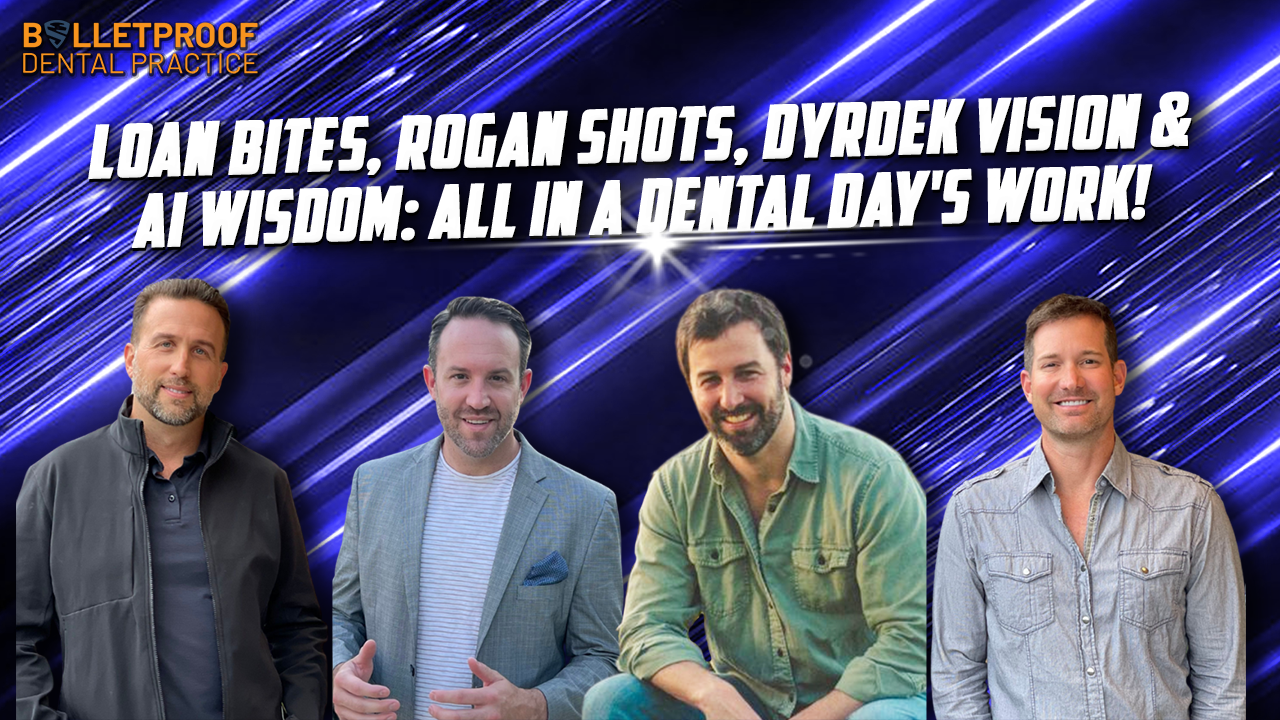
, June 15, 2023
, June 8, 2023
, May 31, 2023









Look at These 3 Stats if You’re Thinking of Going Out of Network with Teresa Duncan
, January 11, 2023
, December 28, 2022



Knowing What You Don’t Want with Judy Kay Mausolf of Culture Camp and Erika Pusillo
, November 30, 2022



Cabo This Week, Immersion Learning, Biggest Breakthroughs, Your Personal KPI is Net Worth
, November 2, 2022
, October 19, 2022

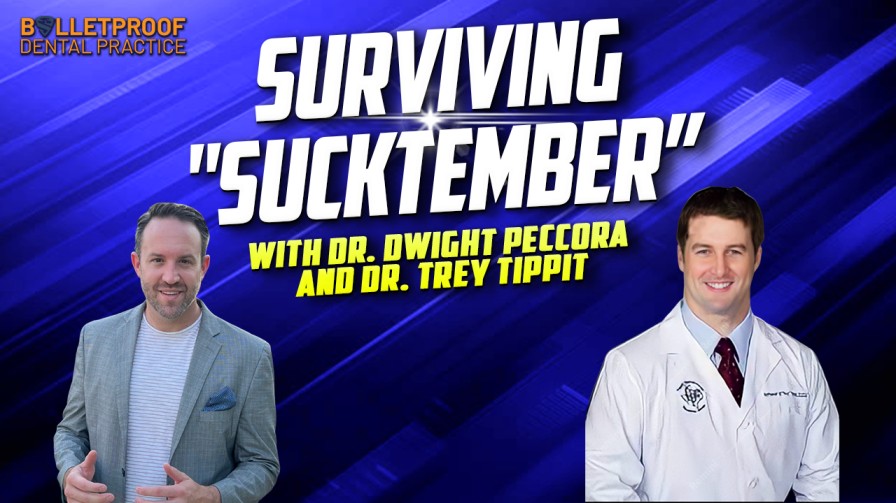











Business is not Productivity, Productivity is not Profitability with Chris Salierno
, September 22, 2021




























3 Biggest Bottlenecks of an Entrepreneurial Dentist: PART 2 with Perrin DesPortes of TUSK Partners
, June 25, 2020

3 Biggest Bottlenecks of Being an Entrepreneurial Dentist: Part 1 with Perrin DesPortes
, June 18, 2020




















Building a Referral Network With Specialists (The Two-Way Street Most GPs Get Wrong)