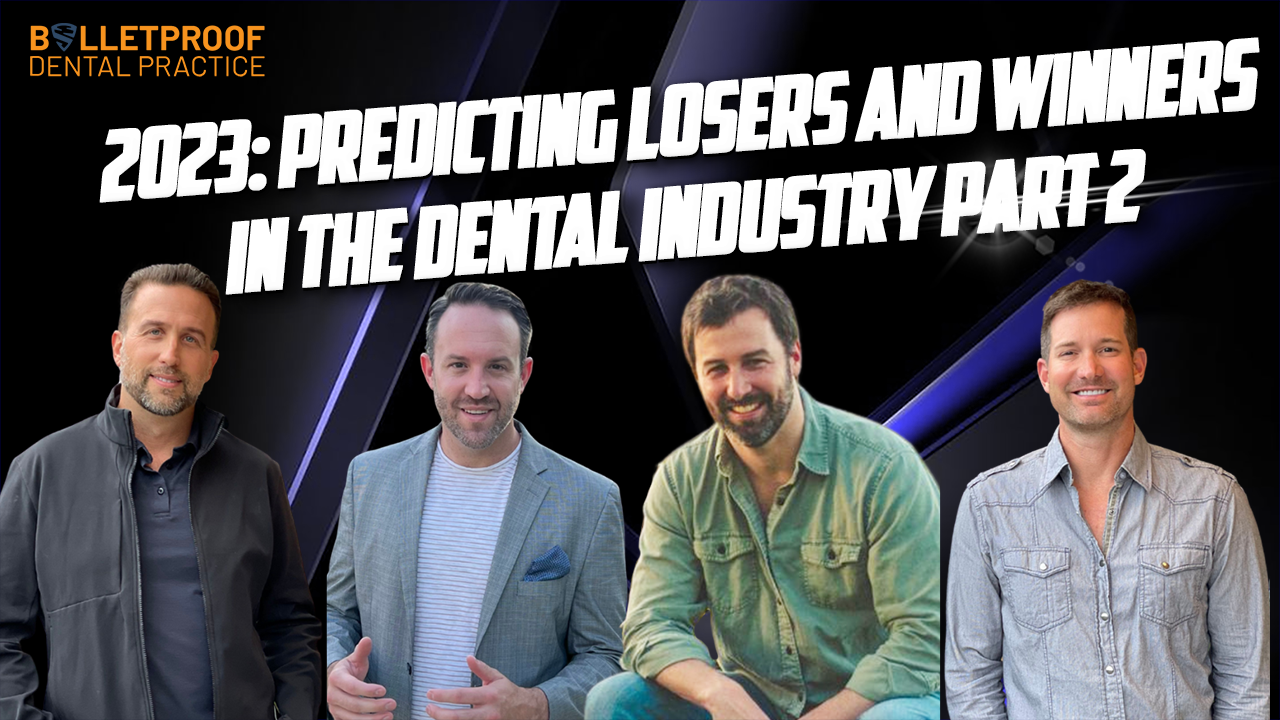
2023:Predicting Losers and Winners in the Dental Industry, PART 2
Bulletproof Dental Practice Podcast Episode 285
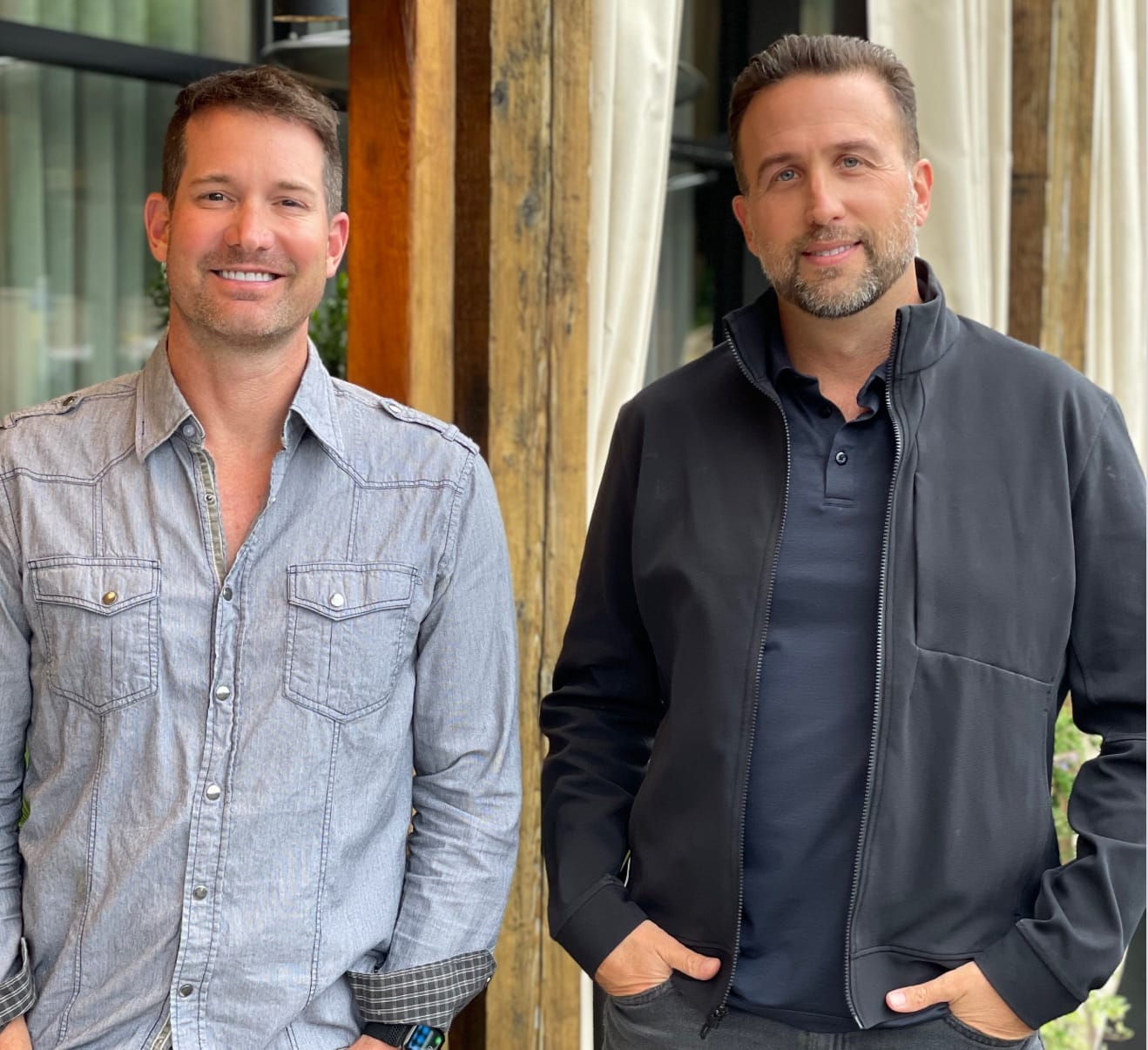
Hosts: Dr. Peter Boulden & Dr. Craig Spodak
Guests: Dr. Trey Tippit & Dr. Dwight Peccora
Key Takeaways:
Introduction
Political Impact Of 2023 As It Relates To Dentistry New Tech Influence In Dentistry
Consolidation Influence And The Future Of DSOs
Hiring
Patient Trend And Desires
References:
Bulletproof Mastermind
Bulletproof Summit
Mighty Networks: Bulletproof Dental Practice
Bulletproof ERC
Tweetables:
If you don’t have a strategy you’re going to fall victim to whatever comes along. -Dr. Peter Boulden
Full Episode Transcript
Below is the complete transcript of this episode of the Bulletproof Dental Practice podcast. Prefer to listen? Find us on Apple Podcasts, Spotify, and YouTube.
Read the full transcript
The following transcription was from the Bulletproof Youtube channel. Here is the https://www.youtube.com/watch?v=_I8gIassP3w
Trey Tippit
0:00:00
Next up.
Peter Boulden
0:00:01
Next up in here, the political impact of 2023 as it relates to dentistry. Oh, this is a biggie. I actually, well, OK, I actually I'll get out of the way then because I actually wrote on my sheet. I don't see any political political impact.
Craig Spodak
0:00:25
I'm with you.
Peter Boulden
0:00:26
I say I'm trying to get out on that one. Yeah, pretty, pretty uneventful. OK, trained. I mean, sorry, Dwight and Greg.
Craig Spodak
0:00:33
OK, let me jump. So, you know, I didn't really know at any given moment before covid like I never could really feel the difference about conducting business from state to state. So I'm not saying impacts to dentistry specifically, but to small business owners. Those who live in certain states had a very different COVID shutdown, lockdown, recovery cycle than those of us who lived in other states. So the red wave that was predicted to happen and the righting of the ship and a more centrist political view didn't really happen. So blue states got blue. And I think when you look at politics, state politics, it really has an effect on your ability to conduct small business. If you are a practice owner in a storefront in downtown San Francisco and you cannot remove
Peter Boulden
0:01:26
someone that's camped right in front of your dental office, that affects your ability to attract- A slam with a hose, right? Yeah, well, the optics of that were terrible. But it's just, I'm just saying like the political implications of your state have a massive effect on how you conduct your business. We see when they're masterminders. When we hear what the people in certain states have to deal with, it's really quite scary. We are all practicing in states that were largely conservative run states and we shut down for less time, recovered quicker. At the time, we didn't know what they were, it was a gamble or an educated guess, but conducting business in certain states is very different. I think that the political impacts on small business are massive. For those that say there's no impact, it's just because I think we sit in states where there's less impact. But I think left-leaning policies are harsher towards small business owners. That's fair. That's fair. Dwight?
Dwight Peccora
0:02:26
I think that nearly every one of our answers for – regarding the recession related to some type of government official or political impact affecting it, and I think we just kind of answered this question on its own. I believe that, unfortunately, our government likes to – as wonderful as our country is, likes to react and solve problems, and when they solve problems, they like to overreact. So I actually expect in an environment where they want to prep votes and prep a mindset for the next election, they're going to be prepping and making an impact. And whether that, like you said, Pete, maybe a stimulus, maybe I don't think there's gonna be another stimulus at this point in time, but they're gonna try and do something to rattle those cages. At the same time, I think we're going to start seeing significantly different renewals on our on our insurance plans for practices that take insurances whether PPO, DMO of all those other types that are going to be pre-prepped to the Massachusetts laws that relate to MLR like we talked about last time. I think they're going to be very proactive in making those changes even some of those concepts about that are going to feel a lot more like health insurance concepts are going to start reeling their heads because they're going to have to try and show profitability right away. I know that a massive portion of the ADA budget has now been reallocated now with their win in Massachusetts. And you've got for this year, there's already movement for new legislation in Connecticut, Nevada, Oklahoma, and 20 other states in the next legislative session with the ADA are continuing to support these efforts to implement these MLR expectations. I think that these insurance companies are massive and they are much, much bigger business and they've got much more strategy behind them and they're not going to wait until they have to make things done. I think they're going to be impacting us now and I think those of you who have insurance plans on you, don't be surprised when you start seeing the peeling back of certain components so that they can start to make them look a little bit more like health insurance plans. And I think that's going to be a lot of walls and barriers to seeing specialists versus GPs and all the kind of matriculation of that health insurance plan. So I see this as political because I think it could be, you know, impacted across the board but I still believe the combination of government likes to get involved and solve problems. It's half the reason why nothing is going on. When prosperity is happening we tend to start a war and go pick a fight somewhere because government likes to solve problems. If you look at that before every single war it's exact same story. It was just a time of prosperity and we'd go after it. I think they like to change and
Craig Spodak
0:05:06
make impacts. Same thing with marching through MLR. Dwight, let me ask you quickly what is the, because that was a lot, I want to know like brass tacks, what happens to dental insurances with this new legislation? What's the trend going to be? What are we going to see?
Peter Boulden
0:05:22
You're saying keep it pithy Dwight is what you're saying.
Craig Spodak
0:05:23
Yeah, well I just didn't understand what the actual, you said you're going to notice a lot of changes.
Dwight Peccora
0:05:27
I think within this 12 month window, I think within the next 12 month window, a lot of renewals for insurances locally will look very different than what you're used to. Whether it's adjustments to your reimbursement rates to kind of practice.
Craig Spodak
0:05:42
Up or down?
Dwight Peccora
0:05:43
They're going to put in barriers for how you practice, I believe. So I think specifically, give me an example. Like what I said before, which was the fact that there may be a barrier between a GP and a specialist, a referral process, a non-direct, so they're trying to segregate all the portions of our industry, which is what happened with health insurance when it first got consolidated. The next thing is is they're going to peel back to kind of hold back their money as much as possible before the reimbursement. Less reimbursements for the states that are not implementing MLR as quickly as the other ones are in order to bolster their total national budget. And it will It will continue, so it gives them more time to strategize, more denials, and more criticism for those denials for how
Trey Tippit
0:06:31
we treat them.
Craig Spodak
0:06:32
So just in summation, less payment for the dentist.
Dwight Peccora
0:06:36
Yeah. I think initially that's going to be their reaction to try and bolster up those other statements.
Peter Boulden
0:06:40
In summation, more pain.
Trey Tippit
0:06:41
Yeah.
Craig Spodak
0:06:42
I just didn't know. I was trying to read through the word salad.
Peter Boulden
0:06:45
You just don't know. The matriculation?
Dwight Peccora
0:06:46
Yeah, matriculation.
Craig Spodak
0:06:47
And you've got to use salad instead of diarrhea. No, salad is more appetizing. I really didn't know, but that makes sense. What did you say at the ADA you think that they're worthless?
Dwight Peccora
0:07:01
They're bolstering a massive portion of their budget towards essentially doubling the amount that they were implementing into these lobbyists to pursue MLR throughout all these other states. So they're basically shutting down portions of their budget right now to focus on that. And I mean, you know, they've got a perspective that they're pursuing against the Dental Plans Association, which at the end of the day, they've got some work ahead of them, and I'm sure they've marked it out for the next three to five years of absolute focus in that.
Craig Spodak
0:07:34
There is a relationship. There is some financial exchange between the insurance industry and the ADA which I think it's a conflict of interest But anyway, we'll put a pin in that I think it serves
Peter Boulden
0:07:43
I think it serves both of them and white I commend you on actually staying up with this because I would rather slam my Pinky in a car door than
Dwight Peccora
0:07:51
Well you know somebody if the ADA is already in my pinkie in my one state you can imagine how much they're gonna spend in others and then there's gonna be the rocket states, the southern states, the big ones, the Texas, the Floridas, honestly Georgia, all the ones that we're in, that once that jumps, it's an absolute snowball effect. So there's gonna be a large impact, and I think it's gonna be really, really interesting on how that matriculates that, and how we keep an eye on consolidation too. Three matriculations, I haven't heard that
Peter Boulden
0:08:21
since freshman year in college.
Craig Spodak
0:08:23
I thought that was just a relative thing.
Dwight Peccora
0:08:29
I'm glad that I'm here for a reason.
Peter Boulden
0:08:31
I should not have said anything. I was keeping count over here.
Trey Tippit
0:08:34
I did, too.
Peter Boulden
0:08:35
Damn it. We should have had it.
Dwight Peccora
0:08:37
We should have had a shot at getting you in the news.
Peter Boulden
0:08:38
We should have turned this into a show. Trace Tequila. If Dwight says matriculation, take a shot.
Craig Spodak
0:08:45
Obviously, your wife watches Bravo.
Trey Tippit
0:08:48
You're a mess. I wanted somebody to answer it.
Dwight Peccora
0:08:52
So do you want to keep going?
Peter Boulden
0:08:55
Let's keep it going.
Dwight Peccora
0:08:56
So new tech influence in dentistry. I think Pete knocked some of this out for everybody. Since I'm being asked to talk less, I'll let somebody else. Let's go first. It's okay. It's okay. Y'all can talk about it on the next podcast.
Peter Boulden
0:09:13
New tech is one of his pain points.
Trey Tippit
0:09:15
Talk the same amount, but just say more.
Craig Spodak
0:09:19
We talk to new tech?
Trey Tippit
0:09:20
Yeah, new tech.
Trey Tippit
0:09:21
Go, Trey. So the new tech, I think AI is the new tech that's the only thing worth talking about. I think that that is a useful tool that can be implemented across the board with a huge gain for everybody involved. And that is to say that those things happen very rarely in dentistry. So the consolidation of dashboards, which I think Pete, you alluded to this earlier, I was thinking a little bit about that, but it still hasn't happened, so there's benefit to that, but that's only benefit from the standpoint of us as operators, which I think would be a phenomenal addition to see, but no one's really done it yet, and I'd love to see that out there. But AI, I think, will dwarf everything in terms of tech's influence on this industry. Yeah, I have an interesting statistics and two are all basically, I said chat GPT-3 100% as well. I have the thing, how many days it took to reach a million users, and of course, Netflix was 1,277, and Spotify 153, Instagram 75, iPhone 74. Now how many days it took for chat GPT to get a million users was five, five days.
Peter Boulden
0:10:32
Five freaking days.
Craig Spodak
0:10:34
That's amazing.
Craig Spodak
0:10:35
It is, it is.
Peter Boulden
0:10:36
And for those that haven't dabbled in it yet, this is. I do remember two people that, let's see, when were we in Cabo? Two people that couldn't be less interested in AI when Dwight and I were having this conversation. I completely agree. I think Craig was actually sleeping. But hey, the bandwagon came along, so jump on guys.
Trey Tippit
0:10:55
Here it comes.
Peter Boulden
0:10:56
Jump on the bandwagon. That was what we were, it was so boring. It was not actually. Dwight, I think we should re-earth that podcast.
Dwight Peccora
0:11:03
I think you should.
Peter Boulden
0:11:04
I think you should.
Trey Tippit
0:11:05
I think you should.
Craig Spodak
0:11:06
I think you should.
Craig Spodak
0:11:07
I think you should.
Craig Spodak
0:11:08
I think you should.
Peter Boulden
0:11:09
I think you should. I think you should. I think you should. I think you should.
Craig Spodak
0:11:13
I think you should. I think you should. I think you should. I think you should. and I were just matriculating all the way through. Yeah, we're matriculation geniuses. I was AI, I think the biggest thing I had in the AI, if I remember correctly, which is a far cry, I mean, this is a stretch to go back to that day, that night, but I think I was having trouble seeing the implementation of it outside of the diagnostics. And when you look at a lot of the AI
Peter Boulden
0:11:40
that people talk about, there's really nothing,
Craig Spodak
0:11:38
GPT is awesome.
Peter Boulden
0:11:40
Well, that, okay. Maybe I should have disclosed that in that pod. Like, that's what I was referring. Yeah, it's all good. I hear you on that context of that weekend. I'm not gonna crush it. Well, also, when you use it. The diagnostics, I think, that's the main part. I think the diagnostic is the, when I say AI taking over and influence this industry in that standpoint, I'm specifically talking about the diagnostic aspect of that.
Craig Spodak
0:12:02
Oh, I'm not even talking about that.
Dwight Peccora
0:12:04
See, Krugman, we were talking about two different things. He's saying 100% Chad GPT.
Craig Spodak
0:12:08
I love Chad GPT, and I think it disrupts a lot of things. But the industry itself, diagnostics.
Craig Spodak
0:12:14
Interesting.
Trey Tippit
0:12:14
Got it. Got it.
Peter Boulden
0:12:16
OK, do I have more to go?
Craig Spodak
0:12:17
Remember you had the conversation, Pete,
Peter Boulden
0:12:19
about what makes a dentist, what is the dentist thing? Yeah, yeah, yeah.
Craig Spodak
0:12:23
We did post that, by the way. Yeah, it was just like, what percentage? Like, is it the diagnosis? Is it your hands? Is it the comfort? Human touch? With CHAT GPT-3, Awaken for me was it actually was more human empathetic than the average dentist. That's what freaked me out. So I understand, obviously, there'll be great diagnostic capabilities for AI, which are better than naked eye, because we're just interpreting shades of gray or the grayscale for decay.
Peter Boulden
0:12:48
I think AI will be better at that what I thought you say the the number of gray scale that can be interpreted Versus human eye what you say the number why I just remember that it was about 40 times more accurate
Dwight Peccora
0:12:59
I think the human eye can see like 5,000 shades of gray. Yeah, exactly
Trey Tippit
0:13:03
Yeah, okay
Peter Boulden
0:13:04
But the point I was trying to make is that with the with the human aspect went to dabble in GP t3 and you see it That's when it's like, oh shit, this is really good. It's more empathetic and more responsive
Craig Spodak
0:13:17
than many, many practitioners.
Dwight Peccora
0:13:20
I think as visionary of a talk as Chat GPT is when you dive into it, I think for this year, if we're going to do 2023 predictions, I think that the expansion, I've been working with some of these AI diagnostics in my office over the last year. And they're getting better and better. We're implementing the endo side of it for endodontics next month and you know just keep scaling the perio, the secondary perio is being told to you for all your patients coming in in morning huddle, things to that degree. That's a big, big influence and I think that's going to happen. I think CHAT-GPT for two components, first of all it's complex and it has to be broken down into individuals that can then use the technology properly to embed it in a easy to use format for dentists. I think that's going to take some time only because I think it's going to be delayed a little bit mostly because of their, remember, they were originally founded as a non-for-profit and now they're transitioning it to a for-profit. And so it's a very complex dynamic that they're trying to figure out, followed by the fact that then they have to output that data and make it available for it to be used. And that, remember, it has to go to the most profitable markets as it matriculates its way down to different industries, including ours.
Peter Boulden
0:14:37
Take a shot.
Dwight Peccora
0:14:39
So I don't think necessarily it's going to be down to us. I'm trying to help decipher that. But I've got one other winner, but you can go ahead and respond to that because that'll be a worthy conversation, I believe. Okay. So I wrote down something that you guys have already talked about right? Let me let me say something a little more bold. Go for it. I think 2023 is the start of the fourth industrial revolution. Yeah I agree. Good. The start right? I remember being on stage at like over like a DEO or something and I was sitting there saying hello crypto and we've already had blockchain and all this stuff and this was the start and that was probably three years ago. And like Craig says, I'm always way too early to the party and no one's listening and saying stuff. But I think this is it. And I think AI gives rise to this because it brings everything up. And GPT-3, as good as it is, when GTP4 launches in about a month, it's gonna be 10 times better than what GPT-3 was. And GPT-5 is gonna be 10 times greater than what four is, which is 100 times faster and better than three. Okay, so it doesn't go up just linearly, it goes up at scale, and I think both of those happen and are released in 2023, at which point we start looking at what the Turing test is called. Remember, you know, if you guys know, Alan Turing is the test that determines at what point a human and an AI are hard to distinguish. Injustice and good choice. Exactly, the Turing test. And that is a massive inflection point, which then changes things. So if we look at the best new tech, the question was the best new tech to influence dentistry, that obviously it's gonna impact diagnostics, but I think it impacts marketing, I think it impacts chat botting and getting answers. I think we start looking at the integration. Remember we showed in the summit
Peter Boulden
0:16:19
how Google was having the appointment.
Craig Spodak
0:16:22
Assistant, yeah, Google Assistant.
Dwight Peccora
0:16:24
I think our computers, I think our Siri is gonna start talking to our AI chats and I think there's gonna be a lot more Efficiencies and automation in the way that has been highly disruptive and things we've grumbled about as dentists I need to get this new phone. I don't have enough team members here things like that
Peter Boulden
0:16:40
I think tech is gonna solve some of that friction. Can you tell me what the fourth Industrial Revolution looks like though Peter?
Craig Spodak
0:16:46
What does that mean?
Dwight Peccora
0:16:48
Yeah, I think it's just the renaissance of like the things that have been baked but haven't been fully integrated together, meaning big computing. Now AI has kind of pulled that in, right? We have computers, we have synthetic biology, things that are going to be augmented by AI predictive things. We have the NLP, which is the GPT-3, which is natural human, natural language programming. So what is going to be augmented, Greg? All of the things. Everything will get a rise up in augmentation because AI touches so many things.
Craig Spodak
0:17:24
Well, all the things you just listed require less humans. So what happens to those humans?
Peter Boulden
0:17:32
So then I got a question.
Dwight Peccora
0:17:33
It's what everyone has been panicking. It's the same thing computers did. Everybody says, well, it's going to replace everybody. Well, this will have a bigger impact.
Trey Tippit
0:17:42
I agree with that.
Craig Spodak
0:17:43
This will have a bigger impact on humanity
Peter Boulden
0:17:45
than the internet did. What's your thought process on timeframe of that? Think this year.
Dwight Peccora
0:17:51
This year? I think this is the year 2000. The way that the internet came on was the analog 2000. Yeah, we'll give you the start. Because I think for it to matriculate throughout, I agree that every… No, no, no. This is what's interesting. For every single industrial revolution, there was something that lit it, right? And I do believe that the level of tech that open AI and chat GPT-3, whatever, all these things, as it grows and does what it needs to do, this is the fuel to that fire. And now it's going to kick off. And I agree that it's going to be this year. But if we're going to do a podcast about dental 2023 predictions, got it, the impact on the customer service level, like the replacement of customer service people or the replacement of, you know, all these other diagnostic considerations, all these other things. I think it's going to matriculate, but it's going to take a while because we're not the most profitable industry. Right. OK, so you're saying you're saying I basically didn't answer the question.
Peter Boulden
0:18:53
I answered it at scale, but not really as it relates to dentistry, right?
Craig Spodak
0:18:56
Yeah. Yeah, but we're all interested in dentistry.
Craig Spodak
0:18:58
Gotcha.
Dwight Peccora
0:18:59
Yeah, so, okay, Dwight, so I'll go back to that. I think it influences, I think diagnostics get crazy. I think that becomes the standard of care. Maybe not this year, but I think it starts trending that way that we become reliant on AI diagnostics versus our dental training.
Trey Tippit
0:19:14
I agree.
Dwight Peccora
0:19:15
And it standardizes our care across the board in a more consistent format to where people can't argue personal bias on these things. I think that's good.
Craig Spodak
0:19:24
Yeah, it's like what happened with medicine. I don't know if that's necessarily a good thing or a bad thing.
Peter Boulden
0:19:27
Like the pathway system for medicine.
Craig Spodak
0:19:29
Well, it changed.
Dwight Peccora
0:19:31
I'll be telling you this. It really made a massive change in my practice when I brought in these softwares that are AI-driven for diagnostics. I mean, it's massive amounts of same-day dentistry, massive amounts of diagnostics. Doctors that have been practicing 25 years are like, I totally missed that.
Craig Spodak
0:19:50
I think one thing to note, Craig, is that you can't compare medicine as a whole to dentistry as a whole, because dentistry is a technical skill. Everyone in dental school is sitting back saying, we're not just tooth carpenters. That's bullshit. We're tooth carpenters. We do something. We provide a skill.
Peter Boulden
0:20:05
Most of medicine is diagnostics, not so much surgery.
Craig Spodak
0:20:08
So it's diagnostics and the prescriptive pathway, if this, when that.
Peter Boulden
0:20:13
That's a different program, because when you have a technical skill, consistency can be deemed quality. You can predict the outcome when you have a consistent outcome from a skill.
Peter Boulden
0:20:23
Makes sense.
Craig Spodak
0:20:23
Good distinction.
Peter Boulden
0:20:24
That's a good differentiation, Trey.
Trey Tippit
0:20:25
It is.
Dwight Peccora
0:20:26
I like how you brought that up.
Craig Spodak
0:20:27
Another Trey. I'll tap out.
Peter Boulden
0:20:29
I will let you know, like most things, I go down rabbit holes, and so I'm sorry.
Dwight Peccora
0:20:33
No, I love it.
Trey Tippit
0:20:34
I think we've learned a lot.
Peter Boulden
0:20:35
I've gone down the rabbit hole on this just like I did crypto probably in 2016, so unfortunately I'm going to speak and be a little dangerous with my…
Dwight Peccora
0:20:44
No, I love that, and I think honestly it's one of the reasons why we love hanging out because it gives us such a prop to sit on and say, hey, this is what's coming, this is where we're going. You've got to keep deep diving, we all will as well. One item that I want to add that I think for 2023, tech-wise will be massive, I think it will start, I know of some other individuals that are trying to release this year, and I think it will be a giant push into web-based practice management softwares, not in the way that we've been dealing with them, which are cloud-based or local server-based, but I think there will be a massive jump in that category to get us out of this just continued failure rate of massive infrastructure and all these other things. So I'm gonna make a giant push. There are some groups out there, really small, that are VC-backed with massive amounts of money. If you're doing this, can you reach out to us because that has been one of the biggest impediments of growing a practice, I think, is the software and the tech and the management of your servers and someone saying this isn't possible and this doesn't talk to this. So if you're working on that, my God, let us help you.
Craig Spodak
0:21:51
Work faster.
Peter Boulden
0:21:52
Work faster.
Dwight Peccora
0:21:53
I think it's going to be huge. And to me, it's one of those things that I think could categorically change, but also facilitate a lot of our practices to being able to grow at scale and compete in a consolidating market simply because we don't have such a barrier of infrastructure costs. And I think it's gonna make a big, big difference. At the same time, I think it's gonna require dentists, specific owners to be more flexible about what they need for their software to do for them, right? And I think that's something that we lack the understanding of, right? Back in the day, Patterson, Eaglesoft, and all the ones that were built by our suppliers, they just built it to accommodate the doctors because they initially gave you free software as long as you bought their supplies. And then that transition over time, they started saying, oh, well, now we can charge for it. But it was perfectly built for the dentist, but it wasn't built for scale. And so I think that's, I think they're starting from scratch and ready to implement and open up, I think, mid-year in 2023.
Peter Boulden
0:22:56
And the cool thing is, not to pull this back to AI, but AI, the people who are most nervous about AI right now in GPT-3 are the coders, because you can actually get GPT to code for you. Correct. And so when you can open up and disrupt coding, now you can have millions of people coding and making product potentially. Right? So it's fascinating. So hopefully this happens fast on your timeline, Dwight, because I'm right there with you. Do you want to keep going so we don't make this?
Craig Spodak
0:23:23
Yeah, let's keep going, Gus. So Peter, it is shocking to me how many people, one, have not actually heard about ERC and two, have gotten the wrong information. And you and Trey being two of them, I mean, I consider you to be an epic business person. And when I talked about the employee retention credit to you, you were really dismissed above me. Like, no, I went through that. I got it. You know, it's great. I got it. It was done. And even trade just now, we were just talking to them on the last pot. He's like, yeah, I already, you know, my accounting firm, they got it very little. They only got like five or 10 grants. We know this is totally misunderstood.
Peter Boulden
0:23:56
I was told I didn't qualify until I went to a specialist and they're like you absolutely qualify and here's the number and it almost startled me like my jaw was off on the ground.
Craig Spodak
0:24:07
Yeah you don't actually you don't believe it.
Craig Spodak
0:24:09
You don't believe it.
Dwight Peccora
0:24:10
But don't ask your CPA, ask someone who specializes with which is why we actually have this awesome arrangement and we created a link and the company is Bulletproof ERC to help kind of implement this because from this pot of money that Congress has allocated we want the people listening from Bulletproof to take advantage of it. So this is why this announcement is going on because it's, like I said, don't ask your CPA, ask the people who this is the only thing they do all day every day.
Craig Spodak
0:24:37
That's why we had to do this, because initially of telling everybody, telling you, telling everybody, like, oh, it went, we don't qualify. So like, oh, this is not going the way it's supposed to. Like, you have to go to the people that do it. So I'm really proud of that. My buddy Norm works at the company. Norm, as you know, is like the nicest guy in the world. He's literally like Ned Flanders. He's like, how do you digitally do? He'll fill out your form. He'll walk you through the process. He'll do the zoom call with you. It's literally white glove services. You don't have to do anything. And this is what they do. And it's an unbelievable program. You have two ways to pay for it. You can either pay up front or they can just take a percentage when they give you the money, and it is awesome. You did one, I did the other. We won't tell which one, who did what, but it's a government program. It's going to run out, do not delay. It's amazing how many people are like, I'll handle a couple months, I don't have time.
Trey Tippit
0:25:26
You don't need any time.
Craig Spodak
0:25:27
Like, this is like crazy.
Peter Boulden
0:25:28
First come, first serve, right?
Craig Spodak
0:25:29
First come, first serve, and I mean, I know the government's treated you well through the CARES Act, and you're thinking to yourself, well, maybe I don't need this. It is your money to have.
Peter Boulden
0:25:37
This is part of the CARES Act.
Craig Spodak
0:25:38
Right, it is part of the CARES Act. But I mean, even when I thought about it, I'm like, nah, I'm good. I don't want to take more money. But this is a program that's allocated for people like you who have kept your employees,
Trey Tippit
0:25:49
kept your businesses open. Do not take it for granted. If your accountant told you, your friend who's a lawyer told you, do not leave that stone unturned. Go to bulletprooferc.com.
Craig Spodak
0:26:01
Spend five minutes. It's worth the due diligence. Do not assume anything. And even if you filled it out, you got something, but it wasn't what you think is commensurate for your size business, go ahead and reopen the process. You can amend these things for different years. So do yourself a favor, take the five or 10 minutes, have a Zoom call. You may be leaving hundreds of thousands of dollars on the table, which is not prudent for you, your business, and the families that your business supports. Do it for them.
Trey Tippit
0:26:30
All right.
Dwight Peccora
0:26:31
So we've got consolidation influence and what the future of DSOs, do they change? How does the private small practice fare, and do DSOs go bankrupt? You guys, there's two answers that are, I don't know who wrote them, but consolidation
Craig Spodak
0:26:49
will slow and consolidation influences growth will be overrated. Who are those who are on the same page here? I wrote, your answer is I think consolidation will slow.
Peter Boulden
0:27:00
Want me to go? Yeah, please. And that's the person who agrees with you.
Trey Tippit
0:27:03
I'd love to see that as well.
Peter Boulden
0:27:04
Yeah, I think consolidation is going to slow until interest rates come down since most are backed by debt leverage. Okay, look at all private equity is backed by leverage. The cost of capital has been increasingly more and more. Right, and so for them to get capital, it's not the interest rate of what prime is, it's typically eight, 10% of what they're getting these levered loans on. And if the economy potentially slows, then now you have to beat your cost of funds. And so they're not gonna take these big risks and these big buyouts anymore. So I think they're going to sit on the sidelines, wait for interest rates to come down, and then go back into the dental market, I think. I think we will see several DSOs fold due to the intoxicating free money that we had
Dwight Peccora
0:27:52
and the expanding money supply that we had in 2021 and 2022. Easier to do business.
Peter Boulden
0:27:57
Yeah, without…
Craig Spodak
0:27:58
Who also agrees with you? Who's the owner?
Peter Boulden
0:28:01
Oh, I'm not done. Oh, okay. And also the dentist, the schools are rapidly expanding supply of dentists, and they're gonna be entering the market, you know, it's almost become a business because everyone has heard that you can make $300,000 a year kind of training a dentist. So the expanding supply, there's gonna be an expanding supply of dentists. I don't know if you guys have kind of recognized that, which is not really related to the DSO influence, but I
Dwight Peccora
0:28:28
believe we're gonna have a supply of dentists and not a demand. Why?
Peter Boulden
0:28:32
Why is there a supply of dentists in your opinion? What's happening? Because more dental schools, less jobs, they've been opening up more and more schools, Greg. Okay, got it. So there's a net increase in the amount of dentists being produced per year. But net decrease in the amount of demand based on going back to what I was saying about expansion of this intoxicating free money, blah, blah, blah, blah, blah.
Craig Spodak
0:28:54
Right.
Dwight Peccora
0:28:54
Got it.
Peter Boulden
0:28:54
I believe that DeNovo's are going to be super hard in 2023. And I believe that niche practices are going to thrive in this environment. Interesting.
Peter Boulden
0:29:01
I'm the one that agrees.
Craig Spodak
0:29:02
Okay.
Trey Tippit
0:29:02
Go, go ahead.
Craig Spodak
0:29:03
If you don't mind.
Peter Boulden
0:29:04
I, I think consolidations affect on things in terms of what people worry about. Not all the little things that we've touched on here, but is grossly overrated. You're affecting an industry by certain things in terms of the, a good example is web-based software or even cloud-based software. It never happens because there's no demand for it. There hasn't been demand until now because nobody has cared. So now you start seeing those types of things happen. So there is some effect in that regard, but in terms of the effect on the actual, and when I say this, not your average private practice, but a private practice that's a good private practice with a good operator that is doing well, he gets squeezed, but he's never pushed out. This is still a relationship business. It's not pharmacy. There are differences that we have in our favor. So I think the overall group slows, or the overall consolidation slows for all the reasons Pete said. I think they slow down as a way to then set themselves up to speed up later. I do think you're going to see someone, you're going to see people go bankrupt. I think that those people get swallowed up or get absorbed if by smaller groups that think they can fix it or they disappear altogether, and I think the growth that does happen because of the slowdown ends up being mergers. I think you'll see some mergers happen that we typically haven't seen on a larger scale as opposed to some of these mergers where they're absorbing smaller groups or even bigger groups, but in terms of
Craig Spodak
0:30:29
Some of the big players you'll see the merger for that reason you and I have been oddly aligned in these yeah
Trey Tippit
0:30:34
I just agree with you guys
Peter Boulden
0:30:36
Just like yeah, yeah, I disagree, but you know obviously mad respect for both of you and what you think. I will say this Pete, hold on Craig, let me jump in here. I will tell you, I disagree, I agree that from the money aspect you're going to continue to push dentists out because there's a business behind it. However, the demand for dentists I think is skewed. I think the demand for dentists, there's still a huge demand for dentists. They're grossly underproduced except for when you talk about access to care, a whole other topic there, but people need a lot of access to care that we don't have. The demand is only flooded in metropolitan urban areas. So I would agree that it's overproduced in that sense or it will continue to overproduce, but I think that you need to see these people start to head towards some of the environments that truly need dentists,
Craig Spodak
0:31:39
which there are a lot of.
Peter Boulden
0:31:40
That'd be great. Okay. Okay, Craig, go ahead. You said consolidation speeds up is what you said. Yeah, so I believe that consolidation speeds up, whereas you guys both believe these mid-market DSOs and get their ass kicked, they don't go out of business. They just get acquired by more sophisticated DSOs, so the net effect is not that they're turned back to the free dentist enterprise they still stay gobbled up so when you have a crappy duct tape DSO or a mid-market DSO that was that was really debt funded highly debt funded and it goes out it gets gobbled up by somebody else so it still it preserves the consolidation that's that's going to be a high one that's going to knock it they're not going to give back territory but I think that you know they don't really run well run businesses. I think the factors of the government are rewarding the bigger people, you know, whether that be the larger companies getting more PPP or ERC and those types of things, I just think that consolidation accelerates. I see that a lot of people who, a lot of dentists who maintain free standing practices, although maybe they may not get the same multiple they would have last year, the pressure is going to be so great that they just want to tap the brakes and get out. So I see 2023 and 2024 continuing the pace of consolidation, if not speeding up. I think valuations may not be the same, but I think the consolidation rate stays or increases personally. Okay. Good. Dwight, curious about you.
Dwight Peccora
0:33:15
Yeah, I think in big picture mode, just so I don't get a lot of lip about this, I think that consolidation will continue its stride forward. I don't think it's necessarily going to slow down. I think clearly there's two main components that make this complicated. If I were to ask you what the percentage of consolidation there is right now in the industry, most of us could come up with a different statistic that we read from somewhere else, and they're all over the place. They're somewhere between 20 and 38%, and I think that the rationale for that, the reason the percentage is so ambiguous, is because the definition of consolidation is ambiguous. It sounds like most of you are talking about the mergers and acquisitions and de novo development, but there's also affiliations and alliances and things of that nature that are now being clumped into those, right? A lot of us would be considered in those categories as far as what the ADA would consider a DS, a dental service organization, because we may have a management company that oversees the management of multiple locations, things of that nature. So I think that the definition is ambiguous and therefore that creates some complexity.
Craig Spodak
0:34:27
For the sake of the podcast, can we just agree, I think we all would agree that your practices are consolidated when the management company that runs your practice or your DSO is not wholly owned by you. So I think what we understand to be consolidated is that we run independent practices and your management company may be owned by you and others, but for the sake of the conversation, I think consolidated means by a larger,
Peter Boulden
0:34:52
you know, at least state or national DSO.
Trey Tippit
0:34:54
You know, right?
Craig Spodak
0:34:55
Is that what we all would agree upon or just for the sake of this? Or not?
Dwight Peccora
0:35:00
That's not how they define it as far as consolidation, but I agree with you that that's how we're seeing it as far as whether you have control of your daily operations or not, if a dentist is in control or not, I understand that methodology. In that sense, as far as whether it's going to speed up or not, I think between the one million and $15 million acquisition number, I don't think that changes. I think they will continue to acquire these smaller groups. And the only things above that $15 million, I think most of that's gonna be held until the market settles and there's less risk and VC or private equity is not so scared about the rates and the impact of making that bet. So I think they're gonna hold back a little bit on those. The only thing others, I agree with Trey in that there will be some mergers at the very top end when they can't sustain their variable debt interest rates or things to that degree and they can't pivot back, they will do mergers. And so do I think all that turns into faster pace of consolidation? Yes. I actually do.
Craig Spodak
0:35:56
I don't think so. You guys are two and two. Two and two. What are you, I mean, listen guys, you're all talking about PE and interest rates and leveraging debt. But in all the different industries, if we do go through a recession or a protracted longer term, like a longer recovery, don't you think PE is going to be more interested in less risky endeavors? They have to deploy money. It's just that the returns may not be as sexy. But don't you think more of the direction would go towards health care and dentistry than it is now because you had all these other things. You had software and all these other things.
Dwight Peccora
0:36:29
Yes, they want some health care in their portfolios because it is stable during pandemics and recessions and things to that nature because people still need health care. So there's still a percentage of people's portfolios. They don't really care about dentistry and massive levels of acquisition. They just need to know that their shareholders understand or their money people are basically saying, hey, this percentage of our portfolio has to be in these stable industries. And that's what it is, and that's why they're getting involved. And honestly, that's really what it is. It's not a patient care model.
Dwight Peccora
0:36:59
Dwight, one question.
Craig Spodak
0:37:00
When you say the $1 to $15 million level, are you talking about revenue or enterprise value? I'm talking about enterprise value. That's why I think that number is so low,
Dwight Peccora
0:37:09
because it's compared to, hey, enterprise value of a 20, 40, you know, $60 million acquisition. I think those lower ranks are still going to be available because they're still going to be savory and the interest rate is not going to be as much of a conflict to get over, right? We're talking about billions and billions of dollars, you know, in these giant firms and they're able to manage that, right?
Craig Spodak
0:37:34
Got it. I think also there's a trend too, and not just to add one more thing, what I heard is there's a trend of more money going to PE, more money flowing into PE. So people are looking for alternative investments and there's more upside. It used to be that PE was the velvet rope of the high-level classes. It's being more democratized. There's going to be more money flowing into PE, which will then translate all the way down to speeding up consolidation and people maybe not getting, even though we're spoiled by higher returns, it may not, it won't slow.
Peter Boulden
0:38:08
There's just more money coming to PE.
Dwight Peccora
0:38:10
Sorry. The next big topic here relates to predict that hiring will become easier or harder. It's a big, big topic that I think a lot of people are interested in, so will tech help, well, everything, right? So predict whether hiring will be easier or harder let's start with that hiring will be easier unemployment will rise who wrote that yeah okay that easy next I agree I think I predicted that the hiring becomes easier due to lack of competition and fear of dentists usually dentists react when they hear oh we're gonna have a recession everyone puts on the brakes I'm gonna stop marketing as much I'm a potentially not higher right now, I'm not going to expand. And I believe that people who migrated away from dentistry during COVID because there were banana offers and, hey, come work at my startup, or, hey, come do this, are recognizing the value of most that had a great quality of life working in dentistry with a four-day work week.
Peter Boulden
0:39:05
And it was pretty good.
Craig Spodak
0:39:06
So look at all the people that were selling mortgages and real estate agents.
Peter Boulden
0:39:09
There's going to be a migration back, too, and it's going to be easier to hire thoroughbreds, like I kind of said a while back.
Trey Tippit
0:39:18
I agree.
Dwight Peccora
0:39:19
A very common impact of recessionary environments is increase in employment. But my question there that I think everybody else is wondering is, what is your feel, your impact, as two of you have answered that, as far as wage inflation? Do you think wage inflation comes down. I believe it in a more competitive market as well as your
Peter Boulden
0:39:43
climbing. I believe it's hard to put the toothpaste back in the jar. I believe if you gave raises and you chased it all the way up, I believe you're kind of stuck now potentially. With your existing team. Now you're saying for new hires, Dwight?
Craig Spodak
0:40:01
I don't know.
Craig Spodak
0:40:02
Correct. Supply and demand.
Peter Boulden
0:40:03
I think it takes that. Depends on where the new floor is, right, in your organization. I don't know.
Dwight Peccora
0:40:10
How many of us do we feel we raised the floor of what we pay our people? Non-incentive, we're talking about base, over the last three years.
Trey Tippit
0:40:19
I raised my floor.
Trey Tippit
0:40:21
I raised my floor.
Craig Spodak
0:40:21
Besides basic inflation increasing,
Dwight Peccora
0:40:23
I need to specify, like, not crazy inflation, but what we would normally increase, right? Like a huge adjustment to accommodate to higher and bring-
Craig Spodak
0:40:35
We did not.
Dwight Peccora
0:40:36
I did not either, but-
Craig Spodak
0:40:37
Because it wasn't up to me. If it was up to me and my domain of control, I would have shafted that whole thing. I did not. I just think we're in an interesting time where the inputs are not hitting yet. So we still have people that are demanding, you know, I'm a brand new assistant and I heard I can get $28 an hour and they're still delusional in that and they don't feel the pain of anything yet. So I just think that what feels to me is that things haven't fully, to use my friend Dwight, matriculated through the system yet. Like we don't really, we don't have all of it hitting yet to drive the actual change that we're expecting, at least that I'm expecting. And bottles empty, bottles empty. I think it will be easier, and I think to touch on those things, because the unemployment goes up, now you get into a supply and demand. Granted, some of us raised our floor, but that's a choice of how you operate your model. And as the supply and demand, or because of the supply and demand, you have more supply, the demand goes down, they're $28 an hour on the front end, they're not delusional now
Peter Boulden
0:41:44
because they're gonna get it somewhere.
Craig Spodak
0:41:46
They will still.
Peter Boulden
0:41:47
But that goes away because at some point someone's coming in for less. And now, I mean it's a pendulum, the pendulum's swinging.
Craig Spodak
0:41:55
I think one of the micro effects,
Trey Tippit
0:41:56
and I had this discussion just today
Peter Boulden
0:41:57
in my leadership meeting is that you know when people kind of recognize that other people are going to be gunning for their jobs on your team meaning people want to enter dentistry people want these jobs I think when you recognize that you have a great job in a great ecosystem with a great boss and a great team and then you recognize that there's heat and there's a plethora of applicants like we have a ton of applicants right now people try what positions forever all every everything interesting so I think are you to see for everything? For everything. Interesting. Are you two seeing that as well? Let me finish my point. I think that it makes people a little happier knowing, in their day-to-day, there's not this apathy or being a little disgruntled, being like, well I could make more down the street. They know that they are in a blessed position and like, oh I because I know other people are gunning for it, which makes me happy that I'm the one who has it.
Craig Spodak
0:42:55
So funny.
Trey Tippit
0:42:56
What's funny?
Peter Boulden
0:42:57
It's just funny. It's true. It's when people want your job, people are happier. It's just
Craig Spodak
0:43:04
interesting the way human psychology is.
Dwight Peccora
0:43:06
Well, and even on top of that, what you're saying is people who work harder at their job are more fulfilled.
Craig Spodak
0:43:11
It's so funny. Everybody wants it the opposite way.
Trey Tippit
0:43:14
Oh, good.
Peter Boulden
0:43:16
Hilarious. That is so funny.
Peter Boulden
0:43:17
That's the truth.
Craig Spodak
0:43:18
That's so true. But are you guys, just to kind of finish that point, Dwight, Trey, are you feeling the same plethora of applicants at this moment?
Peter Boulden
0:43:29
Our applicants have increased. I would not call it a plethora.
Craig Spodak
0:43:32
Right, well, it was going from desert to what, is it an oasis? I mean, it was so bad. Are you saying that it's better, or is it the best it's ever been? Or Peter, are you even saying that? It's better. It's not the best it's ever been.
Peter Boulden
0:43:46
Is this the best it's ever been for you, Peter? Yeah. Well, I'm not sure about the best. It's the most I've ever seen.
Craig Spodak
0:43:53
OK, so hygienist, assistants, everything.
Dwight Peccora
0:43:56
But look, I always said this too, is that big cities react quicker to macro stuff than rural. Right, you do it for the… It may not trickle to him yet. So maybe for better or worse, I think I will see things before. Even Dwight and I probably very similarly. Craig, you're kind of more in a secondary market, right? You're not in a giant city. So I think we will see things kind of as a canary in the coal mine a little bit before. And so who knows, maybe that is the indication of what's to come and I think it trickles down from there. So, so. Trey you'll see it in your more Houston office more direct and then as it matriculates out you'll see that difference. I think it's really good feedback in that sense to give us as you go along. I would say that we're getting more applicants. I would say that the way I know is that there's more working interviews around and that the existing team is more fulfilled because they're working a little harder because they see those working interviews. So I think that there's that side of it and there's nothing wrong with that. I think that's healthy. They've also – our existing team, and I think Craig, you would agree with this, is – we weren't – they weren't willing to bring in random people who really didn't know what they were doing. They were willing to still up the work and they're excited at the idea of having a little bit more of a stable established team and I think we're getting better quality applicants right now than what we were before.
Peter Boulden
0:45:22
You can just be pickier versus like remember all our masterminders, I was like I just need someone I can't get anybody. And now you can be like nope, nope, nope, nope, maybe, yes, maybe, you know, like you can be a little more picky I think. And so look the pendulum's swinging, I always talk about the pendulum. I think the pendulum's swinging back into the business owner's favor, because for so many years, three years, let's call it, two years, it was in the favor of not us.
Dwight Peccora
0:45:49
I think the mastermind is a great, great way to see that, because usually I get one to two maybe per week that are calling me about all these applicants. They're trying to compare one to another. Last week it was like five or six, I think. So, you know, they're getting a whole lot more and they wanna know which one to pick and things like that, so.
Peter Boulden
0:46:08
Now, are y'all seeing a, this is what we're seeing. So, when you divide up the actual positions, I see a big difference. So, dentists, hygienists, those are plentiful. Assistants are very hard to find with good experience. And admin, you can pull admin from a lot of places, but it's still not as plentiful as dentists and hygienists,
Craig Spodak
0:46:30
funny enough.
Peter Boulden
0:46:32
Really?
Craig Spodak
0:46:32
OK.
Craig Spodak
0:46:33
Yeah, I see that, too.
Peter Boulden
0:46:34
Well, look, this will be a fun thing to revisit and see what happens. These predictions, I could be having to eat crow on this one.
Dwight Peccora
0:46:45
But that's the fun part of it. Hey, we're all going to eat a little bit of it. We're all over on this one. All right, patient.
Craig Spodak
0:46:50
We're divided. Even better.
Dwight Peccora
0:46:52
That's a good thing. Patient acceptance is next. Harder or easier in light of potential recession? Think tech would help? What would help?
Craig Spodak
0:47:01
This is hard.
Trey Tippit
0:47:01
I think when you start making predictions
Peter Boulden
0:47:03
and you start asking questions like this, I don't know if there's going to be lines in the sand of like, yep, I was right or I was wrong. So I will say that I think patients will demand high-tech dentistry. I think recession-resistant practices are typically the ones who are heavy insurance-based. Right, so I think if you are a fee-for-service practice and you don't have your ground game suit ready to go, like you could be in a tight. And I would like to hear Trey's thoughts on that when I finish. I anticipate patient acceptance being harder in the next year, but tech could potentially help with the wow factor over the competition. And I think in recessions, people defer their wants for their needs. And yeah, and I think post COVID though, I think one thing we'll say is post COVID, I think people are demanding environments, your dental office to be very clean and modern looking and things like that. very clean and modern looking and things like that and unfortunately I see some of these new DSOs, I know I'm going to rain here, new DSOs who are kind of filling that that that desire bucket of people right so if you have a shag carpet and the old drills and rip chairs and shit like that and then you have this fancy new dental chain like a a tent or something coming next to you and it looks great and it feels good and it smells good and lighting's good. Like, yeah, your dentistry might not be as good, but people don't know that as we've always proclaimed. So, I don't know. I kind of went down the rabbit hole. I mean, I agree. I kind of went off on the tangent, but I think patient acceptance becomes harder in a recessionary time is where I'm going.
Trey Tippit
0:48:46
That's all.
Trey Tippit
0:48:47
Yeah, it's elective spending.
Peter Boulden
0:48:48
You're competing for more discretionary dollars when you're talking about elective procedures. Yeah, which I'm stating the obvious. I know that. Yeah, sure. But it's important to say, and it's a good lesson, because I think one of the things that's really interesting is that when you have, you use the word ground game, and ground game for me is insurance-based dentistry. It's needs-based dentistry is really what it is a recessionary period or a period of growth, an abscess is an abscess. People need care and you may not be doing full mouth rehabs and elective big cosmetic procedures and they may delay an Invisalign or something along those lines, but they need to get a root canal and crown. They got to fix their broken tooth. They have to handle the things that are causing issues, namely pain, but also things that are affecting function and everything else. So having the large ground game or being able to have a solid foundation is the way I always refer to it in that regard, is important because it also lends itself to numbers. Patients that do that, or practices that do that well have large numbers of patients. And when a large patient base is present, you can absorb a tremendous amount of fluctuation in the economy just on sheer numbers. And on pure numbers too, what's funny is you still have more electric procedures to be done on pure numbers. So it provides a huge amount of insulation on a downturn in that regard. And frankly, it provides a huge amount of uptick on an upturn or a positive type of economy on a growth phase because that's a bigger base to pull from. So it's just a good way to operate a practice. You understand, right? You're saying, essentially.
Craig Spodak
0:50:33
You got it.
Craig Spodak
0:50:34
Yeah.
Craig Spodak
0:50:34
You got it.
Peter Boulden
0:50:35
You're building a great foundation. Craig, what do you think?
Craig Spodak
0:50:40
I mean, obviously, patient acceptance goes down in recession. And I think it's important to point out that I think a very large percentage, I know we cite the abscess, you know, as a little cliche, like if you have an abscess, you still need to get your tooth pulled. I think that's a smaller percentage of the reality of our economics, and I think that we are, dentistry by and large, is mostly elective, cleanings and all the other stuff. I mean, the acute stuff that we talk about is obviously the abscess, but that's rare, and that's not going to support and prop up a lot of practices. So I think that DSOs, especially ones that look good, have tech and have the economies of scale to leverage their costs and their reimbursements from insurance companies and stuff like that, they're gonna come out ahead in the recession. They'll be able to withstand it more.
Craig Spodak
0:51:30
I agree.
Dwight Peccora
0:51:31
I agree. Dwight, what do you think? I think just to add to it and not repeat, because I think the four of us are in a lot of compliance, I think this merges clearly into the next category, which is patient trends and desires. So technology in patient acceptance and those types of things, I think comes down to three main categories. First of all, you have to have financing pay over time strategies for your patients. I think you need to have availability, meaning flexibility, even if you're not offering extended hours, but that your patients know they can get a hold of you, that you'll see them after hours in emergencies, that's going to flex. Even when before, maybe we weren't as flexible to see those. I mean, for most of our practices, obviously we are. So access to pay, access to care. Access to pay, access to care, and access to same-day dentistry as far as technology, meaning getting it all done at once. Because once you get rid of their pain, they may not come back for that buildup and crown, meaning if you take them out of pain on the root canal, are they coming back for the follow-through? Those are the parts and pieces that I think that same-day availability to go from specialist to practitioner or that same flow is really where we need to be more flexible. So again, it comes down to an extensive category of customer service which usually keeps us surviving in the prosperous times too. Very good Dwight. So anything else we want to add on that patient trends or desire section?
Peter Boulden
0:52:52
No, I think that wraps it. I think we stay in our lane from a, you know, I think we got outside and we're in the macro talks and the AI talk, which is fun. Because like how many predictions can you make in a legacy business like dentistry, right? I mean, it's not that fast moving. Luckily, it's not that fast moving. We're not in a volatile, we're not in this massively volatile industry. So that is a blessing. So, you know, our predictions are not going to be that bombastic.
Peter Boulden
0:53:16
No.
Peter Boulden
0:53:16
But I think we've had fun with this today. I actually liked, I think it was daunting. I think all of us were kind of looked at this and like, damn, we've got to fill out this form. But it forced me to really think, like what do I really think is going to happen? And I think that helps us as operators, just like it could potentially help the people listening. In their opinion, it helps you form your strategy, your reactionary strategy. And if you don't have a strategy, then like you're just going to fall victim to anything that comes along. You're going to be the victim. So I think this is a good exercise to do so that you can form, yeah, be proactive and potentially contingency plans what could happen one way or the other.
Craig Spodak
0:53:56
I agree.
Dwight Peccora
0:53:57
So thinking about it.
Peter Boulden
0:53:58
Yeah.
Dwight Peccora
0:53:59
So kind of for sure. Dwight, what are we going to talk about next time so we can keep all the BP listeners enthralled on the edge of their seat? We are talking about hiring strategies next time. Cool. And going down the road of strategic thought, different ways to do it. I think it's going to be interesting because a lot of us are going to have a lot of availability in front of us on how we want to strategically hire the right people, but more importantly, you're going to have a flood of applicants. You want to be able to understand how to do that and do that properly, how to empower your team to hire the right people under them as opposed to us get involved, all the types of things like that. And having some fun ideas like Trey has on how he recruits certain people, which I think the mastermind loves to hear some of that. I'm sure everybody else will too. I got to say the impact you've had on this and the mastermind, just like even opening our eyes to the culture index. Hiring was so daunting. Even the concept of posting a job is so daunting. By you putting in that filtering mechanism and saying you don't have to kick all the tires of all the applicants, you know this person is suited for the job and I only need to talk to these three out of the hundred that have applied or five.
Peter Boulden
0:55:11
It's almost gamified it.
Craig Spodak
0:55:12
Totally. Dwight, can you give the listener a link just for you to have that profile that we're always talking about? How do you want people to get in touch for culture?
Peter Boulden
0:55:23
What's the best way for them to get in touch with you?
Dwight Peccora
0:55:25
Yeah, we'll probably, we'll go ahead and put it in the show notes, no problem. That way we've got it all in there and it'll definitely be part of that podcast where we'll discuss kind of the rationale and the strategy and really how to kind of speed up the process to make sure you're getting the right fit for your team. I think that's great. Yeah.
Craig Spodak
0:55:41
Let's do it.
Dwight Peccora
0:55:42
Great pod, everybody.
Craig Spodak
0:55:43
Good to see you.
Craig Spodak
0:55:44
Thanks guys.
Dwight Peccora
0:55:45
Appreciate you.
Craig Spodak
0:55:46
Thanks a lot.
Dwight Peccora
0:55:47
Let's see how our predictions go.
Peter Boulden
0:55:48
Bye, Beth Steve.
Trey Tippit
0:55:49
Bye. Bye. Bye.
Transcribed with Cockatoo
Blog















1+1=3 The Power Of Alignment and Delegation For You and Your OM with Erika Pusillo
, October 31, 2024










, June 15, 2023
, June 8, 2023
, May 31, 2023




Look at These 3 Stats if You’re Thinking of Going Out of Network with Teresa Duncan
, January 11, 2023
, December 28, 2022

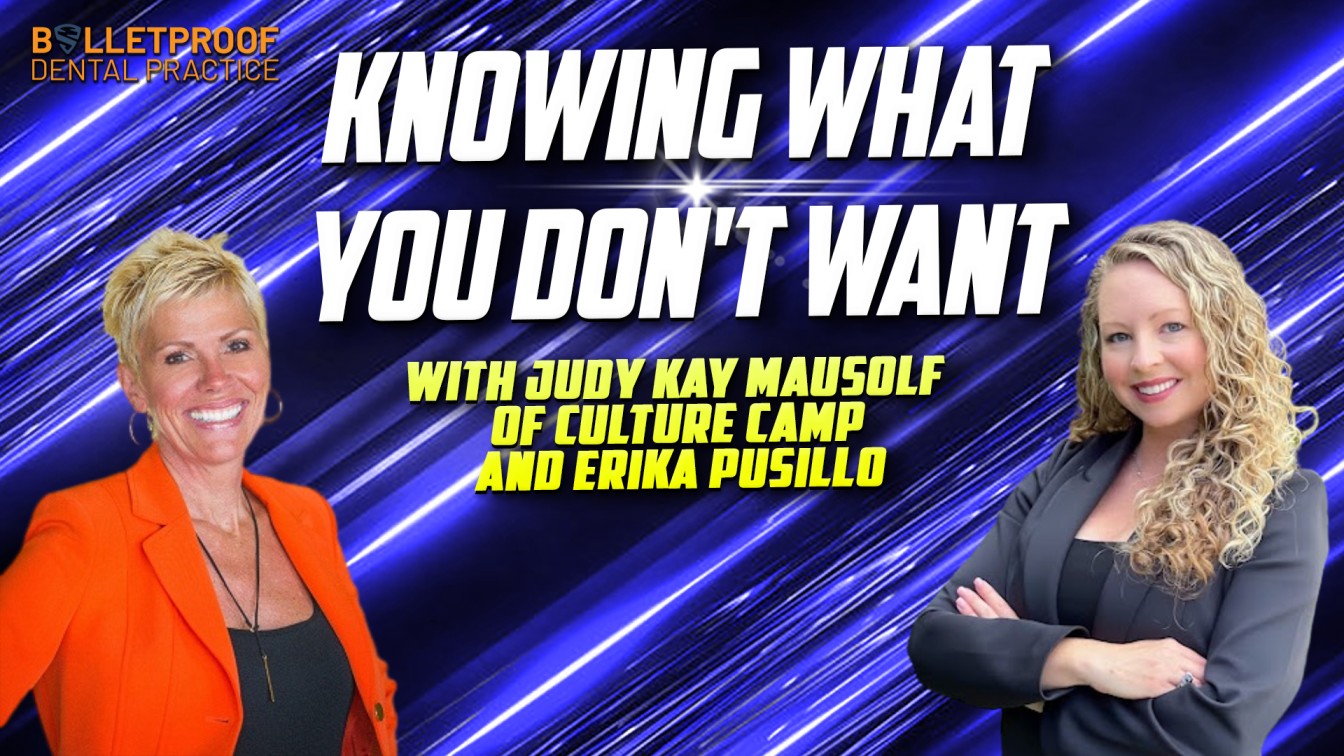
Knowing What You Don’t Want with Judy Kay Mausolf of Culture Camp and Erika Pusillo
, November 30, 2022

Cabo This Week, Immersion Learning, Biggest Breakthroughs, Your Personal KPI is Net Worth
, November 2, 2022
, October 19, 2022







Business is not Productivity, Productivity is not Profitability with Chris Salierno
, September 22, 2021









3 Biggest Bottlenecks of an Entrepreneurial Dentist: PART 2 with Perrin DesPortes of TUSK Partners