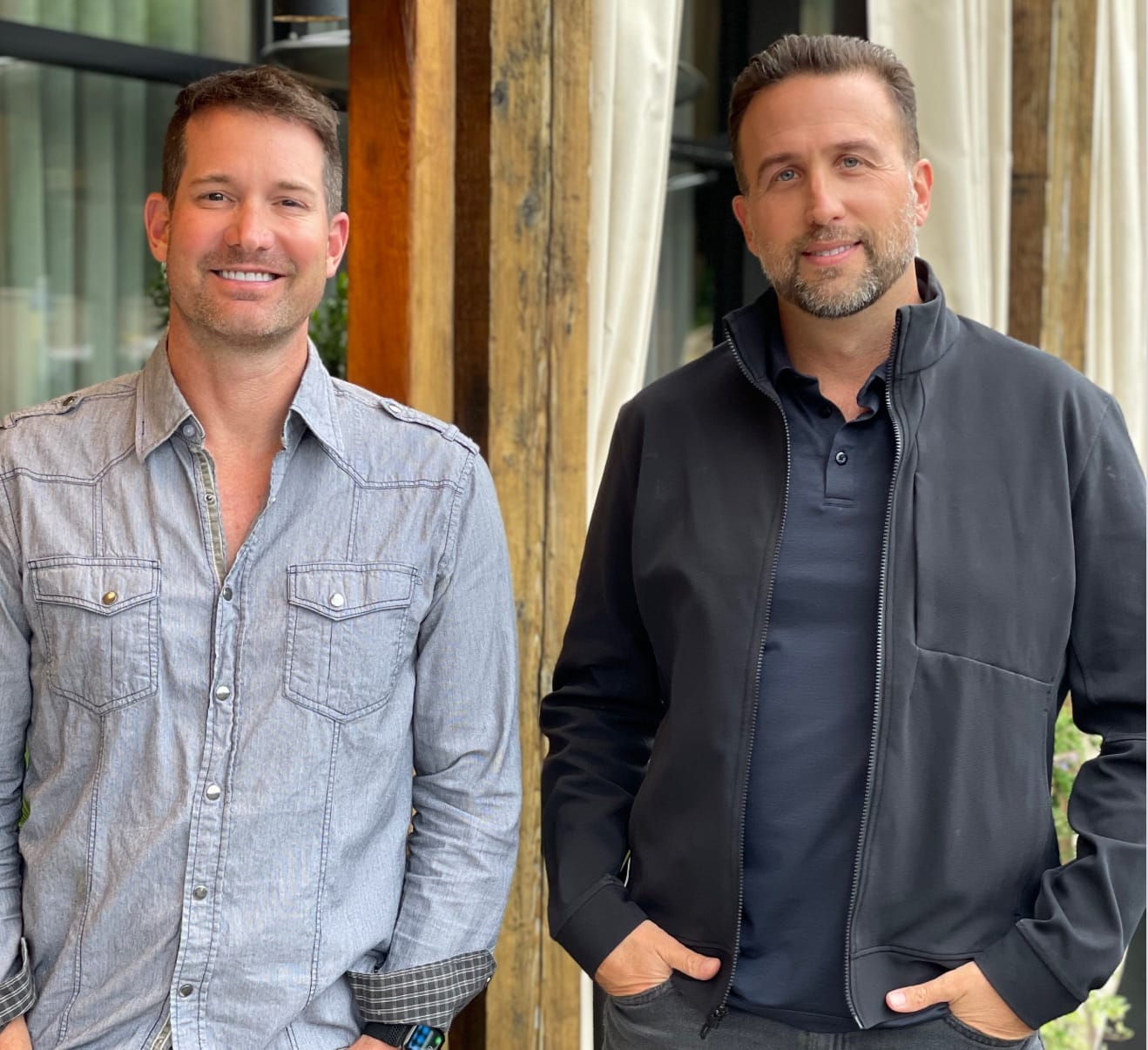
Generational Dentistry with Dr. Myles Spodak
Bulletproof Dental Practice Podcast Episode 274
Host: Dr. Craig Spodak
Guest: Dr. Myles Spodak
Key Takeaways:
Introduction
Transitioning Patients
Giving Suggestions
References:
Bulletproof Mastermind
Bulletproof Summit
Mighty Networks: Bulletproof Dental Practice
Tweetables:
If you have a very motivated child in dentistry, encourage them to the fullest extent. -Dr. Myles Spodak
At some point in time you just have to let it go. -Dr. Myles Spodak
You don’t know what you don’t know. -Dr. Craig Spodak
It’s really what you do to your teeth that makes the difference. -Dr. Myles Spodak
The greatest privilege a person can have is father-privilege. -Dr. Craig Spodak
Full Episode Transcript
Below is the complete transcript of this episode of the Bulletproof Dental Practice podcast. Prefer to listen? Find us on Apple Podcasts, Spotify, and YouTube.
Read the full transcript
The following transcription was from the Bulletproof Youtube channel. Here is the https://www.youtube.com/watch?v=wh9_I4t8SSI
Craig Spodak
0:00:00
Hey everybody, welcome back to another episode of the Bulletproof Dental Practice Podcast. Today I'm actually with my father, Myles Spodek. And I dragged him over here and he's like, what am I doing here? And I said, well, you know, it's very rare that you can find a father-son that can actually go through a transition and wind up working together successfully. And when we have our summit, so we have our masterminds, it's incredible how many dentists actually practice with family. So me being a third-generation dentist and you know dad working with grandpa for a very very short amount of time, there's a unique perspective here and I think it's valuable for all the listeners that actually have worked with their family either for a day, a week, a year, a decade or more. You and I have worked together since 1998, so that puts us at like 24 years. So we're in rare air that we were able to successfully navigate it, but I don't want to misrepresent it. It was not always easy and there was a dynamic of mom being in the practice too, so it's not just a father-son relationship with a father, mother, son, and it's hard. So first of all, thanks for spending time with the listeners. Great, nice to be here. Yeah, have you ever listened to a podcast before of ours? I might, not sure, I don't think so. Okay, you ever read my book before?
Myles Spodak
0:01:31
Yes.
Craig Spodak
0:01:32
I read the lead come like that, how cool is that?
Myles Spodak
0:01:34
It's the first line I got to.
Craig Spodak
0:01:36
Did you read the entire book? No. Isn't that incredible? I don't read very much. But you know how to read, don't you? Yeah, that's one of the few things I do have. So it's kind of funny, you know, my wife is similar to you. She's like, I don't need to read your book. I hear all your bullshit all the time. It's so funny. She won't show up to any of the things. She won't listen to any podcast or something. I can't hear you. Anyway, so dad, let's rewind back when Grandpa Harry, so how long, so you graduated dental school in 66, 66, 66 from Temple. And grandpa's practicing Harry Spodak's practicing in Brooklyn, New York. Right. He started his practice in 1938. He went to dental school at the University of Illinois class of 1938. Okay. Class of 38. So he works. Does he work with grandma Ruth or no?
Myles Spodak
0:02:28
Is he solo?
Craig Spodak
0:02:29
No, no, he worked pretty much by himself with one assistant. Okay, and that was an office in the house, right? Yeah, it was a very small office. Okay, so you join, you go right out of school and go right to him, right? Or did you go to the Army first? No, I went in 1966, it was the middle of the Vietnam War, so I had to go into the service. I spent two years in the Army as a captain in the Army Dental Corps. Okay, so right when you get out, you go to Perry?
Myles Spodak
0:02:56
Yeah, 1968, we moved back to New York, and I worked with my dad for about a year.
Craig Spodak
0:03:02
A full year?
Myles Spodak
0:03:03
Yeah, but I knew that I wanted to have my own practice.
Craig Spodak
0:03:06
What reason? What was wrong with that one, or what was the deal? Well, I didn't want to live in the city, I wanted to live in the suburbs, and somebody had told me, just pick a place you want to live that you like and just open a practice. Yeah, you always said that. I like that, by the way. I mean, it's nice. You also said one thing, I remember you was telling me, if it has a Cadillac dealer or a Mercedes dealer, you can do well there.
Myles Spodak
0:03:26
Yeah, well, I stole that line from a well-known dental lecturer, I think.
Craig Spodak
0:03:32
Okay, got it. Well, you don't have to admit stuff like that. You just take it as you're on.
Myles Spodak
0:03:36
I'm gonna credit you with that.
Craig Spodak
0:03:38
I'm very honest. I'm honest too, but I don't mind a little bullshit. I don't think that. But one thing that's interesting is I was once giving a lecture out in Naples, Florida. And maybe it was not Naples, it was a surrounding community of Naples. It was in a business lecture. And I met somebody in the audience and they said, Hey, you know, we're out of practice. People can't afford it doesn't want to double blah blah blah and I said you know how far away from this hotel do you practice they said well right literally two miles I'm like well there's a Mercedes-Benz dealership like three minutes away don't you think they have better demographics than we as dentists do so obviously there's a need to support a Mercedes dealership but I think it's a good little point for people if you want to practice in a certain area you love it and it has a car dealership of those magnitudes or good Starbucks and good retail development, the demographics apply there. And fortunately, nowadays we have great demographic services that you can purchase to know what the areas, if it's underserved or over served and the socioeconomic factors that can support the practice. But anyway, we digress. You go to work with grandpa Harry. Um, what was that like? Talk to me about that first year. I know you didn't want to be there, but how was your relationship with him? It was good. It was very good. It was, you know, like transitioning patients from his practice to me was a little tricky because I was a pretty young guy at the time.
Myles Spodak
0:05:03
And a lot of the patients were reluctant to…
Craig Spodak
0:05:06
Sitting like us. I think sitting like us. And I remember one story that was really, really interesting that this patient had an emergency issue and My father said well, I can't see you, but my son is here You know give him a try, you know see how things work out So I treated him and after I treated him. He's just said to me, you know, I really love you dad But when he worked on me, it was like he was changing a tire in my mouth So I felt really good about that, that I was able to transition one of his patients to me. I worked with him for about a year, but the office was very, very small. I think it was probably like 400 square feet, which is tiny. It was in the house, right? Yeah, it was in the house. It was two operatories, very cramped, a small waiting room, and not much else. And I just felt like I wanted to do something on my own. I didn't want to live in New York City. I wanted to live in the suburbs. So that's when I decided to open my own practice. It's a funny story, you're reminding me of this. When we came together to work here, you were probably like, this is going back like five or ten years ago. You're in your 70s at that point and a patient wants to see, saw you. And so at the very end of the appointment, hey doc, you were great, but I want to see your father next time. They thought you were, so you're in your 70s. So like you're awesome, but I want to see your dad. You're like my dad is like a hundred, would be a hundred. It's like you're too young. So then, so you leave dad and there's no drama around that.
Myles Spodak
0:06:44
Like no, no, no.
Craig Spodak
0:06:46
Well, he was a little disappointed. He had his, his intention was to me to take over his practice. So, you know, I really maybe foiled his plans, but I wanted to be out of my house. So was it really about being out on your own or being in the suburbs? Because you're kind of saying like being in the suburbs, I didn't want to live. Okay. So it wasn't this need to individuate, like, and do something totally different, so you couldn't see yourself living in the city. Yeah, right. Okay, got it. That's a different distinction.
Myles Spodak
0:07:20
Yeah.
Craig Spodak
0:07:20
Because a lot of dentists, like, don't want to fall into the shadow of their parents for other reasons. You just had, like, a real practical issue, couldn't see yourself practicing there.
Myles Spodak
0:07:29
Right.
Craig Spodak
0:07:29
That's true. That's a big distinction. So then you go out to New City.
Myles Spodak
0:07:34
Right.
Craig Spodak
0:07:34
And then how long were you there? I opened a practice in New City in 1969 and at that time my in-laws had moved to Florida. So we were going down to Florida for vacations. And I never really had much exposure to Florida other than when I was a kid. I mean my parents used to go there, I used to go with them. But I never realized how nice Florida really was, especially in the wintertime. And I had to practice, I started to practice in 69, and in 1973, I took the Florida boards.
Myles Spodak
0:08:15
Yeah.
Craig Spodak
0:08:16
With the intention of just having the boards, not really wanting to move at that point, I really was okay, I liked the house, I liked the neighborhood, I had a fairly good practice, and I didn't have any intention of moving. But I remember it was probably around Thanksgiving time, just about this time of year in 1973 or 74, just after I had passed the Florida boards. And I remember it was starting to get dark about three o'clock, three in the afternoon.
Myles Spodak
0:08:47
And the mamas and the papas was singing, all the leaves are brown and the sky is gray and I said that's it I'm moving
Craig Spodak
0:08:52
to Florida. Yeah you're done. Yeah I'm done I moved to Florida. But the cool thing is and that's how I ended up the story is like when you got here like you didn't realize how unsuccessful or maybe that's the wrong word to use how much more successful you were. Absolutely. So the first year in this in this practice that you opened with Uncle Marshall and Del Wright you did more and more crowns in one year than your last five years. That's true. The practice in New City was mostly kids the average age of a person. In New City, I was 16 years old. My practice was mostly a pediatric practice. I saw a lot of kids. So that was really tough. But I did it because that was normal for the area. And the parents would send the kids in. They'd say, if my kid comes out alive, I'll come and see you. And that's how I got the adults. Okay. So let's fast forward all the way through. So you're busy, you're doing your thing. You have a great reputation. You're working here for basically 25 years. I'm in dental school and I'm not sure if I want to go back to Florida at a certain point, you know, I was kind of eyes wide open. I was really enjoying, you know, I enjoyed Boston and I was just, I had opportunities for me and you're like the whole time that I was in dental school, you kept saying to me, I can't wait for you to get out. Can't wait for you to get out. I need help, I'm overwhelmed. And all of a sudden, like, late 97, 98, and I'm about to come out, you give me a different tone, like, I hope I'm busy enough for you. No, things started slowing down for some. I don't remember exactly what happened with the economy, but I was like very very busy very busy extremely I was seeing like 40 patients a day. All fee for service never mess with any insurance. No never did and I was probably the only provider in Delray that did not accept insurance. Right. I mean I was dealing with patients who were very insurance driven and and I didn't you know entertain doing any insurance dentistry. Yeah. And the practice just grew and grew. So I joined you and I'd say the first like, I don't know, eight years were really tough. The first, right out of the gate, it was really good. It was great to have you there and it was, you were really impressive in education at Tufts. I remember you saying that, like how much I didn't do a GPR, I came right out. I joined the Seattle Study Club and I started learning a lot, you know, getting into FMR and stuff like that. And it was tough because of the lack of technology, you know, the appointment book, the way, what really inspired me actually, I don't know if I ever told you this, to become a dentist was that when you had your old office, you remember you had two different offices in the same building, the first office was really dated, it was very 70s. And then like somewhere when I was in college, you redid the office you moved next door, you know, in the same building. And that kind of like lit a spark in me like, oh wait, dentistry could be totally different. Like so I conflated dentistry and your Brady Bunch 1970s offices one, you know, and then when you went to the new space, I was like, it lit a spark in me for what maybe dentistry could be totally different. You can, you know, do anything you want. when I came in right at probably like year three, four, I was really anxious to do stuff. So I was probably like what, 31, 32. But you know, the mechanics of the practice, the mom and everybody there, we really didn't have an ability to relinquish the control to allow me to do it. I understand like, it was very difficult because every time I would suggest doing something, it felt like a personal attack. Like, what do you mean we're not doing it? You know, like it was like a personal attack on you and mom. Like, well, what do you mean? We're not doing it right now. You're doing it right. But things are changing and there's technology and computers. And it was, it was very, very difficult. And what I remember doing during that time was like, okay, I can't really advance my career because I'm kind of stagnant. I can't really, I don't have the control that I would want. So I started doing extracurricular activities. So I was working, you know, we were number five every day. I became a pilot, you know, I was channeling all that energy into other things. I became a private pilot, flying all the time. And then it really kind of got up to a boiling point when I met Saisha. Because when I met Saisha, you know, in 2005, my wife I Remember talking to her and she was we got we were getting serious and talking about the future and I found out what she makes Per year and when she told me what she made for you. I was like triple what I was making and I got so insecure When I've ever talked about that, you know, I'm super super insecure because like, you know, like one of the things that you know You know the manual to be able to provide and instantly I felt like outclassed and that created a lot of angst. It was like saying, okay, I got it. I got to do better. And frankly speaking, you know, for better, for worse, there was no possible way for me to make more money at our practice. You know, there was nothing I could do. So it was like, I got to a point like where it's like, okay, either I'm going to go out and buy that practice at Miami or something, or, um, but I knew I couldn't have, you know, uh, an opportunity that wasn't going to be able to be scalable. And I think through all that, we were, you know, one of the things that I, that happened from it was a contentious time was fighting. There was a lot of slamming doors, you know, because Tiffany was there sometimes, you know, we were arguing and stuff like that. Because it was a lot, I think, as the, as the father, and I see this a lot. It's a very big thing when you let a child come in because it means, it's like, it's an existential thing of like, okay, where's my relevance? What am I supposed to do? And we handled it, you know, in hindsight, after all the contention, kind of the boiling point simmered down. It was a really beautiful thing. And I want to kind of distill down for the listener what it was. So on my end, Michael, my best friend Michael, Michael, Michael DeNora said to me, hey Craig, your dad's, I don't know what the time year was, 65 or something? Yeah. Right? 60 something? In 98? No, 2006. Yeah, 65. So I remember him telling me, this is like, hey Craig, because you and Joe are the same age, probably, happy early birthday to us. He called me up, he's like, Craig, you're fighting with your dad a lot, and our dads are at this age, in their 60s, where like one day, you can pick up the phone, something catastrophic is happening. And he says, you don't want to fight with your father and get in a, you know, and then have something happen. And you don't want to like, you know, you don't want that on you. You don't want to ever have that level of discord with a family member, especially someone that's getting older. And I remember that it shifted from that. I'm like, I'm just not going to fight anymore. I just don't want, I mean, obviously we've argued and then nothing's perfect, but he wanted to get the back label. And, uh, now looking back on it, like I look at our transition, I'm like, I actually can see pretty clearly that I bet you would agree that if we didn't do this, we didn't take it. So you probably would have disconnected. You know, like, I think we, I think what we were able to do in hindsight was extend your career. I mean look, you're here now. You have the ability to add value to the practice and come and go as you please and still add value and plug in. So the days you're here is great, but you don't need to carry so much weight. I see a lot of dentists that partner family and the dad wants to slow down but there's no other way to replace the revenue so it's hurting the practice. They're like cranking it down and everybody's stressed out because dad doesn't want to really, dad or mom, I have one girl I'm that mastermind, her dad wants to maintain the ability to practice four days a week but what doesn't want and then sometimes takes off months at a time. So she can't replace him to keep the revenue up. So it's cool that we were able to scale it and provide that. So there's no resentment. Like if you want to work five days per week, I love it. I love seeing you. But if you want to work one day a month, that's cool too. So we would not have been able to do that I don't think. I came to the conclusion that you had some amazing ideas for your own practice and the things that you were trying to do to create something that was really special. And after a while I realized that that was a very good thing and it was a very smart thing to do that. I don't think you thought I was doing it smart at that time, though. I think you just said, I gotta.
Myles Spodak
0:17:52
It evolved. It evolved.
Craig Spodak
0:17:53
you just kind of said like I've got it was more it was like more binary you had to feel like you had to do something I don't think at the time you're like this is gonna work out great I think you're like I'm gonna let it go and it could totally fuck up I really do think you thought that at least well I didn't have, you may have not had the same feeling that I had, but I just felt that you had a great idea, a great perspective of what the practice could be. And, you know, eventually I just, you know, felt I'm going to let you run with it. So let's go all the way forward. Let's fast forward, like, towards the next level. So it was in this office at this desk. Do you remember that day, right? So we built the building. You know, I had this idea to build this massive building, 13,000 square feet, you know, millions of dollars, five, six million, I can't remember. And I don't know if you know this part, but I'd probably tell you this, but so the bank was sold during the process of the building being built. So it was on a certain bank and they got sold. And so when the building, I had a construction loan and my payments were like five grand a month. But when you get certificate of occupancy and conversion construction a permanent. So we got our CL in December. So in January I'm expecting my first real payment is gonna go from five thousand to thirty Did you know that? No. And so, we're moving in in December. Right. And I know that I have a $35,000 mortgage payment and I know I have like 60 in the bank and payroll at that time was like 50. Can I tell you any of this? Oh yeah, this gets pretty bad. So I had a legal patent next to my bed at night and I had a list of names like Michael and all these different people after John that I was gonna borrow money from to keep it all afloat and I was I didn't want to tell you this because I needed to be upset or bit scared but um, I Was pretty sure I was gonna go broke and go out of business so you didn't know this but I'm in this room. I always get emotional. I talked about so I won't get emotional now because I don't want everybody to hear this one. I think I'm over it now. I can process it. But I'm sitting there, and you're walking around the office, and you hear me crying. Remember? Yes, I do. Can you kind of go on with the rest of it? We were actually standing in the hallway just outside your office, and you were like really, really scared. I could see it. And all I did was I gave you a hug and I said, you'll be fine. Everything will be fine. This was a great idea. It's going to be fine. I didn't know the details of what you just told me. And if I had known the details, I might have had a different kind of self. Fuck, Greg.
Myles Spodak
0:21:11
But I had a feeling.
Myles Spodak
0:21:13
I had a feeling.
Craig Spodak
0:21:15
Well, you were hugging me, and I was crying more. And you said to me, I'll work for free. Remember you said that? Yeah, I would have been no problem. You said, I will produce, and I'll work for free. I'm going to make this work. And then, because I remember the feeling going into it, like, why the hell did I do this? And then, through that moment, I'm like, oh, I did it for us, for our legacy, for as like a testament to like dentistry and all the stuff you created. And it was really, it was really a defining moment. And then the rest of the story, it gets pretty good here. So since the bank got sold, January 4th comes along and I don't get the bill. I get a $5,000 bill. And that's interesting. They get the paperwork has to be settled, pay the $5,000 bill. So February comes along I'm expecting 35 plus 35 they're gonna hit me 70. I get a $5,000 bill. February comes along I'm expecting now I'm getting a reconciled 105 and now I have like 90 in the bank. You know but I feel a little bit better. Yeah. And they send me a $5,000 bill and they keep doing that all the way through October. So I got through the grace of God or an error or whatever, a $350,000 float. You didn't know this?
Myles Spodak
0:22:34
No.
Craig Spodak
0:22:35
I don't know. In October I finally called the bank because Michael said, don't call them, you know, don't worry. In October they finally catch up and they send me my first payment, $35,000 request. So I had paid $5,000 a month and I should have been paying $35,000. So two to be after it, it's a $300,000 mistake in my favor. And that was the only space I needed to go from failure to success. Wow, that's amazing. Now you know I was crying.
Myles Spodak
0:23:09
I can see why. I would be crying. We both would have been crying.
Craig Spodak
0:23:13
Yeah, that would be a lot of free work.
Myles Spodak
0:23:15
That's right.
Craig Spodak
0:23:16
Well, I had no reservations about doing that. Isn't that crazy? Yeah. So let's get down some takeaways because I know your time is limited. What are the things that you would… So I imagine there's going to be a lot of young dads that are listening to this podcast and they're going to tell their fathers that they're working with to listen to this. And they're going to listen to you and I want you to speak to the fathers of those dentists male and female you know what what are the things that you can tell them in retrospect after working with your son for 25 years and you're got 50 some odd years of dentistry yeah 55 years of dentistry what are like the top things you could tell those fathers well they're contemplating having the Well, don't contemplate having a child in coming. If you have a very motivated child that's in dentistry, I would encourage them to the fullest extent. And you know, trust your gut and go with it and let them take off. I mean, when patients would ask me how it felt to have, you know, your son running the practice, I said, well, when Craig actually took over the practice, I felt like I was hanging on to the wing of a jet plane because things were moving so quickly. Technology, computers, the people, the treatment we were providing. Yeah, they stopped doing amalgam, remember that? And then it went up and down for you.
Myles Spodak
0:24:48
Yeah, I felt that that was a good move. I thought that was good.
Craig Spodak
0:24:50
It felt like your production went up because you couldn't do those big old MOTVs. Everything had to become indirect to Crowns.
Myles Spodak
0:24:55
Yeah, Crowns.
Craig Spodak
0:24:56
Your personal production went up. Yeah, we had to do Crowns instead of Giant Immogals, which I was very accustomed to doing. But, you know, I had tremendous faith in Craig and I just felt that it was going to go well. And the bottom line is just trust your gut and go with it. And, you know, at some point in time, you've got to just let it go. Yeah, yeah. Anything you would have done differently? No, actually in retrospect looking back at all these you know the transition that we had, the difficult times, it was really well worth it because at this point in my life I probably would not have been able to work because I couldn't really have a practice with the technology that we have here to make crowns in one day. You can't say that you wouldn't know any different so you'd be you know like Marshall, I won't mention his full name, but you know Marshall Dullin Street he has a very you know traditional 70s practice and isn't that you don't know what you don't know you know the patient's demand was sophisticated services now I mean but you would have slowed down and your demand was slowed down so you would have had it just a different career one thing that I know about you is your social person you love being my people and all the people that you've met you know the team you've interacted with from Vanessa to like Sam Wagner you trained Erica Erica run for the whole place now she started off as your assistant and seeing the pride and joy of seeing her evolve. You have all these fingerprints that hasn't become a dentist because of you. So I think it's like when we think about the patient care that we do, it's the relationships that bring us the most amount of fulfillment. And I do agree that the relationships have been expanded because of it. But people have left too. Some of your friends have left because they wanted the same. Now some of our friends have not come, they don't come here anymore. Yeah. I know that always bothers you, it never bothers me.
Myles Spodak
0:26:54
It bothers me.
Craig Spodak
0:26:55
It shouldn't. Yeah. You know, like, I think that if you try to be at a practice for everyone, it's, you're not gonna win. You wanna be, you know, like, I went to that cardiologist he sent me to, you know, and I walked in, and I was all, I mean, he's a great guy, don't get me wrong, but his technology, his office is falling apart, and I'm like, damn. You know, so everybody has a different you know demand there's a lot of demand for high-end dentistry today I can see yeah more than ever before ever believe that you know they pay patients of demand even in England maybe which was basically socialized dental care patients are demanding more sophisticated services and they're paying for it yeah because the insurance will not cover it. Yeah. Dentistry has changed drastically in the last 50 years. Better or worse today? Much better. Good for you. Much better. I mean. The best it's ever been? Well as of right now, I mean when I went to dental school we didn't have implants, you know, nobody did full mouth reconstruction. It wasn't really, you know, you treated one tooth at a time. What would you say to the dentist that tells their son or daughter don't become a dentist?
Myles Spodak
0:28:04
No, that's a great injustice. I see that in medicine too. I mean all the physicians that I know, not all of them, but most of them, tell their kids not to go into medicine.
Craig Spodak
0:28:15
And why do you think, why would you be telling somebody that's possibly in college right now to go to dental school, why would you tell that person to go become a dentist? Well, I think dentistry is an amazing profession. I mean it's done well for me and I think what you can do for patients is just over the top amazing. Yeah. Because you can just, yeah, I look at all these people who have facelifts and all kinds of plastic surgery but nothing does the same thing as redoing their mouth. Of course. And their beautiful teeth. I mean I see people who have face lifts, you know, and they have, they're missing teeth and they think that the face lift does it all, but it's really what you do to your teeth that makes it. So you know what Dan, I'm listening to you, you're speaking from an interesting place. You are speaking from a dentist that has done and watches a lot of full-mount reconstruction. So there's a lot of dentists that will spend their entire career and never do more than two or three rounds in a quadrant. So you have a unique perspective of dentistry like I do. But you've invested, you took through experience and courses and work, and you went to photography way back in the 80s, you had that book of photos. So if I can distill down your message, it's like invest in yourself, do bigger cases. You know what I mean? Like you always used to tell people don't ever pre-judge a patient. Right. That people deserve to hear all their options. Absolutely. You never and you don't always tell me that and other doctors here like don't tell them about just the one tooth. Tell them the whole thing. Yeah I once went to a lecture and it was a pretty large group of dentists and the speaker was talking to us about what dollar amount do you feel comfortable talking to patients about? Is it 10,000, 20,000, 50,000? And most of the dentists were very uncomfortable talking to patients about numbers when it got up in the higher ranges. And I never felt uncomfortable because everyone deserves to have the best. If they can't afford it, then we can, you know, you should never do that. Never.
Myles Spodak
0:30:28
I learned that very early on in my career.
Craig Spodak
0:30:31
Fortunately, it taught me a lesson that I would never forget. So funny enough, I had a podcast with another dentist, Chris Ramsey, it was like a couple weeks ago. And, you know, he was shocked that I asked the question, do you love your smile to patients? And by the way, if they have a really ugly, crowded, you know, smile with broken teeth. And they tell me I love my smile. I tell them me too. But if they say, no, I don't love my smile. I ask him why?
Myles Spodak
0:30:57
Why? And why?
Craig Spodak
0:30:59
And well, what do you, what would you know, if you had the magic wand, well, I get rid of all these other crowns.
Myles Spodak
0:31:03
And he was like shocked.
Craig Spodak
0:31:04
I see that he was shocked. I went, that's ridiculous. That's like you're going into a bar and the bartender saying, like, do you like your shirt?
Myles Spodak
0:31:13
That's bullshit.
Craig Spodak
0:31:14
That's not the same.
Myles Spodak
0:31:15
That's not the same.
Craig Spodak
0:31:15
Not the same. It's incumbent upon us because we have the tools that they don't know we have. How many times have the patient over your career said, I had no idea you can do this or had I known I would have done it sooner or, you know, like you would invisible and how long was I on you for invisible life? A long time. And then finally, like, would don't you wish you did it sooner? Yeah, I do. And you're a dentist. Yeah. So I just think it's interesting that there's a dialogue out there that tells people that you should practice a certain way and you know at every dental office and I have the privilege of going to so many, they're so different. They're so different. I'm sure. Each one is so different. But I'm appreciative of all that I've learned from you. There's a lot of people talk about privilege in life, you know, that there's a lot of different privileges. Not to get political, but the greatest privilege a person could have is father privilege. When you have a man that you grew up in the house for, a young man or a young woman, that does the right thing, has high character, great work ethic, it just sets somebody up in life and I think that's one thing I'm gifted that you were able to do that for me and yeah it's if I'm proud of myself it's because I have a dad like you. Thank you. I'm proud of you as well. I know you are. It's just it's cool and hopefully I'm doing that with Gavin. He tells me he wants to work in the practice. Good for him. The dentistry is great. Only like a CEO degree not a double degree to cover my stuff. But anyway, I know you gotta run home now, mom, and do your thing, but just wanted to make sure that we had this podcast recorded because it's really common. And people are fighting. And it's a contentious time when the change of control.
Myles Spodak
0:33:08
I know.
Craig Spodak
0:33:09
It's not easy, but I feel very good about what happened yeah it's not all it wasn't all roses and sunshine so don't beat yourselves up if you're currently fighting with your father or your mother or whatever it's kind of normal you know yeah I mean look at I have independent children they fight with me so I kind of like don't mind a fighter you know I mean cuz I mean it's gonna fight for other things of course you know and if you got a passive one maybe kick their ass a little bit. All right, dad, well thank you. Give me a hug. I'm gonna take off your headset. I'm gonna end this thing. Love you.
Myles Spodak
0:33:44
Love you too. Thank you.
Craig Spodak
0:33:45
I hope you guys enjoyed that. If you did, drop a like, drop a comment, or if you have a challenge with your father or your mother, let us know. I'll point my dad on the comments on YouTube and he can add to it as well. Thanks everybody and thanks for listening. Thanks, dad. Thank you. Thank you.
Myles Spodak
0:34:02
Thanks for listening. Thanks, Dad. Thank you
Transcribed with Cockatoo
Blog

















1+1=3 The Power Of Alignment and Delegation For You and Your OM with Erika Pusillo
, October 31, 2024










, June 15, 2023
, June 8, 2023
, May 31, 2023




Look at These 3 Stats if You’re Thinking of Going Out of Network with Teresa Duncan
, January 11, 2023
, December 28, 2022
Knowing What You Don’t Want with Judy Kay Mausolf of Culture Camp and Erika Pusillo
, November 30, 2022

Cabo This Week, Immersion Learning, Biggest Breakthroughs, Your Personal KPI is Net Worth
, November 2, 2022
, October 19, 2022

Business is not Productivity, Productivity is not Profitability with Chris Salierno
, September 22, 2021







3 Biggest Bottlenecks of an Entrepreneurial Dentist: PART 2 with Perrin DesPortes of TUSK Partners