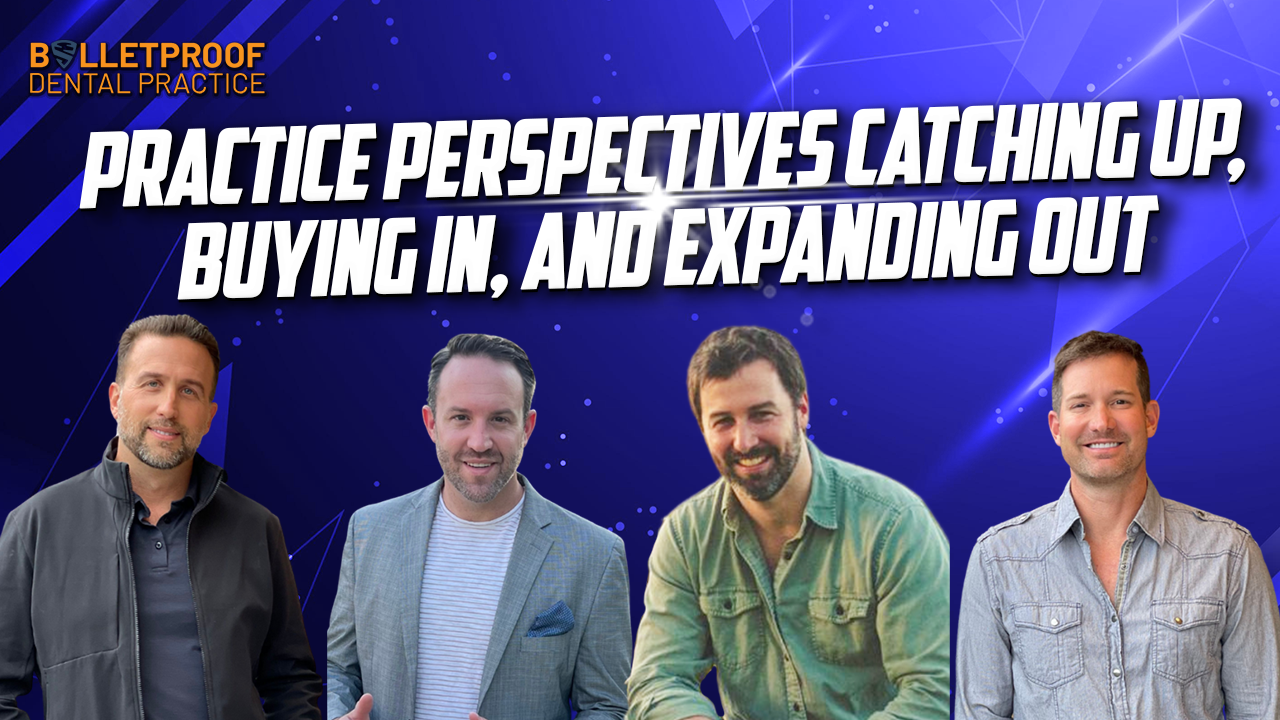
Practice Perspectives: Catching Up, Buying In, and Expanding Out
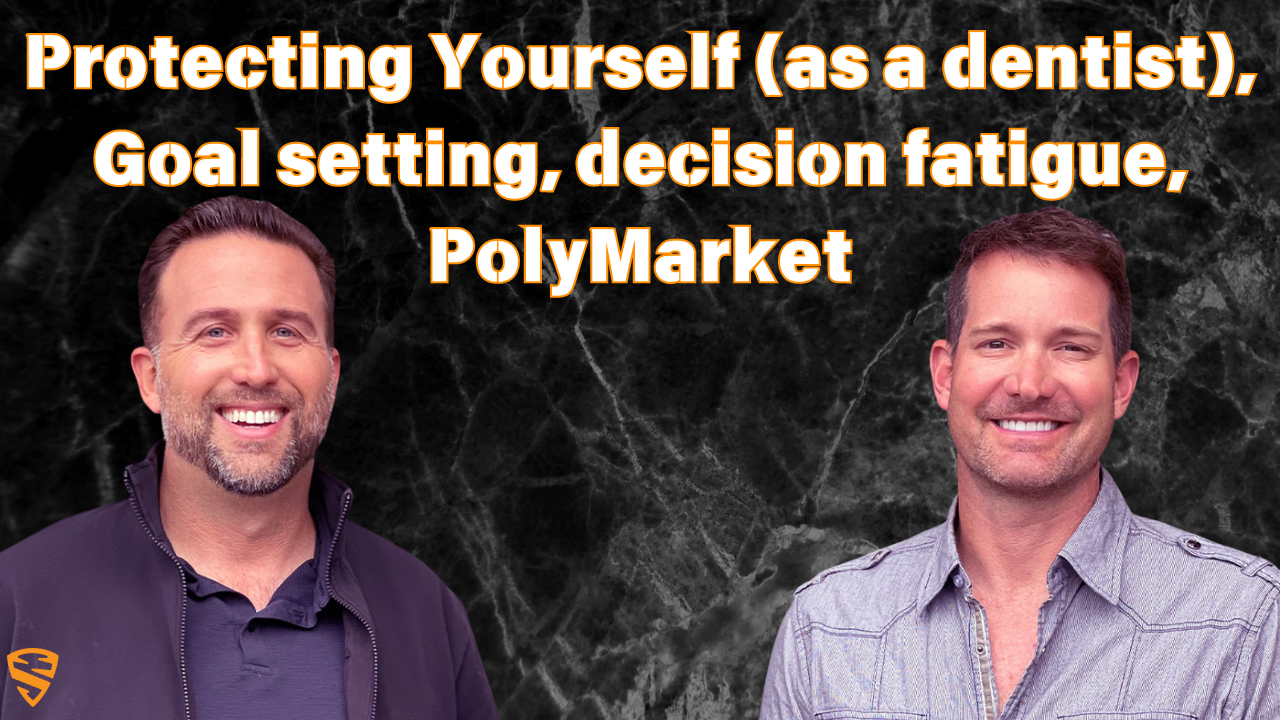
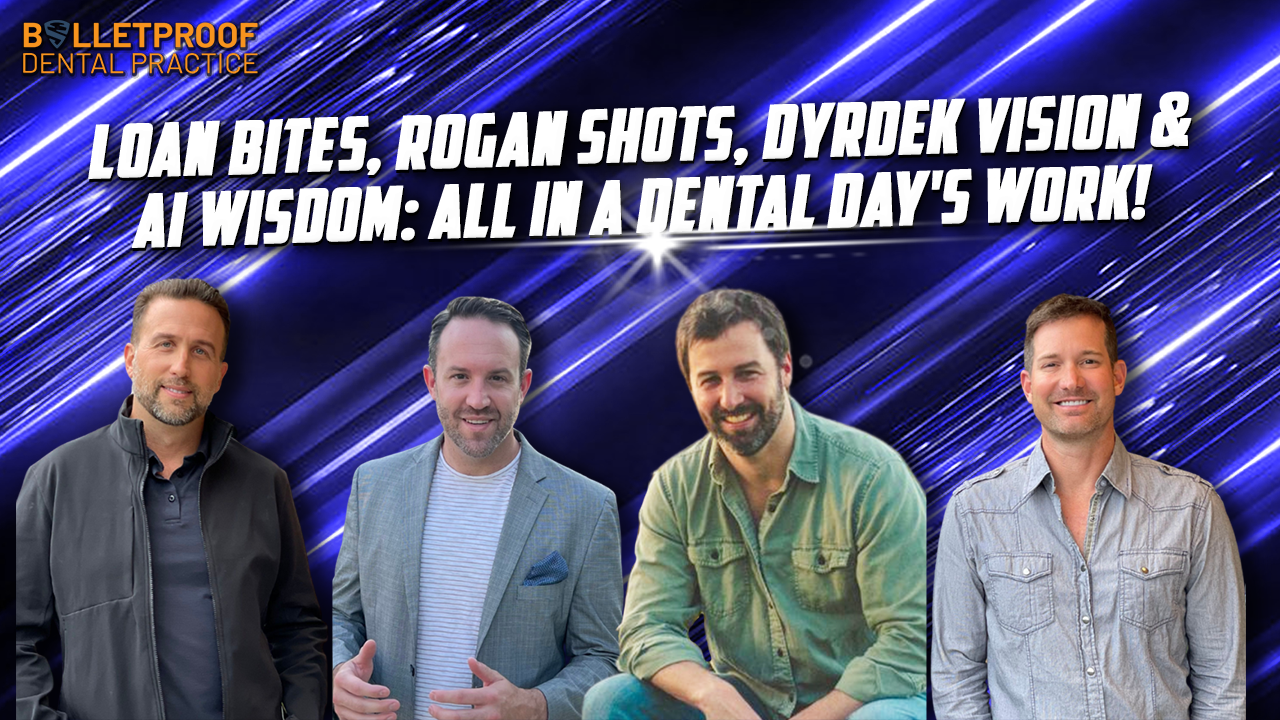
Bulletproof Dental Practice Podcast Episode 294
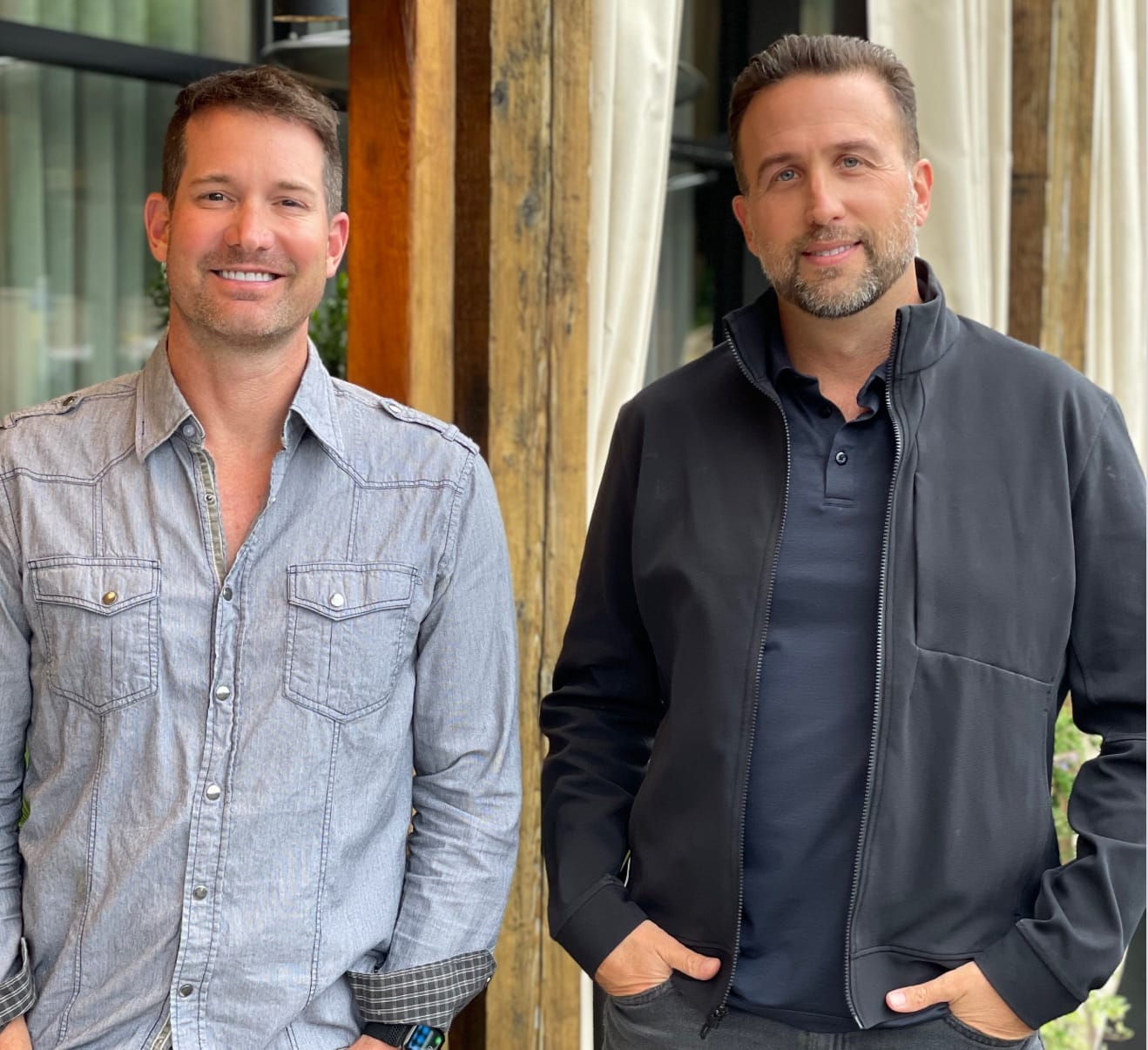
Hosts: Dr. Peter Boulden & Dr. Craig Spodak
Guest: Dr. Dwight Peccora and Dr. Trey Tippit
Key Takeaways:
Introduction
Takeaway From Marcus
Independent Dentist Versus Consolidation Status
Sell Or Not To Sell
Investor Pressure
Not Being Paralyzed By Interest Rates
Acquisition: Look At Production Not Collection
Marketing And Phone Conversion
Teaser For Next Podcast
Invest In Your Team
References:
Bulletproof Mastermind
Bulletproof Summit
Mighty Networks: Bulletproof Dental Practice
Bulletproof ERC
Tweetables:
There is very few business training out there. Dr. Craig Spodak
Diversify to maintain growth. Dr. Dwight Peccora
Banks love to give you money when you don’t need it. Dr. Craig Spodak
People are looking for care NOW! Dr. Dwight Peccora
You have to be the person who steps ahead. Dr. Craig Spodak
Full Episode Transcript
Below is the complete transcript of this episode of the Bulletproof Dental Practice podcast. Prefer to listen? Find us on Apple Podcasts, Spotify, and YouTube.
Read the full transcript
The following transcription was from the Bulletproof Youtube channel. Here is the https://www.youtube.com/watch?v=BbM7owa4fbE
Dwight Peccora
0:00:00
The biggest difference I'm saying is one person carrying all that weight, if they're not diversified well enough, or dealing with a tremendous amount of wealth are going to get to the point where they're like, yeah, some of my practices are not profitable, but it's okay, because I don't want to sell them.
Dwight Peccora
0:00:13
Right.
Dwight Peccora
0:00:14
And at the end of the day, the ability to grow, the ability to compete is going to be your diversification of your ownership. Um, which is healthy. I mean, a lot of us have done that and already, and it's helped us. But I think it just comes down to groups of entrepreneurs coming together and
Peter Boulden
0:00:30
saying, Hey, that's actually what Mark said. He said, look, I hope that it becomes part of like, there's even groups doing private DSOs, right? Like the DSIs and Mark's group potentially, or the Bulletproof group. He's like that, you know, this, this will be a good thing for the industry. And he's like, you know, I see the rise in that as well. And, uh, I mean, shoot, that's cool. And right, you get better, Dwight, like you're saying in your own ecosystem by holding hands with potentially other partners. I think dentistry gets stronger by potentially holding hands with each other versus a big PE firm, right? That is only coming in as an intermediary between investors and dentistry. That's it.
Trey Tippit
0:01:08
In a hot minute since I think the four of us have been connected on a pod, right?
Peter Boulden
0:01:23
I know there's been three, but I think it's been a hot minute. Dwight, you've been dealing with some operational things, let's just say. You know he's been listening because that, speaking of dead weight comment really razzled my boy Dee Whizzle. I don't need much content but like one podcast with just the three of you on it and I woke up this morning I was like oh I'm gonna just write off of that one.
Dwight Peccora
0:01:49
Oh is it is it roasty time.
Peter Boulden
0:02:05
Craig, I just,
Craig Spodak
0:02:06
I think it's your guy.
Peter Boulden
0:02:08
Craig said it, not me. Craig said it.
Trey Tippit
0:02:10
I just figured,
Craig Spodak
0:02:11
I just want to make sure you're paying attention, Dwight.
Trey Tippit
0:02:13
It's on video, we're good.
Trey Tippit
0:02:14
We're good.
Dwight Peccora
0:02:16
I would have never thought that out of one podcast I could get enough content for a full roast for all of you.
Craig Spodak
0:02:21
Oh, good, here we go.
Craig Spodak
0:02:23
Craig said it.
Craig Spodak
0:02:24
You know you're not dead weight. I just, I don't want you getting too big for your britches.
Dwight Peccora
0:02:29
No, my favorite, my favorite is, is literally this is why Pete wants us all on the pod and why he wanted roasts is he wants to see you get upset at me for a roast.
Craig Spodak
0:02:39
Well, you got upset at me, bud. No, no.
Peter Boulden
0:02:41
God, you guys grow up. Be men, shut up. All right, go ahead, Dwight.
Dwight Peccora
0:02:47
Are we recording already? We are already recording.
Peter Boulden
0:02:49
It's been two minutes of useless content so far. Yes, sorry.
Peter Boulden
0:02:54
Sorry, people.
Trey Tippit
0:02:55
Get some value for it.
Dwight Peccora
0:02:56
This is a real deal. No intro music, no nothing. I see how it is.
Trey Tippit
0:02:59
Nothing.
Craig Spodak
0:03:00
We roll. I'm working on a new intro music, by the way.
Dwight Peccora
0:03:02
Did you get it?
Dwight Peccora
0:03:03
It's almost ready.
Craig Spodak
0:03:04
That's all we go.
Peter Boulden
0:03:05
That's all we got.
Craig Spodak
0:03:06
All right, you're shut.
Peter Boulden
0:03:07
Go.
Dwight Peccora
0:03:08
All right, let's go. It has been a long time since we've been on together, so. By the way, kudos to you guys.
Trey Tippit
0:03:14
Craig, shut up.
Trey Tippit
0:03:15
Kudos to you guys.
Craig Spodak
0:03:16
I'm not interrupting. The last couple podcasts, the ones I was on vacation, you guys crushed it. I'm so happy to hear Trace finally come into his own and actually speak.
Peter Boulden
0:03:26
You have so much good stuff to say.
Dwight Peccora
0:03:28
He always has good stuff to say.
Trey Tippit
0:03:30
I do.
Trey Tippit
0:03:31
I'm smart. You are very freaking smart.
Craig Spodak
0:03:34
I like you.
Dwight Peccora
0:03:35
Mike is still a little low, but it's coming back. It is nice to get everybody back, and more importantly, it's nice to maybe do a little intro and a little roasting. As I said, all of you gave me plenty of content from the last one, so we'll get started on the first one right here. The survivalist hobbyist who's trying to make Florida more like Texas, whose political perspective is a merger between Trump and DeSantis. All guests to the pod beware he's our interrupter extraordinaire. Even as we try to discuss all of dentistry's tips and tricks expect him to come back and bring it all back to Florida politics. Inflation was not transitory but a solution will be some allegory that tells any of you who have been profitable to give up now and make your practice forfeitable. Either pay for culture or become prey to DSO vultures. Feelings are his statistics, and Ivy League data is just a bunch of mystics. He tells us how we're overspending in the Ukraine war, so we are all aware, but tell Craig he's overspending on his people and he'll turn into the cocaine bear. He's our trailblazer, practice vision appraiser, and enough of a spokesperson to have a Republican Party retainer. Please welcome Craig Spodak to the pod. Thank you. Just for the record, though, I am not a Trump supporter.
Craig Spodak
0:04:57
You can't correct the intros.
Trey Tippit
0:04:59
Yeah, yeah.
Craig Spodak
0:05:00
I can. I mean, I feel like there needs to be a rebuttal. I'll write you an email. There's no rebuttal. I'm writing an email. Who's filing a complaint? Yeah, I'm filing a complaint. Yeah, I'll file a complaint. There's a box, it's on your desk, it's over to the right, just drop it right in there.
Dwight Peccora
0:05:20
Just drop it right in there. And of course, the one and only, the chickens may always come home to roost, as we know his tortilla addiction will never be reduced. He identifies as fat and happy, and regardless of what is going on in the world, this Texas boy is always chappy because he's always has his comfort of his Texas sayings. His desires for details is explained as good enough for government work and he can't always say what he's thinking so he sits back with the smirk. His analysis of the competition is that they are all hat and no cattle or would that be all horse with no saddle. As the besties are busy making podcasts are never on low supply. This practice builder is focused to be as busy as a Texas funeral home fan in July. As quiet as he is, you might think he's got his head in the sand, but his practice model is so resilient, he doesn't even care if the economy will ever land. He's our logic speaker, positive thinker, rainmaker with a calming demeanor. Please welcome Trey Tippett.
Dwight Peccora
0:06:23
All right.
Trey Tippit
0:06:24
I'm following your complaint.
Craig Spodak
0:06:25
Can you write one for me, too?
Trey Tippit
0:06:27
I'll write both.
Peter Boulden
0:06:28
I'll write both. Hey, man, it was all your Texas tags.
Trey Tippit
0:06:30
I had to throw them in there, man.
Dwight Peccora
0:06:31
Come on.
Craig Spodak
0:06:32
Fat and happy?
Peter Boulden
0:06:33
You said it.
Dwight Peccora
0:06:34
You should still be drinking a beer right now.
Craig Spodak
0:06:35
Pick up that can. What is that in there? I think you're like chugging a beer back there.
Dwight Peccora
0:06:38
I'm telling you, 100% of this stuff is from this one pot, which is these fires. And of course last but not least The first part of the pod this intro is brought to you by Reynolds wrap the top quality foil maker for all you tinfoil hat Creators who believe our apocalyptic instigator his relentless Bitcoin backing means he's doubling down on the economy cracking Hang out too long with him and you'll think he's a blowhard until you find yourself hiding money in your backyard. Who knows if he's right? He'll either become the Bitcoin sheik of dentistry or begging Craig to move into his Florida barndominium on bended knee. This buyer of Bitcoin and bullets is ready to hodl even if his data is anecdotal. He's our enterpriser who's betting on everyone else losing just so he can buy a crypto yacht for cruising. If you're not anxious yet, let's give him some air time for his predictions bet. His cryptic crypto mindset will tell you to be your own bank, but you will leave every conversation wondering if this is just a prank. He's our enterprise or anxiety rising tinfoil hat advertising bulletproof host with the most Peter Bolden.
Peter Boulden
0:07:55
As he has a Bitcoin hat on right now. I like it. I like it. You know what's funny? I'm going to call Peter out a little bit. You know I love you, Peter. I'm going to call you out.
Peter Boulden
0:08:06
Let's all do that.
Peter Boulden
0:08:07
That will be the first time, I'm sure. About a year ago, Peter's like, can I borrow blank dollars of money? I'm like, bro, 100%. Just tell me what you need. I want this. I'm like, yeah, done. What are you going to do with it? I'm going to put it in the stable coin. Remember you told me I'm going to make
Trey Tippit
0:08:22
a big thing.
Peter Boulden
0:08:23
Oh, yeah. It was kind of a joke, hypothetical. I was like, let me get like a million bucks and like I'll just put it in this stable coin.
Craig Spodak
0:08:29
And I'm like, well, is there any downside? It's like, absolutely no, zero, like impossible. It's pegged to whatever, whatever. I'm like, you know, I'm gonna tap out.
Peter Boulden
0:08:38
My anchor and Luna Protocol and all that Terra Farm is my wounds are just healing and you just ripped it off.
Craig Spodak
0:08:45
I'm sorry, bro. Come on, come on.
Peter Boulden
0:08:47
It was a significant amount of money that I've lost and you're just, no, it's not.
Dwight Peccora
0:08:50
No, we're in the halt in it right now.
Peter Boulden
0:08:52
Are you kidding me? Are you kidding me? Dude, I lost like $400,000.
Craig Spodak
0:08:56
Yeah, I mean, that's one month.
Peter Boulden
0:08:58
I mean, maybe not significant to you, but…
Dwight Peccora
0:09:01
It would have been a lot more had he said yes.
Craig Spodak
0:09:03
That's four days of Trey Tippett's crown and filling operation.
Peter Boulden
0:09:07
All right. Let's get into it. Let's get into it. Please, please, please. All right. How do we transition from that shit show?
Craig Spodak
0:09:18
God, it's just tough. I don't know. Let's just put… You want to not do this one? Let's just throw it away. Hey, if you think this has been valuable thus far, drop a comment. Just for now. Don't forget to subscribe. Yeah, smash the subscribe button. Okay,
Peter Boulden
0:09:32
let's get into it. So we just got off the pod with Mark Costas. We did one and we had a really good conversation. And we were kind of comparing notes as he coaches and Bulletproof has coaching and the outlook on the economy and what he's saying. There were some eye-opening things that we were talking about. And actually, that's how we kind of spoke about, I said, Craig and I are kind of on the kick that you probably shouldn't sell your practice right now. A, because interest rates are too high. B, because you probably don't know what your next looks like. And then Mark proceeded to tell us like he had just pretty much gotten out of ownership of dentistry. But in that though, the context always matters. I mean, he had a lot going on in terms of his next steps. So Craig, what was your takeaway? Yes, so he basically said, like, look, I've hit my money mark. And basically what he said is that, like, he's got many other businesses he's running and it's just not a great use of his time to manage his practices. And admittedly, Marcus said over time, over the years to us, you know, that his practices have not always been the best use of his time. So I think it's a moment of clarity for him. But what really struck me is two things. Number one, he's starting an amazing non-for-profit where he provides dental care. He actually called it Jungle Dental Care. He's going to have places in
Craig Spodak
0:11:01
DER.
Peter Boulden
0:11:02
No, that's not what the name of it is called. No, I know. I know. I forgot the name, but he's saying it's basically going to third world countries to deliver care. And set up permanent outpost, Dwight, essentially, right, in these locations.
Craig Spodak
0:11:15
It was really cool. So Peter and I said, hey, we're all in on that. The other thing that was a good takeaway, which I wanted to just start with your dialogue, is he has, from a variety of attorneys and PE and different bankers, a really good feeling about this number that he heard. And he said that in the next seven or eight years, the consolidation will go up to about 65 to 80%. So let's call it like 70 some odd percent.
Peter Boulden
0:11:44
So in eight years it'll be at 70, two or three percent. Well no, it's 30% now. Right, and in eight years it'll go to 70, 80%. Right, so 150% increase.
Peter Boulden
0:11:54
Yeah, right.
Craig Spodak
0:11:55
What part, you said no, what part was incorrect? Anyway, so we're gonna, the consolidation, he says listen, he really feels strongly about that.
Peter Boulden
0:12:05
So before we go- I asked him, and then I asked him, is that a fear-based, you feel like that's a consolidation acceleration, again, is it a fear-based thing or is it a, oh my gosh, look at all this money? And he said, it's half and half, I think. And I said, okay.
Craig Spodak
0:12:21
He said a mix of both. So I'd love to hear, first of all, Dwight, Trey, I know we've been saying, I've been saying or hearing for two decades now, the era of the independent dentist is closing and consolidation is speeding up. But everything happens slowly until it's sudden. Is it speeding up? And do you believe that it will be that mid-70 percentage in eight years, like literally increasing by 20% per year or 25% per year? Do you guys think that? No. Go ahead. That's excessive. 80%. That's
Trey Tippit
0:12:59
yeah. You might as well go to a hundred at that point. Well, he's basically saying the outliers at that point, um, Trey will just, they will sell. They don't care. They'll just
Craig Spodak
0:13:09
basically saying, I'm not selling. When all this started and we started hearing from everybody and you had the fear that was placed by those buying always came at you with, hey, there's a window and this closes. Don't miss your chance. You have a big motivator from a seller.
Peter Boulden
0:13:34
The musical chairs thing, right? There's not going to be a chair left for you if you don't do it now.
Trey Tippit
0:13:39
Yeah, and then you lost your whole opportunity. And the problem with that is it implies that everyone's gonna work, and this is what was always said, we're all gonna work for one of 10, 20 companies, and that's gonna be it. And as much as the industry and consolidation has taken place in a lot of different places, dentistry still has a relationship component, much more so than what you've seen in the past, even in healthcare. So I think you still have that as a fail-safe to keep people going in the direction of independent practice.
Peter Boulden
0:14:17
Here's why, Trey, I don't want to stop you there, but here's why. There's so many people beating the drum of what you just talked about, that fear drum, like better move now, better do it now, the money's there, good, look at this multiple. And so I feel like we, with that last pod, we adopted kind of the contrarian view because I think it's healthy to have balance in people's audit of what they want to do, is present all these reasons, okay, we hear your fear mongering, we hear the opportunity, we hear FOMO, but also like let's explain the reasons why you should never, right? From a context standpoint, you should never sell your practice, right? Like Trey, you've been saying, I'm never selling. I don't give a shit. I'm never doing it because look at all these benefits that I've gotten to enjoy because of it. And so I like having this in the industry. I like having a big contrarian view of saying like, don't do it. Unless you have a situation like Mark, where he's saying like, Hey, I had six other businesses that I needed to jump into in dentistry. I checked the box with general ownership and I want to go make impact in all these other areas. And I was like, dude, that's a completely different story than 99% of the people who were selling. So like you are the unicorn in this story. Most people don't have that. So I don't know. I don't know where I'm going with that other than I like us banging the drum of don't sell your practice, optimize
Craig Spodak
0:15:41
your direction. It feels like we're the only ones. You know what I mean?
Peter Boulden
0:15:44
It's such a consistent narrative right now.
Craig Spodak
0:15:45
I think that's what I'm saying.
Dwight Peccora
0:15:46
It's important.
Peter Boulden
0:15:47
And it's not irresponsible because I feel like things can always be fixed. Going back to that freedom of direction, you can always optimize your practice for whatever you're seeking in the life. If you want to do impact, optimize your practice for that. If you want more time, make less money and optimize for that or become more efficient. If you want to scale and grow your net worth, optimize for that. But without that vehicle of your practice or the vehicle of dentistry, you're going to be limited.
Craig Spodak
0:16:15
One thing I want to add, Peter, and I want to hear obviously from Dwight and Trey on this too, is that we're speaking to a broad audience. There's a lot of people that are listening to this right now that their businesses are failing. It's not working for them. All they have is the implant course. The belief is, I've got to get better clinically. We spoke to Costas about this as well. There are very few good business trainings that are out there. We speak from the luxury of not only teaching but benefiting from our mastermind. Look at how much value we've all gotten from what we do. So there's no, when you help somebody, you get help in return. So I could speak that seven or eight years ago, I hated my business and a five multiple might have got me to ring the bell. Trey, I know in the past you've not liked your business. Dwight, you know, we've gone through these rough patches and we sought out and got educated. So we're speaking to people that don't recognize that what you may need the most of is to sign up for like a Costas or a Bulletproof or whatever the flavor of business training is because it's not to take the weekend implant course. That's not going to fix you.
Peter Boulden
0:17:31
Or get an environment, right? Like you said, in the DSI, right? Maybe going to that conference and sitting down with someone and being exposed to someone at lunch who may course correct, right? Some may say, oh my gosh, I was in your spot.
Trey Tippit
0:17:44
Right.
Peter Boulden
0:17:44
So many of these problems I feel like in dentistry get propagated because we live in a bubble. We live in a silo by ourselves and we make decisions by ourselves and we don't have someone that we can trust as a dentist or counterpart to say, hey, what should I do? Like, Craig, you and I have used each other for the past 10 years or, yeah, almost 10 years now of like, what do you think about this, right? And I know that your advice is coming from a very Peter benefited way, right? You're only wanting me to win in the advice you're giving and vice versa and and in dentistry We live in these lonely silos and we think like, all right. Well, I don't really know what to do
Craig Spodak
0:18:17
Like I'll just pull the f- it card. Yeah, that's the only choice you that gets so bad and then and then you listen to these narratives that are on Facebook. Dwight, you and I are part of these groups and it's like this guy, like it's like one guy in particular, like a freaking slow moving train wreck, you know, FML, these hygienists don't give a crap. And then you're like, yeah, me too. I totally know. I had a hygienist not show and they won $80 per hour. And it's like you go down this rabbit hole of like desperation and it's like, yeah, I've got to pull the freaking cord. I got to ring the bell. And then not to mention, we've got predatory consultants out there, like legit predatory consultants. I mean, I haven't talked about it in a while, but something came up on my Facebook feed. There's a consultancy out there that will help you with your dental practice, but what they really do with the real business they're really in is they sell you shitty financial products. How abhorrent. So they'll help you with your practice and oh by the way with this sister company. That's kind of owned by like my son Legit like it's owned by his son That's a financial services company and I'm using air quotes and all it does is sell you whole life insurance Which is the most highly commissioned shittiest frickin product bar none that none of us have but I had it and I spent a decade
Peter Boulden
0:19:31
Funneling that crap so like not only are we lost but we have predators out there, the sharks in the water. I've seen an increase on Instagram too of just people have never even, I mean look, I don't know everybody in dentistry, I'm just saying, but I see these people.
Trey Tippit
0:19:45
Haven't you guys seen that?
Peter Boulden
0:19:47
Number one closer in dentistry. I'm like, how does someone A, crown themselves that and like B, I've never heard of this
Craig Spodak
0:19:52
person. How do none of us know who he is? And then if you look, he's been in real estate for the last 10 years. I'm like, okay, dentists are dumbasses and they have money, let's go there.
Trey Tippit
0:20:02
That's exactly right. How do you pick an accounting firm? First one, stay away from anybody that only does dentists and not just accounting or anything. As soon as they say, I only do dentists and you ask them why and they go, I just love dentists. Really? Everybody loves those guys. That's everything though.
Craig Spodak
0:20:14
Ancillary services in this industry is a huge market and I think sadly that a lot is predicated on dumb doctor deals.
Dwight Peccora
0:20:29
So just to give my response. So first of all, it seems like there's two main questions. First off is, will consolidation get to 80% or 70%, whatever it is. And then the second question is, is this sell or not sell, which, you know, we did the whole podcast on. And I, from the very, very beginning, stated and said, consolidation will go to 80%. I am adamant. I believe it's going to happen. I have no reason to think otherwise. The timeline, right? Yeah, the timeline. And the timeline of eight years, I thought was actually a little slow. Wow. I'm on the other side of that. I'm going to be honest with you, and the reason is because I feel, and this is not just polarizing, I just, the more we spend time with dentists and practices, either coaching or by just getting random phone calls and be like, hey, this isn't working, that's not working. And even doing some of the stuff that I get to do, the culture indexing stuff and stuff like that, 20 to 30% of our industry, and I actually think it's closer to 20, are made up of actual entrepreneurs. And the rest are a bunch of craftsmen that fall in line with academia and end up kind of getting enough consulting to keep their business going and profitable. And then there's a big portion of that group that also struggles to financially focus on how much they need to spend personally and not elevate themselves to the point that their business is choking them because they can't keep scaling just production, right? To run a good business, we get the luxury of being profitable, we can keep producing, but at some point in time, you can outrun that with your personal life, and that's incredibly common. On the back end of that, the struggle that I see is that now it gets tighter and tighter because of insurance, it gets tighter and tighter because of the cost of services, overhead, these types of things that keep going down that road, and DSOs and others are consolidating in the market. So exactly what happened in medicine, I'm not surprised by it, I think there's gonna be niches and I think that's where a lot of people are gonna enjoy themselves, but the remaining 20% are gonna be the entrepreneurs that, like part of my conversation I had with Trey last night, like, I love dentistry, but I love every vertical that has to do with business. It's kind of like the Costas conversation. Clearly he got to a point where, where is my best allocation of time? And some of it may be like Trey, I believe he may never ever sell his practices, but that's only because he then is gonna own other components and be a true serial entrepreneur in other areas and be completely diversified. And now he's just overseeing a portfolio. And I think that that's where that 20% is going to lie. And that's where a lot of healthcare lies today, to be honest with you.
Peter Boulden
0:23:18
It's a very fair point. And look, I don't think it ever, I think 80% becomes the ultimate plateau if that's what it is, meaning it doesn't then go to 90 or 95. And then I think ultimately it resides at that plateau level. And Duane, I don't disagree with you on this and my battle cry is not to prevent that. I just want to make sure that I'm crystal clear on that. It's not that I'm anti-consolidation. I just want people to make not these big drastic draconian moves and make what's in the best, evaluate all the options. And exhaust everything too.
Dwight Peccora
0:23:56
Yeah, well this is the other thing that I think a lot will not understand and if you just kind of, again, we're reading out of the same book that healthcare read through. I mean, medicine did the same thing. And what happens is those entrepreneurs who try to keep up with consolidation and compete, but don't diversify their portfolios and have multiple ways of revenue and a lot of protection for themselves, willing to make heavy risks on practice, equitization, development, things like that. Those entrepreneurial groups who then don't diversify their guarantees, meaning having partner.
Trey Tippit
0:24:34
Yep.
Dwight Peccora
0:24:34
Cause I do believe that in order to maintain growth, that is going to be competitive at the DSO level, you're going to have to diversify your guarantors and your strength to be able to, you mean the days with me, make
Peter Boulden
0:24:48
sure I'm understanding this. You're saying the days of the soloist are gonna become more and more rare.
Dwight Peccora
0:24:55
Correct, I believe that that 20% is where the group practices are going to enjoy. And I'm not saying that that means, the biggest difference I'm saying is one person carrying all that weight, if they're not diversified well enough or dealing with a tremendous amount of wealth, are going to get to the point where they're like, yeah, some of my practices are not profitable, but it's okay, because I don't want to sell them, right? And at the end of the day, the ability to grow, the ability to compete is going to be your diversification of your ownership, which is healthy. I mean, a lot of us have done that already, and it's helped us, but I think it just comes down to groups of entrepreneurs coming together and saying, hey, let's-
Peter Boulden
0:25:36
That's actually what Mark said. He said, look, I hope that it becomes part of like there's even groups doing private DSOs, right? Like the DSIs and Mark's group potentially or the Bulletproof group. He's like that, you know, this this will be a good thing for the industry. And he said, you know, I see the rise in that as well. And. I mean, shoot, that's that's cool and right, you get better, Dwight, like you're saying, in your own ecosystem by holding hands with potentially other partners. I think dentistry gets stronger by potentially holding hands with each other versus a big PE firm that is only coming in as an intermediary between investors
Craig Spodak
0:26:10
and dentistry. That's it. Yeah, and that investor relationship is a timeline pressure. So it's not that PE is so good or bad for dentistry. It's the investor pressure. So PE needs to make a return, an immediate return. So the decisions that the four of us make for our practices may not, may be three and four and five year decisions, like we'll spend the money or train the people because we're thinking of owning our practices for three, four, five and beyond. A PE company cannot have the luxury of doing that. The investor needs a return quarter by quarter. So if the four of us ran our businesses to produce profit for the immediate, it's just a different pressure. A friendship is not about what happens next week. So it's the alignment of the investor with the company that causes the friction
Peter Boulden
0:26:58
of what I think is bad. I'm going to give you guys an example which you guys are going to be like, duh, I get this but maybe everyone might not see it this way because Mark was saying that he has people come to him saying, hey, I'm getting a 10. I'm getting a 10 times earnings. So I would encourage people if you're doing that, all you have to do to get a 10 is keep your practice five more years and then you can sell for a five.
Craig Spodak
0:27:23
Or keep it for 10 more years and throw it away.
Peter Boulden
0:27:25
Or keep it for 10 more years and walk away. You laugh at the example, right? And chances are, it's probably not going down, it's going up. I'm not saying it's a game of holding on as long as you can, but like,
Craig Spodak
0:27:38
this is real math.
Trey Tippit
0:27:39
Let me interrupt for one second.
Craig Spodak
0:27:40
Let me interrupt for one second. I need to crowdsource this. Someone told me, and I can't remember, this is something, I just, help me verify this. I spoke to a very smart person, maybe one of you guys was in the room when this happened, but I've heard that when everything consolidates, as it gets more consolidated, 80, 85, 90, valuations go up. So in veterinary, when it became 60 70 80 90 Dermatology as it went to the upper echelon of consolidation
Peter Boulden
0:28:08
Right. So is that is that something that you guys agree with that the most? Okay. Yeah, you hear that There's also an inflection point where it doesn't make sense, right? We've heard of those those those scenarios in dentistry where it's like, oh, I got the 18x. That's probably not sustainable, right? We are not a software company with zero expenditures. We are heavily based in expenses to provide those goods and services. So there is a limit to where it goes and I don't think the 18 times earnings is a-
Craig Spodak
0:28:39
Yeah, I understand.
Dwight Peccora
0:28:40
Okay. It's kind of like right now, and just so everybody understands who's listening, like when he says a pure supply and demand, it's not as, you know, just simply as that. Even when you get to 80% consolidation, 70%, 60%, there's gonna be less of a cereal aisle of practices available to try and acquire. That's the whole point, right? So it's gonna be, okay, it's more savory. Now I will say that at that point in time,
Peter Boulden
0:29:04
the expectations are higher. Dwight, hold on. I believe at that point, it will become like a third world nation, meaning there's gonna be elite practices and there's gonna be present practices.
Dwight Peccora
0:29:16
Yes, absolutely. But just like the cereal aisle, it's no different, right? You're going, you've got all these types of scenarios, but towards the end, there's gonna be less and less available to buy. But I will say, those practices, you have to build yourself because there's gonna be more and more requirements to make yourself savory if that's the case scenario. Whether it's how you do your accounting, whether your career or your cash basis, whether you actually do, you know, do you partner your doctors properly? Do you compensate them? Like all that stuff, we'll get to that point. It's just going to be what's savory, but I'm with you. And that that's between now and then, and then it just becomes who's available, who wants to sell.
Peter Boulden
0:29:53
Let's get off of this. Cause we, I feel like we've talked a lot of theory lately,
Trey Tippit
0:29:58
in my opinion.
Trey Tippit
0:29:59
Hold on.
Dwight Peccora
0:29:59
Can I make one comment before you go on?
Peter Boulden
0:30:01
I'm not. Yeah.
Dwight Peccora
0:30:01
What's interesting is an infrastructure piece that we keep talking about. And I've been adamant about when I had a bank asked me, how far do you want to go? They're asking about vision because they're funding, you know, my next expansions and buildings and this and that. They asked two questions. They asked the easy one, which was what's your percentage of EBITDA. Right. Uh, and then the other question. Percentage of EBITDA? Oh, okay. From your gross percentage. Yeah, whether it's 25%, 30%. They want to know that. First of all, it tells them right off the bat what they're dealing with, what kind of doctors they're dealing with, whether they have an understanding of what EBIT is, much less is it calculated and is knowledgeable of that. That's the first question. The second question was, how many partners have you already retired and what's your formulary? And so I looked at him, I said, we've retired four partners, transition them and brought in. So that is the future formulary to give us kind of consistency of business, strength of business, proof of concept of longevity, in my opinion. So just going back to that comment, I had to add that because I think that that's the component that we've had the luxury to get to do, but it's hard. And now that's why there's such a…
Peter Boulden
0:31:18
Do you think that if you hadn't been able to provide a good answer for the second one, that they wouldn't have given you money?
Dwight Peccora
0:31:24
Not to the level of request that I was asking for. Yeah, banks love to give you money when you don't need it.
Peter Boulden
0:31:30
Well, look, banks make money one of two ways. They either do loans, and if they can't find enough loans that they can that they can warn are good deals, then they go buy T-bills. That's it. That's their only two minutes. And we know what happens when they buy too many T-mills that are long term.
Trey Tippit
0:31:47
That's right.
Peter Boulden
0:31:47
So thanks. Yeah, that was actually very good.
Dwight Peccora
0:31:50
Thank you for thank you for interjecting that.
Peter Boulden
0:31:52
So, Frey, given all the things we've I feel like we've talked a lot of macroeconomics, we've talked a lot of practice stuff, very high level stuff. Do you personally consider now a good time to expand?
Dwight Peccora
0:32:13
Yes.
Peter Boulden
0:32:14
Interest rates being high, you're okay with that?
Dwight Peccora
0:32:17
Yes, they are.
Trey Tippit
0:32:18
Okay.
Peter Boulden
0:32:19
Do you consider now being a good time to do an acquisition, potentially?
Dwight Peccora
0:32:23
Good time to ask.
Trey Tippit
0:32:25
Okay.
Dwight Peccora
0:32:25
It's a great time to ask, Ray.
Peter Boulden
0:32:29
Do you think now is a good time to potentially do a de novo?
Trey Tippit
0:32:32
Yes.
Dwight Peccora
0:32:33
Also a good time.
Peter Boulden
0:32:34
You think now is a potentially time to do all those leasehold improvements in your practice?
Peter Boulden
0:32:40
Yes.
Peter Boulden
0:32:41
Even though interest rates are high?
Trey Tippit
0:32:43
Yes.
Peter Boulden
0:32:44
So you are not paralyzed by the interest rates.
Trey Tippit
0:32:48
Why?
Trey Tippit
0:32:49
So, well, I'll give the story of me starting. I bought the first practice at five and three quarters percent. I mean, it's way higher now. Well, it's way higher from the standpoint of what you look at of CPIs and this or that, but you can still get that easily from banks. Yeah, and lower. So when you look at that and you start realizing we're not, we're not, and I did find there, I mean, it got me here. So we're high when we compare it to what we've had, which is basically zero. And the other aspect, we've touched on this in the past, but this is a cashflow game. And if what's your, what's your debt service is because of an interest rate going up, however many percentage points there, if that affects whether you should do something or not, you don't belong in this game. I mean, you're not running it from a cash flow perspective because there's too many other aspects that go into that.
Trey Tippit
0:33:48
That's just one line item of data.
Peter Boulden
0:33:50
Let me throw one more variable for you in. What if unemployment, you know unemployment is gonna double. Let's just say, crystal ball, you know unemployment's gonna go from 3.5% to 7% in the next 12 months. Are you still on the gas? If so, why?
Trey Tippit
0:34:09
Yes.
Craig Spodak
0:34:10
If unemployment doubles, there are more people for me to hire.
Trey Tippit
0:34:14
Oh, I see.
Peter Boulden
0:34:17
Okay.
Dwight Peccora
0:34:18
All right.
Peter Boulden
0:34:19
How does that affect it from a gross revenue standpoint?
Craig Spodak
0:34:22
It doesn't. It's depending on what you do. So obviously, your suite of services that you offer is going to matter. But in terms of the, you know, there is a component of dentistry that is needed all the time. And that is what we focus on and deliver. And when that's the case, it's always there. So the need is there. Now you go fill the need. You're delivering a service that hasn't gone away because the economy is down, is basically what I'm saying.
Peter Boulden
0:34:50
Yeah, we kind of touched on this when we talked about the great financial crisis, and you guys were indicating how you all had increases in revenue in that standpoint, and I said, well, I went down 22%. And it was mainly predicated because I was ultra-focused in a bad area.
Craig Spodak
0:35:05
No, a good area, a luxury market.
Peter Boulden
0:35:08
Poor visibility, and I was the scalpel, meaning I didn't do a bunch of things. I did one thing well. That was pretty much it. And so, yeah, I learned a lot of pain from that. And so, I think I like listening to where you come on this topic because I think it's helpful for other people to kind of hear that and hear my pain from the great financial crisis and then also hear you saying, oh, they end up. And then also for facing this in the next, you know, look on the news saying we're going to have a hard six, the next six to 16 months to 24 months, it's going to be some pain.
Dwight Peccora
0:35:43
And you're saying,
Peter Boulden
0:35:43
I don't give a shit because my systems and my ground game is good enough to, to outlast that. It's good enough to beat that. And I just think that's super empowering because most people I talk to Trey or even outside of dentistry, most people are paralyzed and not paralyzed, but they're sitting on their freaking hands
Craig Spodak
0:36:04
Well, it depends on the industry to Peter. I mean certain people leverage money like I just said
Trey Tippit
0:36:08
Not just in dentistry
Peter Boulden
0:36:10
It's like people are sitting like my other friends a lot of people are sitting on their hands, right?
Craig Spodak
0:36:14
And they have to we don't have to I Want to I just want to ask one quick question just for like for just for some Clarification from a podcast that we all did like six weeks ago, eight weeks ago, where it was like the predictions and whether or not we're in a recession. And I know the technical definition of negative GDP growth for two consecutive quarters came up and influenced a lot of your answers. I just want to see today, do you feel like the pain at the cash registers at our practices has fully hit its peak or has yet to, you were anticipating and prognosticating
Peter Boulden
0:36:51
that there will be a greater pain at our cash registers. You mean of our monthly revenues?
Craig Spodak
0:36:58
Right, people saying no and not ringing the cash registers, but sales going down. Have we hit it, are we over it, are we through it, is it coming, where's everybody at?
Peter Boulden
0:37:09
I think, and you didn't ask me personally.
Craig Spodak
0:37:12
Yeah, go with you first.
Peter Boulden
0:37:13
I think that that's highly correlated too and this is just again based on my life experience. I don't think we're there yet because I think it's highly tied to unemployment rate and the stock market.
Craig Spodak
0:37:28
So that's a slightly different answer than maybe it was the way you asked the question originally and help me remember this guys because I almost think like it was the way that maybe the question was answered. I interpreted that question like the recession is already here.
Peter Boulden
0:37:42
Yeah, but it's not a finger snap and it's here and then that's the consequence. It's going to ebb and flow worse and better, worse and better until we're out.
Craig Spodak
0:37:52
More troubling times are in our windshield.
Peter Boulden
0:37:55
I don't know.
Peter Boulden
0:37:56
I don't have the data to say that.
Craig Spodak
0:37:57
I know. I'm asking you for a prognostication, a refinement of the prognostication because it was just a guest a month or two ago. And I'm just curious if you feel I'm trying to gauge.
Peter Boulden
0:38:05
I am planning for a little bit more getting worse or better. I am planning for a little bit more pain, not a tremendous amount more pain.
Craig Spodak
0:38:11
OK, so do you feel more optimistic or less optimistic than two months ago or the same? The same. OK, Dwight, tell me you want to hear.
Dwight Peccora
0:38:20
When we said when I said that I felt it was relatively baked in. It's because I did not feel I was gonna get a 2008 impact comparatively, right? And so my concept is that the oscillation of the economy is going to be more what we're used to feeling. And I think that a lot of us who made a lot of infrastructure development during COVID and all these other things are more prepared and apt to be able to do that. And I don't think it's gonna affect that much. Do I think it's gonna be more correlated to unemployment? I agree, I think that's gonna be the key cog that we're watchful of all the things I watch when I turn on the news and I'm listening to it in the car on the way to work, whatever. Like that's probably the one that I listen to the most because it makes, it extrapolates, dives down.
Trey Tippit
0:39:04
But I'm not expecting that.
Craig Spodak
0:39:05
So more pain at the cash register or less pain?
Dwight Peccora
0:39:08
No, I think it's gonna be consistently what I'm used to over the last couple years.
Craig Spodak
0:39:12
I don't think it's much different.
Craig Spodak
0:39:14
Okay. And Trey, you and maybe Trey, just clarify because of the nature of your business that you actually don't think about stuff like this because it's so needs-based. That has to influence your …
Trey Tippit
0:39:25
Yeah. From the standpoint of what I'm worried about in terms of revenues, I don't think about stuff like this.
Trey Tippit
0:39:30
However …
Craig Spodak
0:39:31
And is that the fact that you're so non-elective in your treatment that you offer? What a great feeling for those listening.
Peter Boulden
0:39:38
Look at him. He's sitting next to a triturator.
Trey Tippit
0:39:41
That's right. Look at this.
Peter Boulden
0:39:42
I mean, he's sitting next to a wooden plug. He's doing some amalgams there, Craig.
Trey Tippit
0:39:46
Wow.
Craig Spodak
0:39:47
I use a beautiful material called Miracle Mix. It's only like 60 years old, but it's one of the best materials I have.
Dwight Peccora
0:39:56
Oh, then you know the glass ionomer mixed with the…
Trey Tippit
0:39:58
Oh, yeah.
Craig Spodak
0:39:59
It's metal.
Dwight Peccora
0:40:00
You must have a lot of stainless steel crowns.
Trey Tippit
0:40:01
It's phenomenal.
Craig Spodak
0:40:02
Yeah, my dad would do the stainless steel crown, retrofit a core, it's amazing. My dad's a miracle mix master, an MMR. An MMM.
Peter Boulden
0:40:11
He's into triple M. So, Craig, keep going with that if you want.
Craig Spodak
0:40:18
No, I was just curious because I felt like I re-listened to that podcast and I just felt like I was wondering because I value you guys' opinion, I respect you guys so much and such a disparate and geographically and sector diverse like group of dentists here we are. I'm just wondering if people should be buckling down. I mean the banking crisis…
Peter Boulden
0:40:39
What's the downside? What's the downside to buckling down? I'm asking not rhetorically.
Craig Spodak
0:40:44
Well, there are two things. and conserving cash and there's like being like because because by the end if if the all economic cycles if people historically ignored the factors the macroeconomics and charged forward they'd be far wealthier than if they retreated so everybody in the face of an economic I'm saying that there are
Peter Boulden
0:41:09
cleansing processes that you go through as a business owner. For instance, Craig, 12 months ago, I was not going line by line on my AMEX statements, looking at everything. I am currently doing that now. What's driving you to do that? Because I think when you have high revenues and you're blowing and going, you have a tendency to get sloppier business.
Craig Spodak
0:41:35
Has your net profit waned a bit over the last three months as a percentage?
Peter Boulden
0:41:41
Not the net, but no. No, but it's again preparing for battle potentially. If I have the time to prepare for battle and like you said, kind of batten down the hatches. Like COVID.
Craig Spodak
0:41:55
Like COVID was a great one.
Trey Tippit
0:41:56
Yeah, it was great.
Dwight Peccora
0:41:57
What he's saying is if there's a revenue drop, he's making sure that his net stays the same.
Peter Boulden
0:42:04
I just think, I think, I think potential upcoming tragedies are great. If you think that's potentially coming, that is a great exercise to dial in some things that you may have gotten sloppy in. That's all. That's all I'm saying. Yeah, I agree.
Craig Spodak
0:42:16
COVID was that for all of us when we were all talking about getting extended terms and like, do you really need this? You really turned off a lot of software. You turned out, you know, it's funny. You never turned it back on. You started doing a lot more remote, like Invisalign, your clear aligner checks were becoming more remote, less frequent, but you didn't go back to where they were but pre-COVID, there's certain things we learned about. So yeah, I think it's incumbent upon a business owner
Peter Boulden
0:42:43
to do all that problematically. If you were buying, if you were in the market like Trey is potentially, like if you were looking at a practice to buy and you're saying, look, I'm foot on the gas. I've got a lot of disposable cash right now. I need and want to buy a practice. I want a second location. What would be some of the things that you would be looking for given the optics that
Dwight Peccora
0:43:03
you have?
Craig Spodak
0:43:04
Well, I mean, I would, when Trey was talking, I was like, damn, I'd invest right. Purpose it with him. I'd love that. The opportunity to do that. You know, I like where he's at. You know, I think one of the major challenges for the three of us, Peter, me and you, Dwight, is that we built the practices around the dentistry that we like to do. Dwight's a full arch implant master, you're an AACD, you know, master this and that. I've got my own clinical expertise. And we build practices that make us personally suit our own egos. Trey was really smart to say, and maybe it's just his optics of it, he's like, I want the most replaceable thing. I think that's really cool. It doesn't make me feel good in my ego to do that restorative miracle mix stuff. It actually bothers me a bit, but from a business standpoint, man, that's bulletproof.
Peter Boulden
0:44:00
You're not posting that on Instagram?
Craig Spodak
0:44:02
I'm not posting the Miracle Mix before and after. That's not dental? I also don't think that then at that point, Tony's reposting his Miracle Mix front page. I might do that either. I think we conflate our businesses and we as dentists like to associate the patients we treat with our own sense of purpose and fulfillment. Kudos to Trey for separating that out because if I invest in a fund, I want it to be a diversified fund that sells wheat.
Peter Boulden
0:44:27
You want a guy who gives zero fucks, right?
Craig Spodak
0:44:30
Yeah, I do, I do. I do. So, I mean, the fact that Trade does that.
Peter Boulden
0:44:35
Zero freaks, sorry, Dwight.
Trey Tippit
0:44:36
Zero freaks.
Craig Spodak
0:44:37
Freaking freaker. I just think it's really cool and I would love to be an investor in that. That's a sound investment.
Peter Boulden
0:44:43
All right, Dwight, same question.
Craig Spodak
0:44:44
Not what I do, though. So, what I would like, I don't want to build another SDG right now.
Peter Boulden
0:44:49
Right, I know you. I'm not saying another one. I'm just saying hypothetically, given your optics, like if you were to do that, Dwight, same question. What would you focus on, given all the aforementioned we talked about? Right. Interest rates, potential, this potential recession, potential this. What would you be looking at as a target of something that you would say? This is what I this is what will perform well. And what I want.
Dwight Peccora
0:45:10
So for me, what seems to work the best for me is comprehensive care, high same day dentistry performance, general practices. That's just the ones that to me in general, and honestly, that's what gave me stability. Good quality hygiene programs, good quality comprehensive care, general dentistry with same day, meaning we're taking care of you today. This is not, and it's built in into the format and the modeling. Those are the practices that I tend to find other practices out there with low utilization rates of their existing spaces that have excess chairs or have some of those things. And honestly, when I get a new associate today, I give them an extra chair besides a regular production chair and I just open that chair up to online scheduling and it fills up for same day care. And it is the method by which we're moving right along because I think a lot of-
Craig Spodak
0:46:13
And cleanings by the way, and same day cleaning. Sure, yeah. Let's just do their own cleaning.
Peter Boulden
0:46:17
That utilization rate gives you personally a lot of data very quickly from an analysis perspective of acquisition, correct?
Trey Tippit
0:46:27
Right.
Dwight Peccora
0:46:28
And so just for everybody to understand what I mean by utilization rate, I mean, we're talking about net production divided by the total number of hours of patient care. Um, so total numbers means number of chairs times number of hours that they're in operation. So you've got a total amount of patient care hours and yes, you have to go through calculate when you're open. If you had eight chairs, Dwight, just to break it down, if you had eight chairs in your operatory
Peter Boulden
0:46:50
and you had eight hours a day, you'd have available 64. 64. Okay.
Dwight Peccora
0:46:54
Right.
Trey Tippit
0:46:55
64.
Peter Boulden
0:46:56
And so you can ask me your net production.
Dwight Peccora
0:46:57
So you can do a production, net production view of that and understand what they're capable of doing. Because some of these have horrible AR programs, right? They're lacking in 20, 30%. I think I can tackle that without any problem. Oh, so you're saying actually look at production, not look at production for an acquisition, because I tend to look at these collection scenarios. They make everything look really bad. And it's just because they suck at AR. See, that's your, that's your arbitrage. Sorry to interrupt you, but that's a beautiful thing. And I think that's where DSOs, if we're kind of landing the plane on this, they look at things just like that because they're saying, Hey, we can pay them only on the stuff that's landed in their bank, i.e. the collections. But we have systems in place that we feel like we can recoup some of that AR imbalance that's happening.
Peter Boulden
0:47:45
Right.
Peter Boulden
0:47:46
That's a great point.
Dwight Peccora
0:47:46
If you can balance AR and you can utilize the space, you can get upwards of five to 10% EBITDA higher on that acquisition the day, you know, months after you buy it.
Peter Boulden
0:47:57
Yeah. Oh yeah, okay, months. Yeah, but it did a very quick fix. You're right. Without changing much of anything, right?
Dwight Peccora
0:48:02
And without paying for that otherwise. So even utilization rate, like if it's, there's a lot of practices out there. So let's say you're high-end, small boutique, or you know, those types of things. You might have a $300 utilization rate per chair per hour, right? But for the ones that I'm looking to acquire, I'd like that 125 to 175, which means they over built out chairs because a Patterson rep oversold them which is You know 80% of this situation and then you have the other case scenario where you have Individuals who don't know how to do same day don't know how to master the marketing components or online scheduling all these other components So it's a pretty easy flip But I know 125 to 175 because I can I know I can easily get them over 200.
Peter Boulden
0:48:50
200, right.
Dwight Peccora
0:48:51
But the question there is, is I don't want something that's under 125, because that's a doctor, quality of care limitation, the team's inability to do it, I'm gonna replace the whole team.
Peter Boulden
0:49:01
Or it's not better.
Dwight Peccora
0:49:03
Yes, it's not just a bad location, wrong side, all these other things, and you've gotta be honest with yourself, so focus that avatar and that structure.
Peter Boulden
0:49:12
One more question for you on this, on this, I think this is helpful. What do you feel like would be the Goldilocks?
Peter Boulden
0:49:18
Utilization?
Peter Boulden
0:49:19
No, no, not Goldilocks utilization rate. I'm saying like what's too small of a practice to acquire, what's too big, right? Or and what is like kind of a, I like that one. I don't look at anything under 650,000.
Trey Tippit
0:49:32
OK.
Peter Boulden
0:49:32
And that's small.
Dwight Peccora
0:49:33
650,000. Okay. And That's small. It's really small. But what chairs what about minimum chairs? Because that would be the thing that I'd be most interested in so my my goal on an acquisition is usually six to ten chairs That's what I was thinking anything beyond ten Takes this is what I often find is somebody has a more than ten chair practice and they build all their systems to accommodate that one Central like stadium of dentistry takes a lot of work right Craig You know what that's like I know what that's like like But the model is totally different in the second office if it's six to ten chairs Very very different because the way you utilize people the pace at which how tight everything is is very very different So it's a completely different model the second you jump out of that. So if I see something that's above 10 shares, I get a little worried how scalable that might be. And it has to turn in at that point in time, if I see something like that in an acquisition as possible, I'd have to have it centralized to other locations I might purchase. And then I'd make that a specialty hub.
Trey Tippit
0:50:45
Very good.
Peter Boulden
0:50:46
The way that we do it now.
Peter Boulden
0:50:47
So basically you're saying six to 10 is the Goldilocks in terms of offer to raise.
Peter Boulden
0:50:52
6 to 10, above 650.
Trey Tippit
0:50:53
And then above 650.
Peter Boulden
0:50:54
Can I ask you another question? Sorry, go ahead.
Craig Spodak
0:50:56
Go ahead, Peter. I'm sorry, I didn't mean to cut you. No, it's… Please.
Trey Tippit
0:51:00
No, no, no.
Craig Spodak
0:51:01
I've just got a quick thought, but please. So, goal of 650, keep going. I wanted to… No, north of 650K. You don't really care what profitability is per se. You don't necessarily care how the accounts receivable, what that looks like because you
Peter Boulden
0:51:07
feel like that can be a big deal. You don't care what the profitability is per se. You don't necessarily care how the accounts receivable, what that looks like because you feel like that can be a big deal. You don't care what the profitability is per se. You don't necessarily care how the accounts receivable, what that looks like because you feel like that can be a big deal. You don't care what the profitability is per se. You don't necessarily care how the accounts receivable, what that looks like because you feel like that can be remedied. And like I said, that's kind of your arbitrage, your personal arbitrage from Dwight's ecosystem to say, hey, I've got the operations to fix that pretty quickly. So I don't know. I'm just, I'm trying to, I'm taking it kind of all in.
Craig Spodak
0:51:33
Yeah, I know this is very valuable.
Peter Boulden
0:51:36
Because I really, I actually really align with Dwight. I think, Dwight, if I could have run dentistry in reverse, meaning being a 50-year-older and going backwards in dentistry and done it, if that makes any sense, I would have done 10 operatory practices times X number of locations.
Peter Boulden
0:51:56
Right.
Dwight Peccora
0:51:58
The only, the scratch-up buildings that I build now are 10 ops.
Peter Boulden
0:52:02
Yep.
Trey Tippit
0:52:03
Okay, that's good.
Peter Boulden
0:52:04
Very fast.
Dwight Peccora
0:52:05
No more, no less, just lock it in.
Craig Spodak
0:52:07
Yeah, so I love that you're, of course you know me, I'm gonna throw in the other axis to this graph of what makes you happy too, you know, and you know, I'm obliged to do that as the kind of resident culture fulfillment guy. I mean, 10, 10 operatory practices wouldn't suit me. If I could have done everything differently, I would have built my building larger and had a bunch of symbiotic businesses here. I would have had the yoga studio and the juice
Peter Boulden
0:52:32
bar and I would have made a shopping mall out of it. You're a little bit of a unicorn, Bob.
Craig Spodak
0:52:36
I know. I'm just saying whatever suits you. One question that your conversation I was listening to inspired me to ask is, what is your sweet spot for number of operatories per doctor in your space. So, you know, I find, you know, I've had so many associates and so many different doctors with a unique opportunity to see how they thrive. And there are people that can take more operatories and be not as effective. I, when I was doing my clinical dentistry, I was a one operatory guy, one patient at a time. Same. Peter too. Dwight, two operatories.
Peter Boulden
0:53:14
Is that because you have a what about your apex of like business the busyness? What were you it would it would appal you?
Peter Boulden
0:53:20
What are you to for six?
Craig Spodak
0:53:22
Yeah, so when I checked all hygiene, so that's six five really five at a time, and I had no time How many no no no no absolutely out of absent of hygiene we had in Holland I might have seven patients at eight all in my face.
Peter Boulden
0:53:37
The question is, how many trips for you to go do dentistry the way you were at the apex doing it? How many operatories did you need?
Trey Tippit
0:53:45
Well, and that's how I did it.
Craig Spodak
0:53:48
So I had to have seven, eight operatories to do what I was doing. You're not here, but I wasn't. We're going to skip Dwight. I mean, no. So and here's what I'll say. The reason is, is because you're not you don't y'all are working out of columns. We did not work out of columns. So I get it, I understand it, but I worked, we worked from colors. I would go to any operatory at any given time.
Peter Boulden
0:54:14
Jesus, are you serious?
Craig Spodak
0:54:16
If you saw what we did, you would have a heart attack. Yeah. Now what we do now, what we do now is totally organized.
Dwight Peccora
0:54:23
Well, here's the question. I'm gonna bring this together. So Trey, right now,
Trey Tippit
0:54:27
But that's my apex.
Dwight Peccora
0:54:28
I've long been through past that.
Dwight Peccora
0:54:29
And right now your associate is usually given There you go, T.
Trey Tippit
0:54:33
Two operatories?
Trey Tippit
0:54:34
There you go, T.
Craig Spodak
0:54:35
That's the way to answer the question. So then help me out here, is it, because there's a lot of details in this response that I think need to be fleshed out. Because it's probably not two operatories, Dwight, if you really think about it. It's probably like 1.5. Because what I'm trying to say is five doctors do they really need ten or is it eight is it that they need 1.6 operatories or you really need two per doctor? I agree with where you're going Craig I think one doctor needs
Peter Boulden
0:55:02
two I think two doctors needs three right three doctors need five.
Craig Spodak
0:55:09
Yeah yeah yeah. So Dwight do you so in your in your ideal model, this 10 operatory practice that you refined, how many doctors, how many hygiene? I wanna know that. What's that ideal?
Dwight Peccora
0:55:21
Six operatories for doctors, four hygiene, every doctor has two chairs.
Craig Spodak
0:55:25
So four hygiene and six, wait, four hygiene. Six hygiene? Six operatories for three doctors.
Dwight Peccora
0:55:33
Six doctors, every doctor has two chairs.
Peter Boulden
0:55:37
Any surgical?
Craig Spodak
0:55:38
Wait, no, no, you mean three doctors, two chairs.
Craig Spodak
0:55:41
Because you're telling us to do it.
Peter Boulden
0:55:42
No, six operatory ops, right? And then four hygiene operatories.
Craig Spodak
0:55:50
And how many doctors?
Trey Tippit
0:55:51
Three.
Craig Spodak
0:55:52
Yeah, that's what I just said. Okay, so four hygienists and three doctors. Yeah, be nicer, I think, even to have six hygiene and three doctors. Because you know, so-
Dwight Peccora
0:56:01
So we always leave with the expectation. Here's the flex on that. With the expectation that we feel that eventually, as the practice is comprehensive and really builds a practice pool of active patients, we will end up with, and yes, you're getting to this, five hygiene and five doctors that end up using the same day suites. See what I'm saying? Because we almost always have to end up with one thing. Because we end up there, but not at the start.
Craig Spodak
0:56:31
Wait, wait, so you're saying you eventually the doctors will shrink to just use one column per?
Dwight Peccora
0:56:37
Yeah, because they want to do more fruitfulness dollar per hour.
Peter Boulden
0:56:40
But Dwight, is that because you're so ultra focused on the utilization rate, right? The quickest way to increase utilization is to have someone stay in that operatory all day long? The utilization, for us, the reason is
Dwight Peccora
0:56:52
we build extra operatories is because we make a lot of same day availability, so that chair may not be booked and it's online scheduled, so it's set aside. But we do expect our hygiene to outgrow four. When you've got three doctors, I expect it to outgrow four. There's no doubt about that. So I know that at some point in time, and then at that point in time you realize, hey, it's just been a luxury for three doctors to have six operatories. They'll probably end up with five operatories and five hygiene.
Trey Tippit
0:57:21
Yeah, interesting. So would you go-
Dwight Peccora
0:57:23
That's where it goes from the two to kind of the 1.6. Well, that hygiene number is north of the doctor number
Craig Spodak
0:57:29
the practice is poised to grow, I think.
Dwight Peccora
0:57:32
And well, yes, but the problem becomes is who can check all that hygiene, right?
Craig Spodak
0:57:38
So you can't get to the point where you can't have enough. It's funny because depending on the practice, like I've worked with mastermind clients, I think like Matt, Matt told me, no last names, but he told me that in his own practice, the doctors are complaining of how many pre-eric exams they get. Like oh, you know, Dr. Jones got five this week and then they get three. In our practice, in my practice, it's like man, I text so many damn patients. It's like an onus of responsibility. The new patient is always so sexy. The periodic exam is not sexy, but in actuality, we all know the acceptance rate of that periodic exam is through the roof.
Peter Boulden
0:58:13
Of course.
Craig Spodak
0:58:14
You know, but we avoid them, which is funny.
Peter Boulden
0:58:15
We avoid those.
Dwight Peccora
0:58:16
Well, I think it's a very simple and practical format to say you got those 10 ops and stick with the six to four and play along with the understanding that I do think that the future of dentistry is who can get me in right here right now. And leaving those chairs open to me is, here's the thing, we do 25 is the lowest percentage I have seen of our daily production in same day dentistry. 25% of every single day's production comes from same day. Is attributed to? Is attributed to same day dentistry. I would say for us it's not abnormal that we have a brand that people walk in and say I want to get treated today. We have patients who walk into the front desk and say I haven't eaten today can I get my wisdom teeth out and sedate me? And that is incredibly common. I did two of those cases this week. So once your brand becomes the same day,
Peter Boulden
0:59:15
same day, someone just woke up wanting to have that. Hey, you know what I'm going to do?
Dwight Peccora
0:59:19
Oh, they just walk by. It's pretty, it's relatively common. They're like, hey, let's see if we can get it done.
Craig Spodak
0:59:24
Well, Dwight's also got a digital sign out that he could change, like walk-in wisdom today.
Peter Boulden
0:59:28
Walk-ins accepted for Whizzees.
Dwight Peccora
0:59:31
Walk-ins accepted, exactly what's on there.
Dwight Peccora
0:59:33
Floor on the floor.
Craig Spodak
0:59:34
Don't you want your floor on the floor? Chick-fil-A, wisdom teeth.
Dwight Peccora
0:59:39
Honestly, if you've got the infrastructure, it is that easy. It's very mindless work.
Craig Spodak
0:59:45
I will make the comment towards that of I believe that the accelerated growth that is sustainable and long-term happens because of that ability to do that same day growth. That's what we do.
Trey Tippit
0:59:57
You need to do it.
Craig Spodak
0:59:58
When you're fully, fully booked out for weeks and no opportunities in hygiene or in your schedule, restorative schedule, you got a problem. It's time to add operatories or doctors. I think that is enough, but move upwards in the direction of people, even now, younger people are even more driven to want convenience. In which case, same day as now, it's giving, and there's a lot of ways to define convenience, but really getting them in right now is the, I believe that is the end all be all of convenience.
Trey Tippit
1:00:30
In which case, get it over with.
Dwight Peccora
1:00:32
Yeah, ask your walk-ins, when was the last time you got care? Well, I had this other tooth that hurt me, so I went, okay, where'd you go? I went here. Oh, what about the time before, what'd you do? Oh, I went over there. Okay, well, what was the reason why you went to three different dentists for the last three dental appointments? Well, they could get me in right away. Okay, that is the generation we're working with, and that is the future of dentistry. You can't accommodate that, I think you're gonna struggle. And that's what DSOs are focused on.
Craig Spodak
1:00:58
But I'll make the comment about new patients. I don't have to pay attention to anything but a trend of new patients. And when I know that hygiene is a big issue, is when the new patients, which happens literally in one month, plummets. The first thing you go to is, oh shit, how far out are we booked? Now everyone calls and you may still get phone calls but now they go, oh, you can get me in Linn?
Trey Tippit
1:01:21
Thank you, I'll call someone else.
Craig Spodak
1:01:23
So Trey, that's the problem. People are working on advertising spend and they don't have places to put them so they're actually spending money to piss people off. Come see us.
Peter Boulden
1:01:32
We may have to say this, Trey, you opened up a can of worms.
Trey Tippit
1:01:37
Go back to purchasing, go back to purchasing. That's a good, that is a can of worms, but it's a good topic.
Peter Boulden
1:01:45
Okay, so new patient plummet, you, so Trey, your mind goes to what? New patients plummet, I immediately go look at my hygiene
Trey Tippit
1:01:55
and how booked out it is.
Peter Boulden
1:01:56
So you're immediately going to, oh my gosh, we just don't have the places to put people.
Trey Tippit
1:02:04
Correct.
Peter Boulden
1:02:04
Okay.
Trey Tippit
1:02:05
Dwight, same question.
Craig Spodak
1:02:06
Same thing with the mastermind, she wanted to spend more marketing.
Peter Boulden
1:02:09
Too many questions.
Dwight Peccora
1:02:10
Not enough people on the phone. Dwight, where does your head go? Too much capacity problems in that location, and we can't even answer the phone fast enough. So that's our big problem.
Craig Spodak
1:02:24
Okay.
Peter Boulden
1:02:24
It's not in, this is fascinating. So for you two, it's not inbound demand that you feel like is potentially suffering. Your head goes to an operational thing.
Dwight Peccora
1:02:36
Absolutely.
Trey Tippit
1:02:37
Right, it always is.
Peter Boulden
1:02:38
When I say, man, your new patients have plummeted, where does your head go?
Craig Spodak
1:02:42
Yeah, mine goes to capacity. You know, I just look at that.
Dwight Peccora
1:02:46
Wow.
Trey Tippit
1:02:47
That's all it is.
Peter Boulden
1:02:48
Mine goes directly to analyzing my marketing. Well, I mean, it's one factor, but if you can't get somebody in… No, no, two factors. Marketing and then phone or digital conversion, right? How are we answering calls? How are we converting people? So it's those two things. It's not a capacity thing. I don't ever go to the… We have the space to put them. I just go to marketing and how are we converting on the phones?
Dwight Peccora
1:03:18
It's, it's always crazy. And then all the conversion is also calls you receive. If you go, we're called, we missed what, that's what I'm saying. The biggie is the missed calls. And for us, we will get, you know, we have a weekly meeting and marketing. And the first thing we actually spend our time talking about is bones. What's going on at this location and why is there consistency? Like we reach a certain cap on what we can handle in a given month and it happens earlier and earlier in the month. There's only so much you can do. Why? Because people are looking for care now. They're not looking, they're like, oh great, you can get me in next month. It is our constant struggle and it is location by location, which is also why, just to bring your comment back, Pete, is that information is critical to know how you manage your branding and your marketing per locations, meaning if you're just branding on Facebook but not specific to locations, if you're not just branding on your digital media and you're making these pushes, but it's not specific to the locations of the patients that influence those, then you'll shut something down because you've got a capacity issue at one location and it affects all of them. It's the wrong way to do it.
Peter Boulden
1:04:32
I completely agree with that, Dwight. All right, I think, look, I wanted to keep this tempo fast and furious, there's a bunch of other things that I wanted to get to for you guys and we'll save them for future, but I will just tease everybody with I wanna talk about how to utilize, this is gonna be a total tangent, how to utilize Google Alerts to your advantage from a competition and reputational awareness if people aren't using Google Alerts like that. Also wanted to talk about AI, things that I've learned recently post our first talk and how I'm actually implementing that into business operations, not as just a, oh look how cool it is, shit that I'm actually doing and actually software that I'm actually using now that goes back to the question I just asked, which is about phone call conversions. So there's some cool advancements that are happening in dentistry, not just from a diagnostics, like we all anticipated would happen. And I wanna talk about that. And then the last thing I wanna do, I do talk about is, I think it would be interesting to talk about the Bellagio bet of $1 million and Operation Chokepoint that's happening in the banking industry. Are you guys familiar with that? Very interesting stuff.
Craig Spodak
1:05:37
Are you talking about for next time or now?
Peter Boulden
1:05:41
No, no, no, no, next time. I think we're right at an hour, but I'm saying these, I'm basically, Craig, I'm throwing out a teaser for things that we'll be talking about next time.
Craig Spodak
1:05:50
Speaking of teasers, by the way, Peter, that summit is filling up. Very fast. And I don't want the normal texts and things like, oh man, the hotel book is, yeah, let
Trey Tippit
1:06:01
me in.
Craig Spodak
1:06:02
Please, there's a 10-time guarantee. 10 times guarantee. You know what the coolest thing is? That's crazy.
Craig Spodak
1:06:06
Is that people are booking 15 and 20 tickets at a time because of the promotion.
Peter Boulden
1:06:07
Right, because of the pricing schedule. Dwight, you know that we did that, right? And that's exactly what we wanted to happen. Move the freaking needle by bringing people to Vegas. Yeah, send your team and you can blow it all.
Craig Spodak
1:06:12
Yeah, you don't even need to come.
Peter Boulden
1:06:13
I think it's worth it.
Craig Spodak
1:06:14
You're the least important person there.
Trey Tippit
1:06:15
That would be incredible.
Peter Boulden
1:06:16
I mean, I think it's worth it. I mean, I think it's worth it. I mean, I think it's worth it. I mean, I think it's worth it. I mean, I think it's worth it.
Craig Spodak
1:06:21
I mean, I think it's worth it. I mean, I think it's worth it.
Dwight Peccora
1:06:23
I mean, I think it's worth it.
Peter Boulden
1:06:24
I mean, I think it's worth it.
Craig Spodak
1:06:25
I mean, I think it's worth it.
Trey Tippit
1:06:26
I mean, I think it's worth it.
Craig Spodak
1:06:27
I mean, I think it's worth it. You're the least important person there.
Trey Tippit
1:06:26
Be a team.
Craig Spodak
1:06:27
You'll still do well.
Dwight Peccora
1:06:28
You're Campbell.
Peter Boulden
1:06:29
They learn.
Trey Tippit
1:06:30
But you know what's funny about that?
Craig Spodak
1:06:31
If you're good at it, you're doing it.
Peter Boulden
1:06:32
That's exactly the way it should be.
Trey Tippit
1:06:33
If someone told me that, I'd be like, that is the most magical thing you've ever said.
Peter Boulden
1:06:34
I don't need to come, but my team goes and I get to move the needle?
Craig Spodak
1:06:35
That's amazing.
Trey Tippit
1:06:36
I think it's for optics.
Craig Spodak
1:06:37
I do think it's a good idea that you show up, but you could literally not pay attention
Trey Tippit
1:06:38
and send your team to every part of it, the hygiene to the hygiene girls and the team
Peter Boulden
1:06:39
to everything. I think it's a good way to get people to understand that you're not just a guy who's doing it for the team, but you're doing it for the team. I think it's a good way to get people to understand that you're not just a guy who's doing it for the team, but you're doing it for the team. I think it's a good way to get people to understand that you're not just a guy who's
Craig Spodak
1:06:45
doing it for the team, but you're doing it for the team. I think it's a good way to get people to understand that you're not just a guy who's
Trey Tippit
1:06:47
doing it for the team.
Craig Spodak
1:06:48
I think it's a good way to get people to understand that you're not just a guy who's doing it for the team. I think it's a good way to get people to understand that you're not just a guy who's doing it for the team Terica and all that and be around of course and then get out of their way and let them execute You'll make a lot of money. I mean, it's just there's so much fear as a business owner. We're all scared shitless We're talking about that with Randy the other day. I talked about Paul Hutchinson when he sold to a DSO He's like it's not the DSO that helped me It's my leadership style if you've panicked and you're on people and you're riding them, you destroy their ability to help you. So I'm being serious. Bring your entire freaking team and if it doesn't pan out to be the investment you thought, there's a guarantee. Like hello, there's no downside. Worst case scenario, you entertained your team. It's better than the cruise to go on.
Peter Boulden
1:07:32
Or not just entertain your team but as we talk about and Dwight's going to push back on this because this may not be considered culture, but doing things like this is part of culture for your teams, right? Investing in them is the thing that you can promote to future people who are trying to apply for your company. This is a segment of that culture. And your team feels that when you invest in them. So anyone looking to amp their culture, think about all the great pictures you'd have, right, at the team, learning together, sitting there in Vegas, creating FOMO in the community of people.
Dwight Peccora
1:08:04
And please stop being so scared that when you invest in your team, they're going to leave.
Trey Tippit
1:08:09
Grow up as a business owner.
Peter Boulden
1:08:11
Who says that?
Dwight Peccora
1:08:12
Grow up as a business owner. Like, I hear this all the time. Oh, why would I, what if they leave?
Craig Spodak
1:08:19
I'm like. You know what, a doctor reached out to me the other day and says, why do you promote your associates on your Instagram page? I go, well, why wouldn't I? Well, if you promote them, you're just gonna make their head swell and they'll leave. I'm like, okay. Like, they got mad at me because it's like one of my doctors posts like an amazing case. I wanna highlight them.
Dwight Peccora
1:08:37
The most important thing that I ever did was start investing my people. And yes, some people left, some people stayed, but we are now known as the place that invests in their people. And it attracts the kind of people that I want in my business.
Craig Spodak
1:08:52
What a great legacy. You should always be on it. The soundbite that we use that I think is good for people to hear and push towards, which is exactly what Dwight said, is I would love for your career to be within these four walls or however many walls at this point. However, if it is not, we fully understand. Let us know what your goals are. We'll help you get there and I want you to actually view your time here as a phenomenal stepping stone to get where you want to be. Richard Branson quote like that, train people well enough so that they can leave, treat them well enough so they don't want to. That's a great quote. That's a scarcity mindset that people have though.
Dwight Peccora
1:09:30
I get that question.
Craig Spodak
1:09:31
It's infectious though, depending on who you're hanging out with. If all your friends are saying that shit to you, believe me, you'll start thinking that
Trey Tippit
1:09:36
shit.
Craig Spodak
1:09:37
Sure, sure.
Peter Boulden
1:09:38
That's your five, you know, five plus.
Dwight Peccora
1:09:39
I can't tell you how many times someone has told me the flip side of that is like, oh, I don't know about this person. I'm not sure if they're going to last. Then you invest in them and they're there forever. Yeah. Why? Because they love that you put time into them. Part of the reason why they're willing to leave is because you're not investing in them.
Craig Spodak
1:09:54
Right. I had, I had, I made a list of stressors right before COVID, by the way, guys. And one of my stressors was the fire this person that's in my organization today. This person is amazing now. They were in the wrong seat on the right bus. I had them doing something that they hated doing and I got so mad at them and can't you just do this? They never did it. And I'm like, I gotta fire this person. COVID happened, their job position changed. They're fricking indispensable. And by the way, if you treat them that way, if you say I'm not investing in this person, you're going to make them worse. So when you think people can't do what they can, you make them worse. When you believe in people, you help them become what they can be. So you have to be as a leader of your organization, the person that steps ahead and believes in someone, gives them a little bit of lift under their wings. That's what you need. That's what people need.
Peter Boulden
1:10:43
I'm going to get an update from Lacey on I think the biggest thing, the Summit, is the amazing room block that we got.
Craig Spodak
1:10:52
It's awesome.
Peter Boulden
1:10:53
I'm gonna get an update from Lacey on how many are left.
Craig Spodak
1:10:56
It might be sold out at this point, but. I don't think so. I'm not yet the room block, but that crushes you at that point. You gotta get that before the room block, because that room is like $800, and it's like $200 at the Summit. Don't quote me on the exact numbers, but it's awesome. Well, basically, yeah. Never get the numbers.
Dwight Peccora
1:11:13
Sending three to four people versus sending one. Yeah, absolutely.
Trey Tippit
1:11:16
That's awesome.
Craig Spodak
1:11:17
Yeah, send your team. That's, Dwight, I know you always have, even before we were connected, you were sending your team and lit them up. And what a treat, what a benefit for them. And you don't just have to send them on some entertaining thing. You can actually entertain and educate.
Peter Boulden
1:11:33
I want to give Dwight, Craig, I want to give Dwight some kudos. I think we were actually just talking the other day, Craig and I, of how proud we are of just, you've made such massive advancements in such a short amount of time. I have a video of you, like, you know, when you were kind of breaking ground, being like, I don't really know what I'm doing, but a lot of this was because of y'all's help and whatever. And like, you're just like, you're just blowing and going, and really just-
Craig Spodak
1:11:57
That's cool.
Peter Boulden
1:11:58
Really made me know that.
Dwight Peccora
1:11:58
To make that ironic, we are struggling to move around the construction opening of another 10,000 square foot building because y'all summit is right on top of what we're opening.
Trey Tippit
1:12:09
Oh my God.
Dwight Peccora
1:12:10
So it's like, you know, it's kind of a, yeah. If you talk about full circle, that's the reality of it.
Trey Tippit
1:12:16
So.
Peter Boulden
1:12:16
Yeah, now look at you leaning back in, you know, even through the doing this pod, you know, and our mastermind leaning into others and kind of paying it forward because you've just, you've made this massive advancements, man. Just really proud of you.
Peter Boulden
1:12:27
Appreciate it.
Peter Boulden
1:12:28
It's been good stuff.
Craig Spodak
1:12:28
Sweet guys.
Trey Tippit
1:12:29
Well, thanks for the time.
Trey Tippit
1:12:30
All right, besties.
Trey Tippit
1:12:31
Besties.
Craig Spodak
1:12:32
I'm happy to be back on.
Peter Boulden
1:12:33
I'm proud of you guys.
Trey Tippit
1:12:33
Bye bye.
Craig Spodak
1:12:34
Take care, buddy. Wait till you hear the new intro music. You're gonna love it.
Peter Boulden
1:12:37
It is fire. The new intro is fire. Craig has worked his butt off on it.
Craig Spodak
1:12:41
You keep hearing about it, though.
Trey Tippit
1:12:42
I know, I know.
Craig Spodak
1:12:43
It's like a constant, like it's like I gotta make it perfect.
Trey Tippit
1:12:47
It's gotta be perfect. It's gotta be perfect.
Trey Tippit
1:12:48
We'll see you next year.
Transcribed with Cockatoo
Blog
1+1=3 The Power Of Alignment and Delegation For You and Your OM with Erika Pusillo
, October 31, 2024
Look at These 3 Stats if You’re Thinking of Going Out of Network with Teresa Duncan
, January 11, 2023
Knowing What You Don’t Want with Judy Kay Mausolf of Culture Camp and Erika Pusillo
, November 30, 2022
Cabo This Week, Immersion Learning, Biggest Breakthroughs, Your Personal KPI is Net Worth
, November 2, 2022
Business is not Productivity, Productivity is not Profitability with Chris Salierno
, September 22, 2021
3 Biggest Bottlenecks of an Entrepreneurial Dentist: PART 2 with Perrin DesPortes of TUSK Partners