MLR Passed Legislation, Recession Proofing, the Culture Debate Continues
Bulletproof Dental Practice Podcast Episode 279
Hosts: Dr. Peter Boulden & Dr. Craig Spodak
Guests: Dr. Trey Tippit & Dr. Dwight Peccora
Key Takeaways:
Introduction
Affordable Health Care Act
Access To Health Insurance
How Does This Impact Consolidation?
Hyper Reactions
Should KPIs Change?
Stop Day Trading
Dental Spending
Recession Proofing Your Practice
References:
Bulletproof Mastermind
Bulletproof Summit
Mighty Networks: Bulletproof Dental Practice
Bulletproof ERC
Tweetables:
If you want to have good insurance, you’re going to have to pay for it. Dr. Dwight Peccora
Teeth are not a medical necessity in this country. Dr. Craig Spodak
There are so many things changing so quickly. Dr. Dwight Peccora
Be prepared to take it on and pivot your own model. Dr. Dwight Peccora
Nothing bad lasts forever. Dr. Craig Spodak
Opportunities are abundant in a situation where things drop. Dr. Trey Tippit
In a bull market, revenue can hide a bunch of problems. Dr. Peter Boulden
Don’t fly blind. Dr. Craig Spodak
Everybody tries to overdo it. Dr. Dwight Peccora
Full Episode Transcript
Below is the complete transcript of this episode of the Bulletproof Dental Practice podcast. Prefer to listen? Find us on Apple Podcasts, Spotify, and YouTube.
Read the full transcript
The following transcription was from the Bulletproof Youtube channel. Here is the https://www.youtube.com/watch?v=-FoW_0w-aNE
Dwight Peccora
0:00:00
Well, with that being said, I'll go ahead and start intro so that I can throw some punches and see what comes of it. So we'll go from there. All right. Well, he makes dentistry into retail and makes us all question our need for detail. He makes it always profitable, even if his work environment is unconscionable. He is the Texan Texas so you better respect us. For him there is no better state but compete and he'll treat you like a erected Kuwait. He's waiting for the recession because that's when he grows his profession. You see his main chromosome over expression is the ability to find a practice repossession. So no matter if he wakes the next morning not knowing what happened, he's just celebrating that the economy has flattened. If it's a practice that's bread and butter, he won't need a rubber.
Craig Spodak
0:00:58
This Texas boy will mount and be sure he'll get a discount. Who wrote this for you?
Dwight Peccora
0:01:07
He's our lip reader, pomp and circumstance, insinuator, the friend to all whose dreams are never small. Please welcome the rainmaker himself, J.Tippin.
Craig Spodak
0:01:16
Dude, that's awesome. Who's writing this for you? That is not Dwight that I know, Dwight. You channel a different moral. It's AI. It's AI. It's gotta be AI.
Peter Boulden
0:01:25
Oh, what you got. It's a cooler Dwight. It's too cool. You know what, Craig? Maybe that's what's making me rough. Craig, I wonder if, well, there'd be no way to do a roast but like I had AI guys like I Did an AI episode with Craig yesterday, and I had to Craig's mouth on the floor, and then I showed him later I was like hey watch this press release, and it wrote a perfect press release like just it's just crazy anyway Sorry Dwight. I didn't mean to jump in your intros But Trey you saying that AI was like actually probably could do that it could write your own They talked about that last all in podcast they did yeah yeah
Dwight Peccora
0:02:04
you can see the edge it's crazy for sure
Craig Spodak
0:02:08
good brother why are you very good what was the context of the rubber again I want to hear that line every read that piece no problem yeah it applies to so many things correct it's a practice that's bread and butter he won't need a rubber yeah I'm not a little amount and be sure you'll get a discount like this is so not you Listen to all who know Dwight Pecora before the transition. I'm sorry the transition
Dwight Peccora
0:02:32
Well that matter I'll respond to Craig by saying he's a trustworthy man who never puts his head in the sand He's the dreamer with the anxious demeanor He always claims he lives in the tropics this helps, Florida seem more exotic and less of a retirement home for neurotics. If he feels it, he believes it. He says he loves that Florida is his home, although he gets his dopamine from his phone and carries the record for the daily screen time of any human ever known. Talk about his network and you can expect him to go berserk since name dropping is his style and he doesn't care that it makes his argument juvenile. His main fear is that we are all unclear but my main fears that he never read the topic to this pod and instead we'll talk about his cabo stories he chanted or if his political buddy the Santas he's the most likely to spill beer on a waiter and accidentally hire underage labor he is our trail blazer please welcome to the pod
Craig Spodak
0:03:35
I do get my dopamine from my phone. That's so funny.
Trey Tippit
0:03:39
That's so good.
Trey Tippit
0:03:40
So good.
Dwight Peccora
0:03:41
And last but not least, he's obsessed with control and loves the energy at Cabo's Marina Soul. He's to bulletproof as Pablo is to narcos. He's the man who puts the narc in the narcissism. If it's not his idea, he won't like it until he later uses it and copyrights it. He coaches us all to scale, but if you grow bigger than him, he won't even respond to your email. We are always on his timetable, but maybe it's just the modafinil. He's our core that makes us all want more. By core, I mean he's a gravitational pull that takes away all of our souls. He brings us together and pays us his slave labor. He's the introvert or Craig's Life narrator and one more beer instigator. Please help me welcome the dictator.
Peter Boulden
0:04:28
Peter, that was your best.
Craig Spodak
0:04:30
Oh, that's the best one ever.
Craig Spodak
0:04:32
I love this new side of you. It's so… That's true. You know, this is a whole new Dwight.
Trey Tippit
0:04:38
I don't know what to do with you.
Craig Spodak
0:04:39
Something happened. You know, you're not…
Dwight Peccora
0:04:42
You just made me write intros that I just got inspired to be, say what I'm thinking.
Peter Boulden
0:04:46
I know, but…
Peter Boulden
0:04:47
That's what Trey always said, right?
Craig Spodak
0:04:48
Be scared of what we're actually thinking just keep asking questions. It'll come out. That's wonderful I got someone's got a Ruth Dwight in the process. Yeah, man, it's gonna far flat on his face, man It's be hard to compare. I know this I feel like that Eminem rap battle an eight-mile. I just don't even have to say That's her to do that. You could do it. I Love it. Well, well done. Yeah, yeah, cheers. Can we take Peter's description and put it in his bio on the website?
Peter Boulden
0:05:20
I actually do want a copy of that one.
Craig Spodak
0:05:22
I want a copy of Peter's for sure. Why am I likely to hire underage labor? I don't get that one.
Trey Tippit
0:05:31
No, you can't.
Peter Boulden
0:05:32
Listen, L of one, you cannot dig into the…
Trey Tippit
0:05:35
I know he's going to dig back into it.
Peter Boulden
0:05:36
I don't understand.
Craig Spodak
0:05:37
Wait, why? I can't stop thinking about this. Exactly. Tonight. Hey, Dwight, what did you mean by that?
Peter Boulden
0:05:43
Yeah, he was straight up texting. I can't sleep.
Peter Boulden
0:05:45
Dwight, I can't sleep.
Peter Boulden
0:05:46
You said something in my roast.
Dwight Peccora
0:05:47
You said something in my roast that concerns me. Well, today we definitely need to get started on a topic that's hitting a lot of areas right now, and I think a lot of, I don't know if y'all have been hit up by a lot of docs talking about this one, but for sure, the medical loss ratio legislation that's passed in Massachusetts. First one ever, I'll do a quick little discussion about some of it in case if listeners don't know what's going on or how this is going to impact us. But I find it interesting. I think it's important when we talk about these things. We're not normally going to drop legislation because it takes a while to get around the country, but this is one that looks that it's got a lot of support behind and it's starting to gain a lot of traction, so it's worth discussing. So, essentially, the Affordable Care Act required health insurance to submit data on proportions of their premium revenues, and that was mostly focused on the medical side, and that's what they call what's an MLR is a medical loss ratio. Long story short, the first of its kind actually included dental insurance. And it just passed in the midterms a few weeks ago in Massachusetts where voters decided to establish a medical loss ratio for dental insurance for the first time at 83%.
Peter Boulden
0:07:07
What does that mean, Dwight?
Dwight Peccora
0:07:08
It's a big deal. So in other words, what that means is that they require that 83% of the premiums that were paid to the insurance company must be spent directly on dental care.
Peter Boulden
0:07:24
Or we'll have to visit now. Is it unregulated?
Craig Spodak
0:07:27
No, it's unregulated. You can spend like no percent.
Dwight Peccora
0:07:30
Exactly. It's unregulated. We've heard there are some dental insurance companies where it's just an add-on to the plans and we've seen numbers closer to 40 and 50, but we also have seen numbers of Blue Cross Blue Shield and Delta Dental that are down in the 20 percentile.
Peter Boulden
0:07:47
I can't believe lobbyists, I can't believe lobbyists have even let this come. Can you imagine going from like, yeah, we make 80 cents on the dollar to we make 70 cents?
Craig Spodak
0:07:59
Well, it's so unjust that lobbyists are forced to. I mean, you know, the politicians are forced.
Dwight Peccora
0:08:07
You've got to think about the fact, compare this to the medical world. This is the difficult thing is I don't think people understand that the medical dynamic, the MLRs for the Affordable Care Act were 88%. So they require Massachusetts already established 88% MLR for medical insurance plans but there was no previous MLR for dental insurance plans. Now clearly dental insurance plans are usually more like discount plans and they are technically insurance and this is why I think it's such a dramatic change and we've worked with several doctors that are out of Massachusetts and they're trying to revamp and figure out the impact what this is going to make for them to say the least now clearly if they don't spend the money on their dental components they they have to read give the the premium back to the why they're the business or the individual
Peter Boulden
0:08:58
ok yeah so this is basically you're saying that that Massachusetts is going to become the precedent because the voters are massachusetts overwhelmingly approved measure to reform dental insurance medical loss ratio and so you're So, and then it becomes effective, it looks like here on January 1st, 2024. So at that point, that's when they'll start having, they give them a year essentially from now to restructure and find ways to manipulate the structure. So you're saying that that's going to be, the dominoes are going to start to fall and because of the overwhelmingness, it's going to be brought to other house floors, other state house floors.
Dwight Peccora
0:09:38
Is that your prediction is that yeah now there was Correct. So Massachusetts is not the first to pass a type of legislation, but they did go to the minimum So California passed one, but they didn't have a minimum standard. So they passed a law in 2014 Requiring minimum reporting and what they required was that they have to report their MLRs Which means you're showing me how much and that in essence was already just because of the politics in California right if an insurance company is showing that they're spending 10% on you know it's a little politically driven and therefore it's going to make a push to get them to spend a little bit more We've seen some California insurance companies which by the way. There's a lot less to go over there for this reason, but They they made a push up to 76% of MLR and that happened after this law was passed, but that they're trying to push for the next threshold. The ADA did invest $5 million into making this push in Massachusetts to make sure that the minimum was established in order to make sure that, in hopes that it would create a domino effect in our industry. So, honestly, it's a big deal for a lot of insurance-driven practices. I think that's a real big discussion. I'm sure that it will have its caveats with regards to out of network and in network and things to that degree. But at the end of the day, it's about putting money back in the pockets of the individuals. Now, some of these groups are claiming, the ones who were the lobbyists against this, were claiming that it's going to create conflicts for the amount of available dental care, that the access to care is going to be affected. What would be their argument? Their argument is that most of them are going to back out or that it's not going to be a feasible model, right? Or that mostly because dental plans are going to increase in cost significantly to be able to essentially become just like healthcare.
Craig Spodak
0:11:35
So they're going to say that they can't run their business unless they get 80% profit. Sounds like Twitter, pre and post Elon.
Dwight Peccora
0:11:41
That's exactly it. Or the fact that they're gonna increase the fees so high that it's gonna be ridiculous.
Craig Spodak
0:11:48
No, when you're used to making 80% profit, it seems unconscionable to have to live on 26% profit. But most of us would be happy to get 26% net profit.
Peter Boulden
0:11:58
Yeah, absolutely. I mean, they have it right here in their, I mean, summary of the bill.
Dwight Peccora
0:12:03
Right.
Craig Spodak
0:12:04
Well, listen guys, it is true. The CEO of Aetna only gets paid like $500 million per year, so he might have to go down to something a little bit more realistic, like $300 million per year maybe.
Dwight Peccora
0:12:15
Fair enough.
Craig Spodak
0:12:16
So think of, and Dwight, you mentioned ADA putting $5 million to go towards this. That's like pissing in the ocean. Think of the lobby against this.
Peter Boulden
0:12:25
Oh no, that's not a saying, Dre.
Trey Tippit
0:12:27
Yeah, yeah.
Craig Spodak
0:12:28
And because of the fact that a dental insurance plan is basically a discount plan, essentially, that never gets used anyway, you're talking about a massive restructure to model healthcare, medical healthcare, that will, I mean, there's a lot of things that have to happen to really get this off the ground and see what, for it to filter down to us at this point in time. Yeah, just to be accurate though, Karen Lynch, the president of Aetna, only, she doesn't do that well, guys. I mean, I don't know if you know if you could live on this. She only makes 7.3 million per year. Yeah, that's hard. That's a struggle bus.
Peter Boulden
0:13:11
Yeah, it is a struggle bus.
Craig Spodak
0:13:12
No, that's the president Karen Lynch.
Trey Tippit
0:13:17
It's hard.
Craig Spodak
0:13:18
Yeah, I'm reading it right now on Comparison.
Dwight Peccora
0:13:20
Yeah, so the biggest push against it was the National Association of Dental Plans and that is where they're claiming that they're going to include increased premiums that are going to be medical level or decreased dental plan options. So essentially you're going to cut out all the lower staging and all the access to those benefits just to where it's basically out of reach. And then the expectation or their belief is that it's going to push it into a more of a nationalized healthcare methodology where you're going to go down that road and it's going to decrease access to care anyway and it's going to be controlled by government. So they jumped way out right there. They're arguing at a absolute extreme level. So
Craig Spodak
0:14:07
Insanity yeah, the Delta listen this Delta Dental of California. I'm really worried about these companies their net income was only 192 million On 4 billion of total function. I'm sorry total revenue 4.6 billion. So yeah, and the CEO was paid $28 million. Yeah, I'm really worried about these guys. I think we should – I'm going to argue, maybe I'm going to steel man this and just argue that we should all just agree to not – Steel man.
Trey Tippit
0:14:38
To not –
Craig Spodak
0:14:39
Listen to him use it all in words. No, they invented that fricking term, jackasses. So I'm going to say that we should agree to accept lower reimbursements because it's a net income. To support them. Yeah. Because there's nothing worse than someone who's used to probably, those CEOs probably have people to chew their food for them, and now they have to chew their own food, and it's gonna be hard. It's a big change. All we have to do is guys, come together and be happy you get $600 for Crown. It's not a big deal. Your lab bill's 200, your overhead's 48%, you can make $19 a crown.
Trey Tippit
0:15:15
Yeah.
Craig Spodak
0:15:16
It's not that hard. Y'all will be fucked, but we'll keep going at $600 a crown. I think we should do that.
Trey Tippit
0:15:24
No problem.
Dwight Peccora
0:15:25
He's like, solid.
Craig Spodak
0:15:26
Thank you.
Trey Tippit
0:15:27
Sign me up.
Craig Spodak
0:15:28
I mean, how do you get by on $192 million of net income per year?
Dwight Peccora
0:15:34
Struggle is real, man.
Craig Spodak
0:15:35
Yeah. So what happens, guys? Let's take this down the path. Does this mean that insurance reimbursements, I'm sorry, do you think insurance premiums have to go down? Because Delta Dental's not gonna like charging people $200 a month to have to distribute out $160 of that. So they're just moving money through their system at that point, versus the one, they just, because if they're only giving out 20% now,
Peter Boulden
0:16:03
the truth. You have a couple options you're saying,
Craig Spodak
0:16:05
lower premiums. Lower premiums.
Peter Boulden
0:16:07
Or be in the habit of refunding money.
Craig Spodak
0:16:09
Right, but I mean what happens in the short term, I'm just curious what happens.
Peter Boulden
0:16:13
It will be a loophole, some admin, or some kind of thing, they'll find.
Craig Spodak
0:16:16
No, there's not for medical. In medical, you get reimbursement checks in your medical insurance.
Peter Boulden
0:16:20
Yeah, I don't know. I don't know.
Dwight Peccora
0:16:22
My favorite though about this is, is they made an argument that they will not be able to argue or push back on dental directly against dentists and their high fees to represent the general population if they're limited in this way. That was one of their arguments is that they won't be able to push back on dentists and their fee structures and things to that degree, which I just find it interesting because you're going to have to come through it. I think, if anything, they're going to have to increase the amount of approved procedures or go down that road to say the least. But then patients, I think there's going to be a caveat as to whether patients show up or actually get care and kind of start going down that road or else you're going to be in a situation you're stroking a lot of checks out. It's an interesting dynamic. So do you all think that this goes more to just a general medical plan and that's just kind of the way it starts?
Craig Spodak
0:17:18
Yeah, I think premiums go down. Reimbursements, I don't think they'll, I think premiums are going to be lowered drastically. So here's one of the issues that I think is a downside though is premiums go down and let's say deductible goes up and let's say it becomes a true medical model. Call your deductible. Oh, great. That's great for us. Three grand, maybe if people are willing to pay it. But then it's three grand out of pocket before anything's covered. Well, let's just call dental insurance what it is. It's a total farce. It's a discount plan at best. It's the only insurance product that we all have that we are excited to use. And it doesn't, I mean, the average total benefit was about $1,500. And it's been that way since like the 1970s. In the 1970s, an FMR cost $1,500. So it hasn't kept up with inflation. And it's a farce. It doesn't really work. So I think this is pushing dental insurance out of the norm, maybe it'll go away. I think that it might go away.
Dwight Peccora
0:18:31
I think it's gonna end up increasing the premiums to be like health insurance premiums, super high. And it's gonna skyrocket.
Dwight Peccora
0:18:39
Right, but then you disrupt it.
Craig Spodak
0:18:41
So there's a delicate balance of how much am I willing to pay per month to get a maximum allowable of 1,500?
Dwight Peccora
0:18:48
What I mean is that a lot more is going to get paid for because there's going to be a much higher premium, but the cost, meaning the access to health insurance. So what it was like before, before the Obamacare push was, oh my gosh, it costs so much for me to have good health insurance, and I have to spend so much out of pocket, and blah, blah, blah, blah. And the concept was, was to socialize medicine in a way that it would kind of, across the board, more people would have access to care and blah blah blah, and that was the argument, right?
Craig Spodak
0:19:18
But what happens to maximum allowable benefit? That's the most important thing. So if you believe that maximum allowable benefit's gonna stay at 1,500 or 2,000, which I'm presuming you think that's what's gonna happen.
Dwight Peccora
0:19:27
No, I think that that will go up, that you can get more care done, but I think that the premium for the cost, I think it's literally gonna look like a medical insurance model.
Trey Tippit
0:19:36
It's gonna split up.
Craig Spodak
0:19:37
So like $100,000 of potential care because that's medical insurance if you get catastrophically If you're if there's a catastrophic level of disease they could be paying hundreds of thousands of dollars for you, right? So you're saying and if I didn't go up by what? But dentistry doesn't have that type of price tag to it. There's a limit It does it does it goes up to all on for and for if that's if that's a drop in the bucket compared to what medical goes up to, my point being is
Peter Boulden
0:20:04
that there's a limit.
Dwight Peccora
0:20:05
Yeah, yeah, yeah, sure.
Peter Boulden
0:20:06
You're going to cap out.
Craig Spodak
0:20:07
But look at the lift from a $1,500 maximum allowable to a $70,000 treatment plan. That's a big jump. I'm just curious what you think would happen to maximum allowables too.
Dwight Peccora
0:20:17
I think that if you want to have good insurance, you're going to have to pay for it the same way you do with medical, and it's going to be a massive increase in premium.
Craig Spodak
0:20:27
But then look at the model, Dwight, so you would elect for that plan, because the thing about health insurance is you never know the year in which you're gonna have a catastrophic problem. Dentistry, you'll go in like, shit, I need double all-in-fours, 70 G's, let me pay into this high-level premium for a year or two, do my thing, and then go back down and elect with the most basic one. You can gamify dental insurance because it's not really insurance.
Peter Boulden
0:20:52
Right.
Craig Spodak
0:20:53
Teeth are not a medical necessity. In this country, we can change.
Trey Tippit
0:20:56
That's what's going on.
Craig Spodak
0:20:57
That's the now, but that's going to change.
Dwight Peccora
0:21:00
I think it'll transition to being the standard and it will be, hey, this is, if you want dental care, you're going to have to either go down that direction or you're going to have to have a concierge model, the same way medical insurance is.
Craig Spodak
0:21:14
I think one thing we can all agree upon, this legislation will spread and it's gonna completely change the face of the way we're doing insurance right now, dental insurance right now. It's gonna completely change it.
Dwight Peccora
0:21:25
Well, I think one of the big, big components to this is, if you take nothing away from this conversation, it is be amongst your peers, be in a mastermind, be in something, because right now my struggle is, is just like it was during COVID, there were so many things changing so quickly. And I do think that over the next three to five years, this will be a big chunk of that transition. And my interest is knowing how does this impact consolidation as well? That's what I would love to hear a little bit more of, because the impact of it becoming a more harder to access care because of increased premiums, because of just kind of a more complex model. How much more of our team is gonna be allocated to accommodate or deal with insurance issues? And it's gonna go down that direction. Next thing you know, sure, we might get compensated more, but it's gonna be a harder model. You know how insurance is for medical. It's gonna be far harder perspective to try and tackle.
Craig Spodak
0:22:21
It's gonna be a harder model at first because it's change. But then just like everything else, you will adapt. It will become mainstream, and it will become the norm. Well, I think one thing we can agree upon, this is good for dentistry.
Peter Boulden
0:22:36
I agree.
Craig Spodak
0:22:36
I think this is a net positive.
Dwight Peccora
0:22:39
I think it will be, too. I just think you have to be prepared to take it on and to tackle it and pivot your own model. Because I think a lot of the models, all of our models will change a certain amount. And all of our models, even on this group, are different. And each of us are different. So we just have to be prepared to see what that looks like. And I think the more flexible you are, the easier it is to take advantage of the benefits that come out of this. But if this means that more patients will receive more care, of course we win. I actually think that everyone wins. It's just a matter of making use of it. And I think that before it was just a discount plan. Most insurance companies were treating it as a little discount plan, an added benefit that you could add, like a vision plan or like a life insurance plan. Oh, you can get dental too and clump them all into your health insurance plan. And now this is going to stand on its own. Oh, well, we have Aetna for health, but we have Blue Cross Blue Shield for dental because we have to treat them in a totally different way.
Craig Spodak
0:23:35
And it is not going to be as much of a bundle method. I mean at the end of the day too it's helpful to bring this up that in dental insurance is just really expensive marketing that's all it really is. You can choose to pay your your customer acquisition cost. We have this time issue on body networks. Yeah, yeah. It's just expensive. It's not it's only expensive marketing in certain models which is a whole different conversation but I would argue it's cheap marketing. It is. It is cheap marketing. For you, you're not looking to hunt for dental whales. You're not looking for the all-in-four. You're not looking to land the $50,000 case. For a practice ecosystem, it's cheap marketing. It's one-off marketing. It has to do with the model. But also, you can have a hybridized model. So I have providers that are in-network providers that most likely in the practice…
Peter Boulden
0:24:25
Is that legal in every state, by the way, Craig? Do you know?
Craig Spodak
0:24:28
I don't know.
Peter Boulden
0:24:30
Can you guys do that? Can you have different providers inside of the same roof? Do, like for instance, I'm only fee for service and then other providers can be in-network?
Trey Tippit
0:24:39
Can you do that in Texas?
Craig Spodak
0:24:41
Yes, you can do that. Are you an in-network provider for anything, Dwight, personally, your provider?
Dwight Peccora
0:24:47
No, I've over time transitioned myself out and most of my proceeds at this point are out. I have a few of them, my endodontist is fee for service.
Craig Spodak
0:24:57
But you have GPs that are on certain networks and others that are not, right? Correct.
Peter Boulden
0:25:01
And I love this idea that you can be,
Craig Spodak
0:25:02
and Peter, good question, I don't know about the issue with every single state. If someone knows about Georgia,
Peter Boulden
0:25:09
can you put it in the chat please, or in the comments? There you go. We're trying to use the comments for crowdsourcing stuff. I know some people listen to this on actual, the iTunes. Yeah. But anyway, if you're listening to it or if you're watching it on YouTube, it is very visual. We are very visual these days. Looking for more,
Dwight Peccora
0:25:30
we're celebrating.
Trey Tippit
0:25:31
Take that for what you will. Give me a dangerous conversation, by the way.
Craig Spodak
0:25:35
Well, especially with new Dwight I know old Dwight's fine new Dwight's like scary I'm scared of new Dwight crossing old Dwight was like Ned Flanders this new Dwight like Dave Chappelle I'm gonna repeat I'm gonna repeat what Tippett always says is like you never knew cuz you never asked I know I know old Dwight flipping Ned Flanders, flippin' guy. Mother flipper.
Dwight Peccora
0:26:03
It's freaking me out.
Craig Spodak
0:26:04
Mother flipper.
Peter Boulden
0:26:05
J. Cal, should we move on?
Peter Boulden
0:26:07
Yeah, we can, let's do it.
Dwight Peccora
0:26:08
So Peter, it is shocking to me how many people,
Craig Spodak
0:26:11
one, have not actually heard about ERC, and two, have gotten the wrong information. And you and Trey being two of them, I mean, I consider you to be an epic business person. And when I talked about the employer retention credit to you, you were really dismissed above me. Like, no, I went through that. I got it. I, you know, it's great. I got it. It was done. And even trade just now, we were just talking to him on the last pot. He's like, yeah, I already, you know, my accounting firm, they got it very little. They only got like five or 10 grants, but we know this is totally misunderstood.
Peter Boulden
0:26:43
I was told I didn't qualify until I went to a specialist and they're like, you absolutely qualify. And here's the number. And it, it almost startled me. Like my jaw was off on the ground.
Craig Spodak
0:26:53
I'm like, are you serious? You don't believe it.
Peter Boulden
0:26:56
You don't believe it.
Peter Boulden
0:26:57
But don't ask your CPA. Ask someone who specializes, which is why we actually have this awesome arrangement. And we created a link. And the company is Bulletproof ERC to help kind of implement this. Because from this pot of money that Congress has allocated, we want the people listening from Bulletproof to take advantage of it. So this is why this announcement is going on because it's,
Dwight Peccora
0:27:18
like I said, don't ask your CPA, ask the people who this is the only thing they do all day every day.
Craig Spodak
0:27:23
That's why we had to do this because initially of telling everybody, telling you, telling everybody, like, oh, Edwin, we don't qualify. So like, oh, this is not going the way it's supposed to. Like you have to go to the people that do it. So I'm really proud of that. My buddy, Norm, works for the company. Norm, as you know, is like the nicest guy in the world. He's literally like Ned Flanders.
Trey Tippit
0:27:40
He's like, how do you do what we do? He'll fill out your form, he'll walk you through the process, he'll do the Zoom call with you. It's literally white glove services. You don't have to do anything, and this is what they do. And it's an unbelievable program. You have two ways to pay for it. You can either pay up front, or they can just take a percentage when they give you the money. And it is awesome. You did one, I did the other. We won't tell which one, who did what, but it's a government program. It's going to run out. Do not delay.
Craig Spodak
0:28:09
It's amazing how many people are like, I'll handle it a couple months. I don't have time.
Trey Tippit
0:28:12
You don't need any time.
Peter Boulden
0:28:14
Like, this is like crazy.
Peter Boulden
0:28:14
First come, first serve, right?
Trey Tippit
0:28:16
First come, first serve. And I mean, I know the government's treated you well through the CARES Act, and you're thinking to yourself, well, maybe I don't need this. It is your money to have.
Peter Boulden
0:28:23
This is part of the CARES Act.
Craig Spodak
0:28:25
Right, it is part of the CARES Act, but even when I thought about it, I'm like, nah, I'm good, I don't wanna take more money, but this is a program that's allocated for people like you who have kept your employees, kept your businesses open. Do not take it for granted. If your accountant told you, your friend who's a lawyer told you, do not leave that stone unturned. Go to bulletprooferc.com, spend five minutes. It's worth the due diligence. Do not assume anything. And even if you filled it out, you got something, but it wasn't what you think is commensurate for your size business, go ahead and reopen the process. You can amend these things for different years. So do yourself a favor, take the five or 10 minutes, have a Zoom call, you may be leaving hundreds of thousands of dollars on the table, which is not prudent for you, your business, and the families that your business supports. Do it for them.
Dwight Peccora
0:29:16
What's on our agenda? What's next? We got some good-
Craig Spodak
0:29:20
So you had a Spear article up there. Okay, yes, yes. You did?
Peter Boulden
0:29:25
I did, because I'm following your agenda. So the next thing you want to talk about is- Oh, right. Session. I got-
Trey Tippit
0:29:34
No, there you are.
Craig Spodak
0:29:35
Can I ask a question real quick. Today I go for it about macroeconomic stuff with Craig again. Can I ask you a question? No sleepy Craig. I was thinking about I got invited a lecture for Spear. Should I do it yes or no? What do you think? What's the line?
Peter Boulden
0:29:56
Are you really asking? I'm
Craig Spodak
0:29:58
credible amongst these guys.
Dwight Peccora
0:29:59
There's crowdsourcing too. So are you? What is it? How's the topic? People listen to this right?
Craig Spodak
0:30:02
Like why would you ask that? I don't know, edit it out. I just want to ask Dwight, no, Dwizzle and Trey.
Dwight Peccora
0:30:10
Dwizzle, what, you clear a line up there?
Craig Spodak
0:30:12
Or if you gave a drizzle. Yeah, what's the topic? They want to talk, they want me to like, do like a business module on like, how to attract and retain good team members, basically. It's like a video two-hour video thing or one hour of content they played all their local study clubs so basically you're gonna put some online video content develop yeah yeah exactly cost-benefit I don't know that's what I'm trying to look like outside Craig downside is like you know a
Dwight Peccora
0:31:08
waste of an hour well is me no Well, it was me. No, it's just looking like an idiot. You won't be on the rant. Huh?
Trey Tippit
0:31:18
Looking like an idiot?
Dwight Peccora
0:31:19
You will never look like an idiot. Just do it. No, that's not true. This is the give back.
Trey Tippit
0:31:23
Give back.
Dwight Peccora
0:31:24
I agree. If that's your answer, then do it. All right. Just do it. My God.
Peter Boulden
0:31:29
All right, let's move on.
Craig Spodak
0:31:30
Sorry.
Peter Boulden
0:31:31
Don't ever try to be the moderator again. No, I like it. I like it.
Craig Spodak
0:31:34
Okay, go back. Who's the moderator? So, there is a point.
Peter Boulden
0:31:37
It's me. Oh, sorry.
Trey Tippit
0:31:39
Sorry.
Peter Boulden
0:31:40
It's me. All right.
Dwight Peccora
0:31:42
Alright, so obviously the continued discussion of recession proofing.
Craig Spodak
0:31:48
I'm super interested in these components.
Dwight Peccora
0:31:51
So he's got a Spear article up that relates to four ways to recession proof your dental practice, which I find— Who's Amy Morgan? Yeah, I was going to say this was written by an Amy Morgan. Let's find out who Amy Morgan is. She's a consultant, says the article. Yeah, so she's also written about partnership transitions,
Peter Boulden
0:32:13
navigating the ideal exam, coronavirus proactive steps, simple surgery. I mean, we're the bad ass none of us have ever heard of. Well, I don't want to disparage. No, I'm not, no, I'm just saying it's-
Craig Spodak
0:32:25
A lot of it has to do with more focus on clinical ways to kind of protect yourself from the recession.
Peter Boulden
0:32:32
Well, let's like, okay, so like, look, so if the general… Truth prides the EO. But it's not, it's nothing you don't know. So let's read through it. It's basically, here's the four ways, here's the groundbreaking ways.
Craig Spodak
0:32:43
Know your numbers, number two, know your patience, number three, adapt your systems,
Dwight Peccora
0:32:50
and number four, stay the course.
Craig Spodak
0:32:28
actually got so what's the pride institute just so I know they are a consultancy for been around forever Craig I actually should google it but I'm doing it right now started by Jim
Peter Boulden
0:32:41
pride I think his name is Jim how I
Craig Spodak
0:32:43
thought it had to know what I put pride institute is the LGBTQ residential outpatient, prideinstitute.com.
Dwight Peccora
0:32:51
The reason I bring this up is because there is more generalized garbage like this out there right now. I'm given, I get it, I know your numbers of course, blah, blah, blah, but there's no actual
Peter Boulden
0:33:02
clarity.
Dwight Peccora
0:33:03
That doesn't recession proof you, by the way. It doesn't do anything. You should do that.
Craig Spodak
0:33:06
That's a general basic business 101.
Dwight Peccora
0:33:07
This is garbage.
Trey Tippit
0:33:08
That's basic.
Craig Spodak
0:33:09
Stay the course.
Dwight Peccora
0:33:10
Exactly.
Craig Spodak
0:33:11
What does stay the course mean? Let's be honest. We're people that are going into business. Stay the course. And I think that… Who's that voice down below that I'm hearing? I don't see anybody. Can you hear the banners on his face? He's there somewhere. Peter's not happy. Peter,
Peter Boulden
0:33:33
you don't find… No, because I'm just like… Dude, Google… No, no, do what I just did. It's, it's, it's, I did, I looked it up. It's just, it's, I don't know what they do.
Dwight Peccora
0:33:44
It's a premier, it's a mere… It's Spear, just so you know, it's Spear. Because they bought…
Craig Spodak
0:33:49
No, she's a…
Dwight Peccora
0:33:50
Spear bought them.
Dwight Peccora
0:33:51
Oh.
Dwight Peccora
0:33:52
Spear bought them, which is why she's working for them, which is why the article's on there.
Peter Boulden
0:33:55
Craig, you probably just got uninvited, by the way.
Trey Tippit
0:33:57
I definitely did.
Dwight Peccora
0:33:58
And Greg just got hired to work for the Pride Institute.
Trey Tippit
0:34:03
What, what did you feel?
Craig Spodak
0:34:04
You don't want to look like an idiot? Well, congratulations.
Trey Tippit
0:34:06
Yeah, you did it.
Craig Spodak
0:34:07
Check on inviting you.
Trey Tippit
0:34:08
Check.
Craig Spodak
0:34:10
Made me so happy just letting this go. Awesome. So, wait, do that Pride-Institute. I just want to see that. Just cut and paste that bad boy.
Peter Boulden
0:34:20
I'm trying, I'm trying.
Craig Spodak
0:34:22
That's a right-click, Peter.
Peter Boulden
0:34:23
That's in here, buddy.
Craig Spodak
0:34:26
All right, while he's doing that, yeah, I like the idea of stay the course. Adapt and stay the course. It's like conflicting. Yeah, see what I'm saying? They redirect you to the LGBTQ recovery program. That's what I was showing you.
Peter Boulden
0:34:44
Oh, my God, you're right. I know.
Craig Spodak
0:34:46
You thought I was making a joke. I'm not kidding.
Trey Tippit
0:34:48
I thought you were.
Peter Boulden
0:34:49
I'm not going to lie. Someone got the URL wrong, honestly.
Craig Spodak
0:34:54
How do you know? Maybe she's the CEO of that.
Peter Boulden
0:34:56
Oh, God.
Dwight Peccora
0:34:57
This is the Pride Institute. This is not the same dental one.
Craig Spodak
0:34:59
Right, but when you look at Dentistry Today's article, that's their contact and their phone
Dwight Peccora
0:35:03
number. They sent you to the wrong…
Craig Spodak
0:35:05
Okay.
Peter Boulden
0:35:06
That's pretty rough.
Peter Boulden
0:35:07
Well, yeah, the Pride was…
Craig Spodak
0:35:09
Golly, now we do need to stick on this.
Dwight Peccora
0:35:13
Peter must have been in charge of the links on that one. No.
Craig Spodak
0:35:16
I see what you're doing. Peter will routinely send out a link and then we click on it we're idiots. Why did you, you got the wrong link. Well, you're the one we sent so just so people know. Anyway, so that was a good story. Okay, you're right, correct Dwight, look at this yeah there we go got it that would be the right dental and so Craig is no seat but but I was right the vision of the steward dr. Jim pride along advocate for increased education to help Dennis balance clinical and business demands of their practice so I did it was around forever it was a consulting see he passed away see I know he passed away in 2004 so anyway a long time but he was faculty. So, let's get off of that. They have their link wrong.
Peter Boulden
0:36:08
We've already found out that this is kind of garbage.
Craig Spodak
0:36:12
Well, let's talk about the real ways to recession-proof your practice. I want to see that list again, sorry. Can you go back for a second? Yeah, so, one. So, number one, know your numbers. If you're a business owner, you need to know your numbers at all times.
Dwight Peccora
0:36:26
Period.
Peter Boulden
0:36:26
Exactly.
Peter Boulden
0:36:27
Not just, not in a recession.
Dwight Peccora
0:36:28
Not in a recession.
Craig Spodak
0:36:29
Right, right. That's good, when you're in a recession, it's too late. You can't, you don't, you have to start, start right now. Know your patients, you should always know your patients. You should always know your avatar, yeah. What type of patient, like, see how clear Trey is about like, hey, insurance works for me because I do, we do quadrant dentistry. It's a very different avatar from Peter or I or even Dwight. So it's really important. Adapt your systems. You should always be adapting systems. And I disagree. You should stay the course.
Peter Boulden
0:36:58
Wait, wait, wait. Look, it literally, it just contradicts himself. Adapt your systems. Maybe instead of doing 12 full-mouth reconstructions each year, the practice should do 24 $3,000 to $5,000 cases. Then flexible dentists may need to change their marketing, new patient screening, number four. But stay the course.
Craig Spodak
0:37:15
That's what I was gonna say. But stay the course. If you like your practice, I think what they meant to say is like, look, nothing bad lasts forever, right?
Dwight Peccora
0:37:26
So when I saw this link, I said to myself, they're literally talking about everyday business and not about how to recession proof. Like you have to pivot, you have to change. I mean, it's easier to look up another article about COVID to find yourself about recession proofing. Scroll down on this article. This is the one that I found really interesting.
Peter Boulden
0:37:46
So this is a new article we're looking at now.
Dwight Peccora
0:37:48
It's from 2014.
Craig Spodak
0:37:49
The Dental Economics.
Dwight Peccora
0:37:50
And it's a reflection of the financial crisis.
Peter Boulden
0:37:55
Oh, Vijay Sika. Okay, so I know him.
Craig Spodak
0:37:57
He's legit and smart. Yeah, this is written in 2014, guys.
Dwight Peccora
0:38:00
Yeah, yeah, yeah. It's a response to the impact. This is data in response to the impact of the financial crisis in the dental industry. And I want you to scroll down, keep scrolling until we get to the chart. I just found this super interesting.
Craig Spodak
0:38:14
Okay, so I knew we were going with this, Dwight. I knew we were going, okay.
Peter Boulden
0:38:17
Tell me when to stop.
Trey Tippit
0:38:18
Stop.
Craig Spodak
0:38:19
It was a prognostication that it became true.
Dwight Peccora
0:38:21
I'm gonna go down, one more, one more.
Dwight Peccora
0:38:22
That bottom one, that one right there. So that chart, if you can hit the ctrl plus to make it larger on your keyboard yeah all right all this is showing you is patients visits versus gross production during that last essential recession and what you see is what you see that yes patient visits drop dramatically but for the fewer number of patients, those patients were willing to spend more.
Craig Spodak
0:38:54
Interesting.
Peter Boulden
0:38:55
So you're talking, so this is obviously, this is the data from the great financial crisis of 2008. So using this data to extrapolate, I'm just making sure I'm stating this.
Dwight Peccora
0:39:05
Correct, because I think everybody will get on here and say if you reflected to COVID, COVID was a what of a law and then people had flushed money from the government. I'm trying to compare it to…
Peter Boulden
0:39:13
History doesn't repeat itself, but it sure does rhyme, right? That's correct.
Dwight Peccora
0:39:16
All right. That's exactly it. So what I'm seeing here is a lot of people will freak out and say, well, we have to find a way to go crazy because our numbers are going down. When in reality, what most of us need to recognize is stop running at the same pace. Odds are you might have less patients, but more of those patients want to get more done and more comprehensive care actually does increase.
Trey Tippit
0:39:39
And so if you look at the-
Craig Spodak
0:39:41
Let me go back to that one second. Go back to that chart one second. I just want to show one thing. So look at, God, I need glasses to see this. Look at 2008, nine, and 10. You see how productivity is flat and patient visits start dropping. And then as they go really far down in 2011 patient visits the production goes up. So potentially what happening is it yes right so what's happening and this is just you know my hallucination is that people are blowing off their routine care and then small problems little feelings little things that were not being taken care of come back and they need massive levels of care. The big reason why a lot of our practice is spiked after COVID is So what I see here, and maybe I'm just wishful thinking, like looking into this, but I see a flattening out of, or a flattening out of productivity as the two axis is crossed. And then you see a good drop in patient visits, but people are coming in like, meaning I don't have the money, I'm waiting till it hurts. And when it hurts, it's not a prophy. When it hurts, it's not an MO. When it hurts, it's an implanted extraction.
Peter Boulden
0:40:51
What's interesting, too, on this, Craig, I agree with you're saying that. What's interesting on this graph, and if, look, everyone who went through 2009 knows it was pretty catastrophic. It was pretty bad. I mean, there was some real pain back then. I know, you know, just speaking personally. So from trough peak, from trough to peak, the delta on this, like so Craig is saying, at the intersection was basically right before the great financial crisis at the apex or the biggest Delta between Highest neglect meaning highest lowest level of patient visits higher off to peak the Delta is only about not only but it's about let's see From two thirty twenty seven. So what I'm saying is there's thirty let's call it thirty dollars There's an inverse relation center. It's a ten percent swing. And so, Dwight, I guess are you going to this where you're saying essentially it always feels worse than it really is?
Dwight Peccora
0:41:47
I'm saying that it's most of the practices that we have discussed many times that really struggle during downturns and they say I'd agree, they hyperreact. And one of the hyperreactions that we normally see is, and we can talk about a couple other methods, right, financial methods that make it easier for patients to pay and blah, blah, sure, but the biggie here is most people will, A, shut off marketing, B, close down hours or reduce team member size, right? They just look at their profit and loss statement and they're like, well, I need to cut costs, cut costs, cut costs, and in reality, make yourself available, focus on the basics of just, hey, I need to make it easy for people to pay, make it easy for people to get in, but I still need to be aware, be available, and pivot towards, maybe it's not a numerical thing, but be more prepared for, your marketing should talk about emergency care. It shouldn't talk about the day-to-day, you know? And you're not in bleaching mode, but you're more in kind of a maintenance mode, right?
Craig Spodak
0:42:47
It's a return to a solid foundation, which you should have again, regardless,
Peter Boulden
0:42:51
any across the board.
Craig Spodak
0:42:52
Great trick. But also, one of the beautiful things about our business is when people don't seek care, whatever, for whatever reason, whether that's the pandemic or a recession, it leaves a backlog of care that needs to be done later. So we have a beautiful profession that like-
Peter Boulden
0:43:10
Just like COVID did.
Trey Tippit
0:43:11
Yeah.
Peter Boulden
0:43:12
That's why we had the rage of COVID.
Craig Spodak
0:43:13
We had a rage, and also imagine all those people that were putting off like the crown.
Peter Boulden
0:43:17
The pent up demand.
Peter Boulden
0:43:18
Remember?
Craig Spodak
0:43:19
Right. That's what happens. That's a supply chain. We are a type.
Peter Boulden
0:43:23
We're a routine maintenance business.
Peter Boulden
0:43:24
Let me ask you guys something. Do you think that KPIs, I'm thinking about this article or some other article, should KPIs, do you think they should change in good times versus bad times? No.
Peter Boulden
0:43:39
Dwight?
Peter Boulden
0:43:40
No. So when I say KPIs, I mean the ones you're actively looking at and using to be a barometer. Do yours change at all? Are there any that you would put more emphasis on? Come back to you if you want.
Craig Spodak
0:43:59
I know I'm not the moderator, but…
Dwight Peccora
0:44:01
No, no, no. I love it. Um, I mean, I would focus on increasing same day dentistry. Okay. So I was actually going to say this. So the average production patient, the AP PV numbers, what I call it, the patient per visit, it'd be a little bit more focused, which would be the same thing as what you're saying. Same day dentistry. But you also have to be prepared because you know, those, those numbers are based on the number of patients that are coming in. And if for any reason, your hygiene decreases slightly as opposed to your day-to-day, then those numbers might be slightly larger. Hygiene production or hygiene reappoint? Hygiene production. Got it. Hygiene total production. Those numbers will go down. And that's on that article as well, doctors versus hygiene production. What dipped during that whole financial crisis was hygiene, was not hygiene production, it was actually doctors production. And that was the area where we have to realize, like, what is it that's more?
Peter Boulden
0:44:50
Which is what happens in 2000, which would happen in, you know, like it always happens in any kind of crisis, right? Hygiene pretty much stays consistent. Going back to what we talked about in the beginning, there's usually coverage for that, meaning there, here's some insurance benefit, right? That almost covers all of it or does cover all of it.
Dwight Peccora
0:45:07
And this is where I think COVID was different than this financial crisis, because COVID is like, you can't do hygiene. You can only do emergencies. And government got involved and tripped things up and created complexities, which is why I wanted to look back at this. Because the truth is, is this is a more applicable apples to apples, in my belief.
Peter Boulden
0:45:25
Craig, does anything change on your, from a KPI standpoint, anything you're monitoring? I'm asking you the same question, and then Trey, I wanna hear yours.
Craig Spodak
0:45:32
Specifically, good times versus bad times, I focus on different things. Well, the KPIs, yeah, do they change? I think we all should know they shouldn't change. It should be the same set. But do you have something that you pay attention to more? Does something become more important in that? I can't really speak with confidence on what I would do because every recession is different. And I can speak to the last recession, I was optimistic and I did a merger during the last recession and did well. I don't, you know, obviously recessions and a financial crisis, I would expect that we'd all do less well. I mean, I don't want to point out the obvious, but I think we'd all do less well. And I would be focused on what are the unique opportunities outside of the KPIs? Because I don't really know. So the answer to your question is no, I would not focus on different KPIs.
Peter Boulden
0:46:33
I'd still want my hygiene appointment rate high. Your should be very profound, Trey. You've had lots of time to think about this.
Peter Boulden
0:46:39
Yeah, I know.
Craig Spodak
0:46:40
I'll start to. You're set, profound.
Peter Boulden
0:46:42
Are you ready?
Peter Boulden
0:46:43
Yeah. No. Okay, the answer is no.
Craig Spodak
0:46:45
But I will say, Greg, you might have been trying to go down this direction, but what I will say is no, I will not change KPIs, I won't focus on anything differently, however, I will start to look for opportunities because of the fact that opportunities are going to be abundant in a situation where things drop, and therefore a focus changes in that regard, but in terms of how you run the day-to-day operations, no.
Peter Boulden
0:47:10
I think, and no one asked me, but I'm going to tell you what I think.
Dwight Peccora
0:47:14
No, I was just asking right now.
Peter Boulden
0:47:16
I think that you look for lead indication things that are going to prognosticate where your months are. And we already know what does it. It's the hygiene reappointment. So you make sure that stays consistent. The second thing I would do is become hyper-focused on whatever protocol I have for a reactivation protocol where people are becoming inactive or haven't been reappointed so I'd be hyperactive on that. Making sure that people had next of a moment or finding out reactivation so that in this event that my new patients go down regardless of the marketing that I don't have a net loss of patient database. That make sense? Yeah. The next thing I would do is to make sure that I would be tracking conversion so I would be a little bit more crystallized with a dollar spent here yields five dollars here in marketing. So I would probably shrink down on some branding and go more towards conversion marketing as opposed to just, hey, I'm going to shoot a bunch of videos here and there. I would go more with a laser focus, punch, kind of like what Dwight was saying, maybe shift more towards emergency, maybe go more towards base hit as opposed to spending, you know, three or four thousand dollars a month on just all on X marketing I don't know if I would continue to do that or will continue it just turn all that stuff off. Well maybe Dwight because guess what metropolitan area and luckily we you know we all live in a metropolitan area Trey I don't really know if you would call yours metropolitan or not but let's call it a secondary right market. There are people there were people in in this recession let's just say we're in one, and there were people in the last one who didn't know we were in a recession.
Peter Boulden
0:48:54
Me neither.
Peter Boulden
0:48:55
Oh no, don't. They had money regardless of what you did, what the economy did. So there are people who are financially independent. Now that doesn't apply to the masses, but guess what? We were still doing large cases back then, right? And you'd be surprised, like, damn, I thought everyone was struggling. It's like, no, what recession? I drove into my Porsche or whatever. Yeah. So I think I'm now at the point of rambling other than just I think KPIs should be, you should pick five to ten that you love. Make sure you're looking at those. Be looking for lead indications into the next things that prognosticate your success. Make sure you're
Dwight Peccora
0:49:38
looking at those all day.
Craig Spodak
0:49:40
Hey Pete, I just want to add a counterpoint to your view here. So when you said like maybe I wouldn't be as likely to continue that surgical advertising specific to larger ticket items like all-in-four, I kind of feel the opposite. I think…
Peter Boulden
0:50:02
I didn't say I was going to do that. Let me provide a counterpoint to your counterpoint. I will say it was as I will.
Craig Spodak
0:50:09
Which is my point. You're just validating my point.
Peter Boulden
0:50:11
No, I'm going to say that I would evaluate it. So if all of a sudden, Craig, if the conversions were going way down, then I would probably adjust in proportionate the marketing spend on that.
Trey Tippit
0:50:26
He would react.
Dwight Peccora
0:50:27
He would read it and make an adjustment.
Craig Spodak
0:50:29
But that's no different from, I was really trying to highlight a difference between good time KPI, bad time KPI. Everything you said is something that I think you do already.
Dwight Peccora
0:50:39
But what I'm saying is what I'm saying is what
Craig Spodak
0:50:41
You need to allocate your dollars to where they're more profitable. Yeah.
Peter Boulden
0:50:43
So you're digging into everything. Craig, look, in a bull market, we all know that revenue can hide a bunch of problems. So I think you're right, you're right. I would just become a little bit more hyper-focused on what's this doing, what's this doing, what are we doing over here.
Dwight Peccora
0:50:58
Well, let's say a small practice has $5,000 a month that they're spending on marketing spend, and they want to allocate it to make sure that things stay as stable as possible during that time. And that may mean that they pivot a few of their veneer spend and all that spend towards more emergency spend, which we don't always have to focus on. And also let's just take a small
Craig Spodak
0:51:18
practice right now too, Dwight, to add to what you're saying. If you're over the last six months, if your revenues have been stable or declining, or let's just say the last year while we're all sitting here like, oh it's been great the last year, maybe we're speaking to a practice that's actually not doing well already. You know, the recession is coming. I don't know, I think spending is still high. Okay, so if you want to go buy a brand new Cadillac or stay at the Wynn tomorrow in Vegas, it's going to be expensive and you can't get it. So, consumer demand is still high. So, what I'm saying is I'm speaking to the practices that are actually struggling right now while consumer demand is high. We're all prognosticating that consumer demand is going to go down. So for those practices, you've got to get real proactive, real proactive.
Trey Tippit
0:52:11
Very.
Craig Spodak
0:52:12
Because if what you're doing is not working right now, or it hasn't been working the last year, because remember, there's practices that have been declining ever since COVID opened back, ever since the pandemic allowed us to, ever since the pandemic ended and things started opening back up. They've been going down and down.
Dwight Peccora
0:52:26
Unpaid credit by Americans has skyrocketed, which means they don't want to feel the recession and they got told, here's a bunch of money from the government. Their method of expenses was increased superficially and they don't know how to stop that and that is where we're at right now. So you're right, if you are doing poorly right now, there's going to be a lot of work to keep chipping away at that process because now it's probably as good as it's getting in a lot of ways, at least over the next 10, 18 months.
Craig Spodak
0:52:56
I think longer, but yeah. So what do you advise those people? That's my question. How do you, what do you tell those people?
Peter Boulden
0:53:03
What do you do?
Dwight Peccora
0:53:04
The first thing I would tell you is, we've talked about this a million times, it is create a financial partner that will allow your patients to have a monthly payment strategy, as opposed to telling them it's a $10,000 bill. This is, to me, is number one right now. Because all of us talk about how nobody knows how much a Honda Civic is, but we know it's about 290 bucks a month, right? Those are the things we talk about. That, to me, is my number one, but that the money comes to you first, even if it's a 6% or 10% haircut, but you're getting the money up front, okay? And there's groups out there, whether it's a Care Credit, whether it's a Sunbit, whether it's all these others fine Whatever. There's a lot of them out there build a relationship and build those systems with your treatment coordinators to get people to say yes To a monthly expense and we won't even get into how generationally that's more practical anyway But that's that's for recession proofing. I think that's a big key
Craig Spodak
0:53:57
Yeah, so that so let's rewrite that article five ways through a session to improve your practice. It's actually the same article that would be written of how to grow your practice. It's call every person, call every person after every procedure that gets Novacaine. Literally call every single person. Hey, it's Dr. Spodek just making sure you're doing okay. If you have any problems, call the office. Number one. Number two, focus on your patient, what's a percentage recall, what's it called? Reappointment rate. Sorry. Keep your reappointment rate 95% or greater because that single metric alone is the greatest indicator to overall practice success. Number three, offer reviews and referrals. Right. Then ask for reviews and referrals. Number four, create flexible payment arrangements and recognize that all people live in a monthly economy. The reason why the housing market got so hot was not because house prices were low, it's because monthly payments were low.
Peter Boulden
0:54:56
Present a comprehensive treatment in terms of a monthly payment versus an aggregate amount
Craig Spodak
0:55:01
is what you're saying. Yeah, exactly. And then number five, which we could all agree upon, is what? Stay the course and adapt. I'm just kidding. Know your numbers. Yeah, know your numbers. Don't fly blind.
Peter Boulden
0:55:17
Yeah.
Dwight Peccora
0:55:18
So then my question-
Craig Spodak
0:55:20
I officially have been rescinded my invite.
Dwight Peccora
0:55:22
No, no. What I love about this-
Craig Spodak
0:55:24
You'll just have to start your own institute. Maybe call it Bulletproof or something.
Trey Tippit
0:55:28
Maybe Prouder.
Peter Boulden
0:55:29
Prouder.
Dwight Peccora
0:55:30
Prouder.
Craig Spodak
0:55:31
Prouder.
Peter Boulden
0:55:32
Prouder.
Trey Tippit
0:55:33
Prouder.
Craig Spodak
0:55:34
Prouder.
Peter Boulden
0:55:35
Prouder.
Dwight Peccora
0:55:36
Prouder.
Craig Spodak
0:55:37
Prouder.
Trey Tippit
0:55:38
Prouder.
Dwight Peccora
0:55:39
Prouder.
Craig Spodak
0:55:40
Prouder.
Dwight Peccora
0:55:41
better. More proud. I'm actually, I was very confident. We are proud boys. I mean, the problem here, we what do I'm actually very confident that we were going to end up in this discussion, because the question I want to pose to everybody now that we've had the discussion we've had, because it says, Oh, if you're a recession, come back through. Oh, wait, no, just do what you're supposed to do to grow your practice. And it's a mindset scenario. And we're going down this road. Well, then
Craig Spodak
0:56:02
Yes.
Dwight Peccora
0:56:03
To a recession? Oh, and that is probably the main takeaway here.
Peter Boulden
0:56:08
I see myself overreacting in certain instances.
Dwight Peccora
0:56:11
Right, exactly. Of course.
Craig Spodak
0:56:13
This is what I would add to that list to go back just a little bit. To Craig's list?
Trey Tippit
0:56:18
To Craig's list. To Craig's list. To Craig's fear list.
Dwight Peccora
0:56:21
Yeah. To the pride and to fear list.
Peter Boulden
0:56:24
I think they got deleted. People that need it the most will never do.
Craig Spodak
0:56:29
Are you trolling it? I'm not deleting it. No, I'm talking about the personal ads in Craigslist.
Dwight Peccora
0:56:37
Oh, yeah, I just thought it was funny that Craig and list together just serendipitously. Land the plane, Trey. Land the plane.
Craig Spodak
0:56:45
What are your thoughts on someone that needs it the most, going into a recession, hiring a coach, or joining a mastermind. Specifically hiring a coach, because it's money.
Peter Boulden
0:56:57
They're the ones who need it the most.
Craig Spodak
0:56:58
I think that's probably one of the most beneficial things you can do, but it's one thing that will never get done. Coach, mastermind, or some kind of community where you're getting sound advice other than the article we just wrote.
Dwight Peccora
0:57:12
Like, that is not good advice.
Craig Spodak
0:57:13
Or the crab potting, because if you're in the wrong circle, I'm like, you know the recession's coming, what I did, you know what I did, I prophylactically, prophylactically, pun in there, I preventatively laid off two of my hygienists, because you know it's gonna be slow.
Dwight Peccora
0:57:28
It's gonna be slow, guys, yeah, absolutely. But this is why I love this discussion, because I feel like, A, not only do we overreact, it's mostly because it depends on what we're feeding ourselves, whether it's from watching too much news or being around the wrong people that are making us think and overthink. Therefore, your team sees you coming in after hanging out with those people and you're trying to change everything in the business and the business is actually probably going pretty good and you kind of overreact. That's kind of my biggest fear is that sometimes everybody tries to way overdo it. And every single one of these graphs actually ended up higher than it started. And nobody realizes, it's like being a day trader in your practice. Stop day trading your clinical day-to-day operations. You can't do it. And the point is, hold the line, do what you need to do while also be proactive and see. Because every day, even when there's not a recession, we're making pivots and changes, and hey, it's the 10th of the month, 15th of the month, and guess what, we're a little behind. Day to day, are we tracking? Do we need to get ahead of it? Do we not? If you're not already doing that, then yes, you need to find a different way, whether that's getting, like you said, get a coach, get a mastermind, get other people around you that are doing well. Find those people. If you're just hanging out with all the other guys and girls who are struggling in their practice, guess what, you're gonna continue to struggle.
Craig Spodak
0:58:55
You're gonna struggle.
Peter Boulden
0:58:56
You're gonna struggle.
Peter Boulden
0:58:57
The average of the five people you surround yourself by, right?
Peter Boulden
0:58:59
Yeah, for sure.
Craig Spodak
0:59:00
One of the best indicators of that, that graph that you popped up there, one of the things that if you look at that graph, the graph that was of gross production, it essentially was up into the right curve. It didn't really, it didn't really flatline even, it almost just kept going up and to the right. Correct. Look at your average dentist's salary from that time, even recently, it has done nothing but decline. Interesting.
Trey Tippit
0:59:29
So what that points to is,
Peter Boulden
0:59:31
you're saying this graph is up into the right trend?
Craig Spodak
0:59:33
Look at that graph, overall it's up and to the right. All the line. Average that line, it just goes up and to the right. It has that slight dip, but let's call that a flat line.
Peter Boulden
0:59:43
It's just one year. Yeah, so let's call it a seven year moving average would kind of look like that, right?
Dwight Peccora
0:59:50
Yeah, maybe a little steeper.
Craig Spodak
0:59:51
But it would be up and to the right, you're right. Correct, yet our average income is down. It is continually moving down to where, I think the last data out of the ADA was a hundred sixty seven thousand dollars Yeah, I think you can point out. You know what that is right, so let's let's add one more access to this What is the overall dental expenditures? Money spent in dentistry going up and to the right correct So when you start looking yes, or no is dental spending can let's pull up dentals I think it's we're spending more now than ever before Let's pull up dental. I think we're spending more now than ever before. Can we pull that up? Yeah, pull it up. All right. So if you just take those two axes while we look for that, you start to look at it and realize you just hang out with your peers that aren't really focused on any of that. People aren't running good ships, so you're going to get bad advice. You need to be very selective of who you're talking to and what you're doing and who you're surrounding yourself with. Because the numbers are not pretty when you start to look at it from that standpoint. Gross production going up, it's dollar going down. So what's happening here, there's another thing that we're not talking about. I believe, and again someone should correct us here, but I believe money being spent in dentistry over the last 10 years has significantly risen every single year. You have more money is being spent on dentistry, dentists are making less money, and you know the reason why I think that's happening? DSO. Because what happens is that the DSOs have put themselves in there, dentists are actually making a lesser percentage of what they do, and the profit of the dental industry is funneling to a different place. It's an effective consequence of this whole issue. I agree, let's go on to a different person.
Peter Boulden
1:01:37
I agree with that, Craig. Yeah, I really do.
Craig Spodak
1:01:39
So consumers are spending, U.S. consumers are giving more money to the dental industry and the dental heads of DSOs and insurance companies, whatever you want to call it, they're making the money. It's just the dentist is getting their ass kicked. So in, what, Trey, are you shaking your hand yes or no, or what do you think? No, I think that's, I agree. The money's funneling to other people, to ancillary services other than the provider so then let's loop it all back together
Dwight Peccora
1:02:05
We said initially that MLR legislation was going to cause Is a good thing for dentistry Yet you're now saying dentistry is more profitable now this and therefore. How does that not increase? consolidation Wait, dentistry is more profitable, what do you mean?
Craig Spodak
1:02:26
It would be more profitable with MLR legislation.
Dwight Peccora
1:02:30
Got it, okay. Which is better for maybe our runways or some of our runways. It accelerates the consolidation. But it accelerates consolidation and we just talked about how consolidation is decreasing the income of the individual and in their pocket of the clinician of the clinician mission correct so essentially the question to the the true wraparound before we just finalize this podcast but i think it's a really good discussion is exactly what is going through a lot of minds a lot of people is what are we talking about if m l i legislation allows for increased compensation all of a sudden our industry we should we talk not too long ago about how black rock and some of the other big dogs are getting into it, this speeds up consolidation in every possible way. It's more savory than it ever was before. So how does that affect? How quickly will that cause consolidation to happen? And how quickly will that decrease compensation to the clinician? Does that mean you need to be focused on what your model is going to be? Because we've got a lot of clinicians that are part of bulletproof that they love clinical dentistry But they've also decided I want to run my business. I want to make jobs. They hate op-ex right right Or just ops Sure, which causes op-ex? Operations operational expense, okay? Touche All right Dwight, I think that's a good place to put a pin in that one.
Peter Boulden
1:04:02
That's good fodder for-
Dwight Peccora
1:04:04
It's a complex dynamic, and I think that what I love is we need to keep talking about these topics, because every little bit of these legislative pushes, we always end up talking about how it consolidates or doesn't, increases or slows it down, things to that degree. Do I think that there's still going to be a 10 or 20% that's going to avoid? Yeah. But the question is what business models are they going to have?
Peter Boulden
1:04:26
Anything that's good for the industry is going to contract.
Dwight Peccora
1:04:29
It's going to increase consolidation.
Peter Boulden
1:04:31
Okay. Yes. All right. So that's an unfortunate conundrum.
Peter Boulden
1:04:35
What a very doomsday thing to end on.
Dwight Peccora
1:04:39
All right, guys.
Peter Boulden
1:04:40
See you later.
Peter Boulden
1:04:41
Yeah.
Trey Tippit
1:04:42
I'm going to go buy a new watch.
Craig Spodak
1:04:43
Yeah, exactly.
Dwight Peccora
1:04:44
Well, it's funny to me that everybody's thinking that MLR is incredibly great. I think it is in many ways, but that's also what DSOs are thinking. And so I think we just need to make sure we're focused on what type of a business we're creating, and how we're protecting ourselves from not just recession proofing. But when we talk about recession proofing, we're also talking about how keeping your practice, and enjoying your runway, and building a comprehensive business model that survives not just recessions, might also survive your consolidation into a DSO.
Craig Spodak
1:05:17
Pete, I found a piece of data, by the way, while we're kind of circulating around this whole thing. It's the US dental service market size 2020 to 2027, 196. So from 2020 to 2027, that's seven years, it believes this precedence research believes that the U.S. dental service market size is going to essentially double. and compound that to what Trey is saying with average dentist salaries falling. Look at the rub as dentistry becomes incredibly lucrative. There's gonna be a lot more workmans than Dr. Trey's. You know, that's what it means. Maybe not Trey, but there's gonna be a lot of Dr. workmans versus Dr. regular guy.
Peter Boulden
1:06:25
Do you guys wanna end on?
Trey Tippit
1:06:26
Thanks for clarifying that, man.
Craig Spodak
1:06:28
I didn't mean it that way. Sorry. I don't want to insult you. I was like many. And we can't even say us versus them because a lot of us run, we all run businesses. So it's not even fair to say us.
Dwight Peccora
1:06:37
Well, I love it. I think this conversation is going to keep coming back. So we'll put a pin in this one and be done. But I think we need to spend more time together, fellas. There's a lot to discuss.
Peter Boulden
1:06:46
Christmas bonus battle? Christmas bonus?
Craig Spodak
1:06:50
Oh, God. So, Dwight, you're not going to be very happy, but we did something. I'm always happy, my friend.
Dwight Peccora
1:06:58
No, I didn't mean that. You're not going to be very pleased with me, specifically.
Craig Spodak
1:07:00
Yeah, he called you out. When you're supposed to have an intelligent conversation, you really should be having the other person in the room. I spent like 10 minutes on a one-way conversation with me and the audience, pardon me, about how I thought your science on Harvard Business, you sent those four Harvard Business Reviews, for the listeners that don't know, we had a Christmas bonus battle where everybody was very heated about why you should or should not gift for Christmas, and how reacher.
Dwight Peccora
1:07:29
No, no, no, that was not the argument. The argument was, let me be clear, the argument was, do you call that cultural? Does that relate to your culture, or does that relate to you feeling good about yourself giving money right right and money? Wait, we'll bum on the street makes you feel good. Does that benefit the color of society right right yes?
Craig Spodak
1:07:47
Thank you for the clarification. I don't give it points the part I was trying to say is that your sole defense was a slew of Harvard Business Review articles and Which led me to believe that the ivory towers of education are crumbling. It's very kind of coincidental in my life that my buddy John, you know Dwight really well, took his company through Pricewaterhouse and had to defend, it was like a portfolio defense of his company to a bunch of Harvard business guys and Stanford business guys. John's worth $2 billion, scrappy, knows his game. I was at a board meeting with people that will remain nameless last week in New York, and I was trying to help these people. And I was on their YouTube channel, and their YouTube channel actually had videos that were promoting a service that they no longer do that's detrimental. I'm like, who's the password to the YouTube channel? I want to delete these videos. Twitch is like, we don't have that. So what I was, I know I'm, this is a long, long, this is a long, long story to tell. Oh, it's good, I like stories. To tell you guys that my belief is that Harvard business people suck. And that if you send me a video, I don't give a shit. Tell me a guy, give me a Dwight, give me a Trey, give me a Peter who actually has ground game, who is a dentist, who runs a dental practice, who knows. who know, I, you know, there's a reason why we're so, we haven't known each other for the 20 years we've all been in dentistry, or you know, 10 or 20 years, but we're all amazingly similar. We all figured out how to run practices that are different, but they're more similar than they are different. And you get a bunch of Harvard or Stanford people like, hey, this has been scientifically proven, fuck it,
Trey Tippit
1:09:37
that's bullshit.
Craig Spodak
1:09:38
Don't give incentives.
Dwight Peccora
1:09:38
I want to remind you also. It's been proven. I want to remind you that we were on a call with the Mastermind and it is recorded so you can go back and watch it. No, I'm not talking about that. I'm talking about the text chain after. You want me to pull it up? No, no, listen. Listen, I want to tell you something. I said to you that it was not a cultural benefit, but that it made people feel good, right?
Dwight Peccora
1:10:01
I know. And so what did I say? What did I say?
Craig Spodak
1:10:02
You said a bunch of Harvard business bullshit. HBR.com. HBR.com. HBR.com. Go to fucking Harvard then. When is this guy going to stop talking? Okay, listen.
Dwight Peccora
1:10:12
No, because you're…
Craig Spodak
1:10:14
You asked me in the National Mind Group.
Dwight Peccora
1:10:16
I love you guys. Okay, Trey and Peter, you're going to vote and remember this. I said it is non-cultural. It makes you feel good. According to whom? And then you said to me, and then I said, there's a lot of literature on this. And what did you say, Craig? You said, oh, really? Like Harvard Business Review, real? And I said, yeah. So let's look at this. I sent you what you asked for. Or else I would have sent you a bunch of literature
Craig Spodak
1:10:39
about this stuff that I actually read a whole lot more on.
Trey Tippit
1:10:42
Everybody wants to see this.
Craig Spodak
1:10:43
What holds the modern company together by Rob Gaffrey and Gareth Jones. This is like Ligama Johnson, these two. That's who these people are. These people, let's do the research. What is Rob Gaffrey? Like literally, let's go through this and find out what this company, this guy does.
Dwight Peccora
1:11:00
Do you remember asking me for an HBR literature to back what I was saying? That's literally what you asked for, which is why I gave it to you. This is not me wanting you to read that article. You asked for that in the mastermind and I have now supplied what you asked for.
Dwight Peccora
1:11:15
That's it.
Craig Spodak
1:11:16
So here's what he wrote.
Craig Spodak
1:11:18
He's not listening.
Craig Spodak
1:11:19
He's not listening at all.
Craig Spodak
1:11:20
No, let's just look at who he is. So Rob Gaffey and Gareth Jones, I'm calling you guys out. Look at these. These are the ones that are… Why should I talk? I'm going to jump in and I will say yes. White is correct. Unfortunately, Gareth Jones, you tragically died. Oh my God. Craig, Craig, squirrel, listen.
Craig Spodak
1:11:38
Now you're natural.
Peter Boulden
1:11:39
Craig, go.
Peter Boulden
1:11:40
Dwight is correct.
Craig Spodak
1:11:41
Craig, now you're getting emotional and proving your point now that you've been able to think in your echo chamber after a time. Both of y'all are correct in the overall scheme of things, but you're arguing different points. And when we all get together and have our Christmas eggnog, we should put a camera together and actually go after each other over the deal. Well, all I'm saying is that I trust, I know what I asked for, but I realized I trust Trey and Dwight and Peter more than the professor of organizational behavior at the London Business School and the founding partner of Creative Management Associates.
Dwight Peccora
1:12:19
On the topic of culture? On the topic of whether money breeds good culture or just makes you feel better
Peter Boulden
1:12:29
Christmas does breed culture Dwight and has this guy has this guy actually components of all the aggregate things that you call the culture how you treat your people is in Directly proportional to the culture you breed that's correct
Craig Spodak
1:12:44
The argument Dwight's making is that how you treat your people has nothing to do with money.
Peter Boulden
1:12:51
Oh, really? Well, then ask them to work for free.
Dwight Peccora
1:12:53
See how that works.
Peter Boulden
1:12:56
Nobody's being asked to do that.
Peter Boulden
1:12:57
You believe that having a carnival, like you said, it's your own practice breeds culture. Hey, let's save money.
Dwight Peccora
1:13:03
A lot more than having our book.
Craig Spodak
1:13:06
By the way, Rob Gaffey, the article on HBR, he's got… Oh my God, you're really back on that. No, I'm just telling you, our book, The Bulletproof Dental Practice, which Peter and I wrote just for fun, has more reviews and more sales than his.
Dwight Peccora
1:13:19
My favorite thing is your book actually talks about how experience and team interaction is more valuable.
Peter Boulden
1:13:28
Dwight, they're not mutually exclusive. They're not mutually exclusive.
Dwight Peccora
1:13:30
That is correct. Then why are you reading this? But you're saying that that is a requirement for cold brew? No, it's a requirement.
Peter Boulden
1:13:37
I said it was an augmentation. That was it.
Craig Spodak
1:13:40
Oh my God, this is so good, by the way. Listen to this.
Peter Boulden
1:13:43
Somebody need to mention Craig.
Craig Spodak
1:13:44
Craig is in a different world. Listen, I'm in a different world. No, just because the authors, this is the review of their book, OK? What we would, while we would all love to sponsor employee guitar lessons. It's like the Gramp 111 at this point. OK, whatever, guys. The point I'm trying to make is that the audience, OK, you guys suck. You guys suck. I'm going to do my own podcast. The Fearsome Wansome.
Craig Spodak
1:14:08
Oh, we got you.
Craig Spodak
1:14:10
We drowned you out.
Trey Tippit
1:14:12
Showtime at the Apollo.
Peter Boulden
1:14:14
That was too fun, everybody.
Dwight Peccora
1:14:16
We'll have to do it again soon.
Peter Boulden
1:14:18
I love you guys.
Craig Spodak
1:14:20
That was fun.
Craig Spodak
1:14:22
That was great. Showtime at the Apollo. All right.
Craig Spodak
1:14:26
That was fun.
Peter Boulden
1:14:27
We'll catch everyone next time.
Craig Spodak
1:14:28
It was a great time.
Trey Tippit
1:14:29
Bye.
Peter Boulden
1:14:30
Bye.
Peter Boulden
1:14:31
Bye. Bye.
Trey Tippit
1:14:32
Bye.
Transcribed with Cockatoo
Blog





























1+1=3 The Power Of Alignment and Delegation For You and Your OM with Erika Pusillo
, October 31, 2024

























, June 15, 2023

, June 8, 2023

, May 31, 2023












Look at These 3 Stats if You’re Thinking of Going Out of Network with Teresa Duncan
, January 11, 2023
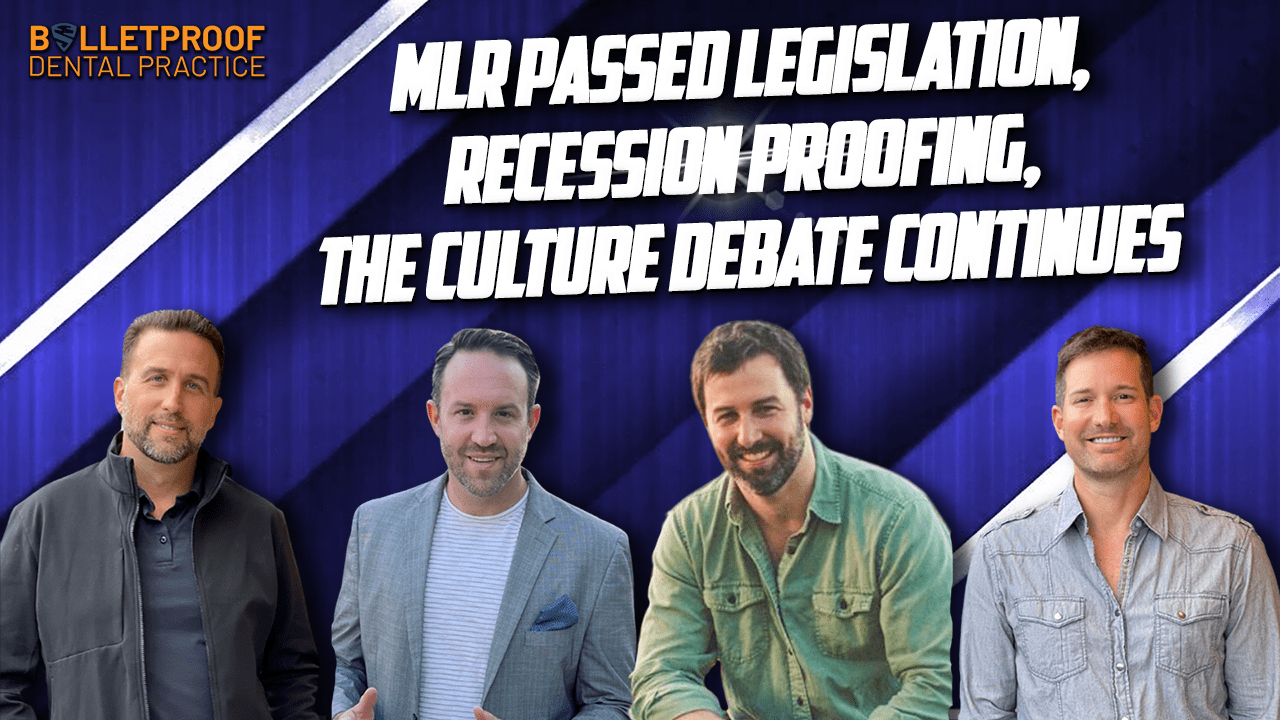

, December 28, 2022




Knowing What You Don’t Want with Judy Kay Mausolf of Culture Camp and Erika Pusillo
, November 30, 2022



Cabo This Week, Immersion Learning, Biggest Breakthroughs, Your Personal KPI is Net Worth
, November 2, 2022
, October 19, 2022

















Business is not Productivity, Productivity is not Profitability with Chris Salierno
, September 22, 2021



























3 Biggest Bottlenecks of an Entrepreneurial Dentist: PART 2 with Perrin DesPortes of TUSK Partners