EOS + BULLETPROOF PATHWAY
The Bulletproof Dental Podcast Episode 411
HOSTS: Dr. Peter Boulden
DESCRIPTION
In this episode of the Bulletproof Dental Practice Podcast, Dr. Peter Boulden explores the parallels between the Entrepreneurial Operating System (EOS) and the Bulletproof Pathway, emphasizing the importance of structure, vision, data, and processes in dental practices. He discusses how dentists often operate in chaos and the need for clarity and systems to achieve fulfillment and success. The conversation highlights the significance of leadership, addressing issues, and creating a culture of accountability within dental teams.
TAKEAWAYS
- Entrepreneurs need more structure, not more ideas.
- Vision is crucial for clarity in practice.
- People are the biggest investment in a practice.
- Data helps measure practice performance effectively.
- Addressing issues head-on leads to better outcomes.
- Processes should standardize patient experiences.
- Traction is about fulfillment and rhythm in practice.
- Leadership meetings are essential for problem-solving.
- Creating a culture of accountability enhances team performance.
- Optimizing practice life involves preserving time, emotion, and money.
CHAPTERS
00:00 Introduction to the Bulletproof Pathway
02:27 Understanding the EOS System
05:43 Vision and Clarity in Dentistry
10:02 The Importance of People and Culture
12:27 Data-Driven Decision Making
17:04 Addressing Issues and Implementing Solutions
20:18 Conclusion and Call to Action
REFERENCES
Full Episode Transcript
Below is the complete transcript of this episode of the Bulletproof Dental Practice podcast. Prefer to listen? Find us on Apple Podcasts, Spotify, and YouTube.
Read the full transcript
The following transcription was from the Bulletproof Youtube channel. Here is the https://www.youtube.com/watch?v=cA9bozgj1uA&t=1451s
Peter Boulden
0:00:00
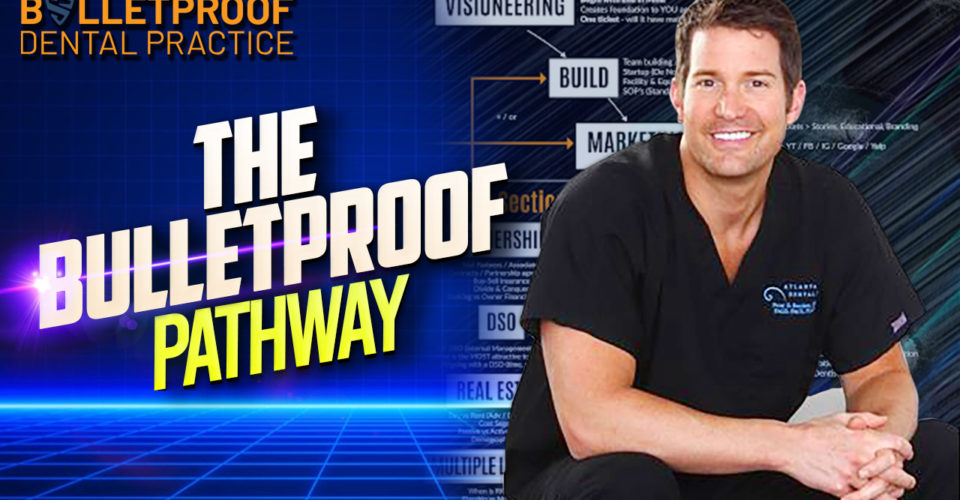
Hey everybody, welcome back to another episode of the Bulletproof Dental Practice Podcast. Today I'm flying solo because I want to go over something that's been in the works for a good three or four months. And the genesis of this is I was listening to another dental podcast, and I can't remember the dentist's name. I actually really liked it, and I can't remember his name. He was a guest, and he basically was saying that dentistry is not always so complicated, right? It follows a certain number of steps, and after that, you kind of step and repeat, which I agreed with to a certain degree. Now, there were some things that I disagreed with. I said, look, that's maybe distilled down a little bit too much, which has become what I want to talk about today, which is something that we've developed called the Bulletproof Pathway. So after hearing this, gentlemen, I was kind of in the, you know, thinking about it and yeah, it's a good idea. And of course, like all good ideas, it came to me in the shower and I said, Oh my gosh, here it is. And it was crystal clear to kind of write down the path of what we as dentists go through as dental entrepreneurs, as dental owners, the path that we should go through and revisit. And like I always tell Craig, dentists love a plan. I think I am, dentists are very analytical, dentists are very scientific, and I think we all love a plan. We like to see a path. We like, you know, I think we're one of the few people who actually read directions typically, especially because we're used to, you know, from our bonding agents, we know how important that is. We follow a plan, we look at plans, we read directions, and we comply in that manner. So I think it's nice when we see maps and stuff like that, that we say, hmm, I like this, I like a plan. So anyway, I was saying, I was listening to his logic, and this came to me in the shower, and it was literally, I tell Craig, like, this is gonna be my legacy piece, because it puts down, it takes something that's complicated, dentistry, as we know, we're practicing dentistry, and the business of dentistry is complicated, but it distills it down into bite-sized pieces. And how do you eat the elephant? One bite at a time, right? And it wasn't as simple as that gentleman who I was listening to on the podcast. His was like, do X, Y, and Z, and that's pretty much it. So I've expanded it. I think it's a great plan, a great backbone, a great structure, so much so that we've actually structured our Bulletproof network. And if you haven't joined that bulletproof network go to bulletproof.dental and you can join up and there's free dialogue going on in all these courses and you can see that it's forming the nomenclature for that you'll see the bulletproof pathway hints of it all throughout the thing so it'll be and I'm going to go over here so if you're watching on YouTube good for you if you're following along in your car or listening to just the audio you may want to go and look at the YouTube version of this just so that you can follow along. But again, it's forming the foundational organization for what we're doing from the the Bulletproof Dental Network, the mighty network that we have. And also for the summit. So even if you've been to the summit all previous, let's see three summits or four summits we've done, if you've been to all of them before, the content is going to change as is the structure and organization of it. So don't feel like you're going to say, oh yeah, I've heard that again. Yeah, some pieces may be reincorporated back in, but now we're having a plan and we're getting structure. Because like I said, I pushed really hard on the fact that I, for one, like systems and operations and a plan, a map. And so I've pushed really hard on this and I'm glad we're getting to kind of roll out with it. Without further ado, let me start talking about what it is. So again, the name of this is the Bulletproof Pathway. And this is this is something that we're going to have for a while. And if you've been a fan or a listener of the podcast for a long time, at first, you remember we started with columns. It was four columns. It was it was marketing. I'm sorry. It was it was vision. It was then team culture was another column in marketing, financial freedom. And that's it. It was the pictures, the four columns. And then we had gears because we said, hey, everything kind of interacts with each other and it has gears. So we we changed that thing to gears. But now it's going to be the bulletproof pathway. So you'll be hearing a lot about that. I know I keep I know I keep going going into that aspect or driving that home, but it's going to be important. Let's jump into it again. If you're watching and following along, you're going to see I'm going to just go over all of this stuff right here. I'm going to start zooming in here and going over it. But you can see it breaks down into visioneering, the next step would be building, building that vision, next would be marketing that practice, then you enroll the patients, then you do the actual clinical dentistry, then you retain the people that you've enrolled or attracted, then you recapture those that you've lost, then you ask for referrals, then you measure what you've done, so it's all these things, that's why I'm saying if you're listening along, this might be complicated, but I'm gonna start breaking it down piece by piece. So the first step in the Bulletproof pathway for entrepreneurial dentist is the visioneering and Craig is a master in kind of really unpacking what that means for us as dentists. We spend a lot of time with that with our mastermind, we spend a lot of time with our summits because we both agree that it is a vital source of how you articulate what you want to do. So if you just start and like, oh, I hope this goes pretty well, chances are you're going to be very reactive to the environment around you, right? So if you never form your vision, it's really hard for people to get behind and start rowing with you. So visioneering equals, we have this on the sheet, that equals inspiration plus conviction, plus action, plus determination, and plus completion. And it helps you if you begin with the end in mind. What do you want your practice to look like five, 10, 15, 20 years from now, right? And it helps you create the foundation, the vision helps you create a foundation for you and your team, because you are gonna have bullets, you know, hypothetically, you're gonna have, metaphorically, you're gonna have bullets, you know, things are gonna happen in your careers, whether it's, you know, like a 2008 crisis or 9-11 when that happened. Lots of things happen and you have to be ready to look up at the North Star that you've created, that vision, that map and say, OK, life is hard right now, but we know where we're headed. And I always say that a vision is important because I'm a big fan of Gary Vee and he's kind of said, look, you get one ticket, you get one ticket in this world. So the biggest fear is that you get to be your 80 years old and say, ah, I would have, should have, could have done it differently. So right now, if you're, if you're, if you're in the infancy of building your practice, you get a magic wand and there's no rules and you can, you can dictate exactly what you want your practice to look like, but it starts with the vision and be very descriptive and writing that out. And at the summit, we have worksheets and in the, in our digital course, we have how to go through this, but it's very important and it's not just so yeah I have a vision, it's you want to write it out, you want to be very descriptive and Craig talks about that a lot being very descriptive with a vision because the more nuances that you can put out, the more tangible pieces, the more storytelling you can almost tell it, the more it almost makes it real. And you know and when you write it down, shit gets real. And I think that's what we talk about a lot. So visioneering, don't skip over that. big, big component of the success that you're going to have in your career. And, uh, yeah, don't skip over it. The next stage, um, in the dental life cycle, if you will, is going to actually building what you've thought about, right? So what that, when I say build, I mean, in a couple of capacities, I mean, the actual physical structure, whether that's going to be a startup or DeNovo, uh, or an acquisition, and then actually the facility, what's that going to look like? The equipment and how you cost engineer. And these are things we're all gonna go over in the summit, some more in depth than others and some we may not be able to have the time to touch on because this is all of dentistry on one sheet and it's a lot of topics. And so it's gonna be hard to dive in very comprehensively on all. But it is nice to have this foundational piece. So again, and then, so it's startup, when you build, you're in the startup de novo situation or acquisitions, facility, cost engineering, standard operating procedures. You want to make sure you have a plan and a systems and a way to run your operations beyond just your, beyond just your, yeah, we have manuals. Yeah, we have an assistant manual. You want to have, you want to have the blueprint for the flagship that you're going to create. And then team building, when it goes under build, I want team building is important because you're actually building a team and you're building a culture right from the start. And whatever you start, even if it's one, two, three people, that culture usually grows. And so it's very important to set that from the beginning. So now as we evolve a little bit, now we get into the marketing and this applies to all levels of whether you're an established practice, a de novo acquisition, marketing tends to be a very big component of our success. And it used to be that things could be attracted by word of mouth, and that was great. But in today's day and age, I feel like with all the other distractions that are going on in our lives, it's very hard. You need to get attention, and you need to drive that attention to your practice, because it's not that people typically don't know, people typically just don't know about you, which is why they don't use you. You're probably the best in town, but it's unlikely that you've gotten the attention you deserve. So marketing is a way to really drive home the attention for your practice. And so I contend that marketing is a couple subtopics, mainly based on content creation. Content creation goes across a lot of platforms, whether that's social, whether that's your website, but it's just the creation of content, whether it's blogging or vlogging or video or whatever. But it falls into three buckets, in my opinion, and it's the stories we tell about the lives we touch, or are we creating educational pieces, like blogs about, you know, what is whitening? What are the three terms of whitening? Or what's a sinus lift? And then there's branding pieces, where you're actually just showing how superior your brand is versus the dentist down the street. So as we go a little further into that, we talk about storytelling marketing, which I think is a big fan. And storytelling is really more of the testimonials, really more of the lives that we change and really showing from start to finish. And we go over that a lot in the summit, kind of talking about the hero and the guide. Also inside of marketing, there's the paid ad management we talk about a lot, which is, you know, we talk about YouTube and Facebook and Instagram and Google, even some Yelp. There's remarketing sequences that are important to talk about, right? As you qualify your audience and you get engagement with them on certain things, you want to then re-market to those people, we talk about that a lot. Video marketing is a big component of what we talk about and I am a huge fan of it, so much so as you listen to the podcast, you know that we have a full-time videographer because I believe that it is one of the most uncrowded areas to then compete in marketing, but it also, if a picture tells a thousand words, a video, how much, how much does a video tell? And videos are just so much more compelling. And the engagement that happens online is so much higher when you have a video experience. So video marketing is a big thing we talk about. We talk about it a lot in our mastermind even, and we've had amazing success with really converting a lot of our mastermind clients, friends into, into being avid video creation-ers. We're gonna talk about keyword research and how to actually find the stuff to talk about when you actually talk about creating that content. We're gonna talk about social media, paid and organic, website and SEO, local SEO, which is two different things. There's local SEO and there's website SEO and they're not the same, all important, and then even talking about things like chatbot and texting services and things that are just gonna make marketing go to a whole new level. So now we move a little further down the pathway and we talk about now enrolling the people in, right? So we've done, we've created the vision, we've built the practice, we've marketed the practice, and now the phone is starting to ring or we're starting to get text inbound with people wanna come or we're starting to get web inquiries from people and this is where we start to enroll the people into our practice. Okay. And so my thing I talk about a lot is this has to be the easy button. Dentists, people are really scared of going to the dentist and I think you have to reduce friction as much as possible at all points in the life cycle of someone onboarding to your practice. And it starts online. So you want to have copious pictures, you want to have videos of you talking, you want to videos of your team, pictures, all these things. You want to reduce the friction and the scariness of dentistry. And right now people are really scared of dentistry because of the COVID situation. And oh, should I go there? Should I not? You know, we already had enough problem before COVID with people being like, ah, I'm really scared of going to the dentist. But now they can actually use one more excuse, which is the COVID excuse. I'm not going there, I might get COVID. So we really have to aim hard to reduce friction. I mean, not just from a, not just from reducing fear, but reducing the pain of what it takes to get enrolled as a new patient, right? So allow people to text you, allow online things, maybe online scheduling if that works for you. And this all starts with, they pick up the phone, we're gonna talk about phone call verbiage. And you'd be surprised how much. I actually posted something recently on the Mighty Networks about how looking at your web traffic from using Google Analytics, and then making sure that your phone team was augmented because you are likely gonna get the most phone calls based on what your analytics were telling you was your highest traffic rates, right? Things like that. And then having your phone verbiage just dialed in where it's friendly, but efficient. You ever seen how like people can sometimes get caught on, your phone team can sometimes get caught on the phone talking for 45 minutes, but I got the new patient scheduled. Yes, Kristen, but it took 40 minutes. And then we missed new phone. How many phone calls did we miss by being tied up on that? So efficiency is a big thing. Then we talk about the first visit, patient and the check-in process, right? Did we stand up and greet with them? Did we know their name? Did we greet them? Did we give them a tour? Did we show them the sterilization? Did we do all the things that make them comfortable, just like you would if you had a guest come into your home, right? You go, let me show you around. You've never been here before. You want a drink? You want something? You want, here, look at my couch. Let's sit down and get to know each other. Same kind of philosophy, honestly. And then we want to talk about coordinated handoffs, right? As someone moves around your practice, right? Going from maybe the first person they met to then the hygienist, the hygienist to the doctor. It's these coordinated handoffs where the patient feels taken care of at every step of the way. Then we're going to talk about non-dental verbiage, or which is the communication. And we have a sheet in our field manual from the summit that talks about how we as dentists sometimes get stuck in conversations and we don't want to, you know, I don't really know how to communicate this. And our default when we get comfortable is going right into the scientific verbiage. You know, things like gross debridement and you're Ms. Jones, you're gonna do scaling root planting and I'm gonna prep your crown or grind. And the patients, you know, radio, let's look at the radiographs, Ms. Jones. The patient doesn't know what that is. And so talking about things that make the patient comfortable. Sometimes they'll just shake their head and say, yeah, yeah, yeah, I understand, Doc. And then another thing that helps with enrolling, if we're still in the enrolling section, is the NLP and nonverbal communication. As if you listen to the podcast, you know that I always talk about body language and just the nonverbal ways in which we communicate. Is Mrs. Jones uncomfortable? Is she sourcing this? Is she scratching her neck? Is she feeling all the signs? Is she folding her arms? Is he, you know, men grab their chin and do this with their chin if you're watching when they're uncomfortable. Women kind of touch their neck. And so these are things that we, and 80% of what is said is not said. 80% of what the human body is trying to communicate is not verbal is what I mean. All right, new for 2021, we want to invite everyone listening to join us on our private network. It's free to join. Join the conversation at bulletproof.dental. You can even download it in the app store. Just look for the Mighty Network app and you can download it there. But just point your browser to bulletproof.dental, and join and sign up and start collaborating on some of the ideas we discussed on the podcast. There's content there to download and it's all designed to help grow and stimulate us together. Hope everyone has a great day. Actual dentistry. So this section is called the clinical. And we've actually touched on this pretty recently, which is talking about how we thought the most important clinical thing that you need to master coming out of school and otherwise is master of occlusion, because everything is kind of on that. But we're talking about the actual dentistry. And you know on the Bulletproof Dental Practice Podcast, we don't talk about, we talk about more of the business and the marketing of dentistry, not so much actual clinical. We don't talk about bonding agents and all that stuff. But once in a while we do. But you should be comfortable doing comprehensive diagnosis. So in the Bulletproof pathway, this is just a check. You are going to look at this and audit where you are in all this pathway, making sure that you're very ready to roll in all these sections. So can you comprehensively treatment plan and then present with awesome financial presentation? That doesn't have to be you. You have optimized patient comfort. When the patient is in the chair, what are they actually receiving? Are they comfortable? Is the noise canceling headphones? But being obsessed with making sure that they are comfortable going through this scary procedure of quote unquote dentistry. Put yourself in their shoes. If you've ever received, like I had, had by veneers done, if you've ever, ever had long procedures done, like it's sometimes hard to sit there. So you have to always vicariously put yourself in that situation. Are they comfortable? Are they enjoying this experience as much as possible? They are numb enough. Am I taking the time with them? Am I explaining things enough? Okay. And then last I have on here is same day dentistry opportunities, because I think that is something that can categorically change the collections of a practice if you, if you are ready to capitalize on it, especially now in today's day and age with Kovat I think it's a it's a great narrative to say hey, miss Jones I know you you know as opposed to having to come to the whole kovat Protocol again, you're already here. You're already in I know you came for a cleaning today We have an availability to knock out the crowns that I just diagnosed on on 13 and 14 if you'd like to address them now So that is a great thing. I learned that actually from my buddy Marvin Berlin. If you go back all the way to some of the first podcasts, he talks about that a lot. All right, and so now I want to move along into the next section of the Bulletproof pathway, which is called retaining the patients. So now we've enrolled them, we've done the clinical dentistry, and now they're actually just part of our practice. But we have to retain them. That is, retention of your existing patient base is huge because there's always someone trying to attract them into another practice. So is the experience a world-class one? Is the experience such that they would not go anywhere else because it was quite the different dental experience than they've ever had? Yes or no. When I'm talking about, you know, did you follow up with them? Did you do post-operative calls? Is the customer service where they, is it, is it non-frustrating, meaning they can call up, get their questions answered, or they can text you and get their questions answered, or are you a tech enabled again, like I was just talking about? Can they communicate with you on an app or a portal or whatever? Can they schedule online? Can we reduce those frictions, uh, friction? And then do they have their next recall or re-care
Peter Boulden
0:19:41
scheduled before they leave?
Peter Boulden
0:19:42
Craig talks about this a lot in that one of the biggest determinants of the success of a practice is, one of the metrics is, is their recall. Are they scheduled before they leave? And typically if you get into the 85%, like that's a great indicator of how the practice will do going forward. So getting them scheduled for their next treatment, whatever that looks like. And there's a science to that, because a lot of times people are like, oh, I'll call you back when I figure it out, or oh, and we let them go. And what we found is, just like your life, things get busy, and you forget to do it, and you forget to call, and before you know it, you haven't been in the practice for two years. Okay? Which leads me to my next bullet point, which is talking about the recapturing of patients. That is a big tenant of what we need to be focused on, because people do slip through the cracks, people become inactive, and it's a system that we have to have. Do you have a system in place, from a practice standpoint, to recapture people, to reach out to them, a system of follow-ups, whether that's email, text, or call? And another thing you can also do, and I have here listed is that consider the thank you economy and if people are not responding to the general reminders of hey you need to get back in here via the text, email, calls, whatever it is, you know you may even go one step further and just touch them meaning in a meaningful way. Follow them on social, send them a gift even though they're not a patient anymore. If you have toothbrushes or something say hey I know you're not a patient of the practice anymore just make sure, here's a toothbrush on us, just make sure you're being taken care of somehow. Touch points are amazing in today's society because we're so used to things being remote, right? Especially with COVID, we're so used to things being remote and non-personable, non-personalized, that it's so nice to get a human touch points
Peter Boulden
0:21:32
once in a while.
Peter Boulden
0:21:33
So little things like that. And those are just ideas or primers for you to think about, but there's some cool ideas that people have come to me with about how they have been able to recapture patients that have gone inactive, or even recapture them back from another practice when they didn't have a great experience. So recapture your patients, because that is a big thing. We talk about that a lot on the podcast, is not the number of new patients that is the driver of the practice, it's the net growth. And the net growth is determined by your new patients minus the ones that have gone inactive. So if you can open up your front door, we call it, front door with your new patients, and close the back door, minimize the amount of people that have been lost to attrition, then that's how you really grow a practice. But if your new patients are 100 and you're losing 100 every month, you are on this treadmill that is hard. And as we know as practicing dentists, it takes a long time. Meaning to triage a new patient takes a long time. It's a two-hour appointment typically, and you're getting to know them, and they don't have the rapport so much. The patient that's been there for five years, you already have the rapport with them. That's the low-hanging fruit of them doing treatment. They trust you, you've already treatment planned them, that's easy. But for some reason, we all focus on the new bright and shiny objects of the new patient, okay? So as we move along in this process, we talk about the referral system. Don't be afraid to ask for reviews. You know, when someone's actually, when a mother is scheduling, hey, can we schedule your husband or your kids? Any friends that you know that we could schedule? If you had a great experience, we would love for you to tell all your friends about us. We'd love for you to post on social media. The one thing I found that we don't do as dentists is we don't ask. And the minute I got my ego out of the way and just said, hey, I'd love to get a picture with you. Can you post this on your social media? Or hey, you know, we're really looking to grow this practice. We would like your help. And if you ever ask a human for help, people love to be asked for help, I've found.
Peter Boulden
0:23:29
And it doesn't make you look needy
Peter Boulden
0:23:30
and it doesn't make you look like a bad dentist. It just makes you look like you're a business and strong businesses ask for referrals. And then one more thing you can do is that I have in here is the gifting. I talk about that a lot is giving referral gifts or even new patient gifts. And it just helps and I talk about this a lot in the summit. This is something, a Chowdhury's principle called the law of reciprocation where you do something nice for someone and they want to reciprocate in kind. They don't really know why, whatever, but it's kind of the human, it's in our psychology. So, you know, maybe you provide a referral gift and you reward people for helping them grow your business, your practice. And then as we move along, one of the last steps is talking about finally measuring all the aforementioned steps that you've done, right? So you've done the visioning, you've done visioneering, you've done the build, marketing, enrolled, you've actually done the dentistry, you've retained them, you recaptured, referred them, you got referrals. Now let's measure all the stuff we've done.
Peter Boulden
0:24:29
Right.
Peter Boulden
0:24:29
And so we talk about Pearson's law. We talk about the Bulletproof KPIs and Craig and I, we're going to talk about that a lot in the summit, but it's really the four things we think that, that move the needle for a practice and how you can really drowned in a lot of data, um, that a lot of these software platforms can give you. It's great that they give you all this data, but we get very attracted to what we see in the demo. Look at all this great data and fancy charts and whatever. And guess what? A month goes by and you never look at it again. But there are four KPIs that we're gonna talk about in the summit again, and they've been modified just a little bit, that we feel like is sustainable for you to monitor and it really can turn the needle. As long as you're tracking these four things tend to track in the right to in the right capacity and then actions from your KPIs meaning that that Don't just measure stuff Right you need to be able to execute an action and take action on things if they're not going well And there's a difference between lag indicators and lead indicators, okay? Okay And then and then in this measuring bucket right this measuring platform in the bulletproof pathway We also have rewards bonus system and then team compensation, which we talked about a lot. I'm not going to go into here But it's important to have when you have really good months It's important to have wins where the team can start winning rates and so in my practice we have several Tiers, so there's five tiers and you know They start it at at X tier and they start going up incrementally and obviously as the practice wins, as the owners win, the team starts winning. And that's what we call a triple win, where everyone starts winning because we all start hustling towards the common goal. And I just think that's a very important thing because it incentivizes everyone to row and get on the same page and row the boat at the same speed and the same direction. Okay, and then lastly, after you measure, and this little little icon, little arrow that goes into fulfillment, because are you, after you've done all this stuff as a dentist, are you fulfilled? Is the human fulfilled in being happy? Is your purpose defined? Are you living authentically as you want to be? And you know, and those are only questions that you can can figure out. But sometimes we get unfulfilled by doing copying and pasting someone's vision or copying and pasting someone. I was told I should have multiple locations and now I do and you're miserable in the process and you would have been much happier as a single practitioner or I was told that you know I need to be a practice owner and you're miserable because now you're having to do HR and payroll and marketing all the stuff I just talked about and you might have been happier as an associate and just focusing on your craft. So it's I have this in here on the Bulletproof Pathway because Craig talks about it a lot and it's very important to check in with yourself. Am I happy? Because it goes back to the first thing, you get one life, you get one ticket, make it work, don't do something just because you spent four years in dental school being told you do it this certain way and now you're just doing it this way because you were told that way. Make sure to check in with yourself and make sure you're fulfilled. That's a big thing. So as we move from the measuring standpoint, right, it's going to, I have this long arrow and again, if you're following along on YouTube, it's going to be important, but this long arrow goes all the way back up to the build and or market. You see how I have end or market. So you've aggregated money and hopefully you're profitable, all these things. And now what do you do? You reinvest in, you can either, you can build more, you can market more and grow your practice, or you can stop along the way, and here is the wealth section, where we talk about partnerships, which we're gonna talk about a lot at the Bulletproof Summit, we're gonna talk about DSOs, and how sometimes you can have your own internal DSO. I had my, we have our own internal management DSO that's done in my group. And you can talk, you know, so we'll talk about other things. So there's just, there's an evolution sometimes in a practice and you're going to maybe want to onboard a partner. Maybe you're going to look at being, taking on a financial partner through a DSO. Maybe you want to look at doing some real estate, which we've been talking about real estate a lot on the Bulletproof network. Right. Again, go to bulletproof.dental. Maybe it's time for another multiple location. Right. And so we're going to talk about when is the time right? You know, do you have a flagship versus a multiple mess? Right, did you create that flagship first and take it to capacity and then step out with all your new, with your existing SOPs and go to the next and replicate that? Are you just creating multiple messes? That's a big thing we see. Again, back to in this bucket, acquisition, do you want to do an acquisition? Do you want to do a de novo in a multiple location? And then make decisions based on data. I used to make so many decisions in my life and young in my career based on my gut. And sometimes that's been great, but when I started making data-driven decisions and taking motion, especially as it pertained to where I wanted to have a location, that's when things, that's when things, data just, data trumps your gut. And I've been in Atlanta my whole life, so I thought I knew certain areas in which would be good. Some of them have been great, but I could have made some vital catastrophic mistakes had I not gotten the data to back up some of that. Okay, so, and then we talk about financial planning, right? Craig talks about this a lot. A lot of dentists can't even retire at age 65. Like, can you retire? And are you putting the financial safeguards in place to make sure, do you have a financial advocate on your end to make sure you can? And honestly, we're gonna have Peter Malouk speaking at the summit, who is the CEO of Creative Planning. And there's a dental offshoot of that. It's really, he wants to help and focus on dentists getting, kind of fixing this problem of not being able to retire. So we're gonna talk about that there as well. So this pathway, right, there's, there's a wealth section along the way, because it's not always, not all of your, not all of your, uh, wealth from, from when you get to the measure section and when you've got, when you've got the financial rewards at the end, not all of it should go into, Oh, let's just keep marketing and building, marketing and building. At some point you have to look at, you know, you're planning for retirement. Maybe you want to expand, maybe you want to buy some real estate, maybe something else,
Peter Boulden
0:30:50
right?
Peter Boulden
0:30:51
But we're going to talk about this whole life cycle and ecosystem because this is what I think encompasses dentistry. And as someone who's grown eight practices now, built eight practices, actually seven existing, one we just moved and modified. But after doing this, I've learned a tremendous amount and having multiple partners and multiple great partners and building teams and such. So I feel like we've condensed it down to this one sheet. And obviously there's going to be things that I had just missed in talking about. But I really wanted to come on and talk about the Bulletproof pathway. Number one, because I think dentistry is we make it almost more complex than it should be. And, yes, if you're looking at this sheet, it looks very scary and daunting and comprehensive. But at the same point, if it is a comprehensive map, wouldn't it be great to have that in front of you? So when you get kind of like thrown off your balance a little bit, you say, all right, what do I need to do? What do we need to do as a practice? You know what, here's our problem. We're not enrolling very well. Oh, here's our problem. You know, we have a wide open back door. We need to recapture. I mean, you look at these sections on this bulletproof pathway, and it can help you recalibrate. So again, I'm gonna stop there. I hope everyone enjoyed watching or listening. And if you're listening, it probably sounded like I was a mad scientist going all over the place. I encourage you again, like I said for the third time, go to YouTube and just check it out. Or even better, come to the summit where we're gonna be digging into this and using this. Or sign up for the Bulletproof.network. I'm sorry, Bulletproof.dental, and join our network there. And that's it, as always, hope everyone has a great day, And that's it, as always, hope everyone has a great day, and we will see you next time.
Transcribed with Cockatoo
Blog


















1+1=3 The Power Of Alignment and Delegation For You and Your OM with Erika Pusillo
, October 31, 2024














, June 15, 2023
, June 8, 2023
, May 31, 2023




Look at These 3 Stats if You’re Thinking of Going Out of Network with Teresa Duncan
, January 11, 2023
, December 28, 2022

Knowing What You Don’t Want with Judy Kay Mausolf of Culture Camp and Erika Pusillo
, November 30, 2022

Cabo This Week, Immersion Learning, Biggest Breakthroughs, Your Personal KPI is Net Worth
, November 2, 2022
, October 19, 2022






Business is not Productivity, Productivity is not Profitability with Chris Salierno
, September 22, 2021












3 Biggest Bottlenecks of an Entrepreneurial Dentist: PART 2 with Perrin DesPortes of TUSK Partners