Fortune Rewards the Bold
Join our network at www.Bulletproof.Dental to stay in the know on all things Bulletproof!
Bulletproof Dental Practice Podcast Episode 211
Hosts: Dr. Peter Boulden
Guest: our guest
Key Takeaways:
Intro
Cryptocurrency
Acceleration Of Technology
Network Effect
Macroeconomy
Situational Awareness
Challenge And Learning
Innovation
Steps To Start
References:
Anthony Pompliano on Bulletproof Podcast
The Bitcoin Standard book on Amazon
Mighty Networks: Bulletproof Dental Practice
Tweetables:
In the end our environment and market has control. our guest
Buy it, forget about it and zoom out. Wait a couple of years. Dr. Peter Boulden
Full Episode Transcript
Below is the complete transcript of this episode of the Bulletproof Dental Practice podcast. Prefer to listen? Find us on Apple Podcasts, Spotify, and YouTube.
Read the full transcript
The following transcription was from the Bulletproof Youtube channel. Here is the https://www.youtube.com/watch?v=9rxDlLh7yhg
our guest
0:00:00
All right, everybody, welcome to the Bulletproof Dental Practice Podcast. I am our guest, a completely excited and ecstatic human being right now getting the chance to be a guest host. Bullet Proofer slash proximity seeker to Peter Bolden and Craig Spodak, incredible humans and incredible friends. And just getting the great honor to get to host today. Of course, the one and only Peter Bolden, giving us a little bit of perspective on something that seems to be super talked about and sought after right now, not just in our industry, but beyond. And for those of you who've been bulletproofers for a while and going after it, you've been growing practices, finding ways to invest your money in different things, not just your practice, but diversify. And so what then do we realize, but on the Mighty Networks, we are seeing numerous questions regarding cryptocurrencies, Bitcoin, Ethereum, decentralization, all these crazy things. And there's only really one person that I know right off the bat that has been a source of mine, the person who originally got me into it, Dr. Peter Bolden. And so wanna welcome him, of course, to his own podcast that I get to enjoy today. And I wanna say thanks, Pete, for joining us and letting us get after questions and stuff here for you.
Peter Boulden
0:01:32
our guest, I gotta say, you, that was pretty good, pal, pretty good. That was the first take, everybody. Just so we're talking. You may be taking my job or Craig's job. It's undecided, but that was pretty awesome, bud.
our guest
0:01:46
I think I've listened to enough of them, right? So after a while.
Peter Boulden
0:01:49
That's awesome. Well, yes, like you said, you're gonna get some context. And it came up because of the mastermind, I'm sorry, I should say, the Mighty Networks, right? Which is Bulletproof.Dental, which I said on the podcast the other day, I can't believe it's just free for everyone to just join and come talk, which is awesome. I hear that joke about Twitter too because it's a really good platform. But, point is, you're right, it is very relevant. Every time you turn on the news or a financial channel, there is something going on about Bitcoin. And it used to be I was the Lone Ranger in the room and everyone thought I was a weirdo. And just with my tinfoil hat on talking about crypto and this and that, and now I get lots of phone calls, do I, lots of phone calls. So I said, you know what, instead of me running point and I feel like I'm in an echo chamber sometimes just like talking, why don't you kind of act as the proxy for everyone who, and I said, hey, for people who may not know or are too afraid to ask, and let's go from soup to nuts and I will kind of tell you what I know or the questions that you think are important versus me thinking what I think is important and then talking about it right so it's a much better much better Avenue today so I'm really excited about being the guest
our guest
0:03:03
thank you no thank you I I think one of the greatest things is sitting around and getting to see the amount of information that's getting poured in, in BulletproofDental.com, going through that Mighty Networks and sitting down, because all of us spend a lot of time on social media, and that is a great place to completely mess up on knowing what's real and what's not. And so having this kind of smaller space where we get to discuss this, this is where the Mighty Networks has become so powerful. And I mean, I have completely made sure that it pings me every time something gets posted on there because it is super relevant to what I'm doing every day.
Peter Boulden
0:03:41
So, you know, and the thesis of that, honestly, I'm glad you're bringing this up because the thesis is just like you said, is that social media, let's just call it Facebook and Instagram, Twitter are black holes, meaning that if we were to have a closed Facebook group and we were having discussions, this is why I opted to not have the Facebook is because you go in there to talk about the dental stuff. And then guess what? Before you know it, you're looking at pictures of people's cats and vacations and you're getting FOMO and all of a sudden now you're down a wormhole and you're like, you just blew an hour versus putting it into a closed ecosystem like the Mighty Networks. So, you know, obviously it would have been very easy for us to do a Facebook group, but we wanted to go and get an autonomous path of that so that people didn't go down the wormhole of social media.
Peter Boulden
0:04:25
That's it, that's it.
our guest
0:04:26
So it's also creating these great podcast topics. So specifically, I think one of the biggest things now is understanding why it's important to at least know about it, be active in understanding how to invest, what to invest in these types of things. But we are gonna go pretty basic at the start because I think my goal here is that I'm going through and I'm looking and you know calling out incredible people on Mighty Networks like Will Jones, Jeffrey Birch, Tommy Dooley. There's people on here immediately asking for help and information and some of their questions are just like, tell me what cryptocurrency is right at the basics and so starting from there kind of let's go ahead and start from there Pete and just kind of jump in and say tell me more about where this came about and how this is kind of, you know, why it keeps coming up.
Peter Boulden
0:05:18
Well, okay. So it's this cryptocurrency is the conversion of analog money into digital, right? It's trustless, meaning that it doesn't depend on an intermediary like the government to define its value. You can transact without knowing who the other person is, right? So you don't, so trust list sounds like something you wouldn't want to have, but you actually do want to have it. And most of them where it's like in the case of Bitcoin, there's a there's a programmatic defined amount of it so that inflation can't occur. It's actually deflationary by its nature. And that's that's built in in the code that was developed back in when Satoshi Nakamoto, who is anonymous, you know, it has this immaculate conception. It was it was programmed back then. So it is designed to fix the problems of what we we saw in 2009, which was the government just printing tons and tons of money, which at the time in 2009, it was 600 billion. And people said, holy shit, how can the government be printing 600 billion dollars. Do you know what they printed this year, our guest?
Peter Boulden
0:06:28
Close to four.
our guest
0:06:29
How many trillions are we at?
Peter Boulden
0:06:30
Exactly, exactly. So it's like this prophecy that has been fulfilled. So cryptocurrency is essentially, all you can think of it is the digital conversion, I'm sorry, the conversion from analog money to digital. And if you look in history, the…
our guest
0:06:50
How well has that ever worked?
Peter Boulden
0:06:51
Exactly. I would give the example, like look at when… Give me an example when digital photography won. Snail mail to email, it won, right? So it's always the, you know, it's like Peter D. Amandus that talks about his six Ds, you know, demonetization, dematerialization, democratization, all the things that, I don't know all the Ds, which I thought I could rattle off right there, but I didn't. But it talks about that and how he evaluates technology that's going to be a moonshot, meaning it's going to be something that just takes off in this economy. And it checks those boxes. So I hope I answered the question as pithy as possible, our guest, but it's essentially a digital currency that has programmatic volume, typically. There are some that do not, like a dogecoin. If you can't see me on YouTube, I'm rolling my eyes because I think it's just ridiculous. I'm not a fan of meme coins and shit coins and stuff like that, so I'm not going to talk about them. But there's one digital asset, and to me, that's Bitcoin.
our guest
0:08:01
And as we kind of go into specifics in particular, you know, opinions of Peter Bolden and others, we will make the caveat, just say, hey, FYI, disclaimer, this is not financial advice for anybody. This is just some clarity for everybody to understand.
Peter Boulden
0:08:18
It is collaborative.
Peter Boulden
0:08:19
It is for me.
our guest
0:08:19
I know. I feel it that way. But it's because I love Peter. And I would take his advice because I already have. So I think what's exciting is to say, hey, there's no financial planning advice here, but it is something to say, hey guys, you've got to start listening to this process because the same way we collaborate at how we run our practices or how we do clinical dentistry, you've got to start listening to each other, especially those who are willing to share. And that's kind of the essence of Bulletproof. So start listening to Pete and everybody about some other things that they're getting into because at some point in time, you gotta keep building the other components. So I love what you're saying about kind of the basis of cryptocurrency. A lot of people just turn cryptocurrency into the understanding of it's, you know, it's just a payment model. It's a merchant processing of just stop, let's buy this with buy that, and it's a currency, but there are many, many other functions to cryptocurrency beyond that. And essentially kind of the architecture it sits on and it's many ideas like you sit here and you hear about how is this safer to do it digitally because everybody's talking about people stealing people's identities and things like that. And so I kind of wanted to open you up the chance to kind of and I've sat through your talks before regarding blockchain and things like that. And I think it's exciting to explain how this is not just cryptocurrency method of payment. Can you expand a little bit on that?
Peter Boulden
0:09:40
Yeah, you actually did sit in into that big lecture I did at DEO, weren't you there?
Peter Boulden
0:09:44
Right, yeah.
Peter Boulden
0:09:44
Yeah, that was in 2018 or 19. Anyway, yeah, so can I talk about, you were saying, can I talk about how other functions for cryptocurrency beyond that and why it's kind of… Yeah, so I won't go too deep on this, but it's not, it's really as a currency, yes, it technically you could do transactions. If you look at Bitcoin, right, it's uncommonly used for transactions to buy a cup of coffee because people kind of know that potentially it could be worth more tomorrow than it is today, right? But there are transactions happening and they're happening very quickly. For a long time it was, oh, it's slow and clunky, but now there's the Lightning Network which can do transactions just as fast as Visa can. So I would say that it is more of a store of value. I would say that's where it's a global store of value, a one world currency. I think there's about 200 currencies in the world, our guest. We call them fiat currencies because the fiat term came up. And if you ever heard that term, it happened because that was the day we went off the gold standard. When Nixon took us off the gold standard, our dollars used to be backed by currency in essentially a commensurate form of gold, right? So it was backed up by gold bars. When we went off of that from a temporary standpoint, when Nixon took us off, we went into a fiat currency, which basically means it's backed up by reputation or the goodwill of a government. So there are lots and lots of fiat currencies, lots of them that can be manipulated. So Bitcoin, as I illustrated before, can't be manipulated beyond its code. It's a consensus value, meaning that it's a supply and demand and it's worth whatever other people think. So that's one purpose of it. There's more that happens with things like Ethereum, which Ethereum you can look at more like, I give people the analogy, it's more like the App Store, where things are built upon the platform, something called smart contracts, which are really neat, which are basically a disruption for attorneys, in my opinion, because it's a disk intermediation, it takes away, so you programmatically say, if X happens, then distribute Y, and they can be more complicated, but it's a digital handshake, if you will. And then there's lots of other things, right? There's securitized token, there's fractionalized tokens, there's all sorts of things, but it's essentially, if it can be done digitally, and if it has value, it can be tokenized, or coinized, if you will, okay?
Peter Boulden
0:12:21
So it's beyond-
Peter Boulden
0:12:22
And to simplify- Yeah, go ahead.
our guest
0:12:25
And to simplify, it's kind of like you're just talking about the tip of the iceberg when we're talking about these currencies, right? You're really kind of, it's the beginning. When we first, when the internet was first started, the reason it was discussed was it was called the, you know, will you internet work with me? It's because my computer was directly linked to yours and we were connecting to a-
our guest
0:12:44
The interwebs.
Peter Boulden
0:12:45
The interwebs, right?
our guest
0:12:46
That whole concept. That was just like us talking about the beginnings of Bitcoin or these first, but it's really the layering of these contracts and all these other processes and legal. And then all of a sudden discussing this decentralization of finance and the bigger things that can come from this type of technology.
Peter Boulden
0:13:01
It's confusing. If you get on it as a newbie, let's just call it, and you look at like all the available cryptocurrencies, there's probably 6,000 of them, right? And really the only ones that are worth anything are in the top 30, right? The platforms that are not zombie platforms. But it's overwhelming to say like, oh, what do I do? And I don't know what these stand for. And I don't wanna read all these papers and such. So it is daunting, our guest, but I agree with you. It is still, it's still the first or second inning
Peter Boulden
0:13:31
in this kind of scenario.
our guest
0:13:32
You consider it more of a revolution, industrial, the next component.
Peter Boulden
0:13:36
It's the fourth industrial revolution, right? That combined with big data, combined with AI, right? It's not one plus one plus one, like I just said, equals three. It's one squared because they're all compounding on each other, right? So that's the speed of Moore's law, it's called. And I don't want to get too nerdy on you, but essentially it's the acceleration upon acceleration of technology. Things are happening much quicker than they used to happen because of all what I just said.
our guest
0:14:09
Oh, it's an exciting concept, but one of the things is also understanding when you go back and I've got like the side of my head, I know there's people out there asking this question. It's like you said, I could jump on and buy different types of coins, but you said some are worth more or actually worth or have actual value. So in the Peter Boland scenario, where would you say that something like Bitcoin has more actual value? And you would say, because it's more tested, it's tried and true, or how would you define the fact that it has more value or consistency?
Peter Boulden
0:14:43
And I'm interested- It's the network effects. It's the more distributed nodes, they're called, that makes it stronger. So it doesn't, I forget the mathematical calculation, but it's not every one, every additional user doesn't add, you know, n plus one to the power of the network. It's actually the square root, and that's a, I forget, I think it's Metcalfe's Law, but it's a network thing. You'll have to look that up, our guest, maybe someone if they're listening, I should know this, but it's essentially the power of the network and the power of the consensus and the fact that millions of computers are running nodes or running, and basically they don't know, unless the internet goes down, it's not going down. And people always use that as, well, what happens if they take the internet down? I say, if they take the internet down, we got bigger problems.
Peter Boulden
0:15:38
You bet, right?
Peter Boulden
0:15:39
Bitcoin game taking down, right? I mean, you got bigger issues.
Peter Boulden
0:15:42
So anyway.
our guest
0:15:45
Well, I think that's one of the things, the power of consensus. I think that's also, you know, I'm gonna ping back to earlier today. I was on some for the office hours and Craig was bringing this up during the Mastermind talk. And we've got these office hours for Mastermind every week. And what was cool is it was brought up, you've got these visions for your practice, but you have to pivot your business to the market you're in and not get so steadfast focus. And that's kind of what you're talking about. In the end, our environment and our market is what controls and it's that power of consensus. And I think that's what's driving so much of this. And because I did look it up before, I noticed that there's been an estimated close to 2000 cryptocurrencies have failed right off the bat. Some of them were frauds.
Peter Boulden
0:16:27
They're designed, there's a lot of them were designed to do that though, our guest. So like, you know, so they are designed to be what's called pump and dumps, where they come on, I mean, look, I could create the Peter coin in probably 10 minutes right now. Right. Really good. Right. I could just say, I wanna have 50 million, I'm gonna distribute it, I don't wanna be an influencer, I'm gonna go on there and sell my coin and I could get out and dump it. And it can be built on Ethereum, I would build it as an ERC20 token, which is called, which are what most tokens are built on, is Ethereum's platform. Let me go back, because I felt like I screwed up the Metcalfe's Law. So Metcalfe's Law is, I was right, it was called Metcalfe's Law. The value of a network is proportional to the square of the number of its nodes, okay? So that is, I did kind of say that correctly. So Metcalfe's law is what gives Bitcoin its value is the nodes and the network.
Peter Boulden
0:17:18
So.
our guest
0:17:18
Okay.
our guest
0:17:19
Crazy.
our guest
0:17:19
So tell me a little bit more as to why. Um, so if you were to say in the end, people are trying to dabble a little bit in cryptocurrency, they're finding themselves saying, okay, well, what I need to figure out before, you know, before I start really deciding how much I'm going to double down is, there's this concept of getting off zero that I think that you really charged me with a long time ago. And I think it's probably the most valuable piece of advice when it came to cryptocurrency. And it related a little bit to just kind of once you're in it, now you want to know more about it. And I wanted you to give that same advice you gave me, in particular, when I got in, I got in on Bitcoin and Ethereum. Those were my two kind of jump-ins and that was kind of my process and I went through Coinbase and of course there's a bunch of different ways and we'll talk about kind of, that is a big question, keeps coming up.
our guest
0:18:11
Where do I go?
our guest
0:18:12
How do I do this? But I'm interested in hearing that advice again because I think it was the most powerful thing for me to hit the trigger and kind of move forward
Peter Boulden
0:18:20
and it's been a big impact on me.
Peter Boulden
0:18:22
Yeah, so getting off zero is a good term and actually Pomp is the one who coined that. I cannot take credit, and he was on our podcast, and now he's literally one of the most famous people in the space, he's on CNBC every day, it seems like. But getting off zero is just something that just says, look, it's an asymmetric risk, meaning that if you put 1% in your portfolio, and it's gonna perform the way it has for the past 11 years, the returns, right? It's been the highest returns in any asset class over the past 10 years, bar none. There's nothing even close to its returns, okay? So basically it's an asymmetric risk because if that 1% that you allocate of your net worth into it goes to, let's just call it, goes to zero, which, you know, not gonna happen, then you've lost 1% of your net worth, or your portfolio, I should say, maybe not your net worth, your portfolio. But if it does what we're indicating it to do, that 1% could be the returns of the equivalent of 10 to 20% of your entire portfolio, right? So I look for things in life, honestly, our guest. I think that's just a good thing. I look for investments in my own life, not just Bitcoin that have asymmetric risk, right? Is my downside capped and is my upside unlimited or could it be a moonshot, so to speak? And I honestly, I think that's been a reason that I've been somewhat successful in just my financial life is that I've evaluated things in that capacity, right? And fortune sometimes rewards the bold. I have been punished too, I will say, that it hasn't all been easy. But just like private equity, right? Meaning just like a venture capital, like they take risks and let's say they call it 20 companies and they're like, all right, you know what? 18 of these are gonna be dogs and they go to zero, we're gonna invest in them, but two of these softwares are gonna be moonshot and give us 1,000 extra turns. That's an asymmetric risk. And so that is their whole business model. So I'm like, wait a second, if the smartest guys in the room are kind of performing this way, then shouldn't I be kind of looking at things versus the way that I may have been trained in my economics class is you get money and you put it in the stock market and you hope and you pray. You hope that you're gonna get a good return. You hope that we don't have a 9-11. You hope that the tax rate is gonna be all this. You hope that your fund manager calls you. It's a hope, hope, hope. I don't like to be the one not in control. I am my own sovereign in control of my, and now, I am more sovereign in control of things. So, I know I just went on a diatribe there, and I actually even forget your question now, but, because I get so, there's a million things festering in my brain that I like want to get off and sometimes I verbally vomit. But that's such a critical component to the concept of getting off zero and then once I was off it was part of my day-to-day instead of spending
our guest
0:21:25
time on social media I was researching a little bit more. And you know what's
Peter Boulden
0:21:28
cool about that and I've mentioned this before it's a great I think I said summit when people because people always ask me about it because now I guess they know me as the Bitcoin guy. The socks man it's the socks. It is the socks.
Peter Boulden
0:21:40
It's my lucky socks, Bitcoin socks.
Peter Boulden
0:21:42
our guest, is that, it does, so you said, look, I'm gonna put a chip on the table, right? I'm gonna learn about this. I'm gonna put something in here that is a sizable investment but because of that, because you are a good shepherd of your money, I know you personally, I know you were a good shepherd. You said, look, first off, I'm going to do my own research. I'm going to do my own due diligence. I'm going to dig in. I'm not just going to play this like a stock market. I am actually going to invest and get to know. So then you did your own due diligence. You said, okay, you know what? It's worth it to me. And you put a chip on the table. But because of that, you actually then went to work and kind of kept learning about it. Meaning that you actually studied the things that, you know, like on-chain analytics and you studied charts and you studied, you know, you get to know the macroeconomics and you get to know how this works with this. So it teaches you a lot of things that surround it in a macro economy, which I think is really neat. I think that's one of the coolest benefits that I used to be pretty ignorant about economics in the world around us and even just money and what it was and all the things. And it's taught me a lot because, yeah, like, you know, I'm playing, I'm playing to, you know, cause I like it.
Peter Boulden
0:22:57
That's great, absolutely.
our guest
0:23:00
Yeah, I think it's critical. That's what got me so invested because we tend to find ways to fill our day. But like you said, you put a chip on the table, now your eyes on that table. All of a sudden, I want to see what's going on in and around what I've invested and how that's happened. And then how can I kind of double down on that? I've learned so much just by all of a sudden, I mean, you say some of these other podcasts, but yeah, I mean, I listen to Paul Podcasts as well because your podcast with him got me so fired up to realize, hey, there's more out there to start knowing. But more importantly, it's like, if you were sitting on the sidelines when the internet was first coming out, you're sitting there and just realizing, oh, this is going on, I'm hyper-focused on my job and I'm just eight to five doing my thing, but I'm not paying attention to this thing that's completely gonna change anything and everything about the way we do pretty much anything at this point in time. You've gotta be part of that process, and kind of being where your feet are, but also realizing that you've gotta have a year out
Peter Boulden
0:23:54
to see what's coming.
Peter Boulden
0:23:55
And the other interesting thing I will say is that the world's smartest people are working on this right now, some of, in this sector. Meaning that a lot of times I will meet someone new in my life and talk to them at a cocktail party or whatever, wherever we are. And I'll be like, man, this guy is really intelligent. This gal's really intelligent. And without fail, and this is just anecdotally to me, they are bullish on that cryptocurrency, right? Usually bullish on Bitcoin. But like, and if you look at kind of where the minds are in the financial sector, they are in, they are in Bitcoin. So it's not an if, it's just when. And maybe it's not right now, and you know, and every time it goes down to whatever, people will send me texts like, ha ha, I told you so, right? And I'm like, it's so easy. I get the text from the guy who never risked anything saying like, ha ha, I told you so. So anyway, sorry, our guest, again, I'm just going to say like blanket statement, I'm sorry, our guest, that I just went off topic.
our guest
0:24:59
I think it's pretty easy.
Peter Boulden
0:25:00
Then I don't have to say it again.
our guest
0:25:01
You're going to go into some tangents, you have such depth on this topic, so there's no doubt that you're passionate about it, I think that there's nothing wrong with that. I think some of the questions that do come up is, okay, well then, if I'm going to go do some research and figure out what are the most common places in which, hey, I wanna buy in, I wanna jump in a little.
Peter Boulden
0:25:19
Before you buy in, buy a book on Amazon called The Bitcoin Standard. It's by an author named Seifedean. And if you get through that, I always tell people that is kind of the, that could be the totality of your due diligence. Then I would also look at crypto Twitter, and it's called crypto Twitter because Twitter, I think, is very, very heavily geared towards people interested in cryptocurrencies and NFTs and securitized tokens and finance and stuff like that. So I don't spend any time on social media. I mean, I know Twitter is social media, but my wife's always like, oh, you're on Twitter? And I just think Twitter's fascinating. It's a brain stream of what people are thinking and doing in business, the people I follow. So to your original question, the Bitcoin standard, Twitter is good, listening to lots of pods, like Pomp's pod is excellent. What's it called? Pomp podcast, I think. I mean, yeah, the Pomp.
our guest
0:26:18
But the podcast that you all did with Pomp.
Peter Boulden
0:26:20
Yeah, I mean, that's a good place. But if you actually wanna know the underlying reasons, why it is gonna be disruptive or is already becoming disruptive, then the Bitcoin Standard is step one. And if you get through that book and you're not just blown away and like, I'm all in, I'll be stunned. What's up, everybody? Just wanted to give a special shout out
Peter Boulden
0:26:45
to our friends over at TBS Dental. I had the pleasure of meeting with Hasib from that company. And it's just a great story to hear how two brothers came into the family business and decided to shake things up. It really resonates with me that I worked with my father for so long. And my dad likes to joke around with me that ever since I took over the practice, it's like holding onto the wing of a jet airplane. And after talking to Hasib over at TBS Dental, I can probably imagine how his father feels, but what a great company, and they're shaking up the way things are done. One of the unique products that I love is the Frings. So it's basically forceps with springs. And for those of you who have had some oral surgery experience, and I've taken out a lot of teeth in my day, it's just like a no brainer that like, you don't have springs in your forceps because it requires so much more dexterity to hold those forceps in your hand. So I'm loving that, but on a more applicable note, I'm loving the springs that are the crown removing forceps. So I love the little forceps with the rubber pads on them and to have the spring-loaded action of it. I'm really loving it. So kudos to those guys who are shaking things up. I love disruptors and I think there's a lot more bright things to come for TBS Dental. So I want to give a shout out to them. They're big sponsors of our summit and Hasib is just awesome to talk to. I really enjoyed speaking with them. Great guys and I can't wait to see what the future
our guest
0:28:15
holds for TBS Dental. We had a session during the OG Mastermind and there was a session where you came on and there was a little discussion because different people in the mastermind want to discuss and we spent One evening yeah, I went through a training on it Yeah, we went through a training and ironically Bitcoin at that time was around 16,000 I believe Right now according to my coinbase account. It's at 48 And it had it had gone up to 64 and then you know people freaked out and it went and dropped down To 30 and then it's coming right back up and all these other components. And now it's people are either consistently, like with everything else in life, right? They're either hyper reactionary or they're bullish and they stay onto it and they make things happen. And I think that's one of the biggies. Now talk a little bit about getting on Coinbase and getting on some of these places. Like where do people buy?
Peter Boulden
0:29:08
Yeah, the easiest, great question. This is where we start getting into the how, which is my favorite. I like to tell people the steps. I like to know the steps. So Coinbase is an app, go to your app store and download it. There's others that you can do, but Coinbase is the original exchange. It's probably the most, it just went public, as a matter of fact. There are others like Voyager, and I mean, there's so many. But look for, I would say look for a US-based custodian. When I say custodian, custodian means an exchange, because a custodian is gonna be where you hold the coins, and that's a whole different topic. So I actually buy on Coinbase, I use Coinbase Pro, which is more of a different kind of, it's more like the stock market where it's a bid and an ask, and you can get, you don't have such high fees, but if you're just looking to like DCA or dollar cost average, which I think is the best method into entering into the space, Coinbase is good. You'll have to upload, and it's legit. Like it's not just an app and then all of a sudden you give them your credit card and you're off to go.
Peter Boulden
0:30:16
You have to-
our guest
0:30:17
Yeah, it was a process.
Peter Boulden
0:30:17
Oh yeah, it's KYC and AML. So KYC stands for they have to know their customer, KYC, know your customer, and ALM, they have to prove that it's not anti-money laundering. And that is set up by the SEC in our country. So it is legit, there's someone physically looking at your account and whether you're approved or not. And it's just approved on basically an identity thing, right, can they prove that you are who you are and you're not using this for, you know, you're not sending this maliciously to a terroristic country. So that is step one, is getting approved on Coinbase. And then once you're approved and your account's in, you put in your credit card information or link your bank, and then they let you start buying at certain cadence. And I forget what they start you out at, but right. If you're wanting to do large sums of money right out the gate, if you've read the Bitcoin Standard Hypothetically, and you're saying, dang it, I'm all in and you want to play big, then you can straight up just wire money to them. But they have a phenomenal reputation, even though everyone in the space doesn't love them, they are still the 800 pound gorilla.
our guest
0:31:27
And I think sometimes we get a little overwhelmed at the concept, but honestly, yes, it was hard because they had to confirm everything, but the app, super easy. And that's another thing that kind of woke me up to some of the things going on out there. And of course, I went in and bought Bitcoin, kind of some Ethereum. I really love the technology around Ethereum and everything around it. And then the second component for me had to do with kind of stopping and realizing, well, there's more on here. There's more going on. And it's interesting because you brought it up in the podcast you had just posted regarding your epic arbitrage and the process relating to managing debt, and which I highly recommend to anybody who's out there trying to figure out kind of, especially young dentists out there with debt, in particular student loan debt, if you have not, and it is not a long podcast. We are not long, we're talking about incredible crypto. Right, I think I did. But it was a quick and it was easy. And I mean, I heard it, I listened to it a couple times during a run yesterday because I said to myself, you know what, the concepts here, then you try it out on something, a small debt component, like, you know, the debt for going to school and all this, but then you start using this kind of stuff and going down a road on debt and how to manage it and going down that, managing other debts as you're building and scaling businesses.
Peter Boulden
0:32:48
Yeah, and it's a good lesson. It's arbitrage and yield, right? And so these get into more higher level, this would be economy kind of 301, if you will. It starts getting into higher level techniques. So I was hesitant to even post that pod yesterday. But sometimes you get podcasts, it's like, whoa, way over my head, I'm not really interested. But other times you gotta meet people where they are. So I felt like the questions that I've been getting recently were enough, where I was like, you know what? I'm gonna take it up a notch, and maybe someone's not ready for it now, but they may be down the road. And so, yes, I agree with you, our guest.
our guest
0:33:22
On the arbitrage discussion you brought up on that podcast, what was super interesting was the discussion of something that we all then see on our Coinbase account once we start deep diving, is you're seeing the USDC component. And you talked about obviously moving that over to Celsius and getting that right hand and left hand discussion on the arbitrage. And the exciting part is to realize when people are weary about one thing or another, explain a little bit more specifically about USDC, if that's something that I can pick.
Peter Boulden
0:33:51
So yeah, USD, so there are things in the crypto verse that are something called stable coins and they are pegged one-to-one to the value of the US dollar, right? So it's no better, no worse than the dollar that you can, the fiat dollar that you can hold in your hand. So that was kind of the thing. So a USDC is a one-to-one bet. One USDC is equal to, it's just a digital currency, right? US digital dollar. And so I take that, buy it on Coinbase. You actually buy those for zero fees. You buy stable coins for zero fees on Coinbase and I sent that to a different platform. Because Coinbase doesn't give you the yield that some of these DeFi platforms do, like Celsius or BlockFi. And it's just seeking yield, because right now we have to be desperate for yield right now, especially in this environment where, yeah, I know the government is printing, oh, we're not in inflation anymore, but everyone knows who lives a life in America right now, knows that everything's more expensive. Period. Full stop, right? And the Haywood Index, we'll show you, oh sorry, the Haywood, Chapwood Index, we'll show you that, you know, it takes 500 consumer products and gives you a reading. And like most of those big, some of the most metropolitan cities, we're probably in the range of 13, 14% right now. So people are desperate for yield because the dollars we are holding right in a savings account are melting like ice cubes, unfortunately, right? They will be worth more, worth less next year than they are today. There's nothing safe about being in a savings account, unfortunately, which causes people to be a little bit, holy shit, what do I do? I need to put this into real estate, which is why real estate prices are astronomical right now, right? There's a cause and effect for everything that's going on. So stable coins are a great way to just, instead of having to wire money around and go to the bank and ask permission to use your money, which is, ever tried to make a big, large wire, by the way? Yeah, it's exhausting. I'll never forget, our guest, it's kind of interesting.
Peter Boulden
0:35:57
I'll give you a kind of,
Peter Boulden
0:35:58
this is something that freaked me out, and this may be just my bank, but COVID hits and I'm having flashbacks too. So this is March of 2020, right? I'm saying, oh, here it comes. I've seen what's happened in China. We're going to be on lockdown for probably six weeks or something's going to happen. Or maybe it's going to be two weeks to flatten the curve, like they said.
our guest
0:36:20
Right.
Peter Boulden
0:36:21
Um.
our guest
0:36:23
Take the smile into the camera.
Peter Boulden
0:36:25
So I went to the bank and I said, look, we're going to be in a, potentially we're going to be in a Greece situation where everyone's going to flood, the banking could go down and, you know, and I want to get some cash out to,
Peter Boulden
0:36:36
just in case, right?
Peter Boulden
0:36:37
As a contingency, who knows what's going to happen, right? So I am a man of many contingencies, right? You put me in a room that's, and I immediately look for the four ways to get out of it. It's just the way I was wired. So I went to the bank and I said, hey, I need to take some of my money out.
Peter Boulden
0:36:55
And they said, okay.
Peter Boulden
0:36:56
And they go, how much do you want? And I said, I think by the number, it wasn't egregious, but I think I was like, I need $20,000, because who knows how long this is going to be. And they said, you can't do that. I said, what do you mean? And they said, well, we're going to limit you to 5,000. And they said, we don't have that money here. So what do you mean? You're a bank, where's my money? They said, it's not here anymore. We'll have to order your money from the Fed. I said, well, here's the deal. I gave it to you guys to watch for me and now you're telling me I have rules and restrictions and the cadence is defined and when you need to tell me I get it back and it blew my mind. So then I went back the next day and I said, I'm gonna try this, I'm really gonna rock them. I raised that amount and it just got rattled and more rattled and rattled. And I made a bigger stink about this because I was like, how do you guys, how are you a bank? And you literally are saying, nah, we're gonna let you know when you can have your funds. I gave it to you in good faith. So stable coins are a great way. That was my little thing. So stable coins, I know that was your question about stable coins, is they are a great way. But because of that, stable coins are really liquid, meaning there's full liquidity with that because they're backed up one-to-one. So there's no speculation in that coin. Everyone knows what it's worth. That you can micro-lend and put it on fractional lending platforms and decentralized finance platforms like Celsius. And so that was my arbitrage thing, right? I borrowed the money at two and a half and I put it on Celsius at 8.9 and I get the spread, right? I'm responsible for the two and a half but I also get the upside. So that was just an experiment of me saying like, hmm, I'm gonna try this. But stable coins are awesome but they're not an investment more so than like cash is an investment. Absolutely, yeah, kind of sitting on it
our guest
0:38:48
but it gives you a little bit more flexibilities. And you know, I will note my family is originally from Argentina. So the discussion you just had about banks is something that's historically in a lot of countries and in particular right now with COVID, you know, it's not like anybody in Lebanon can go to an ATM, right? It's not like a lot of countries in the world right now, an extreme struggle.
Peter Boulden
0:39:11
Western Union pulled out of Afghanistan. Right. So how do they get remittance? How do they get money? Like, you just leave the country in a lurch. And like, so there's a lot of good people, you know, that are not able to get access to their funds or get sent funds.
Peter Boulden
0:39:27
So.
our guest
0:39:28
And essentially this leads us to discussion about why. A lot of people ask why cryptocurrency, why have things been created? Essentially what we've come back to is essentially the why a lot of this was created, was because the control in the people's hands, the control of the people based on something that is theirs is what's created the concept of decentralization. Because the concept of you going up to your bank where you literally put the money in and they're like, well, we got to call Mr. Fed to get your money is something that we are less used to as Americans.
Peter Boulden
0:40:02
It freaks me out. It freaked me out.
our guest
0:40:03
But it's more common in the rest of the world.
Peter Boulden
0:40:06
Yeah, I know that.
our guest
0:40:06
And I think this is the concept of decentralization. A lot of people, especially Americans, we tend to get egotistical in the sense of, well, this is this cryptocurrency.
Peter Boulden
0:40:14
This is not gonna happen here.
our guest
0:40:15
And it's not gonna happen here. And we're making this because it's another way to invest. When really, we would say that if anything, the Americans are behind on cryptocurrency. Because of the fact that it's all over the world.
Peter Boulden
0:40:27
Because we've been able to rest on the laurels of, we essentially are the denominated currency of the world, right? America is for now the fiat superpower.
our guest
0:40:37
Yeah, exactly. And so the concept of abundancy and trusting that abundancy, which is something, this is a saying from Argentina, and I think I've said this to you before, but they used to to say this was, la abundancia los repudre. The abundance rots us from the inside out because we are doing so well. We have these stable currencies. We don't worry about things. All of a sudden you stop thinking, you stop protecting yourself. You stop strategizing your brain and survival. And I think this is the concept is a lot of people are very comfortable with cryptocurrencies and the idea of finding more stability with their money than we are because they've had to deal with it around the world and we haven't. And so this is why a lot of people have asked, well, you know, why, you know, are we ahead of the game? What's going on? And from what I have seen, many other places, especially Asia are far further along when it comes to cryptocurrencies than we are. It's almost like we're slightly behind.
Peter Boulden
0:41:30
I wouldn't say farther behind, especially from a development standpoint our guest, but from a usage, from a practical usage standpoint, you are right, we have been, we don't, we're like, wait, my credit card works just fine. Like, I don't really need to use Bitcoin, right? So you're right. I will say from a store of value though, America's done pretty well. And from a mining capacity now, meaning I know we didn't get into that, but essentially mining is what securitizes the network, those nodes, what I was talking about. And so America is pretty strong in that department because China actually banned it and shut it down, the mining, because they want their digital one to be take off. And because no one can control Bitcoin, no sovereign government can control it. They said, we don't like this. We want to control all of our shit. So you're right, Central America and parts of Asia are have been, you know, in lots of Europe, like Estonia and Latvia, and there's places, I know those aren't crazy financial capitals of the world, but Greece has taken off with it.
our guest
0:42:35
It's because they don't trust their currency as much, so they're like, oh, I've got to find something else.
Peter Boulden
0:42:39
Yeah, so it's just fascinating, and I think this goes back to what you said about learning, and when you start tiptoeing in, you start putting a chip on the table, you start learning about the like, why a why was money created? B, what are the struggles that we Americans want to deal with? And this is a global problem, right? If there's 200 currencies and the government defines what they're worth, how is there not manipulation in that? Right? In the inter exchange, which is called a forex, right? Forex is is inter exchange of money. And people make livings on doing that, right? The arbitrage and and selling it here and buying it here and trying to flip it here. But it's just, it's very clunky and it's very confusing. So, and it's all based on governments of the world. As opposed to having one that's 100% decentralized, can not be inflated, right? Is borderless, it's permissionless, it disintermediates a lot of transactions. You don't have to go to the bank and ask someone to use your money. I can take my entire wealth. If I was someone in Latin America and I was worried that the government was gonna overthrow or take back my property or seize my wealth at a bank, I could move across the border with a seed phrase in my brain, which is the code to your, kind of all of your assets. I could walk across without memorizing it. I could have that bank in my brain, if you will. That's the power of it. That's the power of it. You could walk across with billions of dollars in your head.
our guest
0:44:09
With that being said, would you say – this is a big question that I know somebody as close to us as what's asked has said, well, when do I sell?
Peter Boulden
0:44:22
You know, look, if you're a trader, if you don't believe in it from a thesis standpoint,
Peter Boulden
0:44:31
like my dad asked me that a lot.
Peter Boulden
0:44:32
Well, look, what's the exit? And I always tell him, my dad, it is the exit. It's not when do I exit, it is the exit. Because I know all the factors that define it. I do not know the factors that define the dollar, unfortunately, right? We get statistics disseminated when the government feels it's appropriate to do so. So we don't know how much there are, we don't know the outstanding currency, we don't know the M1 money supply, we don't know the M2. We do, I mean, they publish it, and it's supposed to be transparent, but you're not nearly in control of that. So for me, the exit is, you know, one day, I will be buying, I think it's generational, our guest, personally, I think it's something that I will pass on to my children, I also think it's something that I will buy hopes and dreams with, meaning a house in a Caribbean place potentially that I will buy in Bitcoin, because I love, my passion is kiteboarding. So that is the goal one day, is that, hey, do you accept Bitcoin? It's kind of like the thing back in 17 when everyone was like, I bought my Lambo, it was all about when Lambo, right? That was the memes online. But more and more people are accepting it. And they're willing to accept it. So I'm about to buy a new car and they're like, yeah, we'll take Bitcoin. So I don't think it's, I don't think, so there's two schools of thought. One is from a, I think it's superior money concept. And the other one is can you day trade and treat it like a stock? And catch falling knives and try and exit, go in and out. Here's what I will tell you. That is very hard to do.
Peter Boulden
0:46:23
It's a volatile creature.
Peter Boulden
0:46:25
Can't live and die by the swings. And if you think you're that, if you're that good, I mean there are people who have made money with it, but you have to be really, really good with trading it. Additionally, once you go from Bitcoin, which is property by the SEC, and you convert back into dollars, guess what, our guest?
Peter Boulden
0:46:51
That's a taxable event.
Peter Boulden
0:46:53
Okay, so now just like selling a building or selling any piece of property, depending on how long you held it for, it's either capital gains or ordinary income. If it's less than 12 months, it's ordinary income. Which can really erode some of your stuff. So, you know, that's another reason, is that I don't want to have a taxable event in a conversion, because I'm not into trading. So, long-winded answer, but I think there's two camps,
Peter Boulden
0:47:21
is all I'm going to say.
Peter Boulden
0:47:22
One, who are like, I'm going to pass this to my children, and the other who are like, I'm going to make some money. That being said, I did promise my father that when it gets to X amount, that I am going to take my capital, I'm going to take my funding capital and take it off the table. That's cool.
Peter Boulden
0:47:45
Right, so then it's like no longer,
Peter Boulden
0:47:47
it's I guess in the real world, we call it house money, exactly. So, and luckily because I've been a cuckoo for so long, it's, you know, it's… It's getting there. Right, yeah. I mean, it's definitely there, it's just when. And it's still gonna, honestly, it's still gonna pay me to do that. But I kind of made that promise and I think it may be the responsible thing to do. But whatever. Well, I think it just kind of leaves it as fun.
our guest
0:48:15
And you go back to the concept of paying for things. And I'm gonna bring up this question as we're headed toward a wrap up, but just Jeffrey Burr's question on Mighty Networks, which again, I continue to say, like, this is the place to ask these questions, especially now as we're turning these into podcasts and then kind of deep diving, people who don't, you know, you don't have Peter's cell phone, but you wanna be able to get Pete to have some ideas, all these things, I ask the questions here. And one of the things I love this concept is who's interested in becoming a cryptodontist. And you know, the idea here is heading in and how it's gonna affect us on a, we've tackled a lot of personal, as a business for sure, it's gonna change a lot of industry, but in dentistry, how do you see this impact? How do you see this crypto-dontes concept start kicking in? I'm interested in hearing going down that direction as it does relate to a lot of this. Will you be considering and accepting Bitcoin or crypto as payments and things to that degree, or considering discounts for those who do.
Peter Boulden
0:49:15
Yeah, so I guess what he's saying is cryptodontists is someone who accepts it, right, as a dentist.
our guest
0:49:21
That's how we're term, that's where we're defining our new term, yes.
Peter Boulden
0:49:24
So in February of, February 21st, I'm looking at this press release of 2018, we started accepting it, right? I did a PR and it was mainly just to jump on, it's on my website right now. We have actually had people pay using it, mainly Ethereum. No one has paid in Bitcoin. People have paid in Litecoin and Ethereum. So it is not this flood to market, this amazing thing that's gonna enhance, all of a sudden you're gonna go from doing, you're not gonna increase revenues by accepting cryptocurrency. I do think it makes you look a little more relevant than it is to any age. I think it's just good for the space to say, look, come as you are, we'll take your currency, whether it's crypto or US-based currency. So it's an easy way to do, our guest. So just like, remember we talked about Coinbase, you can go to Coinbase Commerce.
Peter Boulden
0:50:20
They will vet you the same way,
Peter Boulden
0:50:21
kind of from a business standpoint. And then you essentially just make bills for people who are, for instance, I've had several people and you just kind of just create from an implant perspective, they need an implant, you create a $10,000 invoice, let's just say hypothetically, and whatever the exchange is at that time, that is what they pay, meaning it's not just like all of a sudden because it's so volatile, it's worth less a week from now when they decide to pay. It's done in real time from a transaction standpoint, and then you actually, and then those funds in cryptocurrency go into your account. So it's not converted into dollars, just so everyone knows. It stays in the native asset that people paid for. And so anyway, I think it's cool, I think that's a level two thing, meaning do not try and do that before you have played around with just from a personal level and done some transactions of sending it, sending Bitcoin here and there, meaning there's Bitcoin addresses to send and receive.
Peter Boulden
0:51:25
Learn how to do that.
Peter Boulden
0:51:27
I would actually even learn how to store it and become your own custodian, which I know we didn't go into our guest, but Coinbase, you can buy it on Coinbase and they will keep it as a custodian, that exchange, just like any bank account, can get hacked. And because they are the custodian of your money, potentially those keys, the keys to your coins, could be stolen if you're relying on someone else to be the custodian. So there's a term in Bitcoin, it's called not your keys, not your coins. So there's a big push for people to take it into what's called cold storage, which is the ledger Ledger device you'll see that which is basically air gapped meaning that no it's unhackable because it's not connected to the Internet It's the device You sent me one. It wasn't actually ledger. I think it was I forget what I have one here on the screen for people Yes, a ledger is a great one The other one is Trezor, which is good. I'm a fan more of Ledger. And that is something that is called cold storage. So once you put it on Ledger, there's never been, Bitcoin itself has never been hacked, ever. People always talk about quantum computing and whatever, it cannot be. So it's literally, once it goes onto a Ledger
Peter Boulden
0:52:38
and you know where that Ledger hard drive,
Peter Boulden
0:52:40
Ledger hard drive, Ledger device is, it's unhackable. But it's also, if you lose your keys and lose the login, lose this, you lost your funds forever. There's no customer service that you can call and say, hey, I lost it, can you reset it? It is gone forever. Okay.
our guest
0:53:05
You've got a little batch of cold storage ledgers stuck in a safe somewhere that you'd ever worry about. Yeah, so mine are something called multi-sig, which it requires more.
Peter Boulden
0:53:12
So again, our guest, I am very deep into this and I won't bore people with the level, but my protection is crazy. They are in different geographic locations and they are called multi-sig and multi-shard, which means that it takes more than me as being the signature to do it. You can't complete the transaction unless one or more of the devices actually authenticated. Okay, so it is it is a whole other level I had my PhD in Being being a psychopath with this is well
Peter Boulden
0:53:43
I mean
our guest
0:53:43
This is also why you have we were asking you these questions because it is I mean yes people need to deep diamond it You know next year we go to deep dive level two and deep dive level three We know that's we go But I think that's the beauty of is kind of getting off zero, getting a better perspective on it, start deep diving. Do you see any other areas in which dentistry in particular is gonna start seeing it other than, you know, kind of merchandising or even-
Peter Boulden
0:54:12
I do, I do. I mean, it's probably not gonna happen for a while, but I said this on stage at the EO. I think that eventually we're gonna get into a securitized and fractionalized economies where essentially you can fractionalize your practice through securitized token. I think that will come into play and it makes it easier for liquidity for your practice, things like that. I don't think from present day there's anything more you can do than kind of looking at it from a,
Peter Boulden
0:54:45
accepting it standpoint.
Peter Boulden
0:54:46
But if you zoom out and you look at the charts and you look at what history has done, accepting it may be one of the wisest things you ever did in your career. Maybe, I could sit here and be completely wrong.
Peter Boulden
0:55:03
But if the history, looking at charts, and I always remind
Peter Boulden
0:55:06
people, don't buy Bitcoin and then look at it every four minutes on your Coinbase app. See if it's gone up or down. Buy it, forget about it and zoom out. Wait a couple of years. Well, it's also not be the practice that you walk into in 2020 and they're still
our guest
0:55:24
not, they don't have digital records, right? Yeah. We're paralleling the concept at some point in time.
Peter Boulden
0:55:29
You've got to catch up.
our guest
0:55:30
You've got to be moving forward.
our guest
0:55:31
You've got to be with that process because sometimes you're so out of the game that it's near impossible to make the jump in. And that's kind of some of the concept that we're stirring people up. This is why we put a little bit of a ping on Mighty Networks and it was a flood of people asking questions about this. Because they do, they feel like they're not, it's not even just FOMO. I think it's a concept of saying, this is legitimate enough for me to realize that I've got a friend.
Peter Boulden
0:56:00
Well, what's the downside? Right, like, what's the downside in this, in saying that you'll accept it for patience?
our guest
0:56:07
Downside is you may get an asset you don't want,
Peter Boulden
0:56:10
you don't want to play this game of cryptocurrency. Okay, guess what? You can then get it on Coinbase Commerce, you can log in, and you can immediately convert back into fiat dollars. And then wire that to your account, okay? So the upside is from an optics standpoint, whoops, my camera, the upside from an optics standpoint in my opinion is that you look relevant as a dentist. Meaning you're not the mom and pop dentist who never upgraded their floors or their hand pieces or their chairs or their lights or whatever. You look relevant with the times. And because it's on CNBC, because it's on all the financial networks, because people are talking about it, it looks relevant and it makes you look like you're a current dentist, right? In today's day and age. And if you don't incorporate, I don't think it makes you not one, but I think it's just an easy add-on optics play that says, cool, we do this. Sure, we accept it. And for everybody, what he's saying also is it's also been made easier.
our guest
0:57:11
The discussion about Coinbase commerce, all these other things is before it was a lot harder. I mean, people didn't do that because they didn't necessarily know, but here it's the
Peter Boulden
0:57:19
easiest way.
our guest
0:57:20
And you're not losing, you're not lost in the process. Well, how much money am I getting paid? But then it gets converted dollars. No, he specifically said it's transitioned.
Peter Boulden
0:57:27
Yeah, you enter the dollar amount for the treatment, you send them the invoice and whenever they decide to quote,
Peter Boulden
0:57:38
quote, unquote, check out,
Peter Boulden
0:57:40
that is when the transaction is done. So you're getting it at real time. No one can gamify it, so to speak.
Peter Boulden
0:57:46
Yeah.
Peter Boulden
0:57:46
Absolutely, absolutely.
Peter Boulden
0:57:47
Man, that's some good stuff. Now this is nothing, this is the tip of the iceberg,
our guest
0:57:51
our guest, let's get into it.
Peter Boulden
0:57:52
No, no, no.
Peter Boulden
0:57:53
I'm just kidding.
Peter Boulden
0:57:54
I know, I know. Well, I was about to open the decentralization book
our guest
0:57:56
and be like, oh, let's go down that road.
our guest
0:57:58
I mean, I think that there's something to be said for as we scroll through and we look at some of the questions that are being asked, it really comes down to the sense of just, this has to be something that I can implement, but people sometimes feel like it's too late to get involved.
Peter Boulden
0:58:19
Yeah, you know, everyone thought that about internet stocks when the bubble hit in 2001, like, oh, it popped, the bubble's over, right? We've already had a metaphorical pop, so to speak, in Bitcoin, it went, it drew down 90% in 2018 when I was the one who was accepting it, right? I think that was actually one of the lowest points was when I said, hey, let's do a news, right? But because of that, we actually got people to pay. And because of that, now, it's a much different, that treatment was very profitable to do. But again, a million things going through my head. I wanted to talk about there's just so many cool things that I think that it opens up. What's going on right now with NFTs, which I honestly, our guest, knew nothing about a week ago. But I put a chip on the table because I was like, I don't want to be ignorant about this anymore because the whole world seems to be talking about it, especially the youngsters. Yeah. They're talking all about it. Like the 25 year olds are all over NFTs right now.
our guest
0:59:23
For those of you who are not on Mighty Networks, Pete got on there and said, I feel like I'm the only whatever year old person who's like buying stuff and sitting here is like, and Bob stared at him like, what is all this? But he's putting a chip on the table to better understand it. And I think that's essentially the biggest component to what we're talking about, right? What is next? When we drop into the concept of NFTs, we start dropping into these variable other investment options that kind of seem to parallel the same technologies, but go through this line of, hey, you know what? It comes down to the very beginning of our podcast, what do we value and the power of consensus? This is where NFTs and these other concepts come up. What else do you see out in the market? How do you see NFTs being effective?
Peter Boulden
1:00:06
I still don't fully understand how they're going to be effective and change the world like some people think, but they're essentially just JPEGs that you own on the blockchain. They're one of one and they are the rights to you, but look up CryptoPunks right now. Look up, I guess CryptoPunks is the most popular one. Oh no, Fidanza is one that sold for 1.3 million, 300 ETH. Yeah, 1.3 million. Some of the punks are selling for 1.3. Big influencers like Logan Paul and Gary Vee and all those people, everyone's talking about. So it's essentially the collectibles market. No different than, you know we did this in the analog world. Well we did this in the analog world, right? The Jordan rookie cards, beanie babies, the cabbage, what was it, cabbage patch? I don't know why that came to my brain. But just collectibles in a scarcity world. So it's just now the digital scarcity is essentially that market. But you can make things NFT. I actually thought about, someone should do dental NFTs where instead of using that same clip art that every dental website in the world seems to have, that blonde gal smiling. We know it. You know, how, you know, to do an NFT and then get, and then get credit for that for someone using it and knowing that they're using it because it's been verified on a blockchain. Like these are the things that like, when I say the smartest minds are working on stuff like that, it's everyone, every tech person is working on kind of AI, blockchain and big data and complex computing because you know, it solves things. And so it just makes-
our guest
1:01:41
And how to monetize it.
Peter Boulden
1:01:42
Yeah, and how to monetize it. So it's just fascinating. And so like, I put my money where my mouth is because I was like, I know nothing about it because people would ask me and I was like, I know nothing about it. But because I quote unquote invested, which I'm not sure if it's an investment at this point, I will tell you that it has worked out really well, but I think that because it's a mania right now and I got lucky, right, I picked the right one because I knew what influencers were gonna post and I bought a couple and like, yeah, it's pretty fun. But it could have also backfired. So it's kind of sometimes riding the hotness of what's going on. Anyway, I just think that it's fascinating that smart minds are coming up with cool things that people consider cool as well and are investing in and they want this to go, the whole space to go. So Visa, as a matter of fact, okay. So Visa, I bet you didn't know this, they bought a CryptoPunk yesterday, $150,000 JPEG, they bought. Visa, one of the most like stoic, what am I saying, traditional companies in the world wanted to become relevant by buying a CryptoPunk. And I think they paid, I think it was, I don't know which one they bought, but there's essentially a series of them. I'm typing it in. And I think they paid, yeah, so Visa buys CryptoPunk NFT for $150,000, which kind of broke the internet, broke Twitter, because people were like, holy shit, like they just bought this non-fungible token and they are Visa. So if a company like Visa is jumping on board to the cryptocurrency land, right? And they are kind of the antithesis of that, meaning it's somewhat disruptive to their business model, right? Not NFTs, but watching. If they are jumping in, guess what? They are choosing to not be what Kodak did. And Kodak said, no, no, no, we don't like this digital photography thing that's coming. That's not our business. We are in the business of film, film, film. And guess what? The world said, well, we choose digital. And because, and your penalty is now you're bankrupt. Right? The Eastman Kodak, right? And so Visa is being smart and they're saying, look, we can hold on to the strongholds of where we built this business, but we're gonna pivot. We're gonna pivot and look at these other technologies and become relevant. And I think it was a genius move for them. It's not even a rounding error for them $150,000, but they got so much media attention for that. It literally was like, I don't know if it was a marketing play or what, but whoever was behind it, if you're listening at Visa, which you're more than likely not, genius, and I would like to shake your hand.
our guest
1:04:21
Well, I think it's also the sense of people, you sit back and you realize when people say the consensus of who or what, it is these impact players that all of a sudden they jump in and all of a sudden it's like, oh, well look at that. Why is Visa getting involved? And it's because of survivability. And I think you did a good job. You referenced that Kodak story. And if you were at the summit, Nathan French discussed that in detail of that process and how the job is to keep up with the times and the job is to keep up with that process and to legitimize your business. Regardless, get your head out of being just dental, right? We get to the point where we're just hyper-focused. You are a business and you are in a business environment and an industry that's consolidating and changing. So what are we gonna do to make sure that we're that component, right?
Peter Boulden
1:05:06
And this is part of it. And I love how you put the parallels there, our guest, meaning that yes, yes, today we're talking about cryptocurrency, but you also just mentioned DSOs, and you also mentioned, well, you didn't mention dental tech. But at no point as business owners, as shepherds and chaperones of our companies that are in likely lots of livelihoods are dependent upon the decisions we make in our day to day, is incumbent upon us to pick our head up out of the sand, to not get lazy, to always be growing and becoming aware of the environment around you. And I'm not saying that you have to go deep diving, but familiarize yourself with things that could potentially affect you down the way. Meaning, like you said, the DSO, meaning technology. Maybe you're not ready to invest, but at least know what's coming down the pipe. Right, cryptocurrency, is it something that you're gonna be wanting to use down the way? You know, potentially one day if you're not, could you lose a case because you weren't able to accept it? Those kind of things. So I think becoming situationally aware, it's one of my favorite, favorite terms, right? When I used to was learning to fly planes and it was a term that basically said, look, get your head because because plane flying, you can look down at instruments a lot. OK, you can look down, you can see I'm flying here. And it's almost like a video game now. The modern the modern way you fly, my instructor would say, get your head up and be situationally aware. Because it's not going to tell you if there's a plane coming to your left and about to smash into you. So pick your head up and fly the damn plane. Never again, I didn't get my license because he yelled at me a little too much and it hurt my feelings.
Peter Boulden
1:06:44
I'm kidding.
Peter Boulden
1:06:45
But it wasn't the right time. But situational awareness, I think, is one of the greatest superpowers you can do. And it allows you to never be lazy, it allows you to always be in growth mode, whether that's learning about dentistry, whether that's learning about finance, whether that's learning about fitness, whether that's learning about body hacks. Like, I just had a three-hour IV this morning. I got NAD Plus distributed. Yeah, I got an NAD IV. It was crazy. I'll have to do a different pod on that. But I used to be a bigger biohacker and I went and did it with my buddies who runs 29029, which is an event that you climb Mount Everest. You climb, he rents out a ski slope and you climb the distance of Mount Everest, up and down, up and down, up and down. It's a 36 hour event, 36 hour event. It's really neat.
Peter Boulden
1:07:31
Tommy was telling me about that this morning.
our guest
1:07:32
Tommy's doing it, Tommy did it.
Peter Boulden
1:07:33
He's in the whole group, yeah.
Peter Boulden
1:07:34
So my partner is partners with Jesse Itzler, who's married to Sarah Blakely of, I'm about to say Swank, Spanx. And they had this business idea, and it's really cool. So I mean, I did it with someone like that, because he's like, yeah, I'm down. I'll do some of your crazy things. And when his wife was like, hey, now what are you doing this morning? He's like, I don't know, Pete told me to do it. He's like, I just trust him that much. Like he did the heavy lifting of the research. So like, I'm in. And that was really the thing. So it was a three, it was wild though. Like it felt like I was about to go in full blown panic a couple of times.
our guest
1:08:15
Yeah, you need that IV too.
Peter Boulden
1:08:17
Yeah, it's crazy. So anyway, I know we did not, I really actually wanna do a pod on this though, our guest. Like so many things I've been trying to get from, I took a COVID hibernation. I will tell you, my diet was the worst it's ever been. The worst it's ever been. Meaning like, if there was a pizza, I ate it.
Peter Boulden
1:08:34
I'm not kidding you.
Peter Boulden
1:08:35
I don't mean the slices, I mean the entire thing. There was a sleeve of cookies, it was gone. Right?
Peter Boulden
1:08:42
And so I gave myself, it was an excuse.
Peter Boulden
1:08:44
Like I ate like shit and never worked out for like literally all of COVID. And then, so I finally went and got a deep, deep physical, it was just time. My doctor was like, dude, you're like, you're like literally have 10 years left if you don't make, from a cardiac standpoint, if you don't fix this. And he wasn't kidding. And so I was like, you know what, shame on me. I've got young children, like shame on me. So true to form, like I put in the time and like figured out some of the things. And the first thing I wanted to fix is sleep because I was sleeping like shit. And so I wish I could do some pods, but like I've gotten some cool hacks that really help people got some cool measurements. Like I just did that. But I've got some cool like performance things and they came out of, and I'm not saying I'm like the world class athlete by no means, but I'm tiptoeing my way out of feeling bad and being bad physically, if you will, and kind of learning a lot in the way. But me, I like to find the path of least resistance. I like to work smart, not super hard. And so I've learned a lot in this kind of journey out of COVID. I know we're not out of COVID, our guest, but for me, it was like, okay, no more resting on the fact that you are hiding, essentially, inside for a year. It's time to get out. It's time, you can't use that excuse anymore because it's not the excuse. So it's been really cool. It's been really cool. And I am, yeah, Chris Tuff is helping me because he's like a super athlete.
Peter Boulden
1:10:10
And just like, some of those guys
Peter Boulden
1:10:11
are just built differently, I've concluded though. They are just built, they are built for. It doesn't matter, it still matters who you're around
our guest
1:10:17
and what they're pushing. Yeah, I think there's some DNA to that.
Peter Boulden
1:10:19
Like just being like endurance athletes and people who are just structured different. And I did not get that DNA.
our guest
1:10:29
Well you just gotta continue to be surrounded by these people even though they force us into it and sometimes it does take an IV to get us back on track
Peter Boulden
1:10:37
and just roll off. Well that was just one thing, right? And I have found that if I like buy cool shit and do cool things, it excites me. It's the reward for like not eating carbs and the reward for like working out. It's like, and it helps me gamify it a little bit. Like, cool, I'm gonna get this new mat, I'm gonna get this bed that cools your back, I'm gonna get this ring that measures this, I'm gonna get this, I'm gonna eat these meals and do this, this.
our guest
1:10:58
Biohack away.
Peter Boulden
1:11:00
It's fun, you know, it's fun.
our guest
1:11:02
And you start to see the difference in your own life, yeah.
Peter Boulden
1:11:04
Yeah, and especially when your doctor's like, yeah, if you don't change, you got like 10 years left.
Peter Boulden
1:11:08
You're like, what, what?
Peter Boulden
1:11:11
You were gonna have a massive heart attack, Bolden. Like, oh shit, okay, let me fix this. I'm gonna fix it this time, I promise.
our guest
1:11:17
It's crazy how it works.
Peter Boulden
1:11:19
I love it.
Peter Boulden
1:11:20
So, our guest, you see how I just went on a random, random thing, but I do wanna have that pod. But yeah, all you're doing is introducing us
our guest
1:11:29
to future podcasts and people show up on it.
Peter Boulden
1:11:32
It's a tell, it's a tell.
our guest
1:11:33
I think that's the thing, and it's not just our industry, it's not that's gonna change with this. Obviously there are some industries that are going to change incredibly. Decentralization is going to affect the way we as a business do finance, the way we do banking, the way we go for loans, the way we go through all these other things. And I think that in itself is a podcast and understanding the bigger picture of how this is gonna be integrated. Because I think we're talking more about the tools and then we're realizing, wow, there's a whole platform on how this is going to change the way we are. And a lot of people who come and are the middlemen and take money from us in running our business are going to be replaced. And who are they gonna be replaced with? Technology and ourselves, right?
Peter Boulden
1:12:14
I said that at CEO. I said, if you're a person in this room and you make your money by being the guy or gal in the middle, you will be disrupted. Start looking for other jobs because transactions are going to be able to happen in a trustless environment. And not just because of cryptocurrency, but that is going to help. But people are already getting on to that, meaning we're buying houses sight unseen through Zillow. Why did I need a broker? Broker, again, was designed to help you look at the house and show you this, go through there. I'm not saying, I think there's still value in agents, but I'm saying that I have several friends who have bought houses and sold houses through people on the internet. One of my friends sold a $15 million house in Hawaii to a guy who's never seen it. Right? So like, and so brokerage is just a term for intermediary, and there's brokers in all sorts of things. There's brokers in real estate transactions, there's brokers in business deals, there's brokers in anything that anyone that stands in between the buyer and the seller is a broker.
Peter Boulden
1:13:26
So, there you go.
Peter Boulden
1:13:29
I mean, but what an impact that's gonna make. Have I taken all your energy units, our guest, and just sucked them all out of you? I loved every bit of it.
our guest
1:13:36
I mean, that's it. It's gonna change everything and how we do it. And I think it's fun. Honestly, it's super fun to get to get on, to host, to have some fun with just you, a great, great friend, a huge mentor of mine. I think Bulletproof Stands is something that we're able to unite on a platform that actually matters. And I think I wanna thank you for creating that because I think that's something that I think people don't realize. They're like, hey, there's a podcast. Oh, and there's this summit. And the goodness and the juice, squeezing out of the juice of our business and understanding in ourselves and growing, it all comes up when we get to collaborate. And the platform that y'all pushed and created for us is that Mighty Networks platform. And I think that sometimes people are like, oh yeah, Bulletproof.Dental, I'm just gonna go on. No, you have to get on there and you have to just attach yourself and start listening to the conversation. All of a sudden, you will find yourself in that conversation. And then from there, we're just going to build these podcasts in more detail for what people are asking for as opposed to what's going on.
Peter Boulden
1:14:38
That's what was fun here.
Peter Boulden
1:14:39
One of the greatest compliments that happened recently, our guest, regarding Bulletproof was someone who was our mastermind last year. You were in that founding class and they decided to not do it this coming year. He's a brilliant man. He's an oral surgeon. And he actually just reached out and he's like, hey, is it too late? Because I'd like to get back in. I thought I could find the information elsewhere in other groups, potentially, and learning more about it. He's like, it's just not even close. Would you allow me to rejoin the mastermind, because I'm not able to find these levels of conversation anywhere in dentistry.
Peter Boulden
1:15:17
Absolutely.
Peter Boulden
1:15:18
And I was like, wow.
Peter Boulden
1:15:20
Crazy.
our guest
1:15:21
Crazy.
Peter Boulden
1:15:21
It's true though, it's absolutely true.
our guest
1:15:23
And on top of that, now you've allowed us, because we've allowed you.
Peter Boulden
1:15:26
And that's just not me, that is the power of the group. I want to make sure that that's not, people don't interpret that as me being a chest beating scenario, because I am a little cog in this wheel by now, right? And so it's just so cool when the sum of the parts is greater than the, you know, anything of the origination. I know that's not a happy, you get where I'm going.
our guest
1:15:47
That's the joy of what I've seen in these masterminds. And to be, you know, I found so much joy in being a part of the OG group that, I mean, it's a constant conversation, right? Right before this, I had another meeting. And before that, I was talking to another group here in Austin that's just was on the mastermind we met, we would have never met. But now it is a part of how I run my business. Becoming Bulletproof for me is about being part of this group and collaborating and being a little vulnerable realizing, yeah I thought I had it figured out. But then to be in a place where we can actually talk and say that, to have an oral surgeon collaborating, his level of vulnerability that I know exactly what you're talking about, has the level of vulnerability to talk with any general dentist who's in a single practice, multiple practice, with specialists involved, not involved, super GPs, all that mix. But to be vulnerable enough to talk about that, you and Craig have built that environment, but you're right. It's kind of like I say, my business is doctor owned, but it's team run. You have allowed the collaborators, the docs, get involved, and now you've allowed the team to get involved in the mastermind.
Peter Boulden
1:16:53
I think it's good too, our guest, for not just ours,
our guest
1:16:55
because I don't want to say like,
Peter Boulden
1:16:56
oh, the Bulletproof Mastermind, Bulletproof Mastermind, whatever it is, your group, your study club, whatever it is, like going back to that thing I'm saying, that situational awareness, it's not always, it's not always your responsibility to go out and find like, what's interesting, what should I learn more about? Sometimes it's something you found out in a group, and that's why masterminds are good. They're good to ask questions, they're good to listen to people, they're good to listen to other people's problems and say, hmm, yeah, here's how I would have done it or audit the way you're already doing it. It is a, inherently, it is just a growth factor. Whether you think you're growing or not, I promise you, if you're involved in a group of people, you know, I am in a mastermind that's non-dental. I am in YPO. That is young professionals organization, right? And so that's a business thing. But I surround myself with trying to become the dumbest guy in the room, the most unfit guy in the room and finding rooms and getting challenged and growing and stepping on it because you just it's just that is, I think, the one of the joys of life is just continual movement and trying to get better and better and learn more because. Yeah, and that was the whole that was the whole idea of it. our guest, that was the genesis of the Bulletproof Mastermind. But just because you're not joining a Bulletproof Mastermind, doesn't mean you couldn't have the same effect in your local study club.
our guest
1:18:08
Yeah.
Peter Boulden
1:18:09
Okay?
Peter Boulden
1:18:09
Or maybe a Facebook group can do the same thing.
Peter Boulden
1:18:11
I don't know.
Peter Boulden
1:18:12
But if you're not doing something, if you're listening to that, like do something where you can get an environment where you can A, be challenged, and B, learn. Challenge, being challenged on what you're already doing from an audit perspective and being able to defend it to someone. Why are you doing it this way? Well, here's why. And B, being open to being like open to other ideas. Because innovation is one of the keys to business, right? Tony Robbins will say, the keys to business growth is marketing and innovation, right? You innovate, find something new to do, and then you market it. Innovate, find something new, and then you market it. And I think that's a relevant story.
Peter Boulden
1:18:49
So.
our guest
1:18:50
And that's it. I mean, everybody, can you see the innovation concept to be able to be listening to a dental podcast and tackling things like Bitcoin and cryptocurrencies and realizing that, you know what? No matter what industry you're in, the world is relevant and it's gonna affect the way you do business.
Peter Boulden
1:19:06
So.
Peter Boulden
1:19:07
Yeah, and if the world is bigger than like the three by three hole that we work in, right? And so pick your head up, learn about business, learn about leadership, learn about macro environments, learn about economies, learn about things that affect the livelihood of you and your family and your team and your family and your friends. And I think it creates a lot of fulfillment, at least it does for me, our guest. I know it does for you because you're a perpetual learner, but it's, you know, it would be a lonely existence to be like, all right, I've got this. I'm just not gonna, I'm just gonna do the same thing until I croak, right? Like, ooh.
Peter Boulden
1:19:41
Man.
Peter Boulden
1:19:42
So, awesome, dude.
Peter Boulden
1:19:43
I enjoyed the hell out of that. Sorry if I went over your timeline that you had allotted for your interview, our guest. I am sometimes a man of few words, but then other times when you get me on something I am passionate about, you cannot shut me the hell up.
our guest
1:19:56
I knew we were gonna run over the hour. There's no chance we'd go deep.
Peter Boulden
1:20:02
If you are someone listening and you're still listening, bless you, first off. And second, if you still have questions, again, like our guest's saying, the easiest way is just join Mighty Networks and ask the question. I promise you I'll answer it, or I'll do my best to answer it. And if I don't know the answer, I will find you the person that can answer it. Regarding some of this, because I feel like we left, it wasn't comprehensive because it's a very complex subject that obviously I left some gaping holes in some of that process of the how-to. But if you have questions and you want help and you want to learn, then ask away. Again, I think in summary, our guest, I think that the entry point would be read a book, the Bitcoin Standard, find other books, listen to some podcasts. Once you've got, once you like what you've heard and you've understood it, then the next step would be getting approved on Coinbase. After that, if you feel comfortable, then maybe look at going into your own custody of sending Bitcoin to your own cold storage wallet,
Peter Boulden
1:21:01
like a Ledger or Tracer.
Peter Boulden
1:21:02
And then the next step, I think, would be going into looking into something like Coinbase Commerce, because by then, you'll have enough familiarity with the way things work.
Peter Boulden
1:21:12
Yeah, and the cool thing is, just like I've always said,
Peter Boulden
1:21:14
our guest, if you don't know how to do it, there's YouTube. You can learn anything. I changed the oil in my jet skis the other day.
Peter Boulden
1:21:23
I think I've used that enough.
Peter Boulden
1:21:24
I mean, like, because I was like, I don't want to take them to the shop and get them out of the water. So like, I just watched a YouTube video and changed the oil in my jet skis with this tool. Like, who freaking knew?
our guest
1:21:33
Amazing.
Peter Boulden
1:21:34
It's just anything you want to learn is there for learning in the University of YouTube.
our guest
1:21:40
So, anyway. It comes down to how much you want to learn
Peter Boulden
1:21:42
and how much you want to do.
Peter Boulden
1:21:43
Yeah, it's an aptitude thing, right? Right, if there's a rule, there's a way, you know? You know, some things I could learn, but I sure as hell don't want to do them. Like, there's a guy fixing the outside crown molding
Peter Boulden
1:21:51
in my house, and I'm like,
Peter Boulden
1:21:53
I sure as hell don't want to learn how to do that. I don't want to do that.
Peter Boulden
1:21:56
I just don't want to do that.
Peter Boulden
1:21:57
Oil, sure.
Peter Boulden
1:21:58
Crown molding outside on ladders, no thanks.
Peter Boulden
1:22:00
Love it.
our guest
1:22:01
Well, thanks again for giving the time. And obviously, it was a huge honor for me to get to chat with you and get to go down and be a guest host. You are the distinct honor of being the only guest host, our guest.
Peter Boulden
1:22:15
So we need to get you a plaque and frame it, buddy.
our guest
1:22:18
I'll do it. I'll put it next to my bulletproof thing from the National Endowment Award.
Peter Boulden
1:22:21
There you go.
Peter Boulden
1:22:22
Yeah, that's right.
our guest
1:22:23
Your swag holder.
our guest
1:22:24
Swag holder.
our guest
1:22:25
Well, thank you so much. And, you know, like as always, make sure that you all go on wherever you listen to your podcast, go ahead and like the process, but also give us feedback. And again, the more the feedback, the more we can get more of kind of what everybody's interested in talking about. But this was a blast. Thanks, buddy.
Peter Boulden
1:22:42
I appreciate you, man. You're welcome. And our guest, even though we've had this summit year after year in your backyard in Texas, we are not having the next one in your neck of the woods.
Peter Boulden
1:22:50
It is gonna be-
our guest
1:22:51
That's right. Did we say it was a, when was that?
Peter Boulden
1:22:53
Nashville, June 25th, 2022. No, no, June 2nd, 2022. We'll have the landing page up. It's gonna be in NashVegas. So it should be fun.
Peter Boulden
1:23:03
Nashville, Vegas.
our guest
1:23:04
That's gonna be interesting, man.
Peter Boulden
1:23:05
Yeah, man.
our guest
1:23:06
It's gonna be a lot of fun. And even though it is a ways out, I will say that it's critically important because I think everybody's going to get going and back at it. And I think it's gonna be event after event after event, kind of like this summer was, everybody goes to a bunch of weddings or a bunch of issues and all these events. I think that's gonna kick in next year heavily. So I would start blocking it out now.
Peter Boulden
1:23:26
I would like to, honestly, and this is, I haven't even talked to Craig about this, but I feel like I'm always so pressed for time in a marketing thing. I always tell people it could be two days. I would actually like to do something between now and then and doing a small like marketing two-day event for Bulletproof. Not even an elaboration, just let me get through like all the things that I have to distill way the hell down in the summit. But again, I think that would be kind of predicated on interest and maybe a small group somewhere. But I think that would be really cool because God dang, June's a long way away, man. I don't know if I'm going to be able to wait to hang out with some of those folks until June.
our guest
1:24:03
Sounds like we're gonna do a virtual discussion on sign up on Mighty Networks and be like, who's up for a marketing?
Peter Boulden
1:24:09
Yeah, well, you can run point because I don't wanna hurt my feelings or be like crickets, like no one's signing up.
Peter Boulden
1:24:14
No one wants to do it.
our guest
1:24:15
No, that is the topic that comes up the most. Most questions are asked at marketing at the summits. And that's just the nature because there's-
Peter Boulden
1:24:22
I think in two days I could do it. I think in two days I could teach 20 years.
Peter Boulden
1:24:26
Come on, that's insane.
our guest
1:24:28
I mean, in the end, that's a lot of info and that is the area you always will run out of time at a regular summit because there's just too much time. I think a marketing deep dive should be epic and I think that's the way we got to get after
Peter Boulden
1:24:41
it. Yeah, buddy. All right, man, our guest, I appreciate you being you and appreciate the time today, pal. And thanks everybody for tuning in to another episode and we will see you next time. And thanks everybody for tuning in to another episode and we will see you next time.
Peter Boulden
1:24:52
Bye everybody.
Transcribed with Cockatoo
Blog
















1+1=3 The Power Of Alignment and Delegation For You and Your OM with Erika Pusillo
, October 31, 2024












, June 15, 2023
, June 8, 2023
, May 31, 2023







Look at These 3 Stats if You’re Thinking of Going Out of Network with Teresa Duncan
, January 11, 2023

, December 28, 2022

Knowing What You Don’t Want with Judy Kay Mausolf of Culture Camp and Erika Pusillo
, November 30, 2022

Cabo This Week, Immersion Learning, Biggest Breakthroughs, Your Personal KPI is Net Worth
, November 2, 2022
, October 19, 2022








Business is not Productivity, Productivity is not Profitability with Chris Salierno
, September 22, 2021
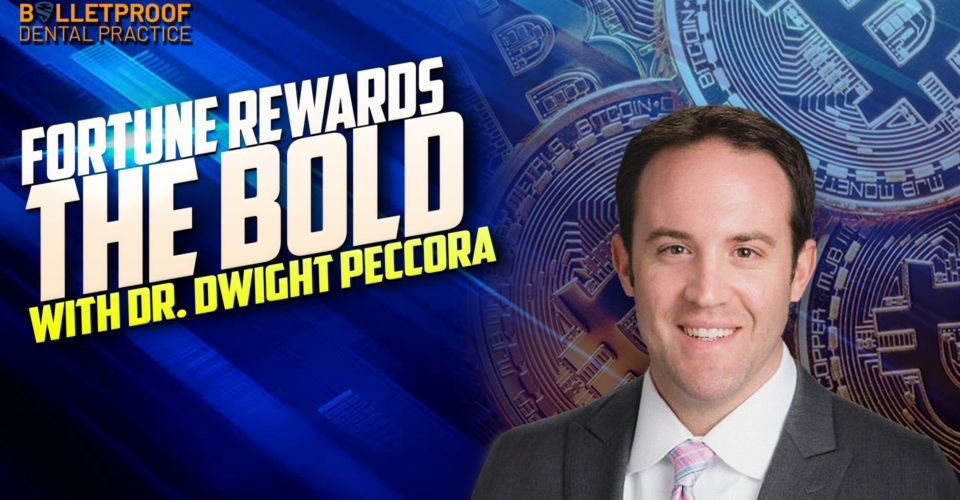


















3 Biggest Bottlenecks of an Entrepreneurial Dentist: PART 2 with Perrin DesPortes of TUSK Partners
, June 25, 2020
3 Biggest Bottlenecks of Being an Entrepreneurial Dentist: Part 1 with Perrin DesPortes