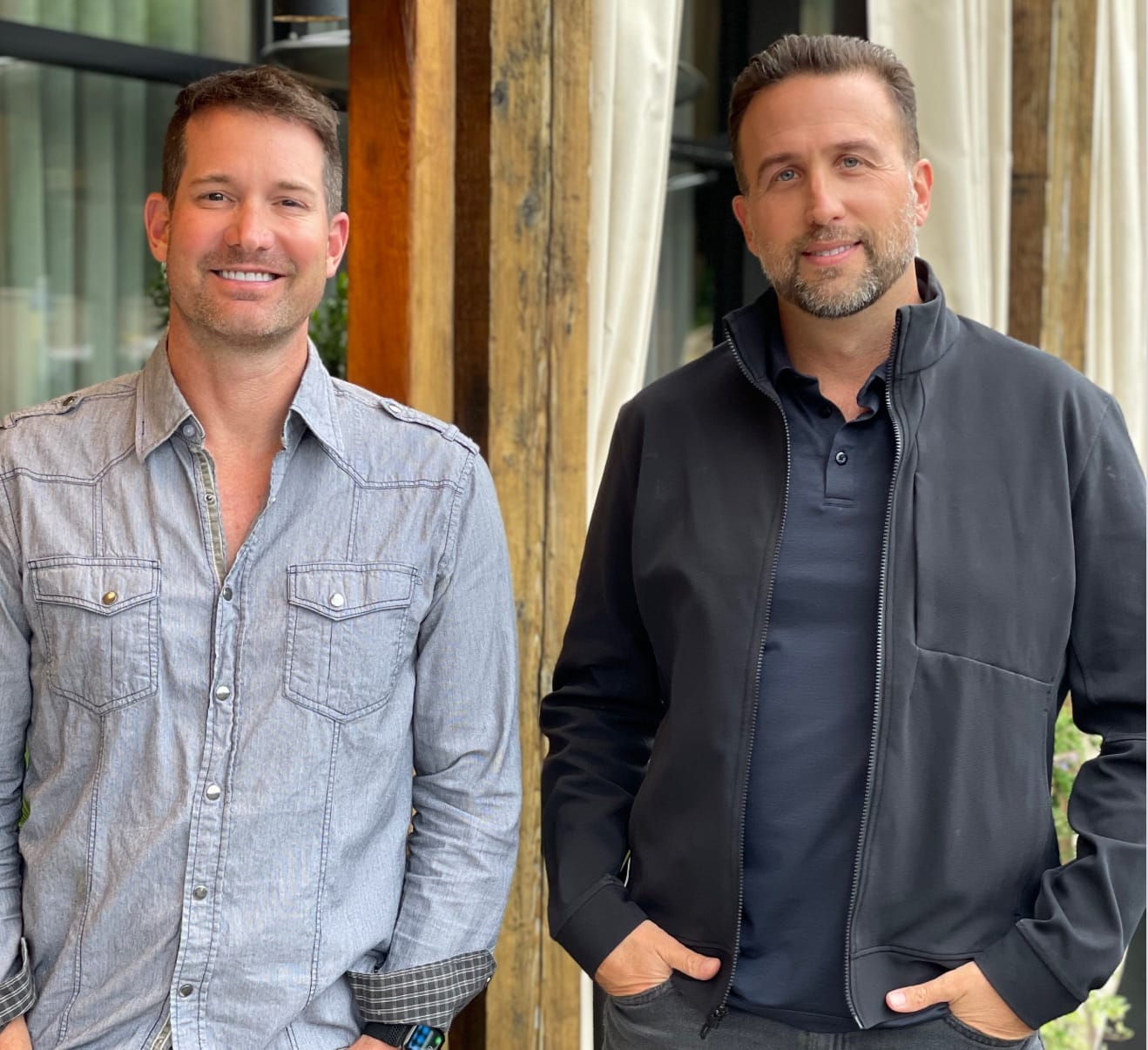
What Nobody Tells You About Treatment Plan Presentation in Dentistry
Here is the uncomfortable truth. Most treatment plans do not die because of price. They die because of the way they are presented. The dentistry was diagnosed correctly. The patient needed it. And still they walked out and said, “let me think about it.” That is not a financing problem. That is a presentation problem.
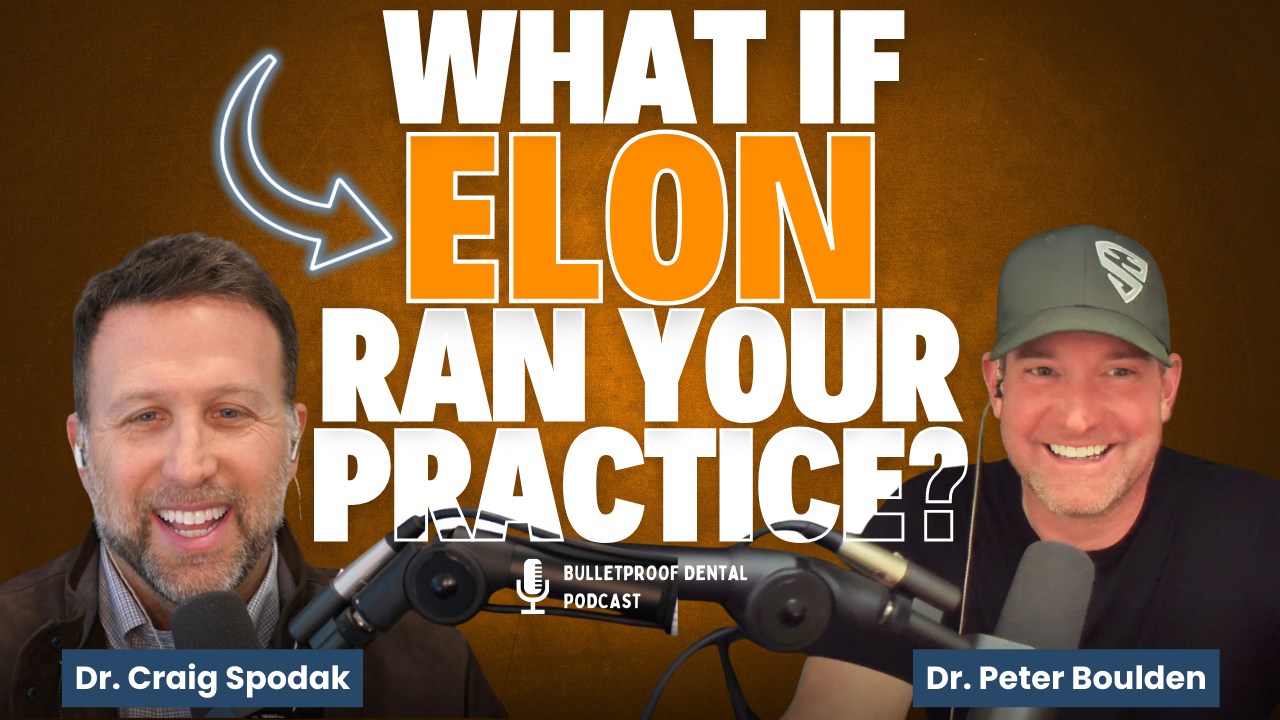
Case acceptance is the single highest-leverage skill in a private practice. Two dentists can produce the exact same diagnosis. One enrolls a $40,000 case. The other watches it walk out the door. The difference is not clinical. It is human. This is one of the most-discussed themes across 450+ episodes of the Bulletproof Dental Practice Podcast, and the pattern is always the same: the best clinicians are the best communicators.
Why do patients say “let me think about it”?
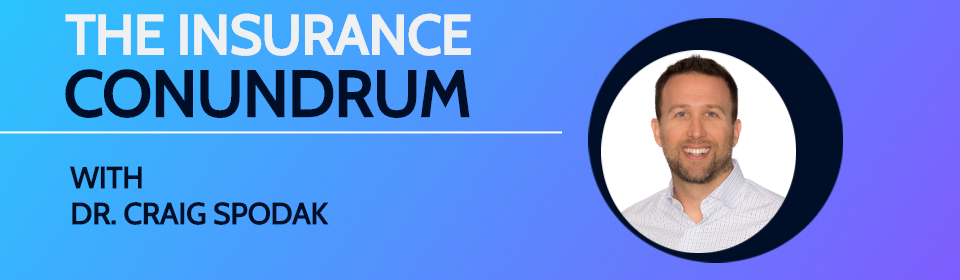
Because they do not trust you yet. Full stop. As Craig Spodak puts it, when a patient sits in your chair, “the thing you’re trying to figure out is, can I trust this person?” Everything else is noise. The patient is not weighing veneers versus crowns. They are deciding whether you are their advocate or their salesperson.
The old model is dead. Twenty years ago, case presentation was a script — “some will, some won’t, so what” — engineered to push full-mouth treatment plans. That worked before patients had the entire internet in their pocket. It does not work now. Modern patients are educated, skeptical, and allergic to being closed. The winning move today is the opposite of a script: total transparency.
How do you present a treatment plan without sounding like a salesperson?
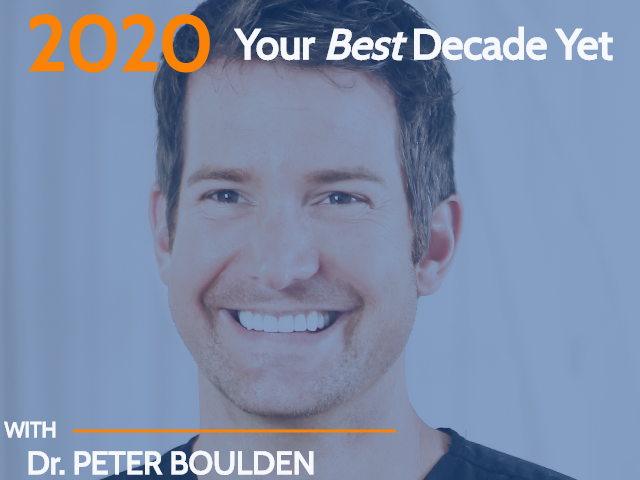
You get in front of it. Pete Boulden is blunt on this: address the cost on the front end, not the third appointment. “You see some people,” he says, “like, I don’t want to talk about it yet because I want to get all the way to the third appointment where we present the treatment. And then someone’s like, whoa, I could never have done this.” Waiting to reveal the number is not tact. It is cowardice dressed up as bedside manner, and the patient feels the ambush.
Instead, name it early and name it plainly. Pete’s analogy: “this is going to be like a car, huh? I’m like, yeah, actually a pretty nice car. It’s gonna be pretty expensive.” That one sentence does more work than a brochure. It sets expectations, it signals confidence, and it disarms the flinch before it happens.
What actually builds trust in a case presentation?
Three things, in order.
- Certainty. Patients come to you for a decision, not a menu. Pete’s observation from watching hundreds of consults: “a lot of people want to be told what to do. You need to do 10 teeth, you need to do 8 teeth. They’re coming for that certainty.” The dentists who lose cases are the ones who, desperate to be liked, offer four options — conservative, aggressive, 28 teeth, whatever — and drown the patient in choice. Lack of certainty by the provider kills more cases than price ever will.
- Advocacy. The most disarming line in dentistry is permission to leave. When a patient starts to waver, get ahead of it: this is a big investment, this is your health, this is your face — go get a second, third, fourth opinion if you need it. When the patient realizes you are protecting them and not your production number, the resistance collapses. You cannot fake this. Craig’s warning is that patients sense it instantly when an “elaborate treatment plan” is designed from financial motives rather than what is genuinely best.
- Distillation. Master clinicians take complex, multidisciplinary dentistry — VDO changes, full-arch, layered veneer cases — and distill it down until the patient says, “yeah, I get it. I see what you’re going to do and I see the benefit.” Not dumbed down. Distilled. That is the skill that separates the dentist who is booked out for months from the one who says the economy is bad.
Do you need a treatment coordinator to present big cases?
It helps, but it is not mandatory. A dedicated treatment coordinator acts as a liaison — intercepting the “what about financing” and “how do I afford this” questions so the dentist stays in the role of trusted advisor, not bill collector. Pete’s practice separates these deliberately: the doctor quotes the treatment and the value; the coordinator handles the financing minutiae.
If you do not have a dedicated coordinator, cross-train. The real first step is teaching an assistant to be comfortable presenting. A clinical team member who can walk a sedated patient’s spouse through the case, answer questions on the phone, and reinforce the plan is worth more than any script. This is a culture and systems problem before it is a sales problem — which is exactly why case acceptance lives downstream of the way you build your team. (Curious what a practice built for this is worth? Run the numbers in our dental practice value calculator.)
How do you talk about price without devaluing your work?
Never apologize for the fee. Frame it as an investment and stand behind it. The language that works: “It is going to be an investment, and sometimes this stuff can get expensive — but I promise you, it’s worth making. We’re really good at what we do and we stand behind our work. That’s why so many people trust us.” Notice what is missing: no discount, no flinching, no scrambling.
And do not chase. One of the most counterintuitive lessons from the podcast: if you want the case more than the patient does — following up every two weeks, hovering, pushing — you repel them. The confident move is to let them know you are there when they are ready, and then get out of the way. Wanting it more than they do is the tell of a practice that needs the case. The 1% do not need it. They present the best option with certainty and let the patient come to it.
The bottom line
Case acceptance is not a closing technique. It is trust, certainty, and advocacy delivered by a clinician who is not afraid of the number. Fix the presentation and your production climbs without adding a single new patient, a single chair, or a single insurance contract. That is the leverage. That is the freedom.
This is exactly the kind of skill dentists sharpen shoulder-to-shoulder inside the Bulletproof community — the ones who refuse to let dentistry be a lonely, isolating grind. If you want to present bigger cases with more certainty and build a practice that funds the life you actually want, join us at the Bulletproof Summit (Aug 7-9, 2026, The Phoenician, Scottsdale) or apply to the Bulletproof Mastermind.
The 1% of dentists, who want 100% from life.
Blog





















1+1=3 The Power Of Alignment and Delegation For You and Your OM with Erika Pusillo
, October 31, 2024












, June 15, 2023
, June 8, 2023
, May 31, 2023





Look at These 3 Stats if You’re Thinking of Going Out of Network with Teresa Duncan
, January 11, 2023
, December 28, 2022

Knowing What You Don’t Want with Judy Kay Mausolf of Culture Camp and Erika Pusillo
, November 30, 2022


Cabo This Week, Immersion Learning, Biggest Breakthroughs, Your Personal KPI is Net Worth
, November 2, 2022
, October 19, 2022







Business is not Productivity, Productivity is not Profitability with Chris Salierno
, September 22, 2021








3 Biggest Bottlenecks of an Entrepreneurial Dentist: PART 2 with Perrin DesPortes of TUSK Partners
, June 25, 2020
3 Biggest Bottlenecks of Being an Entrepreneurial Dentist: Part 1 with Perrin DesPortes
, June 18, 2020









Building a Referral Network With Specialists (The Two-Way Street Most GPs Get Wrong)