Words to Use & Words to Eliminate
Bulletproof Dental Practice Podcast Episode 262
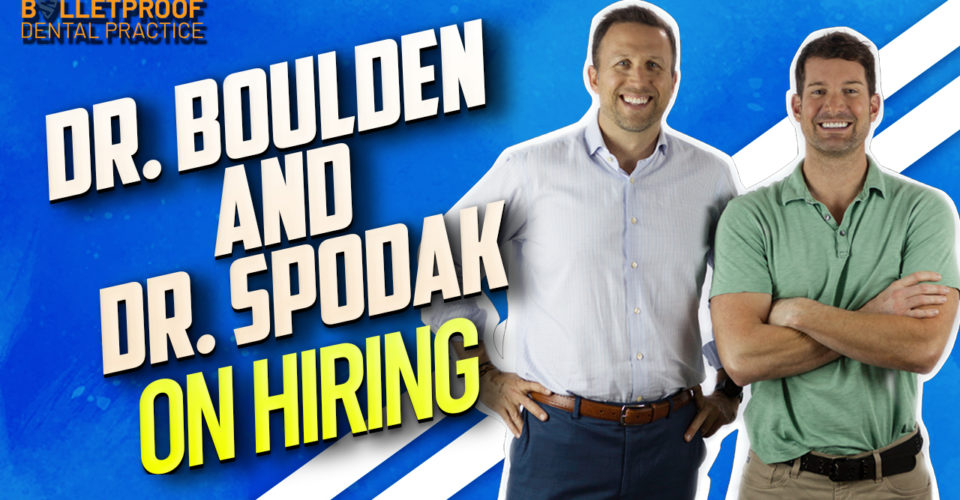
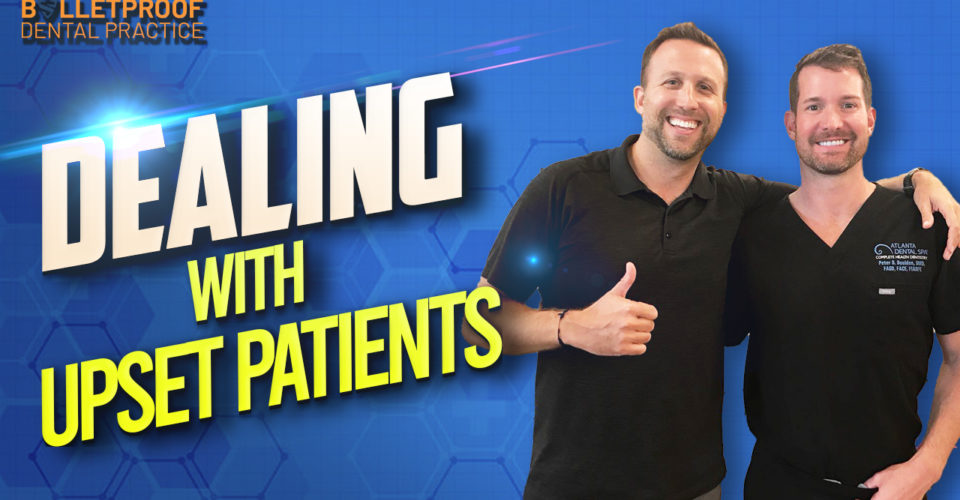
Hosts: Dr. Peter Boulden & Dr. Craig Spodak
Key Takeaways:
Introduction
Gross Debridement
Audit
Progress Not Perfection
References:
Bulletproof Summit
Mighty Networks: Bulletproof Dental Practice
10 Persuasive Words Millionaires Use To Get Things Done
Tweetables:
Empathize [with] where the patient is. – Dr. Peter Boulden
There’s a whole art in training, correcting, and leading people. – Dr. Peter Boulden
Language is the most powerful tool. – Dr. Craig Spodak
The grass is greenest where you are; you just have to water it more. – Dr. Peter Boulden
Full Episode Transcript
Below is the complete transcript of this episode of the Bulletproof Dental Practice podcast. Prefer to listen? Find us on Apple Podcasts, Spotify, and YouTube.
Read the full transcript
The following transcription was from the Bulletproof Youtube channel. Here is the https://www.youtube.com/watch?v=WWwjghtuFxM
Craig Spodak
0:00:00
So, doctor, you're saying that I'm gross? No, I'm just saying that you haven't had a cleaning in three years and you need a gross debridement.
Peter Boulden
0:00:18
So, that's the debridement you do on gross people? Not exactly. I've seen so many people fall on that sword where a patient comes in and they want a cleaning and we fight them and we're saying, you can't get a cleaning today. You can't get a pro-feed. You have to have a gross debridement. And then they write you a bad review because they wanted a cleaning. When a gross debridement is really just an insurance code for cleaning the teeth that you see. So to the patient, yes, their teeth are now clean, but there's a whole bunch of crap below the gum line that you didn't get to yet. But the patients are probably like, can we just do this all the time? I just wanna look good. I just wanna do that whitening you did. But obviously, we use verbiage, and some of it is benefited for insurance companies, some of it is benefited for our instructors in dental school, but usually, it's not benefited for patients, and it drives a lot of upset. The people that, Greg, in your life, think about all the dental masters that you've known, right? Who are just masters at enrolling. One thing I think without fail you would say is that they have an excellent way of communicating with not only their team but also patients and they do not use words like like this, right? You know, Ms. Jones, we're going to do a gross debridement and walk out of the room kind of thing. Yeah. I'm not saying, it's part of the puzzle in my opinion for enrolling is to empathize with where the patient is and they didn't, they didn't have the benefit of four years of dental school to be on the same page of you as knowing what a Radiograph is even I don't know what a radiograph is say x-ray right and so Today, we're going to talk about just some some key things words to use and words to possibly eliminate or phrases to use in lieu of and I posted this question on our mighty networks, which is got you know about a thousand users now Craig up on the, yeah. And people can join, it's a free place to join and post questions and just collaborate with like-minded dentists, you know, Bulletproof type dentists. Just go to bulletproof.dental if you haven't joined. But anyway, this question was posed, is basically I was just sitting there thinking, I don't know what popped in my head, but I posted this question. And it got a lot of good feedback from people, kind of collaborating and saying, this, you know, I got another suggestion of one to talk about. But I was basically, the title of it is basically just, and it did start with gross debridement, I think, to your point, Craig. I'm gonna go ahead and put it up on the screen, and if you're able to follow, if you're watching this on YouTube, good for you, because now you get to see it. If not, Craig and I will verbally kind of talk about this. So we talked about the gross debridement thing, which I think if I had a dollar for every time I've ever heard that in dentistry, it'd be a fair amount of dollars. And you just cringe because you know the patient is not gonna say anything more than what they. They'll probably maybe leave with a little butthurt, maybe not enrolled, and maybe give you a little bit of a bad review, but they're not gonna say anything in there because they are already feeling intimidated. Yeah, their feet are up, the light's in their face.
Craig Spodak
0:03:12
Yeah, they're leaning back,
Peter Boulden
0:03:13
and you're probably talking to them like they're fully reclined and that's And they're doing isometric sit up, just like trying to listen to you. Literally, they're literally crunching. They're shaking because it's been like five minutes. Like, can I lean back? Just, I'll do whatever it is. But never mind the bad language and the way it sounds like they're doing it. Wait, wait, wait, put a pin in that one for a second because that too, if I had a dollar for your time, you've seen that.
Craig Spodak
0:03:36
Yeah, leaning back.
Peter Boulden
0:03:38
Anytime you have to talk to a patient, just hit the up button, even if it's for five seconds, just look them eye to eye, right? When you're done, just look them eye to eye, need to be in the middle.
Craig Spodak
0:03:47
The overhead light or your headlight is in their eyes and they're doing an isometric crunch and you're trying to enroll them. So what do you think of the veneers? They can't even see. The core is sinking.
Peter Boulden
0:03:57
No, and there's a mirror and explorer in their mouth, more than likely, right?
Craig Spodak
0:04:01
No, the suction is there still. It's sucking the whole time.
Peter Boulden
0:04:04
And when they close their lips, it sucks their sinuses. So nevermind the fact that the gross debridement is offensive at best, it's also they're upset because they wanted a cleaning and they got a cleaning. A gross debridement is a type of cleaning. It's a cleaning to aid in diagnosis. So it's still, if they have a date that night and they got a gross debridement, they look better. It didn't take away all the disease, but it's a step in the right direction. So it's the travesty is that, so you're not going to give me a cleaning? Well, you're not going to get a cleaning as a prophylaxis and you're getting a gross debridement.
Craig Spodak
0:04:38
Why go through this? Why go through this? Ben, you're right. Some people die on this hill, right?
Craig Spodak
0:04:42
Yeah.
Peter Boulden
0:04:43
It's like you go to Chick-fil-A, can I get the four piece nugget box? No, but you can get a box with four piece nuggets in it. I think, you know, I made a faux pas just for everyone's in full transparency. We've already done this podcast one time and I forgot to hit record, but things are always better than I thought. Thank God I didn't do that, Peter. Yeah, I would have.
Craig Spodak
0:05:04
You would have gone court-streaming.
Peter Boulden
0:05:06
I would have dog-cussed you up and down on the podcast, but it's okay if I do it. But what I was saying, Craig, is that, you know, now I damn lost my train of thought because I was thinking about literally scorching. But the, I really did forget, the, anyway, we'll get into the whole meat of the podcast. So I posted this, like I said, on Mighty Network, and I'm going to kind of go through some of the comments because I think this is good fodder for kind of talking about some of the suggestions, right? If you crowdsource the question and you put it back in, and I think there was some good feedback. So Anthony Gonzalez actually posts and he says, he says kind of eliminate the quote you need. And he said, it's a hard habit to break. I tell people about their condition, whether it's perio or cracked teeth or a ridge, and then I say the solution, right? And then, and what we were talking about earlier, Greg, was basically, on the last time when I hit record, was that people continue to kind of verbally vomit, right? They don't let there be pauses. The doctor just comes in, does a little monologue, and leaves, right? So try to do a problem, here's what I'm seeing, here's how we would fix it, and then just wait. Wait for a follow-up question from them. I add one thing to that, Peter. So I say, what's the current condition? What's likely to happen over time? You know, the prognostication of the condition and then the solution. And sometimes not even a solution because things that are really easy, you got decay, if you don't fix it, you know, I've seen these types of cabbages go from where they are now to root canal or extraction really quickly. And then I've seen other people that, you know, they come back six months and it hasn't really changed very much But I just don't know where you're gonna be I don't have a crystal I like this actually because the more you say you need it's it's you being Judge and jury and dictator right and it's just like look my job here is not to tell you what you should and shouldn't do My job is to is to you know, my training dictates that I show you what I see is faulty What's going on in the future and educate you pay your correct? Sorry dentist You're paying the dentist for advice and that's why I get so upset with medical providers. Like, you know, like I've gone to medical doctors before. I'm like, listen, I'm 51 years old. You know, there's nothing wrong that I know about, but I want to know, is there some test or something I can do to give me a better, better intel on my health? To which most doctors are like, you're not sick. Get out of here. And that's not what we're looking for. Dentistry is not about getting you oftentimes just un-sick. It's talking about optimal wellness. So let's say you have no cavities, you have no periodontal disease, but you're 35 years old and your incisal edges on your lower teeth have worn two millimeters off because you have a deep bite or an exaggerated curve of speed. If you don't have that conversation with that 30-something year old, when they're my age, they need a fricking FMR. And I'd be mad at all the dentists I saw. And by the way, I have a good anecdotal experience on this because I meet patients every day, I do an itero scan, I look at their weather map, the occlusal scheme, and I'll rotate the lower arch so they can see it, and I see the thickened buccolingual edges of the anterior incisors, meaning teeth are pyramid-shaped, they've worn off the top three millimeters, now they're like two millimeters wide buccolingually. I tell them, hey, you're 28, that's a problem. Or 38, that's a problem. To which an overwhelming percentage say, no one has ever told me this before. So we're sucking as dentists from telling them about occlusal disease. It's not just the absence of cavities and perio.
Peter Boulden
0:08:44
That's correct.
Craig Spodak
0:08:44
Occlusal disease.
Peter Boulden
0:08:45
So this is a hard thing, right? So being able, and we've talked about this at Nauseam, I feel like, you know, it's being able to diagnose is one thing, but being able to communicate that in a language that the patient understands, that's not, almost in a disarming, hopeful way, is the next level of good to great, kind of. All I'm saying, Peter, and we're not going through the tech right now, this little rant that I'm going on, is not about the communication style. It's incumbent upon you as a dentist to tell them what's going on. That's it. And even if you preface it that way, like, hey, I'm noticing something here that I'm concerned about. Sheila, the hygienist, brought it up. I just wanna talk to you about this wear.
Craig Spodak
0:09:27
What I do about it,
Craig Spodak
0:09:28
well, there's a lot of different things
Peter Boulden
0:09:29
you can do about it. Minor thing would be wearing night guard, number two, you could move your teeth, number three, you could rebuild them, but I just need to talk to you about it. And I think that professionals are being dumbed down. You know, medicine is going, telemedicine, the art of diagnosis is going away, everything's being processed, and you know, if this, then this, like when you go into the hospital, it's like they just run a series of tests, because if this test comes out positive and that one comes out negative, you must do these two other things. In dentistry, by and large, we still have freedom to communicate properly with our patients, and I'm just shocked at the lack of guidance that most professionals give us. You know, like, yeah, you might want to consider new brakes. Well, why? I don't know, because they're kind of wearing. Versus like, hey, if you got in an accident with the brakes that you're in, and you slammed on them, you've lost 70% of your braking power right now. Yep. Are you okay with that? Some people are like, yeah, that's kind of cool. I live in a rural community, but if I live in where I live, I don't want to lose 70% of my brakes. Thanks for telling me that. Yeah, what do we need to do to fix it, right?
Craig Spodak
0:10:28
But if you could show me, if there was like a brake-o-meter,
Peter Boulden
0:10:31
I would buy new brakes. Oh, there is, it's called, it's wear on the brake pad. Anyway, the… Thanks, you just alpha'd me. I didn't alpha you, I didn't alpha you at all.
Craig Spodak
0:10:42
It's a car analogy, it's like, honey, it's called the brake indicator.
Peter Boulden
0:10:45
Craig, have you ever changed your own oil in a car? Own oil, no, I've changed the oil on a bike, a motorcycle. Okay, keep going. Okay, all right, so Sharisa Wood, our Sharisa of Bulletproof Hygiene, chimed in and said, instead of saying, this won't hurt, try, we're going to keep you really comfortable during this. And that is good because this won't hurt, although it has great intentions, the patient focus is on the work.
Peter Boulden
0:11:16
So next one, I chime back in,
Peter Boulden
0:11:17
because I'm having fun with this, I'm chiming into my own thread now. Scaling and root planing. Greg, and the patient says,
Peter Boulden
0:11:23
well that doesn't,
Peter Boulden
0:11:24
Mrs. Jones, you're gonna have to have a scaling. I have to put my teeth in the bone. Or we're gonna SRP you,
Craig Spodak
0:11:30
we're gonna need to do some SRP, Mrs. Jones.
Craig Spodak
0:11:32
What's that?
Peter Boulden
0:11:33
It's scaling and root planing. Well, neither one of the, one sounds confusing and one sounds like it hurts like hell. Either one sounds like a good option. So a very viable thing might be to talk, and when I say talk, obviously you're talking in front of the patient, talking in front of the hygienist. It might be a deep quadrant scaling. Oh no, we do NSPT, non-surgical periodontal therapy in my office, NSPT. That's what you say?
Craig Spodak
0:12:02
Non-surgical periodontal therapy, yeah.
Peter Boulden
0:12:05
Yeah, that's a little clunky too. It just sounds better, it's non-surgical, I like that. That's true, who doesn't like a non-surgical? We can do SPT, surgical periodontal therapy. You can have it your way. So Jason, Tessor, Craig help me with that, his last name. Why am I, Tesoriero?
Craig Spodak
0:12:27
Tesoriero.
Peter Boulden
0:12:28
Okay, good, see I didn't have the tongue roll. I know, I don't know if it belongs in there. Instead of saying, sorry, I'm running late or running behind, instead try, thank you for your patience.
Peter Boulden
0:12:42
Yeah.
Peter Boulden
0:12:42
I think that's a great one.
Craig Spodak
0:12:44
That's a great one.
Craig Spodak
0:12:45
I mean, like just take cues from like the nice hotels you go to, we need to go ahead and put your credit card on file. We're gonna go ahead and take care of your balance today. Oh, you're gonna do that for me?
Peter Boulden
0:12:54
How nice. Yeah, thank you for doing that.
Craig Spodak
0:12:56
Thank you. We're gonna go ahead and take care of your balance. It's okay if I put it on the card? Right at the get.
Peter Boulden
0:13:01
So Frank chimes in with, Frank Machitti, you know, Machitti chimes in with, instead of periodontal disease, try gum infection, right? And I actually really like that because everyone, especially, you know, COVID infection, everyone knows infections need to be cured. Infections need to be addressed. Infections need to be treated. Versus periodontal disease seems like, I don't know what that is. Is that something we can do? So I like the gum infection aspect. Yeah, plus people are very attuned to when you have an infection, wanting to fix it immediately. So I have a new infection, what do I do? And then Kerry Brown is our next one. He says, I think this is a great topic. For extractions, I say, I want to make sure you're comfortable the whole time. So raise your left hand if you feel anything aside from a little pressure or just need a break. Instead of, if you feel anything sharp or painful, right? Got it. Which is going to put them on alert even prior to the, meaning if you say the latter of what Carrie is saying, then it's going to be, they're already getting ready for something to hurt, right?
Craig Spodak
0:14:15
Let's see, gold, gold, okay.
Peter Boulden
0:14:17
Okay, Angela. I love the yet. Yes. So we say things like, is anything bothering you? Instead of something is saying anything bother you, because people are inclined to be like, nope, looks good. Everything's fine, like you were saying earlier, Craig. People just kind of want to get in and get out. Or say, does this hurt? Instead, say, does this hurt you yet? Yeah, are you feeling this yet? That we're leaving yet. They always say the same thing, not yet, but when? I'm like, I don't have a crystal ball. I also like when you move forward with treatment versus if. That's important too. Like that's just a little bit more sales coaching. Let's see, Craig help me with this last one. I'm on my screen. I think Vijay's in Australia. She's been commenting for a long time. That's kind of cool. So go ahead and read that in an Australian accent if you don't mind, Pete. For treatment plan recommendations,
Peter Boulden
0:15:10
I would say this would be best. How's that, Craig? That was pretty good.
Peter Boulden
0:15:15
I like it. So rather than this is what I recommend, yeah, I think it's great. She uses the termite analogy for untreated caries. Yeah, I love that. This is what would be best rather than this is what I recommend. I do like that. I do like that. I use the termite analogy for untreated caries, meaning also to give patients – also remember to give the patient room to speak. Like we were kind of alluding to earlier, like give a little pause, give them some, it's not a monologue, right, it's a conversation. I wanna put something as a placeholder right now because what we're talking about is often considered to be a taboo subject because we're using the words like how to sell, right? So the US government probably spends, I don't know, tens of millions of dollars, maybe more, on getting us to just click our seatbelt in or stopping smoking or just trying to live better, less diseased lives, less morbid lives. And what we're doing here is we're trying to figure out how to, because unfortunately, teeth don't always have the symptoms present to what's actually going on. When you have an arthritic change in your joints, you feel it, you seek care. Teeth happen to have something where by the time you feel it, you're up the creek. It's too late. If you come with a toothache, you're not getting an occlusal filling with a toothache. So there's a disconnect between understanding and the problem. That's a problem in dentistry and we need to talk about it. So we do need to develop really refined ways to describe and enroll things because if patients do the preventative treatment that we recommend, they're gonna spend less money and have less care. I do not want an FMR. Neither do you, Peter. None of us want FMRs. But if we're not comfortable talking about the incipient forms of disease, and then we kick it down the road, we're gonna have a bunch of 55 and 65 year old people needing massive dentistry because we were just afraid to enroll them.
Craig Spodak
0:17:22
Or we thought, I don't feel comfortable selling.
Peter Boulden
0:17:25
And then, guess what happens? Then it's super sweaty back. Because if you've got a patient for 15, 20 years, doc, I've been coming to you for 10 years, why didn't you say something earlier?
Craig Spodak
0:17:34
Why didn't you?
Peter Boulden
0:17:35
Right, and then it's a super sweaty back. And then you, as a clinician, almost anticipate that and is like, well, what if they challenge me? So then guess what you do? You don't say anything at all, ever.
Peter Boulden
0:17:45
Right.
Peter Boulden
0:17:46
Yeah, yeah. Right, you get one review, oh, I went to Dr. Boll and he recommended I needed all his work done. I went to some other guy and he said I need nothing. Because what is age inappropriate where? You can take a girl that's 25 years old with perfect bite, perfect occlusion She's worn her teeth down to like what a 60 year old should be but she's got no cavities and no periodontal disease So you say hey We need at minimum a night guard or a maximum you need to rebuild your posterior and your guidance and blah blah blah And then we go to the other schlepper down the road be like whoa he tried to tell you need 50 that no no no You need nothing. You're fine. You're perfect. He's trying to pay. Oh, he's trying to pay for his vote. But that's so disheartening because we just need to get on the same page. And I think this is an important topic to just elaborate on that if you don't have the training, don't disparage the other person. I think we do such a disservice. I think the greatest force against dentistry is not the corporate, DSO, blah, blah, blah. It's other dentists shit-talking each other without a doubt I see too much of it you know the dental firing squad is Craig yeah you all stand in a circle yes a circle yeah hmm it sucks because you know it's I mean there is over treatment there are overzealous dentists but you know there's a lot of 55 year old dentists going through level one of coice and spear and you know why? Because they probably just practiced a certain way their whole career and they had those sweaty backs where they saw little Gina and she was 18 years old and told her not to worry at 25 and 35 and now she's 40 and she has a collapsed video and her teeth are worn to shit. They look at their old photos and be like, damn, I got to go learn occlusion at that point at 55. Well, kudos to them because some people will practice their entire lives and never learn occlusion, never do an FMR. I think the takeaway with this one, Greg, is I'm big on saying the word audit. Audit your patient experience. Audit the way your reception area looks. Audit the way, the clinical flow. Audit the way your phone is answered. Audit means just continue to review.
Craig Spodak
0:20:00
In this context.
Peter Boulden
0:20:01
All of your language.
Craig Spodak
0:20:02
All of your language.
Peter Boulden
0:20:03
So in this context, yes, when you're not doing something, go eavesdrop on your hygienist. Go eavesdrop on some of the assistants in your office. And if you've kind of mastered the art of verbiage, or you've also mastered the art of being empathetic towards patients in clinical presentation, if you will, then it's your job as a leader to then teach that, right? And that's a whole, then kind of teaching it into your hygienist or your assistant or your front, your business manager or business team that answers the desk, that's a whole art itself. Like, not that way, stupid. You know, you can't do that. You have to, you have to, you have to say, that was good, that was good. Next time, you know, what I'd say instead is something like this So you kind of sandwich it and there's a whole art in correcting people and leading people and training people And what you're really talking about by the way is a global consciousness to audit yourself Self-awareness, you know just because you're saying it and you're and it's not working Just because the way you're leading your team and you're really you know when you catch them doing something wrong You beat the crap out of them. I've been there. I've done that or the way you're speaking to your kids. Language is the most powerful tool because it's your sub vocal thought. It's the way you think. So if you start listening to the way you speak to patients and you're aware of the saying the word bone, you become globally aware of how you're speaking. By the way, there's something that like when you talk about fixed and growth mindsets, people that are growth mindset use the word yet a lot. I don't know how to play tennis yet, versus like, oh, I suck at tennis. No, you haven't had lessons or whatever. So I think that there, if you can just start turning your focus on the way you speak and the, you know, and your words you use globally, you're gonna live a better life. Because you're gonna audit it and change it. Things that are not working, you'll get better. Even recording yourself, right? Not for the context of like a patient conversation and oh, I have this documented, but like record, video record, put an iPhone up and you're about to have a conversation with someone and then record it. Because lots of times you can go back and watch that and be like, ah, I said that, I should have said this. And you won't remember the lesson in there, right? But it's just repetitions, it's a new muscle. Progress isn't perfection, but I'm sorry, perfection…
Peter Boulden
0:22:28
Yeah, it's progress, not perfection
Peter Boulden
0:22:30
is where I'm trying to go, right?
Peter Boulden
0:22:31
Right, and by the way, progress is what makes people happiest. Just going forward, even if you're crawling forward, getting a little better every day. And I've been really lucky, I've been surrounded by great practitioners over my career, and I'd listen to them, like, wow, that's really good, so simple. And also, just being confident in what you do. I've had doctors that do it all wrong, by the way. I've had the doctors, like, we're gonna drill your bone and blah, blah, blah, blah, blah, but they're so confident and they're so excited about what they're gonna do. They'll be like, I don't know what you just said, buddy, but I like you and I'm going for it. So it's like that swagger, too. You can say it all wrong. But for us mere mortals, we need to watch our language.
Peter Boulden
0:23:10
We do.
Peter Boulden
0:23:11
Yeah, and guess what? Vicariously, when you start upping your game without even saying something, the team will hear you start to say that over and over and over again. So instead of, when you would have said scaling and replanning, now you're saying gum infection, right, deep gum, something like that. All of a sudden now, the vernacular changes in the office. Because it's a top-down, like everyone is looking to you, potentially, to lead, right? When you have a bad day, the office knows it, right, the office potentially could have a bad day too because you're usually the tip of the sphere if you're listening to this pod. And by the way, so you know how someone commented on Mighty Network about giving the patient the space to understand and process?
Craig Spodak
0:23:53
Yeah.
Peter Boulden
0:23:54
Same thing with your leadership skill. You know, when you're a person, you know, potentially like me who likes to be the center of attention, talks a lot, I can suck the oxygen out of the room, and that affects leadership too. So these lessons that we're talking about for patient language are really just for communication in general. It's important for people to trip over their own truths, for people to recognize the mistakes they made and not have you hold it against them. The idea that patients have choices, and when they say, well, are you telling me I have to do this? No, you don't have to do it. You can just leave it. It's an incipient process. It took you 20 years to get this way, and you can kick this can down the road. It's just my obligation, it's my duty as your dentist today to tell you everything I know, because when they know what we know, they make better decisions. If your roofer tells you that, like the brake pad analogy, is that this podcast or the one we didn't record from before? I don't remember now, but you can go ahead and you can say it. Yeah, but it's like, oh God, you just want me to like step into this one. But imagine that you could know that. So it's like the doctor. When I go to my doctor, I'm finally going to take a page out of Peter Bolden's book and be like really proactive with my health because Peter's not reactive. Peter's like, if there's something that I can do, thank God I've got the money and resources. If there's a $500 test or a $2,000 test that's gonna show me something, let me have it. And I went to my doctor and I'm like, I'm not worried about money, is there anything you can do to tell me to be at the next level of my healthcare?
Craig Spodak
0:25:24
And he's like, nothing. And then I talked to all my friends and there's cardiac calcium scores and CT scans
Peter Boulden
0:25:29
and that cancer thing you did. And Frank's son. And Frank's son, you jackass.
Craig Spodak
0:25:34
No.
Peter Boulden
0:25:35
So, put a pin in that,
Craig Spodak
0:25:36
Peter and I both have creases in our ear. We'll leave it at that. Peter, literally on the night of our summit, we were sitting in the street, like preparing for the next day. He's like, bro, this might be the last time I see you. And got really under my skin. He's like, you know, with that Frank sign, that crease in your ear,
Peter Boulden
0:25:57
you may not be around that long. You might have a heart attack right there.
Craig Spodak
0:26:00
Right now.
Peter Boulden
0:26:01
In the States.
Craig Spodak
0:26:02
He's like, look around. Do you see an ad I don't
Peter Boulden
0:26:04
Yours is so deep. I don't know This might be your last summit You proceeded to go around and tell everyone like look what he did to me It's like what right when we went up on stage KK was on stage and KK obviously works with Tony Robbins She's total badass and he's like as soon as she introed us 20-minute intro. He's like dude. This is all on you, buddy. I would not want to be going up after KK.
Craig Spodak
0:26:30
This is going to be very hard.
Peter Boulden
0:26:32
I love it.
Craig Spodak
0:26:35
That's what friends are for.
Peter Boulden
0:26:37
So let's get back to language.
Peter Boulden
0:26:39
Hey, wait.
Peter Boulden
0:26:40
Instructive languages of friends.
Peter Boulden
0:26:41
Language is everything, like you're saying.
Peter Boulden
0:26:43
And that's why I think even we talk about body language so much, right? Because yes, language is huge, but a lot of things are nonverbal as well. So that's a whole different topic. We've had that conversation. An excellent podcast is the Chris Ramsey we did a couple years ago. But Craig, the verbiage is such an important thing that I think we both believe, our offices both believe, our doctors all believe, that it was important enough for us to actually put it in the field manual. So I think we have in our field manual, I think we have that we give out at the summit, a couple pages of these examples of like, instead of this, try this. And look, these are little micro shifts. So you're listening to this podcast and you're like, ah, that's, you know, whatever. We're talking about words, like not important. But it's little tiny shifts, right? There's never, everyone's always looking for the big lever. Give me the market, like Craig says, right? What's this Yelp hack that's gonna take me from one million to two million? There isn't one. What it is, it's a series of 100 little tiny levers like this, right? This may be one of 100 things that you start implementing, but all of a sudden, now your practice is going gangbusters. You're like, what did we change? We don't really know, but it's this 1% betterment every day. 1%, 1%, 1%. Well, I think to the, you know, Patrick, but David always says the worst types of people who are hungry and lazy People that want more, but they don't want to put the work in those are your haters Those are your friends that you had to let leave behind those are some those are the people that are most dangerous for you because They'll look at you the person that's listening to the podcast because if you're listening to the podcast You're already in a segment of the population of like I don't know at all. I want to learn I want to get better So we're already talking to a very we're talking to an overachiever But what you have to recognize is no failure is final and and grandiose It's a series of small failures and no successes is final and grandiose, you know You might get a break but you just work every day and listening to a freaking podcast You're choosing to get better. You could turn this crap off and build us in a car DB, you know right now, but you're not. So it's, I like that little, that you're in control and we're talking about growth mindset and learning better techniques. Can you hear this coming through?
Craig Spodak
0:28:57
No, is there some,
Peter Boulden
0:28:59
It's Patrick, Pat, David, right? And so it's a example that I actually, that prompted this podcast to happen. And it was kind of, it's 10 persuasive words that millionaires use to get things done. And so this was actually, now that I remember, this was what Pranthabeta posted on Mighty Network. So listening to Patrick Bedavid's thing, that he was saying, look, verbiage is so big, so big that, you know, and these are things that you want to use in business. And I was like, yeah, there's 10, but there's probably 20 or 30 in dentistry, right? So I'm going to put this back to the screen, Greg, because he's saying, just communicating with people. Let me share the screen again.
Peter Boulden
0:29:41
Good.
Peter Boulden
0:29:42
Okay, you know, and these are things like, you know, what he's saying is to say things like, hey, can I request this of you, as opposed to being like, I need you to do this, right? I'd like to make a request. You know, asking may I, let's process this together. Let me get back to you. If you don't know the answer to something, you can say, hey, let me get back to you, and I'll get back to you. Right. As opposed to just kind of just sitting there and being like, well, the answer is. So, so many things I think Greg has arrived. Some of these things though, may I suggest in this process, this is vulnerability. This is like, you know, you think you're the boss of the practice. You know, you, you just acquired a new practice. The old guy left or the old gal left. Now you're running the show. And we think as leaders, we have to have all the answers. And what this is requests, suggestion, may I, you're giving people space. And what most organizations need is not to whip them into shape like you hear all the time. Like I took over this practice, I need to whip everybody into shape. I gotta whip, you know, I gotta get things back in order. It's not that, you're actually whipping them too hard. So it's like suggestion, may I, let's process this together. Those are palliative words that allow people to come out of their shell. You're getting people to contribute. And that's what PBD does really well, and I was lucky enough You know you know when he's in the chair He'll he'll talk about like I don't know if I ever told you this story, but he said something like you know I'll make up a name. He's like hey. Let me ask you something Johnny, Ben. You know because we're working on Ben's problem he's like does Ben have does Ben have a good relationship with his father and Johnny's like no no no Ben's a guy that you know his father left him when he was four years old. He's like, yeah, yeah, yeah, okay, good, good, good. And then he moves on to the next thing. I'm like, well, Pat, Patrick, do you treat, lead people differently if they have a good relationship with their father or not? He's like, I lead everyone differently. So he's that level. So like, do you know, Peter, I mean, I'll admit, I don't know for everybody, but do you know consciously in your organization whose doctor, which doctors have good relationships and bad relationships with their father? No. So I had to figure that out the hard way and I led somebody like I like to be led and like you like to be led. Peter and I just don't fluff anything. Give me the real shit. What can I do better? Did I fuck it up? Tell me straight. Yeah, Greg, you fucked it up. Good. Move on. You and I have good relationships with our fathers. Good men, solid guys. We've been, I don't know, I don't wanna get too woo-woo because you're going to fucking hang up on me right now. But when you have a person that has a fragile self-construct, you actually need to step into the father they never had if you're willing to be that level of leader. And PBD is that level of leader, obviously. So it's just the next level. He's next level, but that's why he gets next level results. All right. Let's wrap. Good segue, good segue. Good segue. Well, look, it's important, and I think we're drawing business examples, right? Because as much as we think that dentistry lives in a silo, and there's lots of sales, there's lots of business communication, there's lots of leadership, I mean, it's all the same things taken from different industries. It's the same thing. It's still a business at the end of the day. So I think opening your mindset to listening to people like PDB, or Tony Robbins, or whatever it may be, right? It only augments the things that you can learn and then you can audit it based on the environment you're in. But one thing I just want to add to, Peter, is as you get on in life like we are and we have more experience in a larger network, you start to see these people with exceptional results put an exceptional work in. So I used to really, as a younger guy, think like, oh, that guy got lucky, he probably doesn't work that hard. All the people, like the PVDs of the world or the Tonys, they get to see them in their private time, you know, and it's like, damn, I don't wanna do that. You know, I don't wanna, I can't do what Tony does. I can't do, like, you know, even like what an appa does. You know, appa's flying around all around the world, bro. I, you know, I don't wanna do that.
Craig Spodak
0:33:34
I don't wanna do that.
Peter Boulden
0:33:36
So you have to be.
Peter Boulden
0:33:37
Did you see one of his, I'm going to give you, I proclaim that I'm never on social media and then I actually saw a post that he did recently and someone's interviewing him about like, I need to send it to you. It's basically about like what next, what next? And he's kind of like, ideally it's to train my next generation and me kind of tap out essentially. I was floored because he's usually been this like.
Craig Spodak
0:34:00
If that's what he wants to do, everything's got to change because his social media is the him show.
Peter Boulden
0:34:05
And that's what the interviewer said on his social media. It was like, well, everyone's coming for APA. He's like, no, no, no. They think they're coming for me. What they're coming for is a different level of experience.
Peter Boulden
0:34:16
They've got to get used to it.
Peter Boulden
0:34:17
That's aspirational and I think that would be great if he pulled that off. But you know, it's fine. It is what it is. The point I was bringing him up is he's doing things that I'm not willing to do. I just don't want it. I know. I don't want PBD's life and I don't want Tony's life. It's magical and there's great things, but these guys are born to run and they run. And it takes great sacrifice probably. Oof. But they're called to it. I mean, a good business can be almost like a spiritual endeavor. I mean, if PBD is leading his people where he's saying, does that guy have a good father or not? He's not just doing business, he's doing like leadership, he's doing personal development, he's making people better. And that's a great calling. It's a great calling to do that. You know, when I was telling him about, I said something about my son and baseball, he's like, I want to write this down. So when Gavin wanted to quit baseball, by the way, you know, he was like little league, I don't know, six, seven years old. He's like, daddy, I just don't like it. I'm not good. I'm like, okay, no problem. We'll quit. No worries. Just do me a favor before you leave. Go in the dugout and tell everybody you're quitting just because I don't want to be the one that tells them. He walks over. He's like, okay. He walks over. I didn't follow him, but I saw him walk up to the first one. Then he said some things to the other one. He comes walking back. I'm like, what happened? He's like, I can't quit. PB's like, I'm going to write that down. That's, if we're doing our jobs well, we can elevate our team to that type of level. And, you know, it's fun to be the smartest person in the room, we get a lot of our ego stroked by being the leader, the boss, and telling everybody what to do. But in actuality, when you unlock people's autonomy, you know, and making them make the hard decisions, you make people feel better, they work harder, you don't have to be there as much, and everybody's happier. So I think that's all language too. So I'm really trying to pull it all the way back home. These are language. When you say, like, we're going to do everything we can do to make you comfortable, it's also when you're leading your team. What should I do, boss? What do you think you should do? Well, I don't know. That's why I'm asking you. What do you think I would do? You'd probably do this. That sounds good. Why don't you try it? What if it doesn't work?
Craig Spodak
0:36:26
I don't know.
Peter Boulden
0:36:26
It's so hard. I mean, this is hard. This isn't reading one book and then it's mastery. And I am by no means a master at things like that. But I'm a student of it, kind of like you, Craig. I think you're more of a master at level just because you have a really high EQ and you know kind of how to read people and you're able to say kind of things curated to who they are. Essentially, you pick up on that. But I think just mastering the art of this communication is something that'll make you a better person. Not, nonetheless, dentist, right? But it's never ending. Just when you think you're good, you're like, hell yeah, I sucked at that. You know, and you're like, geez.
Craig Spodak
0:37:04
You know?
Peter Boulden
0:37:05
That's the thing about being a human, and that's why you have to be, you have to have so much grace for yourself. Because as Naval, or I think it was Joe Reagan or Naval, they said, don't give yourself too much credit. You're just an ape with a plan. You have a limbic system that you and I can have this rational conversation right now. In an hour, someone's gonna cut us off on the way home from work. We're gonna spill our coffee. Your wife's gonna call and scream at you. And now you're a fricking raging ape. And you're like, what just happened? I had this evolved conversation. So you have to understand that we're an emotional creature and we will never master it. There will always be a new situation that God or whatever the universe will put in your life to make you unzip. And you'll be like, what the hell was that? And I think the best hope for any of us is that we can dust ourselves off quicker than the last time rather than go through a seven day tirade of feeling like shit. You can go through a seven second like, hey, can I get a do over?
Craig Spodak
0:37:55
Whoa, whoa, wait, wait.
Peter Boulden
0:37:56
I don't like what I just said. I'm really sorry I said that. I'm just upset my dog's sick or whatever. I'm really sorry that just, can I get a do over? What I meant to say was blah blah blah blah blah and people Respect that shit. I respect that for sure with a patient by the way So just a lot of pride to be able to say that though, but you'll have a better life. I have a better life You know, all right, let's wrap on that. We're going down. We're going down rabbit holes. Well, you haven't had me on in a while So these are the right way you've been just been vacationing all around the planet. It feels like you know Extended extended Aspen. Do you think you could be a mountain man, by the way, since you've been in the Rockies for a month? Aspen's a weird type of Rocky Mountain man. It's not the Rocky Mountain man that you're thinking of. It has nothing to do with a Marlboro man. Think of like Zoolander with a cowboy hat, basically, and on-cloud shoes and an Air Maze belt. an Air Maze belt, you know? So picture a guy with jeans, an Air Maze belt, on clouds, and a Kimo Sabe cowboy hat
Craig Spodak
0:38:56
that's like $1,400 or $2,800. And that's Aspen. That's Aspen, brother. But it was cool.
Peter Boulden
0:39:03
I love it.
Peter Boulden
0:39:03
Not complaining.
Peter Boulden
0:39:04
You're glad to be back to the beach?
Craig Spodak
0:39:06
Yeah, you know, yesterday I packed up and went out to the ranch and got some stuff done.
Peter Boulden
0:39:13
Good to be back. I always say that one of the things in life you're kind of winning at, if you go to an extravagant vacation, whether it's in a beautiful place like Turks or Bahamas or Europe or something, and you're glad to be home, and you can't wait to get home because you won. You kind of won. You're winning at life, so to speak. When you desire to be home and back to your routine, it means that's where you're happy there. So this perpetual vacation that people think they want, I want to travel the world, I want to sit on a beach with Corona or whatever it is, a lot of times the grass is greenest where you are, you just need the water more. Yeah, that's true, 100%. But travel, I think Greg, travel makes you appreciate that. You appreciate your home more, surprisingly, than when you travel. Not that you're having bad experiences, but look, you were probably hyped to get home. Granted, you've been gone for a long time, but you have more appreciation for your environment now because you have the context of other places. Yeah, I just think that if you, I think the monotony of doing one thing or having to do something, I think there's this idea that if you could work, not because you have to but because you want to, that's a great thing. The drudgery of being forced to do something, it's like when you had to read Moby Dick. Moby Dick is a great book, by the way. It's just you and I had to read it when we were 13 years old. It was freaking drudgery. So if you can just get your business, if you can either get your life, your practice life so that you can balance your your burn and your earning number or You know or create a business that can function without you. It's really nice then to work because that's that's beautiful I agree. I agree. Well, I can I can say that everyone's glad to have you back, right? I was good. I had to try and curate solo anymore But I like I listen to all the loss a lot of subscribers there. I loved them. I loved them all I bet you we're gonna get a couple comments of like I liked it better with just you know the I've never heard that sentiment, but I don't know I might I might make a fix But if it did and it does happen I might I may frame it and put it behind me in this in this Perpetuity just so you can sit there and stare at it. Yeah, I appreciate that for me.
Craig Spodak
0:41:39
Good stuff.
Peter Boulden
0:41:40
Anything else going on in your world? Nope. Just building three offices in the next six months.
Craig Spodak
0:41:44
But that's about it. No joke, brother.
Craig Spodak
0:41:46
No joke.
Craig Spodak
0:41:47
I'm expanding.
Peter Boulden
0:41:48
That's fun.
Craig Spodak
0:41:49
That's where I thrive. I know you do.
Peter Boulden
0:41:51
You're a creative guy. I get lit up and it's just a series of events, building a headquarters and call centers and changing locations and building new-
Craig Spodak
0:42:00
My boy's growing up.
Peter Boulden
0:42:01
What did you say?
Craig Spodak
0:42:03
My boys growing up.
Peter Boulden
0:42:04
Yeah, yeah.
Peter Boulden
0:42:05
But it's fun, right? It's sweet. I feel like I've been, I've plateaued or the practice, not I, but like our practice has plateaued for a couple of years. And it's time to make next level moves regardless of where the economy is, regardless of where the interest rates are. We're charging forward because why the hell not, Greg?
Craig Spodak
0:42:25
Yeah, you're the growing guy.
Peter Boulden
0:42:26
You always say that. Why not me?
Craig Spodak
0:42:28
Why not me? You always say that. You're either growing or dying. You just know such a thing as coasting.
Peter Boulden
0:42:32
Yeah, contracting or expanding. That's a quote Peter Bolden. That's a Peter Bolden-ism.
Peter Boulden
0:42:35
There's not many of them, but. Hi, brother.
Craig Spodak
0:42:37
I'm glad to have you back.
Peter Boulden
0:42:38
Likewise, buddy.
Peter Boulden
0:42:39
Good to be back.
Craig Spodak
0:42:40
Thanks to all the listeners.
Peter Boulden
0:42:41
If you like this content, please hit the like and subscribe button.
Craig Spodak
0:42:47
We love your comments.
Peter Boulden
0:42:48
Because we're doing that now on YouTube, huh? Right, because we're now YouTubers.
Craig Spodak
0:42:51
Oh, we really? I met a YouTuber out in Aspen, by the way.
Peter Boulden
0:42:54
Well, if you, yeah, you met a YouTuber?
Craig Spodak
0:42:57
Yeah, I did, yeah.
Peter Boulden
0:42:58
My son was asked what he wants to do the other day, and he was like, I think he said, I believe maybe this was three or four months ago, but he was like, I want to be a YouTuber. And I was like, what did you just say? That's awesome. It's terrible.
Peter Boulden
0:43:10
Wow, why not?
Craig Spodak
0:43:11
My son wants to be a dentist.
Peter Boulden
0:43:12
Well, that's because he's got fourth generation. It's easy. He'll step into a giant practice. Well, whatever. I told the guys here, if I get hit by a truck, you guys got to break his balls. I literally said that. I said that he can get fired for being late. No nepotism here, buddy.
Peter Boulden
0:43:29
I love it.
Peter Boulden
0:43:30
I love it.
Peter Boulden
0:43:31
I love it.
Craig Spodak
0:43:32
Good to see you. Good to be on this.
Peter Boulden
0:43:34
I love this new, beautiful, what do we call this? It's just a template. It's a YouTube template that we're- That doesn't feel fitting of what it is. You can't say it's just a template for those who are listening to us. Go on YouTube. This is a masterpiece. Hours of Peter's work. Hours. Greg just steps right in and be like, hey, this is cool. Let's roll. I've been gone for a month.
Peter Boulden
0:43:55
What's going on over here?
Craig Spodak
0:43:56
I should go away more often.
Craig Spodak
0:43:57
All right, Peter, good to see you. Good to listen.
Peter Boulden
0:43:59
Good to talk to all y'all.
Craig Spodak
0:44:00
And we'll see you soon.
Peter Boulden
0:44:01
Over and out.
Craig Spodak
0:44:02
Over and out. Over and out.
Peter Boulden
0:44:03
And we'll see you soon over and out over now
Transcribed with Cockatoo
Blog























1+1=3 The Power Of Alignment and Delegation For You and Your OM with Erika Pusillo
, October 31, 2024


















, June 15, 2023
, June 8, 2023
, May 31, 2023







Look at These 3 Stats if You’re Thinking of Going Out of Network with Teresa Duncan
, January 11, 2023
, December 28, 2022

Knowing What You Don’t Want with Judy Kay Mausolf of Culture Camp and Erika Pusillo
, November 30, 2022


Cabo This Week, Immersion Learning, Biggest Breakthroughs, Your Personal KPI is Net Worth
, November 2, 2022
, October 19, 2022



Business is not Productivity, Productivity is not Profitability with Chris Salierno
, September 22, 2021















3 Biggest Bottlenecks of an Entrepreneurial Dentist: PART 2 with Perrin DesPortes of TUSK Partners