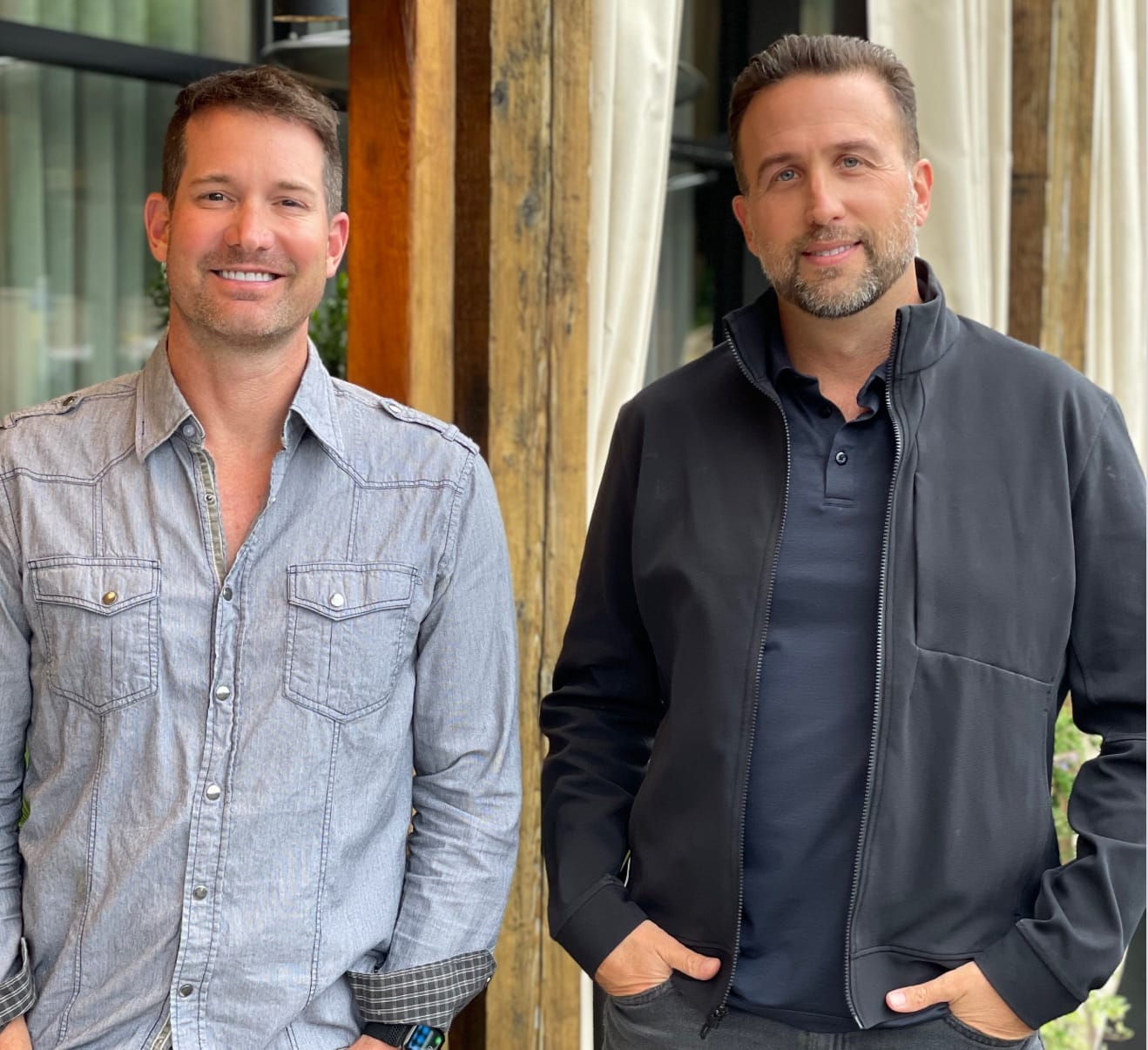
Million Dollar Clear Aligner Practice with Nick Greenfield of Candid
Learn more and apply for our 2022-2023 Mastermind NOW at BulletproofMastermind.com!
Bulletproof Dental Practice Podcast Episode 243
Hosts: Dr. Peter Boulden & Dr. Craig Spodak
Guest: Nick Greenfield of Candid Co.
Key Takeaways:
Introduction
Candid And Its Benefit To The Dentist
Orthodontics
Chair Time Reduction
References:
Bulletproof Summit www.bulletproofsummit.com
Mighty Networks: Bulletproof Dental Practice
Nick Greenfield’s email address: nick@candidco.com
Tweetables:
Technology has revolutionized the way you do your craft. Dr. Craig Spodak
Orthodontics is a service. Nick Greenfield
Crowded teeth is not cosmetic. Dr. Craig Spodak
Full Episode Transcript
Below is the complete transcript of this episode of the Bulletproof Dental Practice podcast. Prefer to listen? Find us on Apple Podcasts, Spotify, and YouTube.
Read the full transcript
The following transcription was from the Bulletproof Youtube channel. Here is the https://four.libsyn.com/destinations/preview-player/item_id/23082674/height/360/width/480/thumbnail/true/theme/standard
Peter Boulden
0:00:00
♪ This time baby I'll be playing through ♪ ♪ This time baby I'll be playing through ♪ Hey, so I'm excited today
Craig Spodak
0:00:09
because we got Nick Greenfield on. Hey Nick.
Craig Spodak
0:00:12
CEO of Candid. Good afternoon, Pavel.
Craig Spodak
0:00:16
Thanks for having me.
Craig Spodak
0:00:18
Good to have you here.
Nick Greenfield
0:00:19
Nick, before we get started,
Peter Boulden
0:00:20
Peter doesn't know your background,
Craig Spodak
0:00:22
the listeners don't know your background. It's a cool background. Tell us how you came to find yourself in the driver's seat of the premier direct, I'm sorry, Clear Atlantic Company. I was about to say something wrong, but.
Craig Spodak
0:00:38
Yeah, you were about to.
Craig Spodak
0:00:39
I was about to, but I wasn't gonna.
Nick Greenfield
0:00:40
You're about to throw us under the bus of our.
Craig Spodak
0:00:43
No, I was not.
Nick Greenfield
0:00:44
Never laughs in the direct to consumer industry. So I started my career in the startup world and I graduated college, went to a company called Zimride and we ended up launching Lyft out of Zimride, which for me was an incredible opportunity to go through this tremendous growth and many of you maybe have watched Super Pumped. Yeah, I've been loving that. Front and center, like I was the 12th employee at Zimride and one of the first few people working on Lyft as we were spinning it out.
Peter Boulden
0:01:16
Was that pretty accurate?
Craig Spodak
0:01:17
Sorry, was the show pretty like how it was?
Nick Greenfield
0:01:22
I would say there were elements. I think Travis is probably portrayed unfairly. He is brilliant and obviously he's got some elements that are unsavory, but he was incredibly strategic in the way that he was doing things.
Craig Spodak
0:01:39
And Ruth Living.
Peter Boulden
0:01:40
What a great show. So, sorry Nick, I didn't mean to derail you.
Craig Spodak
0:01:43
I want to watch the show.
Craig Spodak
0:01:44
What's the show on? It's on Apple, right, Nick?
Nick Greenfield
0:01:48
Showtime, I think.
Craig Spodak
0:01:48
Showtime, okay. And what's it called, I'm sorry?
Peter Boulden
0:01:50
Super Pumped.
Peter Boulden
0:01:51
Super Pumped.
Craig Spodak
0:01:52
Okay, got it.
Craig Spodak
0:01:53
Nick, keep going with your intro. I just wanted to chime in, because that's actually one series that I've actually watched all the way through, it's really good.
Peter Boulden
0:02:02
So, all right.
Nick Greenfield
0:02:03
Yeah, so I got to go through that whole, you know, Uber versus Lyft crazy battle, and I left in the middle, and ended up working at a couple other startups, and after the last company I worked at sold to Capital One in 2016, started working on Candid. And Candid, you know, the original idea was to build a business geared around high quality outcomes for patients, but making things more accessible and affordable. And it turns out, you know, over five years later, that's exactly what we're still trying to do. But we started our, call it angle of attack in the direct to consumer space because we thought we had an advantage there. And we learned over the last five years that Candid ultimately would be a much better product and service when sold exclusively through the dentist. And so after four and a half years, last fall, we pivoted the company, we cut our entire direct to consumer business, and we took all of the work that we had done over that four and a half, five year period, and have brought it inside the dental practice to help dentists more effectively increase accessibility and affordability to clear aligners for their patients, but not necessarily needing to know all of the deep ins and outs of the clinical because we have a high quality bench of orthodontists who help with treatment planning and overseeing the case. So that's the background, and then I've also worked in other startups, helped other friends get companies off the ground. I lived with the first four of the first 20 guys from Snapchat when I lived in L.A., so I've lived in kind of this startup world.
Peter Boulden
0:03:38
You like that startup grind, huh? That's cool.
Craig Spodak
0:03:41
That's awesome.
Peter Boulden
0:03:42
Craig, since I know pretty much nothing about orthodontics or movements of teeth and that's the space you live, I know that you are a big fan of Canada and I know you use it in your practice. So Nick, what problem, when you said you were kind of going to market, like what problem were you solving based on what was already in the market space? I know you said you started with direct to consumer, but then you pivoted. So like, what is still the ethos of?
Nick Greenfield
0:04:10
We started with the patient and the needs of the patient and the fact that the patient was generally underserved by the offerings in the market today. If you think about the average American making $50,000 a year, right? Household income, accessibility to orthodontics, you know, 60% of US counties don't even have an orthodontist. General dentists-
Peter Boulden
0:04:35
No way.
Craig Spodak
0:04:36
Oh yeah.
Nick Greenfield
0:04:37
It's pretty wild. 90% of general dentists don't feel comfortable starting clear aligner cases, let alone, you know, traditional ortho, where they do, you know, one clear aligner case or fewer per month, which means that you have this market where you have a $5,000 price point product. And when I was actually at Capital One, we saw that after a home equity line of credit and home improvement, the number two thing that parents would pay for and that people would actually pay for for themselves was orthodontics. So you have this incredibly expensive product when people get access to credit, it's the first thing they wanna do, generally being underserved by general dentists who don't feel comfortable doing it, orthodontists either not there or pricing things out of the market. And if you work, especially if you're, you know, an average middle-class or even upper middle-class American who's working, you know, nine to seven or working two jobs, you can't get in and out for office business. So that was our original observation. And in fact, Candid, when we started in the direct-to-consumer space, that was the patient base that we were hoping to go after. And today with our candid pro model, we're going after that exact same patient base, but we're doing it through the dentist where you still have, you know, a couple of hundred million Americans every year going and visiting their general dentist. They're all interested in straightening their teeth, right? 75% plus of those patients have some type of malocclusion, but they're not being served, whether it's price point, whether it's having to come back into the office dozens of times for orthodontic visits, whether it's feeling uncomfortable that they're being, you know, they're doing something that may or may not get them a good result, especially with a non-expert who's doing it. So I think all of these elements, that's where we started on the patient and we've worked our way now up to the clinician.
Craig Spodak
0:06:22
Yeah, I think the number one reason at the clinician level, why most GPs are not doing orthodontics is they're just frankly scared to move teeth. And I always tell people, it's like, I'm a pilot as well. So there's an aviation saying, it says you start off in aviation, I suppose the same thing as in dentistry. You wind up with an empty bag of experience and a full bag of luck. And the goal is to fill your bag of experience before your bag of luck runs out. And as a guy who's done thousands of cases, Clarolina cases, I remember those first 20, 30, 40. And it was scary. And frankly speaking, our dental schools are not making it any better. We're, you know, I always lament that at where I went to school, the barometer for whether or not I could be taught orthodontics is whether or not I could bend my knee in wire and have it lay flat on a glass block. So I was not fit to learn about how to move teeth unless I could bend out my name and wire. And along comes you know digital orthodontics and now it's like it's almost like you know when you're an architect you needed to be able to draft and draw. Now there's no architect out there that is drafting and drawing using Revit and AutoCAD and all these great programs because it's the technologies revolutionized the way in which you do your craft. Same thing in clear aligners. So you have the technology coming in and having a trusted partner like with Candid where it actually enables you to surmount that fear. And what I love about what y'all are doing is you're like the orthodontic partner. So for those people that are nervous to move them or they don't wanna have all the nuances of the intricacies of moving the teeth, you have an actual orthodontist that designs the case for you, correct Nick?
Craig Spodak
0:08:07
I'm not mistaken.
Nick Greenfield
0:08:07
That's right. Yeah, so our goal is orthodontics as a service, which is, if you could imagine, if you're a general dentist, but you could have an orthodontist in your practice five days a week, maybe work four days a week, because you listened to Bulletproof and you figured out how to run your business, right? But you're in there four days a week, and you want to have an orthodontist there by your side, we use telehealth to connect the general dentist and orthodontist together, so that you have someone doing the treatment planning, helping oversee and monitor the cases, helping you think about case selection. What is the right type of case to do with a clear aligner in your office? And then maybe what is the right type of case to send to the orthodontist down the street? Because there's a level of complexity that as a general dentist, you still don't want to, you don't feel comfortable with, and we help with all of that.
Craig Spodak
0:08:54
So I have questions, but I actually said I knew nothing, but I probably did 50 cases of Invisalign in my career.
Peter Boulden
0:08:59
Did you really?
Peter Boulden
0:09:00
Yeah, yeah.
Peter Boulden
0:09:01
Back in the day?
Peter Boulden
0:09:02
Oh, back in the day. I didn't realize that Invisalign was around in the 1970s. I mean, I got certified back when it first came,
Craig Spodak
0:09:06
when it first came on the market, I mean, I got certified. And in full disclosure, Nick hasn't practiced dentistry in quite a while. Okay. That's not good, though. That's not exactly true, but anyway. No, I wasn't doing a dig. I'm proud of you. You're the one who's inspired me to be less clinical too, by the way.
Craig Spodak
0:09:21
So thank you for that.
Peter Boulden
0:09:22
Nick, my question, so do you guys offer?
Craig Spodak
0:09:25
You're just getting mad.
Peter Boulden
0:09:26
No, I'm not getting mad at all. I'm not getting mad. I'm gonna lose my train of thought. You said orthodontics as a service, right? Do you charge for that?
Nick Greenfield
0:09:34
Everything that we do is fully included in our. I love this.
Craig Spodak
0:09:38
Here's why I love this.
Peter Boulden
0:09:39
From a guy who didn't do many cases. Well, let me tell you.
Craig Spodak
0:09:41
No, no, no. Wait. There's more.
Peter Boulden
0:09:44
Stop talking, Craig.
Craig Spodak
0:09:45
There's more.
Craig Spodak
0:09:46
Stop talking. Stop talking.
Peter Boulden
0:09:48
There's more, though. I want you to hear one part. No. I don't want to put a pin in this and you don't get to hear it. Okay. No, no. Keep going, but I want to tell you what's cool about this.
Craig Spodak
0:09:55
All right. I'm going to tell you what's cool about it from someone who doesn't do it all the time and I think I would be the target market as a dentist for a company like Candid is that I would look at… I would do a case, go through the ClinCheck, let's just call it, and I would say, oh man, this is complicated. I've gone through the training, but I need some hand-holding, but guess what? They're going to charge me for this hand-holding, which then is going to eat into already what feels to be an expensive lab case, and my time is not going to be worth on this. So maybe I can just kind of grind through, and I can maybe get some help from my friends, but I never paid for that hand-holding service when I probably should have or could have So I love that you're not you're not making it this if if or you know if this then this it's like It's you'd make it as a service to help and and hold hands with the dentist to remove that fear barrier of Am I doing this right? Right? Yeah, I love that add something to okay, come on Craig Come on, add it on to the other part of it is like, listen, in an office like ours, we've built over like a decade or more, like a system of support for clear aligners. So assistants are trained. We have it. We have tech support within our office because the other part is not only do you not feel comfortable doing the actual case, but then how do I fit this new business add on to my own, my ecosystem? How do I get these people in? What if they lose, you know, one of their trays? How do I deal with all this stuff? So it's great about, this is what I wanted to tell you, why you'd really like it, because Candid actually provides all that back-end support. So if you're breaking a line or losing a line, is that correct, Nick? You call them and you can get a replacement. You're not talking to Diane at your front desk, who's like, you know, it's like, one of the reasons why I don't like to sell toothbrushes in my office, because when the thing breaks, you're having to call Sonicare or Oral-B or whatever.
Peter Boulden
0:11:36
You're the intermediary, right?
Craig Spodak
0:11:37
You're the intermediary.
Peter Boulden
0:11:38
Yeah, it's horrible, horrible.
Peter Boulden
0:11:40
Never be the intermediary.
Nick Greenfield
0:11:41
We've gone and we've said, okay, what's broken with this experience? And why is it that 90% of general dentists, even though two thirds of those have gone through expensive, time-consuming clear liner treatment with one of our competitors, why doesn't it work? And it's things like that, right? It's the fear of moving teeth, it's the lack of clinical confidence, that's one part of it. But then there's just so much headache. And once you get 20, 30 active cases going, as you know, Craig, you guys have hundreds of cases going at one time, just managing that volume and that caseload gets hard. So we want to take all of that.
Peter Boulden
0:12:15
I love this.
Nick Greenfield
0:12:16
Technology and telehealth to enable you to be a much more successful, much more efficient.
Peter Boulden
0:12:22
And efficient, efficient. I knew you were about to say that honestly, because that was also a pain point is like, all right, I'm getting the teeth moved, but I know, like, if you put Craig and I, Craig's treatment plan would look quite different than mine in the clear aligner, and he's probably way more efficient because he's doing it all the time. So I always knew, like, I was like, I bet there's a more efficient way to expedite this treatment, but I just don't know how. I don't have the know-how because I don't do it all the time. And so I love that you said that, the efficiency of it, because that's the benefit of the patient and the doctor because it's it's valuable chair time and valuable travel time for the patient. Okay stop what you're doing the Bulletproof Summit is coming at you June 3rd and 4th at the Grand Hyatt in Nashville. The Grand Hyatt is located in the Gulch which as most of you know is the best area of NashVegas. So we'll be featuring new never-done-before Bulletproof tracks for doctors, team, and hygienists. There's going to be some VIP tickets available. But book by May 2, and you can receive some group discounts
Peter Boulden
0:13:22
for your team.
Peter Boulden
0:13:23
Prices will also go up for the last 50 tickets. And tickets are already half gone for this event, and it will sell out like all previous years. This is the biggest no-brainer in dentistry. If you want to elevate yourself, your team, and your practice, check it out. Bulletproofsummit.com. See you there.
Craig Spodak
0:13:41
Peter, one of the things that you and I always talk about, Nick this is important I'm happy you're hearing this, is that Peter and I will talk when someone's really busy, when a dentist is booked out three, four, six weeks, whatever, and you do one of your pre-exams and someone comes in with work that needs to be done, we've all admitted that when we're super booked up and we can't see someone, we won't actually tell them what they need is we won't be as as forthright with them. You're not laying the context down as well Craig I think for Nick to understand. Yeah go ahead and say what we said when we asked. So like Nick when a dentist is let's put this in the solo practitioners they think that's the market in which right right when when when they are overwhelmed and a lot of dentists are overwhelmed and really busy right now by the grace of God there's been tons of you know there's been tons of fluidity in the market and most dentists we know are really busy. So what happens in the dentist psychology is like oh my gosh I'm booking two and three months out. So what happens is you go into a room knowing that if you recommend the crown that Mrs. Jones is more than likely going to say yes to you don't have the space to put her. So you say let's just watch this and you start under diagnosing for a lack of availability in your schedule. That make sense Nick? Okay, so Craig proceed. Yes, so thank you for that Peter. So what's happening is people since people don't understand how to unravel the teeth and get the bite healthy, they're doing the same thing they're not addressing it. And I always tell people you know when you see a person, well I always tell dentists this, when you see a person they have no decay and no periodontal disease but their teeth are crowded and they have what's considered age inappropriate wear. Because it's having an exaggerated curve of speed and the lowers are sticking really far up and almost hitting the back of the you know the upper papilla and you see that you have this 28 year old you know man or woman and their teeth have lost a millimeter or two of wear. We are not as a profession telling them about what's going on because we don't know how to fix it we don't want to lose them and we're doing a disservice to them because they need to know if you have something that's going on in a patient's if you know about something that's going on in a patient's, if you know about something that's going on in a patient's mouth and you don't describe it to them, it's really, it's not taking the very best care of a patient. So I think a lot of that is going on, where like to your point, Peter, you didn't know the logistics of how to do it, you physically didn't know how to move the teeth, you're like, screw it, I'm not talking about this. And occlusion, occlusion's a lot like high blood pressure, because it's not pathologic in and of itself,
Peter Boulden
0:16:03
It's an underlying systemic problem.
Craig Spodak
0:16:05
It's an underlying systemic problem.
Craig Spodak
0:16:06
There you go.
Craig Spodak
0:16:07
So when you have decay, you can say, Mrs. Jones, you've got to take decay. If you don't see me in one or two or three months, that turns into root canal, root canal turns into crown,
Craig Spodak
0:16:15
crown turns into hemploid.
Peter Boulden
0:16:16
Decay is very binary, right?
Peter Boulden
0:16:17
It's there or it's not.
Craig Spodak
0:16:18
Yeah, but occlusion is, yeah.
Peter Boulden
0:16:19
You're like, I don't worry about it.
Craig Spodak
0:16:21
So I meet tons of patients, I tell them about their occlusion and I start talking about their where, and they're like, no one has ever talked to me about this, no one. So we are leaving as a profession, a gaping area of disease that's just slower progressing. That's the only difference between decay and bad occlusion. One is fast, like, you know, chest pain and heart attack, and the other one's slow, high cholesterol, heart attack. But it's important to tell people what their long-term effects of malocclusion are. It's really important. So they're not fully healthy just because they don't have decay or periodontal disease.
Craig Spodak
0:16:57
Sorry, that was a long one.
Nick Greenfield
0:16:58
I can't tell you the number of friends that I have who come and tell me, oh yeah, my dentist just prescribed the night guard because I'm grinding.
Peter Boulden
0:17:06
Right, right.
Nick Greenfield
0:17:07
Right? That's, and that's exactly the, and then I say, oh, well, did you do orthodontics growing up? And most of them say yes. And did you wear your retainer? And everyone says no. And you kind of start going down that path.
Craig Spodak
0:17:20
But Nick, they think of it as cosmetic. So people think of crowded teeth as cosmetic. It is not cosmetic. A fully healthy mouth means free of disease and free of excessive or inappropriate dysfunction. It's dysfunctional, it's not functional. So it's just that the timeline is longer. But it is a very complex thing to have to be able to explain and conceptualize to the patient, much less, right, the dentist has to understand it, and then you have to be able to communicate that in a way that the patient asks, I want to fix that.
Peter Boulden
0:17:51
Whatever you just said, it's problem-solution, right?
Craig Spodak
0:17:54
So what happens, you know how I have that little associate test in my office? So I have this test where when I'm bringing in a new associate, I give them three or four patients, I have them say what they see. And invariably the dentist will see, you know, the crowded teeth and said, well, I'll ask them if their crowded teeth bother them. And if they bother them, maybe I'll suggest using clear aligners. I'm like, well, what about, they're 23 years old, I tell them the age. I'm like, look at the wear patterns. Let's say their crowded teeth don't bother them, would you say anything at that point? They said, no, I wouldn't. So I was like, when, at what point would you say something? Because teeth are pyramidal shape for those that are watching, you know, when you wear them, they get thick at the top. When you wear the top off, the teeth get really thick, buccal-lingually. So I'm like, at what point would you tell them that this is a problem? So it's interesting to see, it's like, by the time they would be willing to tell them they have a problem, they'd be in an FMR.
Peter Boulden
0:18:49
At what point in the wear cycle do you tell them?
Craig Spodak
0:18:51
At what point does the crowding and the wear is time. So what dentists are looking at, and unfortunately this is very prevalent in our profession, what general dentists are looking at is they're looking for a disease today and no conversation about what's happening five, 10, 15 years down the road. Same thing in medicine, Peter. That's why you're hunting out these really high level, Peter's like a biohacker, does all this sort of like cool testing and wants to know things before they start to happen. Because medicine is just focusing on getting you un-sick. And frankly speaking, if you go to the dentist and you have no decay and no disease, no periodontal disease, but your teeth are worn to shit and you're 29 years old, chances are no one's gonna talk to you about that. Yes. They'll give you a night guard and say, we'll have a $70,000 FMR when you're 40. And for me, the best dentistry is no dentistry. I would rather an ounce of cure, you know, or a pound of cure than a, what's the name? Ounce of prevention is worth a pound of cure.
Craig Spodak
0:19:46
Thank you.
Craig Spodak
0:19:47
You're welcome.
Nick Greenfield
0:19:48
So, did you learn this in dental school?
Peter Boulden
0:19:50
No. No.
Craig Spodak
0:19:51
No, I didn't. I didn't.
Peter Boulden
0:19:54
He had a smallish face when he said that. He knew the answer to that question.
Craig Spodak
0:19:57
No, but it's-
Craig Spodak
0:19:58
Nick, you did.
Craig Spodak
0:19:59
But why is it that we're not being taught that? Because it's complex as hell. No it's not. It's actually not complex. Hey did you know that when your teeth when you chew you don't chew like an alligator you chew like a cow and they go kind of side to side. You're a mammal so your teeth slide against each other. Hey look at your teeth look at those photos you see how that number 24 is really thick. The understanding of it is not hard you're right Craig. But the deployment of a solution and conversation is the hard part. That's the hard part. The conversation is easy. I could train anyone in any office to know how to have that conversation. It's just, what do I do? Now they're ready to go. It's like the person who's booked three months in advance. Okay, doc, I want to do the crown. You said it's a problem. What do you mean? You can't get me in for three months? I got to go somewhere else. So it's the fixing or the solution that I think is in the heads of the dentist. It's not the conversation. Hey, Nick, why don't you just jump off, go do something else, and Peter and I will have the conversation. This is great.
Peter Boulden
0:20:59
He's waiting to see what other magic tricks we do, Craig.
Craig Spodak
0:21:02
I'm kidding.
Nick Greenfield
0:21:04
This is the entire premise of the business that we have built with Candid Pro is that dentists fundamentally, this is something that the profession should know and understand, and those conversations should be happening with patients because we should be using orthodontics for preventative long-term health, and it's not happening.
Peter Boulden
0:21:27
What's the price point, Nick,
Craig Spodak
0:21:29
for the service you guys provide?
Nick Greenfield
0:21:31
It varies, I'm sure, by caseload, right?
Peter Boulden
0:21:34
Yes, it varies by caseload.
Nick Greenfield
0:21:35
It's less expensive than the incumbents, but generally call it in the range of 1,000 to 1,400 somewhere in the ballpark. And then the average dentist we're seeing is charging anywhere between $29.95 on the low end and $4,500 or $5,000 on the high end, depending on how it falls within a broader treatment plan. We see a lot of dentists putting this as part of a broader treatment plan.
Craig Spodak
0:22:04
Yes.
Nick Greenfield
0:22:05
So not just using aligners, it's exactly what you're talking about. It's okay, we need to create space because we want to place an implant or we're using this as part of an airway protocol because we're doing, you know, we're doing some sort of-
Craig Spodak
0:22:17
Or, or, or that front-
Peter Boulden
0:22:18
Pre-treatment for veneers or something.
Craig Spodak
0:22:20
Right, or that front bonding that I do is chipping every other month now because the bite's so deep. You know, if you want that body to last at the picture by first you know I'm the lesson that over by the the hand holding you know that's what you're not gonna you're not calling hand holding with an orthodontist but I'm gonna call that is a game changer in my opinion at such that's a genius thing and then you're adding it you're adding it on as a service to the dentist not like hey we're gonna you know if you need is going to charge you five dollars or saying it were here if you need is kinda thing and I love that because it takes the fear out of the process. And honestly, if I had had that as someone to kind of mentor through some of the cases, you could say, is this the most efficient pathway? Cool, yes, it is. Or no, it's not. Let's modify the last trace set up with blah, blah, blah. Right, and then you have the power to do that. That just would have been such a game changer. So I love this. But also the logistical crop too. Once you get going and you're a line of practice and you start doing, you know, 50, 100 cases a year, the logistical challenge comes to bite you in the ass too. Because now your practice is over, your admin team is overwhelmed with like Becky lost her liner. You have to order one and like, you know, the visits.
Peter Boulden
0:23:30
Well, what's the solution here?
Craig Spodak
0:23:32
Well, they have a monitoring system. Talk about that Nick.
Nick Greenfield
0:23:34
Yeah, so this is what I like to point out is orthodontics is four dimensional, right? It's obviously you're moving teeth in three dimensions, but then it takes a year. And when you're dealing with things in four dimensions, you have to have technology and solutions that take the time out of actually having to monitor and manage that. And so what we've built is an entire remote monitoring solution, the Candid app, which allows patients to take scans at home of their teeth. And then they'll take those scans every two weeks.
Peter Boulden
0:24:03
Like with their iPhone?
Nick Greenfield
0:24:05
With their iPhone, yeah.
Peter Boulden
0:24:05
No way.
Craig Spodak
0:24:07
Yeah, that's badass.
Peter Boulden
0:24:08
That's cool as hell.
Nick Greenfield
0:24:09
Yeah, as long as they're progressing through treatment, then you don't have to bring them back. Now, most of our partners will bring the patient back probably six month hygiene visit, sometimes at three months to kind of do that work. And then if there's an issue, you'll bring them back. Now, what we've done, not only is take the technology layer, but we have built the case management team internally at Candid to help you not have to do that. So if there's an issue and something comes up, we track all of the cases, we flag that to you. So on a weekly basis, you're getting a report from the Candid team on what's happening with every single one of those patients. And just as Craig mentioned, if you're doing 100 cases at a time, your practice is going to be overloaded with lost aligner, concerns, I have this thing happening, my aligner broke, what do I do? And so we try to offload all of that via the app, right? Exactly.
Peter Boulden
0:25:05
Exactly. So question on that. So what's really cool, I do see the screen going, correct. is that you, what am I trying to say? It's a vicarious translation of the technology for that office. So bear with me for a second. For the offices that don't seem high tech, all of a sudden now vicariously they are really cool and technology advanced to the patient facing consumer. So look at my dental office, right?
Craig Spodak
0:25:31
They don't, they differentiate. Look at my dental office. It has this app that I scan my teeth with. This office is high-tech. Exactly. And that is really neat from a marketing perspective and just the perception of being high-tech without having to pay for that. Well, you're hitching your wagon.
Peter Boulden
0:25:52
You're hitching your wagon. That's amazing.
Craig Spodak
0:25:55
I mean, look at how this happened too without naming names. We all thought that no one would ever want to have their dentistry done at home. And it was, it was clearly proven by a revenue standpoint. I can't speak to the efficacy and all that other stuff, but from a revenue standpoint, it was clearly proven that patients don't care as much as we thought, but they still do care. So there's no mid-level like to, to have to come to it. There's such a barrier of entry for orthodontics. I have to go on your schedule. I have to show up all the time, I can't take off of work, I don't wanna, I need tech support that's open beyond 5 p.m. So there's this mid-level space in the market where it's like, okay, I don't wanna do it on my own because I think that's just kind of crazy. But I don't want the full work, so I have to go in all the fricking time and go through all that rigmarole. So this is just such a neat place for a product to exist. So I just love that.
Nick Greenfield
0:26:52
Yeah, I think the chair time reduction is the other huge benefit here, which is by using technology, you no longer have to bring those patients in at the same interval. And so now you can choose three months, six months, I wanna do beginning of case and post-treatment records and that's it, right? Whatever fits your need, but relative to other solutions because they're being monitored at home and remotely, the dentistry is happening still inside the chair and in the practice, but the monitoring is happening remote. And that's a huge time saving because if you're booked out three months, there's no way you can, you know, you're gonna fit all.
Craig Spodak
0:27:26
Well, that's what happened for me during COVID. You know, we were seeing our aligner patients really frequently. And then when COVID came around, we started pushing them out now and realize that like, you know, it's the same level of treatment, same quality of treatment. And now we're not going back now that, you know.
Peter Boulden
0:27:40
And they prefer it, and you prefer it, right?
Craig Spodak
0:27:42
So like, everyone's winning in that technology. But having that technology to reassure them with that scanning, we're not using that routinely for all clear aligners, but that's just a game changer.
Peter Boulden
0:27:53
Nick, let me make sure I understood this, because you guys, if a patient loses a tray, you're saying, Craig, there's a burden when you have 50 to 100 cases going, let's just call it for the year, that the front business team gets tons of phone calls about X, Y, and Z, whatever it is, lost tray or something, something. You're saying, Nick, you guys become the proxy to the office by saying, hey, we'll ship you a tray directly to the patient?
Nick Greenfield
0:28:19
Anything non-clinical, we have nine to seven, Monday through Sunday, we have live chat support inside the Candid app. And if there's an issue of that nature, the patient can actually chat with us, have that conversation. And then if that patient, you know, wants to do something or they, for example, ask, hey, can I drink coffee while I'm wearing my liner? Instead of that phone call coming to the front desk, we handle all of that through live chat.
Craig Spodak
0:28:46
Same with like a lost tray, like a lost tray or a crack. Or a retainer. Awesome, I love it, I really do. I'm gonna introduce our ecosystem to it for sure because I think my docs don't even know about this. Yeah, I don't think so either, which would be great.
Craig Spodak
0:29:03
Yeah, it's really the easy button.
Craig Spodak
0:29:04
Look, for a guy like me, I spent so long, literally a decade or more of my life trying to figure out through through hitting my head against the wall, trying to figure out what goes right, what goes wrong, and building the infrastructure to do, you know, a couple hundred cases a year. And had this product been around, you know, 15, 20 years ago when I first started, I would have just scaled the heck out of it. Because look, you can focus on the dental part, and they focus on the rest. So imagine second locations. I mean, all you really need to do at that point when you're training and scaling up is just literally teach your team how to talk about the problem. So imagine how much more efficient. I mean, I can go, you know, when I spend time with a dentist, you know, for the day, when they get through the immersion program here through the mastermind, their clitoral enter cases go from like, you know, handfuls to hundreds, you know. So imagine if you didn't have to focus on all the other stuff.
Peter Boulden
0:30:05
Do you guys have a, so I'm guessing you guys get a lot of inbound traffic from patients who are looking for treatment. So I'm guessing you become also a referral source for the doctors that are in your network, in the Candid network, I'm guessing, right? Is that how?
Nick Greenfield
0:30:20
Yeah, one of the benefits of Candid is we have that consumer marketing and consumer sales experience. So just to give you like the high level on what that looks like. Yes, we have a doctor locator. We, you know, there's referrals that come in. We have a whole marketing strategy team that will work with your practice to help you with your marketing. And that will drive not only new Clearliner patients, but also new patients. We just helped a practice of the campaign. I think they did 15 new case starts on Clearliners, but they got three implant patients, right? And that was just kind of on the side that that was an additional.
Peter Boulden
0:30:55
The halo effect, right? Of getting someone in inbound to your office and identifying other problems.
Peter Boulden
0:31:00
That's awesome.
Nick Greenfield
0:31:01
That's exactly right. Yeah, and then I think the third part is case acceptance, which is how do you drive a high level of case acceptance? You know, in our studios and direct to consumer in New York, we had a 90% case acceptance rate. And that's, you know, it's world class. So how can we help train and teach you the things that we learned over the past five years? And we want to bring all of those different components to bear inside the practice, because if we can do that, then yeah, you can open a second location. You can open a third location. They only have to be open two days a week. And we want to help you really live your best life. And we think that orthodontics can be part of that. And we think we have.
Peter Boulden
0:31:38
And the access to treatment, like you're saying, if there's not that much chair time, is where I'm going from a business perspective. I'm looking at time and value and all these things. If there's not that much chair time or your help reducing the pain points for the dentist, then potentially they could lower the fee and then get more access to a wider group of people who might not be able to afford. Like you started kind of the podcast. And I think that's great. You cast a wider net because let's be honest, some incumbent cases, as you said, incumbent are $7,000. They're really expensive cases. And a lot of people can't afford that, right? So to be able to drop a price point and reach people from an orthodontic market at higher scale is amazing. That's great.
Craig Spodak
0:32:21
That's great.
Craig Spodak
0:32:22
Yeah.
Nick Greenfield
0:32:23
If you think about your office today, maybe you cover five of the 20 zip codes in your surrounding area because those 15 others can't afford that six or $7,000 price point. Well now all of a sudden you can, 10 more zip codes become available.
Peter Boulden
0:32:36
Yeah.
Nick Greenfield
0:32:37
Because you can attack it.
Craig Spodak
0:32:38
That's great. Hey, does Canada have its own financing kind of portal to help patients get financed? Are you guys working with people?
Nick Greenfield
0:32:46
We've partnered with a couple of folks and we're currently doing that. It's a hugely important part of this experience. Not only can you reduce your case fee, but can folks get started for $199 or $299 down.
Peter Boulden
0:33:00
But as a legal dentist, you don't want to front that fee for not getting that cash. If you guys could remove that from… I know you've removed a lot already, but if that came in pre-approved and they're already ready to go and you know Like the case has already been funded here doc. Here's a case for you like that'd be amazing Yeah, you know so we don't have to go through the approval process in our office. That'd be amazing But you know we all can dream can't we?
Craig Spodak
0:33:27
That's the goal. That's the goal. I love it. I love it
Peter Boulden
0:33:29
I love it
Peter Boulden
0:33:30
You actually are thinking about the pain points because so many companies honestly in dentistry are like here y'all deal with this. That's not our problem. And you're empathizing with the pain points of the dentist as well as the consumer. And for me, personally speaking, I love to see when companies do that. And I wanna see you thrive because that's what dentistry needs. We need help. It's hard to run the business, do the dentistry, all the things. And so whenever a company's like, hey,
Craig Spodak
0:33:56
tough job y'all got, but let us help a little bit.
Peter Boulden
0:33:59
I think that's what that is.
Craig Spodak
0:33:59
We as dentists, we wanna help. And you said something about vicarious halo effect on the technology. There's a halo effect about being able to provide that service. Now doctors feel good about, I mean, the packaging is slick. It just, it adds a whole level of credibility and marketing to you as a dentist when you hit your wagon to a company like that. I mean, the packaging is just like ridiculous. Like that's the first thing. I mean, I guess it comes from your direct to consumer roots because you didn't have the doctor rely upon. So you're like, we better blow these people out of the water when they get this box. So I just love the fact that you guys started as a direct to consumer, because I feel like the branding and packaging has to be even more on point because you're not resting upon the credibility of the doctor to back you up. So it's a cool story.
Nick Greenfield
0:34:45
Yeah, we had to take the approach of, an Apple or an Amazon, right? Like you're starting with the patient or starting with the customer. And now our customer is the dentist, but we still have all of that legacy. And we have all of that history of learning that we again can bring to bear and share. We're partners, right? So we wanna be great partners and help practices just learn and figure out those things. And packaging is a great example. It really makes a difference in terms of the expectation and the results of that patient and the buy-in, feeling like it's hefty and important.
Peter Boulden
0:35:16
Yeah, it's cool.
Craig Spodak
0:35:17
It's actually a really cool story. I think at one point you made like a joke to me about like being like a study in Harvard business or something, I don't know, you were kind of being tongue in cheek, but it is a neat chronology and it just shows how sometimes plans have to pivot and change, but looking back, it may actually be the very thing that got you guys to be super successful was this pathway. You know, like, cause it's a pivot, you know, you had to abandon a working business direct to consumer.
Nick Greenfield
0:35:46
We abandoned a lot of business, a lot, a lot of revenue to make this move. And it's absolutely the right move, right? This is the future of what things look like. 80% of our patients were telling us they'd rather start inside a dental practice. And it was the right move. And patients want that relationship with their dentist. It matters. It moves the needle. It drives trust and credibility. But what also drives trust and credibility is technology, high quality outcomes, minimizing the burden of having to come in and out. And that's exactly what the dentist wants. And it's exactly what the patient wants. And so technology is what bridges all of that together.
Craig Spodak
0:36:25
That's awesome.
Craig Spodak
0:36:26
This is very cool. I think of it very much like all the other professions that were analog and they've gone digital. I mean, once something goes digital, it never goes back. There's no architect that's 32 years old that's like, you know, I'm going to start drawing again, just because they're drawing, just more efficient, you know, kind of get out the slide rule again and all that stuff. It's just, it never goes back. So same thing. So I wonder, I mean, I speculate, I'm actually still surprised about the amount of metal that's still being used in orthodontics. It's amazing. You know, I've been around a long time and I had to deal with a lot of negative people that said, oh, it doesn't work. You can't use clear aligners. And, you know, I even have sometimes I'll post it before and after picture and some like local be like, that's not real. I'm like, come on, bro.
Craig Spodak
0:37:13
It's real.
Craig Spodak
0:37:13
That's cool.
Craig Spodak
0:37:14
Very cool.
Peter Boulden
0:37:15
No, it's awesome.
Craig Spodak
0:37:16
See, I told you, Pete.
Craig Spodak
0:37:17
I told you get into it.
Peter Boulden
0:37:18
I was excited.
Craig Spodak
0:37:18
Like orthodontics, I don't know about this stuff. I don't know about orthodontics. But Pete knows business. He knows dentistry. It's a technology, right? The vector can be any direction, right?
Nick Greenfield
0:37:30
This happens to be one of the coolest uses of interventional medicine that's out there today. Right, we're using AI and computer vision to make all of this possible. And, you know, hopefully we can apply this to cancer diagnostics or other things in the future. But, you know, orthodontics is a great place to start and being able to predict how teeth are gonna move and then actually measuring those using photos every two weeks is enormous data set.
Peter Boulden
0:37:59
Yeah, and you guys get more every day that goes on, your data set is just increasing. So it's getting smarter and better and smarter and better. As I mean, you know,
Craig Spodak
0:38:07
they're doing their own data sets and their own revisions. And so, and some of the other companies is like, Hey, send it out, tell us what you're seeing in the field and report back. They're seeing the field, they're seeing it live and they're capturing it with scanners again. That's super cool.
Nick Greenfield
0:38:22
Yeah. Our team went through a couple of thousand cases over the last couple weeks to just see different movements. We thought something was going to happen. How predictable can that be? And we just have this massive data set. We can write a query and boom, pull it down and look at it. And so we can just keep getting better and better and better.
Craig Spodak
0:38:39
That's so cool. That's awesome.
Peter Boulden
0:38:42
Love it. Love it. Well, Nick, so how does everybody get in touch
Craig Spodak
0:38:46
with Candid? Just candidco.com?
Nick Greenfield
0:38:49
Candidco.com or candidpro.com, which will take you directly to our provider site or feel free to email me directly. I'm the CEO. I'll direct you to the right place. I'm nick, N-I-C-K, at candidco.com and I'll make sure that you get the right person on our team to talk to. That's very generous of you, Nick.
Craig Spodak
0:39:09
Yeah, they have to mention Bulletproof to get Nick's VIP service though. That's awesome, buddy. Exactly, put it in the subject line.
Craig Spodak
0:39:17
That's right.
Craig Spodak
0:39:17
And so are you just North America, USA and Canada or talk to me about that? We're just USA today.
Peter Boulden
0:39:27
Okay, not Canada.
Nick Greenfield
0:39:28
Really, really focused on the market, the market where we are and live in. I think we have approval to be in Canada and in a couple other markets, but we're really trying to stay focused this year. So I would expect to see international coming shortly, but really want to lock in and make sure we get it right before we go global.
Craig Spodak
0:39:51
That's amazing. Very cool. Well, really appreciate what you're doing for dentistry. Really appreciate the fact that, you know, you see occlusion and as something that also needs to be treated and helping Dennis feel comfortable. Like Peter said, there's a lot of people that invent stuff and then leave it in our hands to execute and manage. And I love the fact that there's a company that's actually got our back and that helps us support patients, which is really cool. So that's awesome.
Peter Boulden
0:40:19
Thanks, Craig.
Nick Greenfield
0:40:19
Really happy to be on here. And this is awesome. And I think you guys hit the nail on the head in terms of the problem set here and what we're trying to do to solve it.
Peter Boulden
0:40:30
And you guys are a big sponsor for our summit, so if someone's listening to this and they wanna kinda get exposed, like obviously in Nashville in June would be a great place to do so, right?
Craig Spodak
0:40:41
Yeah, and I've got a clear liner track too, a candid track talking about how to implement to your practice, breakout track.
Peter Boulden
0:40:47
All right, everybody, thanks for tuning in All right, everybody, thanks for tuning in and we will see you next time.
Transcribed with Cockatoo
Blog














1+1=3 The Power Of Alignment and Delegation For You and Your OM with Erika Pusillo
, October 31, 2024


, June 15, 2023
, June 8, 2023
, May 31, 2023


Look at These 3 Stats if You’re Thinking of Going Out of Network with Teresa Duncan
, January 11, 2023
, December 28, 2022
Knowing What You Don’t Want with Judy Kay Mausolf of Culture Camp and Erika Pusillo
, November 30, 2022
Cabo This Week, Immersion Learning, Biggest Breakthroughs, Your Personal KPI is Net Worth
, November 2, 2022
, October 19, 2022

Business is not Productivity, Productivity is not Profitability with Chris Salierno
, September 22, 2021


3 Biggest Bottlenecks of an Entrepreneurial Dentist: PART 2 with Perrin DesPortes of TUSK Partners
, June 25, 2020
3 Biggest Bottlenecks of Being an Entrepreneurial Dentist: Part 1 with Perrin DesPortes