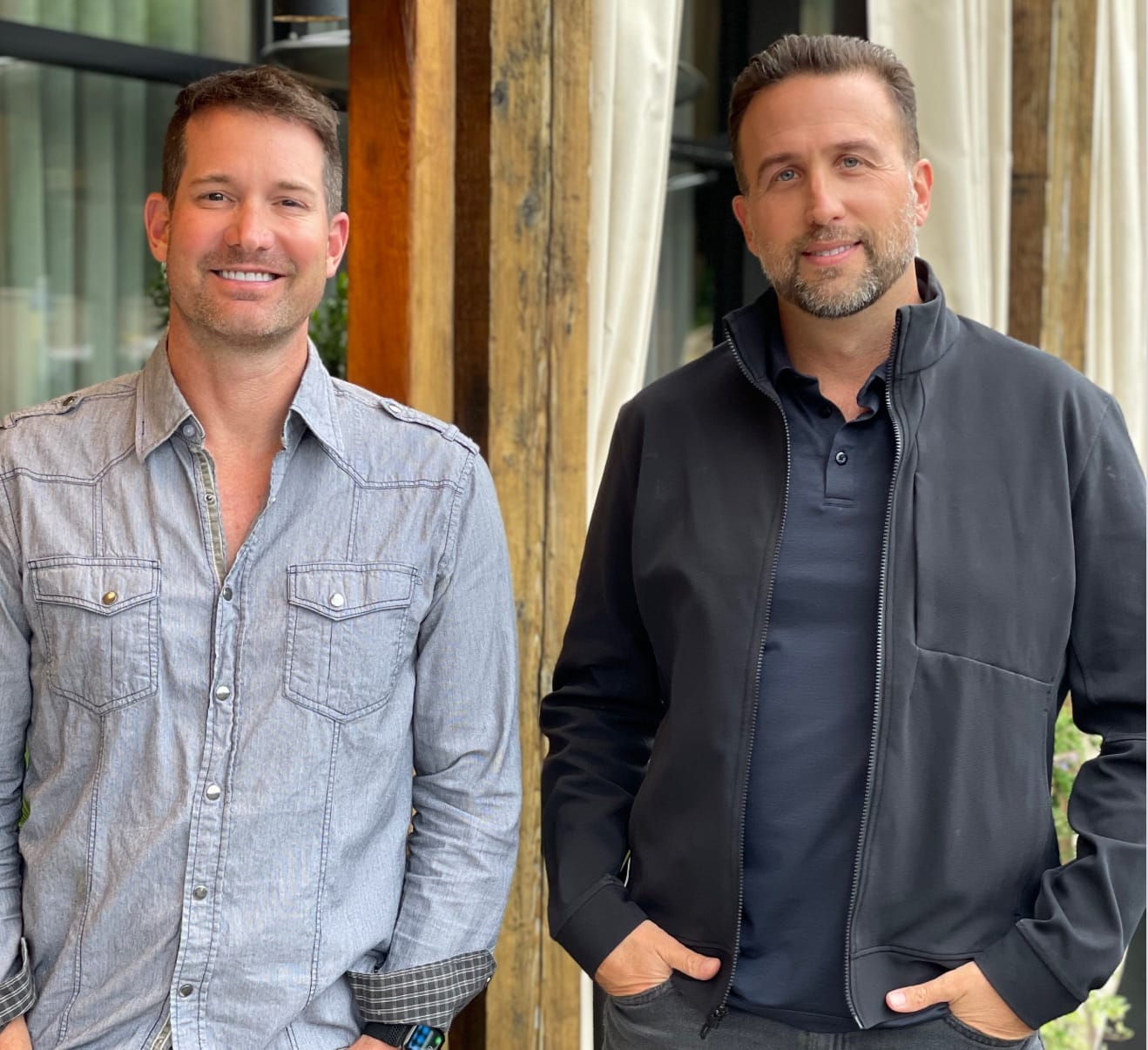
TUFF TALK: Working ON Your Business, Not IN Your Business with Randy Smith
Join our network at www.Bulletproof.Dental to stay in the know on all things Bulletproof!
Bulletproof Dental Practice Podcast Episode 226
Hosts: Chris Tuff
Key Takeaways:
Introduction
History Of Business
Get The Right Advisor, Accountant And Attorney
Working In And On Your Business
Money As Motivator
Mentorship/Shadowing
Family And Business Balance
Figure Out Your Trust Levels
References:
Mighty Networks: Bulletproof Dental Practice
Save Your Asks: Evolve Your Networking Currencies. Grow Your Influence. Triple Your Business.
Tweetables:
The right advisor, accountant and attorney can be the 10x or 50x difference over your career. Randy Smith
Network… find people 10-15 years older than you. Randy Smith
Full Episode Transcript
Below is the complete transcript of this episode of the Bulletproof Dental Practice podcast. Prefer to listen? Find us on Apple Podcasts, Spotify, and YouTube.
Read the full transcript
The following transcription was from the Bulletproof Youtube channel. Here is the https://www.youtube.com/watch?v=yqc6V8zRTlI
Randy Smith
0:00:00
♪ I'm down, nothing to lose, I don't play about me ♪ Craig Spodek and it was during the process of which I was putting together my most recent book, Save Your Asks.
Chris Tuff
0:00:12
And when I was asking Craig, I was like, hey, you know, do you think you can put me in touch with like Tony Robbins and a few others? He was like, no, you got to talk to this flooring guy, Randy. And I'm like, oh, give me a break, Craig. Like what's a flooring guy going to teach, you know, people out there about how to better network and sell? I'm like, all right. So I ended up interviewing Randy here and I even tell today, I say out of all of my interviews, Randy is one of my favorite ones because what he's been able to do with what I would describe as a very commoditized business has been phenomenal. And if Randy, I think there's a lot of takeaways for both small businesses, large businesses, medium-sized business, but especially dental practice owners that I think Randy can bring to today's conversation that will have a huge impact on your business. So thank you for joining us, Randy. Hopefully you are nice and warm down there in Florida and let's rock and roll.
Randy Smith
0:01:30
You're listening to Tough Talk,
Chris Tuff
0:01:32
where we dive into the world's greatest entrepreneurial stories with the purpose to inspire you to take your practice to the next level. Now, when you said you were interviewing like some of the most intriguing
Randy Smith
0:01:45
and inspiring entrepreneurs, I thought maybe we had somebody else on the show,
Randy Smith
0:01:48
but this is me you're talking about. That's you, Randy.
Chris Tuff
0:01:50
That's you, baby.
Randy Smith
0:01:51
Okay. So let's go way back. So, you know, why don't you first describe for listeners a little bit about your company, and then I want to go way back to how you got to where you are. But give us a little kind of rundown as to what Heritage is all about and what you've been able to accomplish
Chris Tuff
0:02:17
in the last couple of years.
Randy Smith
0:02:19
Sure, sure.
Randy Smith
0:02:20
And remember, Chris, I'm a big talker and I got a lot of words.
Chris Tuff
0:02:23
I know.
Randy Smith
0:02:24
I do it about 100,000 a day with Gus to 150. So shut me up when you need to, when you want to move on.
Chris Tuff
0:02:30
Okay.
Randy Smith
0:02:31
So, what I do now is I'm an entrepreneur who started a business in the flooring business, carpet and tile. And I started in 1983 at my dad's urging. He urged me to leave college, which I did after six months. And I got straight A's that first semester. So I'm really proud of that. And I moved to Florida and he lent me money and I started a business and then I lost all his money and then he joined me and we worked together for 38 years. And we built one of the biggest companies in the country doing flooring, with excessive $100 million a year in annual revenue. And it's really a construction business, labor material, et cetera. It's a commodity business and it's a service business. And I grew to love the business and we had the ups and downs. And then we ended with a really good exit selling to a private equity firm in the summer of 2019. And the way that story ends, if anybody's familiar with private equity, and some of your listeners may sell to private equity, is that means you get to work harder for less money. So for the last two and a half years, I have worked harder for less money. And I will tell you, I've enjoyed it more because I drive to work without any of the pressures of bank loans and economy and all that stuff, because everything's good no matter what happens. And so I just get to keep my customers happy and my employees happy and my installers happy all day long and keep everybody engaged.
Chris Tuff
0:04:03
I love it. I love it. And you know, we've had the privilege of having Randy on with our mastermind group and the feedback from that session, by the way, Randy, I don't know if anyone gave you it, was phenomenal. And I think there were a couple themes that came out of that because, you know, on paper you would look at your business and put it up against the dental practice and be like, I don't know, but there's actually quite a bit of similarity. And even if you look at some of the interaction that you and Craig have been able to have and the influence you all have had together on each other's business, talk a little bit about some of those pieces of advice along the way in both of your businesses that you feel like has been impactful. I know of two stories offhand, one of yours and one of his, but can you tell that story quickly or not so quickly? You can say as many words as you want, buddy.
Randy Smith
0:04:56
Yeah, yeah, yeah. So, first of all, I will tell you that I was fortunate enough in my career to get the right advisor, the right accountant, and the right attorney. And if you don't have those, or if you don't know you have the right ones, read up on it, figure it out and make sure you get them. Because the right advisor, attorney and accountant can be the difference in 10X or 50X over your career. And accountants have this great saying because we all as entrepreneurs walk in and say, our business is different and we try to explain it to them and their eyes glaze over and they go, the only people who think your businesses are different are our entrepreneurs. So my business is no different than a dental practice, right? I've got customers. I've got real estate I've got staff and I've got a customer experience I'm trying to deliver and if I do a good job, I get paid and if I do a really good job I get paid well, right and then one day we want to end up on a beach Maybe with an exit or kids in the business or whatever. So So anyway, so I think that that I'm right up there with a good dental practice or orthopedic practice or whatever. So which story particularly would you like me to tell?
Chris Tuff
0:06:07
I think it was a time when you went out to dinner with Craig and you guys were tackling an issue that you were working through with an investor and Craig helped you see the light.
18
0:06:21
Yeah, yeah, okay.
Randy Smith
0:06:22
So when Craig and I met 12 years ago, we were at a dinner with two other guys and they kind of thought Craig and I were dating by the end of the dinner. Because we were like finishing each other's stories. We had all these same interests and hobbies. We both are like really high energy, high octane people. And so we were just playing beat my story all night. And so we became good friends and we helped each other. Craig's a little younger than I am, so sometimes he calls me the mentor and he the mentee. But you don't give advice without learning something as you give it and as it gets acted on. So Craig and I have a great symbiotic relationship. I was going through a time where I had an investor in my business after going through a bad time. And he'd gotten all his money back and everything was good and it was time for me to buy him out. And we were wrestling over the price. And I was struggling with it. I didn't know what to do with it. And I was getting frustrated and this drug on for months and months. So I go to dinner with Craig one night and I'm telling him the whole story. And I'm like, the investor wants too much and this, that, and the other. And Craig breaks it down and he looks at me and goes, hey, Randy, didn't you see this guy came in at a bad time and really helped you and your family basically stay in business, save the company. Didn't he mentor you? Didn't he do all that? And I'm like, well, yeah. And he goes, and so now, now, 15 years later, you guys are haggling over a price, and but wasn't your relationship and what he did for you and then you've paid him back and he made a handsome profit. And you know, what wasn't it, wasn't it like an equal trade and I said well yeah it was so he said I think he doesn't feel appreciated and and when the words came out of his mouth I stood up from the table because I live at that point of time I was building a new house and I was living in an apartment on top of the downtown area of Delray so so anyway so my house is right there so I stood up from the tables, thanked him, said goodbye. I ran home, I grabbed the phone, I called my partner and I said, hey, I just gotta tell you something. I said, what you did for me and my family 15 years ago and what you've done as a friend and a mentor, cause we're friends also outside of business, is irreplaceable and I feel like I lost sight of the fact of that when we were negotiating dollars and cents. And so what I would like to do is pay you whatever you want because it's worth it. And let's do the paperwork tomorrow. So his attorney sent over the paperwork the next day at my number. I love it.
Chris Tuff
0:08:58
I love it.
Chris Tuff
0:09:00
You know, Randy, one of the-
Randy Smith
0:09:00
At my number, you got the picture there, right? Oh, totally. He just wanted to thank you. It's amazing, right? Yeah, so anyway, it was great. Well, so, you know, one of the things that I heard back in terms of the feedback of the different practice owners that were on the call with you, what was that, a couple months ago, was everyone keeps following up on this book that you actually recommended to me, Tax-Free Wealth. And I think even in that whole area of finance, and, you know, you said find the right CPA, find the right lawyer. Talk a little bit more about some of these systems and processes that you've learned through your journey that these practice owners probably may not be thinking about right now. I think tax-free wealth being a wonderful resource for a book for people to buy.
Chris Tuff
0:09:55
Talk a little bit more about that.
Randy Smith
0:09:57
Sure. So when you start in business, you just want the patient to walk in the door and you want to be able to do your work and you want to be able to make a profit and then eventually pay your rent, pay your staff, grow your business, all that kind of stuff. And then you'll read some books if you're inclined about how to grow your business and how to manage your business and how to build your business. And then at some point, somebody's going to tell you, you need to work on your business, not in your business. And that's where all entrepreneurs go, what? I was there till 11 o'clock last night finishing the books on December. Like, what do you mean I'm working in my business, not on my business? And the in your business part is what we do, right? We drill teeth, we sell flooring, we do whatever. The on your business is taking the macro view from 30,000 feet and making sure you have the right people, the right staff, you're in the right location, you've got the right marketing, you've got the right advertising, you've got the right products, you've got the right, you know, whatever. And then on top of that, you are an amateur in business. I mean, a lot of hotshots, I thought I was a hotshot, right? Not in an arrogant way, but I just, I was 25, 30 years old and I, you know, I thought I had figured out. But when you start working on your business and you start looking at it from the outside and then you get the advice of a great tax advisor and you get the advice of a great attorney, which you don't think you need, but you do. And whether it be a partnership agreements, the state plan, I mean, just goes on and on, right? A good business attorney that understands your situation. And then an advisor. And whenever I say advisor, people go, wait, wait, I got the accountant and I got the attorney part, but what's an advisor? The advisor, you'll know when you find them, it's the person who's been before you and been in your shoes and has all the war stories. And when they say something, you know the saying, the truth rings like a bell? That's your advisor, right? So I would encourage people to make friends, network, find people 10, 15 years older than you. The same industry is helpful because Tony Robbins has this great saying, success leaves clues. So if you're running a flooring business, find a flooring entrepreneur who's 20 years older than you and ask them for some time, they'll give it to you. And learn from their successes or failures or what have you because you learn equally from both, maybe more from the failures. So it ought to be easy to find a dental mentor, a dental practice mentor, and the attorney and accountant, you'll know when you find them. But you need those guys on your team, and then you'll start working on your business. And that's when you figure out that when you're in the business, you're doing a task and maybe paying yourself to do so and what have you, but you don't have leverage when you're working. When you're working on your business, that's where you can move a little wheel that has a massive result in the practice, right? That's when you can change your partnership so that it changes your tax situation by 17% or pay yourself a higher salary and hit your FICA at a certain point and then pay your dividends to another corporation where you can do distributions tax-free. I mean, there's just so much that can be done, but that same, say, tax strategy that maybe saves you 17% on your taxes, and maybe that's worth a hundred grand a year, you can't put in enough hours to make a hundred grand a year in the business. So it's important for people to delineate. When they walk through the door at 8 a.m. and they walk out at 5, that's your day job. Now let's look at it from the big picture with your advisors and make sure you're twisting all the right dolls to maximize the value, right? Whether it be owning your building and paying down debt over time, whether it be growing your practice and your patients and your associates or what have you. And then also having an end game in mind. I always knew that at some day I would liquidate my business, right? Cause that's, that's what we do. And, um, but I had that goal in mind 20 years earlier. So, so I was on a journey and I knew when I got there, but it wasn't a question mark.
Randy Smith
0:14:11
Yep.
Chris Tuff
0:14:11
Well, so I'm going to quote you from my new book, Savior Asks, and, uh, you may have heard this, me say, you say, say your words to me and how I basically described them in the book, but I said, you know what fires up Randy Smith? Flooring. Yes, flooring. And one of my favorite things about you, Randy, is one of the first things I asked you in the process of putting together this story, what motivates you? And you said, money. You know, money motivated is a wonderful thing because I don't think there's enough of it anymore. Talk a little bit about that. And also in that story, I'd love you to incorporate that time you went out to California to really shadow that mentor of yours and what that did for your business and how you started to replicate his life in your own as you pursued this, what I would call, Ruth's pursuit of money.
Chris Tuff
0:15:12
Yeah.
Randy Smith
0:15:13
God, it sounds so cheap the way you say it.
Chris Tuff
0:15:17
No, I'm kidding.
Chris Tuff
0:15:18
No, but it's not.
Chris Tuff
0:15:18
When you tell the story, it's so much better, Randy.
Randy Smith
0:15:22
So when I was a kid, I grew up and my dad was a successful home builder for a long time in California. So I was exposed to the finer things in life. And we had a nice house and nice vacations and we went to Europe every summer and all that stuff. And then by the time I was about 14, that all dried up. Home building market dried up. My dad was in and out of business and things just weren't good. And so I wanted to live a life of privilege. And I always wanted to get married and have kids, which I did in my early 20s, right? My kids, I was an empty nester and a grandfather when I was 48. And I wanted to buy my kids cars when they were 16. I wanted them to have Air Jordans or whatever they called them back then, maybe I think it was called Brooks. And I knew I needed money to do that, right? So it really wasn't the love of money, it was the love of stuff and lifestyle, right? And I meet so many young people today, including in my organization, that say, Randy, you're so different than me because you're money motivated and I'd rather have my time. I'd rather spend money on brunch with my friends on Sunday and have avocado toast. I don't need a house. And that kind of thing. And I always think it's cool that they put such a high balance on work-life balance. And I always had work-life balance as well. And I was still money motivated. But some of those people, in my opinion, are gonna get 10 years down the road and they're stuck at whatever that 80 or 100,000, of course today, maybe it's 120, whatever salary. And some people in life is gonna pass them by, and they're not gonna be able to do for their kids maybe what their parents did for them, and they're gonna wonder what happened. And what happened is they didn't put in the work, you know? And everybody in my company wants to figure out how to get to the C-suite, and the answer is, you know, climb the ladder. And they're like, okay, well, how do I go from rung one to 100? Well, it's gonna take time and work, right? So, when I was 21 years old, I had a Nissan Maxima with a little yellow sign in the back window and it didn't say baby on board. It said future millionaire on board. I love it. Future millionaire on board. And so, I was always money motivated, but in a good way, not in a bad way. And so, anyway, so I got into business and fortunately, because my father lent me money and helped me out. And after 10 years of struggling ups and downs, almost closing the business down, throwing that we even had a couple of weekends where we closed the business down on Friday and then we thought about it. Monday morning, we went back to work. I mean, that's how topsy-turvy it was. And I got to a point where my dad said, I had a friend in California who was my flooring contractor and he's really successful. And maybe you could go out and learn something from him. So I would give my dad full credit for this mentor idea. And the guy was a guy named Greg Kent and he used to be a Oakland Raider, he's a football player. And when he stopped playing football after his professional career, he bought a little carpet store in Northern California and he built this big business and made a lot of money doing it. And then he built a real estate empire. And I decided, okay, I'm going to go talk to that guy. So I called him and he remembered who I was because, you know, he coached my little league team, you know, I knew who the guy was. And not only did he offer to spend time with me, he offered to spend three days with me. And I would do that for anybody who called me today, by the way, right? So I went out and spent three days with him and he just peppered me with information the entire time. And I had notepads and I took copious notes, right? And he would say, it wasn't just like, he didn't just tell me big picture stories. He told me, so you get a three by five card and you put it in your front pocket. And so if you don't have a shirt with a front pocket, go buy new shirts that have a front pocket and then put the three by five card in there. And then when somebody calls you and asks you to do something, take out the three by five card and write down what they asked you to do. And then don't go home at night until you can scratch that off as done. Like literally this was a 60 year old guy worth a couple hundred million and he's telling me to buy shirts that can hold my three by five card. So I spent three days with him from the ground up learning about how he built his business and installation and what his day to day is and what he does day to day. And I got all fired up and I came back to Florida. And I walked in the door and I told my dad, I said, you know, everything's changing starting today. Everything's changing. And I basically mimic him and copied him right down to I bought a black Ford Explorer and a blue parka.
Chris Tuff
0:19:53
I love it.
Randy Smith
0:19:54
And I mean, windbreaker. And I got the shirts with the pockets and I had the note cards and I literally copied him. And one of the things he told me to do, he said, do you know your installers? And I said, no, I got a guy who runs the installers. He goes, you should know all of them and you should know their wife's name and their kid's name and if they have a pet. So I started going to job sites in the morning and meeting the installers and building a relationship with them. So they didn't feel like they were working for an unnamed person, but they were working for real people, not just the name on a door. And then employee relations and customer relations and on and on. I would say it was the most impactful 72 hours of my life. And not only did I come back and figure out that I was focusing on the wrong thing, I was focusing on making money. For 10 years, I focused on making money and it was elusive, right? It was like a dream where you can't really accomplish anything. And as soon as I said, forget making money, let's take care of the customers, let's take care of the employees, let's take care of the installers, let's make sure we're giving a great customer experience to everybody in the chain. And then suddenly that year I made money and I made money for 28 years after that, never lost money one month. Not only that, when the great financial crisis came, my business went from 50 million in revenue to nine and I still made 10% profit. I still made 10% profit after cutting it down 80%. So, and those were the life lessons I learned from that mentor. So I would highly, highly recommend if you don't have one, that's like being in a room trying to figure out who the bad poker player is and figuring out who's you.
Randy Smith
0:21:30
Totally, totally.
Chris Tuff
0:21:31
If you don't have a mentor, get one because you do not know it all. Well, and it's funny because one of my favorite conversations is with Craig Spodak, the afternoons after someone in the mastermind shadows him for the day, because that's one of the things that all the masterminders get. And I always know that it's going to be one of those massively impactful conversations, because he gets so fired up. He was like, Chris, guess what happened when whoever shadowed me today? I'm like, all right, tell me, like, cause I love it. And there's always these epiphanies that, that happen with the shadowing of people that were in your shoes, right, Randy? There's so many practice owners that, you know, they're either using one practice to then float the other, or they're trying to be all things to all people. And why I love Craig so much, and like you, is that at the end of the day, it comes down to what am I good at? What fulfills me? What do I need to outsource? And then how do I get myself a little bit out of the way, right, in this business? And then from that, how do I seek fulfillment? And all of our, we could talk about the most amazing tools and tactics that dentists love, but at the end of the day, what is most impactful is these stories of fulfillment that usually come from mentorships or shadowing or other pieces. And so I love that. You know, one of the other things that, when I tell, I'm starting to tell your story to a lot of people, and one of my other ones is using you as the example. I actually changed the way I networked. And I think I told you this the last time we talked, but one of the things you taught me in our interview was that the idea of the second that you walk into someone else's house or they walk into yours, if they are a prospect or a future customer, they will never fire you. And I think it was something along the lines that they'll give you a first chance, a first chance, a second chance, like a 90 second chance. But once that personal threshold has been, you know, passed they won't fire you. So you know what I started doing, Randy? Is I started actually doing all of my networking meetings at my house. And they're like, Chris, we're going to your house. I'm like, hell yeah, I'm gonna cater in lunch. We're gonna sit out on my patio and we're just going to connect. And it's amazing just that small tactic from taking from your story. Obviously your story is a little different in that you would have, I think future customers call you and be like, Hey, I'm having this issue in my daughter's room with the flooring. It's off balance, blah, blah, blah. And you would go over there yourself as the CEO of your business and help them. But I love that about you.
Randy Smith
0:24:23
And it's, it's still, it's still happens today, Chris. And it's kind of a joke in my office, right? I've got 1,200 employees. And when somebody calls and says, hey, my daughter needs something for my grandchild's room or whatever, I say, oh, what is it? What's the address? Whatever, and I'll get somebody over there to look at it. And then I'm the one who goes over and looks at it. I love it.
Chris Tuff
0:24:47
I love it, Ray. That is awesome.
Randy Smith
0:24:50
So I'm the one who goes over, meets the people, solves the problem, and they say, wait, you're Randy from Heritage? You know, it's that kind of thing. Now, obviously that doesn't work for every industry, right? Because you can't touch the customer that much. Sure. But if you think about the connection, you know, like one of the things that happens in Craig's practice, because I go there, my whole family goes there, what have you. What's amazing is nobody comes through the door and sits in there and gets their teeth cleaned or whatever without Dr. Spodak coming by and saying hello. My mother calls me and says, Craig comes in and says hello every time. He doesn't have to, but I don't think he lets a patient leave that office that he hasn't made a connection with. Now in my business, I drive over and I solve a problem in their personal home and they give me millions of business for 20 years. That's not how dental practices work. But that connection between one human and another, thanking them for their business, asking if they feel well served and all that kind of stuff. Craig does it all the time. In fact, every time one of my family members goes to his office, I get a picture of him having a selfie with my granddaughter or my mother. And it's that personal connection that takes him probably 20, 30 minutes a day. And it just, it yields this feeling that like, when I go to a family party and there's 12 of us and we all go to Craig, I'm friends with Craig. None of them are, they're just patients at Craig. Somehow Spodak Dental gets brought up and we start talking about it. And it's because of that customer experience that he gives that's second to none.
Chris Tuff
0:26:21
100%. The other story that-
Randy Smith
0:26:23
I used to tell him he's the Cleveland Clinic of Dentistry and now I realize that's not a correct comment. He's way better than Cleveland Clinic. I love it, I love it.
Chris Tuff
0:26:30
That's awesome. Well, so for those listening and kind of given your incredible experience and success, what else do you feel like has the most profound impact? I mean, what are some of the things that you feel like you've been able to impart on Craig along the way that has had a tangible impact on Spodek Dental. What do you feel like in terms of all of this stuff, right? Dentists love tactics. They love resources. What of those things do you feel like you can leave some of the listeners with today,
Chris Tuff
0:27:08
Randy?
Randy Smith
0:27:09
So, can we talk behind Craig's back?
Chris Tuff
0:27:13
Yeah, yeah, absolutely.
12
0:27:14
You'll never get this far.
Randy Smith
0:27:15
There's a reason he's not on this, Randy.
Randy Smith
0:27:16
You'll never get this far on the podcast.
Randy Smith
0:27:17
Yeah, yeah.
Chris Tuff
0:27:18
No, no.
Randy Smith
0:27:19
He's ADD.
Chris Tuff
0:27:20
Exactly.
Randy Smith
0:27:21
So anyway, when I met Craig, he had built a successful practice and he was involved in a bunch of civic stuff, right? He was on every board in Delray. He was political. He was busy five nights a week. He, he, and at the same time, he was building a new business, trying to expand his practice and all this. And I'm having dinner with him every couple of weeks and I'm figuring out and I'm hearing this and hearing that and things weren't always working good for him, right? And I said to him, I said, Craig, you know, there comes a time when you gotta put first things first. And you're not putting first things first. The first thing you've gotta do is increase your revenue, increase your patient count, increase your customer exposure, figure out the right advertising, and spend less time doing politics because you alienate half your patients, and spend less time doing community service because you can do that later in life when you've made the money after you've built your practice. And I felt like he was kind of putting the cart before the horse, right? And I'm certainly not advocating that somebody doesn't spend time doing charity and community service and all that, but he was out of balance. So he said, I agree, he got off all the boards. He was even traveling around the country to do speaking engagements for dental practices, and I'm saying, go back and work on your practice. And then when it's really, really good, then go out and show everybody what you know. And that was 12 years ago and he literally took off and ran with that. And so he was like my little Rubik's cube that I was just twisting to try to get all the colors on the right side. And it was really great. And guess what he does now? Plenty of charity, plenty of community service, plenty of whatever. But lining things up and making sure you're doing first things first are important. And if all of your practice owners made a list of what their five biggest issues were and then prioritize them in order of importance and just plan on getting each one scratched off the list in the next 30 days, they'd be in a whole different place six months from now. But a lot of times we have these things
Chris Tuff
0:29:30
that linger for years.
Randy Smith
0:29:32
God, I got to fire Bill. Bill's no good. Oh, but you know, I got to fire Bill. And then finally, two years later, you fire Bill and go, God, why didn't I fire Bill two years ago? Like, make a list of what your issues are and attack that list, right? First things first.
Chris Tuff
0:29:47
I love that. I love that. All right, here's my last question for you, Randy, unless you have anything else that you want to add on it. But one of my favorite exercises is to follow you on Instagram because I can live vicariously through your adventures on your sailboat. So, you know, as I describe you to others, somehow you've been able to create a work-life balance and one that even incorporates that blurred line of bringing family into your business. So can you just talk to, especially those practice owners that are struggling in that area? We hear a lot from some of these practice owners that they don't have that balance because so much of their time is spent at the practice and dealing with different things. How have you been able to retain that or have you lost it at times? But talk a little bit about that, Randy.
Randy Smith
0:30:42
Okay, so I'm glad you brought this up because that's a great point. A lot of people, you know, my kids, if you asked them, would say I'm the hardest worker they ever met. But it's not just work. It's my work, my play, my adventure, my travel, you know, with my wife of 25 years. And you've seen, you know, what it is that we do and all that stuff. But all the hard work came first and during. And what I realized is the first five or 10 years of building your business or your practice, we had a saying at Heritage, we got up to about 100 employees and there was a saying that said, all roads lead to Randy. All roads lead to Randy. I answered every question, I solved every problem. You know that term, who has the monkey? Every employee would walk in the door and put the monkey on my back and I would have to solve the problem, right? And what happened is at one point, we just came to a breaking point where I was miserable, I couldn't take any time off, whatever. This was like, we grew from like 10 million to 25 million in revenue. And I was just, if you talked to me, Chris, you would have thought my hair was on fire. I couldn't talk to a friend, I couldn't do anything, right? All roads lead to Randy. And so what we did is I just figured out a way to hire, recruit, train, and replace the bad eggs, and get the right people in place. And then I would empower them to help with, you know, for instance, like one of the things that happened, I owned the business, I owned the building. I was the first one there to turn the key in the morning. So I had to figure out who do I trust that can open and close? Cause you can't even go on vacation unless somebody can open and close, right? And so you start picking who those people are, whether it's your controller or your office manager, figure out who your trust level is, figure out, and then you play the game and it takes about a year or two. When anybody comes to you with a problem, you say, I don't know, how would you solve it? And usually they have the right answer. And even if they don't, usually it's in the right direction and then you just can adjust them a little bit. And as soon as I had people solving their own problems, the revolving door stopped at my door. And that's when I was able to start traveling and taking advantage of those great things that can happen when you're an entrepreneur. So I think it's cool that Elon Musk sleeps on the factory floor and all that, because he's trying to change the world. But I believe that if I can put in 40 hours or 50 hours and then travel 12 weeks a year and still check my email and keep things going, that I can have both. And for about 15 years, I've been traveling one week a month. Think about that.
Chris Tuff
0:33:23
Three months a year.
Chris Tuff
0:33:24
Wow.
Randy Smith
0:33:25
And for the last eight years, I've been traveling by sailboat, and I've sailed over 30,000 nautical miles. My wife and I sailed through the Caribbean, South America, through the Panama Canal, all the way up to San Francisco, California, and all the way back. And we sold that boat, and now we're building a new catamaran in South Africa in a beautiful town called Nysna. And we're gonna take delivery of that boat in November and then sail it back to the Caribbean. And then I'll spend the next two years sailing the Pacific and crossing the Pacific and all that. And I do all that while still running my business and my family and my grandkids. And so I'm at the helm of the business and I'm at the helm of my boat and I'm able to do both. And if anybody ever wants to call me and discuss and talk and just workshop or whatever, I am a pay it forward guy. I've had a really, really great opportunity. I love working, I love this country, I love the opportunities it provides. I like to help people. You can imagine I'm very charitable at this point in my career, and I love that more than anything. It's my greatest joy. And I'm the fundraising campaign manager for a charity called Warrior Sailing, where we do community outreach to injured and ill veterans through sailing. And anyway, so that's my story. I'm sticking with it.
Chris Tuff
0:34:46
I love it, Randy.
Chris Tuff
0:34:47
So what's the best way for people to live vicariously through your adventures on the sea? Well, we had a pretty popular YouTube channel
Randy Smith
0:34:56
for about four and a half years called Sailing SV Happy Together. So if anybody wants to see what I look like, go to YouTube and type Sailing SV Happy Together and you'll see I produced 84 videos. Once we got into the 60s and 70s, we got pretty good. I had a producer, I had an editor, and we were doing, you know, every two weeks launching a video, and we had several million views on YouTube. So when I go to the Annapolis sailboat show, I'm actually famous, and people take selfies
Chris Tuff
0:35:24
with us.
Randy Smith
0:35:25
That's hilarious. And when I walk outside of the show, nobody knows me. And then we have an Instagram called Sailing SV Happy Together, where we just post our travels and that sort of thing.
Chris Tuff
0:35:34
I love it. I love it. Randy, I am so grateful for Craig connecting us and we are grateful for you to really give your time and knowledge to the Bulletproof community. So until next time, hopefully it'll be on your new boat in South Africa, because we're all, me, Craig and Pete are coming down there and we're just hanging out.
Randy Smith
0:35:57
For sure. I love it. Hey Chris, thank you. Your energy is infectious. And from the day you and I met, we were fast friends and kindred spirits.
Chris Tuff
0:36:06
I love it. Well, this is tough talk under Bulletproof, Well, this is tough talk under Bulletproof, and that's a wrap.
Transcribed with Cockatoo
Blog
























1+1=3 The Power Of Alignment and Delegation For You and Your OM with Erika Pusillo
, October 31, 2024
















, June 15, 2023
, June 8, 2023
, May 31, 2023





Look at These 3 Stats if You’re Thinking of Going Out of Network with Teresa Duncan
, January 11, 2023
, December 28, 2022

Knowing What You Don’t Want with Judy Kay Mausolf of Culture Camp and Erika Pusillo
, November 30, 2022


Cabo This Week, Immersion Learning, Biggest Breakthroughs, Your Personal KPI is Net Worth
, November 2, 2022
, October 19, 2022








Business is not Productivity, Productivity is not Profitability with Chris Salierno
, September 22, 2021















3 Biggest Bottlenecks of an Entrepreneurial Dentist: PART 2 with Perrin DesPortes of TUSK Partners
, June 25, 2020
3 Biggest Bottlenecks of Being an Entrepreneurial Dentist: Part 1 with Perrin DesPortes