Opening a Second Dental Practice: Why 1-to-2 Breaks Most Owners
Here’s the sentence that should stop you before you sign a lease on location number two: “As soon as you are not physically there managing, you’re dependent on really dialed-in leadership and systems.” That’s Dr. Tim McNamara on the Bulletproof Dental Practice Podcast — and it’s the single truth most owners ignore when the itch to expand hits.
Opening a second dental practice is not a step-and-repeat. It is the hardest leap in your entire career, and most doctors attempt it for the wrong reason: because someone told them that’s what “successful” dentists do. Before you borrow another dollar, let’s separate the operators who build empires from the ones who spend three years working twice as hard for the same money.
Is opening a second location actually more profitable?
Usually not — and Pete will be the first to tell you. On the podcast, Pete and Craig ran the exact question a Bulletproof member posed: is it better to own five $1M offices or one $5M office? Pete’s verdict was blunt: “All things being equal, unless you’re a sophisticated operator, the more profitable way to go is the single location.”
The math is unsentimental. One larger practice lets you consolidate. You don’t duplicate the office manager in every location. You don’t buy a cone beam for every building — one CBCT machine easily serves 25, 30, 40 operatories, and “there’s never a line.” You get economies of scale on supplies, management, and overhead. The moment you open a second address, you re-buy the entire fixed-cost stack: another manager, another front desk, another lease, another set of overhead line items that eat the production before it ever reaches your take-home.
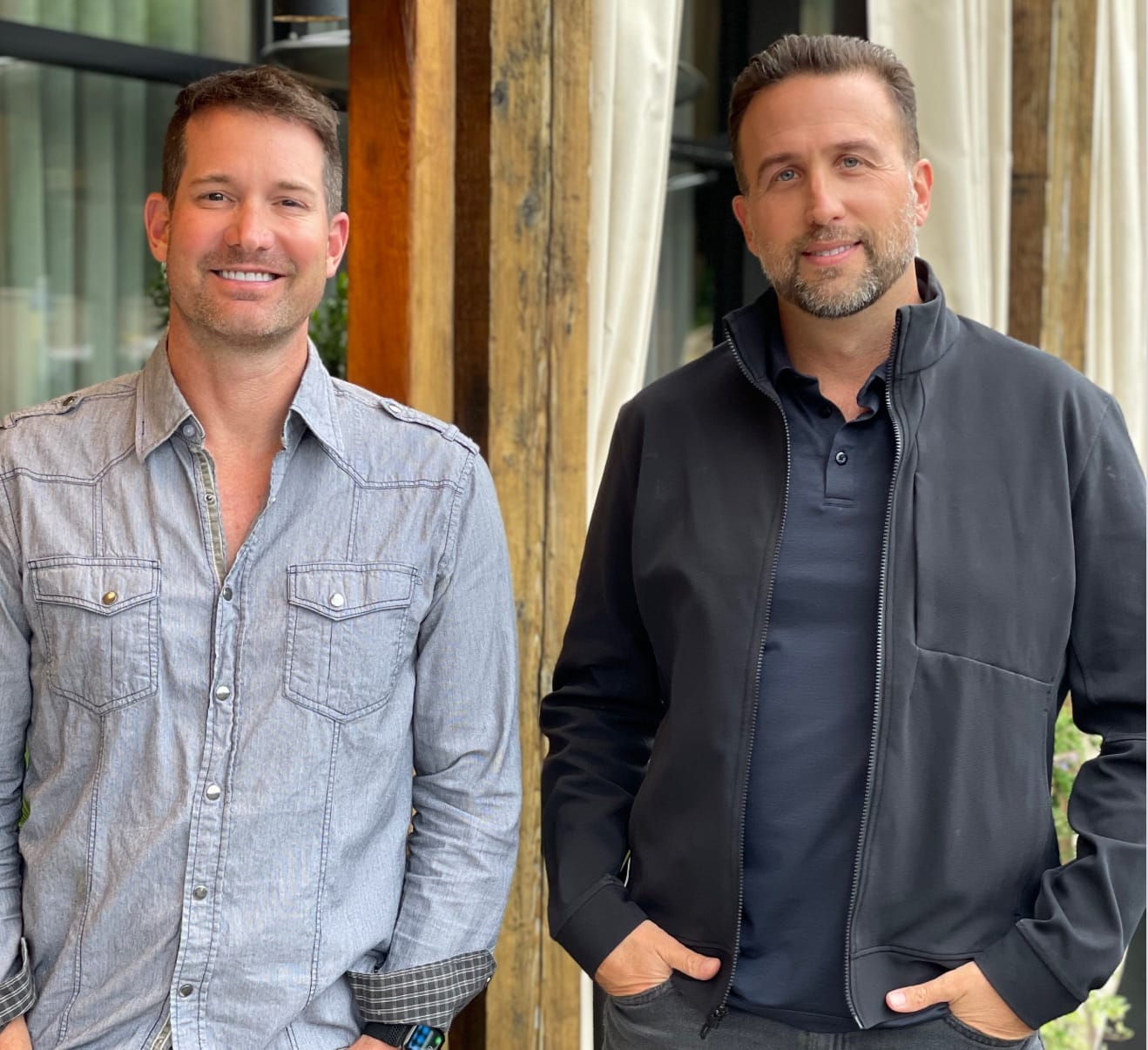
Pete lives this every day. He aggregated four-to-five locations to reach the same EBITDA that Craig produces from one flagship. Same bottom line. Wildly different operational load. That’s not an argument against expansion — it’s a warning that a second location must add enterprise value, not just revenue, or you’ve simply bought yourself a second job.
Is your first practice actually ready — or just busy?
This is where Craig’s voice cuts to the bone. Too many owners expand while, in McNamara’s words, “your flagship is not really a flagship. It’s just — you’re expanding because you were told that’s what you do.”
A busy practice is not a bulletproof practice. If your first office still runs on your grit, your presence, and your hustle in the operatory, you don’t have a business — you have a high-paying job that happens to employ other people. And you cannot clone a job. You can only clone a system.
Here’s the honest gut-check before you scout a second site:
- Can your first office hit its numbers when you’re gone for two weeks? Not survive — hit its numbers. If production craters the moment you leave, you are the system, and you can’t be in two buildings at once.
- Do you have a leader who is not you? An operations manager or associate who owns outcomes, not just tasks. Expansion is a leadership problem disguised as a real-estate problem.
- Are your SOPs written down and followed? Morning huddle, case presentation, hygiene reactivation, hiring — if it lives only in your head, it dies the second you split your attention.
- Is your first practice throwing off real free cash flow? Because it is going to fund the ramp of the second one.
Why does going from one to two break so many good dentists?
McNamara laid out the pattern that plays out over and over: “Dr. Awesome is doing really well at his one practice. Dr. Awesome opens a second practice. And all of a sudden his life is not as fun anymore. Practice one is paying for practice two — or practice one takes a big hit.”
The trap is believing the grit that built location one will automatically build location two. It won’t. As Tim put it, “wherever that doctor and that hustle is focused is where the light shines.” Split your focus across two buildings and you often work “twice as hard to make the same amount of money — three times as hard, and leveraging more debt in the meantime.”
Craig’s analogy nails the emotional reality: managing one practice is like raising kids in your own house — you’re present, you see everything. A second location is a house down the street. You can’t watch it. You’re “out-manned.” It’s a different kind of chaos, and no amount of clinical excellence prepares you for it. The skill that scales is leadership and culture, not dentistry.
Should you build a second location — or a group without becoming a DSO?
Understand who wants what before you build toward an exit. When Pete and Craig broke down “easily exitable,” Craig noted that most DSOs are “accustomed to acquiring smaller practices scattered around a region” — the multi-location, multiple-$1M model fits their playbook. But iconic single practices attract a different, often premium, buyer. Your expansion strategy and your exit strategy have to agree with each other from day one.
And here’s the Bulletproof line in the sand: growing to two, three, five locations does not mean becoming a soulless DSO. You can build a group that keeps its culture, keeps its independence, and never sells its soul to private equity. That’s the whole point of doing this on your terms. Clinical excellence is the floor. A life you actually own is the goal.
The Bulletproof way to open location number two
- Systematize before you scale. Make location one run without you for 30 days straight. If it can’t, you’re not ready — no matter how good the deal looks.
- Hire the leader first, sign the lease second. The operator who runs the second building has to exist before the building does.
- Fund the ramp with reserves, not hope. Assume location two loses money for 12–18 months and make sure location one can carry it without bleeding your family’s stability.
- Protect the flagship’s culture. The thing that made practice one special is the exact thing that doesn’t survive copy-paste. Culture is deliberate or it’s dead.
- Decide the endgame now. Building to keep and build to sell look different. Choose on purpose.
Pete built the multi-location machine. Craig built the single iconic flagship. Both work — and both figured it out the hard way, with peers who’d already made the mistakes. That’s the entire reason Bulletproof exists. Dentistry is a lonely profession, and the second location is exactly where the loneliness gets expensive.
Hear Pete and Craig go deep on this — the “1 vs 5 locations” and “when to expand” conversations live inside the best dental podcast for practice owners. When you’re ready to pressure-test your expansion plan against dentists who’ve actually done it, come stand on the stage at Bulletproof Summit, or apply to build it alongside your tribe inside the Bulletproof Mastermind.
You are not meant to make the biggest decision of your career alone.
The 1% of dentists, who want 100% from life.
Blog





























1+1=3 The Power Of Alignment and Delegation For You and Your OM with Erika Pusillo
, October 31, 2024





















, June 15, 2023

, June 8, 2023
, May 31, 2023










Look at These 3 Stats if You’re Thinking of Going Out of Network with Teresa Duncan
, January 11, 2023
, December 28, 2022


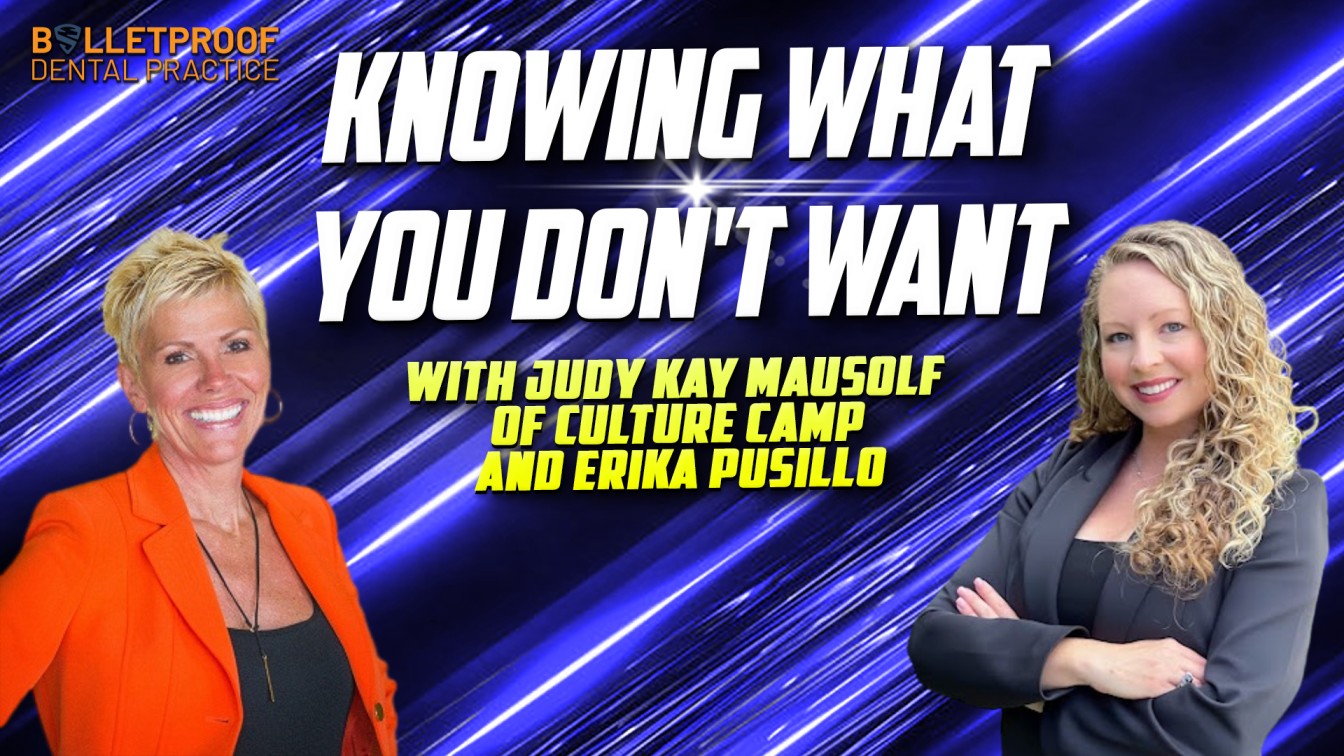
Knowing What You Don’t Want with Judy Kay Mausolf of Culture Camp and Erika Pusillo
, November 30, 2022


Cabo This Week, Immersion Learning, Biggest Breakthroughs, Your Personal KPI is Net Worth
, November 2, 2022
, October 19, 2022












Business is not Productivity, Productivity is not Profitability with Chris Salierno
, September 22, 2021





















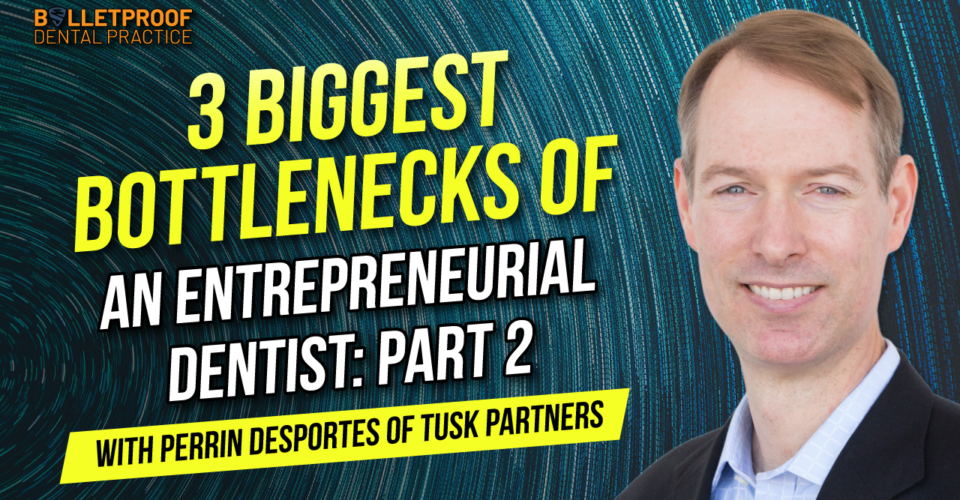
3 Biggest Bottlenecks of an Entrepreneurial Dentist: PART 2 with Perrin DesPortes of TUSK Partners