Sleep Apnea: The Six-Figure Service Line Hiding in Your Hygiene Chair
Here is an uncomfortable truth: the highest-value patient you will see this week is already in your schedule. They’re booked as a routine hygiene visit. They snore like a freight train, wake up exhausted, clench their molars flat, and have a tongue with scalloped borders you’ve been charting for years. And you’re billing them for a cleaning.
Dental sleep medicine is the most under-built service line in independent dentistry — a six-figure lane hiding in plain sight, sitting in your hygiene chair, screaming for help you already have the training and the front-row seat to provide. Most owners walk right past it because it isn’t “sexy.” That’s exactly why it’s an opportunity.
Why is dental sleep medicine such a massive blind spot?
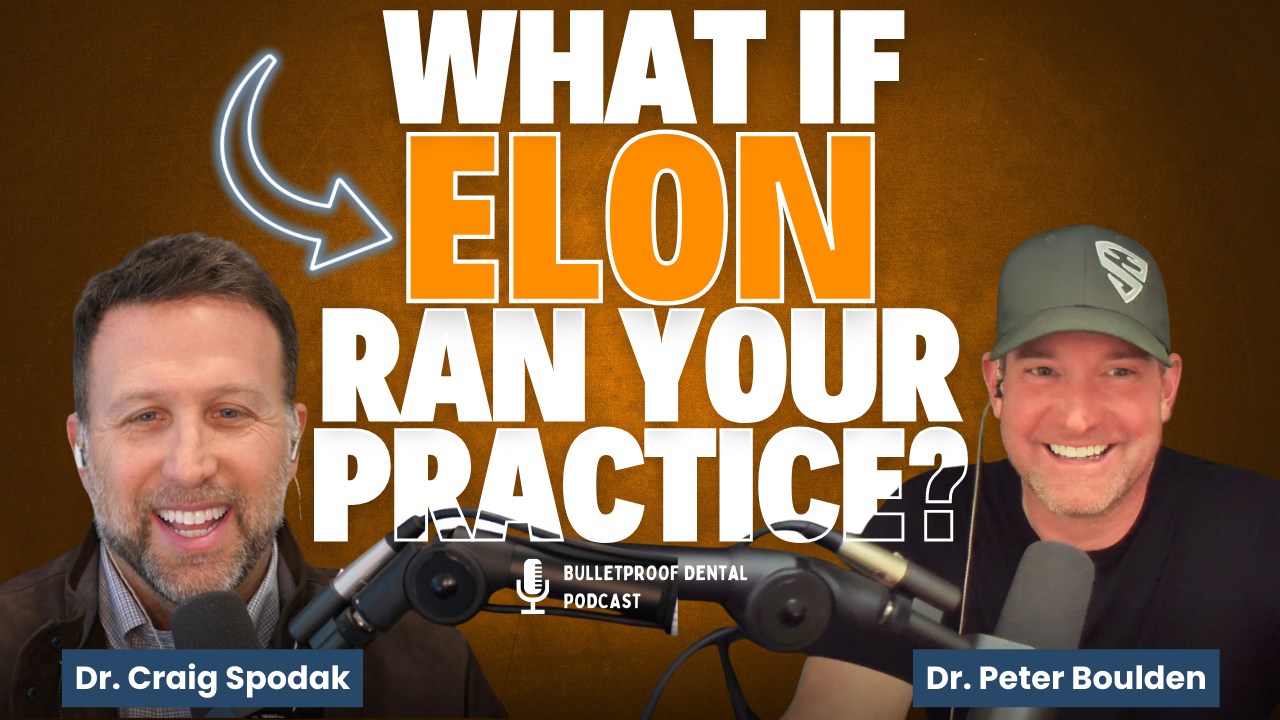
On the Bulletproof Dental Practice podcast, Pete Boulden made a point that reframes this entire conversation. He rattles off the “widgets” dentists chase — endo, surgical extractions, Invisalign, cosmetics, sleep apnea — always hunting the next skill instead of mastering the foundation. Craig Spodak’s answer is the whole game: dentists “understood only the tooth” when they should understand the mouth, the airway, the whole human being sitting in the chair.
Sleep-disordered breathing lives in that blind spot. It’s not a tooth. It’s a system. And obstructive sleep apnea is dangerously common and dangerously undiagnosed — a huge share of moderate-to-severe cases have never been identified by any physician. Your patients aren’t being screened for it at their annual physical. But you see them twice a year, you’re staring into the exact anatomy that reveals it, and you have a hygienist with a front-row seat nobody else in medicine gets.
What are the airway signs already sitting in your hygiene chart?
You don’t need a $40,000 machine to start. You need to start asking questions and connecting dots your team is already collecting. The tells are everywhere once you train your eye to see them:
- The occlusal story. Aggressive, unexplained wear on the posterior teeth. When the brain senses an airway collapse at night, it thrusts the lower jaw forward to reopen the airway — grinding the teeth in the process. That “bruxism” you keep noting may be an airway alarm, not a stress habit.
- The soft-tissue story. Fissured, dried-out tongues. Scalloped tongue borders (not enough room for the tongue = not enough room for the airway). A long, stretched uvula. Large, inflamed tonsils. A high vaulted palate. Chronic anterior gingival inflammation that won’t resolve no matter how good the home care is.
- The one question that changes everything: “Do you have a hard time breathing through your nose?” The number of patients who casually answer “Oh, I’ve never been able to breathe through my nose” is staggering. That’s a chronic mouth breather — and a screening flag.
- The Mallampati score. A 10-second visual class 1–4 assessment during the exam. A class 3 or 4 is an automatic trigger to start asking about snoring, daytime fatigue, and morning headaches.
None of this adds real chair time once it’s built into your comprehensive exam and your recare protocol. It’s a checklist, not a course.
Why should a business owner care about the medical stakes?
Because the medical stakes are the case acceptance. Untreated obstructive sleep apnea is linked in the research to sharply elevated risk of hypertension, stroke, type 2 diabetes, and heart attack — this is a condition that quietly shortens lives. When a patient understands that their snoring is connected to their blood pressure, their brain fog, their exhaustion, and their long-term risk, you are no longer selling a “device.” You are the watchdog for their total health.
That is the Craig Spodak thesis in clinical form: you didn’t get into this to be a tooth janitor. You got into it to change lives. Screening for airway is one of the few things you can do in a dental practice that genuinely extends a patient’s life — and the patients who experience that transformation become patients for life, and referral machines on top of it.
How does the economics actually pencil out?
Here’s the Pete Boulden lens — run the math, unemotionally. An oral appliance case is not a $180 prophy. It’s a custom medical device, frequently billable through medical insurance rather than dental, at a case value that can rival several crowns. You already own most of the required assets: the scanner, the clinical team, and — most importantly — the patient flow. You are not buying new patients to build this line. You are re-seeing the ones you already have through a different lens.
The ramp is deliberate and low-risk:
- Screen first, treat later. You can build the screening habit today without owning a single new piece of equipment. A simple sleep questionnaire on the intake iPad, flagged by health-history risk factors, does the heavy lifting.
- Build the referral spine. Establish a relationship with an ENT and a sleep physician who understand these connections. Dentists cannot diagnose sleep apnea — a physician-ordered sleep study (increasingly a simple, low-cost home test worn like a watch) confirms it. You fabricate the appliance once the diagnosis exists.
- Start with the free wins. For the patient who can breathe through their nose but mouth-breathes at night, inexpensive interventions like mouth taping and myofunctional referral build trust and prove you’re a total-health provider before a single appliance is billed.
- Then add the appliance line. Once screening produces a steady stream of confirmed diagnoses, oral appliance therapy becomes a predictable, high-margin service built on demand you generated for free.
This is the opposite of the DSO treadmill. A DSO wants you drilling faster to hit a production quota. Dental sleep medicine is the independent owner’s move: deeper relationships, higher-value cases, medical billing, and a moat no corporate checklist will ever replicate — because it requires a clinician who actually gives a damn about the human in the chair.
What’s the first move this week?
Add one question to every comprehensive exam and every recare: “Do you have a hard time breathing through your nose?” Train your hygienists to chart a Mallampati score and flag posterior wear as a potential airway sign, not just a nightguard sell. Identify one ENT and one sleep physician to build a referral loop with. That’s the entire on-ramp — and it costs you nothing but the decision to stop walking past the opportunity.
The best dentists we know don’t chase the next sexy widget. They master the foundation and then let it compound. Dig into the mindset behind that on the Bulletproof Dental Practice podcast, come build the clinical and business systems shoulder-to-shoulder with owners who refuse to be average inside the Bulletproof Mastermind, and come get in the room at Bulletproof Summit.
Dentistry is lonely when you’re guessing alone. It’s a different game when you have a tribe that has already built the service lines you’re afraid to start. This is the 1% of dentists, who want 100% from life. Come find your people.
Blog
















1+1=3 The Power Of Alignment and Delegation For You and Your OM with Erika Pusillo
, October 31, 2024




, June 15, 2023
, June 8, 2023
, May 31, 2023

Look at These 3 Stats if You’re Thinking of Going Out of Network with Teresa Duncan
, January 11, 2023
, December 28, 2022

Knowing What You Don’t Want with Judy Kay Mausolf of Culture Camp and Erika Pusillo
, November 30, 2022
Cabo This Week, Immersion Learning, Biggest Breakthroughs, Your Personal KPI is Net Worth
, November 2, 2022
, October 19, 2022

Business is not Productivity, Productivity is not Profitability with Chris Salierno
, September 22, 2021



3 Biggest Bottlenecks of an Entrepreneurial Dentist: PART 2 with Perrin DesPortes of TUSK Partners