Dental Practice Loans: SBA vs Conventional (And Why Borrowing More Can Make You Richer)
The bank is not doing you a favor. You are doing them one. Every dentist who walks into a lender’s office apologetic — hat in hand, terrified of the debt — has already lost the negotiation. A dental practice is one of the most bankable small businesses in America: default rates are famously low, cash flow is predictable, and lenders compete hard for your signature. The question was never “will they lend to me?” The question is “which structure actually builds wealth — and which one quietly bleeds it?”
Most dentists get this backwards. They obsess over the interest rate and ignore the two things that actually decide whether a loan makes them rich or keeps them running on a treadmill: debt service coverage and the type of leverage they’re buying. Let’s fix that.
Is an SBA loan or a conventional loan better for buying a dental practice?
There is no universal winner. There’s the right tool for your situation. Here’s the honest breakdown:
- SBA 7(a) loans — Government-backed, which means lenders take on less risk and will finance up to 90% (sometimes 100% with real estate) of a practice acquisition or startup. Longer terms (10 years for a practice, up to 25 with real estate) mean lower monthly payments and stronger cash flow out of the gate. The trade-offs: more paperwork, personal guarantees, a lien on your assets, and rates that float with the prime rate.
- Conventional / specialty dental lenders — Banks with dedicated dental divisions (they exist because they know dentists pay) often move faster, sometimes offer fixed rates, and skip some of the SBA red tape. They may want more money down or stronger collateral, but for an established, cash-flowing practice acquisition, they can be cleaner and cheaper over the life of the loan.
The Bulletproof rule of thumb: If you’re a first-time buyer or doing a startup and cash flow in year one is tight, the SBA’s low down payment and long amortization is a lifeline — it keeps you liquid while you ramp. If you’re an experienced owner acquiring a second location with a strong balance sheet, a conventional dental lender will usually beat the SBA on total cost and speed. Get quotes from both and at least two specialty lenders. Make them compete.
How much debt is too much for a dental practice?
This is where Pete Boulden gets tactical on the podcast — and where most dentists panic about the wrong number. It’s not the loan balance that matters. It’s debt service as a percentage of collections and your debt service coverage ratio (DSCR).
Lenders typically want to see a DSCR of at least 1.25 — meaning the practice generates $1.25 of cash flow for every $1.00 of loan payment. You should want more cushion than the bank does. As a working benchmark, keep total debt service comfortably inside single-digit-to-low-double-digit percentages of collections, and stress-test the deal at a higher interest rate than you’re quoted.
On a recent episode, Pete broke down a real expansion math problem — a build-out running over $2 million, land already owned, going from 6 operatories to 14. His framing wasn’t “can I afford the payment?” It was “just the interest alone is roughly $10,000 a month — what does that capital produce?“ That’s the entire game. Debt that buys you capacity you’re already overflowing into is an accelerant. Debt that buys you ego is an anchor.
Why do smart dentists borrow more, not less?
Here’s the mindset shift that separates the 1% from the perpetually-stressed. Pete quotes Naval Ravikant on this constantly: leverage is how you create wealth. Your team is leverage. Your systems are leverage. And yes — loans and buildings are leverage. As Pete put it on the show: “Through leverage is how you create great wealth and great happiness and be able to achieve the dreams. Without that, it’s just you being you” — the solo operator trying to be the nucleus of everything, doing it all, capped forever by your own two hands.
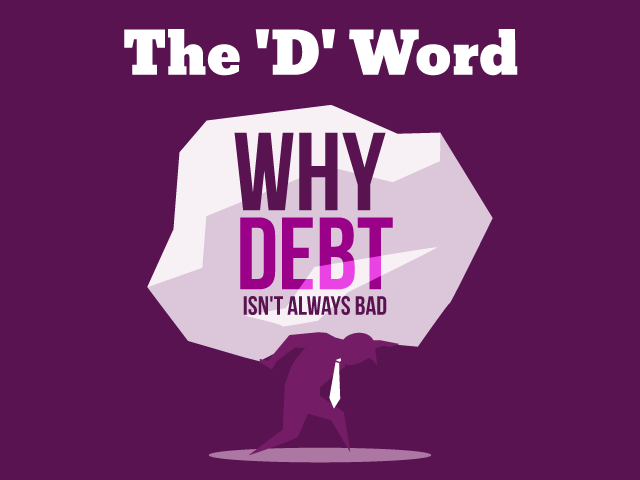
Debt-phobia feels responsible. It’s actually a ceiling. The dentist who pays cash for everything and refuses to borrow stays small, stays exhausted, and stays exactly where they are. The dentist who uses disciplined, cash-flow-positive leverage buys the second op, hires the associate, opens the second location — and compounds.
The word that matters is disciplined. Leverage that outruns your systems doesn’t build an empire; it builds a liability with your name on the personal guarantee.
SBA vs conventional: the buy-vs-build lens
Before you even pick a loan type, answer the bigger question — what are you financing? Pete frames it as a cost-of-capital comparison every serious owner should run:
- Buying an existing, cash-flowing practice — You’re purchasing revenue that exists on day one. The debt is often self-liquidating from the moment you take the keys. Conventional dental lenders love these deals; SBA works beautifully too.
- Building or expanding from scratch — Higher risk, longer ramp, more capital, and you’re carrying interest before a single new patient walks in. This is where the SBA’s low down payment and long term protects your cash flow during the dangerous ramp-up window.
The most expensive mistake isn’t choosing the “wrong” loan. It’s financing a build when you could have bought cash flow — or buying a tired practice when a build would have given you the capacity you actually needed. The loan is the last decision, not the first.
What actually gets you the best terms?
Craig Spodak would tell you the numbers follow the story you tell — and the story a lender wants is a practice with a plan. Here’s what moves rate and terms in your favor:
- Clean books. A lender who can read your P&L in ten minutes prices you lower than one who has to untangle a mess. Your financials are your credit score.
- Strong personal credit + a real down payment story. Even on high-LTV SBA deals, skin in the game changes the conversation.
- A specialty dental lender relationship. Generalist banks price dentistry as unknown risk. Dental-specific lenders price it as the safe bet it actually is.
- Multiple competing quotes. Never accept the first offer. Lenders compete for dentists — make them.
The real reason this decision feels so heavy
Because you’re doing it alone. Most dentists sign the biggest financial commitment of their lives with nobody in the room who has actually done it before — no peer who has closed an SBA deal, refinanced a build, or walked away from a bad practice acquisition. That isolation is exactly what makes debt terrifying instead of empowering.
It doesn’t have to be that way. The dentists who borrow confidently and build empires aren’t smarter than you — they’re surrounded. They have a tribe of owners who’ve run the exact math, made the exact mistakes, and will tell you the truth about that lender’s fine print before you sign it.
Start with the show. The best dental podcast breaks down the real numbers behind acquisitions, expansions, and leverage — no fluff, no sponsors reading a script. Then come stand in the room at the Bulletproof Summit, where the deals get dissected live. And when you’re ready to make sure you never sign a bad note alone again, the Bulletproof Mastermind is the tribe of growth-minded owners who will run the math with you.
Debt isn’t the enemy. Doing it alone is. Come find your people.
The 1% of dentists, who want 100% from life.
Blog


























1+1=3 The Power Of Alignment and Delegation For You and Your OM with Erika Pusillo
, October 31, 2024


















, June 15, 2023

, June 8, 2023
, May 31, 2023









Look at These 3 Stats if You’re Thinking of Going Out of Network with Teresa Duncan
, January 11, 2023
, December 28, 2022


Knowing What You Don’t Want with Judy Kay Mausolf of Culture Camp and Erika Pusillo
, November 30, 2022



Cabo This Week, Immersion Learning, Biggest Breakthroughs, Your Personal KPI is Net Worth
, November 2, 2022
, October 19, 2022







Business is not Productivity, Productivity is not Profitability with Chris Salierno
, September 22, 2021














3 Biggest Bottlenecks of an Entrepreneurial Dentist: PART 2 with Perrin DesPortes of TUSK Partners