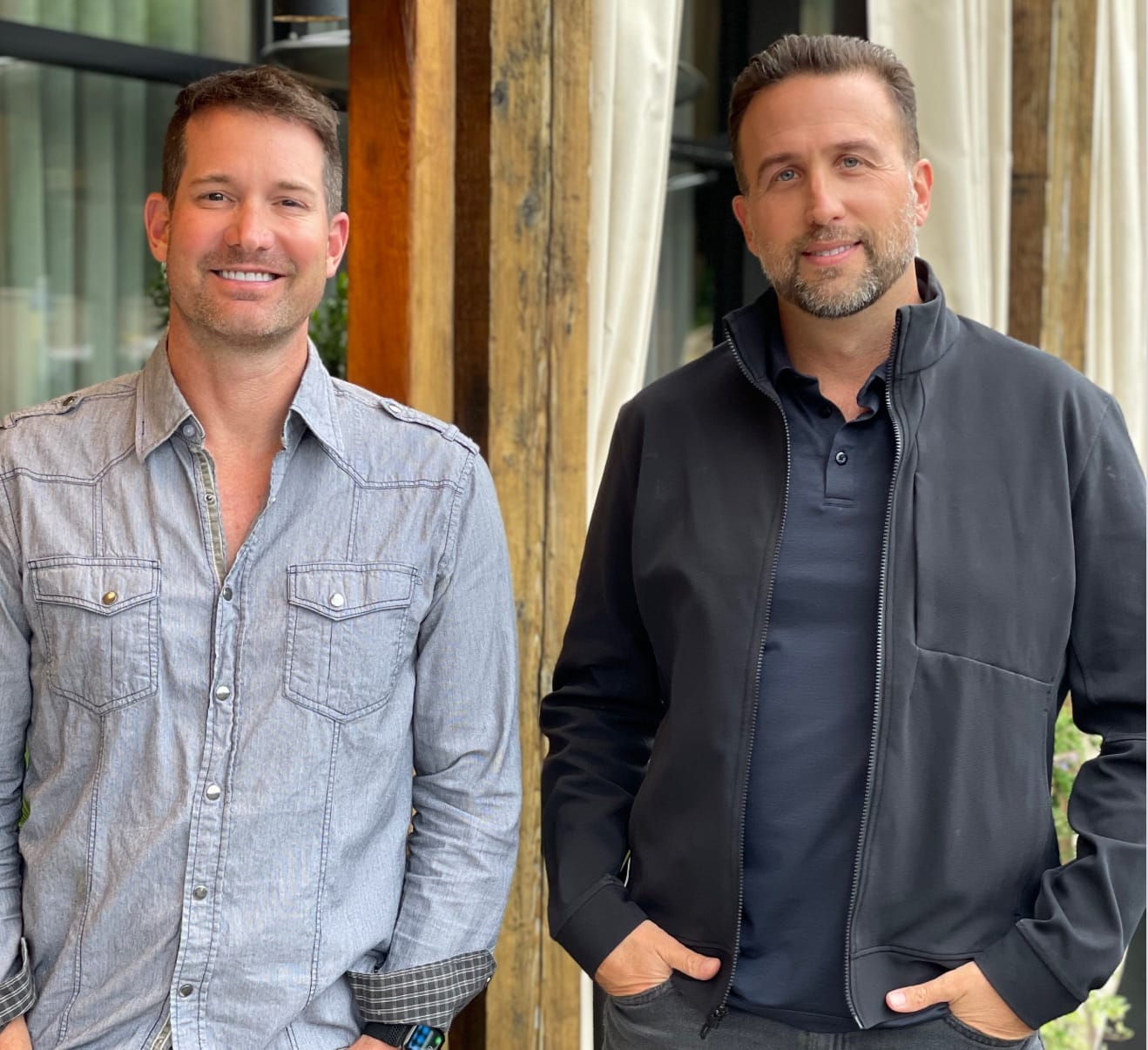
I Fixed my Body from Being a Dentist with Bjoern E. Woltermann of Katalyst
Bulletproof Dental Practice Podcast Episode 259
Host: Dr. Peter Boulden
Guest: Bjoern E. Woltermann
Key Takeaways:
Introduction
Fitness And Dentistry
Occupational Pain
STEM And EMS
References:
Bulletproof Summit
Mighty Networks: Bulletproof Dental Practice
Ben Greenfield Podcast
Ben Greenfield
Katalyst
Katalyst.Shop
Tweetables:
More is not better. -Dr. Peter Boulden
Context matters. – Bjoern E. Woltermann
Full Episode Transcript
Below is the complete transcript of this episode of the Bulletproof Dental Practice podcast. Prefer to listen? Find us on Apple Podcasts, Spotify, and YouTube.
Read the full transcript
The following transcription was from the Bulletproof Youtube channel. Here is the https://www.youtube.com/watch?v=8ZdG3TgOLEY
Peter Boulden
0:00:00
All right, I'm really excited for our next guest on the Bulletproof Dental Practice podcast. His name is Bjorn. Bjorn, make sure I pronounce your last name correctly. Bjorn Wolterman, correct? Yes. And he is the CEO of Catalyst, and I am really excited to introduce everyone on the Bulletproof Dental Practice Podcast to this technology. So essentially it's a revolutionary way to work out in 20 minutes through EMS, right? So an EMS is Electro Myo Stimulation, right Bjorn?
Bjoern E. Woltermann
0:00:37
Exactly, yes.
Peter Boulden
0:00:38
Good, good. And I was introduced to this technology via Ben Greenfield's podcast. I remember he did something and you were on it as well. Ben being a big biohacker and me trying to be a pseudo-biohacker. I was like, man, I need to check this thing out. Check this thing out. And so, Ben was actually on the Bulletproof podcast as well. So we're gonna discuss basically what the catalyst is, but I think some more important questions that I'm gonna talk about right now to give some context is why the heck are we talking about fitness equipment on a dental podcast, right? We usually talk about the systems and the marketing of business and entrepreneurial dentists. This is an entrepreneurial dental podcast. So I'm gonna go into why I think this is important because I have one, it's really changed my life, this Catalyst suit that we're gonna talk about. But A, I think dentist, I know everyone feels like they're pressed for time, Bjorn, but I feel like dentists really are pressed for time meaning that we have a set schedule, there's patient care that defines our available bandwidth of time, and then after that we have hours where we have to do admin. So dentistry is usually half of what we do and then the admin is usually kind of you know 25 to 50 percent more of additional we do. So we are more pressed for time as humans. Therefore our fitness kind of goes to the wayside a little bit right so we are more pressed for time. Also the second point I have is that we are in these repetitive positions throughout most of our career right. Our shoulders are up like this like chicken winged, our back is bent over, we are in poor ergonomic positions for most of our career, right? Day after day, eight hours a day in poor ergonomic conditions. As much as they train us to do proper ergonomics in dental school, it's just, you know, as soon as the professor leaves, you're bent over the chair, you're in the person's mouth, your back's all contorted, and you're sitting there like this for eight hours. The third thing is that pain. A lot of dentists I know have pain associated with what they do, mainly predicated from the second example I just gave, is that these weird contorted positions for hours on end. So we have pain that usually limits our career. For me personally, one of the deciding factors for me to kind of stop doing clinical care, or at least drag down drastically in the hours in which I was doing clinical care, was I had a tremendous amount of pain associated with kind of what I was saying. Additionally, I had a motocross accident kind of like 18 years ago and my shoulder healed my collarbone healed incorrectly So it healed like this which mean that it shortened that hold that whole girdle if you will Yeah, right So all this to say is that I used to have a tremendous amount of pain Occupational pain from dentistry since using the catalyst. I don't have pain anymore now granted I'm not clinical anymore, but I still had a lot of lingering pain from Dentistry right to stuff that was just kind of down over there adhesions or whatever you call it, you can kind of get into this, but it has been a big change in my life, right? I am kind of pain-free at age 47, even though I thought I was gonna be wrecked from doing dentistry for 20 years. So, sorry for the long intro and context, Bjorn.
Bjoern E. Woltermann
0:03:32
Context matters, and your listeners need to understand like, you know, why are we doing this and like how this all fits together. I think this is perfect.
Peter Boulden
0:03:39
Good, good. Well, so can you give a little bit about, I know you and I have had side conversation, give a little bit about what brought you to where you are. You were not a fitness guru from the get. You're a tech guy that then happened to turn into fitness, but yours was also, the journey here was also you from an occupational standpoint as well. The fix was occupationally, you were plagued by occupational hazards, if you will.
Bjoern E. Woltermann
0:04:02
Yes.
Bjoern E. Woltermann
0:04:03
I'm now 45 years old. I'm German, born in Germany. Originally I'm an economist by trade, behavior at scale of people, so I have nothing to do with fitness originally, but what makes people tick, what makes they do, and so on and so
Peter Boulden
0:04:16
forth.
Bjoern E. Woltermann
0:04:17
I was in my job, like as Jakob said, I was in tech. So we were originally part of a company that was kind of like the Zillow of Europe. And we got acquired by Deutsche Telekom, which is like T-Mobile. You guys know T-Mobile here in the United States. This is a subsidiary of Deutsche Telekom. For that company, I was flying around the world in the late 2000s and early 2010s, was sourcing new companies, startups, whatsoever, to integrate into our ecosystem. So all the stuff that we didn't have as the elephants. My job and my team's job was how to teach the elephant to dance with mice, so smaller companies and have them not crushed in the process, which very often happens. So during that time, I basically found myself on a plane every second day. So I had 150 to 160 flights a year sitting on a plane. And for context, when I was 20, I got diagnosed with a problem between my L4 and L5, so they're very tight and a little bit dislocated, a little bit of scoliosis down there and very narrow disc. It was actually in flight school in the German Air Force where they said like, hey, you shouldn't sit in a plane, so please stop doing what you're doing. So now, 15 years later, I find myself 150 days a year on a plane, which again, they told me 15 years ago I shouldn't be doing. What that led to, I was absolutely miserable. I was 20 days a month, I was on painkillers. Not opioids or whatsoever, but like, I don't know, M&M's were my…
Peter Boulden
0:05:48
Because of the back pain, right?
Bjoern E. Woltermann
0:05:50
Because of the back pain, yes. Like, lower back pain was absolutely killing me. I couldn't get out of bed in the morning, could hardly walk. After like eight hours on a plane, I couldn't get out of the seat. It was just really, really bad. But then on top of it, you're sitting all the time. You're sitting in front of a computer, you're sitting in meetings, you're sitting in the car, you're sitting in the plane. It was all sitting.
Peter Boulden
0:06:10
Horrible.
Bjoern E. Woltermann
0:06:11
So, at one point in time, it was 2012, my physician is telling me, Bjorn, we're coming to a point where you either quit your job or you massively strengthen your core. Because the problem is your muscles around that area are too weak. So at night, they basically relax, and then your vertebrae fall into a position that they're not supposed to be. And even if you're sitting, you're relaxing, and all the weight is on the tendons, is on the disc, is on the vertebrae, like that's what it shouldn't be. You have to massively strengthen your core. And I said, Carsten, that was his name, I said, Carsten, you know, I get up at four in the morning to be at six o'clock at the airport to fly somewhere to have a day and then I do this, this. When am I supposed to do this? How am I supposed to do this? Am I going to plank an hour every day or what do you want me to do? And he said, no, no, no. He said, go down the road and go to the studio that I'm going to and you wear the suit, like stimulates all the muscles, but also all the connective tissue, but also all these muscles that are very, very hard to reach, especially around your abs, your like erector spinae, like you know, all these like muscles that you need to strengthen your lower back. I go there twice a week and it's awesome and it absolutely is going to help you." And I was like, interesting, interesting. And then he said, and every session is just 20 minutes. I said, okay, now you lost me. Like now it's too good to be true, right? You know, like literally now it's too good to be true. He said, no, no, no, please go, please go. So yeah, so I went, I just walked past, like from his practice to my home, it was downtown Berlin. I could just walk and I walked past the studio. It was like super convenient. Looked through the window and there was a 30 year old male and a 60 year old female side by side with black suits, wires all over them and a personal trainer telling them what to do and they had nothing in their hands and they were doing butterflies. Nothing in their hands. And they were dripping. And I was like, sorry, first of all, this picture, all this whole picture makes no sense. Why are they dripping? Is it a heated room or what is it? Like I have no clue. And then what is the 60 year old woman doing that? When do you see a 60 year old female in a gym? So I went inside, they explained everything to me. Long story short, I tried this. I was like three minutes, four minutes into the workout, I was dripping. And I was like, my whole body was on literally like lit. And I was like, wow, I've never felt like this before. 20 minutes through, I was absolutely exhausted. Felt this like endorphin rush that you have after like you, you really work out hard. Two nights later, I was so sore. I couldn't get off the bathroom. Like, you know, I had a really hard time getting off the toilet because I was literally so sore. And I was like, interesting. So I just spent 20 minutes standing, hardly moving, in this suit making very basic range of motion movements with no injury risk. And I'm sore as if I spent hours in the gym and went for a hike for six hours on top of this with a heavy backpack. Like I just felt like absolutely unexpected different. Gave it a try, became a member. And then every Monday at 6 p.m. I went to the studio because Monday was my non-travel day. So I went out of the office, non-travel day, did this and after six weeks, it was a Sunday morning, I woke up and I told my wife, I'm not in pain and I haven't taken a pill in a week. And I did six sessions of 20 minutes in this thing with a personal trainer back in the day. So technology wasn't where we have it today. The devices were $25,000. You needed a personal trainer to play DJ on it. It wasn't smart, wasn't intelligent, and you shared suit with other people. So there were a lot of aspects 10 years ago that we don't have anymore today. But 20 minutes in the suit, and I was pain-free, very excited about it. A little bit later that year, just my wife became a customer, half my office became customers. I learned that at the time we had 500 studios offering nothing else than that in Germany already. Wow. Germany is about a quarter of the United States from a population perspective. In 2012, we had 500 studios. Today they are 2,500 doing nothing else. It is absolutely insane.
Peter Boulden
0:10:20
Which is crazy because it's very new tech for the US. I mean, I know there's some competition and it's coming on the scene for you or has been. I mean, they've been around the suits, but like yours is the first one that I ever saw that kind of, it looks really cool. Like you said, doesn't have like zillion wires coming off of it. You have a cool iOS app that kind of walks you through the training protocol now. You know, I pop up my iPad and go through, hmm, what kind of training do I want to do today, right? And then in 20 minutes, like you said, you're done, which 20 minutes doesn't feel like a long time. And then you're in it and you're like, how am I sweating already? Like you're saying, how am I already sweating in five minutes into this? And then it's funny, the next morning you wake up, it's like, all right, I feel pretty good. But this delayed onset muscle fatigue, right? It's a two day thing. And then you're, you're right. It's like, I can't hardly move. I'm so sore. And you feel this in this sense of like, you know, I know we, we attribute soreness to like how hard we worked kind of thing, right? There's that correlation. However sore, it means I must have kicked ass in the gym. So to have that, just almost all of your body being sore, right, it's a very gratifying feeling.
Bjoern E. Woltermann
0:11:25
Absolutely. Yeah, we have people that tell us they really get addicted to it, literally. There's an addiction almost.
Peter Boulden
0:11:30
Yeah, my wife and I would do it, we used to do it a lot together in sessions and just kind of, she'd be like, what number are you on? How are you doing it so high? You know, because it actually, it's on a scale, right? You're working your way up, and I know this is for people when they get the suit, so to speak. It, you know, it goes from zero to what, 400?
Bjoern E. Woltermann
0:11:50
You're on? 200, 80.
Peter Boulden
0:11:52
Yeah, and so it kind of, we almost gamified it between ourselves, like, why are you on, how are you on 200? I'm only on 100, and it's, you know. Anyway, sidebar there, but it was a fun thing to do, or it is a fun thing to do with your spouse kind of training. And you can do it in the house real quick.
Bjoern E. Woltermann
0:12:09
Yeah, absolutely. No, I mean, you're absolutely right. We took the technology much further. So very quickly to finish this story, like why am I doing this? So later that year, we were sitting with friends. My wife and I were in California for a summer trip and we were sitting with friends in Beverly Hills at a barbecue and the girls were talking fitness and the boys were talking I can't remember what we're talking about, but the girls were talking fitness and My wife said oh we do this thing in the suit. Have you guys tried this and so on so far and Everybody is looking at her like what are you talking about? And I'm just overhearing this conversation and I just sorry I'm in city. I'm sitting in Beverly Hills. You don't have this for context if it comes to fitness and beauty, in Europe, we generally look to the United States for new things. You've invented CrossFit and SoulCycle. Literally, all the fitness trends are basically originating, mostly in LA and some in New York, but that's also our perception. For context, we're talking 2012. Peloton didn't exist yet. Okay. All right. Right? So just putting it into context, they only launched in 14. So they didn't really exist yet. And I was just sitting there and thought like, hey, we have them on every corner. For context, Germany has 280 or at the time 280 Starbucks and we had 500 EMS studios. Wow. Just from a context.
Bjoern E. Woltermann
0:13:31
Yeah, yeah, yeah.
Bjoern E. Woltermann
0:13:32
It was so prevalent already. And I was sitting there, this is very, very interesting. Okay, now my economist brain kicks in. I'm like, okay, so here's a thing that is with a short amount of time, with a no amount of effort, with no injury risk, giving me very great results. So the input output function with this thing is so different from everything else that you can do to condition and strengthen your body. That was like, okay, that's a step change. Like that's literally a step change. Because if you think about it, what we've done a lot in the past is we have optimized and put a lot of tech into fitness, but they do only do two things. They track, they tell you how you did, or the Apple Watches and Aura Rings and like all the apps and so they tell you how you did and they motivate you to do something. They tell you what to do and they put a hot model in front of you and a mirror in the back of it and so on and so forth. So that's all motivation pieces and tracking pieces, but we haven't changed the workout itself. We're still lifting weights and throwing them further and running longer and faster and rolling like in, you know, old movies and the Greek basically, like the Olympic games are still the same thing, right? So it's still the same. So once of a sudden we have now technology that helps us directly induce the reaction to the tissue, in this case the muscle, that we want without all the negatives around it. It's breaking down the fibers, it's strengthening. In our suit we can exactly say what we want to trigger. Fast twitch muscle fibers for speed development, for power development, for erection. Slow twitch muscle fibers for general strength, endurance of the muscle. We can have a cardiovascular load that's just inducing a twitch and burning ATP and glycogen and so on and so forth so that your cardiovascular system has to work harder although you're just walking. We have customers that are, for example, not in shape and they can't run, but we make them walk on a treadmill and they induce additional load so now their heart rate goes to a level that they otherwise can't do. So in my case, I was now out of pain because my lower back got massively stronger, my abs got massively stronger, your pelvic floor gets stronger, like, you know, all these areas get, like, you know, strengthened because it literally leaves no muscle behind because it's like this full body experience. But also what I had is I had a lot of headaches and I had the headaches from tenseness around my, you know, trapezius and, you know, those areas. Because it's such a intense muscle work that the muscle has to conduct in this 20 minutes. I always compare this to if you go to the gym and you do biceps curls. If you would go to the gym, do a biceps curl, you do like 12 reps right arm, 12 reps left arm. Okay, but for the right arm, you do 12 reps. Let's say every rep is a second and you do three sets. Now you spend 36 seconds with time and attention on your biceps. One, two, so now you go to the next thing, to the next thing, to the next thing, but at the end of the day, your biceps has done 36 seconds of work.
Peter Boulden
0:16:33
I see, yes, okay, so the time under tension. You hear that a lot these days. That seems to be like the new thing that all the trainers are doing. It is the new thing.
Peter Boulden
0:16:40
Time under tension.
Bjoern E. Woltermann
0:16:41
Okay, so 36 seconds. Okay, so when you do your strength or power workout, it's 20 minutes long, and every four seconds you're flexing and every four seconds you're relaxing. It's pretty much, it's exactly 50% of the time. Okay, 50% of the time of 20,
Peter Boulden
0:16:59
like your bicep is like 10 minutes.
Peter Boulden
0:17:02
Time under tension is 10 minutes, right? Your bicep is time under tension 10 minutes. So if that is the metric, that's why we have this delayed onset soreness that you're like, holy cow.
Bjoern E. Woltermann
0:17:12
Yes, it's like, it's one of the aspects why we can put because people say like we have also this seven minute apps and like We have all these things because we know people don't have time So they're trying like people are trying to like with other traditional workouts trying to push a lot of a small thing with us It's just a function of the technology. We don't want you to work out much longer than half an hour We literally don't want to because we are already putting a lot of muscle work Into that short amount of time. So people who tell us oh I combine three of them. I said, don't, it's not better.
Peter Boulden
0:17:42
Yeah, yeah, yeah, more is not better, right?
Bjoern E. Woltermann
0:17:44
More is not better. So I had all this tension around my trapezius and that therefore like, you know, came into my head and I had headaches around this because again, I'm also very tall. I'm like six four, I'm relatively tall. And then you always like hunch forward with other people when you're talking. It's like there are all these aspects and you sit on computers. So now when I come out of a catalyst workout, we have specific, it's upper back as a muscle group, we have specific pads around here. The muscle is actually exhausted and it relaxes. So now you don't have this constant tension anymore. So first of all, the muscle gets into, okay, a relaxed state, so the muscle can relax, but also it gets stronger. So it doesn't have to operate at the edge of its capacity. So you have a much more capable body and therefore you don't get into this edge cases where then pain comes in because pain is basically The feedback mechanism of the body telling you you shouldn't be doing this like that. That's that's literally it So this is how I found this how it fixed myself Found out it didn't exist in the United States treats powered muscle stimulators as a medical device, when in the rest of the world it's the same as an electric toothbrush or a blow dryer or something like that. And that is because in the 80s and 90s in America, when these app belts came out, the marketeers went a little bit overboard and said, like, you get rock-hard apps from a battery of this size, which obviously does not work. So the FDA started, hey, we're going to regulate the claims that you can make But what that did is it created a very high entry barrier for the small companies in Europe who created these amazing machines
Peter Boulden
0:19:23
And sold them all over the world and they couldn't enter the United States is stem the same thing as just EMS technology Is it you know when you when someone says like I used to go to a chiropractor, right? Because I have all this pain and they're like we're gonna put you on the stem device and it was kind of the same feeling but it was it was pulsing like right or when someone had any injury so is stem the same as EMS is it stimulation
Bjoern E. Woltermann
0:19:46
through electro so they're all it's a family of therapies I would say so family of therapies they're all using impulses but the characteristics of the impulses basically define what physiological reaction you have. So, for example, with certain frequencies and certain… So, you have the amplitude of a pulse, you have the form, the waveform of the pulse, you have the length of the pulse, and then you have, is it just a positive, or is it a positive and a negative, so is it monopolar, is it bipolar? And depending on how you form these impulses, you have a neurological reaction. So what you in pain theory generally do is you just trigger the nerve and what you want to do is you want to basically deplete the nerve so that it has no capacity of basic signaling anymore for a certain amount of time which makes the pain go away. What we are doing is we are forming the, that's stim or or TENS, like TENS is generally in the area of transcutaneous nerve stimulation. So this is what they're trying to do with pain therapy. I see, okay. Right? So what we are doing is we are specifically modulating what we're sending to trigger motor neurons to then have a muscle contraction and muscle reaction. And depending how fast we trigger them is the question of, are we building just small twitches, which we do, for example, in cardio, because in cardio you're still walking. We don't want full contractions, because if you have a full tetanus and you have full contractions, then you don't have fine motorics anymore. You can't run with that, right? That's just, you're just,
7
0:21:31
you're just not.
Peter Boulden
0:21:32
You're rigid, right, you're locked up.
Bjoern E. Woltermann
0:21:33
You're rigid, right, you're locked up. So, for example, in cardiovascular mode, we just have these small twitches. Also in relaxation mode, we just have small twitches because what we want is just a pumping reaction of the muscle because we just want to get the blood flow going and just relax the muscle.
Peter Boulden
0:21:53
I want to loop this back to kind of, because I want you to explain it in, obviously you are a muscle expert at this point in time. I know you started as a tech guy, you don't have a medical background, but at this point in time being the CEO of a large EMS company now, you've gotten that education. So you know how you hear the term, and I don't know the medical term for it, but let's say you're getting a massage and you're saying, hey, all these adhesions have set up in the muscle, right? And I know that that is kind of notorious in dentistry, right? From the, what am I trying to say? The sustained improper form of like, let's say holding your arms up, like holding a handpiece or drills, right? Long periods of time, you get all these adhesions in your back. And I don't know what the word for that is. Is there something, and I noticed that by using the catalyst, it feels like it resets everything. Meaning that like, it kind of reboots your muscle computer. And I know I'm using not very, very medical terms, but it just felt like I felt anew again versus having all these clunky adhesions and my gait was wrong and my posture was wrong. It kind of resets your musculature frame.
Peter Boulden
0:23:04
Is there anything to that?
Peter Boulden
0:23:05
Yes.
Bjoern E. Woltermann
0:23:06
Yeah, there are multiple aspects to this. So when you talk about adhesions, I think what you mean is, so the fascia, basically, so you have the muscle and you connect it to around it, and what you actually want is for the muscle to move freely, you basically want the muscle to move freely, right?
Bjoern E. Woltermann
0:23:27
But it's getting, for example, stuck in a certain amount.
Bjoern E. Woltermann
0:23:31
But adhesions are designed to, pardon me,
Peter Boulden
0:23:33
adhesions are designed to help your body be more efficient. Saying, hey, I realize that you're putting your arm up in the air for four hours at a time. Let's make this process, let's adapt to this process so that the muscle is not contracting all the time. Let's adhere the fascia to the muscle. Is that what it is? Exactly, yes. I see, okay.
Bjoern E. Woltermann
0:23:53
Right, so basically what it does is it limits your range of motion. Right, it's almost like saying, hey, I don't want to hold this, like I put a fixture here, like something like this. It's almost, instead of your muscle constantly work, it kind of like gets stuck in this position. And you don't want the full range of, you basically lose some of the range of motion. Okay, okay. But that also means your muscle stays tense in that area. So some of the muscle fibers are in a constant contract, constantly contract state, so to say. So you're losing range of motion, and this is when you have, for example, when you have an injury, the massage therapist is telling you, oh, you're very tight. Yes. Right, so you're very tight. What's happening when you're very tight is the muscle is trying to protect itself. So for example, if I have, I got a hamstring injury when I did a Spartan race three years ago. I had, like, it was cold, it was all grayed, it was like last quarter of the race, and we had to wait 15 minutes in front of an obstacle because there was a line. There was a line, right? So, cooled down, and there was a sprint and like getting off one of these like slope ramps, and I ran one, two, three, four, and it was an audible bang, like that my right hamstring like had basically one of the fiber bundles was just, and people around like looked at me and I literally ruptured part of my hamstring.
Peter Boulden
0:25:25
Afterwards, what the muscle is doing,
Bjoern E. Woltermann
0:25:27
the rest of the muscle is, you know, contracting because it wants to keep this injured piece together. It doesn't want to expose it to stress. So now what you have, you have basically muscles that are overworked and that are like tightening up and tensing up because they are afraid of like getting lengthened, they're afraid of getting into a more painful state. So your body is trying to protect itself. So this is why you're limping. So for example, you're limping because you know, for example, in your hip, if you have a hip issue, you know if you're extending beyond a certain angle, you get into pain. So now your body basically says, okay, no further than this, and you're starting to limp. So you're losing range of motion and all of that. So what we are now doing with EMS technology is we are first of all training every muscle. We literally, of course, we don't have any on your head and we don't have anything in your hand and so on, but the main muscle groups, we're all working them out. So we're strengthening them. So during your normal, even a normal position, I'm in much better shape than I was 10 years ago. Like I can do things that I was not able to do 10 years ago, like for sure. And now I'm 45 and in better shape than I was at 35. Because you basically strengthen all the muscles, but also the connective muscles, like the smaller ones that you wouldn't really activate and in that state that case they don't have to go into the state where they are Operating at their limit You get more endurance there, but also they are not afraid of getting into this pain So you're losing these these tenseness and these limitations of range of motion and now what comes then as a follow-up if you limit your range of motion. And if you then go to the chiropractor, like he has just a ton of work to do. So basically, it's all this chain of things that are happening, like the fascia is like, you know, tight and so what we now basically do is, we have the mixture of exhaustion and strengthening of the muscle tissue. And I like your way to describe it as a reset.
Peter Boulden
0:27:40
That's really what we're seeing.
Bjoern E. Woltermann
0:27:42
Yeah, and it's just so important,
Peter Boulden
0:27:43
I think again, kind of to loop it full circle, it's just important, because I see dental careers all the time around me being shortened, myself included, because of the pain of occupation. And you wouldn't think, like my friends who are non-dentists think, oh, it's pretty easy, you just sit in a chair all day. But it's these weird contorted positions and you see it. I mean you understand right because you're in this field but like Many many dentists I know are in a lot of pain on the daily basis, and it's and it's 90% of the time muscle pain right there's there's extenuating circumstances like obviously Scoliosis or things like that that you can't it's not going to be fixed by this But it's usually this repetitive poor ergonomic position over time a lot of back issues that is because of the hunching over, you know, eight hours a day and contracted, and then just being, like I said, arms in the air and contorted and upside down and looking in someone's mouth. So, you know, I wanted to bring this to the masses because, look, if it can extend your career even, you know, a couple years, like, it's the greatest thing, it's the greatest podcast you've ever listened to, right? Right? And being introduced to this technology will save, you know, just… Anyway, so if it adds years to your career, right?
Bjoern E. Woltermann
0:28:57
No, it's interesting. It's interesting. Like, so here's one of the… This is why I was so excited to talk to you today. And like, when you first reached out to me, telling me what this did to you, I was absolutely excited because that's exactly what we're seeing. unforeseen benefits that are very unique to specific occupations. So if it's a golf player who now can fix his frozen shoulder, which we have quite a few and you know what, tell us this, but then also these very specific ones where you're saying like, hey, because we take care of our customer and the customer gets the most comfortable position, so we have to get one less than that. It makes a ton of sense, and this is why we are, like the whole team is always so excited to hear these very specific stories, what it can do to individual customer groups. And we're also learning more and more about this. So for example, we're starting to specifically build workouts for specific use cases. So, for example, we now have ACL prevention workouts or so on and so forth. Of course, we always had upper back and lower back and shoulder and mobility. Those were the first ones we really had. But hearing from you that it's a very specific case is absolutely fascinating.
Peter Boulden
0:30:21
Yeah, and obviously, most people, we start working out in the beginning of our lives for, you know, it's not for a functional standpoint, it's for because we want to look ripped and have six pack abs and all those things, right? That's where you attribute fitness. But I think as you get wiser and more mature in your age, you do it from a functional standpoint, right? Trying to prevent injury, trying to stay flexible, trying to stay limber, and abating the effects of aging, right, with being sedentary.
Bjoern E. Woltermann
0:30:48
100%, so more than half of our customers 100%.
Peter Boulden
0:30:53
Yes.
Peter Boulden
0:30:54
So, more than half of our customers are 45 plus.
Peter Boulden
0:30:59
Yes.
Bjoern E. Woltermann
0:31:00
Yes. So, what we see is for the younger crowd that you were describing earlier, like that want to look ripped and like, you know, aesthetics perspective, they have 25,000 other options.
Peter Boulden
0:31:13
Right.
Bjoern E. Woltermann
0:31:13
But once we progress in our careers and get older, we have time restrictions, we have ability restrictions, we have previous injuries, we have risk of injury because also, I mean, our bodies weren't made to become 80 years old. Originally, like I would say evolution hasn't caught up with our quality of life improvements. So, for a lot of our customers, we're the only option they have. It's the first workout they've been doing in 20 years, literally. Yeah, and it is daunting to get back off the sidelines.
Peter Boulden
0:31:47
I think this is important, right? Sometimes once you stop working out, it's really hard to get back into fitness again, right? Once you lose it a little bit, it's really almost demoralizing and it's like, oh, I can't forget it, you know, I'm old now. And I think this is a great, great segue to saying, hey, put this suit on, enjoy the tech, 20 minutes, you're done, and now you're on your way, right? I don't think it's a complete, obviously you still need to do some cardio and you still maybe do weight training, I'm guessing, or maybe you're advocating this can be all inclusive.
Peter Boulden
0:32:25
No, no, no, no.
Bjoern E. Woltermann
0:32:26
So very quickly to that, for us, we see two behaviors within our audience. We see the people who are already very active and fit. They add this once or twice a week to their regimen. And then we see the ones who totally have no alternative or have no time or had injuries. They do this two plus or two times plus per week. And for some of them, it's the only thing they do. For others, it is an add-on that just gives them an extra edge or on days when I don't have time, I just do this for 20 minutes, like half an hour all in, like with getting ready, getting to the shower, half an hour all in, in the morning and I'm ready to go. We see both behaviors. It's one tool in the toolkit. For some people, it's like they only have a car and some only have a bike and some have a bike and a car. So that's that's that's how we look at this.
Peter Boulden
0:33:20
Yeah, and it's option. It's optionality, right? And I think for this speaks to the people getting off of the sidelines saying I'm too busy. I don't have time for working out of my body's in pain. I'm older now, right? Like flip that on its head. And I think that's why again, that's why I brought it to bring it to the masses. I see here. I've got the, and additionally, you look really cool in the suit, by the way, you look, I say that, I told this to my wife, I say-
Bjoern E. Woltermann
0:33:43
I don't, there's no picture of me in the suit, by the way.
Peter Boulden
0:33:45
Women look hot in this suit, and men look badass in this suit. Yeah, we call it, like, people say it's a superhero suit. It really is, you feel that way, you feel that way. I see that there's a wait list still going on. Obviously, the technology has caught on, or I should say the wave has caught on in the US, and you have a way. How far out are you with suit delivery right now?
Bjoern E. Woltermann
0:34:06
So we are catching up. We were first overwhelmed by the responses, and we have not really marketed this product yet, and we haven't really gone out. You don't see press releases yet. I mean, they're going to come now, but over the last year, we haven't. So at one point in time, you know, I think we're now at like 55,000 people waitlist that we currently have. The challenge is, first, we had production capacity challenge due to COVID. Currently, we can't buy enough chips. So we have to throttle that a little bit. We hope to keep up, you know, catch up soon. But what we're doing is we work with specific partners and audiences, people can do something that you're probably gonna tell us about. Yes, I'm gonna give a website that'll push all my people
Peter Boulden
0:35:04
to the front of the line for Bjorn. We'll just tell them that, even if it's not true, let's just say that. But the suit is an investment in itself, right? It's not, you know, and it's super high quality. I gotta say, I was really impressed. I am a fan of packaging and the presentation. You're in like, that's kind of what I do in my dental practices. It's all about the experience. And it was a, I remember when I got my suit, it was like Christmas, and I opened it, and it was this beautiful presentation with a letter and this paper, and it was just like a different experience. It wasn't like how, here's your suit, put it on and go. It was a curated suit for me that I sent in my measurements. And when I bought it, I will say that I was like, man, this seems like a lot for just a suit. But then when I received it, I was like, oh yeah, it has value, right? The presentation of it, the customization of it. Because it runs about, I see on your website, about 23.85 is the price of $2,385 for the price of the suit. But I can just tell you that I've had so much value from it. A, you have the built-in app that now you have your trainer at home, but it's this super high quality suit that it's built to last for years for sure. You can just tell, you can just tell. So an investment, yes, but nothing is more important than your health. Alluding back to, if this saved you even a year in your career, so to speak, dentists can make back that $2,000 in a day. So it's peanuts compared to the big picture of what we're talking about.
Bjoern E. Woltermann
0:36:45
A friend of mine had a very interesting way to put it. And he said, so you can affirm that someone was, he told one of his friends about the suit and was like, how much is it? It's like $2,500. And he's like, wow, that's a lot. So you can affirm it for like 66 bucks a month. Well, that's still a lot. And he said, how much did you spend on wine this month?
Peter Boulden
0:37:09
Yeah.
Peter Boulden
0:37:10
And he was like, so let's say if you have like three glasses a week, we know what wine is, how much do you spend? This is a multiple of that. And he said, and you have no, it's just wine. We're not talking like other things on top of it. It's just, he said, he just asked, how much did you spend on wine this month? I think we have in the past looked at a lot of fitness equipment. The gym membership is $200 or it's $100 or whatsoever. If you don't use it, yes, that's a lot of money because it doesn't generate any value. But once you get value out of it, it's just absolutely not a discussion. Right. Yeah. So the monthly thing breaks it down. I'm just saying, everyone, look, go to, and I'm going to put some, go to catalyst.fit forward slash BP. That is the page for Bulletproof. And I'll put that in the notes and we'll put it maybe on this video. But go check it out, like watch some of the videos. Because I remember when I, I didn't really fully understand when I was exposed to it from Ben Greenfield. I was like, what is this? And I kind of clicked on it and I was like, this looks bad ass. But just watching the videos and then digging into even your FAQs and learning about it. Because like you said, it almost seems too good to be true. And then you dig into the science of it, and you're like, hmm. And then you actually receive it and do it, and your body tells you that that was legit, right? The two day, the delayed muscle onset soreness, or whatever it's called, DOMS, is it DOMS?
Bjoern E. Woltermann
0:38:41
Delayed muscle onset soreness, yeah.
Peter Boulden
0:38:42
Yeah, yeah, yeah, I was right. It tells you that you did work two days before that, right? You did a lot of muscle work. So, anyway Bjorn, I think it's super cool tech. I think I'm really glad to kind of expose, hopefully, some of my colleagues to this technology, because I think it will really, it could help a lot of people in my industry, for sure. So thank you for spending the time today with me, and it's good to see you again.
Bjoern E. Woltermann
0:39:12
Thank you. Yeah, and as we said, so with your link, your customers or your friends and listeners have an opportunity to, you know, jump the line because we strategically deliver it to individuals that then help other individuals. So, yeah, that's good. And if more questions come up, let me know if your listeners have questions, forward them to us and we can go through them one by one. So, yeah, that's good. And if more questions come up, let me know if your listeners have questions, forward them to us and we can go through them one by one.
Peter Boulden
0:39:36
Awesome. Alright Bjorn, thanks so much. I appreciate your time buddy and yeah, be good.
Transcribed with Cockatoo
Blog
















1+1=3 The Power Of Alignment and Delegation For You and Your OM with Erika Pusillo
, October 31, 2024








, June 15, 2023
, June 8, 2023
, May 31, 2023


Look at These 3 Stats if You’re Thinking of Going Out of Network with Teresa Duncan
, January 11, 2023
, December 28, 2022


Knowing What You Don’t Want with Judy Kay Mausolf of Culture Camp and Erika Pusillo
, November 30, 2022

Cabo This Week, Immersion Learning, Biggest Breakthroughs, Your Personal KPI is Net Worth
, November 2, 2022
, October 19, 2022


Business is not Productivity, Productivity is not Profitability with Chris Salierno
, September 22, 2021







3 Biggest Bottlenecks of an Entrepreneurial Dentist: PART 2 with Perrin DesPortes of TUSK Partners
, June 25, 2020
3 Biggest Bottlenecks of Being an Entrepreneurial Dentist: Part 1 with Perrin DesPortes