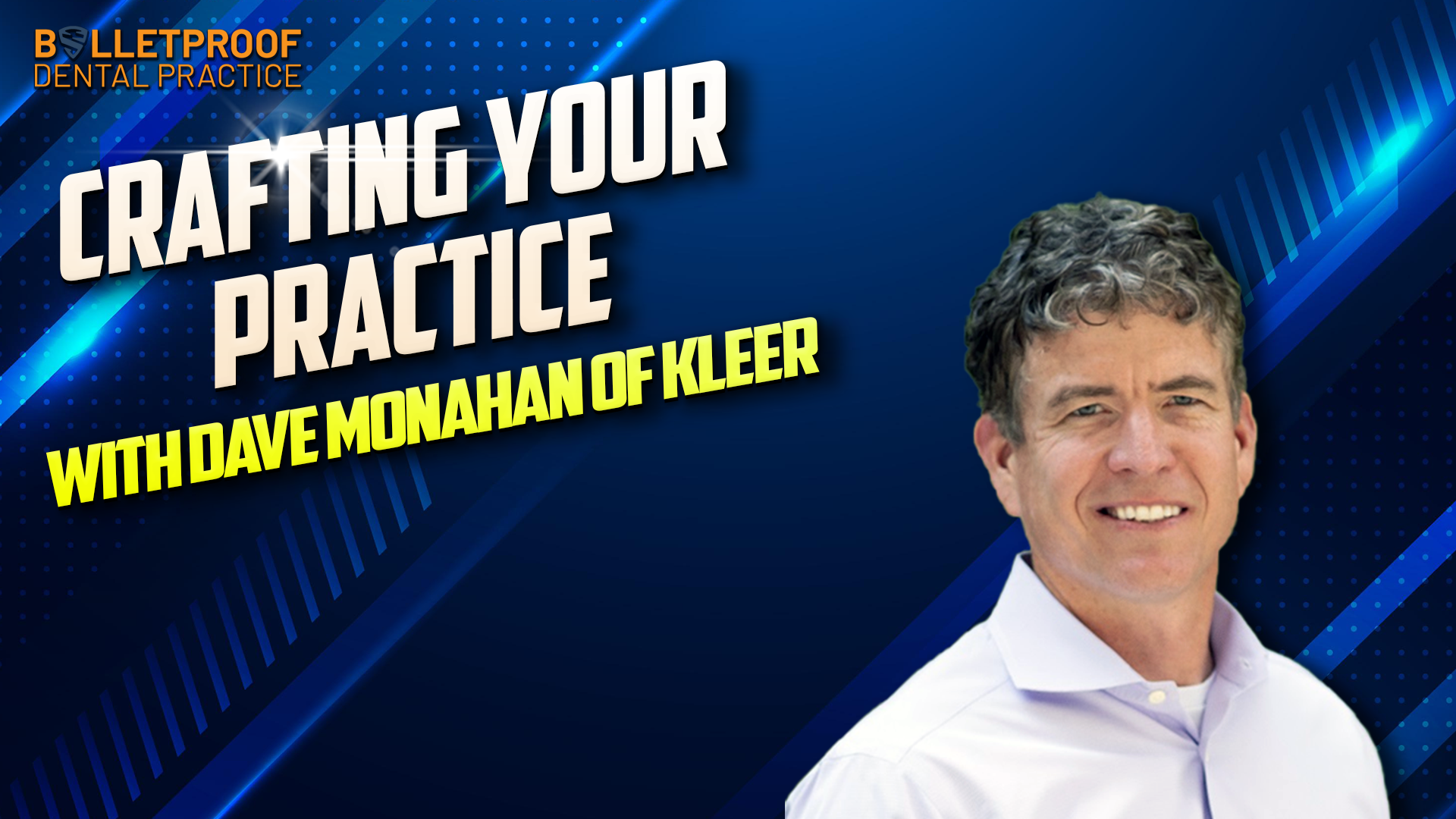
Strategies for Scaling Your Dental Practice: Insights from Trainual Founder Chris Ronzio
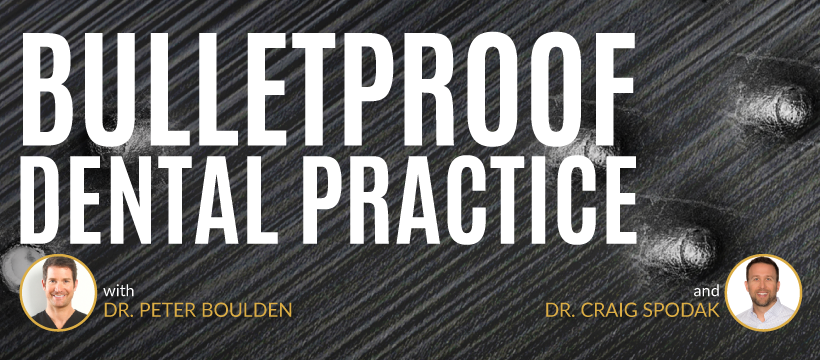
Bulletproof Dental Practice Podcast Episode 309
Hosts: Dr. Peter Boulden
Guests: Chris Ronzio
Key Takeaways:
- Introduction of Chris Ronzo: Founder of Trainual, author of “The Business Playbook” and “100 Hacks to Improve Your Business,” and host of the podcast “Organizing Chaos”
- The Genesis of Bulletproof Dental: Chris Ronzo discusses the inception of the idea to adapt the IP from Bulletproof for dentistry, highlighting the challenges of maintaining and financing software
- Industry Agnostic Approach: Chris shares his industry-agnostic approach to developing processes, procedures, playbooks, and business strategies, drawing from his diverse business experiences
- Chris’s Background: Chris delves into his entrepreneurial journey, including his start in the video production industry and his successful transition to Trainual
- Game-Changing in Dentistry: Chris discusses being ahead of the curve with configurable software and his motivation to create a training software platform
- Trainable Software: Exploring the software-based platform “Trainual” and its impact on various businesses, with a focus on the four key areas: Profile, Policies, Procedures, and Playbooks
- Tailoring to Dentistry: Chris emphasizes the uniqueness of dentistry as a combination of artistry and clinical practice, underscoring challenges related to hiring, firing, attrition, and retention in the dental field
- Building Scalability: The importance of employee experience, customer experience, and business experience in scaling a dental practice, along with the significance of training and retention
- Protecting Dentistry: The rationale behind the name “Bulletproof” podcast, with a mission to empower dentists against industry consolidation through education, IP, tactics, and tools
- Business Information Workshop: Highlighting the value of capturing comprehensive business information and setting clear expectations to foster alignment and accountability
- Clear Communication: Chris emphasizes the role of setting clear expectations in a fast-paced dental office, enabling success and minimizing misunderstandings
- Simplification for Success: Chris shares his approach of explaining concepts in simple terms to facilitate understanding and growth
- Minimizing Friction: Chris addresses challenges related to onboarding and aims to enhance the user experience
- The Vision for Business: Chris discusses his vision of a business as a tool for life enhancement and offers a $100 discount coupon (code: “Bulletproof”) for those signing up at BPTrainual.com
- References:
Mighty Networks: Bulletproof Dental Practice
Trainual
Tweetable:
Four P’s:
• Profile of your Business – Mission, Vision, and Background
• People – Roles and Responsibilities
• Policies – Rules of the workplace
• Processes to deliver the product – The step-by-step place on how you do and what you do.
Full Episode Transcript
Below is the complete transcript of this episode of the Bulletproof Dental Practice podcast. Prefer to listen? Find us on Apple Podcasts, Spotify, and YouTube.
Read the full transcript
The following transcription was from the Bulletproof Youtube channel. Here is the https://www.youtube.com/watch?v=k_RRJrLHYZk
Peter Boulden
0:00:00
because we have the ground game, we've actually built the practices that people aspire to
Peter Boulden
0:00:05
create. History will prove one of us correct. Wait, wait, wait, wait, you're not letting
Peter Boulden
0:00:10
me finish, bro. This is how you become Bulletproof. Bulletproof.
Peter Boulden
0:00:15
All right, everybody, welcome back to another episode of Bulletproof Dental Practice Podcast. Today I'm riding solo. Hopefully Craig might be able to join, but I'm excited. I've got a friend who I've known for a long time on the pod. He's actually speaking at the summit. He's non-dentist, not dental related at all, which is pretty awesome. I love it when we have overlap into regular business, but it's Chris Ronzio. He is the founder of Trainul. He's the author of the Business Playbook and 100 Hacks to Improve Your Business. And he's the host of another podcast, as you can see by his glorious background. I have background in the podcast called Organizing Chaos. And so I will give just a little bit of setup, Chris, as to what I believe Traneuil is and why I think it's important for this to be on a dental podcast. As you know, coming to speak at the Bulletproof Summit here next month, you know that kind of we're in the business and the operations of dentistry, not so much the clinical. And I think the systems and the operations of dentistry is more so important than almost any business, right? It's so predicated on doing these steps in order and doing it replicable manner that it's really important. So I want to do a short story before you go on. I think you kind of know where I'm going. So in 2016, I reached out to Chris because we had the idea of, hey, I want to start. I want the IP of kind of what we're doing to be able to be available for dentistry, meaning the systems create playbook for dentistry. Almost, Chris, we have these things in dentistry, like they're just called office manuals, right? Which I'm sure a lot of other businesses do. But I wanted to be able to take the IP of what we've learned in Bulletproof and amongst my other friends and colleagues who have been in dentistry a long time and actually give a dental specific version of Traneum. And so we went off trying to do this ourselves, right? Cause it was like, why do it when we can build it ourself? Only to learn that software is super hard to maintain. The IP was great. The software is super hard to maintain, super expensive, and it just wears you out if it's not your full-time gig, which obviously it's yours. So I came back on bended knee after a failed software project to Chris. And I was like, hey, Chris, I want you to speak at the summit. I'm using your product again. And, uh, and, and here we are. So I appreciate your grace. And I've mentioned that a number of times, your grace and being like, Hey, I get it like, no problem. You tried, you tried to be my quote unquote competition and you, and you lost and here I am kind of thing.
Chris Ronzio
0:02:42
So that's so funny. No, I love it. I flattered that you came, that you came back around and psyched to be working with you. Well, at the time too, Chris, I think I actually mentioned this. The time when I looked at it, I was like, yeah, it's good, because you were kind of in your infancy back then too, right?
Peter Boulden
0:03:01
Like in 2016, was you kind of a newer SaaS startup? Yeah, yeah, the software, the first version launched at the beginning of 2015, and it was just me, and so I think 2016 I had one employee. Yeah, so I remember looking at it and being like, yeah, it's good. And I love the concept, but like, it needs to do this, this, and this for dentistry, like screen record and sign documents and this and that. And you didn't have those features. Now, of course you have those plus AI plus NFC tags, plus, plus all the things, right? Like it's everything. So when I went back to revisit it after years, Kimberly, my assistant, who really helps me with a lot of operations was like, you got to see train now it's off the charts. Incredible. And so we've been, we've been pushing and I'm going to talk about at the end, I'm going to talk about what we're going to do with our mastermind and training at the end, but I want to jump into kind of you and, and why this is a passion of yours and why it's been your life's work to kind of help. And I know you're not in dentists. This isn't for dentists. You're kind of business agnostic, I would say, right? Exactly.
Chris Ronzio
0:03:55
Yeah.
Chris Ronzio
0:03:55
Industry agnostic process, procedures, playbooks goes across any kind of business.
Chris Ronzio
0:03:59
Yeah.
Chris Ronzio
0:04:00
So tell me what was, what was the genesis of you being like, you know what the world needs, the world needs to train you.
Peter Boulden
0:04:06
Tell me how you got here.
Chris Ronzio
0:04:08
So it actually started when I was in high school. So my first real business, aside from the little kid neighborhood businesses, my first real company was a video production company that did live youth sporting events. Started at my high school, we were filming the soccer games, the football games, the theatrical kind of events. And then we started doing like cheerleading and dance competitions, these big things that would happen in field houses. And what we were doing was filming an event and sending a feed to the Jumbotron or to the judges for replays. And then they would let us, the organizations would say, if you provide that feed to us, you can sell these videos. And we don't even want to cut, just sell the videos to people. So for me, it started with VHS tapes and SVHS tapes and video CDs and then DVDs and HD DVDs. And over 12 years that I was running that business, it was like every six months we're coming out with a different kind of product. And so from when I was 14 through college or through high school, through college, I grew this business. I set up an office in Boston where I was, a second office in California, third office in Ohio. And we had about 300 camera operators doing events in all 50 states.
Peter Boulden
0:05:17
And how old were you when this was going on?
Chris Ronzio
0:05:19
Like 14 when I started it and then I was 26 when I sold it.
Peter Boulden
0:05:23
Oh my gosh, so you did it all through high school and college pretty much.
Chris Ronzio
0:05:26
Yeah, yeah exactly. And so that business it was, you know, you hear video production and you think, oh it must be creative, media, right? No, it was all live sporting. It was like logistics, like how do we set up an event in any venue in America, staff it appropriately, and have a flow where parents can purchase something when they're walking in and can leave with the flash drive, the download, the DVD in hand when they were leaving the building. So, so much was process operations. And so that, yeah, so that was my focus in the business. It was streamlining every single thing that we did so that, you know, start to finish, everything felt the same, no matter if you were in Vegas or Omaha or Orlando or anywhere. So I sold that business after hiring a president. So first we got me out of the business, hired a president, and then a year later sold the company. And a lot of my friends, my entrepreneurial friends were like, well, I want to do that. How did you have a company that just runs on all of your systems and is consistent and repeatable. And so that was where the seed for Tranual got planted. Initially it was me doing consulting, it was documents, it was videos, Dropbox folders, paper manuals, three ring binders, and I thought there's got to be a tool that's designed for this.
Chris Ronzio
0:06:41
So-
Peter Boulden
0:06:41
What year, what year is this? Just, I mean, was tech very commonplace? Was like the iPhone, you know, the remote control of our lives essentially back then? I don't, you know, just trying to-
Chris Ronzio
0:06:49
In my, in my video company or- Yeah, I mean, that was going down. So I started the video company in 2001, so no iPhone.
Peter Boulden
0:06:57
Oh, no.
Chris Ronzio
0:06:58
No, no.
Chris Ronzio
0:06:58
And then, and sold it in 2013.
Peter Boulden
0:07:01
Nice.
Chris Ronzio
0:07:02
Oh, yeah.
Peter Boulden
0:07:02
You know, there's an app that's like just wildly popular. You have children, right? Yes.
Chris Ronzio
0:07:07
Yeah.
Peter Boulden
0:07:07
Are they in sports?
Peter Boulden
0:07:08
Yes.
Chris Ronzio
0:07:09
So you have Game Changer?
Peter Boulden
0:07:10
They're young.
Chris Ronzio
0:07:11
My kids are young, so they're not in competitive.
Peter Boulden
0:07:15
So you had game, Game Changer is like pervasive. People are listening to this are like, yeah, baseball. It's like, it's an app and it basically does your schedule and little clips and parents can log in.
Chris Ronzio
0:07:24
So like you were Game Changer before like-
Chris Ronzio
0:07:26
Before Game Changer.
Peter Boulden
0:07:27
Right? Yeah. And so you were just before your time and that's awesome. That's awesome.
Chris Ronzio
0:07:31
That's awesome.
Peter Boulden
0:07:32
That's very cool. So you've learned, obviously that business was highly predicated on the process, right? Otherwise there'd be no way that you could have scaled that. You would have been, it would have been dependent upon you. And that's what I see in dentistry so much, Chris. That's why, that's why I think like, that's why I've been obviously felt strongly enough where I wanted to create my own software platform because I see it as making someone going from good to great or your practice going from small to scale if that's what you so desire, but it's predicated on you not being the only cog in the wheel, right? Like creating a process and then kind of getting out of the way a little bit, designing the process, and then you kind of getting out of the way a little bit and letting your ecosystem kind of take over. So, you know, talk to me about, I guess, really talk to me about the process. What is Trainul? Like why, why is it software based? Why is it help teams? What have you seen in terms of the changes, right? What's been the Delta of businesses who started it and then the, and then kind of where they are now?
Chris Ronzio
0:08:27
Yeah, sure. So first, what is Trainual? It's a really simple software platform. It's through your browser, it's on your iPhone, it's on your Android. So whatever device you want to access, it's all of your company's knowledge, information, IP. It's how you do what you do. So you might call this an operations manual, a training manual, just the guide to your business, the instructions to your business. It's like, could your practice run without you? Could your business scale without you? If you take a vacation, does the whole thing collapse? Could you open another location? Can you replicate what you do? That's what scalable business is all about. And so, Trainual is centralizing all of that knowledge and making it accessible for your people and making it where everyone's accountable for the best practices. And so that's the biggest thing is it's just simple software to centralize who does what in the business. And then we came up with this playbook methodology because a lot of people would say, okay, yes, I want to capture all the knowledge of my business. Where do I start? That seems daunting, you know, that's hard. And so I wanted to make it easy, break it down. And so we came up with the four Ps. And so your playbook is really just these four areas. First, there's the profile of your business. This is what makes your practice, your dentistry different from someone else's. So it's your culture, your mission, your vision, your core values, the target customer that you serve in your market. What geography are you in? It's all the little milestones that have happened since the business started, like the corporate lore. You know, if you got into a new business, what makes your company different? That's your profile. And so we've got an area to define all of that, which is really helpful for an orientation for your new hires. Yeah, of course. Right. What is the culture? Yeah. Okay. The next piece is your people. So of course, even, even two, you know, dentistry's right next to each other are vastly different based on the people that work there. And so your people is your roles and responsibilities. Who does what? It's your teams, your departments, how you're organized as a business. It's, you know, the org charts, the role charts, the backgrounds, the bios, the contact information, the headshots. When you join a new business, you wanna get to know the people. You wanna get to know the coworkers. It's part of the knowledge in the business. And so that people section is another big part of training. The third piece is your policies. So these are your rules of the workplace. It's how you choose to run your business. It's things you're legally required to do. It's the benefits. It's the decisions you make about, you know, can coworkers date? Do they text each other? How do you communicate? When do they get paid? You know, all those things that you may run into. It's like your traditional handbook that you'd sign off on. So that's in the product.
Peter Boulden
0:11:18
Okay.
Chris Ronzio
0:11:18
And then the policy.
Peter Boulden
0:11:19
That's in the policy section.
Chris Ronzio
0:11:21
Policies, yep.
Chris Ronzio
0:11:21
And then the fourth piece is your processes. This is all of the standard operating procedures, the step-by-step plays for how you do what you do in every role and every responsibility.
Peter Boulden
0:11:33
The processes to deliver the product, right? So yeah, interesting. Exactly.
Chris Ronzio
0:11:37
So those four things, if you can define those four things and break those down, contained all this knowledge, you've packaged all this knowledge in your business into an asset that either helps you run the business better, helps you sell the business someday, helps you work less in the business, helps you open that next location. That's what's required. So I love that.
Peter Boulden
0:11:58
I love the four Ps.
Chris Ronzio
0:11:59
I used to be a big fan of the profit on Marcus Lamarcus.
Chris Ronzio
0:12:03
Yeah, yeah.
Peter Boulden
0:12:04
And he would talk about the three Ps, right? People, process and product. And he was like, look, it's the same thing in everyone's business. And you broke it down, you got a little more granular. It's the same thing in everyone's business, right? Dentistry, we always think our business is so unique. We treat teeth, we are clinicians and we are artists. At the end of the day, like business is business, right? And I always have to remind people that sometimes your practice isn't necessarily a business if you're the only one, you know, if the business is predicated on you having to be there and you having to do all the work, right, if it doesn't work without you there, it's really not a business. The other thing in dentistry that's interesting, Chris, was the reason that really I wanted to get away, try to start, you know, with Dental Train on our own and recreate your product was because we do, like, honestly, if I had a dollar for every time a dentist had asked me, hey, can I get a copy of like your office manuals? And I was like, sure, but like, it's our process and that'd be really hard. It's not a cut and paste kind of thing. So in dentistry, we like to spend a lot of time speaking for a number of my colleagues, we spend a lot of time curating these office manuals and binders and all these things because we want to check the box in our head that we have a system and process. And guess where those manuals and binders go?
Chris Ronzio
0:13:13
The shelf.
Peter Boulden
0:13:14
On the shelf. And guess what? They are never looked at by another human until it's time to say, Hey, these are outdated. These guys, we did these a long time ago. Right. Let's revisit it. So what I hate about office manuals is just what I mentioned. And what I also hate about office manuals is that they're not dynamic at all. They, they don't change with the evolution of the business, right? There's always things in my business right now is adding. We are adding modules and training all the time because we have new IP, we have new education, we are learning new things. And if you have a binder that is now this pristine binder up on the shelf and you don't want to disrupt it, like that's making your business static technically. Right? Exactly. I am a big fan of just like dynamic IP content training. The other reason I will tell you why I love this so much is that if you are a dentist listing this you want scale I Think you can agree and maybe all businesses can agree with this Chris that the biggest impediment to their progress is usually hiring firing attrition retention of employees meaning You know it's it's daunting for us to hire someone go through all this process only to have them be like you know in two weeks Later like I don't think this is a good fit right and the dentist just throws his hands up like god dang it I just took my highest paid employee treatment coordinator let's just say to train you for two weeks and now you're bailing yeah can't do this right I surrender I give up I'm just gonna stay small even though my dream and my quest is to grow big I'm gonna stay small because I can't do this process I also have to do the dentistry right and do the marketing do the payroll so I don't have the bandwidth to do this. So I put up the white flag and surrender. So that was really where I love this is that once you create the process to doing it, I always tell people do things on video, do things in a process, do it one time magically and then you should never have to do it again unless it's kind of faulty, right? But then you build scale. So that's why I love training. It was like it gets that person 80% down the field where it's not so taxing to the organization,
Chris Ronzio
0:15:16
to hire the new hire culture, all these things and, and, and go from there.
Chris Ronzio
0:15:21
Right.
Peter Boulden
0:15:22
And meaning it really, it really saves time. It saves business and it's really efficient and people feel really taking care of and knowledgeable. You also probably have another statistic. I'm sure Chris is that a lot of times people will leave a job when they feel
Chris Ronzio
0:15:35
under-trained when they under-informed.
Chris Ronzio
0:15:38
Right?
Peter Boulden
0:15:39
Yeah, yeah.
Chris Ronzio
0:15:40
Yeah, there's a quote that's, you know, would you, I think it's a Henry Ford quote, would you, what's worse than training your people and having them leave, not training them and having them stay? You know? So, investing in our people is part of the employee experience with your brand, with your business. And there's kind of two sides to this experience. You know, with an earlier company that's just getting started, it's all about your customer experience. And that doesn't go away. It's always all about your customer or your patient's experience, right? Because to build the best business, the best practice, you want people to just be raving about you. You want them to have an incredible service from the time they sit in the waiting room or check in to the time they get in and out of the chair. And the experience that that customer has is all about your processes and your policies. It's your standards for how you treat a patient when they're in your four walls. You know, and so as a business, we wanna perfect that the best of our ability to where we've got a great brand. And then you start to invest in employee experience. And you think, well, for my business to really scale, I can't have this be a turnstile of people coming and going all the time. I need to invest in my people. And that's also process. How do we invest in people? How do we do reviews? How do we get their feedback and institute changes? How do we roll out systems and handle change management in a way that's not so disruptive and not ruining people's time? And all of that is done in our system. So really it is a change management system. It's training when people come in. It's up leveling people into new roles, new responsibilities so that they can delegate or pass off the things they used to do. And it's helping make it easier to hire a replacement when someone does move on from your organization, which happens to all of us. But you know what happens when someone puts in their notice? You say, can you spend the next two weeks writing down everything that you're doing? Please write down your process.
Peter Boulden
0:17:44
Can you train the next person?
Chris Ronzio
0:17:46
Right.
Peter Boulden
0:17:46
You're like, yeah, I don't know, doc.
Peter Boulden
0:17:48
Yeah.
Peter Boulden
0:17:48
I think we really need to balance.
Chris Ronzio
0:17:49
Well, you train, train, you all and train, you'll train the next person. Exactly.
Peter Boulden
0:17:52
Right.
Peter Boulden
0:17:53
And, and you're not vulnerable by, you know, so Chris, the podcast is called Bulletproof or reason is that in dentistry, you know, I think that we are vulnerable by consolidations that's happening in private equity and things like that. And I have to say that this is a big, meaning my practices feel quote unquote bulletproof because I am so invested in, in, in really getting granular with our processes, right. You know, the business is not predicated on me being there. It's not predicated on one person. Like you said, if someone leaves, we have a process to hire and train very efficiently. And it just feels like, you know, I don't know, it just makes you kind of, it's one more cog in kind of the bulletproof wheel. And so that is Craig and my mission is to really help Dennis thrive in cottage industry, right? Like there's a lot of corporate stuff going on in dentistry. So we want to help Dennis bring guns to a gunfight, so to speak, not knives to a gunfight and really compete at the same level and have the same level of education and IP and tactics and tools and things like, like, like training you'll are, are things that great to share. So what are you speaking on specifically? I didn't even ask you this. What are you speaking at, at summit? I know you're speaking at our summit in Las Vegas at the Wynn, August 11th and 12th. What do you, what are you specifically going to bring to the audience? Are you nervous speaking to a bunch of dentists by the way?
Chris Ronzio
0:19:06
No, I did Invisalign a few years ago, so I feel like my smile's great. I'm like ready to go. Let's do this. Let's do this. So the big thing is going to be, it's a workshop on how to get your business out of your brain. And so all these different areas that we're talking about, the profile of your business, your people, your policies, your processes, a lot of this is just prompts to remind you of how your business works and to encourage you to document or to write that down in a really easy way, a lot of process, what feels daunting for people is they, they think they have to create all this process and they don't feel like a specialist in doing that. But really, if you're in business, if you're collecting revenue and you've got patients, you have processes, it's just a matter of capturing and collecting those processes. And so that's what the workshop's gonna be about. It's how to capture all of that information about your business. And we're gonna do some of it live at the event so that people leave with a headstart.
Peter Boulden
0:20:03
I always say that people have loved it. I love a workshop because you know, it's so great leaving with like tangible, where the rubber meets the road shit to do on Monday, like action, right. From us, as opposed to like a glorified pamphlet from a conference you go to sometimes, right. It's just like, that was a waste of time, money and travel.
Peter Boulden
0:20:19
Yeah.
Chris Ronzio
0:20:19
Yeah, exactly.
Chris Ronzio
0:20:20
So yeah, I'm excited.
Peter Boulden
0:20:22
I'm excited to hear you. There's one other thing I want to point out about Dennis that Dennis will say is super frustrating. I'm glad you have solved this in your product, is that you create this stuff. We give them, let's just say in the traditional sense, the office manual. You go through the training process. It's one-on-one training and someone goes, I never got that training. I never got that training. And that was super frustrating to me. So I love it how this system has kind of built for this. And it's like, yeah, you did. You signed for it. You took the test, right? You had the accountability, you signed for it on August 12th. You've actually did do this.
Chris Ronzio
0:20:56
Right.
Peter Boulden
0:20:56
So like, and, and it just creates a different level of accountability as opposed to like, I didn't get that. Like, yeah, you did.
Chris Ronzio
0:21:02
I did.
Peter Boulden
0:21:03
And that's, and that's helpful. I know that's, I know that's granular, but it's helpful for, for those of us who
Chris Ronzio
0:21:08
like to kind of check all the boxes, so to speak, accountability is a huge piece of this, you know, not, not just with our system, but if you want your employees to be really aligned with your business and you want to not run into employee issues, it really comes down to setting clear expectations. You have to show people what you expect of them, what does success look like in their role. And so when we hire someone in our businesses and we lay out the job description with the responsibilities, a lot of times those never resurface, you know? And then people a year later feel like, well, this isn't even the job I was hired to do. And so to run a bulletproof business, I would say, you've got to have a lock on roles and responsibilities of what you're expecting each person to do. And then you go through each of those responsibilities and you train to the best of your knowledge, here's our current best practice. Here's how we've done this, if it's something we've done. Because if you delegate something to someone without those instructions or expectations and they do it wrong, then they're looking back at you. You didn't give them any training. You didn't set the clear expectation. So the way that we avoid those, you know, conflicts is by giving clear instructions. By saying here is what I expect. Here's what good looks like. I love that and I think that's pretty pervasive. You know, like being in a fast paced dental office, right? The example I'm going to use is usually for the front, the front, the front team member who's answering the phones. And when that person goes out, it's like, just, we just need someone to
Peter Boulden
0:22:34
get up here and answer the phones.
Chris Ronzio
0:22:35
Right.
Peter Boulden
0:22:36
But to your point, like if, if the team doesn't know what a touchdown looks like, I'm gonna use a sports metaphor. If they don't know what winning looks like, what did you expect me to do? If you just expect me to get on there and answer the phone, then I'm just running in every direction. I don't know what, where the goal line is, right? I don't know if it's good job or bad job.
Chris Ronzio
0:22:54
Right, do they get on the phone? Like you tell someone, I need you to answer the phones. You pick someone up off the street and they answer the phone and they go, sup?
Peter Boulden
0:23:01
Yeah, what's up? You want an appointment?
Peter Boulden
0:23:03
Is that good? Yeah. Is that good in the business?
Chris Ronzio
0:23:05
I did it.
Chris Ronzio
0:23:06
What if they're chewing gum? What if they don't know what system to have open to look up the patient to see when their next appointment is? What if they don't know where to find the answers? You know, like that's why you stick someone in a seat with no instructions, no training, no expectations, they're set up to fail. And so it's our responsibility as business owners, if we wanna build something scalable, to give that expectation, those instructions, and to say, here's what I know is right, please do it like this, and innovate beyond this. You know, this is like the low watermark for the business. And if we're bringing you in because you have a certain level of expertise, push us further than this and define the new best practice.
Peter Boulden
0:23:44
Yeah, because you're not trying to create a bunch of robots, right? So it's like, hey, help innovate and grow this. I love this. You know, there's something on Reddit, which you've probably heard of.
Chris Ronzio
0:23:54
It's, I think it's Reddit, but it's Eli5.
Peter Boulden
0:23:57
You ever heard that acronym?
Chris Ronzio
0:23:58
Eli5, no.
Peter Boulden
0:23:59
Explain it like I'm five.
Chris Ronzio
0:24:01
Oh, okay.
Peter Boulden
0:24:02
I've heard that.
Peter Boulden
0:24:02
I always tell people, yeah, so it's, I don't know what, what I got fancy with telling you the acronym, I should have just said the damn term, but it's, I see it now. And, uh, and I always say to, to people when they're, when they're kind of training or, you know, assume the person knows nothing, meaning when you're creating these modules and training, it behooves us to, to, to really just lower the common denominator.
Chris Ronzio
0:24:24
And, and I'm not, I'm not disparaging anybody saying, but I always say like everyone like go to the fifth grade level, explain it that way because you'd never know where someone is and therefore if someone gets it, gets it, quits, gets it, they're like, oh yeah, yeah, I've got this and they can kind of beat ahead and they feel good. It's an affirmation. They're like, yeah, I know all this, but if someone doesn't, if they're new, then you want to take them from the fifth grade level and get them to the master's level, you know, but you got to pick them up where they are. So I always say like over explain, over document. And you know, you can't, no one's going to get insulted. They're like, oh, there was too much training. You know, there was too much and too much detail there for my job.
Peter Boulden
0:25:00
No one's going to ever say that.
Peter Boulden
0:25:01
Yeah.
Peter Boulden
0:25:01
Yeah.
Chris Ronzio
0:25:01
I guess, you know, I was going to say the, I don't know if you've played with chat GPT at all. We also have the AI stuff built in. So you can actually put some text into that or into our product and just say, rewrite this to explain it to a five-year-old. So like, I was actually going to say that actually, like I always, I always put in like, explain, like I'm explaining, like, for instance, I use chat GPT, Chris, with a lot of my legal documents, you know, before I get on the phone with an attorney. I want to write this. I'm like, Hey, here's a, here's a phrase.
Peter Boulden
0:25:31
Can you explain this?
Peter Boulden
0:25:32
Like, I'm like, I'm an idiot kind of thing. Cause I kind of am an illegal idiot. And it gives back like, sure, here's what you need to be aware of.
Chris Ronzio
0:25:40
You know, this is amazing. Yeah, you will get in trouble if you don't do this.
Peter Boulden
0:25:48
Look out for this.
Peter Boulden
0:25:49
Okay, but I think we've covered, I think we've covered all this. Oh, I know what I wanted to ask you, last thing. And I need to get this number right. Cause I paraphrase, cause I remember the last time we were on a phone call, I asked you like, hey, do you have dentists that use this? And you're like, yeah, I got, I got a lot of dentists on my platform. My, my, uh, using train you. What was that number? You remember?
Chris Ronzio
0:26:08
So we've got almost 10,000 companies around the world using the tool. And I think it's, I think it's something like, like four or five, four or 500, 600, something like that. I couldn't believe it.
Peter Boulden
0:26:19
I couldn't believe it.
Peter Boulden
0:26:19
So you find, and I think we had this conversation as well, that a lot of friction comes from people signing up, because I had this with a lot of beta testers with dental training. People would sign up, they'd get an empty platform dashboard, it looked great, and then it was like, wait a second, I got to create all this work? I got to do all this? I don't really know where to start. And I love how you're kind of giving people kind of the playbook, as you say, to kind of go through ideating. We are going to be offering, at the end of our summit, Chris, we do these masterminds where it's a year long coach and stuff like that. So I have templatized the processes, the office manual for kind of what I think is a bulletproof office, templatized this.
Chris Ronzio
0:27:02
And so people who are gonna sign up for the mastermind are actually gonna get a free, we're actually gonna get this built into Trainul, these template, all these modules that we've created from the bulletproof side. We are gonna pay for a year's worth of Trainul. I know you gave it a great offer. We're going to pay for training and preload it. So I'm really excited to see, you know, this IP come to fruition in a product
Peter Boulden
0:27:24
that I don't have to mention.
Peter Boulden
0:27:25
This is the absolute best way to get started.
Chris Ronzio
0:27:28
I can't overstate this, but like you said, when people jump in and they want to do this work, they have this aspirational goal of having this done and they can see the finish line, but that gap from here, from the blank page to the finish line is the big problem. And so we've tried to design the product to make it more like experiences throughout the product, like building out an org chart where you're not starting with a blank piece of paper. But the fact that you're taking it to the next level with templates, manuals that are so industry specific, so granular, built on your success is like a turnkey product that we couldn't offer alone. So that's why we love partnering with experts like you.
Peter Boulden
0:28:10
Yeah, and templates, right? You don't want to think that it's a boilerplate thing. Obviously you have to go in and modify, but really just reducing the friction where you can be like, let's change this where it's highlighted, let's change this, let's change this, and all of a sudden now you have a curated product without the, without the, you know, starting 0%, so to speak. So I'm really excited for you to speak. I'm really excited you to do a workshop at summit. I'm excited to kind of bring, bring, give some more awareness into the dental industry for traneal. If someone's not coming to the summit, if they're listening, we've got an offer for you to kind of try summit and I am sorry, try traneal and sign up. Chris is offering a hundred dollars off coupon. You just enter a coupon bulletproof when you sign up. And an easy way to kind of just go to that for this offer is just go to bptrainual, bptrainual.com. So we always, Chris, I always say we shorten things so there's not this long clunky link for people. We always just kind of buy a domain and send them to something where they know they're getting a good deal via Bulletproof. So anyway, man, unless you've got anything else to add, I think we saved some of this magic sauce for Summit. I'm excited to see you. I've never met you in person. I'm excited to see you in person. And I know that we kind of, I'll tell you what was the one thing that we reconnected on. I took the, I got the courage to reach out to you again, because I saw you post, you and I are both YPO members. And I was watching you post a review on a retreat you had done with one of your kids through YPO. Yeah. Yeah. And I was just, I was listening to what you said and I was like, man, I like this guy. I need to reach out to him again and just, and just fall on the sword. So anyway, tell her YPR. Glad to have you there.
Chris Ronzio
0:29:44
I'm glad to hang out.
Peter Boulden
0:29:45
Glad to, glad to see you in Vegas. And I really appreciate you spending your, your time away from your family and your business to come train and help some dentists. I really, I really appreciate it. I'm excited to be there.
Chris Ronzio
0:29:55
I can't wait. And you know, the, the comment you saw about the trip with my son, I mean, that stuff for me wasn't possible 20 years ago. And it was systems, and it was this sort of thing that unlocked my ability to have such more of a balanced life. And so that's what I want to do for other people.
Peter Boulden
0:30:11
Thank you for, yeah, that's where I was kind of trying to go with that example, is like landing the plane. Like ultimately the goal of business is to provide freedom in your life, right? Yeah. It's not to become just work, work, work, and then pass over and die. It's a tool to help you enjoy your life. And like you said, this is another tool in your business to help you get to an autonomous business, help you get to an independent business. Help you get to some freedom in your life to do cool trips like that. Cause that's what it's all about. So yeah, thank you for landing the plan in totality there, buddy.
Chris Ronzio
0:30:38
Um, all right, everybody, thanks for listening and we'll Um, all right, everybody, thanks for listening and we'll
Peter Boulden
0:30:41
catch you on the next episode.
Transcribed with Cockatoo
Blog

















1+1=3 The Power Of Alignment and Delegation For You and Your OM with Erika Pusillo
, October 31, 2024













, June 15, 2023
, June 8, 2023
, May 31, 2023



Look at These 3 Stats if You’re Thinking of Going Out of Network with Teresa Duncan
, January 11, 2023
, December 28, 2022
Knowing What You Don’t Want with Judy Kay Mausolf of Culture Camp and Erika Pusillo
, November 30, 2022

Cabo This Week, Immersion Learning, Biggest Breakthroughs, Your Personal KPI is Net Worth
, November 2, 2022
, October 19, 2022


Business is not Productivity, Productivity is not Profitability with Chris Salierno
, September 22, 2021









3 Biggest Bottlenecks of an Entrepreneurial Dentist: PART 2 with Perrin DesPortes of TUSK Partners